-

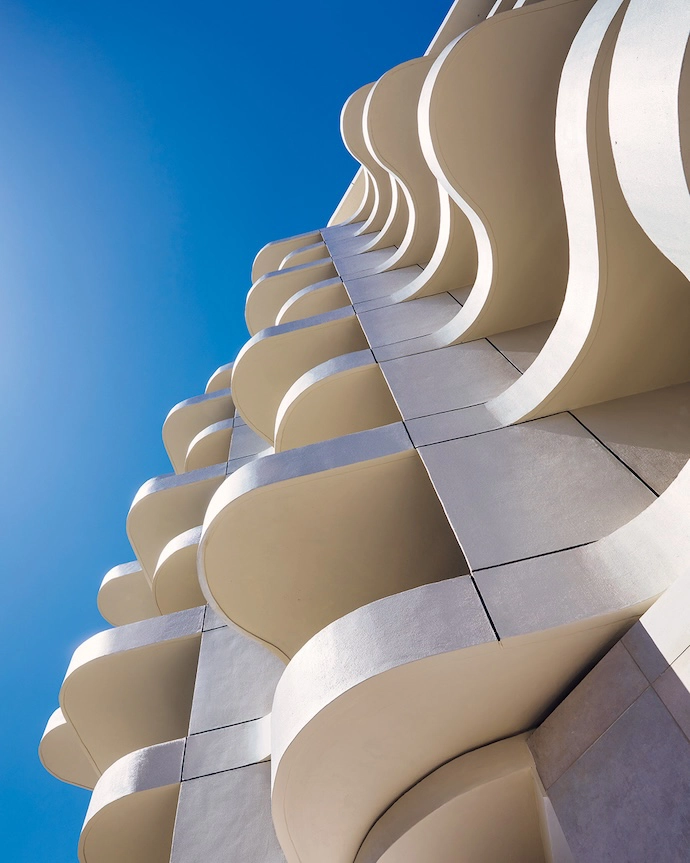
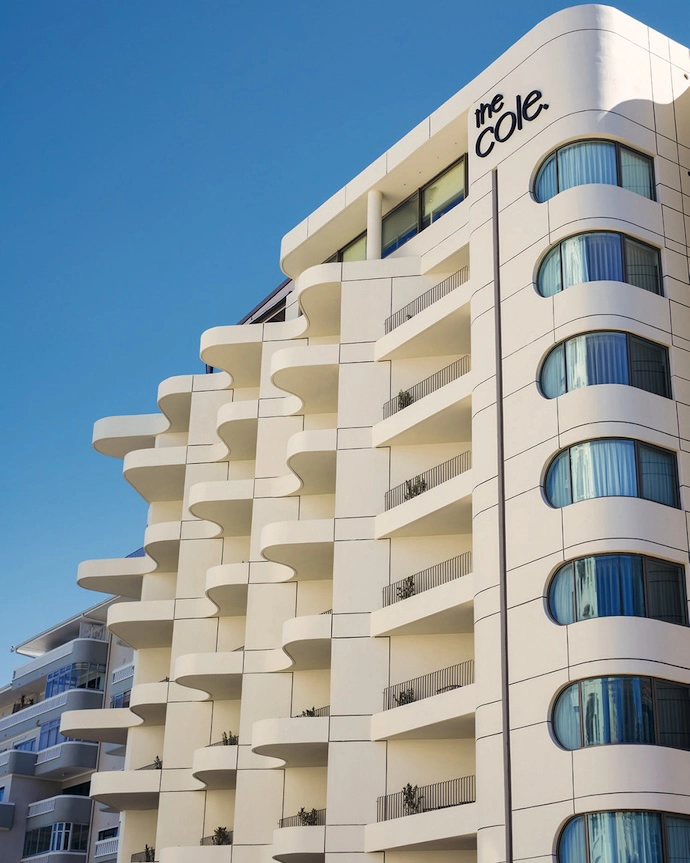
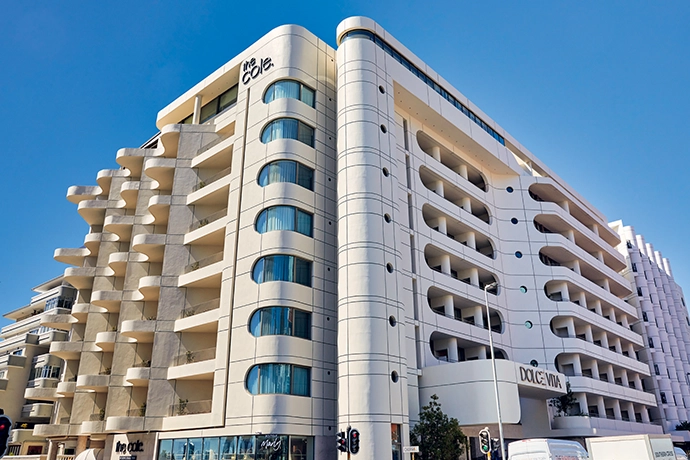
The Cole hotel’s asymmetrical balconies that overhang the property’s boundaries (with the required permission, of course). They’re described as “Baroque operatic” by the architect, Robert Silke. -
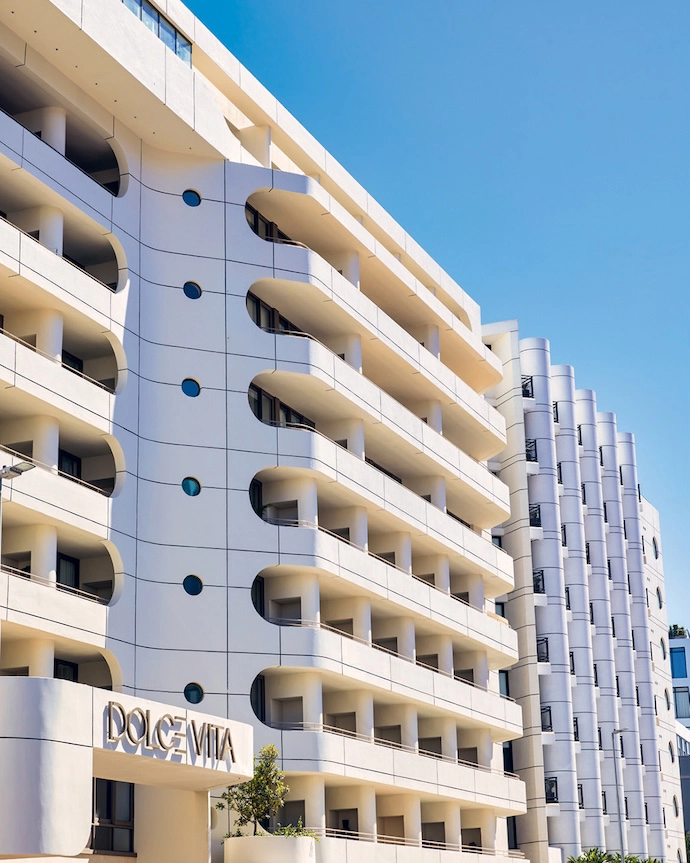
Facing the main road (Regent Road) are the Dolce Vita apartments, with The Flamingo – designed by the same architect – to the right -
Angled at 45 degrees on Church Road, The Cole overlooks the ocean. -
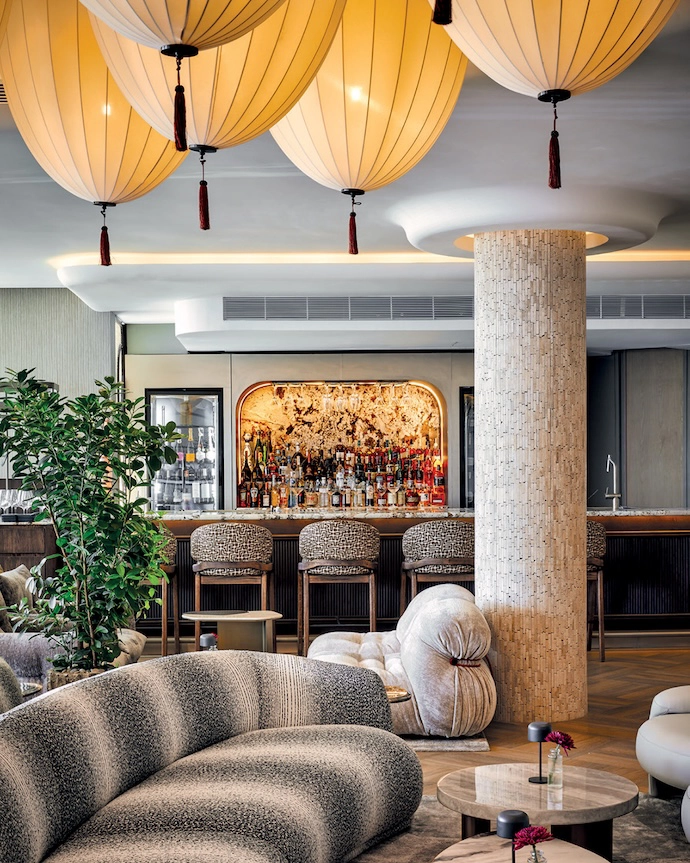
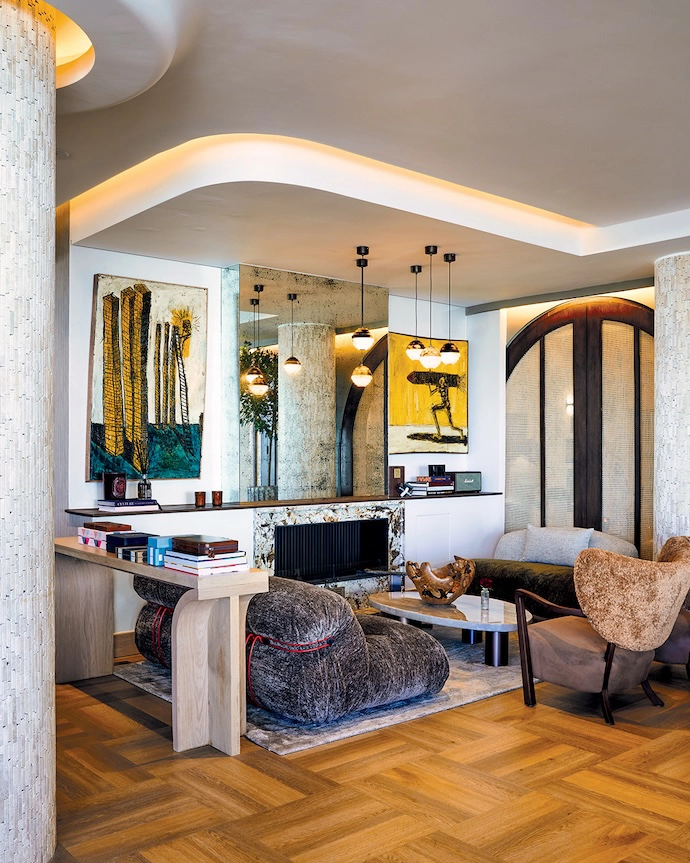
Another view of Script’s interior. -
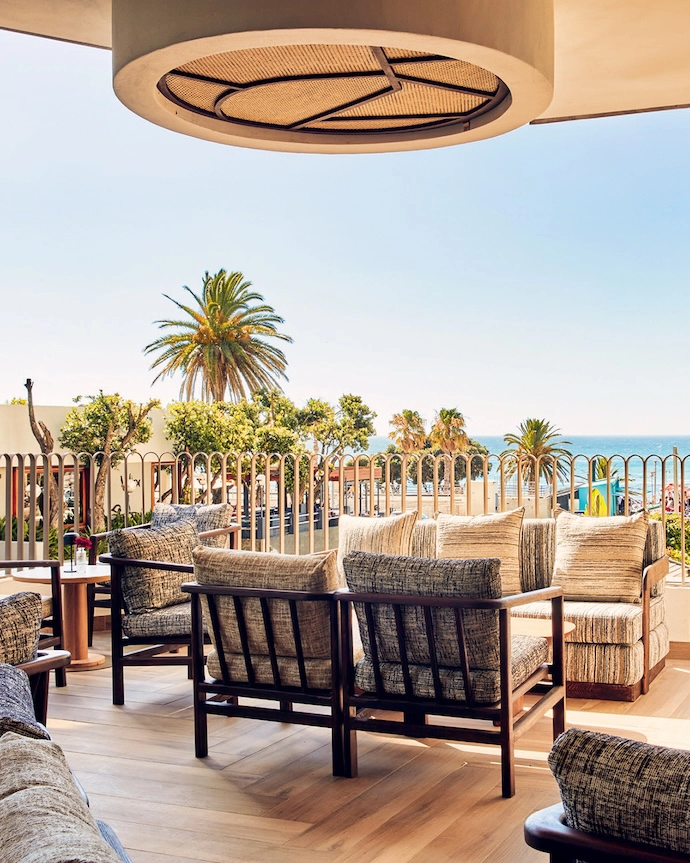
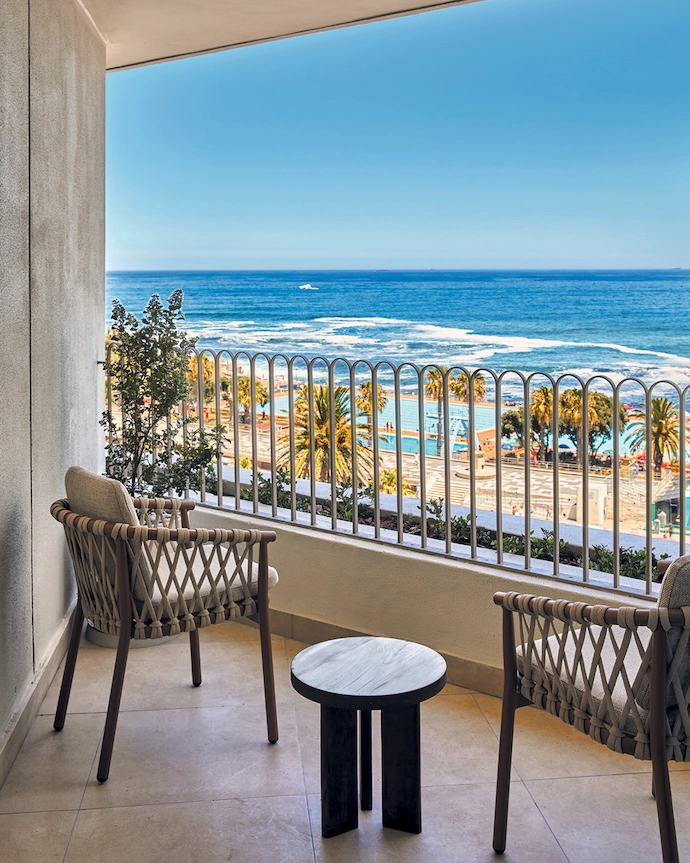
The balcony adjoining Script bar. -
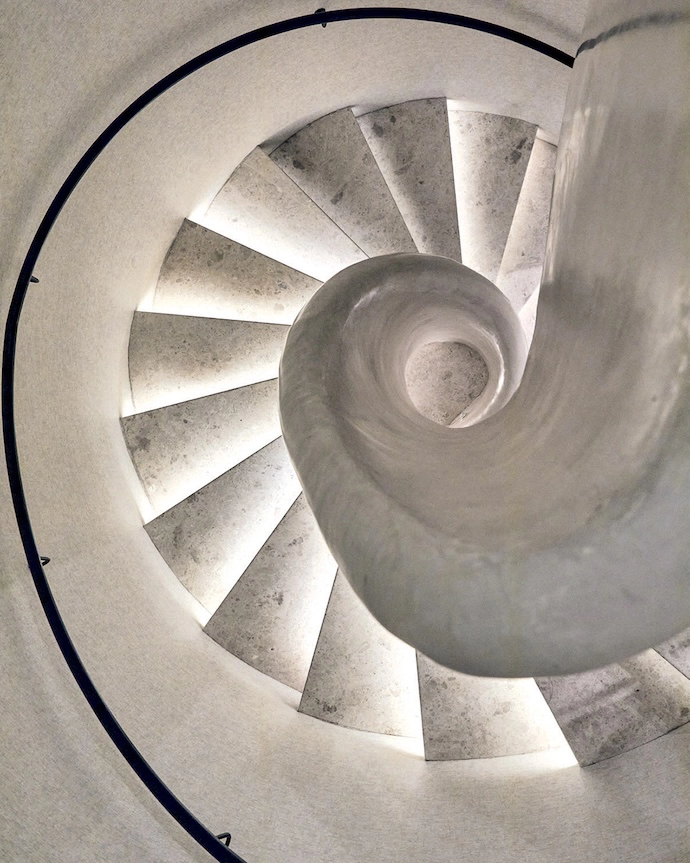
The spiral staircase inside The Cole’s spa. -
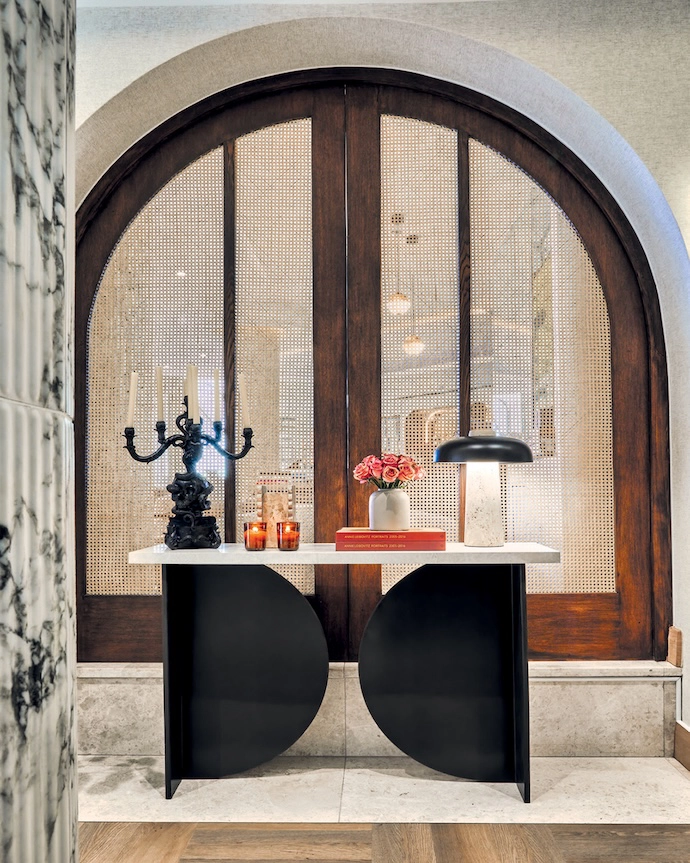
The Cole’s lobby, with Script bar visible behind the screen. -
Script lobby bar at The Cole with bespoke furniture designed by InHouse Design Studio and made by Hermon Brink, flooring by Floer and paintings by Boytchie. -
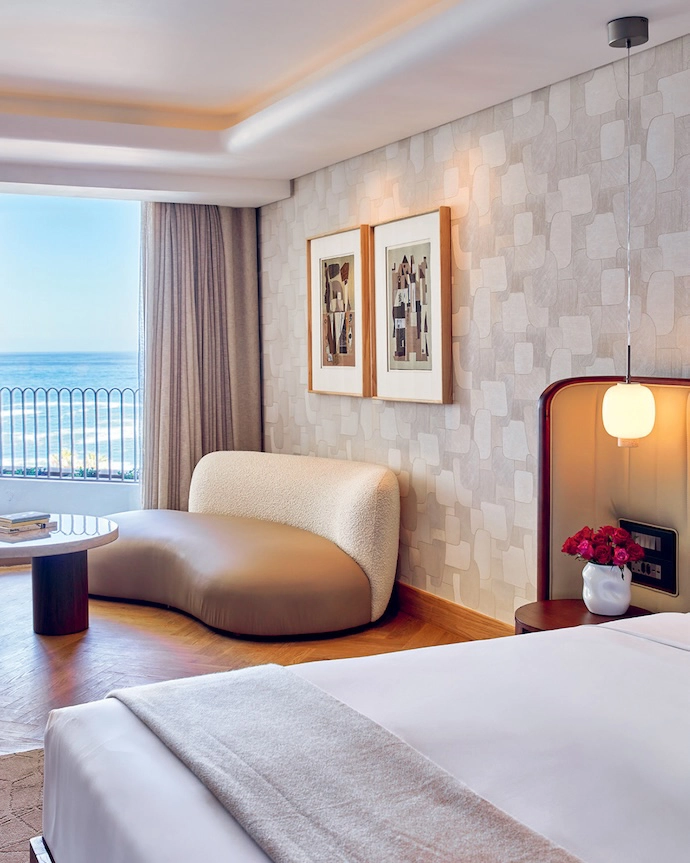
Uninterrupted sea views from one of The Cole’s balconies. -
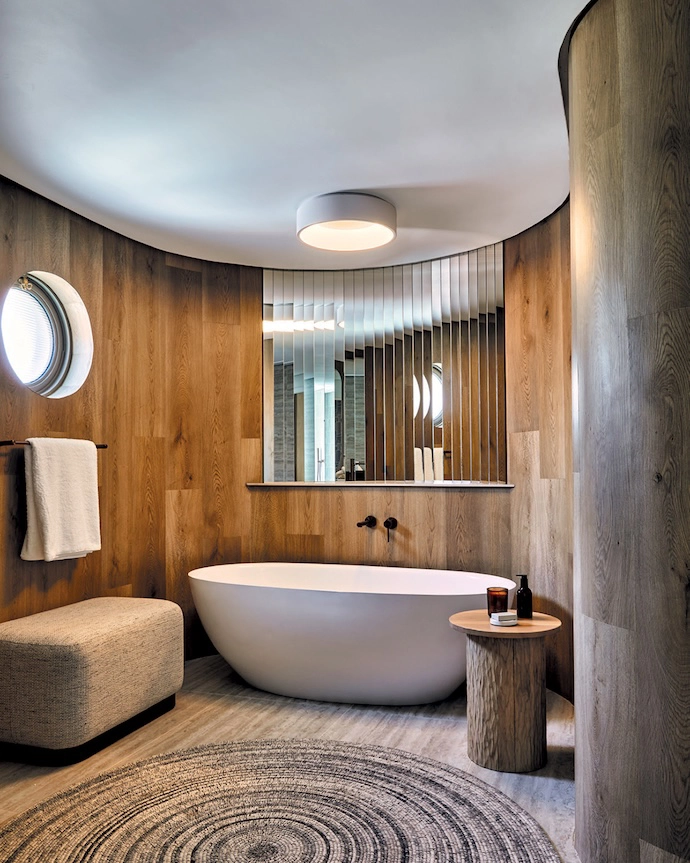
The hotel features beautifully appointed bathrooms. -
A Deluxe Sea-facing Room. -
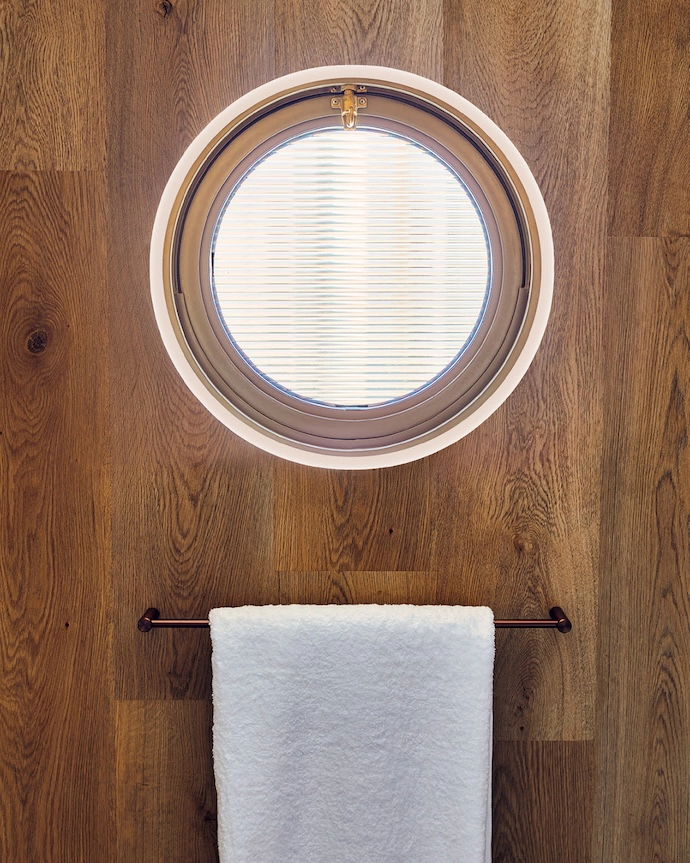
Porthole window detail in the bathroom. -
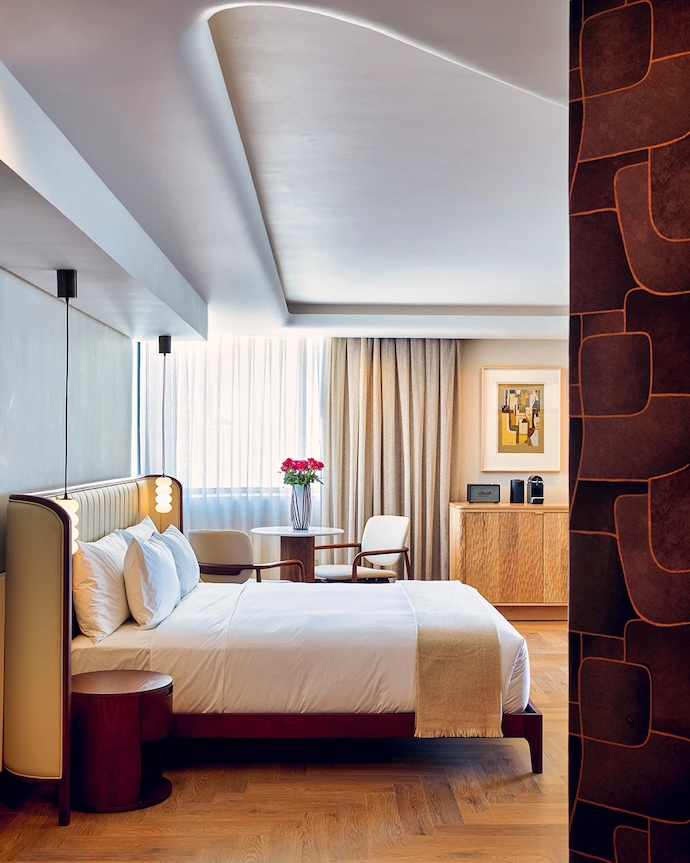
A main bedroom in one of The Cole’s Sea-facing Suites. All furniture in the hotel was designed by Paul Kovensky with the InHouse team, and custom-made for The Cole by Hermon Brink. -

The Cole’s rooftop restaurant, Figo. -
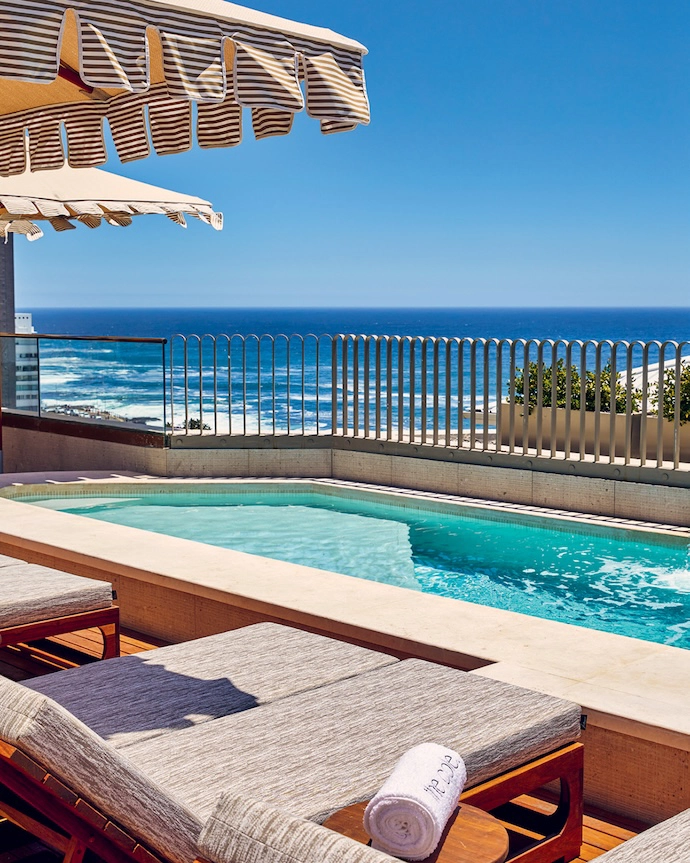
Figo’s adjoining rooftop pool area. -
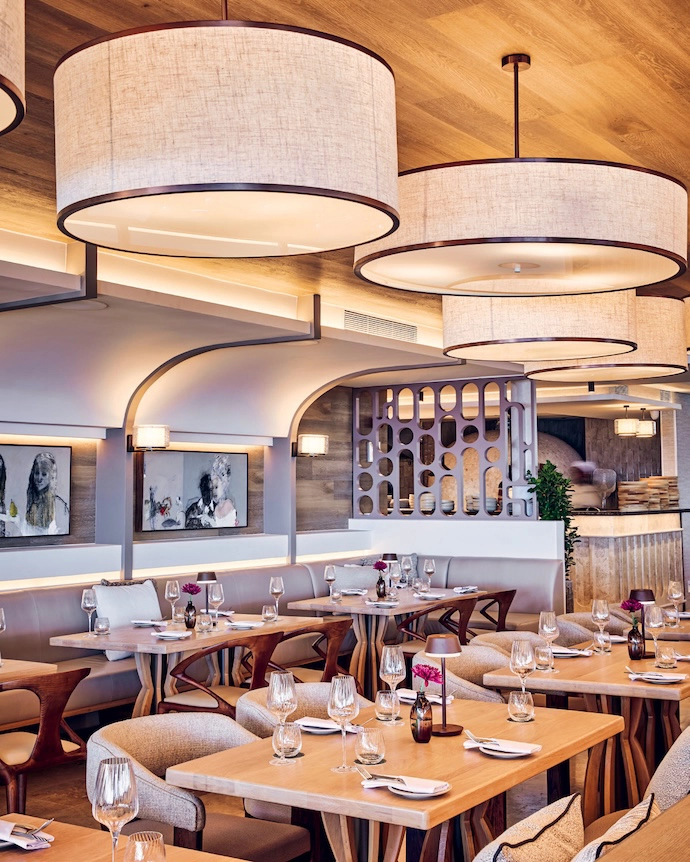
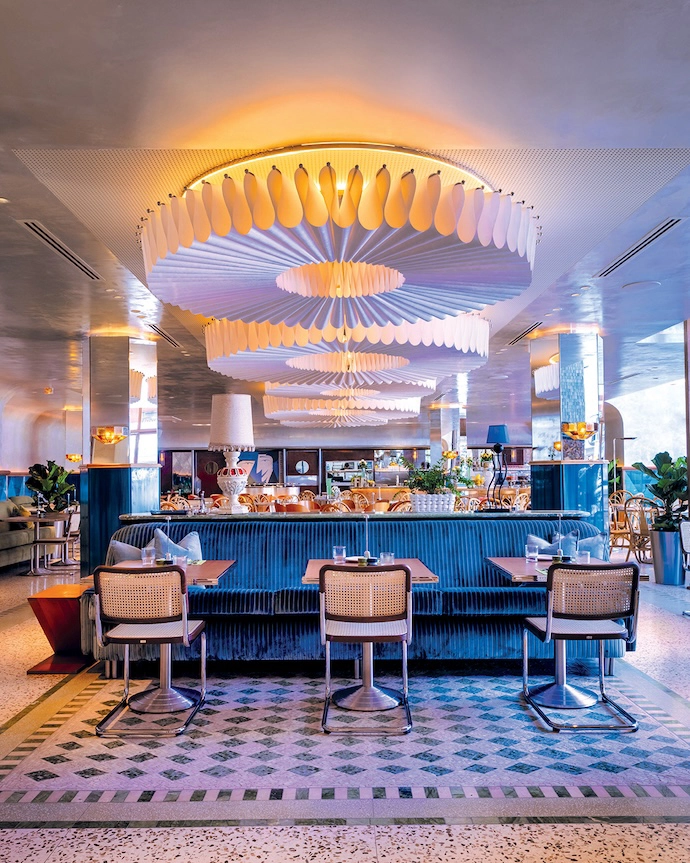
Arlecchino restaurant by Tashas on the ground floor of Dolce Vita. Note the chandeliers, inspired by the neck ruffl es of the iconic Italian harlequin.
Connecting our South African Modernist architects to the present is Robert Silke & Partners. Their latest project may be a building of two halves – The Cole hotel and Dolce Vita apartments – but in concept, build and location, it represents a link between past and present.
WORDS & PRODUCTION Steve Smith PHOTOS Greg Cox
It was a case of joining the dots for architects Robert Silke & Partners. The building occupies a corner with, on one flank, The Flamingo – a neo-Bauhausian apartment block they had designed in 2023 – and on the other, Mimosa Court, a Sea Point grand old lady that’s been revered by Robert throughout his career. Designed by Loris Pagano in the 1950s, the apartments in this stately, Deco-flavoured building remain highly sought-after.
“It was a tremendous opportunity, and a responsibility,” admits Robert. “Mimosa is an amazing building – and then you’ve got The Flamingo, which is obviously important to us. How do you join the two? How do you complete the corner?”
Adding a Pascal or two of extra pressure was the fact that the new building had to accommodate both a 60-room hotel – The Cole – and 60 apartments under the name Dolce Vita. Project developers Paul and Saul Berman of Berman Brothers Group insisted that each have a separate visual identity, and the proprietor of the hotel, Paul Kovensky of the Kove Collection, wanted his hotel rooms to all have sea views – a challenge, given the building site on Main Road was a block behind the seafront Beach Road.
Robert’s solution was twofold. The first part required swivelling the rooms on the Mimosa Court side at 45 degrees, so they’d all look over the legendary La Perla restaurant and enjoy views of the ocean, effectively turning a Main Road hotel into a Beach Road hotel. “Greedy for the sea” is how Robert describes The Cole’s facade. “My old boss, Louis Karol, was my hero,” he says by way of explanation. “In 1990, he built The Odeon – a Pomo apartment block right next door. For me, it was the first building on Main Road that decided, ‘I’m not actually on Main Road; I’m on Beach Road, and I don’t care what you say.’ And it worked. Louis made it exuberant, gave it glass balustrades, curved it, painted it white. White was the colour of Beach Road. So when this particular project came along, we were adamant that it would do the same.”
The second part was to design a building of two halves. While The Cole keeps its eyes on the ocean, the Dolce Vita apartments gaze over Main Road towards Signal Hill and Lion’s Head. “The Flamingo spoke a language of verticals, so we decided to make the Dolce Vita a language of horizontals. My design partner Alex Geh didn’t want it to be a mindless extension of another building.”
What Robert Silke & Partners had no say in was the interior design of the hotel. Paul wanted autonomy inside his hotel, and outside of creating the interior configuration – where the rooms/bathrooms/corridors would go – he could do whatever he liked. “I wanted a destination that speaks to travellers who are deeply attuned to design, who appreciate art, music and a strong sense of atmosphere,” he says. “The idea was to build a sanctuary amid the energy of one of Cape Town’s busiest neighbourhoods.” For The Cole, the brief was about establishing tranquillity – a timeless palette, calming forms, warmth balanced with luxury that guests would feel immediately upon arrival. It needed to be elegant, layered, and emotionally resonant rather than trendy.
Interpreting that brief were Aidan Hart and Phillip Wyatt, founders of InHouse Design Studio. For them, Paul’s vision was rooted in timelessness. “We approached The Cole with a sense of permanence in mind, balancing contemporary refinement with subtle nods to the great hotels of the past,” explains Aidan. “The aesthetic is serene and composed, defined by a muted palette, rich textures, and classical detailing layered into a modern framework. Materiality also shapes the experience – marble finishes, crafted timber elements and refined ceiling treatments, such as the lowered ceiling in the Script bar to enhance intimacy, all contribute to the sense of warmth and connection.”
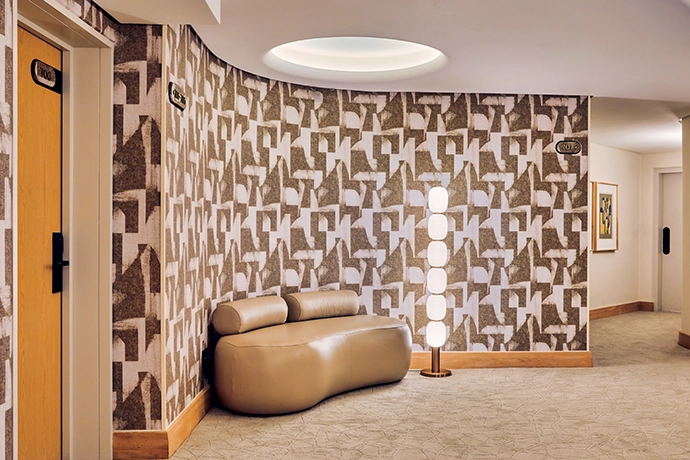
For PauI, the InHouse team completely nailed the tranquillity brief – especially in the lobby. “It sets the psychological tone for the entire hotel,” he says. “The organic curves, luxurious marble, layered textures, fluted stone meeting warm timber flooring, and careful consideration of sound and light all work together to create an atmosphere that’s simultaneously dramatic and intimate.”
And so The Cole/Dolce Vita presents a fitting conclusion to our recent run of Modernist homes. It’s the work of an architectural maverick who, like the others feature in those articles, has designed a building respectful of its location – one that adds a fresh aesthetic layer to the greats that preceded it.
Robert Silke
Over the past five years, Robert Silke’s influence on Cape Town’s commercial architecture has been immense. Not only have his bold Art Deco and Modernism-infused designs brought a fresh aesthetic to a series of apartments and city hotels, they’ve also sparked a wave of similar efforts from other architects that have softened the default rectangular glass boxes of the Mother City’s urban landscape. Founded in 2015, the partnership of Robert Silke, Rob McGiven and Alex Geh has since delivered iconic buildings such as Tuynhuys and The Flamingo apartment blocks, Tropicana and ANEW hotels, Citadel’s head office, and now, The Cole/Dolce Vita. And, happily, more are under construction. | robertsilke.com
Don’t forget to sign up to our weekly newsletter for the latest architecture and design news.