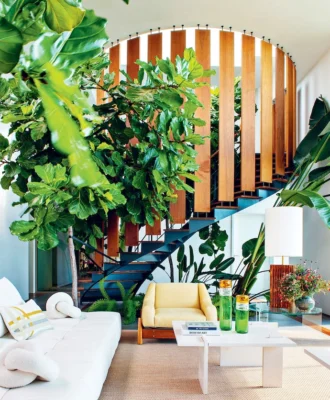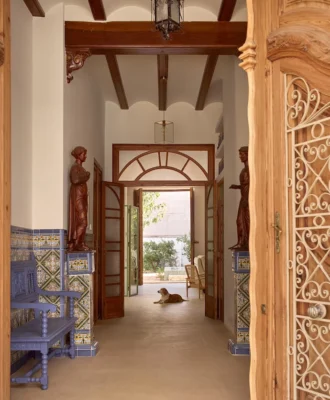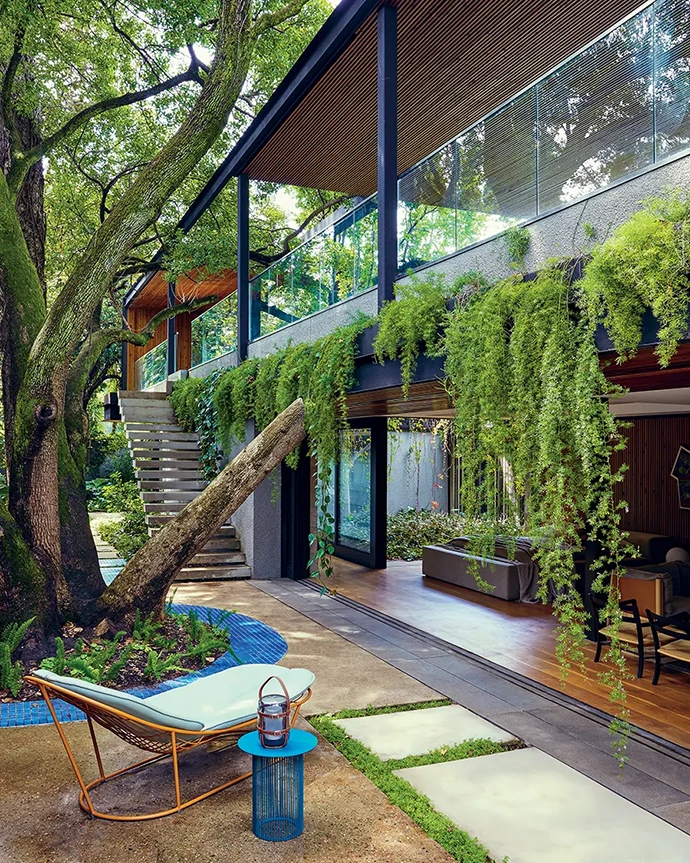
Forget the traditional boundaries between inside and outside. These homes give new meaning to “going green”.
COMPILED BY Gina Dionisio PHOTOS Dook, Elsa Young/Bureaux, Ivo Tavares Studio, Lar Glutz / Bureaux, Jan Ras, Alan Jensen, Paris Brummer, Elsa Young, Toby Scott / Are Media / Magazinefeatures.co.za
Echoing the theme in VISI issue #144, all these homes from the VISI archives have one thing in common: they embrace nature and the surrounding landscape. From Porto to Pretoria, each home creates a dialogue between built and natural environments through innovative design interventions and thoughtful materiality.
Birdhaven Home
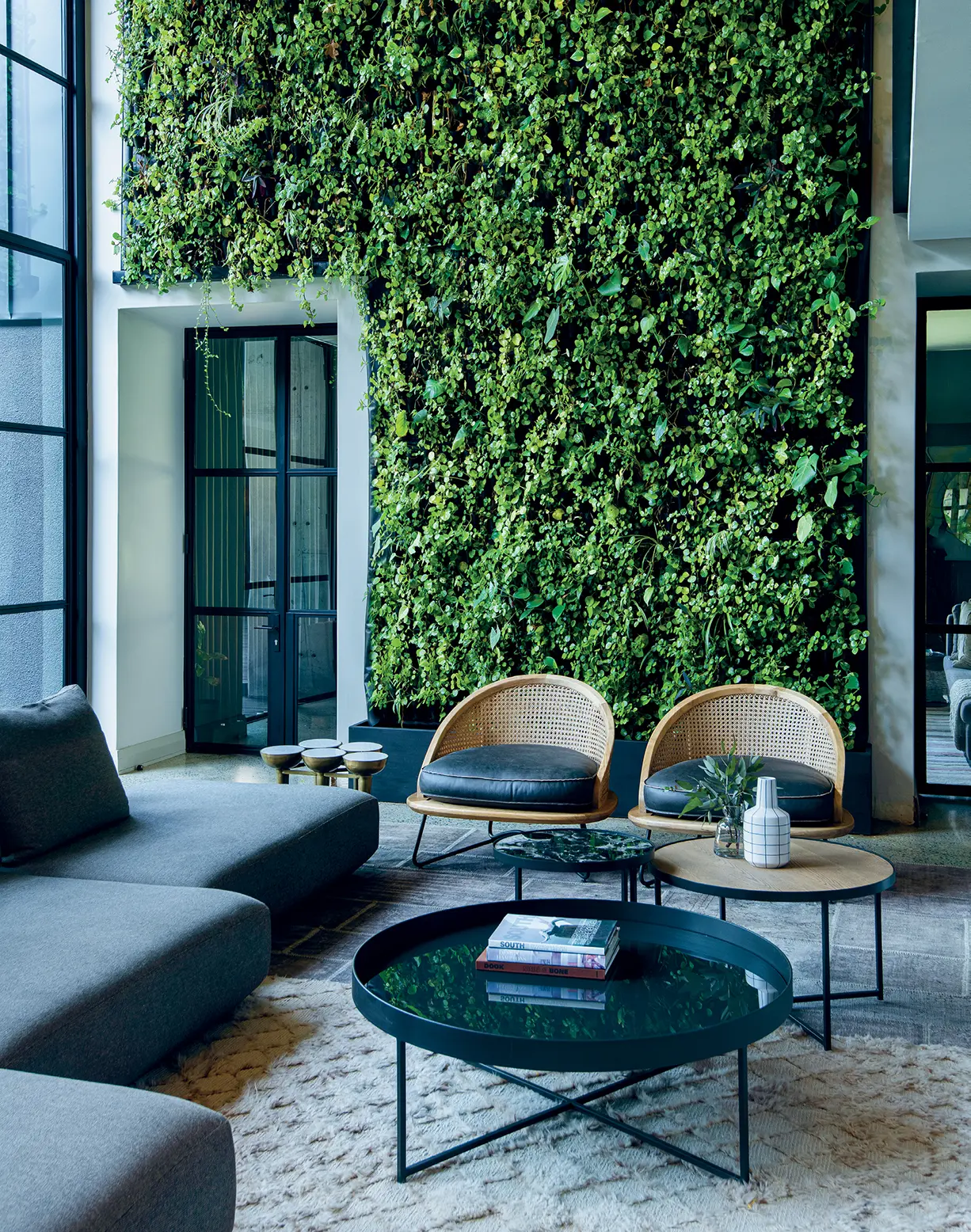
Creating a sense of awe and occasion in a family home is no easy feat.
For David Hollis, founder of Arch3D Architects, the approach to this brief was all about the juxtaposition of materials and designing a visual feast for the senses. After visiting the owners’ previous home, he noticed the lack of volume and layering. “Each space merged into another, with no identity,’’ David says. “I wanted to play with volume here, and bring the excitement of creating a unique feeling of space within each function of the home, but still maintain that easy, flowing openness.” An amalgamation of these concepts has resulted in a space that allows for both family interaction and for refuge, based around a central statement hub.
Read the full feature on this Birdhaven home.
Johannesburg Home
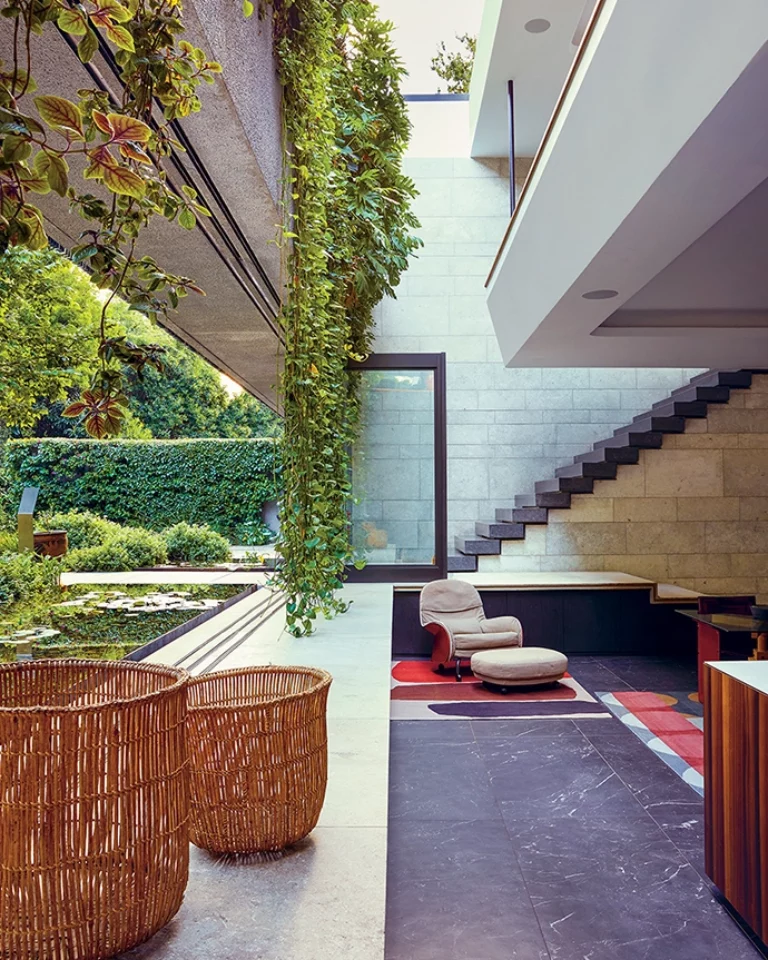
In Johannesburg, there’s no mountain and there’s no sea,” says architect Anthony Orelowitz, referring to homes in Cape Town that tend to look outwards, seeking to catch a glimpse of the ocean or frame a view of Table Mountain. “Here, you have to create your own habitat.” And that, at heart, was the basis of his response to Johannesburg’s urban character when he designed his own home in the city’s forested suburbs. Anthony’s firm, Paragon, is responsible for some of the city’s most significant commercial architectural landmarks – but, he says, “I hadn’t done a house in nearly 15 years.” Nevertheless, working closely with architect Elliot Marsden and interior designer Julia Day, he conjured a vision of what it means to make a home in Joburg, at once perfectly suited to the city and utterly unlike its neighbours.
To create his habitat, Anthony turned to the archetype of the atrium house: an internal courtyard wrapped on all sides by the house, creating a peaceful sanctuary at its heart, open to the sky. He calls it a “self-contained oasis in the city”. The house is essentially a series of pavilions, with vast sliding doors and screens that can be opened and closed to reconfigure a mosaic of spaces in a variety of ways. (A new rail system had to be designed to manage the massive glass panels that make up the sliding doors.)
Read the full feature on this Johannesburg home.
Casa de Lavra
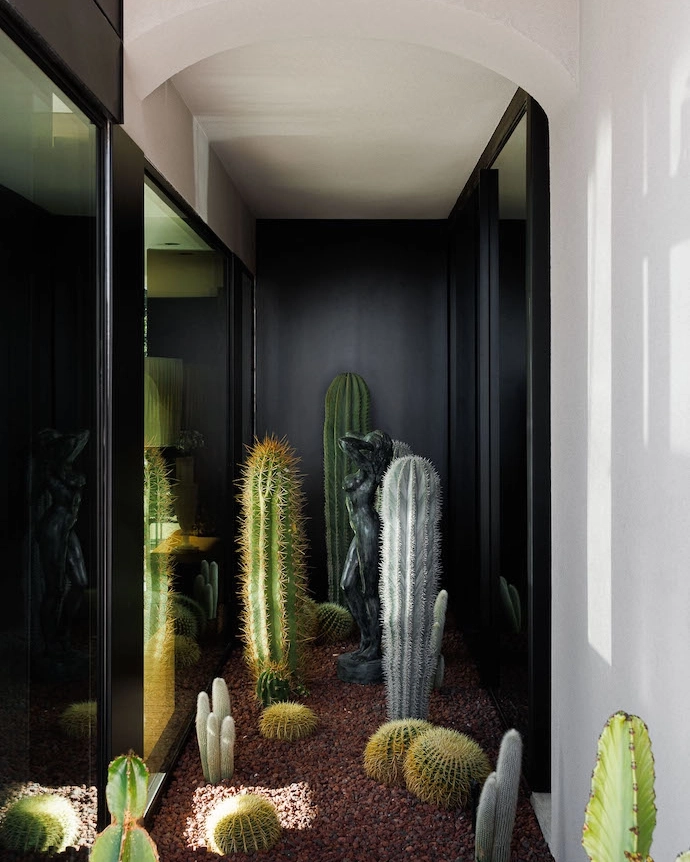
Thanks to the synergy that architect Ricardo Azevedo shared with the clients – a common language of design that was unspoken yet understood – he was given complete creative freedom to design this unique bejewelled abode in Porto, Portugal.
The original 1980s residence on-site bore traditional architectural features, with a distinct disconnect between interior and exterior spaces. The challenge for Ricardo lay in transforming the old foundations into a house which bridged these two realms so that these became immersive spaces without discernible boundaries.
Moving through each space at Casa de Lavra is a sensory journey. Each space is curated to align with specific environments. The social areas, for example, feature tropical greenery and grained marble, which gives this space a unique ambience. “It is the house of a gardener. A man who belongs to the trees, to the cedar, to the maples, to the air breeze. The house can’t contain him. These spaces convert themselves into a house without walls. The garden was a blank space that the client shaped as a sculptor carves a rough stone into a diamond,” says Ricardo.
Read the full feature on Casa de Lavra.
Salt Rock Home
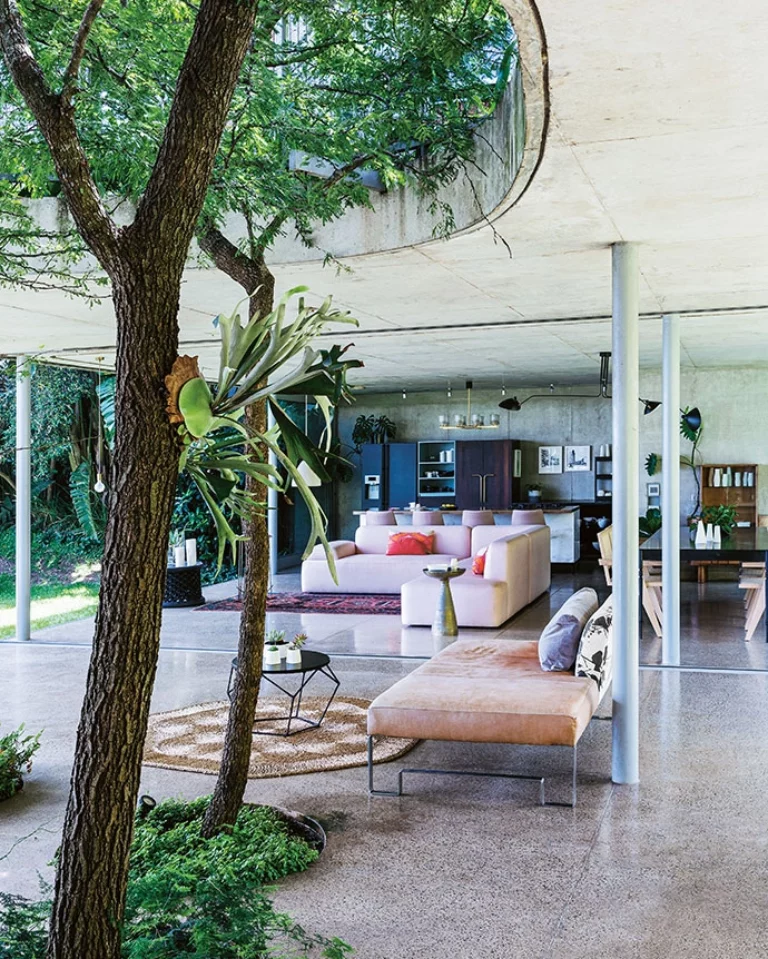
“It’s a great house to wake up in every morning, and a great house to dwell in,” says interior designer and artist Lisa Twyman of her home. “It makes you feel free, positive, motivated, excited.”
Lisa and husband Will Haynes fell in love with the plot situated in Salt Rock, on the Indian Ocean coastline north of Durban, because of its geography – so much so that the build became very much about the garden. “We did not want to impose on it or mess up the flow of it too much,” she says. “During the first few years that we lived here, any extra budget was spent on the garden and planting.”
The key principle for Lisa and Will was that the house needed to become a part of the landscape. This meant including elements such as a ground-floor living area that opens up completely to the outdoors, allowing the spaces to be opened or enclosed as required. This “blurred boundary” – as Lisa describes it – between interior and exterior is further enhanced by the fully open-plan nature of the living, dining and kitchen spaces, as well as the application of simple, low-maintenance materials such as unadorned off-shutter concrete, and the balau wood used for cladding and screening where necessary.
Read the full feature on this Salt Rock home.
Bishopscourt House
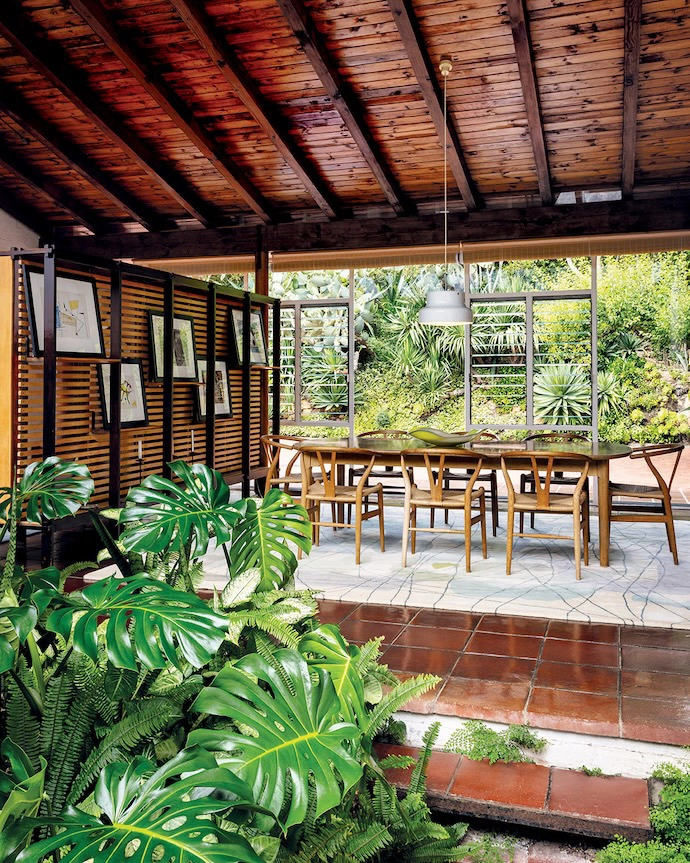
Keurbos manages the clever trick of being both conspicuous and concealed. It stands out in the architectural sense: this Gawie Fagan-designed Modernist bungalow-style home bears no resemblance to the Neo-Georgian squares and contemporary concrete rectangles that occupy Bishopscourt’s streets. And it’s hidden both physically and conceptually: built on a steep slope, Keurbos sits well below street level on a verdant hillside. It’s a discrete structure in a discrete location, accessed via a descending panhandle driveway that requires very specific directional instructions to find. If you know anything about the late architect’s approach, you’ll know that’s all intentional. This giant of South African Modernist architecture had sense of place as one of his key design principles, and his structures all show a sensitivity to the landscape – Keurbos nestles into the hill, rather than dominating it.
Read the full feature on this Bishopscourt house.
Schoorl House
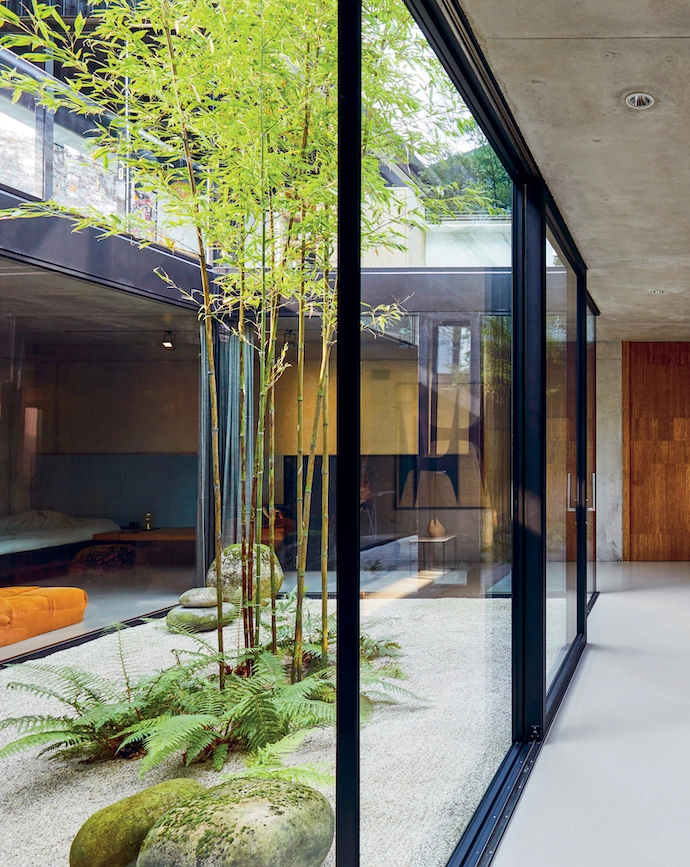
In terms of windswept coastal beauty, it doesn’t get much better than this 7 300-hectare dune field in Noord-Holland – one of the largest nature reserves in the Netherlands. And it’s here that Harmen Lodewijk and Julia Fagel chose to build their home, on a slightly elevated location where dunes merge into polder landscape, with the house and its garden forming a connection between the village of Schoorl and the dunes.
Given the landscape, the choice of architect was a key consideration for the couple – they needed a discerning design that would accommodate their need for tranquillity, space and functionality, along with a sensitivity to the surroundings. Paul de Ruiter of Paul de Ruiter Architects in Amsterdam was commissioned – and the result is a home with an elongated black volume, large glass sections and pointed shed roofs, with part of the building hidden underground. “The flowing transition to the green rural environment was the most important starting point for this design,” says Paul. “The subtly hidden house has been built with as many natural materials and sustainable techniques as possible.”
Read the full feature on this Schoorl house.
Waterkloof House
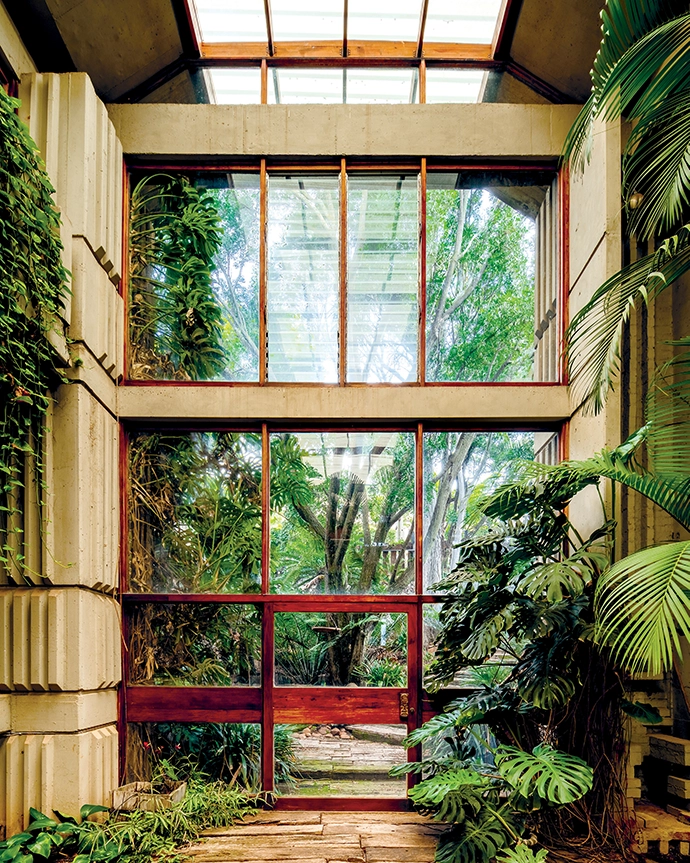
A few years ago, when a handful of curious architects made a pilgrimage to this spectacular 1970s house in Waterkloof in Pretoria, one described it as a “time capsule”. “We’ve lived here for 48 years,” says its owner. As a result, the architecture and the furniture are perfectly preserved, looking just as she envisioned them nearly five decades ago. Everything has been meticulously maintained, and the house has an almost otherworldly, hallucinogenic quality that leaves you feeling transported in time.
It was designed by architect Petrus Paulus (Piet) van den Berg, a Pretoria architect who, while prolific, hugely versatile and tirelessly experimental over his 50-year career, seems little known outside of local architectural circles. “Piet was a great friend of ours,” says the owner. She and her husband simply wanted “something different” when they engaged him to do the design.
And they certainly got it. Unassuming from the street, the house is on a steep slope. On arrival, visitors drive onto a concrete slab – essentially a rooftop motor court – which wraps around the building, leading to a separate exit. Distinctively shaped fibreglass canopies draw the eye to sweeping views of the city. Brutalist-style columns and heavy wooden doors with ceramic handles hint at the wonders beyond. A concrete spiral staircase descends through a triple-volume atrium filled with a waterfall, a koi pond and a tropical indoor jungle, where palm trees tickle the roof. The ground level features a small aviary built into the columns, and coffered ceilings are a reminder of the raw materiality of the structure. “As you go down, it gets cooler and cooler,” the owner notes.
Read the full feature on this Waterkloof house.
Parkhurst Home
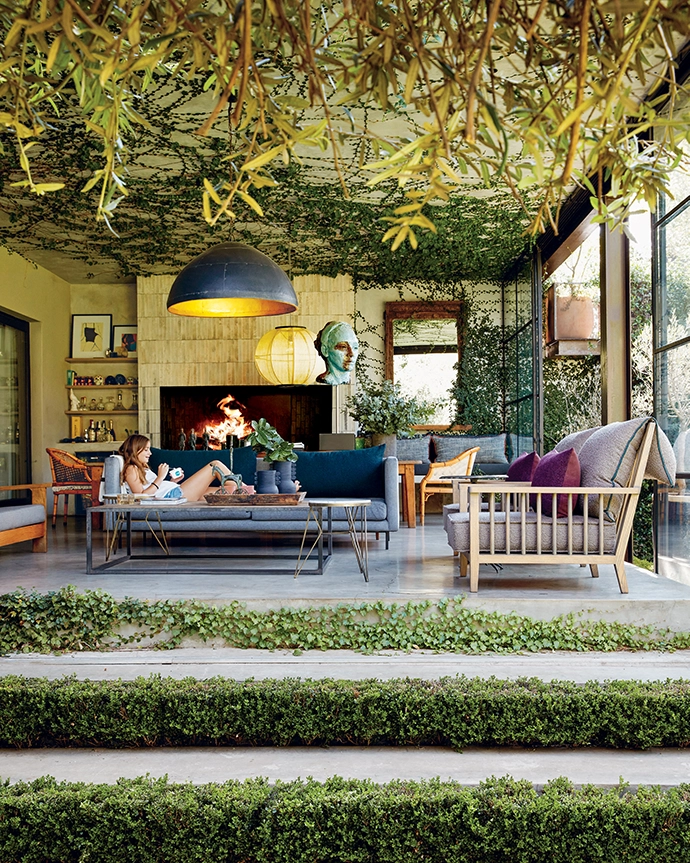
Rhys and Meg Ralph hadn’t intended to live in this house. Rhys, a property developer, originally acquired the derelict stand with the intention of “flipping” it. Hidden away in a quiet nook in Parkhurst, opposite a park with the Braamfontein Spruit running through it, the setting was beautiful, but the stand had been vacant for some time when he took possession and had clearly been used by local builders as a dumping site. At that point, the park was, as Rhys puts it, a “no-go zone”.
While clearing the rubble and building a house, Rhys took on the rehabilitation of the park, too. “We ripped out all the Spanish reed,” he recalls – the invasive species that choked the space. “I planted grass. I put in trees and benches. We secured it, and got rid of all the rubble.” He also added signage, bins, benches, swings and a trampoline. By the end, it had become a “pretty spectacular little park”. His efforts gave this somewhat-neglected corner of the neighbourhood a significant lift, and he and Meg soon realised the property had the potential to be quite special – special enough to live there themselves. They went so far as to give it a name – Cartref, inspired by Rhys’s Welsh roots. “It’s the Welsh name for home: a place of feeling, family, laughter and love,” he explains.
Read the full feature on this Parkhurst home.
Gold Coast House
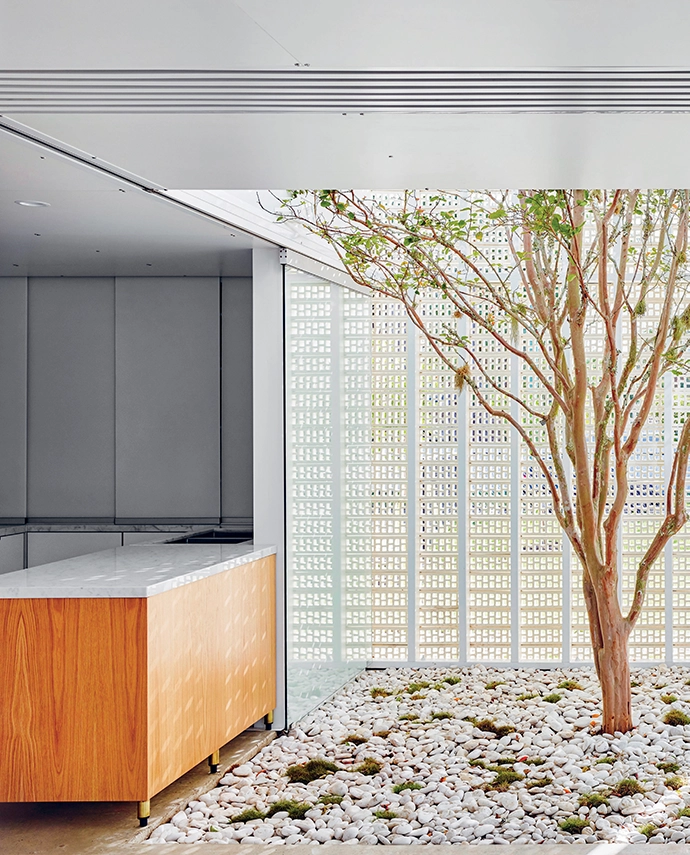
Lauren Davidson knew she’d found the architect to design her Gold Coast home when James Russell boldly climbed up onto the roof of the existing dilapidated house to get a better feel for the spot. “Our goal was to knock it down and build a home that suited our family and our relaxed lifestyle,” Lauren says. “James is so creative; we knew that working together was a no-brainer.” Having shown James the many pictures of breeze-block houses that she’d saved on Pinterest, Lauren was hoping the patterned concrete blocks would be used in some capacity – but she’d never contemplated using them en masse as a semi-transparent screen around the entire house. “It took some time to get my head around the concept, but it wasn’t difficult to soon say, ‘That’s fantastic’,” she says.
They’re not actual concrete breeze blocks, though – at least not in the traditional sense. While the screen very intentionally resembles the airy bricks, two factors made using them prohibitive. One was the cost – as the material du jour, they’re no longer cheap. Secondly, the coastal climate’s salty air breezing through those blocks would make the concrete deteriorate unless specifically treated.
Read the full feature on this Gold Coast home.
Don’t forget to sign up to our weekly newsletter for the latest architecture and design news.