-

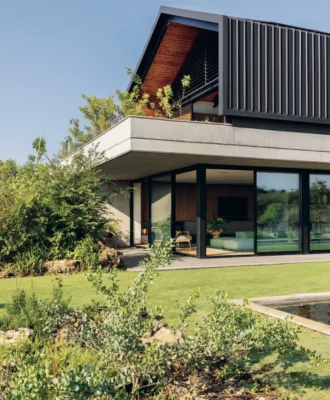
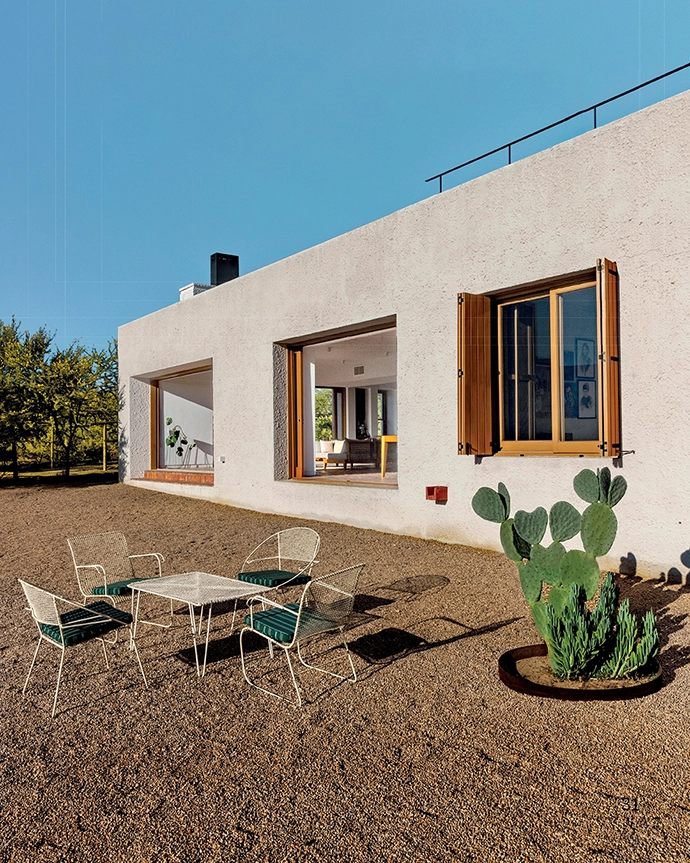
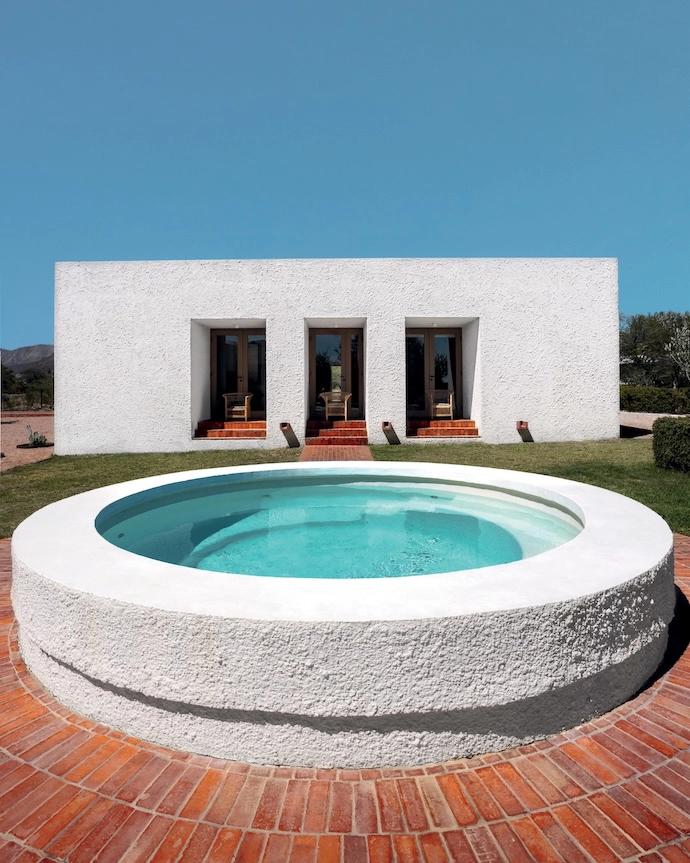
The southeastern facade of the house with views over the Karoo landscape. Protruding from the wall, you can see one of the exterior waterspouts designed by the architects. The walls thicken at specific points, allowing for hidden rainwater downpipes and other services. -

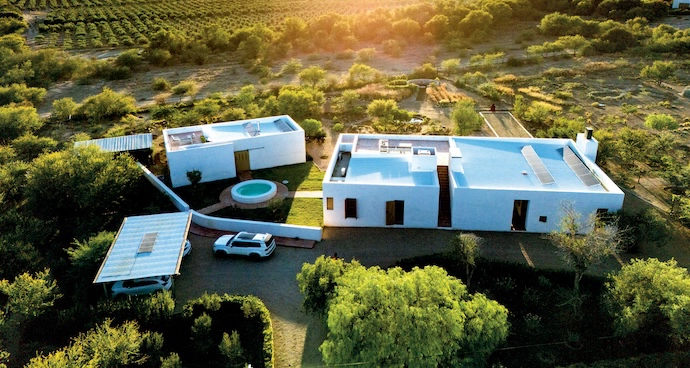
The cottage and main house both have roof terraces from which to enjoy spectacular views of the Swartberg mountains. -
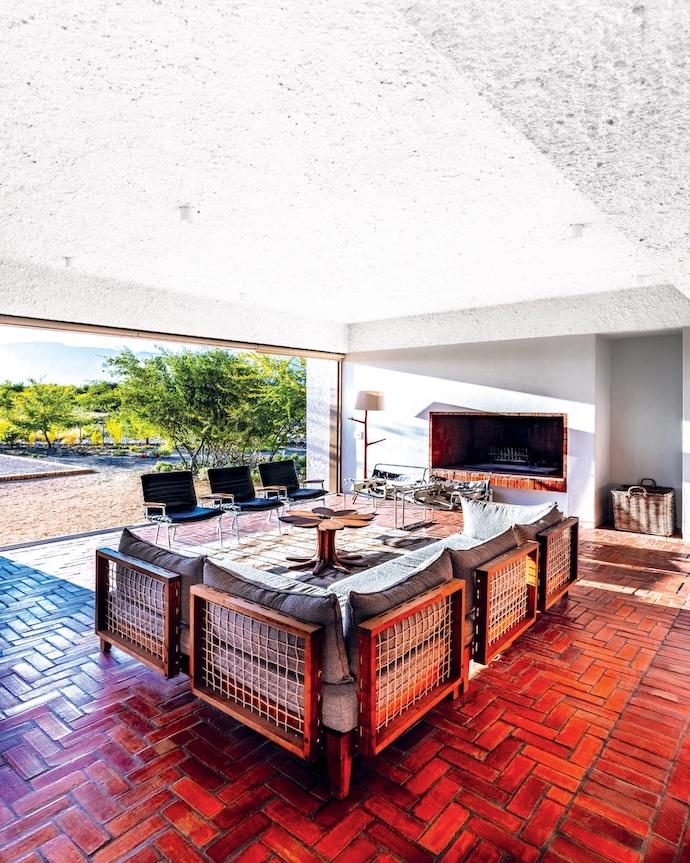
The sheltered braai area features a sofa by Haldane Martin (inspired by riempie furniture), a Loves Me, Loves Me Not table by John Vogel and Justin Plunkett, and vintage Mid-century chairs from Piér Rabe Antiques in Stellenbosch. The herringbone flooring is Terracotta Clay Klompies by Lanes Ceramic Works in Wellington. -
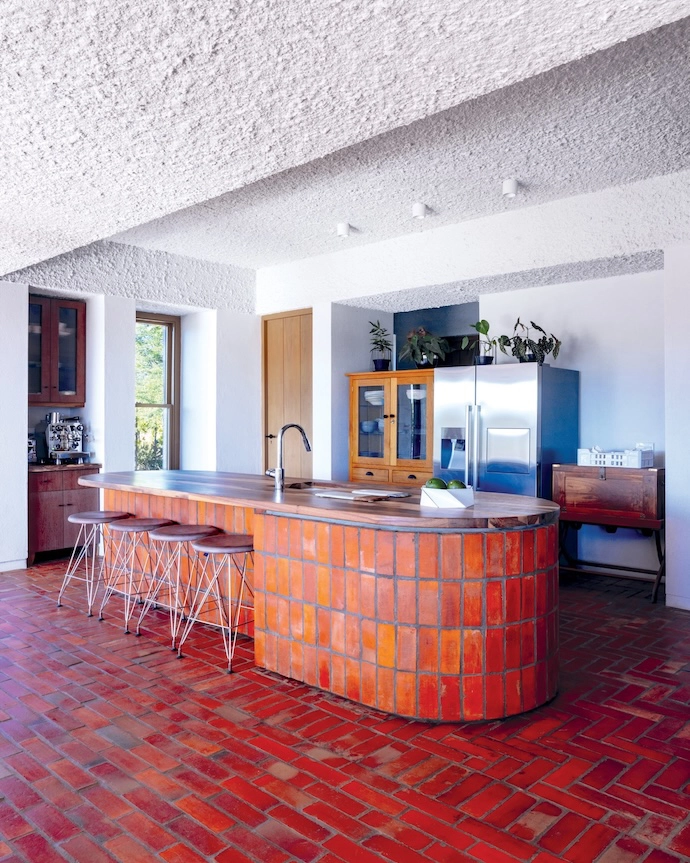
The kitchen is filled with standalone antique cupboards that the owners have collected over the years. The walls and ceilings throughout the home are either textured, with a stipple plaster render; or a smoother wood trowel, finished with a sandy admixture paint. -
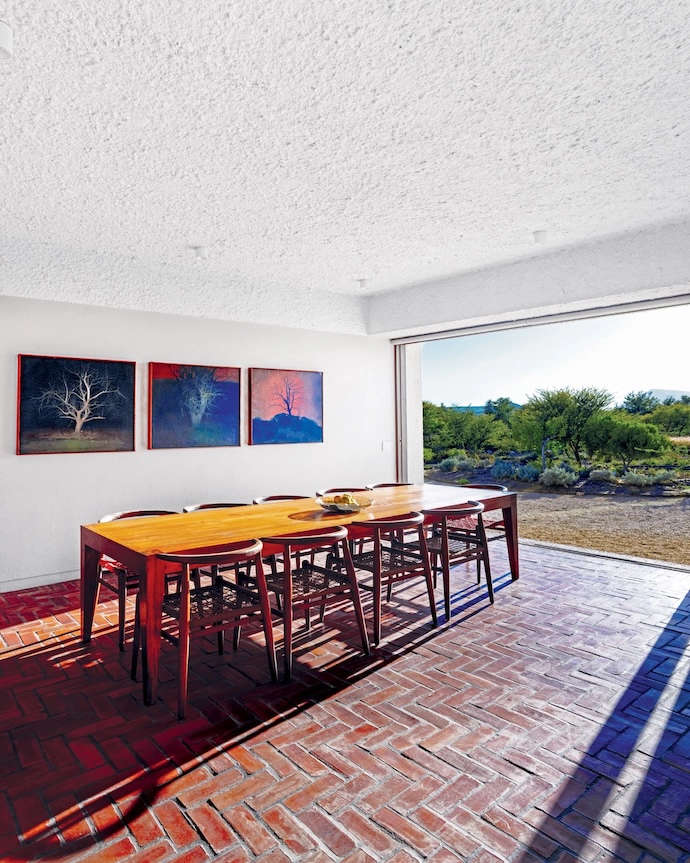
The dining table is by Pierre Cronje and the West Elm chairs are by John Vogel. Trees are a strong theme in the art that owner Wilhelm Boshoff collects – and these three paintings, by Czech artist Tomáš Honz, were a gift from a friend. -
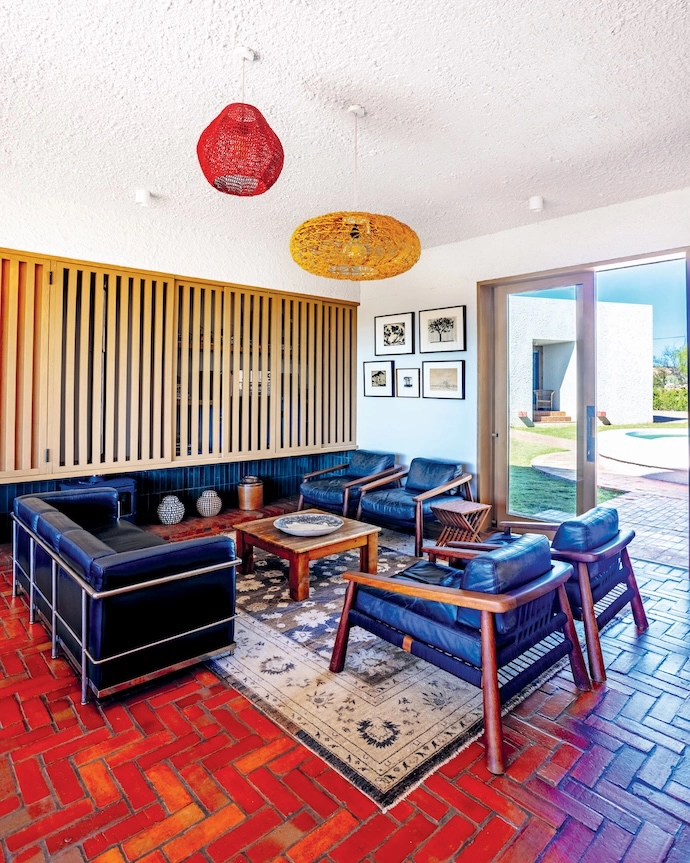
The living area in the cottage features Magnet armchairs by John Vogel and a replica of Le Corbusier’s “Le Cube” sofa. More tree-inspired art adorns the far wall, including work by (clockwise from top left) David Botha, William Kentridge, Pierneef, Heinz Modler and Walter Battiss. -
The farm-style pool is situated between the cottage and the main house. -
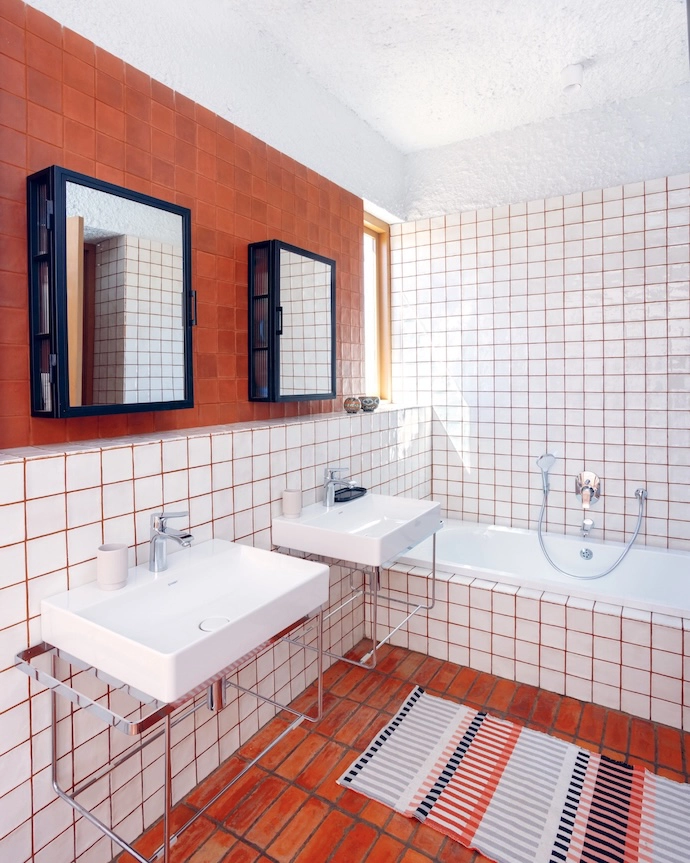
The main bedroom’s en suite bathroom features cabinets by Studio Delta and tiles by LimeGreen.
At the foot of the Swartberg mountain range, overlooking the vast open veld of the Great Karoo, this family home embraces the landscape and its challenging climate.
WORDS & PRODUCTION Steve Smith PHOTOS Jan Ras
If you live in Prince Albert, the notion of site-specific architecture isn’t merely an academic consideration – it’s a necessity driven by the arid climate, especially the summers. It gets bakingly hot in this town on the southern edge of the Great Karoo – a dry heat that radiates off the Swartberg mountain range and prickles your skin. If you’re building a house here, it has to be able to cope with the weather.
Wilhelm Boshoff appears to be coping pretty well as he strides out to meet us in shorts and a polo shirt. It’s mid-January, and hot as hell. “Luckily you weren’t here last week,” says the industrial engineer. “It’s cooled down a lot.” Wilhelm lives here with his wife Annemi and their family, having taken up permanent residence after visiting Prince Albert regularly over the years. The Karoo quietly won them over: “The light, the space, the sense of distance felt familiar, even before we understood why. It slowly became a place we aspired to, long before we imagined living here.”
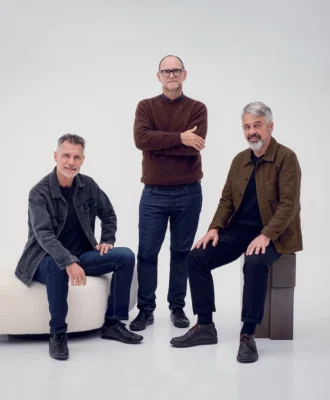
The site they chose to buy was on the edge of town, with a view out over the vast, open Karoo scrub and the great ochre-and-khaki swathe of the Swartberg. And the folks tasked with building the home were Casper Lundie and Yvonne Brecher of Studio Biru. “Our brief to them was simple,” recalls Wilhelm. “We wanted a home, a place that works for everyday living, where friends, family and people from the town would feel welcome. We needed a main house and a cottage, and what appealed to us in the original layout was how the buildings related to each other. The main house and cottage are private and separate, yet connected by a shared courtyard. That balance felt right.”
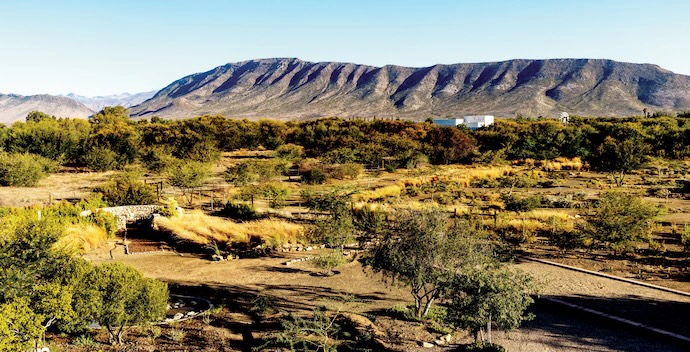
The site already contained existing structures, and although they were demolished for the new build, they did provide Studio Biru with clues as to placement. “Early investigations revealed that the buildings’ unusual orientation – seemingly counterintuitive from a passive solar perspective – was, in fact, typical of Prince Albert, and shaped by the late-afternoon mountain winds,” says Casper. The resulting design was of two single-storey fl at-roofed structures – a cottage where the couple’s daughter lives, and a main house built on a northeast/southwest axis. Not only is the single-volume brakdak style sympathetic to the Karoo vernacular, but the structure’s orientation takes advantage of the summer wind that comes down from the Swartberg and blows through the length of the house. Working with an evaporative cooling system along the home’s spine, the wind carries away the heat, leaving the buildings pleasantly – and naturally – cool.
The site’s best views, however, were eastwards, which meant dealing carefully with morning and afternoon sun. For the living area and main bedroom, which face east and open up to glorious Karoo panoramas (and the morning sun), Studio Biru employed e-glass and blinds; the west-facing frontage features thicker brickwork, additional insulation and fewer openings. “The Karoo’s extremes – heat, sun, wind, frost – informed every decision,” says Casper. “Thick limewashed walls, deep-set openings, timber shutters and clay-brick floors moderate temperature and light. Materials were selected to weather and age with dignity, allowing the house to settle quietly into the landscape over time.”
The home’s decor is appropriately pared-back, complementing Studio Biru’s architecture and adding an interior patina to the one the weather is slowly bestowing on the exterior. Annemi led the decisions here, and the furniture is a mix of contemporary and vintage Mid-century pieces, along with art and objects the couple have collected over time. “Finding old Karoo furniture has been especially meaningful,” says Annemi. “We avoided built-in cupboards and overly finished solutions. This is a lived-in house, not a showpiece. Every piece of furniture reminds us of where we found it, and of a moment in our life. We didn’t try to finish the decor all at once. We’re still adding, adjusting, living into it – and we’re quite happy for it to stay that way.”
Not only has the shape of the home embraced and worked with the Great Karoo’s climate, the house has also shaped the way Wilhelm, Annemi and their children Louis and Anina spend time together. The couple work from home, and the space allows for privacy without isolation. Similarly, the garden provides a sanctuary for both of them. “I find grounding in establishing the Karoo garden and watching it develop,” says Wilhelm. “It has taught me patience, and the value of steady effort rather than instant results.” Annemi expresses herself through her vegetable garden: “I grow what the Karoo allows – vegetables for the table, the occasional flowers. It is both humbling and creative, working within those limits.”
“The house and its garden have become a place that people want to return to,” says Wilhelm. “Our children and their friends need very little reason to visit… It has naturally become our family home.” studiobiru.co.za
Don’t forget to sign up to our weekly newsletter for the latest architecture and design news.