-

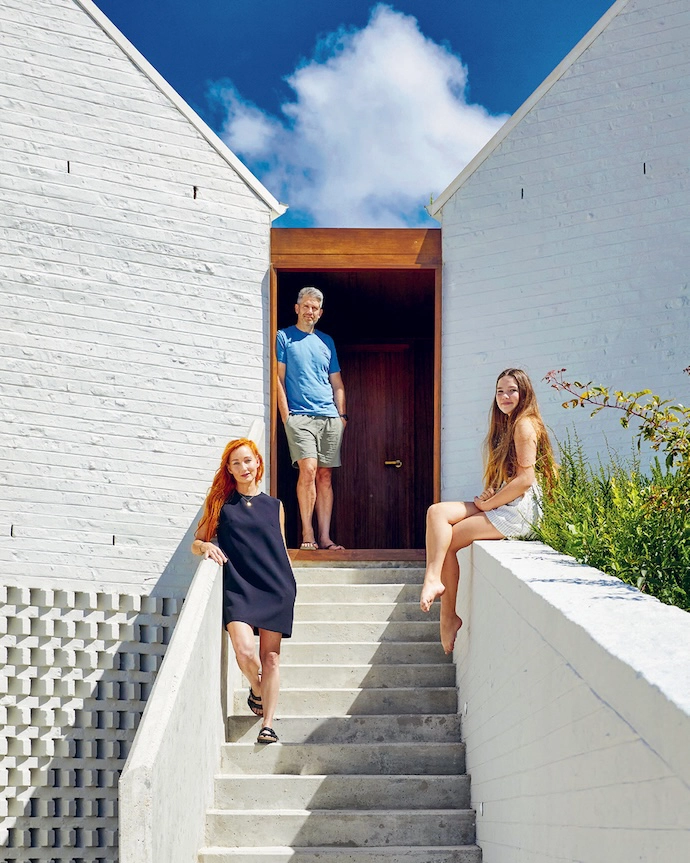
The brise-soleil detail on the left of the stairs echoes other similar elements in the house. -
A sculptural stairway leads from the road and garage level up to the front door. -
Owners Nina, Alastair and Chloe Stewart on the front steps. -

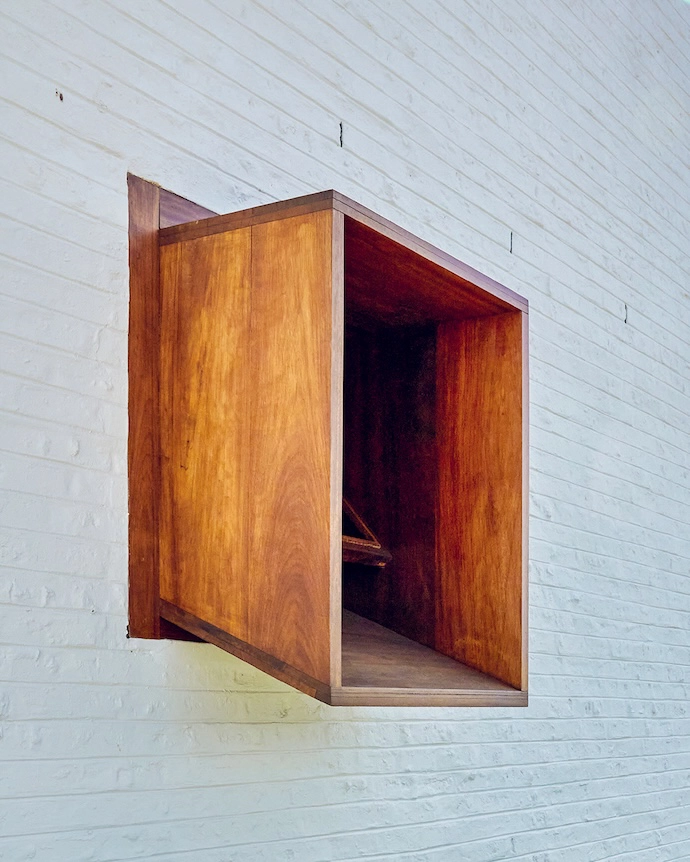
The doorway and windows on one facade are surrounded by wooden frames, custom-designed to protect each opening by architect Guillaume Pienaar. -
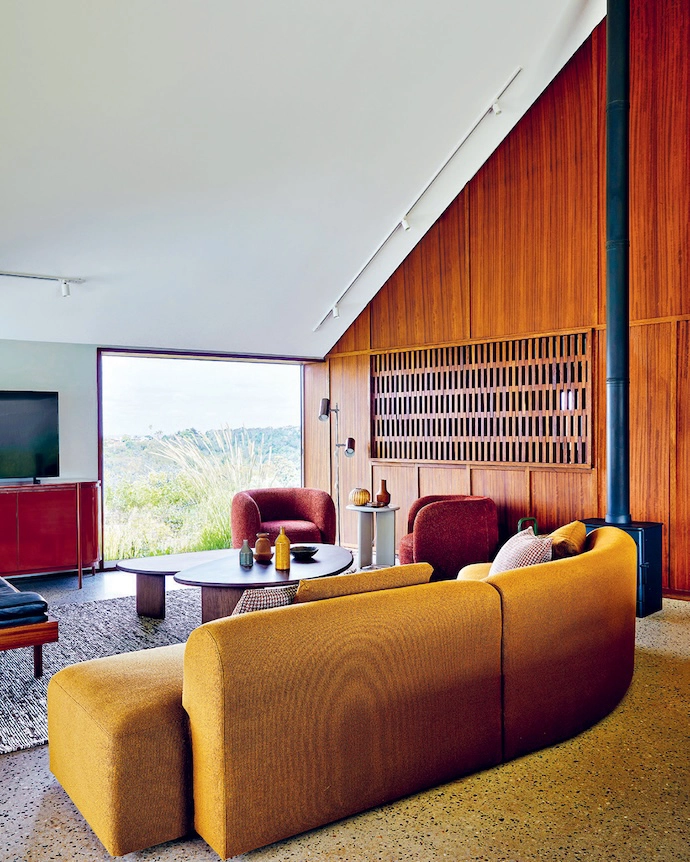
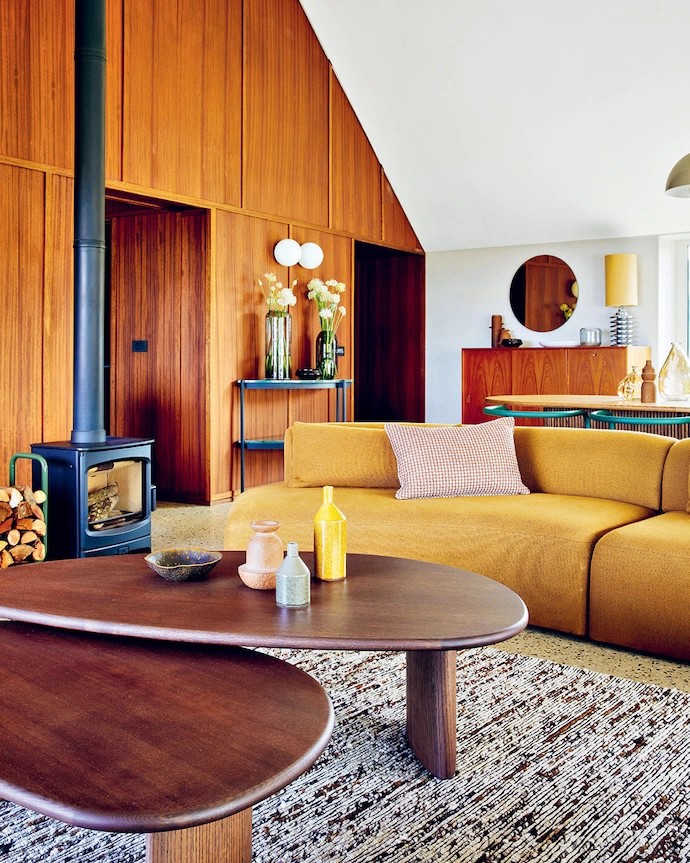
The living area is defined by a sectional couch and Floyd coffee table set from Mezzanine. -
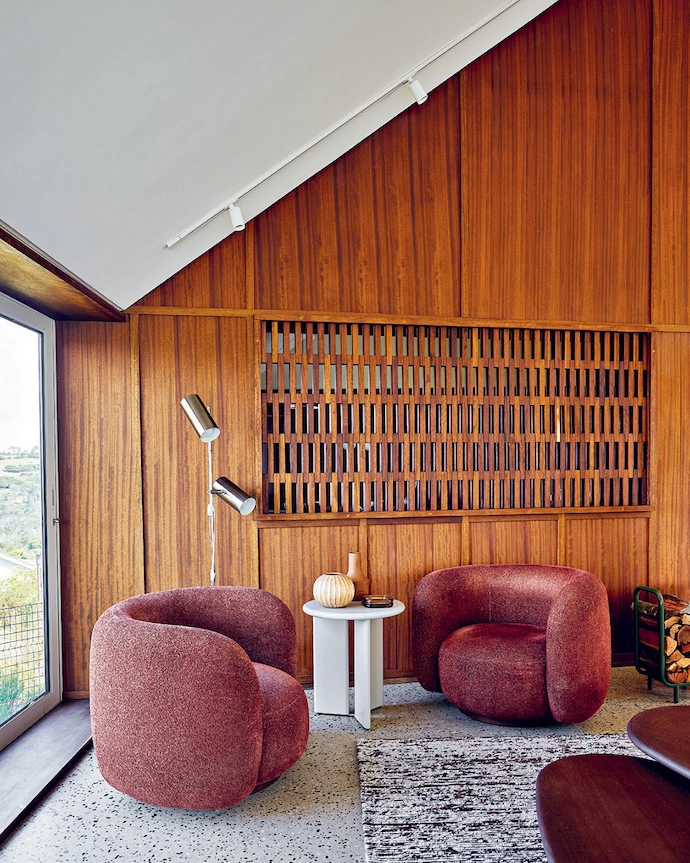
The tub chairs placed for conversation – or for enjoying the view – are also from Mezzanine. -
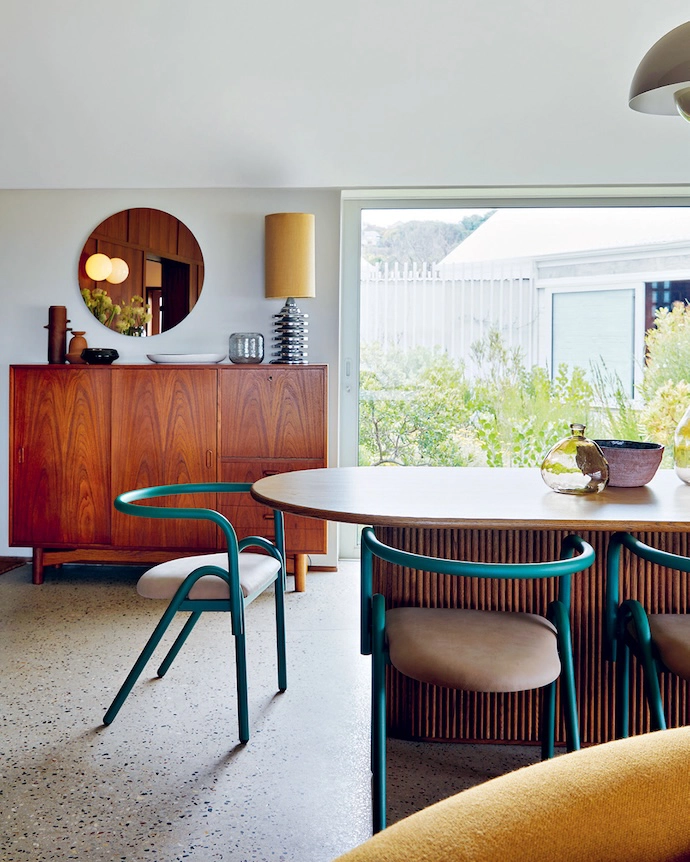
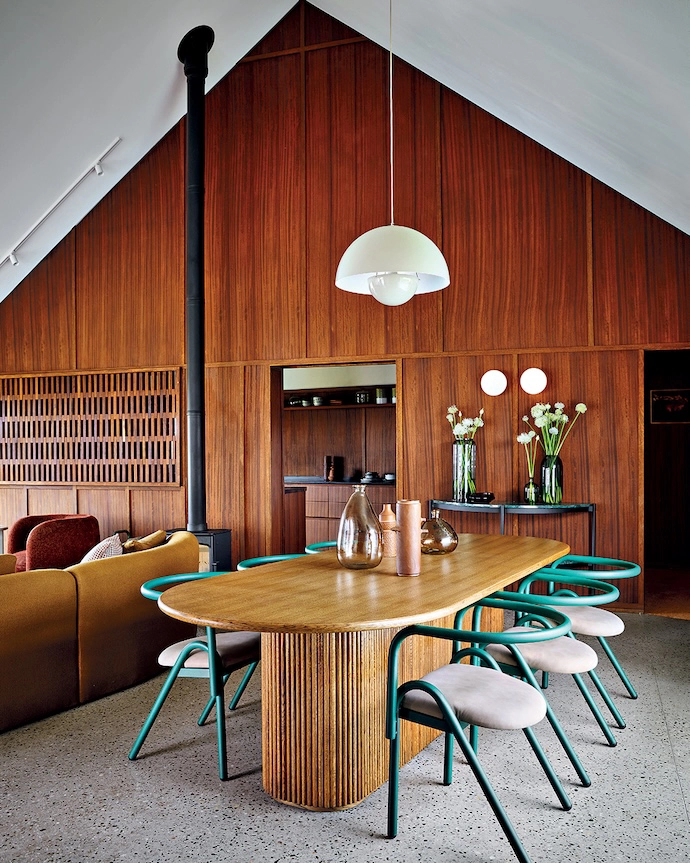
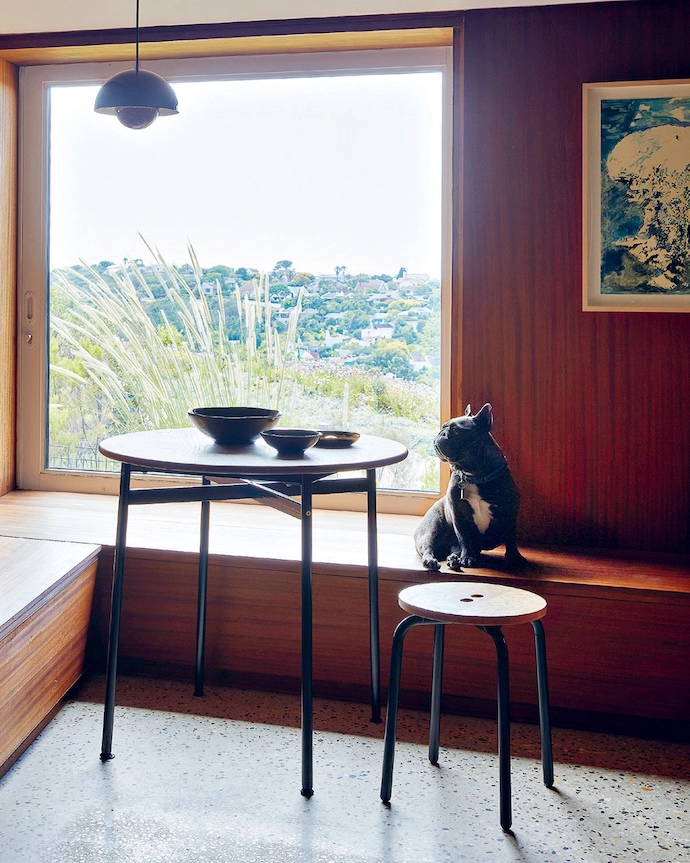
The dining space features one of the home’s many picture windows. -
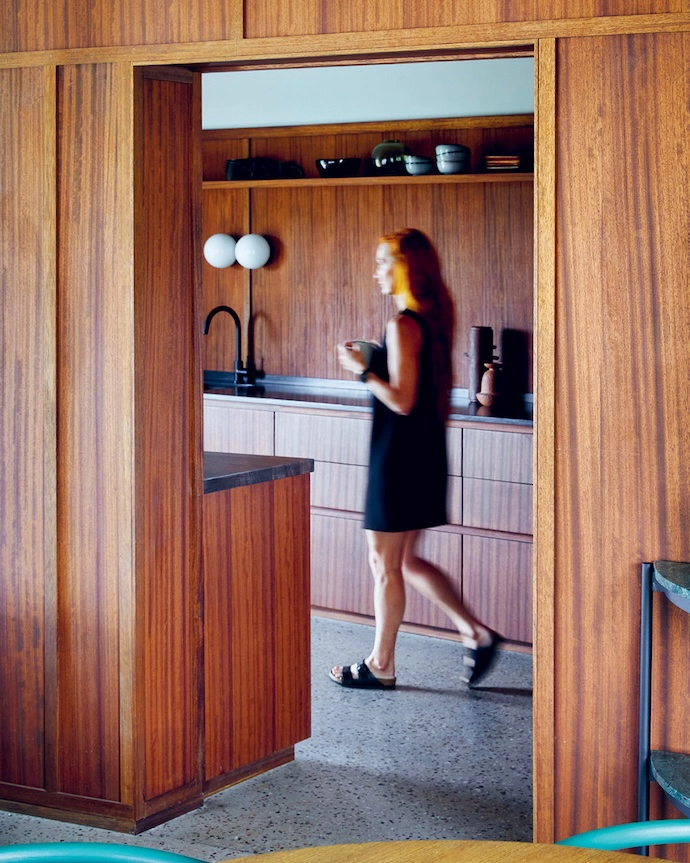
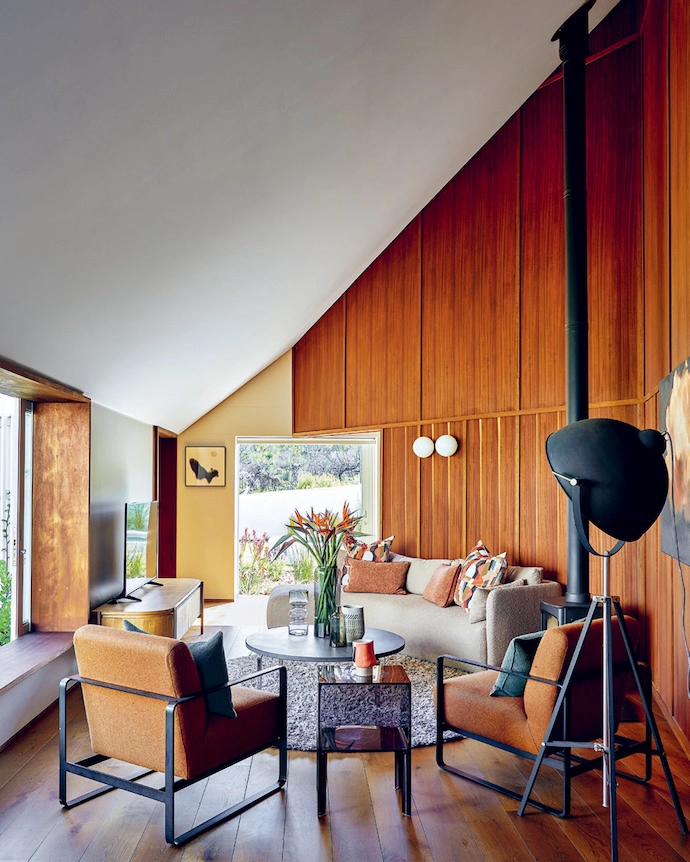
The timber panelled wall was created by local woodworkers from Kia-Ora. -
The Ripple table in the dining area was sourced from Mezzanine, the eye-catching Cobra chairs are by Dokter and Misses, and the Flowerpot pendant light over the table is by Verner Panton for &Tradition, available at Créma. -
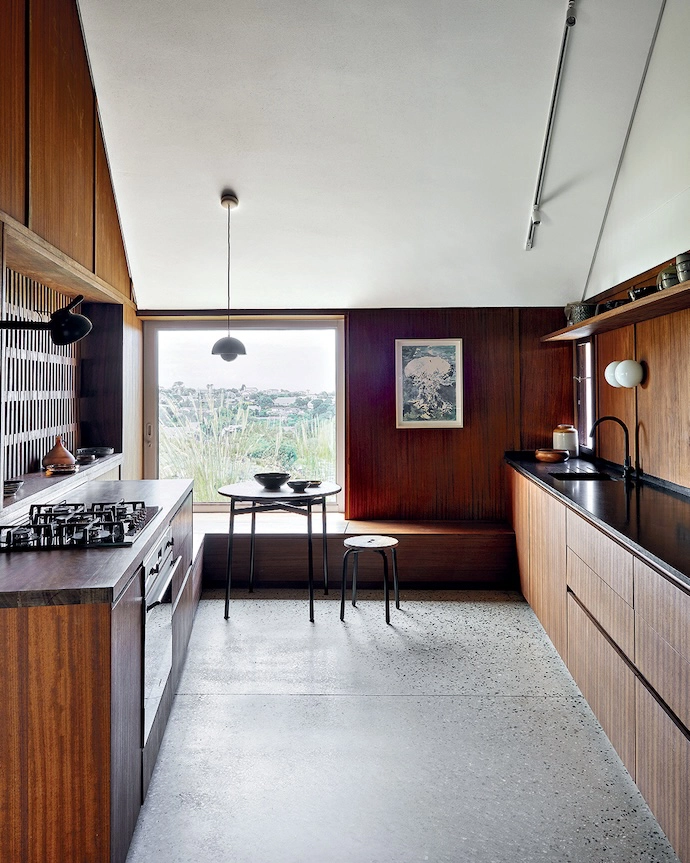
The breakfast nook at the far end of the kitchen is furnished with a petite table and stool by Pedersen + Lennard. -
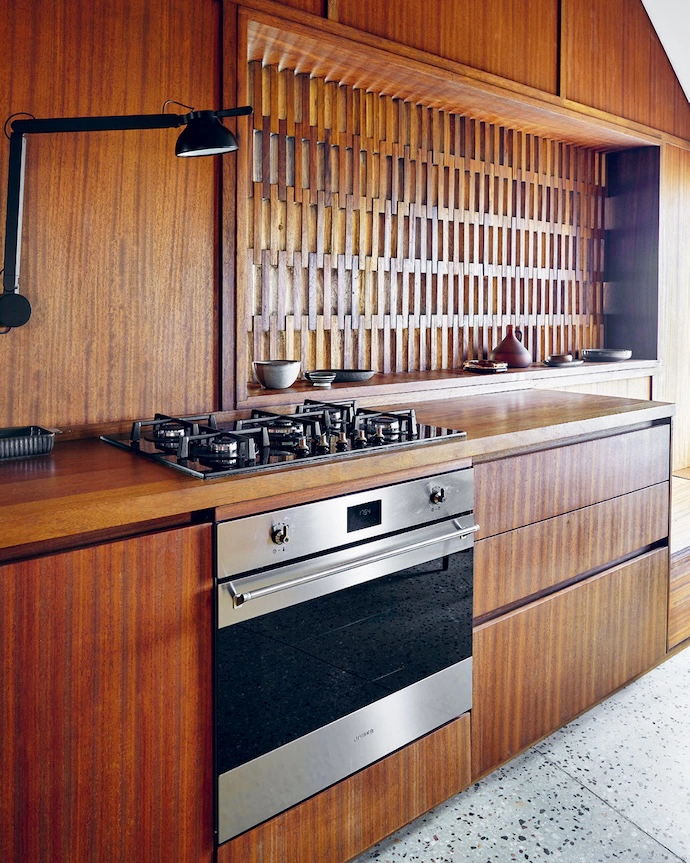
Situated behind the wood-panelled wall that separates it from the living and dining area, the kitchen is by Plett-based company Wooden Wonders. -
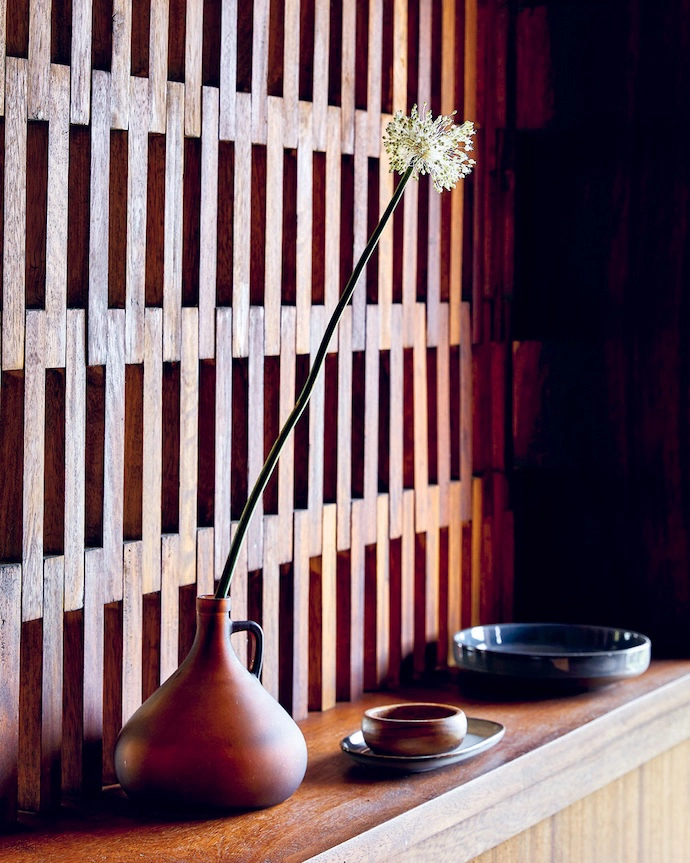
The exquisite brise-soleil section of the wall that separates the kitchen from the living space. -
Peppa (the French bulldog) loves the kitchen nook as much as Nina does. -
The electric oven and gas hob are by Smeg. -
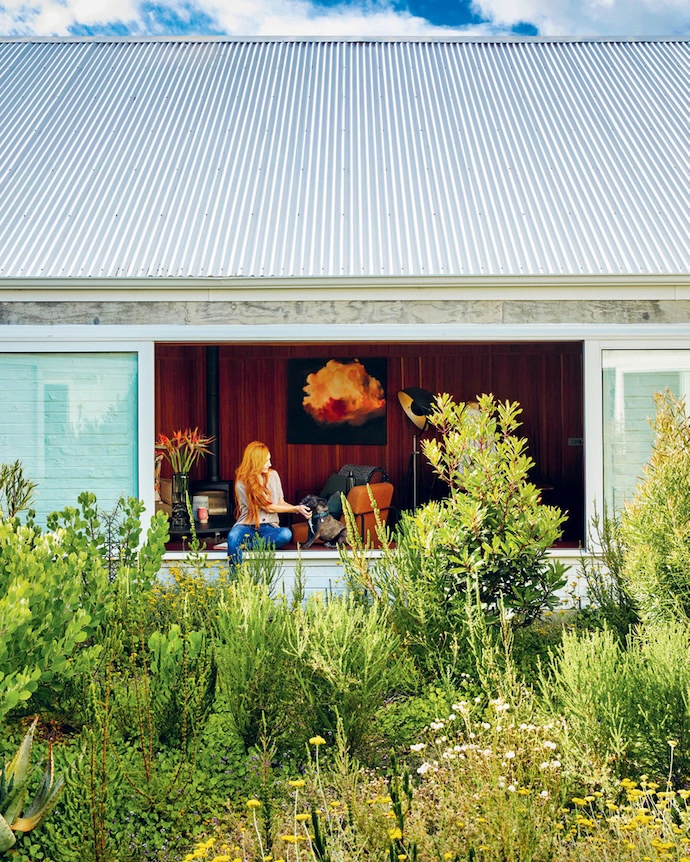
The tranquil, private TV lounge that doubles as a working space for Nina stays cosy in winter thanks to a wood-burning stove by Charnwood. -
Large sliding windows open from the TV lounge onto a lush courtyard garden filled with indigenous and endemic plants. -
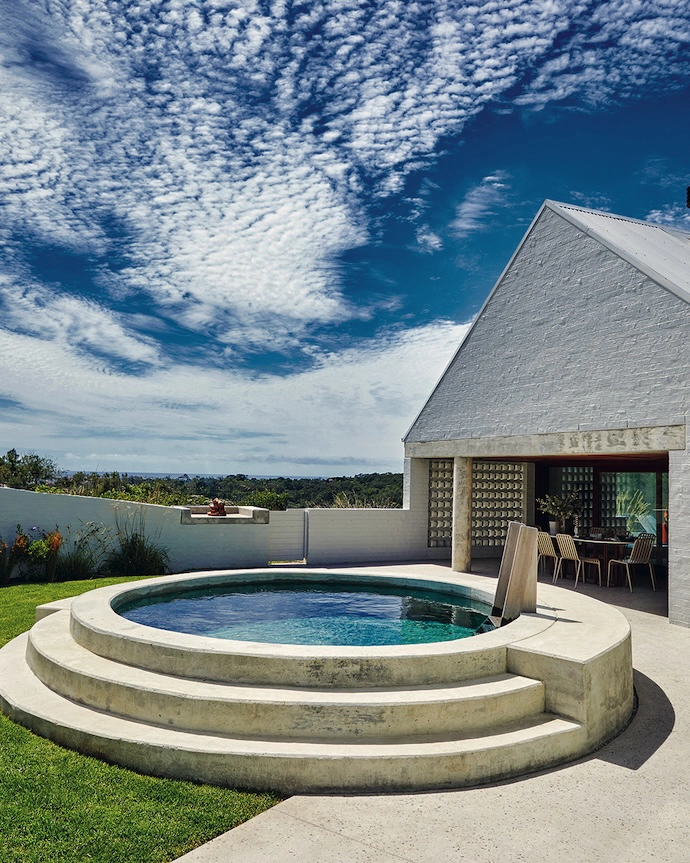
The outdoor living area includes a built-in braai as well as a plunge pool and dining space. Situated fairly high up on a slope, the house enjoys charming views in almost every direction. -
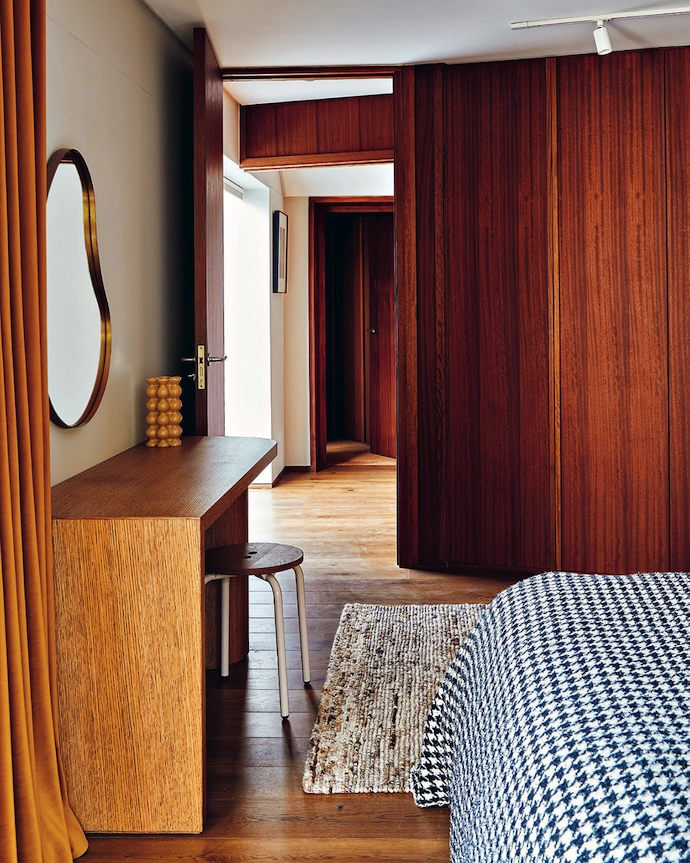
A built-in vanity counter in the main bedroom with a stool by Pedersen + Lennard and custom mirror by Fechters. -
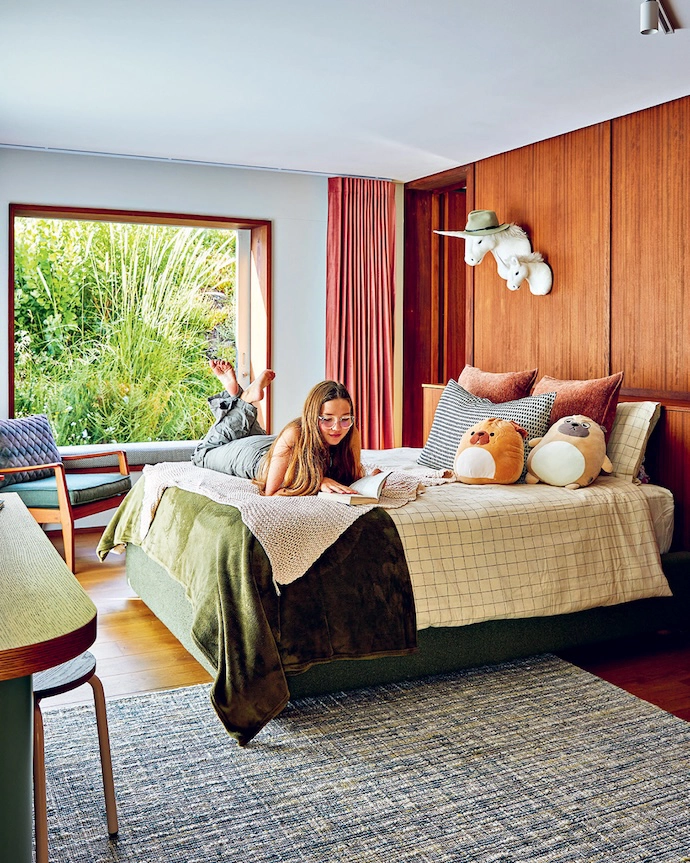
Chloe in her room. -
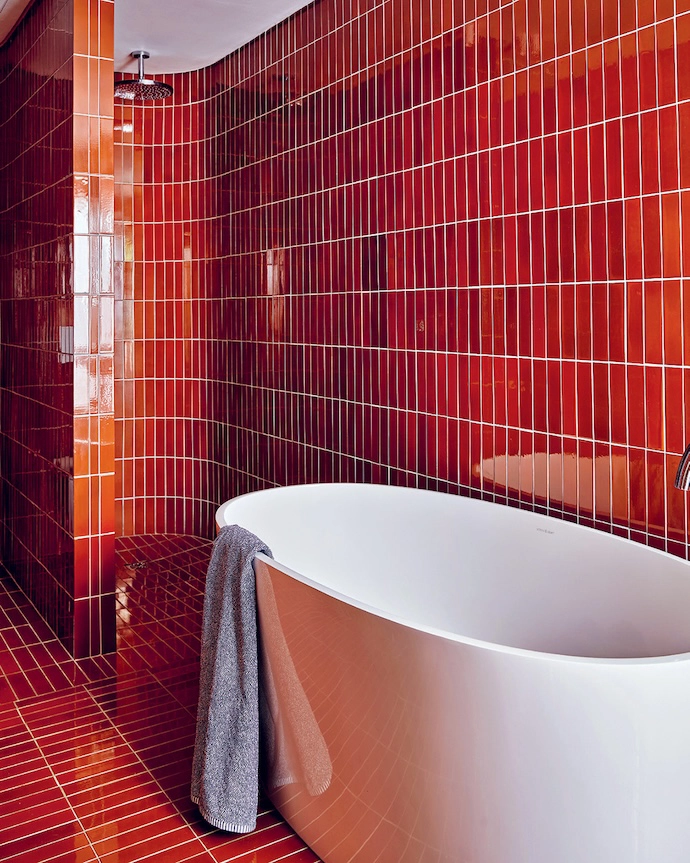
The main bathroom features floor-to-ceiling Kalki Ceramics tiles and a bathtub by Victoria + Albert. -
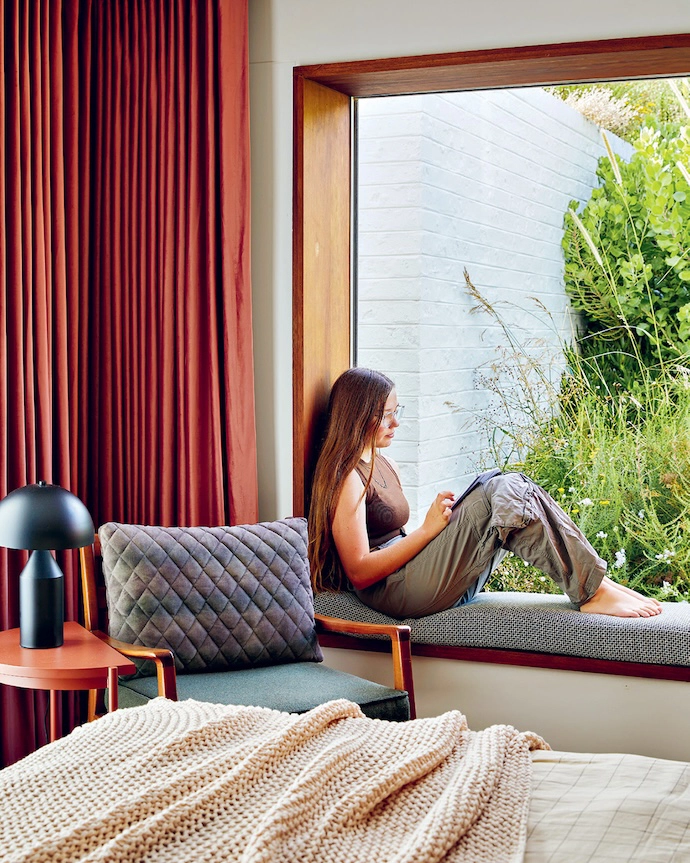
Chloe’s room includes one of the home’s large picture windows with a sill wide enough to use as a window seat, and an armchair from Mezzanine. -
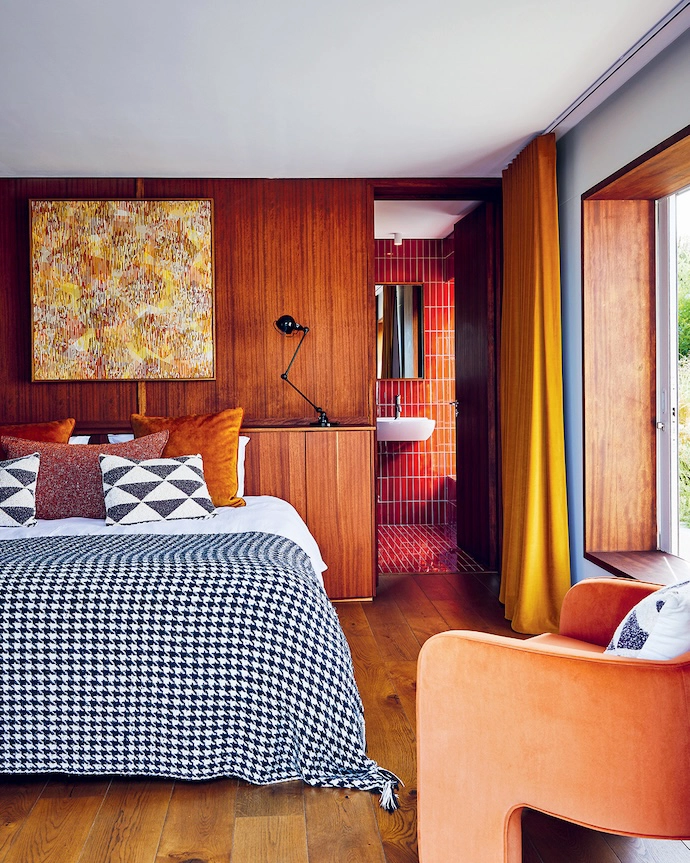
With solid wood floors and wood-panelled walls, the main bedroom is a calming cocoon of autumnal shades and pops of black and white.
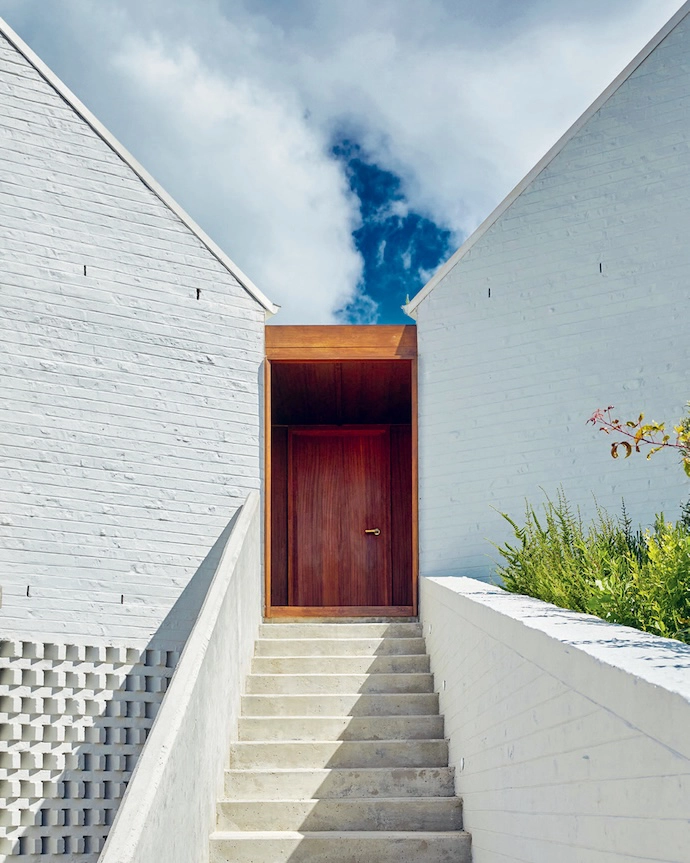
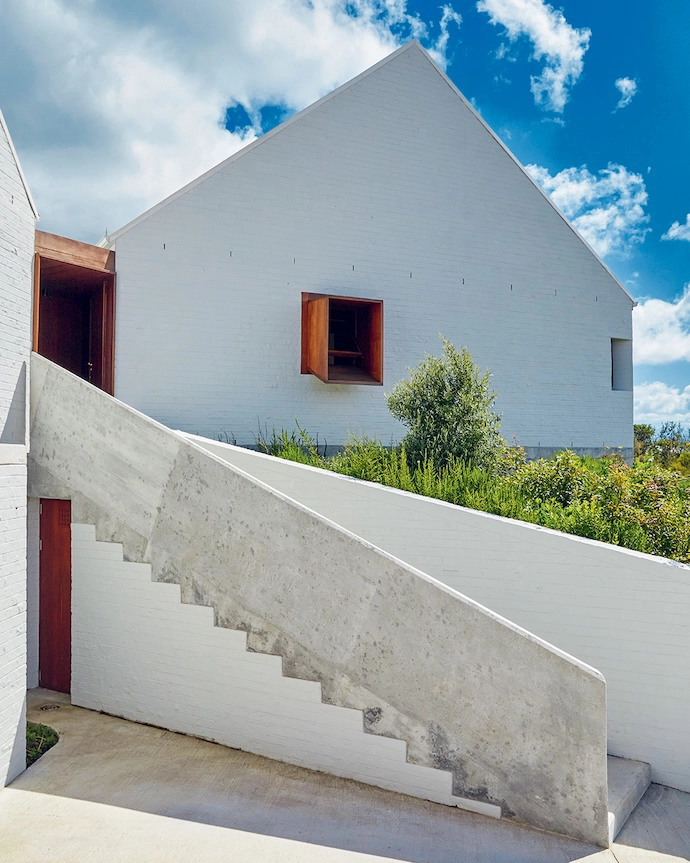
This family home in Plettenberg Bay combines barn-inspired architectural lines with wood-clad interiors that convey a sense of warm and ease.
WORDS Robyn Alexander / Bureaux PRODUCTION Sven Alberding / Bureaux PHOTOS Greg Cox / Bureaux
We wanted to feel as if we were on holiday at home,” says Nina Stewart of her and husband Alastair’s new home. Situated on the lush yet temperate Garden Route, Plettenberg Bay’s pristine beaches and a nature reserve in close proximity are among the attractions that have made living here with their daughter Chloe – and at various times of the year, Nina’s parents too – a pleasure.
However, the beautiful surroundings aren’t the primary reason why Nina and her family spend most of their time at home. Rather, it’s down to the fact that their house was conceptualised from the start to perfectly suit their needs. Planning a move to Plett from Johannesburg in search of a more laid-back lifestyle, the Stewarts purchased a plot of land shortly before their permanent relocation. The topographical attractions included pleasant views and, even more so for the family, a location alongside a permanent green belt.
Via locally based friends, the Stewarts had previously encountered the work of architect Guillaume Pienaar, and having met him soon after relocating to Plett in December 2021, they quickly decided he was the right person to design their new home. Guillaume’s way of working is “more left field, and we liked that”, says Nina. “We met and brainstormed together a lot. Guillaume takes his time” – and his attention to the design of every detail, from the structural essentials to the skirtings, meant that his painstaking process suited the Stewarts, who were themselves very involved in almost every element.
Guillaume also thrives when working collaboratively with his clients, and vividly recalls Alastair’s insistence that his essential work-from-home area include “a space where he could build Lego – he has a huge collection. This made for a unique brief!” Among the more general design requirements from Nina and Alastair was that the house be “conceptualised for cohabiting” with her parents, whose private wing allows them to be completely independent and self-sufficient. “We wanted them to be able to braai and not invite us if they didn’t want to,” says Nina. She’d also long been fascinated by mid-century and particularly 1970s design, and asked for “a 1970s barn” that had a considered relationship with the surrounding landscape.
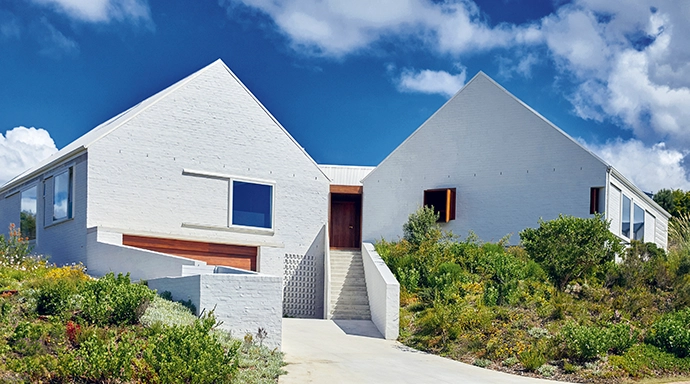
Guillaume’s final design consisted of a trio of linked, barn-inspired structures with a facade in bagged white brick, topped by “steeply pitched roofs in which the acute roof lines are very dominant”, he says. The creation of these three elements that combine to form the dwelling had its origins partly in the aesthetic and occupational parts of the brief from the Stewarts (one of the three sections contains Nina’s parents’ living spaces, for example), but it was also necessitated by the physical characteristics of the site.
“The main challenge was difficult soil conditions,” Guillaume explains. “There’s a lot of clay here, and it’s an ‘aggressive’ clay – in other words, it moves a lot.” Knowing that the house was definitely going to shift on its foundations at some point led him to consult extensively with a structural engineer from the start, and create the linked design to cope with this. The linkages between the three “barns” are all created from timber frames and lined with timber, and it has all been designed in such a way that “if the building moves, it does so in the links”, he says. This simple yet smart solution means that even substantial movement will result in a need for only relatively low-cost repairs.
The linking short passageways also make for excellent transition elements. Closely confined transitions make the areas into which they open feel more visually arresting and spacious than they already are – and there is certainly plenty to interest the eye. Sections of the walls are clad in beautiful wooden panelling by local joinery specialists Kia-Ora, and Guillaume designed high ceilings and angularly shaped spaces to fit, puzzle-like, all the rooms within the barns. Overall, the result is a set of interiors that feel both expansive – even though they are not enormously large – and cosy.
This atmosphere of welcome and intimacy is enhanced by further textural interest, including poured terrazzo floors, brise-soleil elements, handmade ceramic tiles, and furnishings that include pieces clad in bouclé fabrics. The interior finishes were “a big collaboration with Nina”, says Guillaume, and were “inspired by her ideas”. Deep autumnal shades prevail, and the furniture includes original mid-century items sourced from vintage specialists Modernist during the Stewarts’ Johannesburg days, as well as pieces by contemporary furniture and design company Mezzanine, also based in Joburg.
The final aspect of the home is its relationship with the outdoors and the exterior living spaces that can, in Plett’s mild climate, be used almost year-round. From the start, Nina and Alastair wanted to bring in the natural surroundings and indigenous vegetation, and ensure that it seemed as if the house was “emerging out of the fynbos, with wild and natural planting”. The design team worked with plant specialists, including local plantsman Charles Reitz, and the resulting garden is already lush. An essential shaded outdoor dining space and adjacent barbecue form part of a protected courtyard that also features a round plunge pool.
Having moved into their new home in November 2023, the Stewarts are hugely enjoying their space. “I spend 90% of my time at home,” says Nina, adding that one of her favourite spaces in this stylish yet cocooning house is the kitchen’s snug, intimate breakfast nook, situated alongside an east-facing picture window. “Watching the sunrise here in winter combines an amazing view with soft autumnal colours. It’s magical.” | @pinardarchitecture
Don’t forget to sign up to our weekly newsletter for the latest architecture and design news.