-

Located on a forested Bishopscourt hill, the contemporary residence uses every opportunity to bring the outside in. -

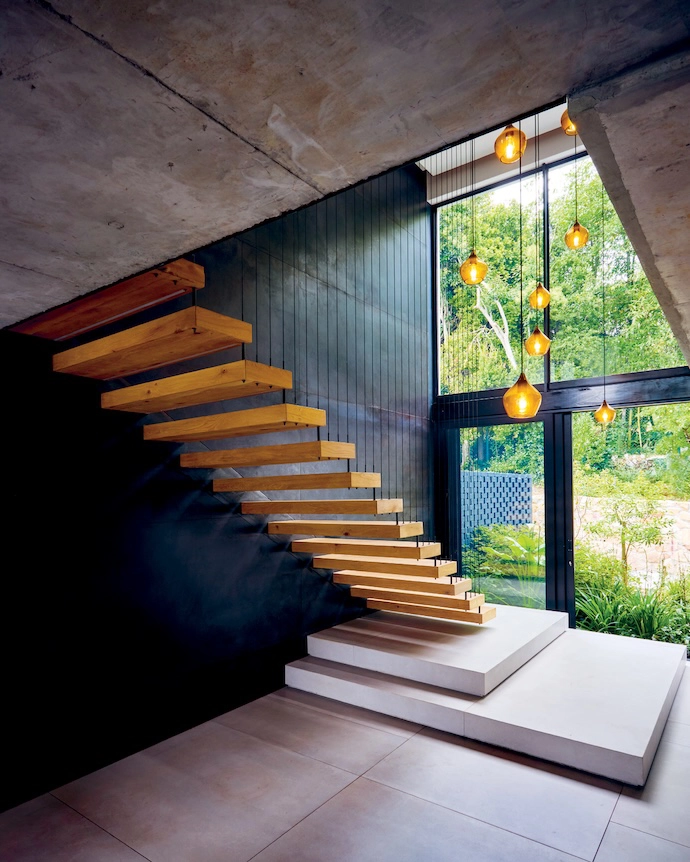
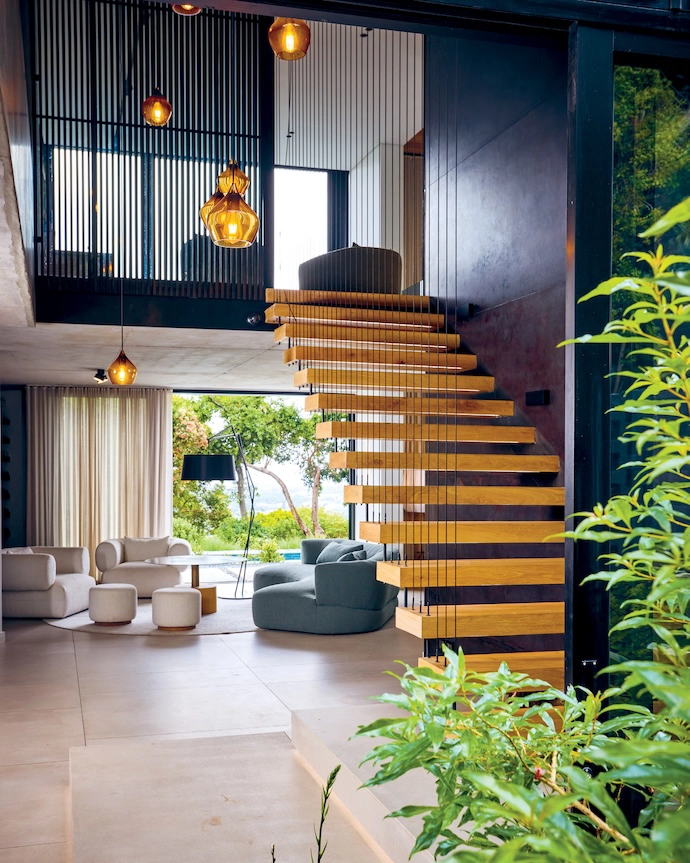
A constellation-like hand-blown glass light fitting adds softness to the geometric planes of the double-volume entrance hall. -
There’s constant interaction between the rigid geometry of the residence and its ever-evolving natural setting. -
The interior design was a collaborative effort by Del Fante Design Studio and Hendre Bloem, whose bespoke couches welcome visitors at the entrance. -
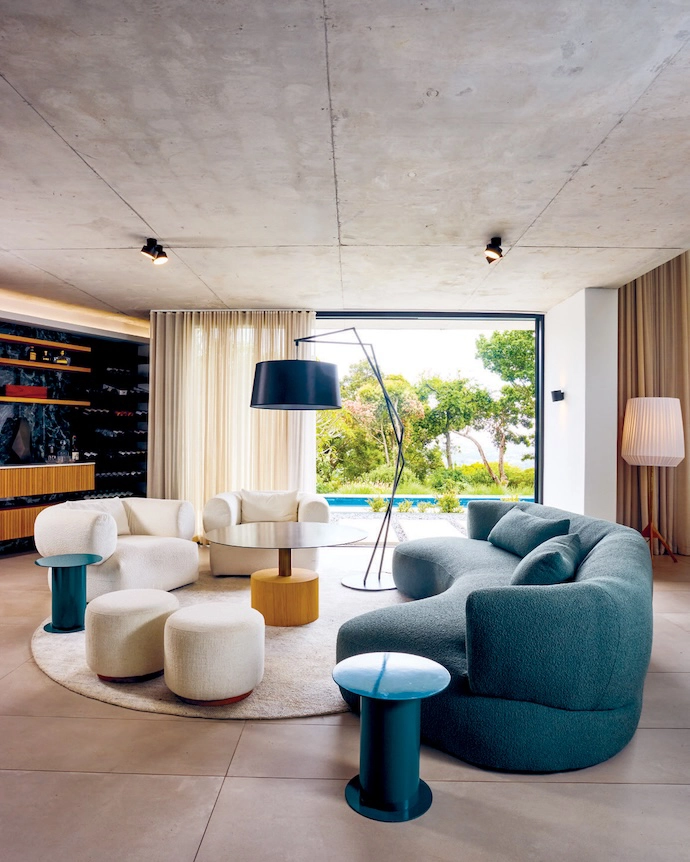
Interior designer Hendre Bloem demarcated the vast open-plan architecture with pockets of intimacy, such as this vignette starring a bespoke curved couch and swivel armchairs, illuminated by a standing lamp from Dark. -
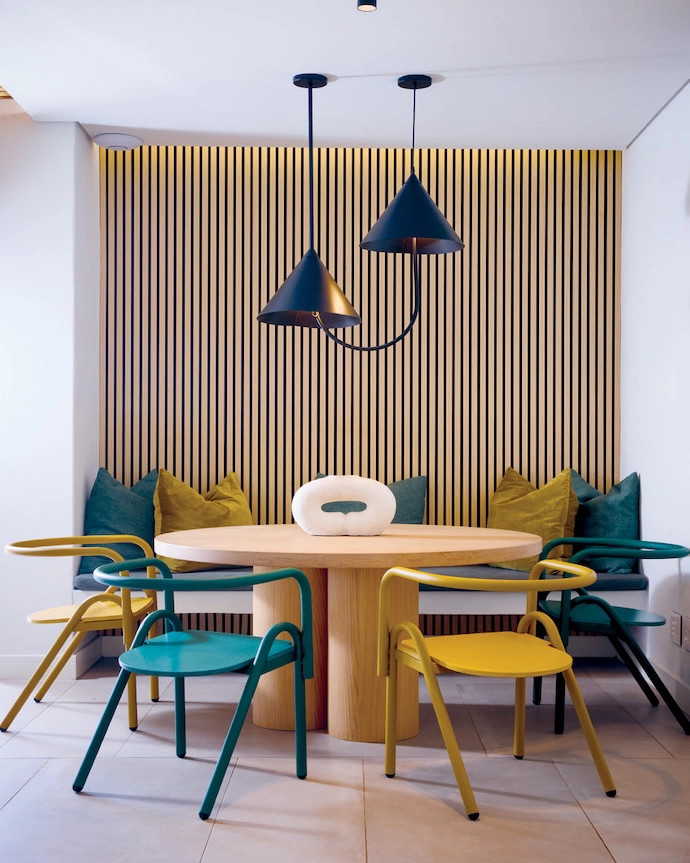
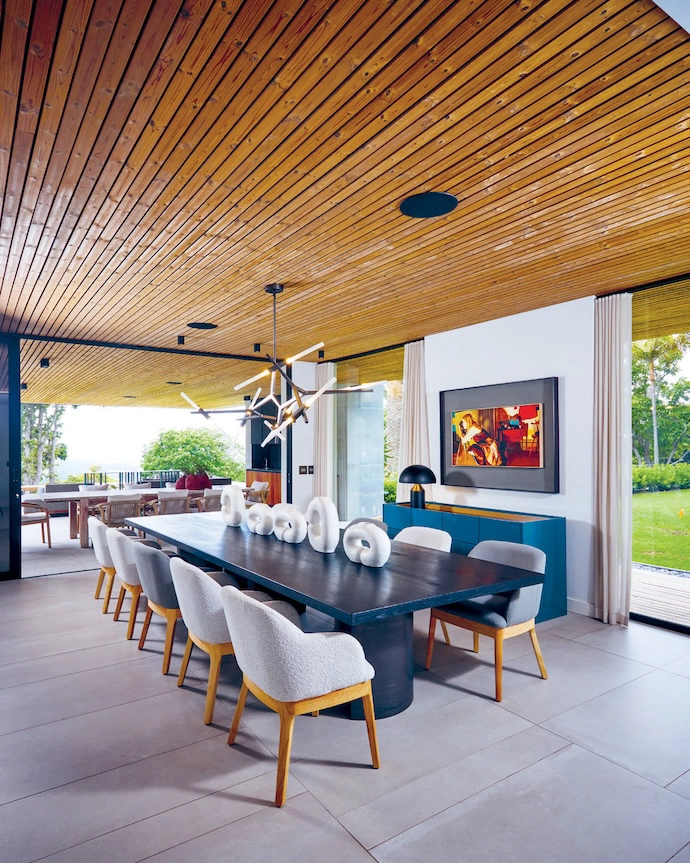
One of many dining areas, starring a Stomp table by Hendre and chairs from Coricraft. -
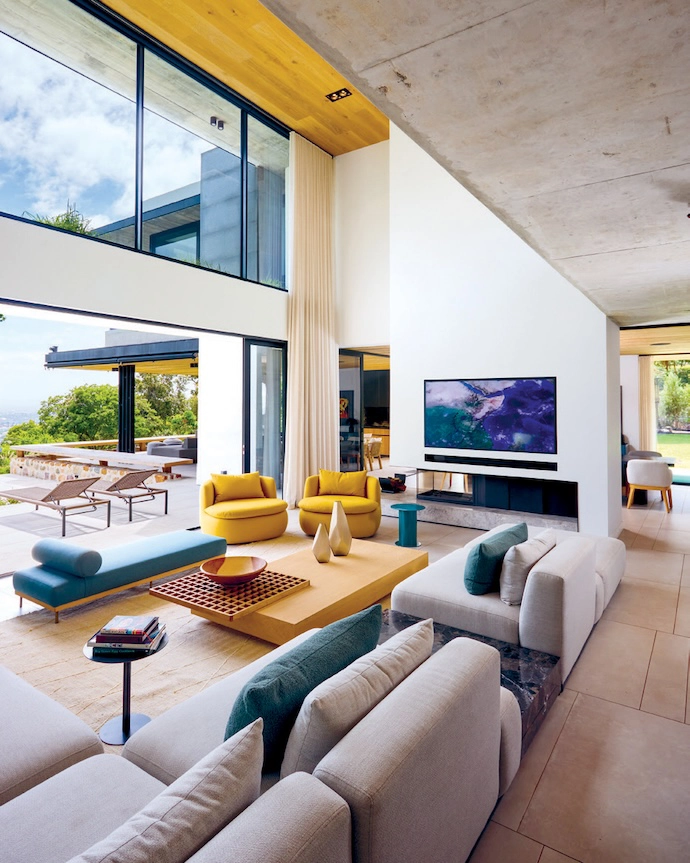
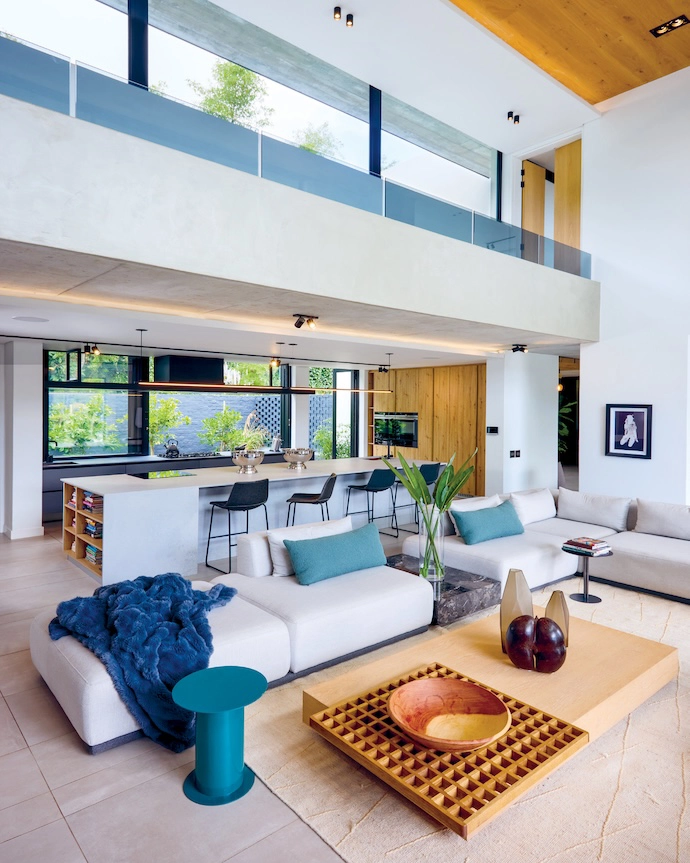
The entertainment area features a collection of versatile bespoke furniture by Hendre to accommodate both large and intimate gatherings. -
Timber cladding lends cosiness to the main dining area, which features Hendre’s Roll table. -
With views out onto a lush courtyard and Table Mountain beyond, the open-plan kitchen benefits from the intimacy of a lowered ceiling. -
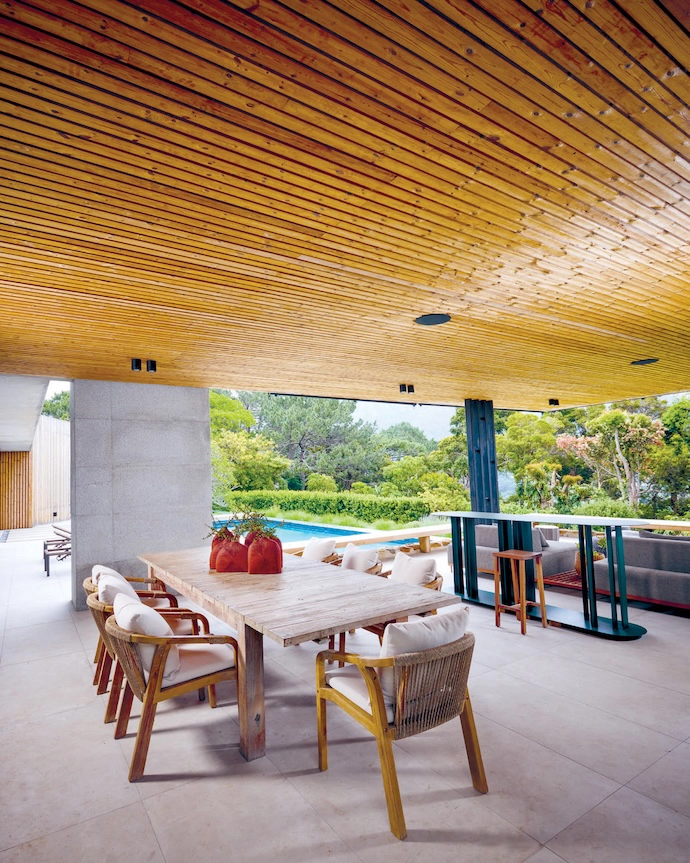
Blurring the lines between outside and in, architect Kate Del Fante created a seamless transition from the interior dining area to the patio with a continuous timber ceiling, further accentuated by Hendre’s innovative furniture arrangements, including a custom steel bar unit. -
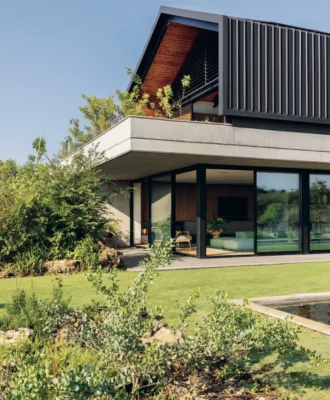
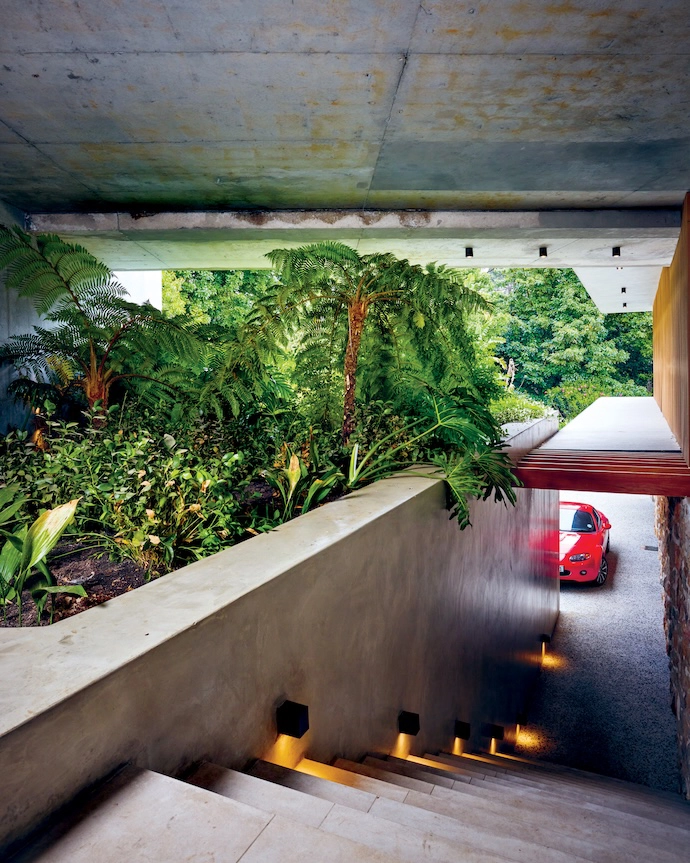
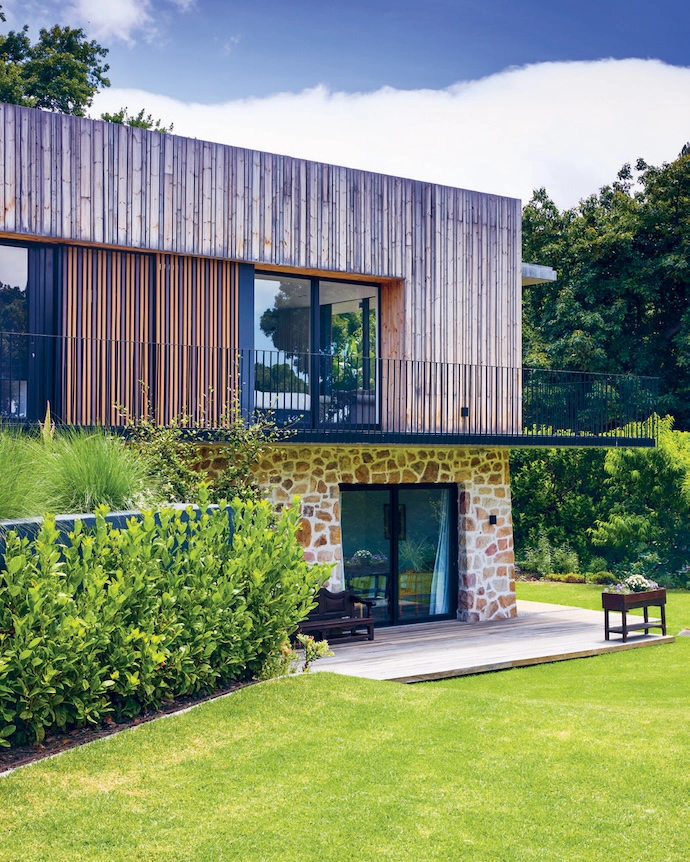
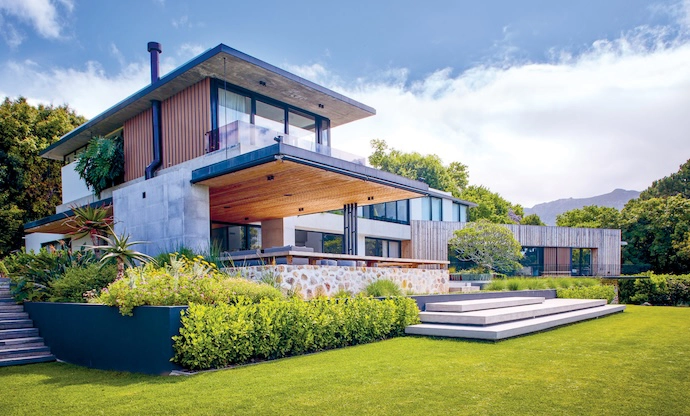
The facade of the architecture heroes materiality, from off-shutter concrete to this considered juxtaposition of timber and sandstone. -

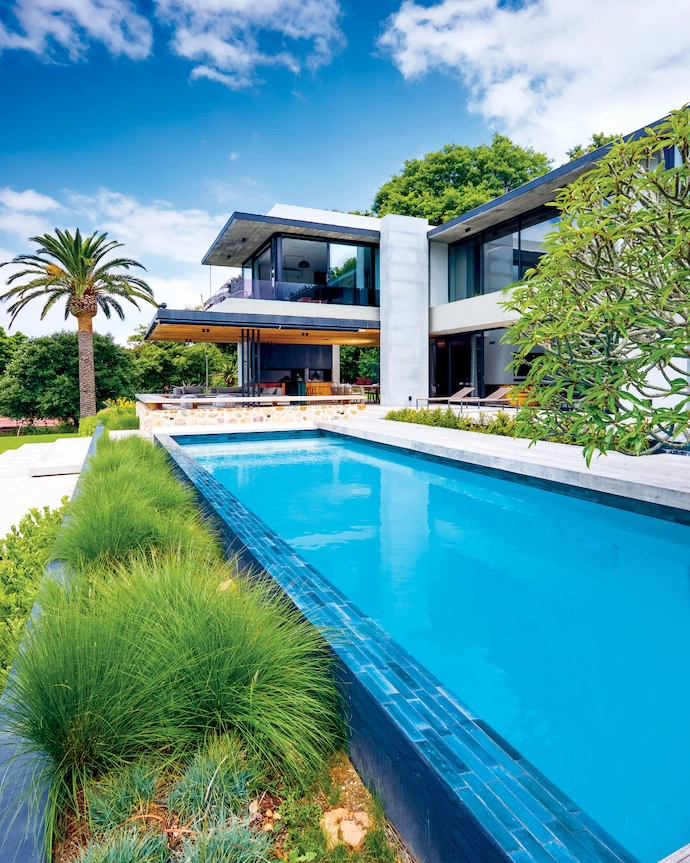
The renovated residence is immediately iconic thanks to two slabs of concrete cantilevering dramatically off the front elevation. -
The lap pool lines up with the home’s rectilinear layout. -
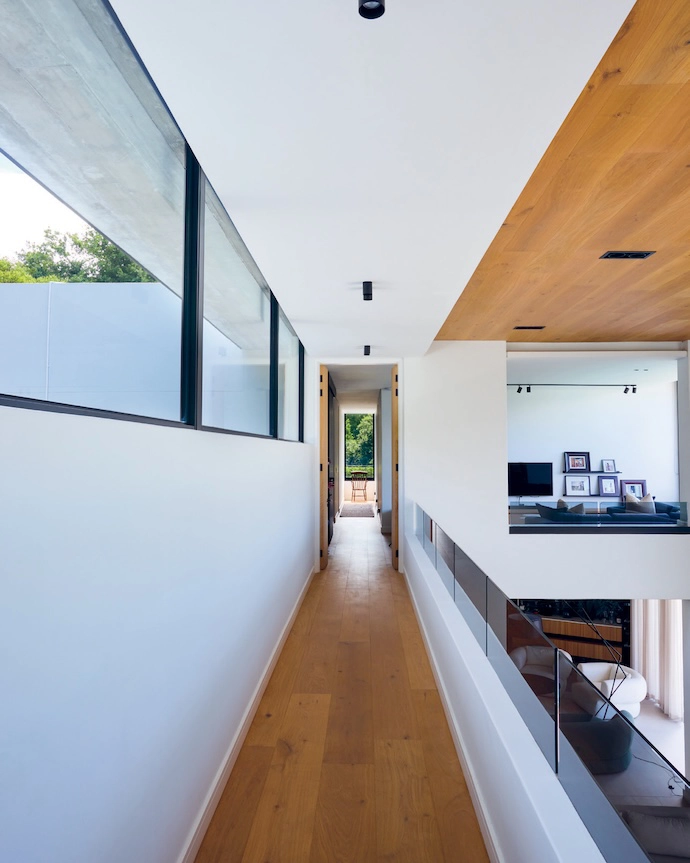
The mezzanine walkway offers a bird’s-eye view onto the living area below, and a peek into the pyjama lounge upstairs. -
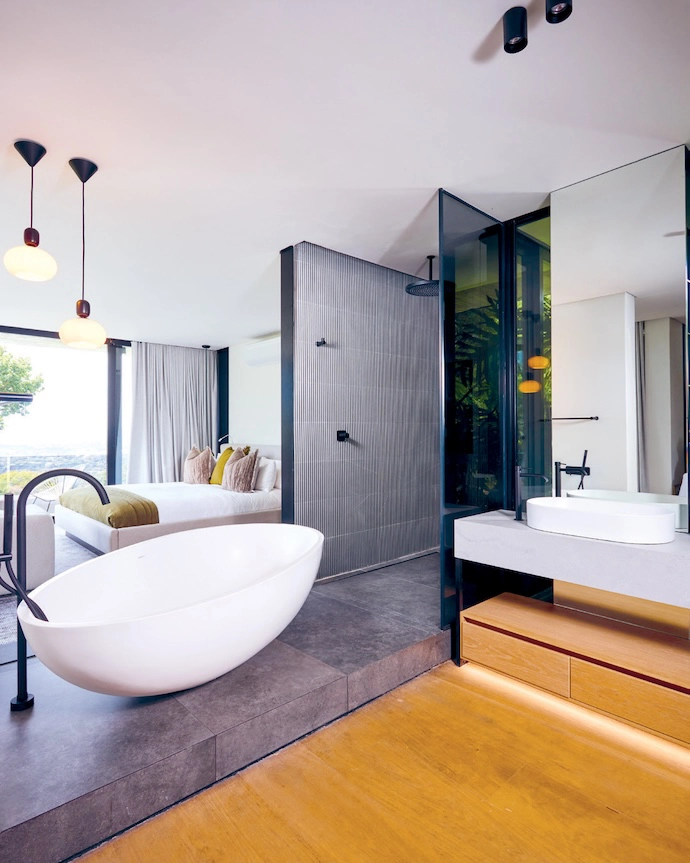
Open-plan living needn’t come at the expense of privacy, as this en suite bathroom design illustrates. -

Wrapping around its Table Mountain view, the facade is characterised by eccentric geometry. -
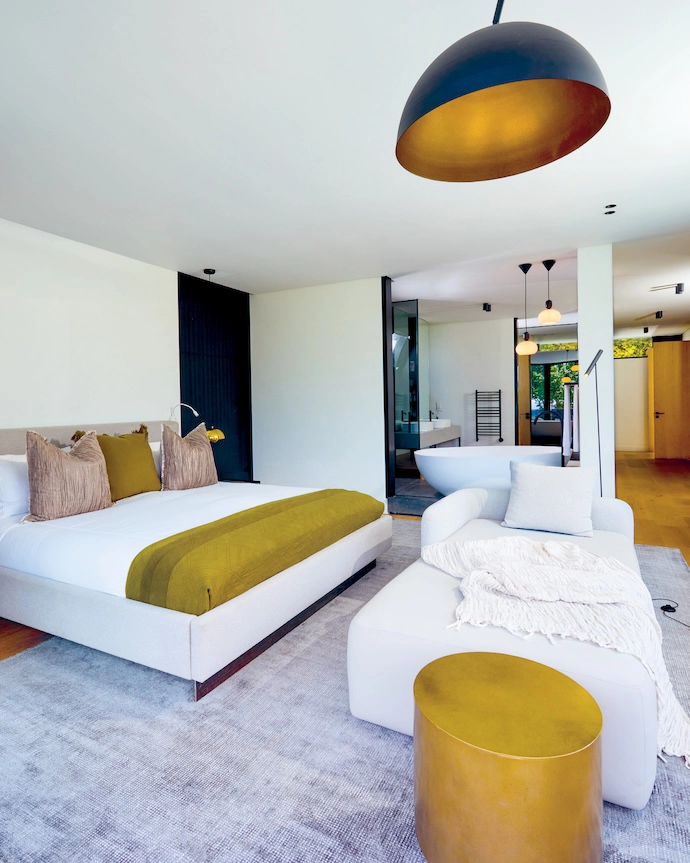
The main bedroom suite is both feminine and masculine, with soft lines and sensual fabrics brushing up against steel, stone and timber.
An unremarkable mid-century residence in Cape Town’s Bishopscourt has officially entered its contemporary era, thanks to an aesthetic intervention that maximises its Table Mountain view from every angle.
WORDS Annette Klinger PHOTOS Jan Ras PRODUCTION Mark Serra
Architect Kate del Fante will be the first to tell you: she’s unapologetically contemporary, favouring a minimalist aesthetic over an ornate one any day of the week. “It’s a style that celebrates the sculptural aspects of architecture,” she explains. “Materials are pared back to one or two elements, so that you enjoy the space and the form of the building.”
While the stripped-down sophistication of contemporary architecture might not scream child-friendly, Kate’s clearly defined aesthetic doesn’t come at the expense of liveability and fun – which has secured her a dedicated family fanbase.
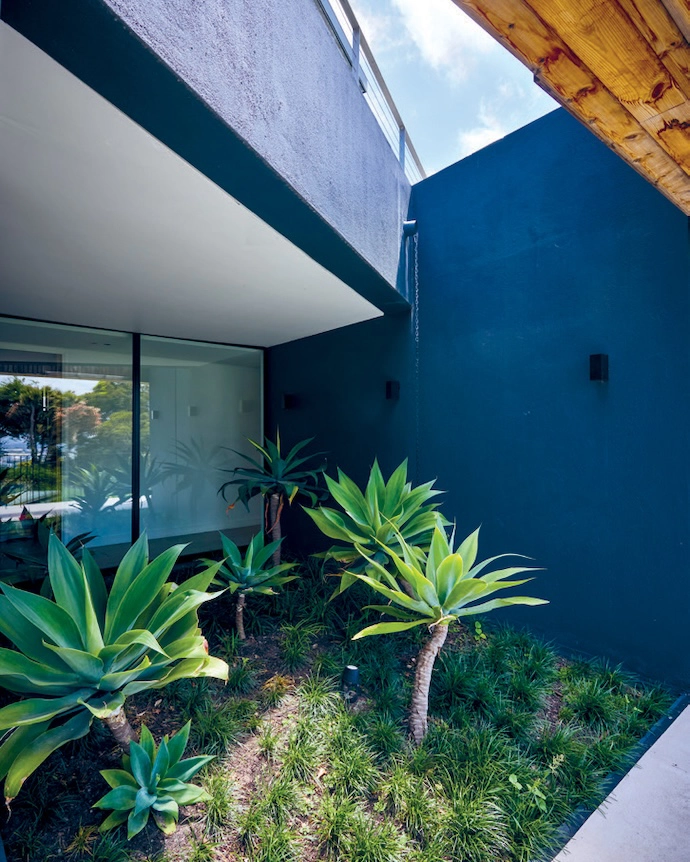
Case in point: the three-kid clan who tasked Kate with a sprawling three-storey villa on a forested hill in the sought- after suburb of Bishopscourt. The brief? To modernise the existing Mid-century residence into a contemporary home that seamlessly accommodates the divergent needs of a five- member family – each of whom, naturally, would like their own view of Table Mountain. The result is a home that blurs the boundaries between inside and outside with features such as wraparound stacking doors, and courtyard penetrations that introduce light and greenery into every aspect.
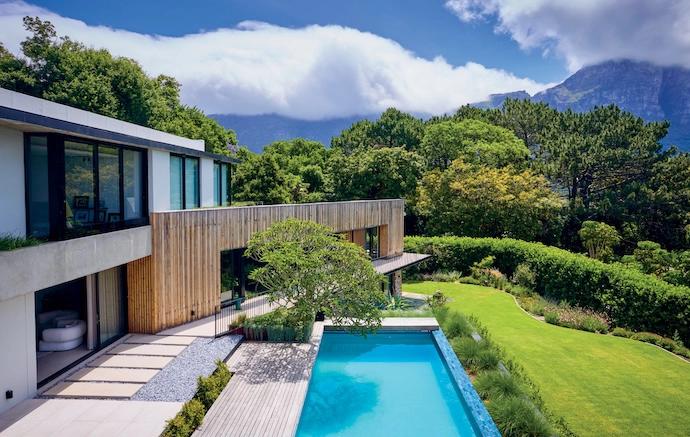
“The original house had nice bones, but it was oriented in such a way that you couldn’t fully experience the mountain,” says Kate, who decided to gut most of the existing structure and redesign the layout so the master bedroom and entertainment areas wrapped around the view. A tricky aspect of the original floor plan was the oblique angle at which the two wings of the house met. “We came up with the idea of introducing timber cladding to the exterior to distinguish the two angles, and played around with interesting angles throughout the design to give it a bit of interest.”
Kate lucked out with clients who share her love for off- shutter concrete. “Bare-faced concrete is stunning, but it needs to be offset by crisp, pristine elements. So, for the interior, I gravitated towards whites and greys, with timber for warmth – used consistently on counters, kitchens and joinery.”
Interior designer Hendre Bloem echoed the sculptural qualities and materiality of Kate’s interior architecture by introducing furniture and accessories that showcase the innate properties of concrete, timber, steel and stone. “There’s a constant interplay between the rawness of the materials,” he says. “The Roll dining table, for example, has roll and burn marks from the manufacturing process on the round mild- steel base, which is contrasted by a very refined stained-oak tabletop. And in the bedroom, you have a masculine Dokter and Misses floor lamp of raw metal and concrete, combined with the sumptuous, soft elements of the upholstery, curtains and rugs.”
Leaning into the large, open-plan, double-volume spaces, Hendre created pockets of intimacy by varying height and scale. “Often, in a large living space, you run the risk of it looking like an airport lounge, with a bunch of seating that feels quite impersonal,” he says. “For this lounge, I custom- made a modular couch, but broke it up with a marble plinth, so that it can operate as a small seating area for intimate gatherings or as one big entertainment space. Similarly, the two turmeric-coloured swivel chairs can form their own reading nook next to the fireplace, or be added to the seating for larger gatherings. The low blue daybed can be used for lounging both inside and outside.”
Beyond aesthetics, it’s the house’s adaptability to an ever- evolving family that Kate and Hendre believe has made it such a success. “It was always about that,” says Kate. “The family is connected, but they’re also able to be separate and find their own sanctuaries – whether it’s the study, the kitchen or the pyjama lounge.” Each with their own views of Table Mountain, obviously… delfantestudio.co.za | hendrebloem.com
Don’t forget to sign up to our weekly newsletter for the latest architecture and design news.