WORDS Sasha Forbes IMAGES Blok’s FourOnC
Are you really maximising the space in your home? Most homes consist of the usual kitchen, dining area, bedrooms and bathroom, leaving little room for the designer extras like sculleries, reading nooks and bars.
Architect Eric van der Berg of WAUW, who works on the Blok developments, shared a few secrets to ensure that extra space in your home is used to its full potential.
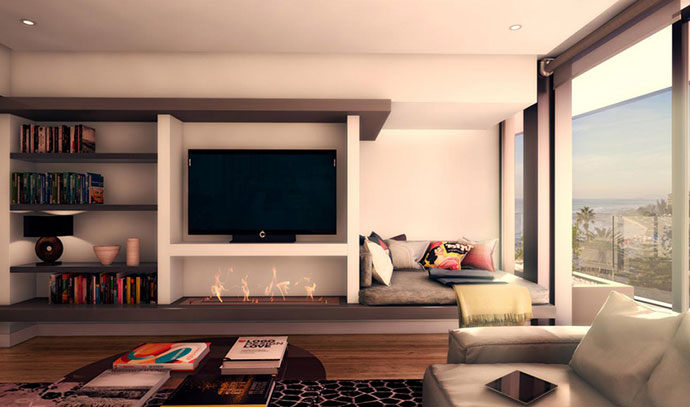
In order to prevent the challenging spaces in your home from becoming cluttered or unused, Eric says that it doesn’t matter what the size or shape of your space is, all you need is a little creativity. “We often use empty spaces as studies, bars, daybeds or reading areas but the possibilities stretch as far as your creativity allows.”
“Look for dead corners or areas that take up a lot of floor space but serve only one function. Often circulation areas such as entrance lobbies, passages and staircase landings (usually only used to get you from space a to b) could easily be used for another purpose as well, ” he says.
“People are not as set on hiding things away anymore and are now open to turning dormant opportunities into third spaces. For example, hanging your bicycle in your entrance lobby, almost as a piece of interest instead of trying to hide it away in a room, is a great use of a third space.”
It’s important to remember that there are ways of creating your perfect space on a low budget.
“Overlapping or layering the functions of spaces is key. Keep things simple. Generally, the simpler the design the more functions you can apply to it. It will probably cost less and look better as well. Simple design should however, not be confused with ill-considered design. The simpler the design, the more thought you should put into it,” says Eric. A good example of this: “Staircase treads were extended to turn the dead space under the stairs into a bar area, which allowed for the dining area to be connected to the bar area.”
When creating the perfect unconventional space, says Eric, any space that serves its function as a ‘third’ space is successful. If it serves its original purpose and other functions while simultaneously adding to the character and design aesthetic of the greater home – it works.