-

The entrance through a low gate laser-cut with the word “unbound” – the name given to this weekend getaway outside Dullstroom – shows how the design opens up vistas between the buildings. -
The gravel-topped central courtyard becomes an outside room with a dining area – the heart of the home. The garage, clad in corrugated iron reminiscent of early gold-rush cottages, creates a shed-inspired structure. -
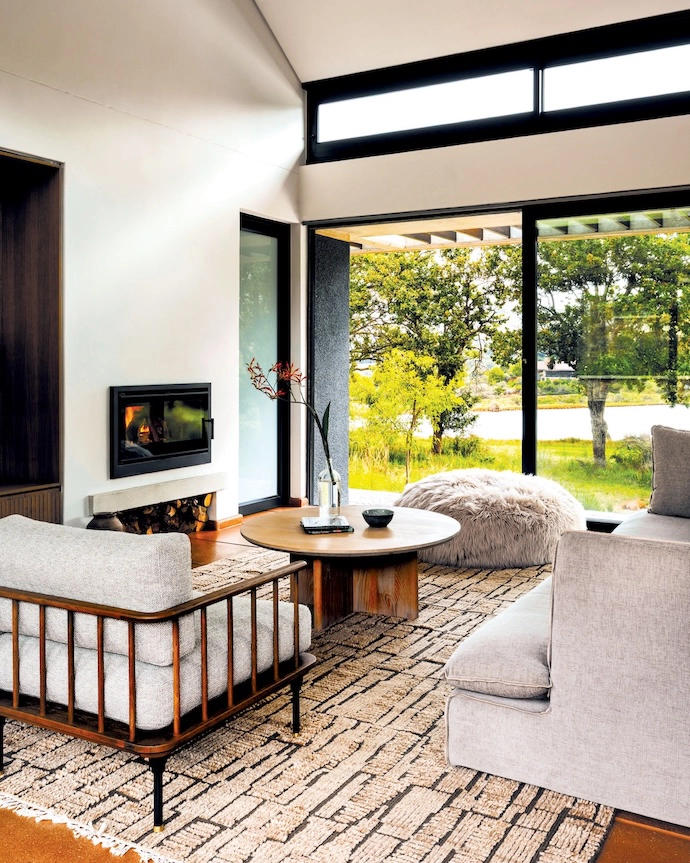
The interiors, designed by Cáreli, are natural, neutral and layered. Rich textures and comfort are paramount, while also receding and allowing the setting to be the main feature. -

In front of the main house (or stoep), a gravel boma area has become one of Cáreli’s favourite spots; from there, she can watch her husband and sons fishing in the dam. -

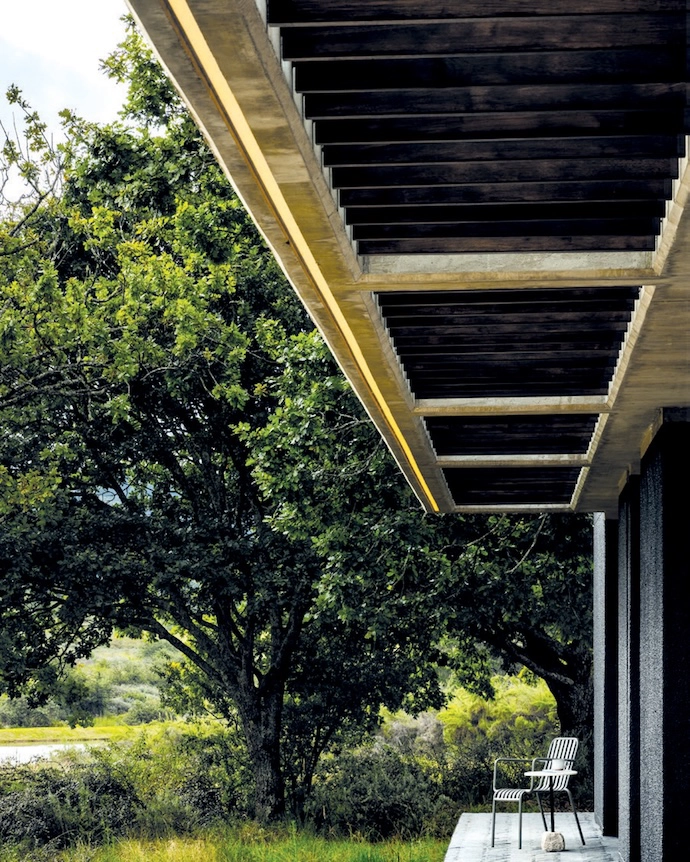
Klompie-style paving around the house reprises a familiar technique in a contemporary setting. -
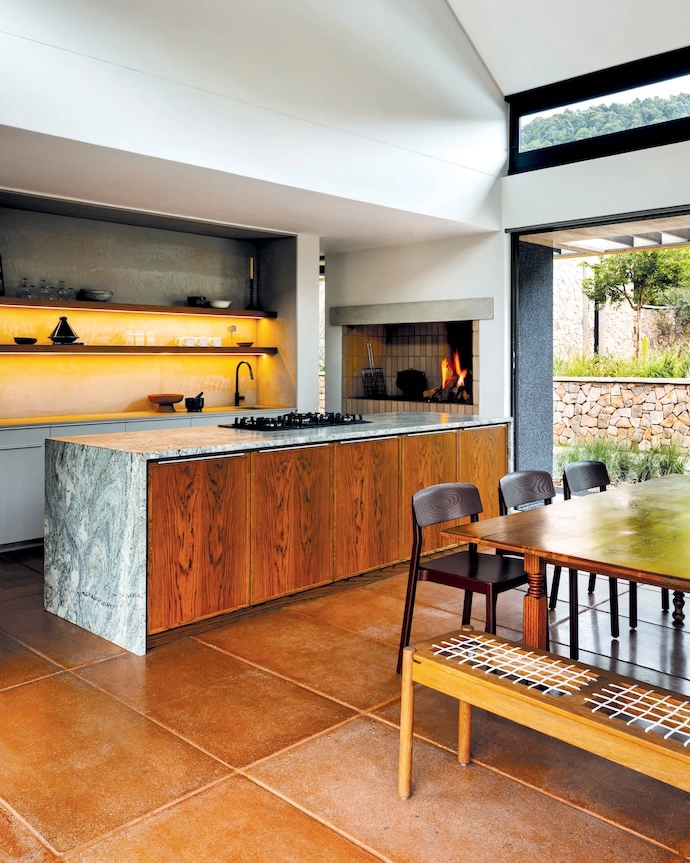
The kitchen includes a braai area, for those rainy Mpumalanga days. The large handmade pavers introduce warmth, texture and a touch of imperfection to the interiors. -
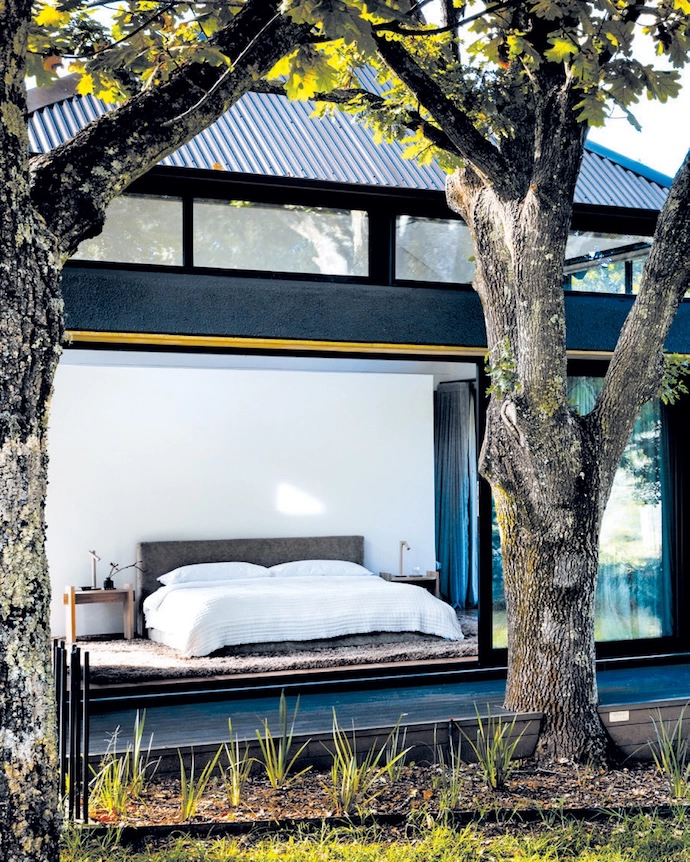
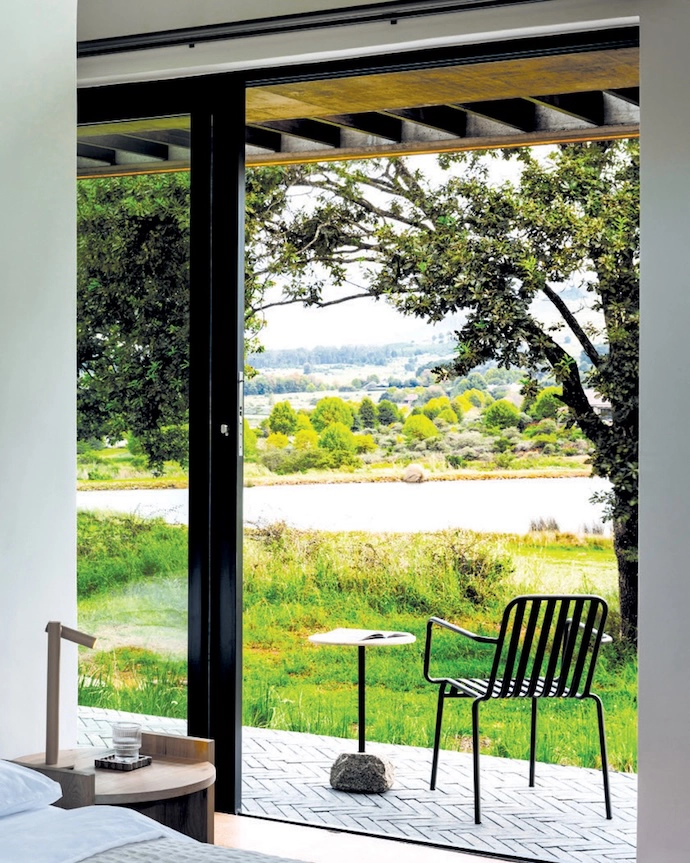
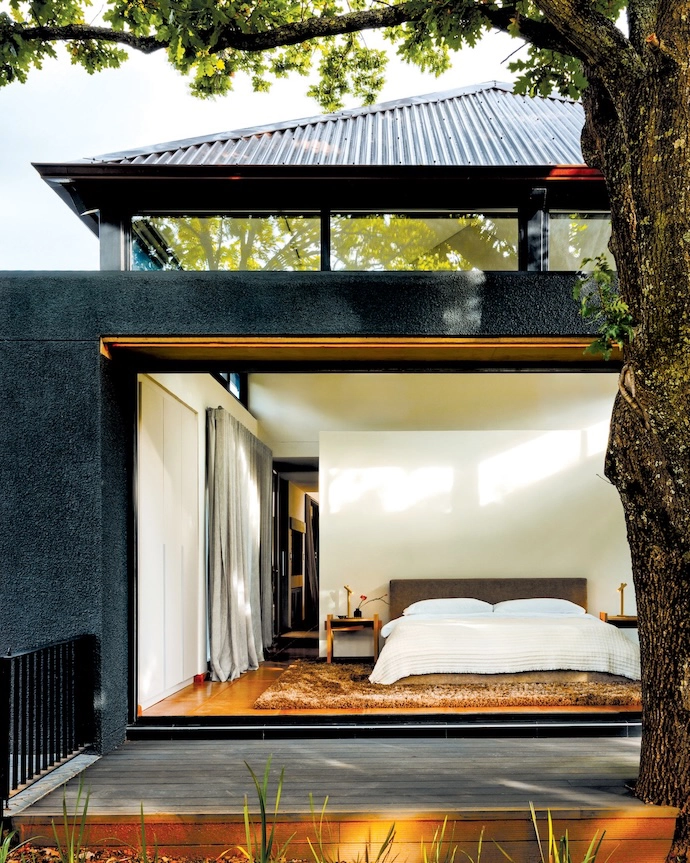
The bedrooms, positioned on the edges of the main “house”, can be opened completely to the outside. -
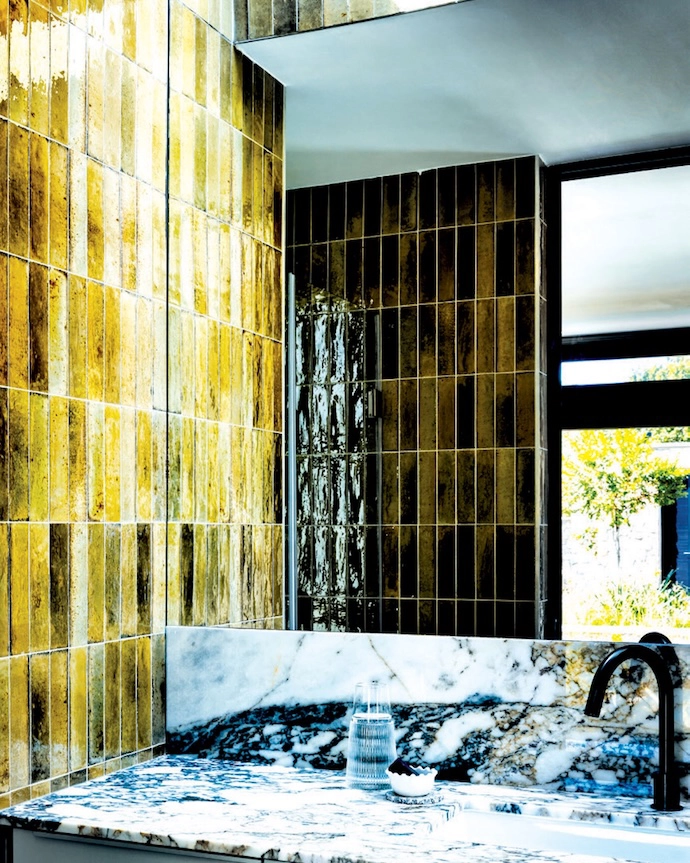
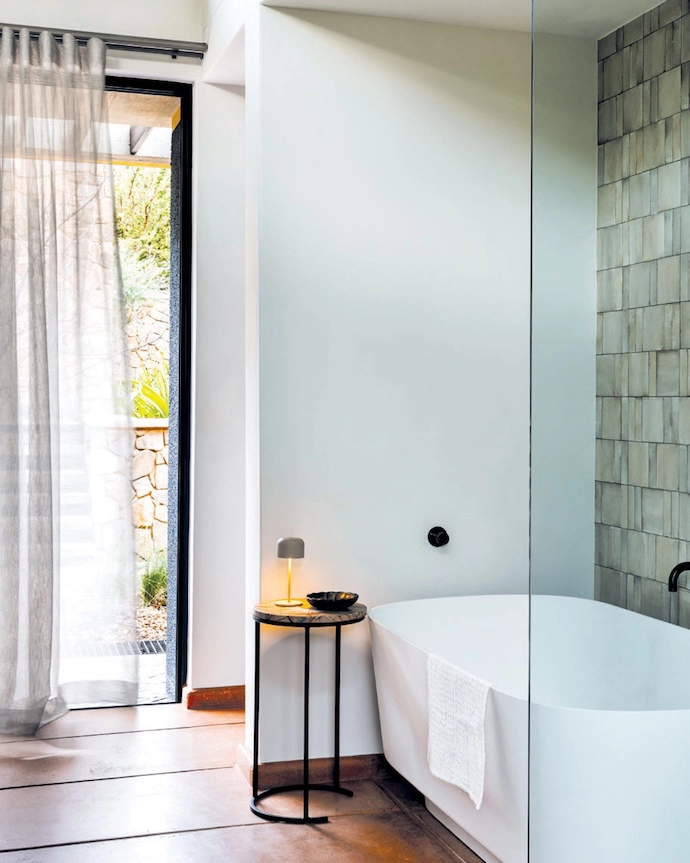
The bathrooms reprise the notion of luxury through simplicity – natural materials, neutral colours, light. -
The dam can be observed from bed. -
Privacy is carefully managed so that even the bathrooms feel as though they’re part of the courtyard. -
Texture, warmth, comfort and openness all add to the sense of freedom that imbues this getaway with its magical quality. and openness all add to the sense of freedom that imbues this getaway with its magical quality.
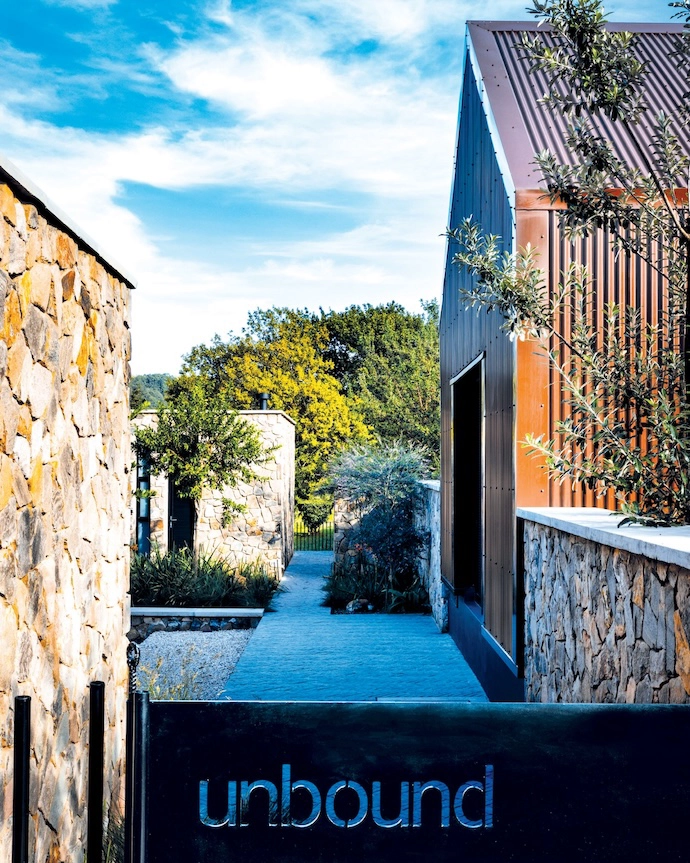
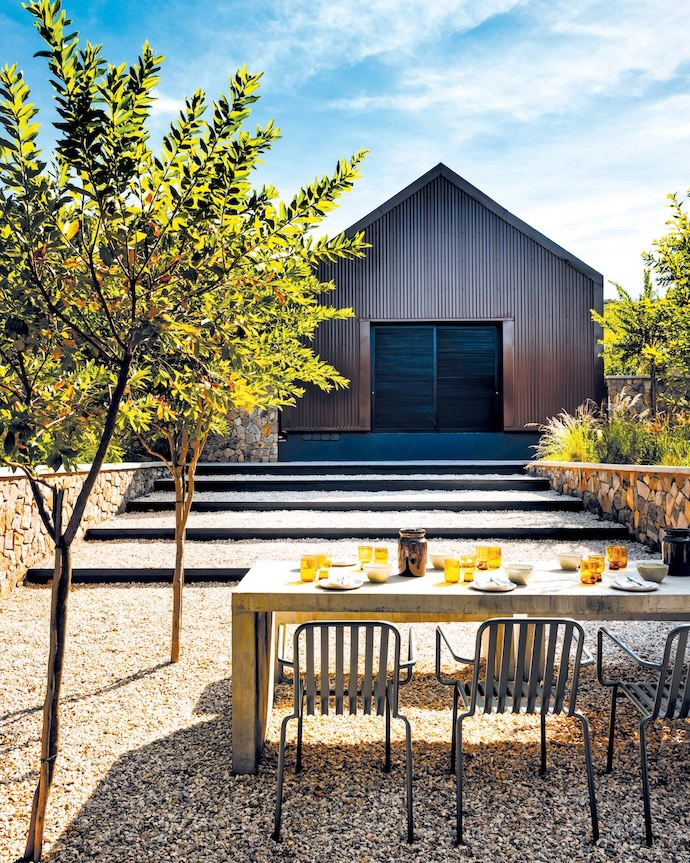
A weekend getaway outside Dullstroom deconstructs the traditional veranda house and farmyard to achieve escape through simplicity.
WORDS Graham Wood PRODUCTION Klara van Wyngaard PHOTOS Sarah de Pina
This weekend getaway, a short drive from Dullstroom in Mpumalanga’s eastern highlands, is an exercise in the alchemy of subtraction. If you get it right, you reach a magical point at which taking away unnecessary design elements results in something greater than the sum of its parts. Less becomes more.
In Walkersons Estate, Chris and Cáreli Leach’s cottage overlooks one of the trout dams, peeping through a row of oak trees as the grassland slopes gently to the water’s edge. Houses in the estate are tightly clustered into small “villages”, each with a distinct architectural theme. This one follows a local vernacular veranda-style design, which specifies a combination of stone, pitched corrugated iron roofing, face brick and plaster.
The Leaches called on Johan Wentzel and Grete van As of W Design Architecture Studio (WDAS), who had renovated a previous home of theirs, and had designed another house on the estate. “They already know us, and what we like,” says Cáreli.
The historical references in the architectural guidelines were not unwelcome to Johan and Grete. In their work, they often aim to harness a quality they refer to as “the familiarity of the new” – where they reach back and reprise often- forgotten but successful aspects of traditional architecture even in their forward-looking designs. The result is a comforting and reassuring quality, and a sense that the designs belong – in the lives of their inhabitants, and in their architectural context.
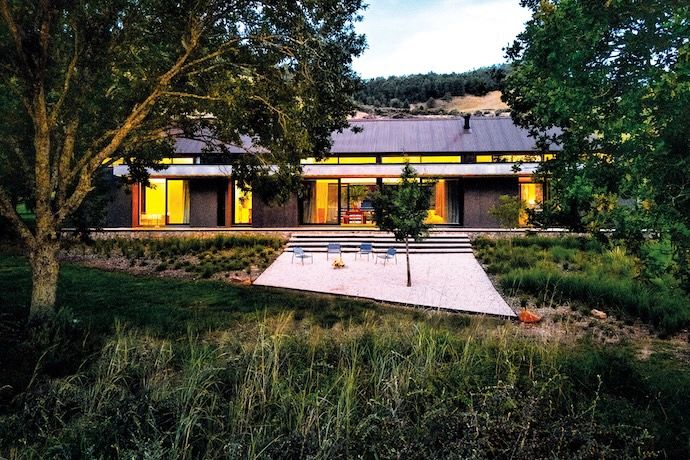
For Mpumalanga, Johan notes, simple industrial materials like corrugated iron and whatever came to hand – such as the local stone from the rocky hills around Dullstroom – work as well now as they did during the gold rush 150 years ago. In this case, they’re put into the service of an escape from the everyday; something refreshing and restorative.
Given the countryside setting, Grete and Johan’s inspiration came from a traditional farmstead or werf, where buildings are clustered around yards, creating outdoor areas that are almost like rooms themselves. If there are walls, they are low. The werf dissolves into the landscape around it. “Remember those art-class exercises where you had to draw the negative spaces? This design is all about the negative spaces, the in-betweens,” says Grete.
Rather than a house surrounded by an apron of land, Johan and Grete’s design “takes the buildings to the edge” and creates an open central space, where the Leaches have an outdoor dining table. The main section facing the dam – housing the kitchen, dining and living areas, plus two bedrooms and a loft – is a light, linear design. Glass doors on either side make it possible to see from the courtyard right through the living areas to a framed view of the oak trees and dam beyond.
Separate, symmetrically placed solid-stone guest rooms and a barn-style corrugated-iron-clad garage hug the central courtyard, making it feel secure and well-defined, but not contained. “It doesn’t really feel like it has neighbours,” says Cáreli. “Yet it has its own special, uninterrupted views.”
Usually, explains Grete, the kitchen is considered “the heart” of the home. “In this case, the courtyard with the table is the heart,” she says. With the house in effect becoming the stoep or veranda, the Leaches even placed the braai in the kitchen (which is smart, given the rainy spells in Mpumalanga). “When I’m in the kitchen and Chris is next to me at the braai, we can actually have a conversation!” says Cáreli.
Chris and the boys have taken to tying fl ies, which they do here, too, creating another communal space – just as a stoep should. It’s the kind of space where “You put your feet up, and watch TV or the fire or the rain outside,” says Cáreli. A little boma area in front has become one of her favourite spots, from which she can watch the others fishing down at the dam.
While Chris managed the project with precision and attention to detail, Cáreli was responsible for the interiors, bringing the outdoors in just as the architecture takes the indoors out. “We wanted to do something warm,” she says. Textured terracotta-concrete tiles add a sense of the handcrafted and imperfect. “But they bring warmth to the space,” she adds. “We just wanted furnishings that are comfortable and easy; a space that’s easy to be around.”
The couple mention the word “freedom” often. The simplicity, openness and ease of the space is a release and an “escape” (another word that comes up often). “That’s what you expect when you take a break,” says Johan. | wdas.co.za
Don’t forget to sign up to our weekly newsletter for the latest architecture and design news.