Designing urban spaces with green connectivity at the core to cultivate more liveable and balanced city ecosystems.
WORDS Neyani Mphephu PHOTOS Supplied
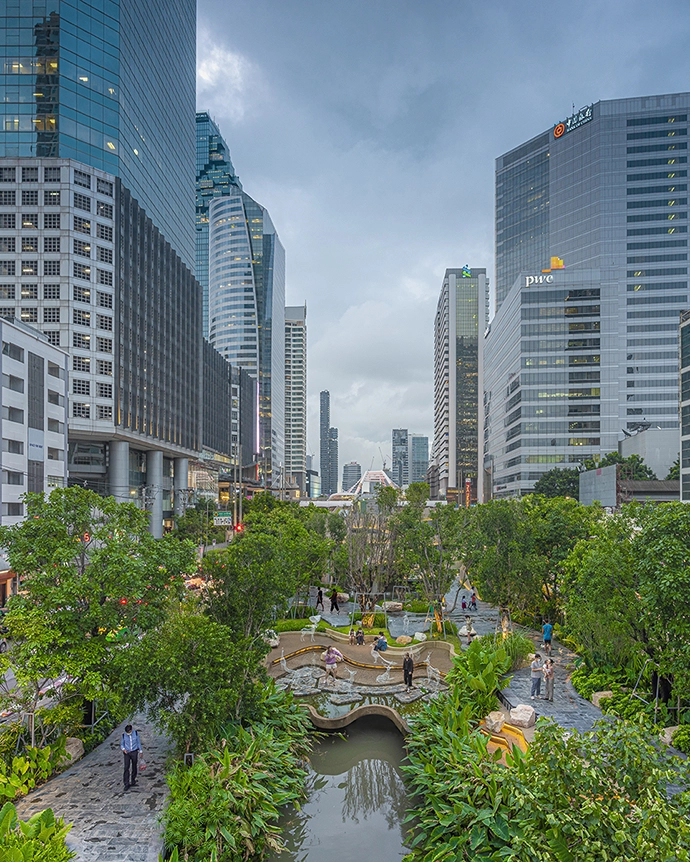
In the past, greenery in urban settings has often been seen as an aesthetic addition rather than a functional necessity, and almost always the first line item cut when a development budget tightens – which is exactly what makes green connectivity, the growing movement to weave nature through the built environment as deliberate, functioning infrastructure, one of the more quietly radical ideas reshaping urban design in cities like Lisbon, Bangkok and Cape Town.
Green connectivity goes beyond simply planting trees. It is the deliberate weaving of natural systems such as street canopies, green corridors, pocket forests, urban farms and water-sensitive landscaping through the built fabric of a city, so that nature does not merely sit alongside urban life but moves through and with it.
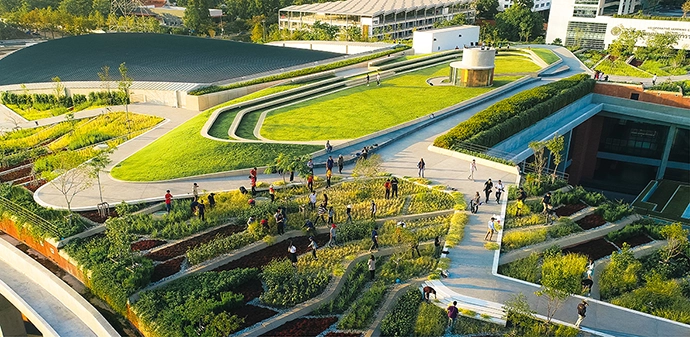
It is this thinking that drives the work of organisations like Mission for Inner City Cape Town, whose Greening Lead, Vincent Truter, describes the city’s green network in terms that go well beyond horticulture. “Every street, every park and every public space is not only part of an ecological system,” he says. “It is also part of a nervous system. It is quietly influencing how people feel, how they move and how they recover from the intensity of urban life.”
At its core, green connectivity challenges cities to treat green space as essential infrastructure, not just an amenity. And it has a host of environmental benefits that address global warming.
The hothouse
Cities are getting hotter in every sense. There have been a number of successful initiatives globally to combat rising temperatures in metropolitan centres. One of these programmes is Forestami – launched in Milan in 2019 – an urban forestation initiative that includes creating green roofs and restoring polluted land in the Italian city, with the aim of planting 3 million trees by 2030.
Since its launch, research conducted in the metropolitan area found that urban forests provided an average cooling effect of 3.5°C on mean temperatures and up to 5.5°C on maximum temperatures within a 180-metre range. A clear demonstration of green connectivity working in practice with measurable results.
Cape Town’s tree canopy cover was measured at only 6% in 2020, against a world norm of 10% to qualify as an urban forest. Cllr Francine Higman, Ward Councillor for the City of Cape Town, warns that “if we don’t continue investing in greening, we risk creating places that become increasingly hot, less resilient to climate change and ultimately less attractive places to live, work and invest.”
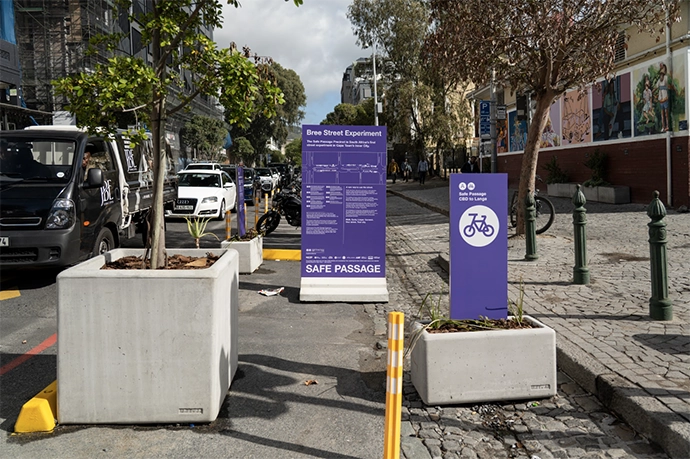
Georgina Smit, CEO of the Green Building Council South Africa (GBCSA), echoes Francine’s warning: “If we do not intentionally weave green spaces into our development strategy, we risk losing critical green and blue resources and their myriad benefits.”
While one of the most overlooked benefits of urban greenery is its ability to cool cities naturally, Vincent argues that what is even less discussed is what trees do to the human nervous system. “Breathing slows. Conversation changes. Children move differently,” he explains. “Green spaces are not only performing ecological work. They are also performing nervous system regulation.”
Beyond the green
A truly green-connected space goes beyond planting trees on a pavement.
Georgina cites Newinbosch Neighbourhood Estate in Stellenbosch as a leading example. It’s the first estate in Africa to achieve a 6-Star Green Star Sustainable Precincts certification, with its on-site nursery, pocket forests, green corridors, urban farm and circular waste processing.

Closer to the city, Green Point Park demonstrates similar thinking at a much larger scale. Its Biodiversity Showcase Garden is home to approximately 300 indigenous plant species and 25 000 individual trees, shrubs and groundcovers, while a sustainable water system sourced from the Oranjezicht spring saves roughly 580 million litres of potable water annually.
But designing a green space is only the beginning. Ensuring that it survives and thrives requires long-term care, partnerships and community stewardship. “Success isn’t simply measured by how many trees we plant. It’s measured by whether those trees survive, mature and continue to expand the canopy,” says Francine. Connected green space, she emphasises, should always be designed around people: “shade where people actually walk, seating, accessible public spaces, biodiversity and opportunities for people to spend time outdoors.”
Future forward
The next evolution of cities may not be primarily technological, but relational. “The question is not whether cities will become greener. That trajectory is already underway,” says Vincent. “The more important question is whether they will become more coherent across their systems. Because cities do not only shape landscapes. They shape people.” missionforinnercity.org | @missionforinnercityct
Don’t forget to sign up to our weekly newsletter for the latest architecture and design news.