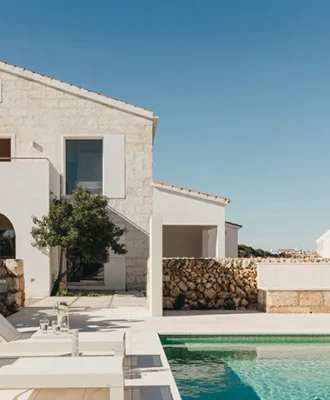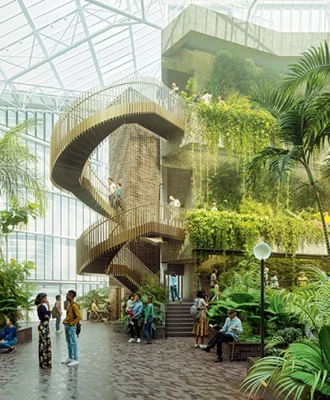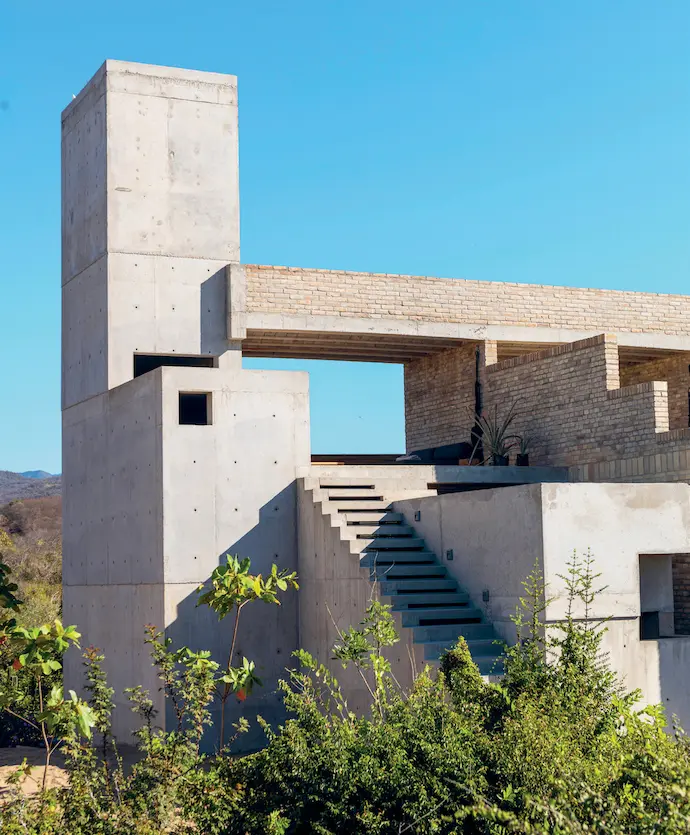
What happens when the uncompromising language of brutalism gives way to the relentless force of nature?
COMPILED BY Gina Dionisio PHOTOS Jamie Navarro and Fabian Martínez, Adam Letch, Mads Morgensen, Paris Brummer, Jaime Navarro
Touching on the leafy theme in VISI issue #144 and our trends guru Chris Reid’s deep-dive into Eco-Brutalism on page 76, these spaces from the VISI archives all marry rampant greenery with raw concrete. The hard edges of these homes and hotels aren’t softened with paint or embellishments, but with plants.
Puerto Escondido Hotel
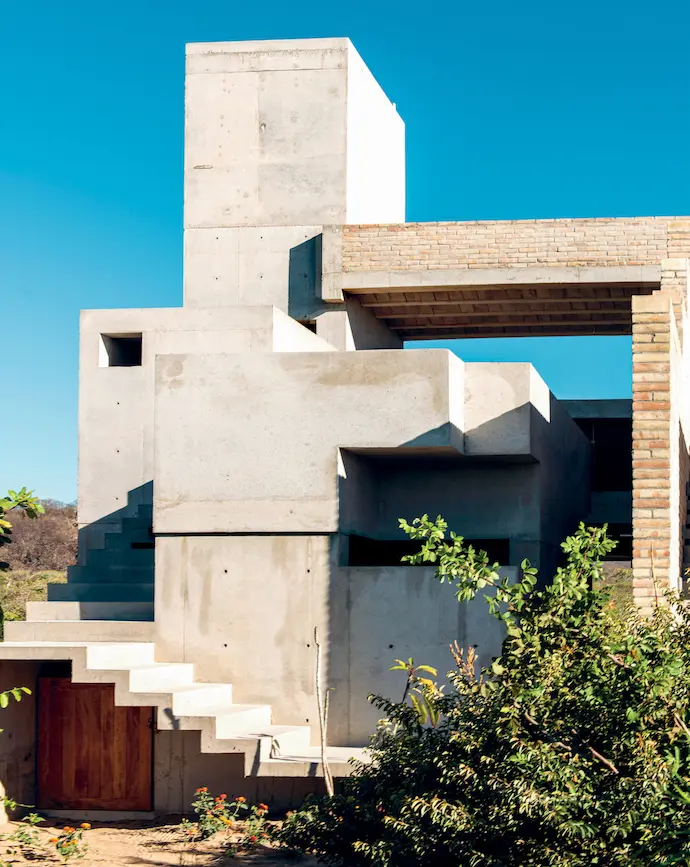
“Hotel Terrestre is embedded in the landscape, as if it has been there for hundreds of years,” says architect Alberto Kalach of his otherworldly masterpiece, 25 kilometres northwest of resort town Puerto Escondido in the state of Oaxaca. Alberto knows a thing or two about this area. It may be a half-day’s drive from his Mexico City studio, Taller de Arquitectura X, but the pristine coastline famed for its surf is already home to a handful of his projects. So when approached by Carlos Couturier, co-founder of Mexican boutique hotel group Grupo Habita, to design a multi-sensorial property that redefines sustainable tourism, he jumped at the opportunity.
His environmentally sensitive approach to architecture has shaped several structures in the area, including Hotel Escondido and the award-winning restaurant Kakurega Omakase. These buildings hold their own in a landscape populated by hotspots like Casa Wabi, a retreat by starchitect Tadao Ando, and a permanent outdoor installation by artist Bosco Sodi.
Read the full feature on this Puerto Escondido Hotel.
Lanseria Eco-estate Home
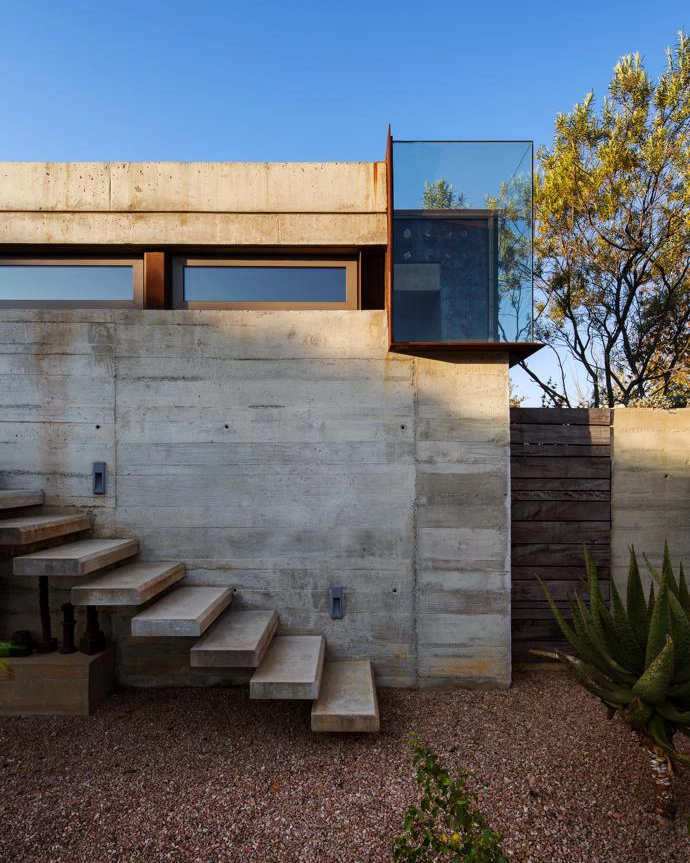
“The site, sun and climate were integral to the design process and we drew inspiration from these elements,” says Enrico Daffonchio, who together with Leigh Maurtin designed the home with extensive input from the owners Lukas and Wendy van Niekerk.
The team were very familiar with the ecological guidelines of the estate as Daffonchio Architects had helped draft them. All of the properties are single storey, cut into the ground to minimise the impact on the horizon: The house is sunk to account for the natural ground level and slope of the estate, so each property has a view over the one in front of them.
This home, which is designed as a set of pavilions with deep overhangs, separated by a series of courtyards and green fingers that act as sheltered outdoor living spaces, is further camouflaged from its neighbours thanks to its roof gardens. The entire footprint is covered in native vegetation so that the boundary between the house and surrounding grasslands is almost indiscernible from above.
Read the full feature on this Lanseria Eco-estate Home.
Chilean House
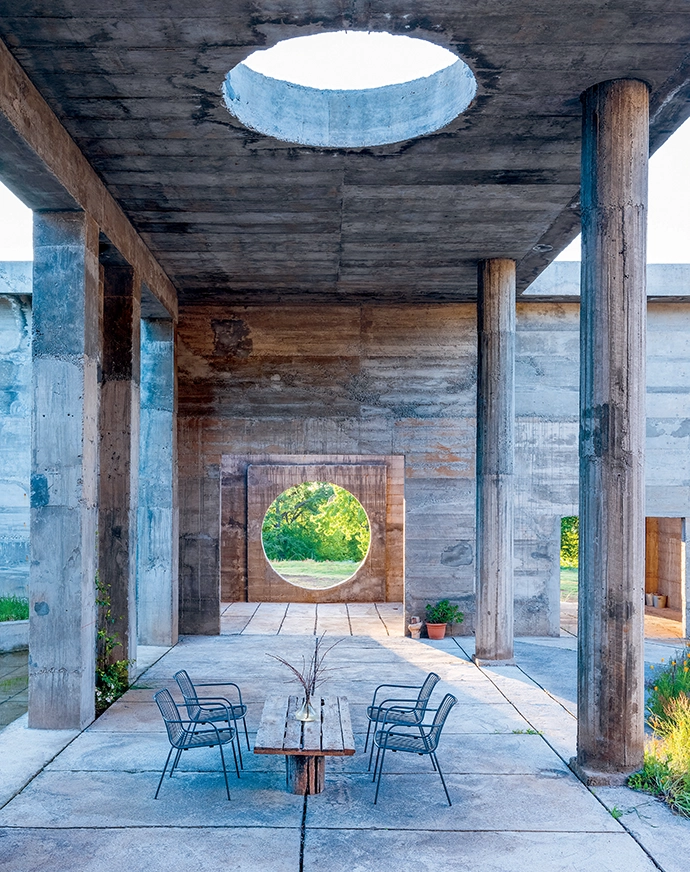
It’s a house, but only in the broadest definition of the term, says co-owner Sofia von Ellrichshausen of this structure in the foothills of the Andes mountains in central Chile. She and fellow architect and artist Mauricio Pezo have been sharing their academic and artistic lives for the past two decades, and together head up the internationally renowned art and architecture studio Pezo von Ellrichshausen.
The couple built their new home in a secluded area surrounded by forest and freshwater channelled through small streams that come down from the mountains. Impressively big, it manages not to impose on its surroundings. “We call it a house, and it is our private home – but we also consider it a cultural centre, as it is meant for more than domestic use. It is a place for our creative expression, and ideally, it will live on beyond our lifetime to become a creative space for other humanist and creative people,” says Sofia.
Read the full feature on this Chilean House.
Waterkloof Ridge House
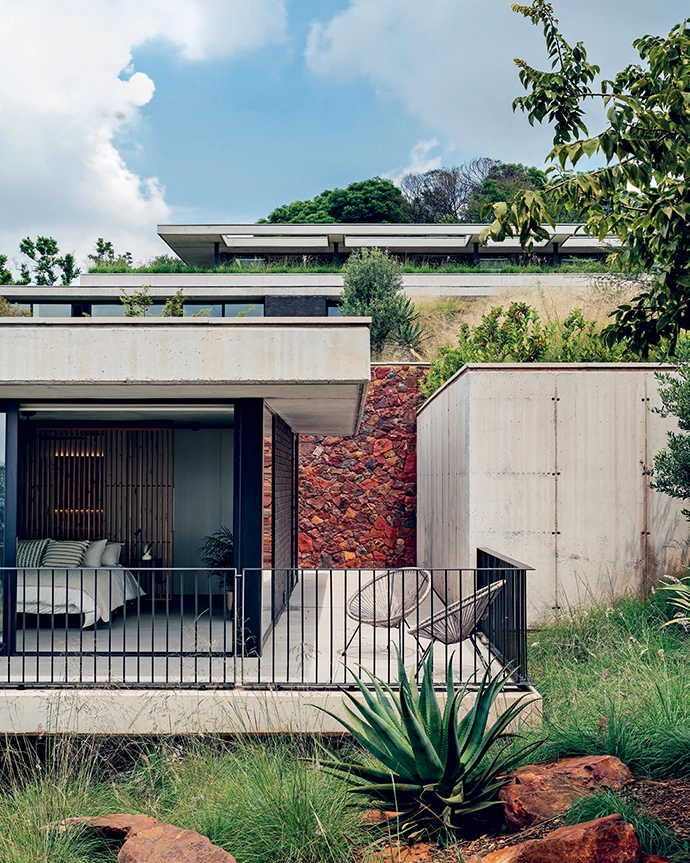
“A friend once said to us, ‘You don’t ever choose the easy way, do you?’” say Ryk and Irma Coetzee, the owners of this hillside home in Waterkloof Ridge in Pretoria. But then, as the saying goes, nothing good comes easy.
Ryk and Irma bought their house – built in the late 1970s and empty for some time, “with no kitchen, horrific plumbing and uncertain electrical wiring” – with the intention to renovate it. What captured their imagination was the spectacular view, say their architects, Grete Van As and Johan Wentzel of W Design Architecture Studio. The house is perched on the steep, rocky slopes of a ridge, with the ground dropping away dramatically below it; and despite its suburban setting, it felt wild and untouched.
“We semi-renovated it just enough to make it liveable,” say Ryk and Irma. Then, they lived there for five years before deciding on a more substantial renovation that would ultimately transform the entire hillside site. They wanted to make the most of the view while preserving the original flow of the house. They were anxious that it should “retain the magic”, but they were also drawn to the notion of a suburban farmhouse. They were already halfway there, having arrived with a menagerie of cats, dogs, rabbits and geese. Their wish list included vegetable gardens, an olive grove and a greenhouse.
Read the full feature on this Waterkloof Ridge house.
Casa TO in Mexico
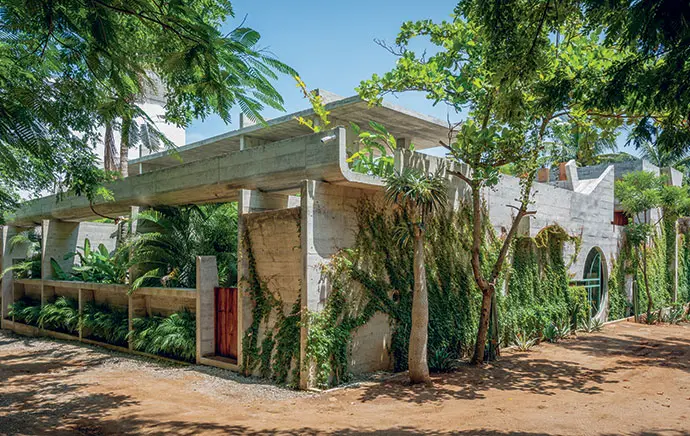
The port of Puerto Escondido is an escape. Travellers from all over the world retreat to its golden beaches and waves, to walk, meditate and help release turtles in local sanctuaries.
On the southern tip of town, Casa TO has added an element of thoughtful luxury to this tiny utopia. Completed in August 2022, the hotel was designed by renowned architect Ludwig Godefroy. Working to a very succinct brief of “nine rooms, and lots of freedom”, he and his team have married tradition and the avant-garde in a unique structure, surrounded by a tranquil natural setting.
Made largely of concrete, the materiality of the build was of the utmost importance to Ludwig. “My search for simplicity has led me to create clean and abstract architecture, composed exclusively of mass materials such as concrete, wood and stone. All these materials look better under the action of time,” he says.
Casa TO takes inspiration from myriad sources, including Oaxacan temples, where enclosed spaces create a sensory experience. There’s also a nod to the reticulated pattern of two historical hydraulic works: the 6th-century Basilica Cistern in Istanbul, and the Hornsey Wood Reservoir in Finsbury Park, London, built in the late 1800s. In relation to these references, Ludwig says that his “architecture is willing to get rid of the unnecessary, to concentrate on the very essence of the structure of the building, offering a contemporary reinterpretation”.
Read the full feature on Casa TO.
Don’t forget to sign up to our weekly newsletter for the latest architecture and design news.