-

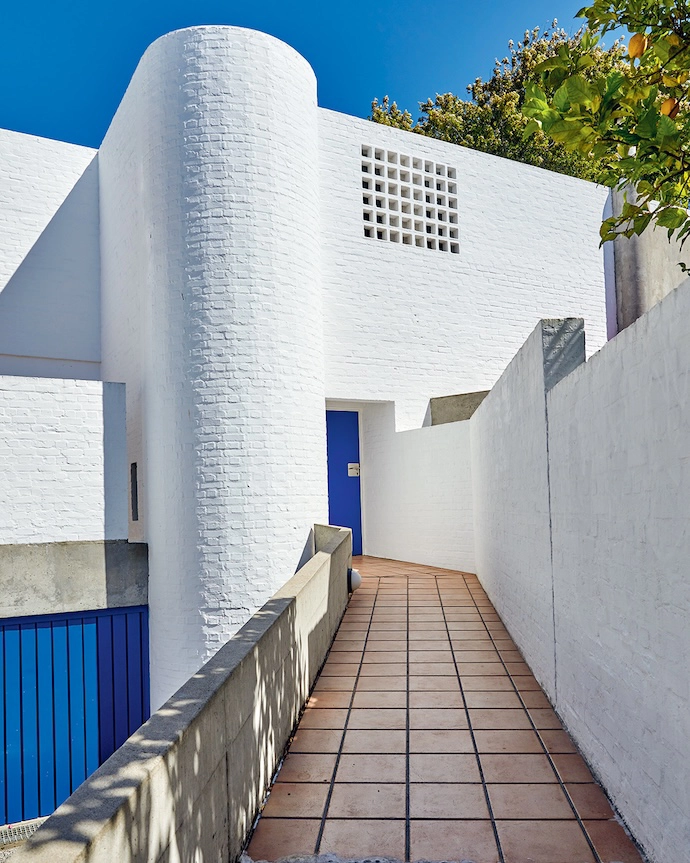
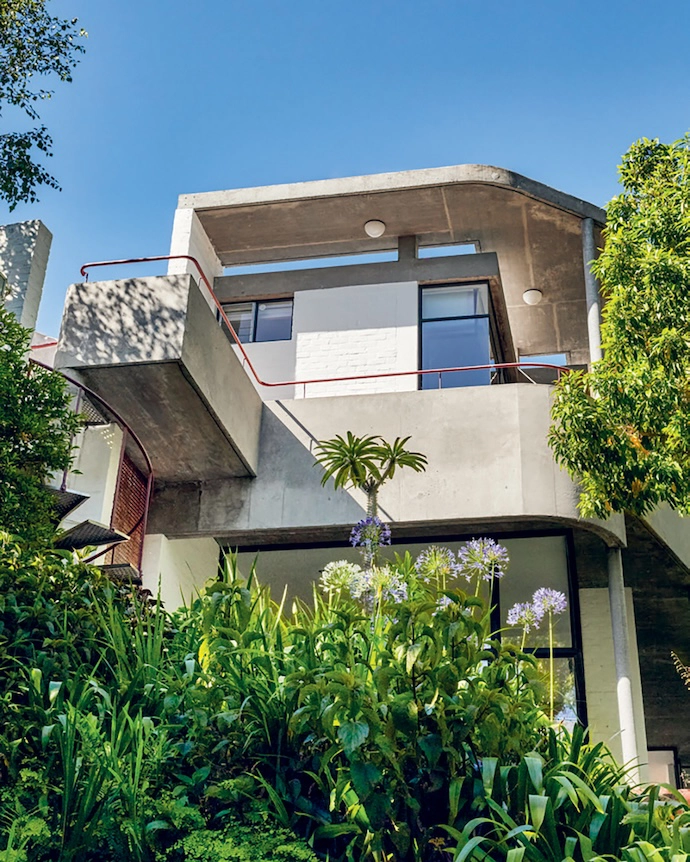
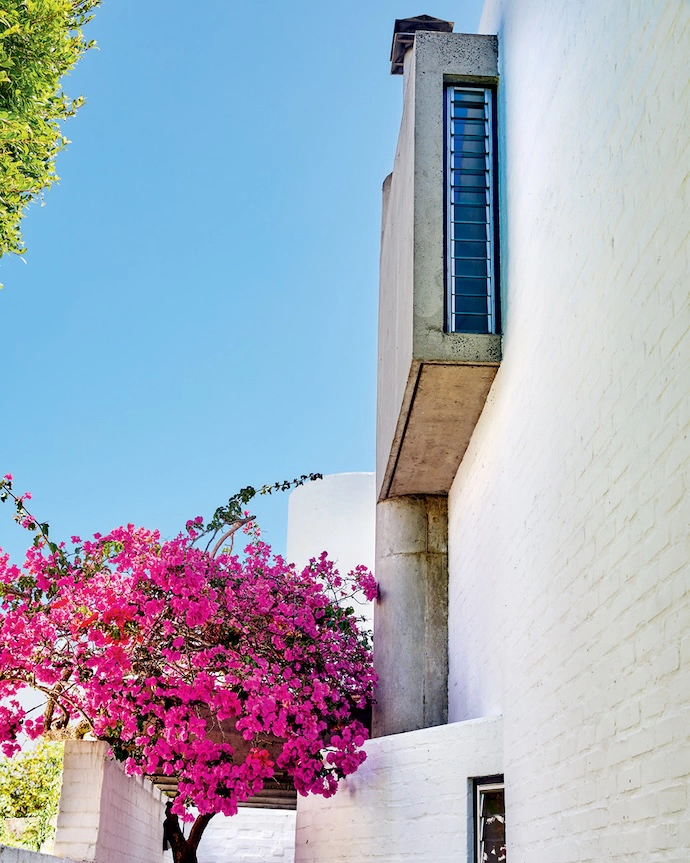
Designed by Adèle Naudé Santos and Antonio de Souza Santos, the home’s blank street- facing facade provides privacy from passers-by. -
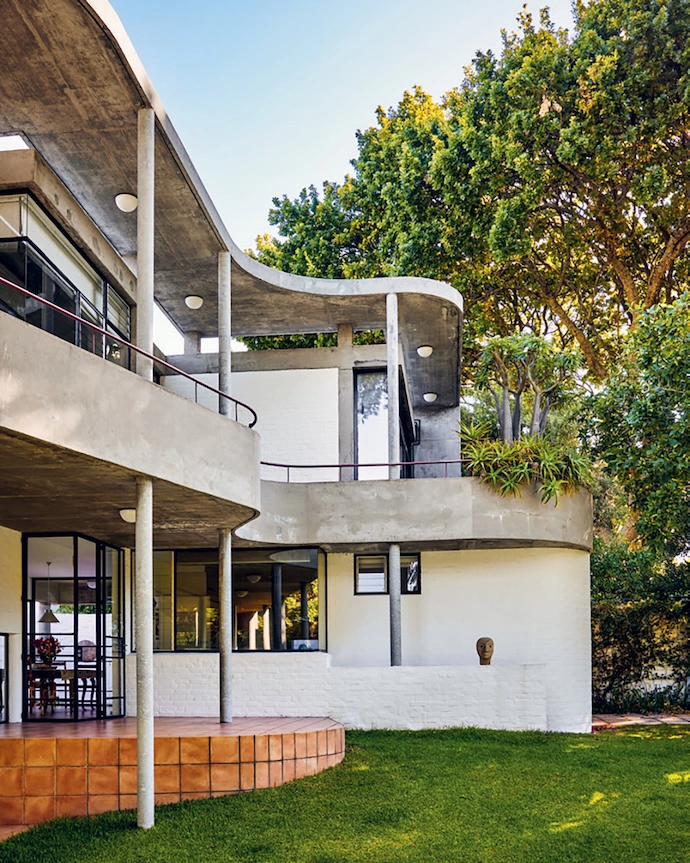
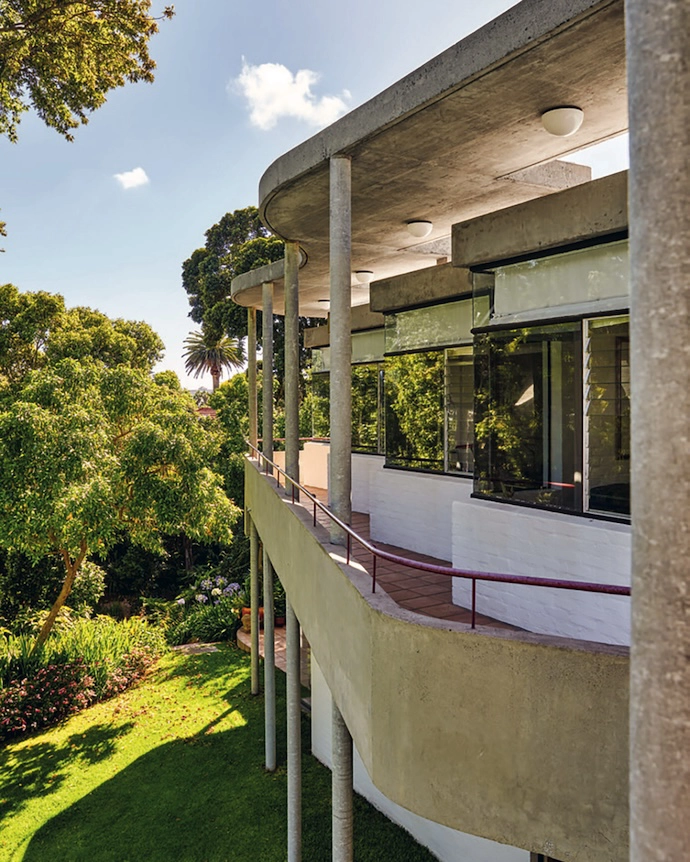
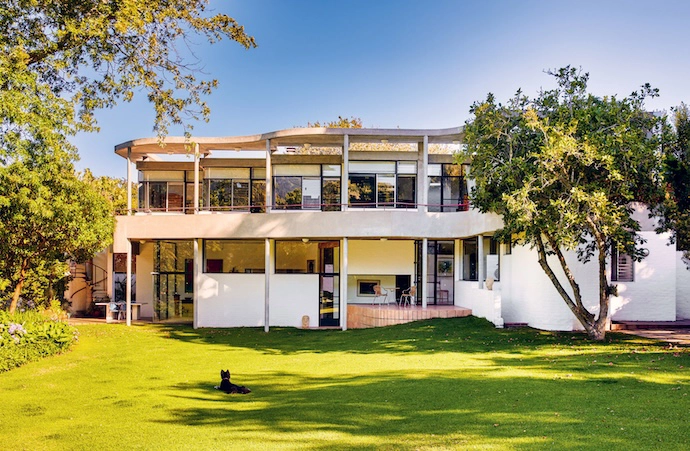
The rear elevation is characterised by large-format glazing. -

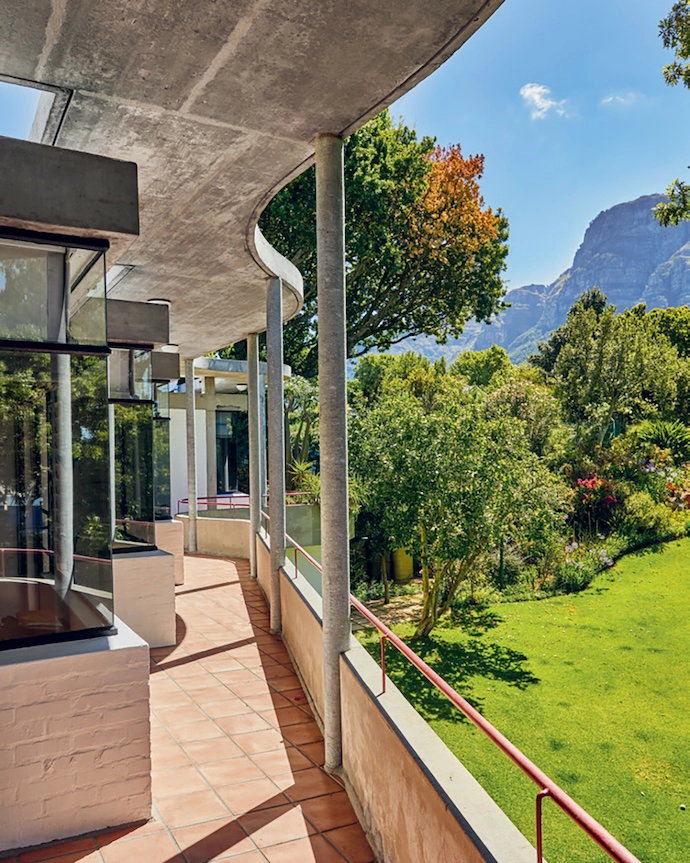
The main bedroom is demarcated with a rectilinear protrusion in the curved balcony. -
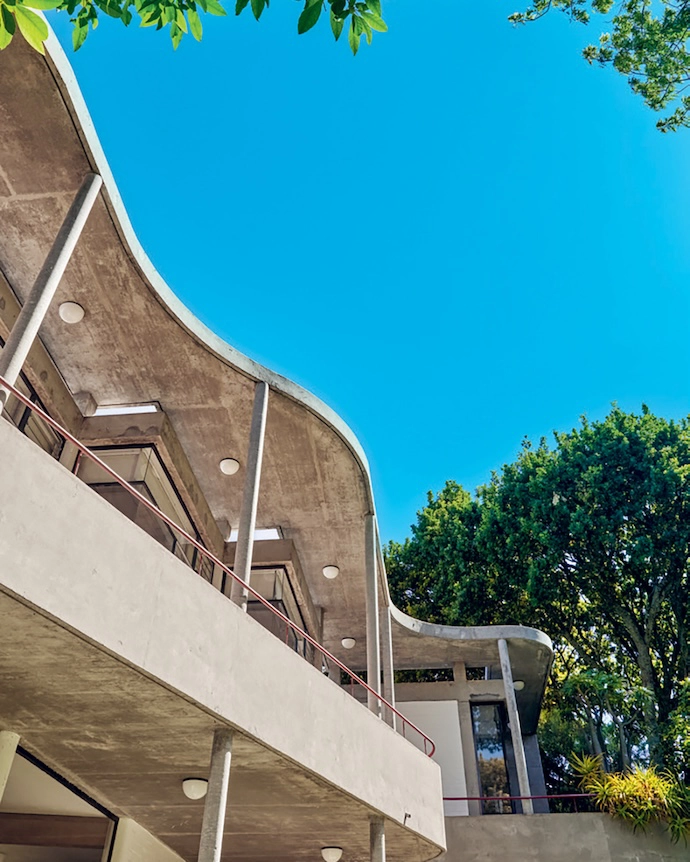
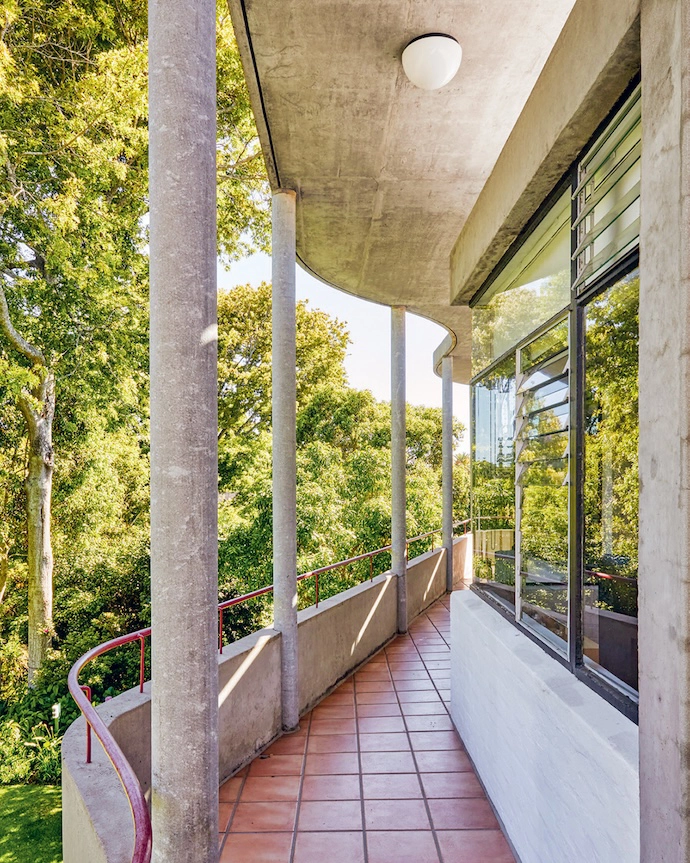
An undulating concrete loggia shades the top floor. -
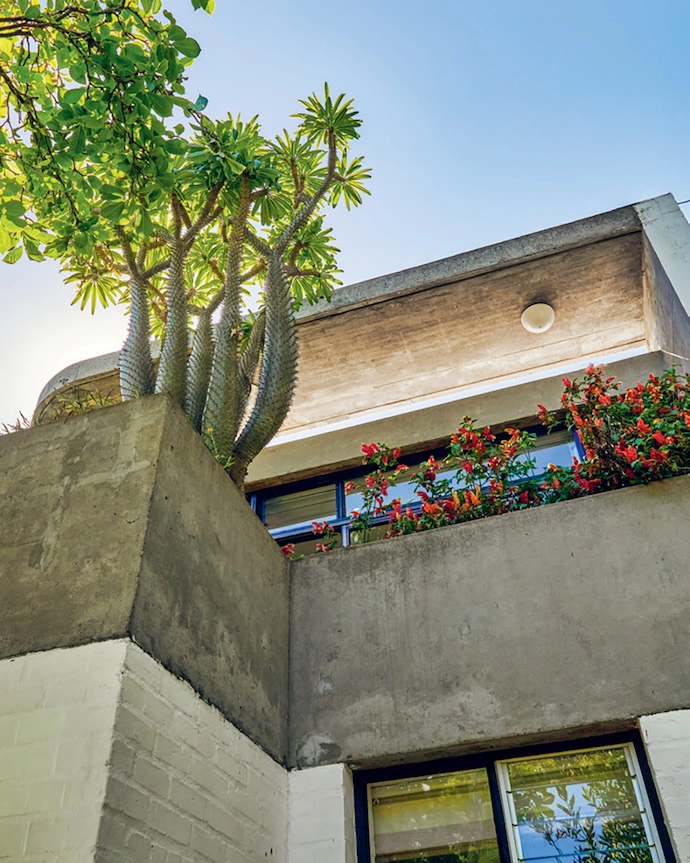
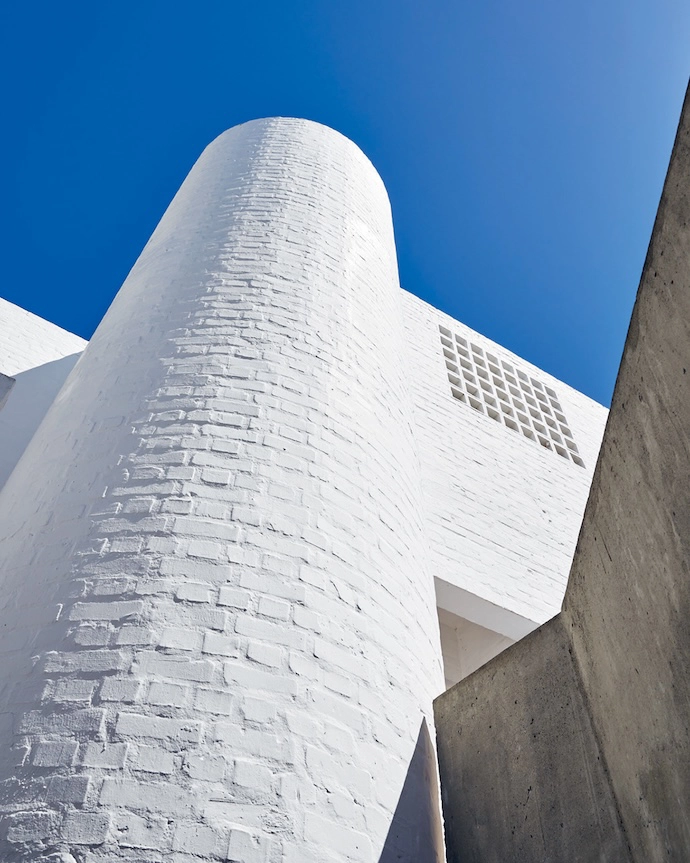
The bagged brick finish is complemented by smooth concrete. -
Arranged in step formation, the four identically sized rooms next to the main bedroom each have access to the balcony and the external spiral staircase. -
Arranged in step formation, the four identically sized rooms next to the main bedroom each have access to the balcony and the external spiral staircase. -
Arranged in step formation, the four identically sized rooms next to the main bedroom each have access to the balcony and the external spiral staircase. -
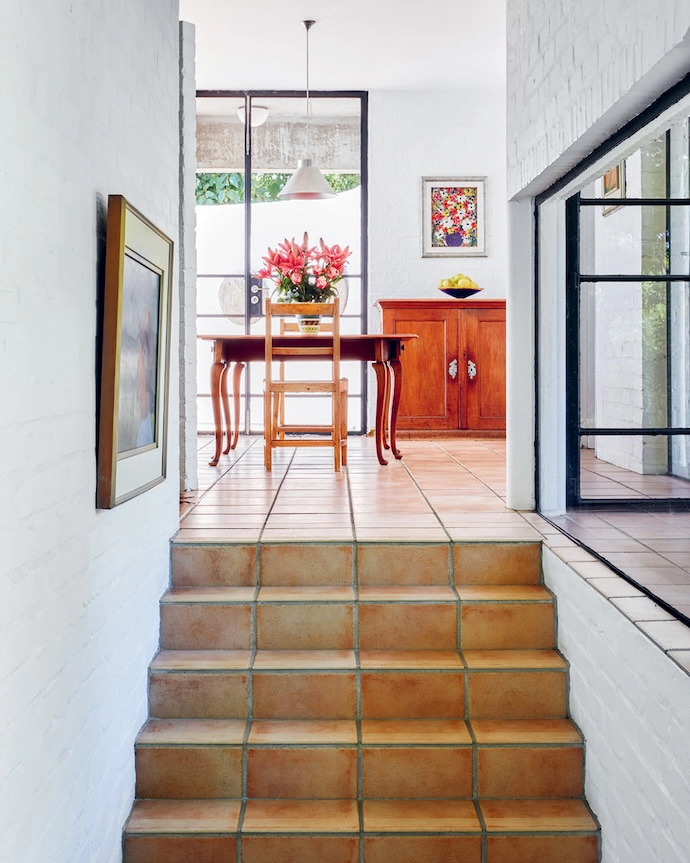
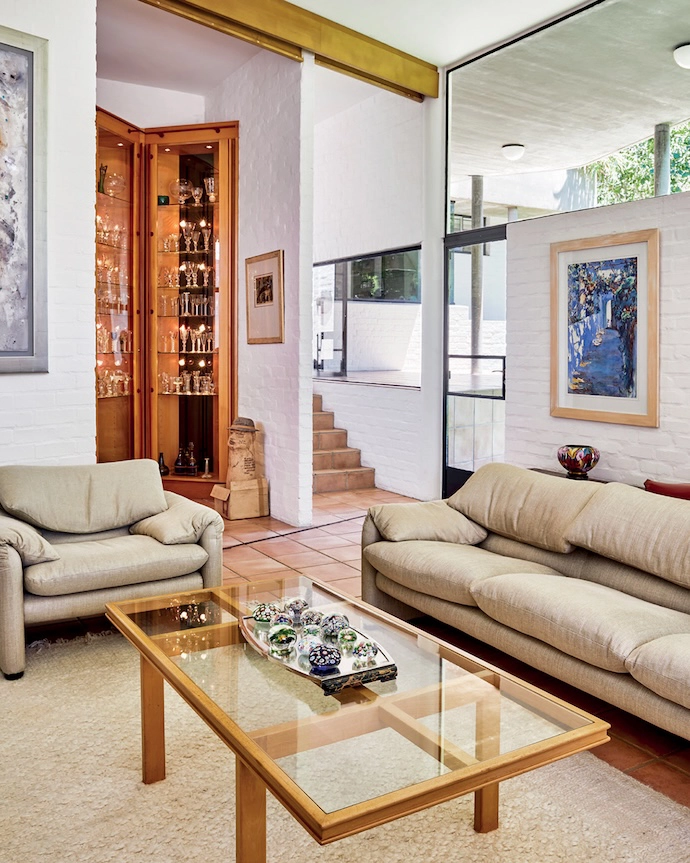
The view from the lounge into the dining room. -
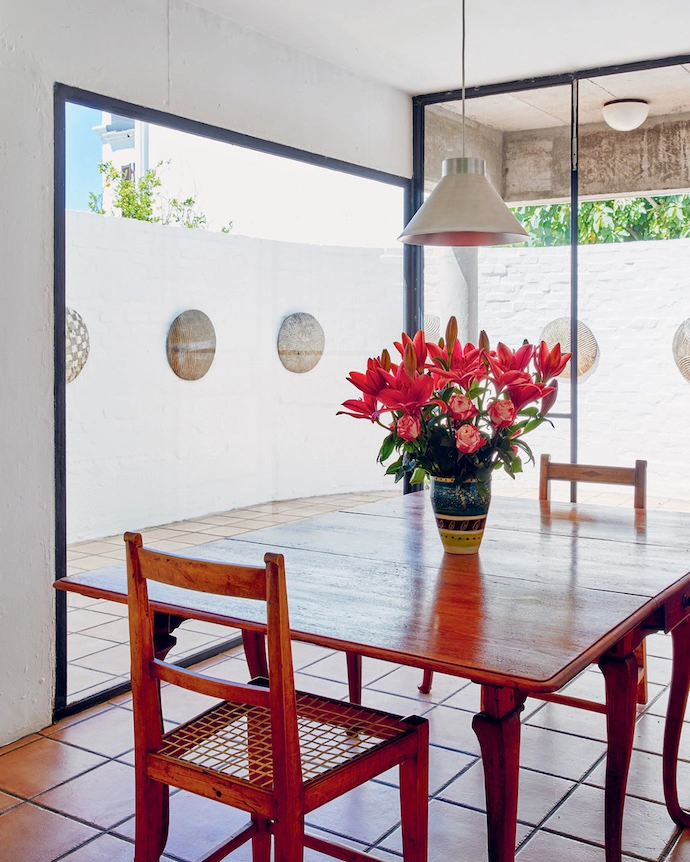
African shields adorn the walls of the sunny courtyard. -
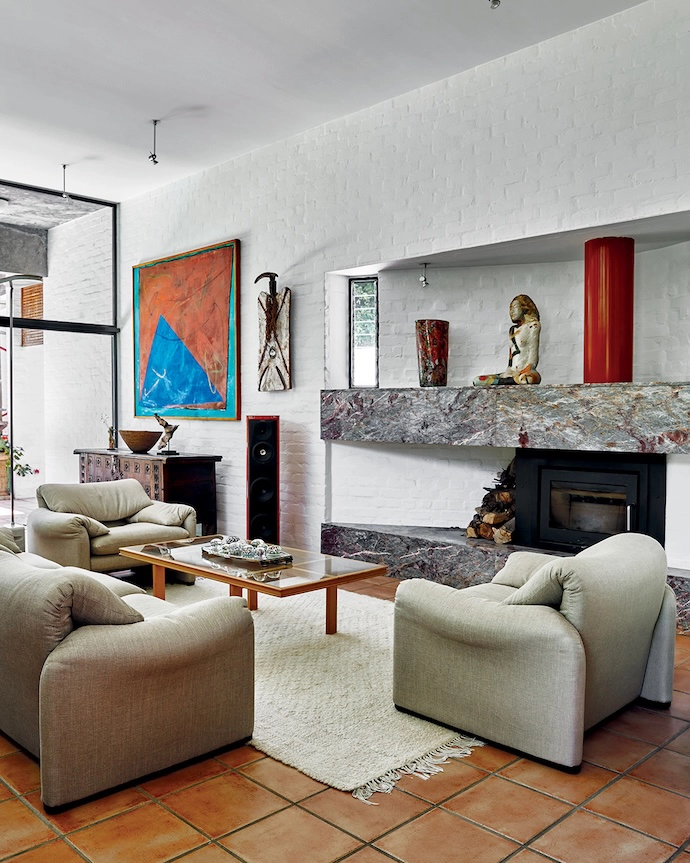
A Maralunga seating system by Vico Magistretti for Cassina and CMPT coffee table by Lichen for Karimoku make for pretty sitting in the lounge. -
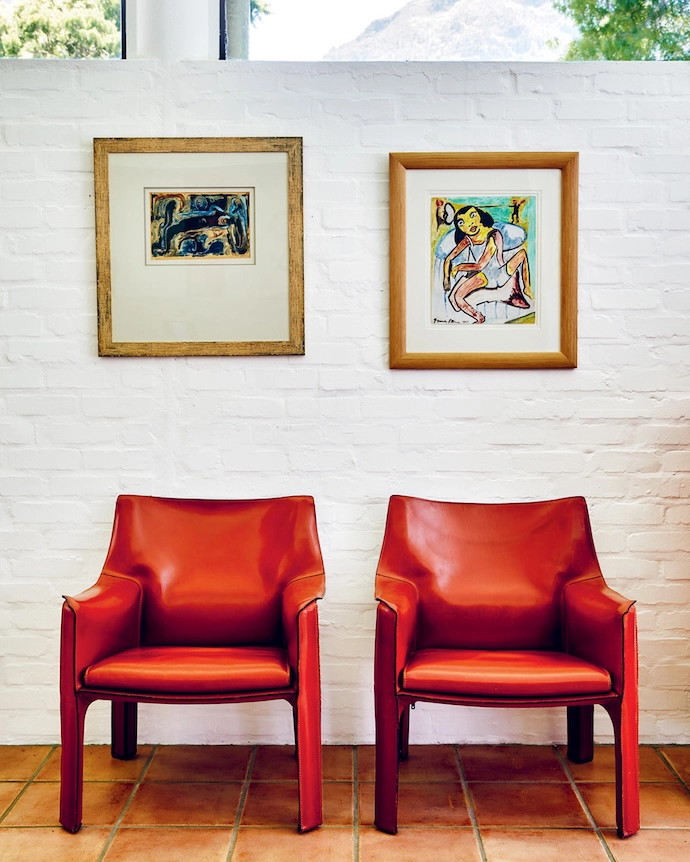
Two Irma Stern originals keep good company above a pair of Cassina Cab 413 armchairs by Mario Bellini. -
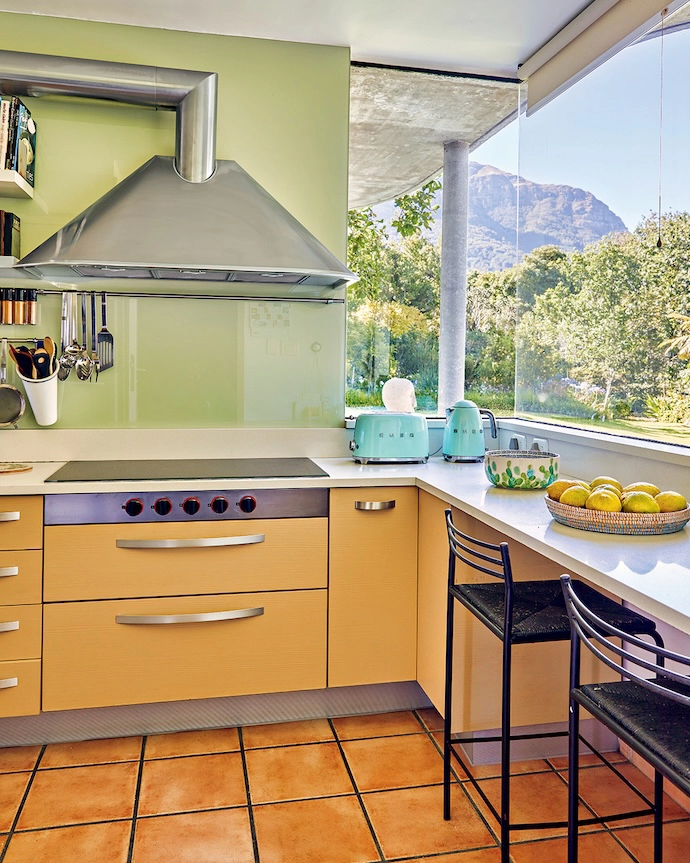
With one of the best views in the house, the kitchen is where owner Mike Stekhoven, a keen cook, is at his most relaxed. -
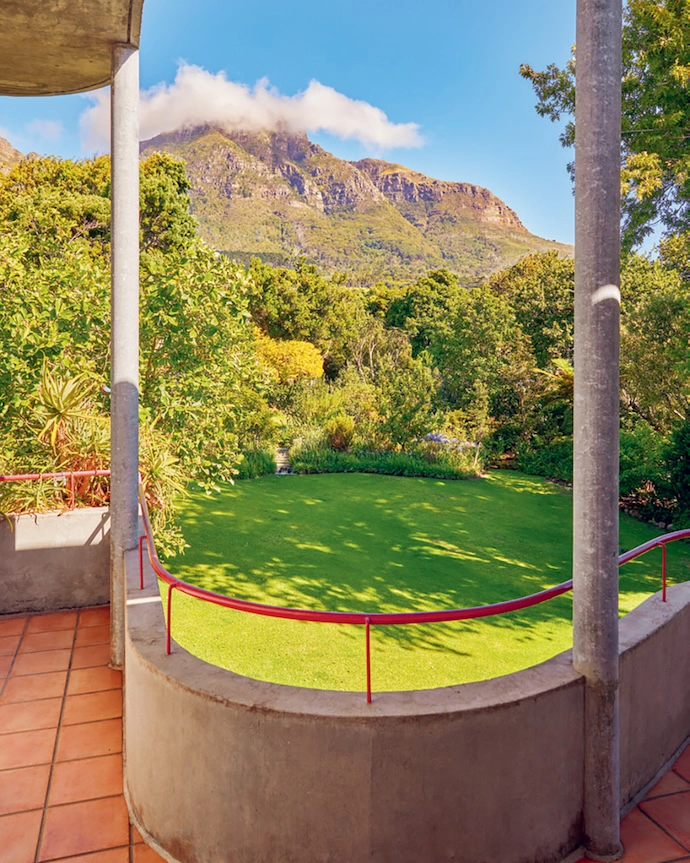
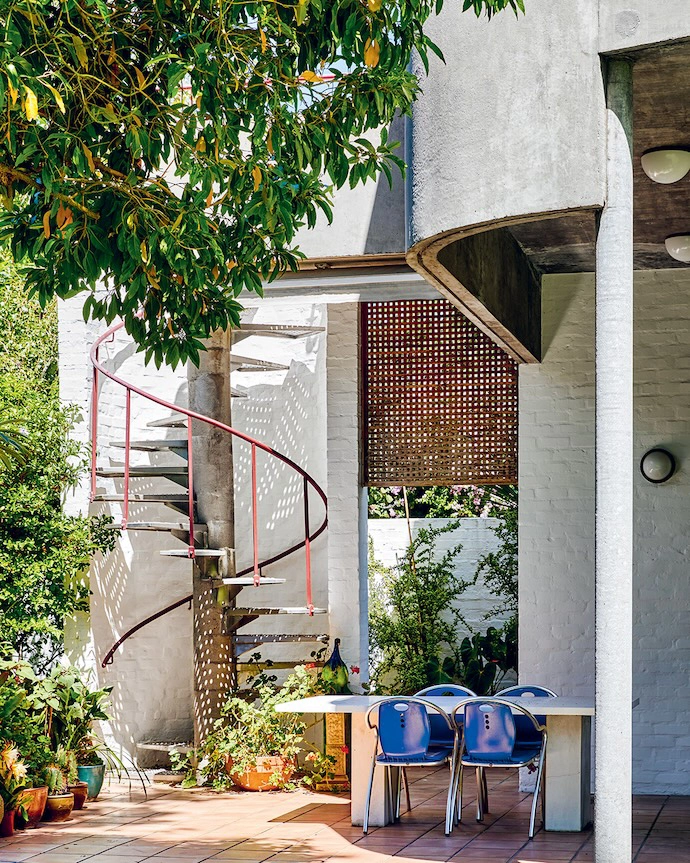
The area next to the spiral metal staircase is a favourite for outdoor entertaining. -
All the artworks in the lounge are by women, including a painting by Jill Trappler, a Burkinabé carved wooden shield, and a sculpture by Evette Weyers. -
Unbeknown to passers-by, the cylindrical projection contains the home’s stairwell. -
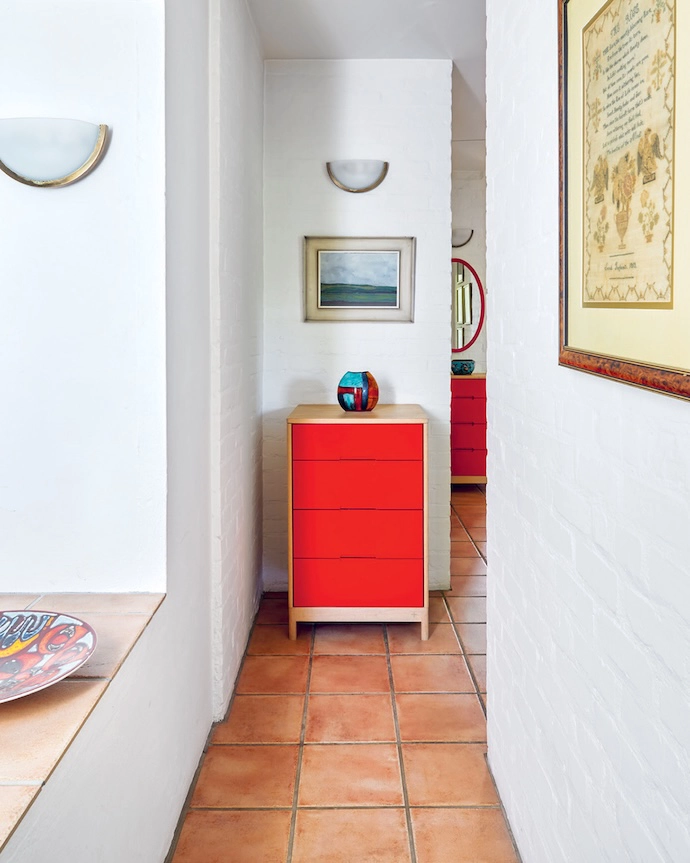
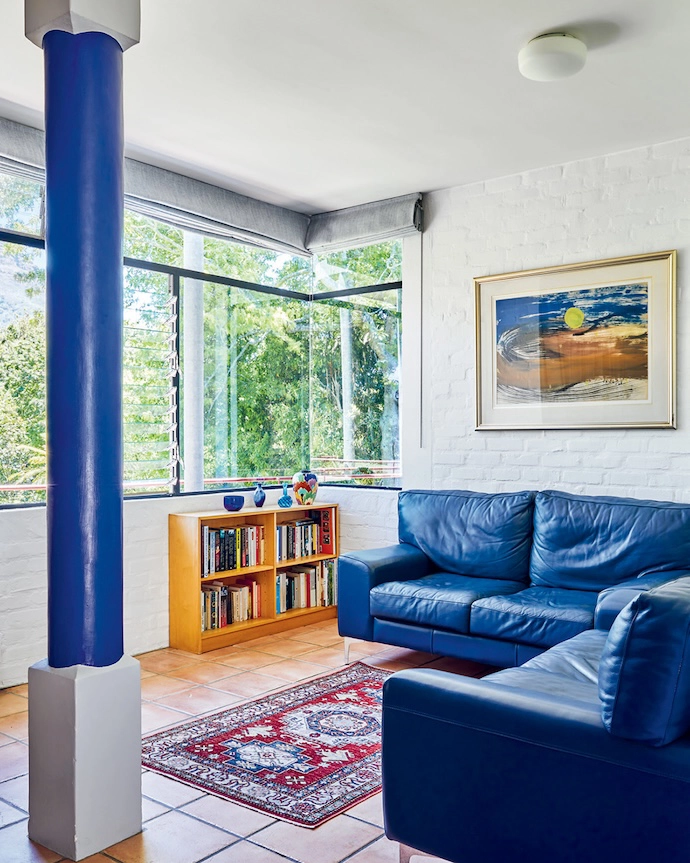
Pops of red and royal blue abound, including a Pedersen + Lennard chest of drawers and an accent pillar. -
Pops of red and royal blue abound, including a Pedersen + Lennard chest of drawers and an accent pillar. -
The vertical slit window extends the sightline of the hallway. -
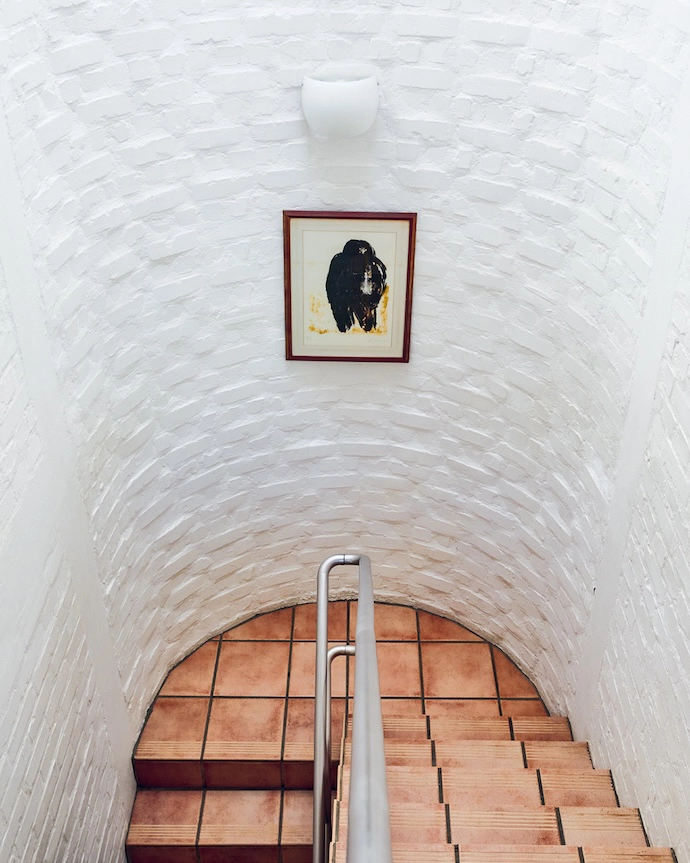
Halfway up (or halfway down?), a Herman van Nazareth original looks onto the cylindrical stairwell. -
Halfway up (or halfway down?), a Herman van Nazareth original looks onto the cylindrical stairwell. -
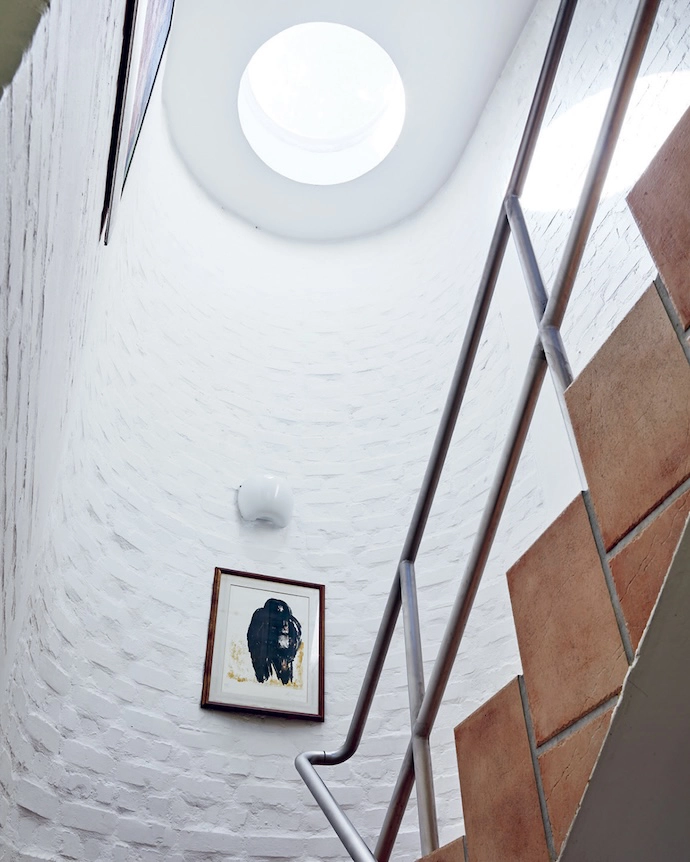
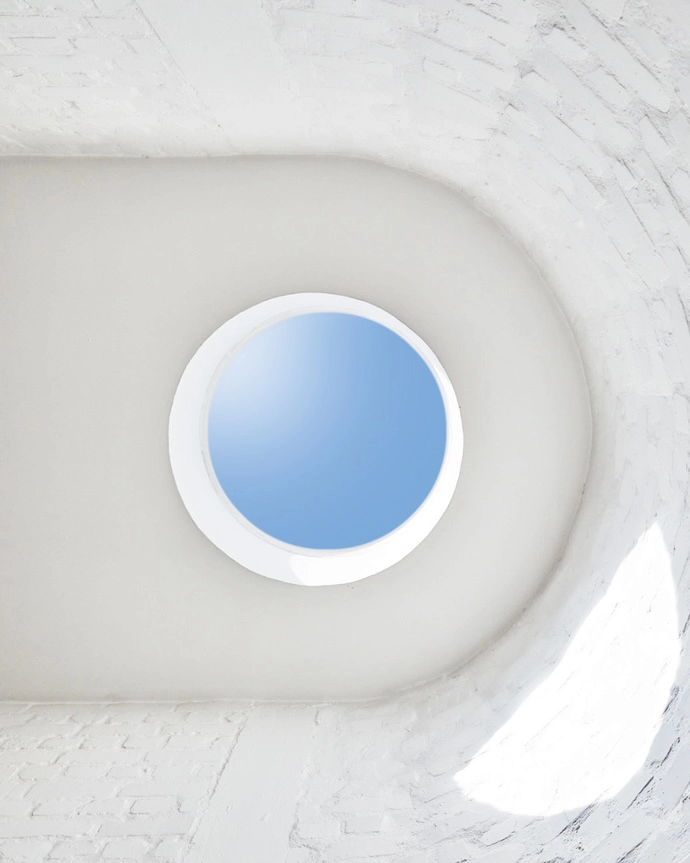
A skylight floods the space with sun, playing up the texture of the bagged brick walls and encouraging upward glances. -
A skylight floods the space with sun, playing up the texture of the bagged brick walls and encouraging upward glances. -
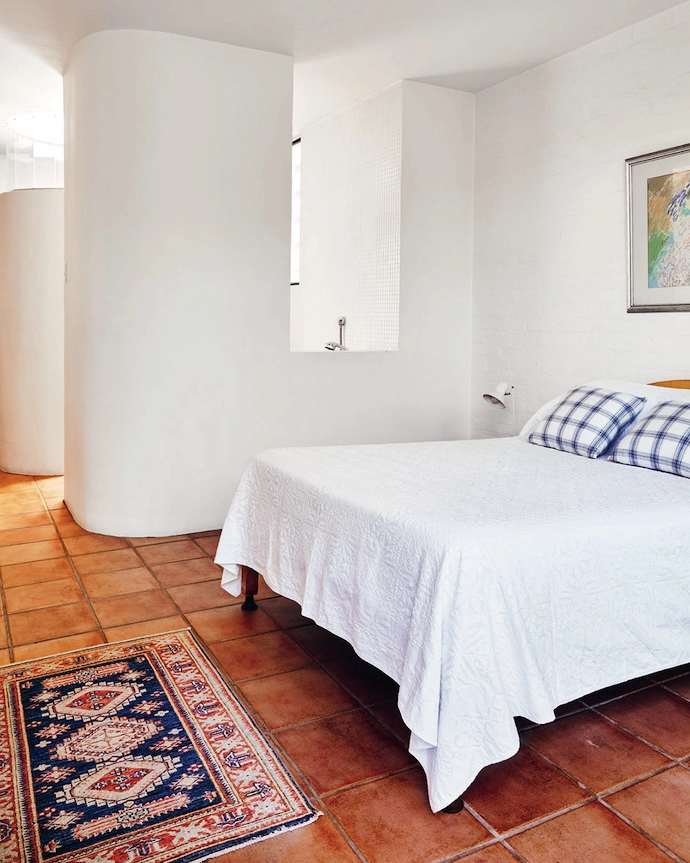
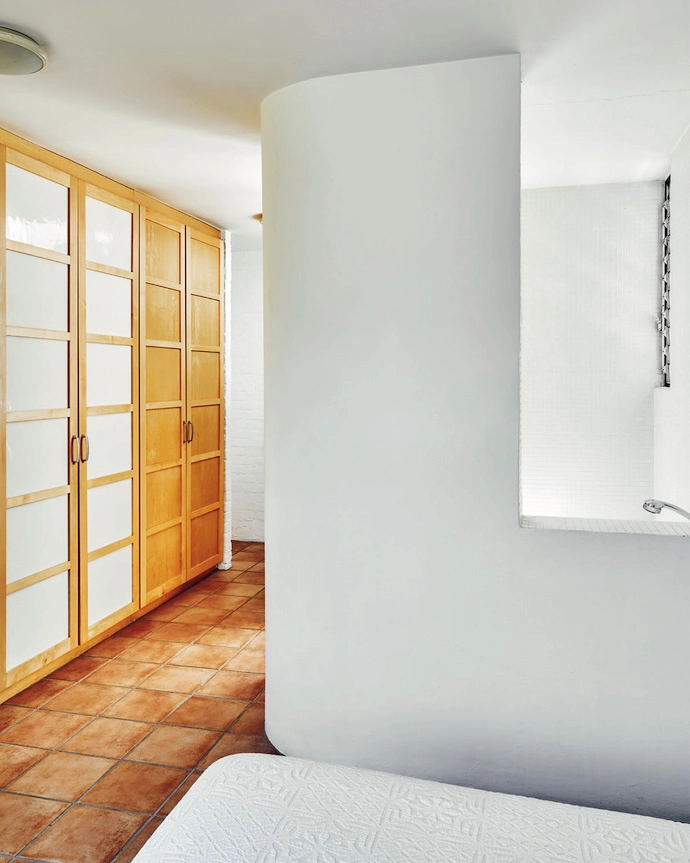
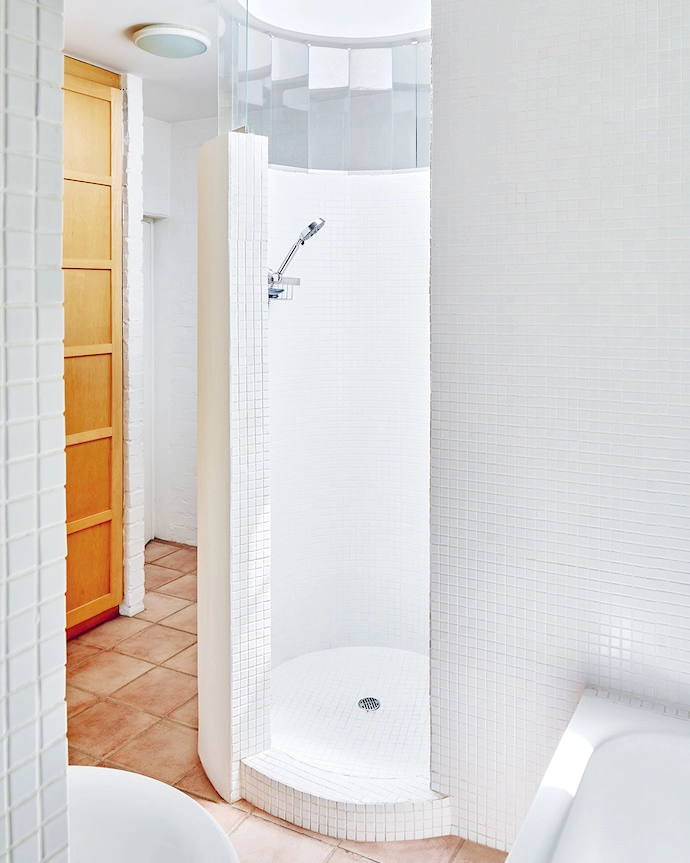
The owners requested an aperture to connect their bathroom and bedroom, allowing them to chat and look at the mountain while bathing. -
Another perspective from the main bedroom. -
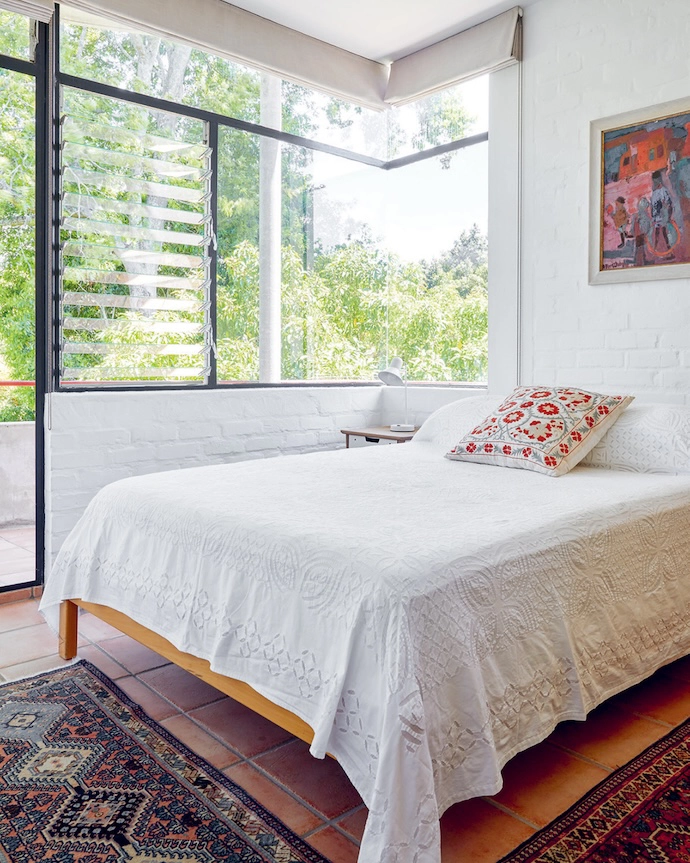
On the opposite end of the house, the kids’ bedroom next to the external staircase is now reserved for guests. -
With a babbling brook soundtrack, the garden-facing rooms encourage relaxation. -
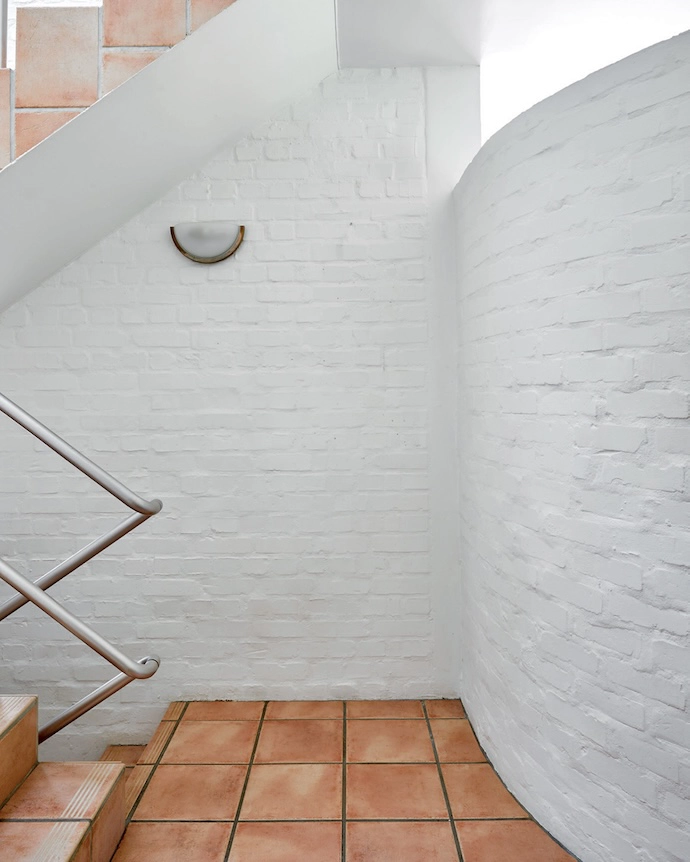
An echo of the stairwell, the cylindrical shower has its own skylight.
At the foot of Table Mountain, a rare heritage-protected Modernist gem by legendary architects Adèle Naudé Santos and Antonio de Souza Santos still brings as much joy to the owner as it did when he commissioned it in 1971.
WORDS Annette Klinger PRODUCTION Steve Smith PHOTOS Greg Cox
There are many reasons why house Stekhoven is special. Location, location, location are the first three. Situated in the suburb of Newlands, it has a front-row seat to the full parade of natural splendours at the foot of Table Mountain’s eastern slopes. River frontage, burbling spring, tranquil pond, private waterfall, close-up mountain view? Check, check, check, check and check. In short, it’s the type of site that makes Cape Town property developers’ hearts flutter.
Reasons four and five relate to the residence itself. The house was designed by renowned architect couple Adèle Naudé Santos and Antonio de Souza Santos during what’s described as their golden era in South Africa between 1968 and 1973, before both went on to achieve starchitect status in the US – albeit each in their own right, after their separation in the 1980s. Along with six other residences and two apartment complexes in the Southern Suburbs, House Stekhoven forms part of the Santoses’ limited-edition portfolio of South African architecture, and its design (as well as the highly desirable plot it occupies) has secured it Grade IIIA status – the highest local heritage grading.
But perhaps the most special thing about it is the fact that it’s still occupied by the same residents who commissioned it in 1971 – Mike Stekhoven and his wife Penny. “We were living in a cottage with our four children, and we realised it was getting too small,” says Mike. “I opened up the property section in the newspaper and saw a plot in Newlands for sale. I offered 80% of the asking price, which I won’t mention, because today you can maybe buy a good meal with it… An hour later, the offer was accepted. The next day, my phone was ringing off the hook with people who’d seen the plot asking me to name my price.”
The son of an architect himself, Mike wanted a Modernist house, having admired architect Gawie Fagan’s House Raynham around the corner. “I went to university with the chairman of the Cape Institute for Architecture, David Jack; I told him I’d bought a beautiful piece of land, I wanted to build a Modernist house, and I asked for his suggestions for the best architects,” he says. “At the top of his list were Adèle and Antonio de Souza Santos.”
Beyond knowing what he wanted, Mike’s brief was quite generous, the only specifications being that the house should be designed around the view, and the layout oriented around the kitchen, where the family loved spending time together. “When you go into the kitchen, you’ll note it has magnificent views of the garden,” he says. “The layout of the house, the way it worked, was what we wanted. The whole thing has worked from day one.”
The double-storey floor plan is a squashed “L”, with the inside of the letter predominantly glazed and oriented towards the mountain, and the outside comprising a bagged-brick facade punctuated by cylindrical projections. An iconic design aspect is the north-west facade’s concrete balcony and loggia, which echo the curves of the mountainous view and shade the interior from the harsh northern glare.
While the design the architects came up with has been widely cited in curriculums and publications for its technical mastery and distinctive sculptural form, it was also created with small children in mind. Neighbouring each other in a step formation, what used to be the kids’ rooms all open onto the balcony, where the undulating design of the loggia shepherds you towards the exterior spiral staircase to the right, rather than the master suite on the left, where the line veers sharply in a rectilinear direction, offering a tailor-made escape route for the kids when they were growing up.
Upon completion in 1972, the house generated considerable interest locally – and further afield. “Within a year of building, people were asking to see the house, and universities were bringing classes and groups of visitors from overseas,” recalls Mike. “It was lauded from the get-go.” More than half a century later, the building shows no signs of ageing – and the land it sits on remains highly desirable, with new projects continuing to reshape the Newlands landscape. “We’ve lived here for 50 years,” Mike says. “We’ve had a marvellous time. We’ve loved the house. We’ve loved the garden. Our hope would be that whoever gets it after us will value it to the same extent, and not want to touch anything. It certainly deserves that.”
Adèle Naudé Santos and Antonio de Souza Santos
Adèle and Antonio’s early collaboration in South Africa between 1968 and 1973 shaped a thoughtful, socially responsive approach to modern architecture. Working during a period of political tension and rapid urban change, they engaged with questions of climate, community and cultural context. Their South African work laid a rigorous intellectual foundation that later propelled both to stellar careers in the US, where they became respected figures in architectural practice, teaching and critical discourse. Adèle is the principal architect at Santos Prescott and Associates, and served as the dean of the School of Architecture and Planning at MIT. Antonio is Professor Emeritus at New Jersey Institute of Technology. | santosprescott.com
Don’t forget to sign up to our weekly newsletter for the latest architecture and design news.