-

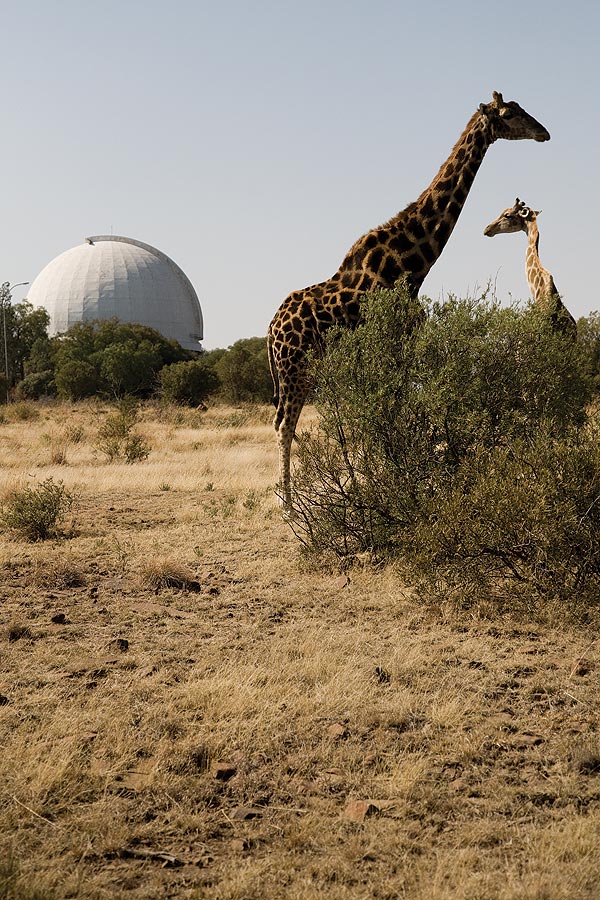
24 hours in Bloemfontein : Lamont-Hussey Observatory -
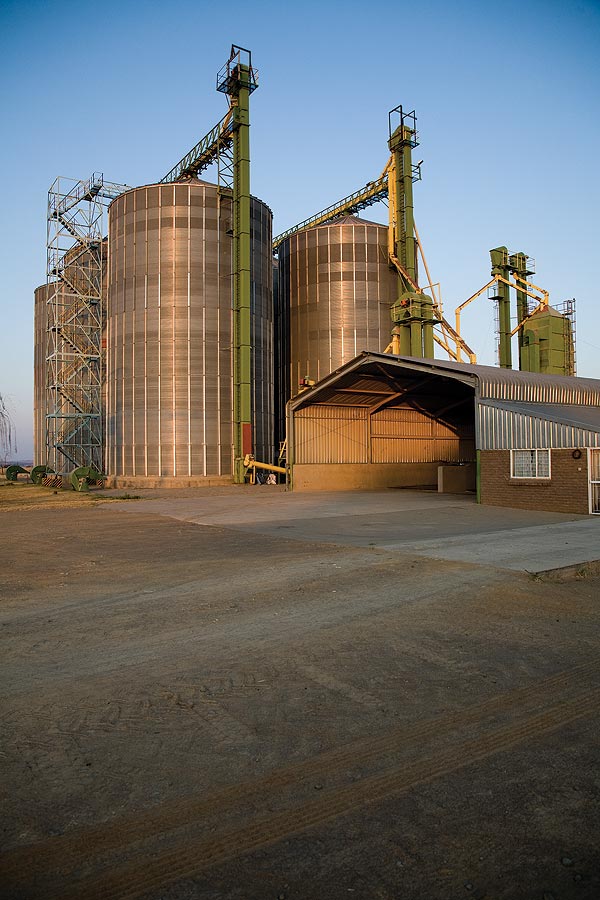
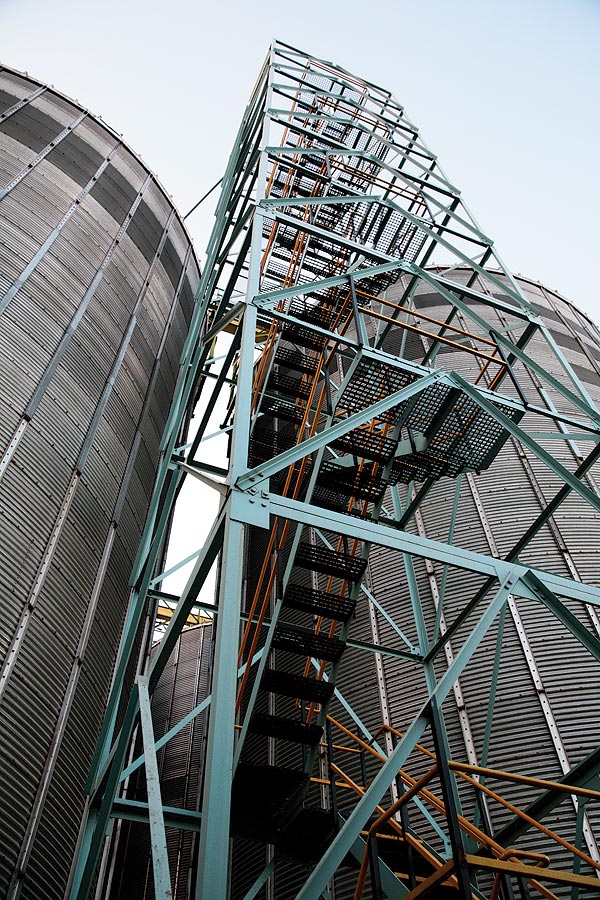
24 hours in Bloemfontein : Bainsvlei Silos -
24 hours in Bloemfontein : Bainsvlei Silos -
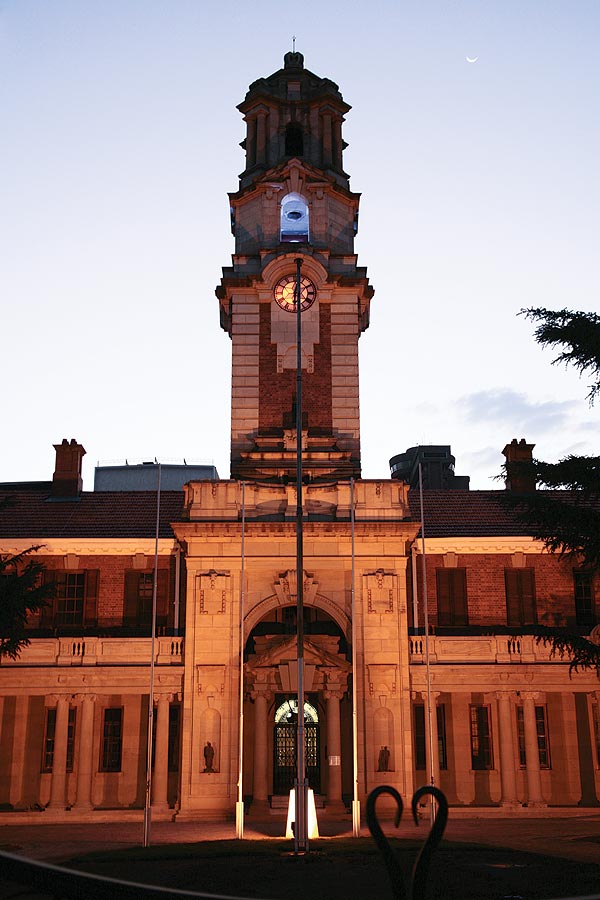
24 hours in Bloemfontein : National Afrikaans Literature and Research Centre -
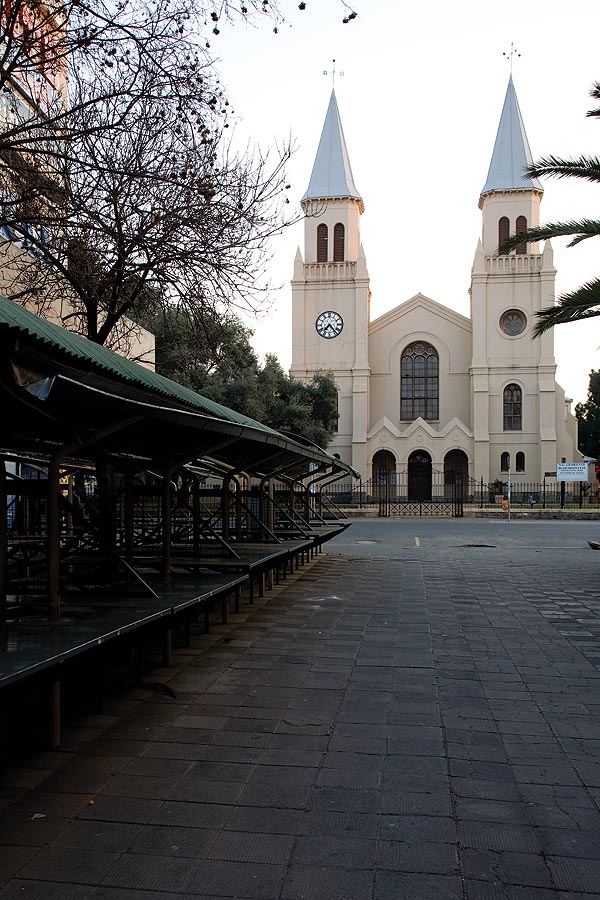
24 hours in Bloemfontein : Twin Tower Church -
24 hours in Bloemfontein : Fourth Raadsaal -
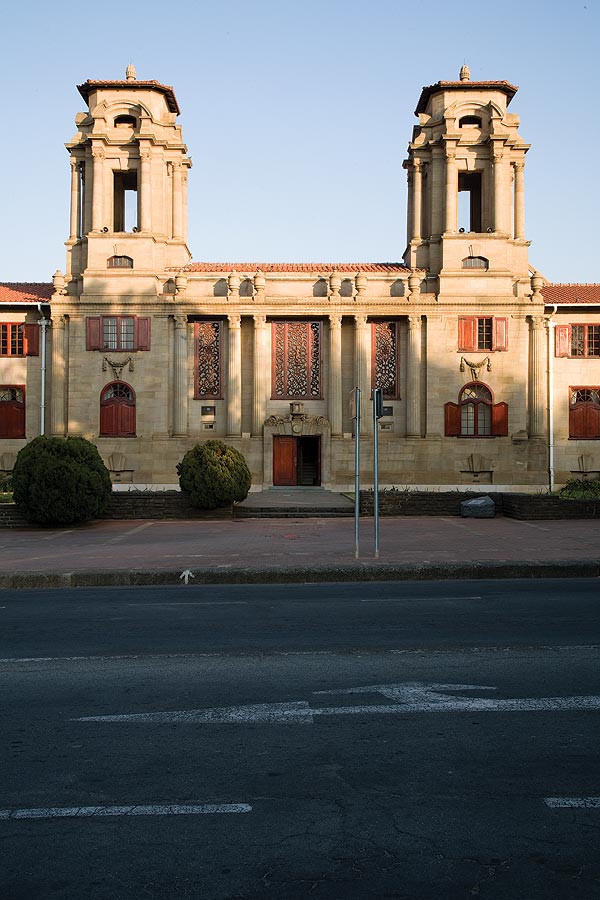
24 hours in Bloemfontein : President Brand City Hall

PHOTOS: David Ross | PRODUCTION: Klara van Wyngaarden | WORDS: Alma Viviers
The five buildings you have to see in the City of Roses – as selected by Architecture Department Head, Professor Jan Smit – embody the distinctive character of the Free State.
Lebohang building – 1968
The design of this building, formerly known as the Verwoerd Building, was a reaction to the classic sandstone buildings of President Brand Street. Influenced by the interpretation of the Modern Movement in Brazil, architect Jannie Witthuhn designed a modern structure of concrete and glass, as well as local materials such as granite sourced from Parys and marble from Vanrhynsdorp. Passive climate control was also an important design consideration.
The H-plan sees the long wings orientated to the north and south, and the use of brise-soleil to shade windows – horizontal louvres on the south facade and vertical on the west and east facades. The circulation space linking the two wings of the building has magnificent concrete and glass panels designed by local artist Eben van der Merwe. A scalloped aluminium panel on the western side shields the space from the severe afternoon sun. At night, the panels are lit from the inside and make for a spectacular colourful light display.
The building makes bold use of reinforced concrete, which elevates it from the site in typical Modernist fashion. But the addition of colour, in the form of mosaic work, and the glass and concrete panels, breaks with the austerity of the traditional International Style. The design of the building precedes that of the Sand du Plessis Theatre and the Civic Centre in Bloemfontein by the same architect.
• Cnr. Markgraaf & St Andrews streets
Lamont-Hussey Observatory – 1928
The Free State’s clear, expansive skies make it an ideal location for astronomical observation, which is why Professor W.J. Hussey and his friend R.P. Lamont chose Bloemfontein as the site for astronomical observation in the southern hemisphere. Located in the Franklin Game Reserve near the city centre, the observatory was opened in 1928 after all the components and the telescope had been shipped from Michigan in the United States and assembled on the site.
The rotating white dome with observation slit rests on a red brick base, and details such as the light fittings and small face bricks allude to an Art Deco influence. The observatory was in use until 1974 but, as the city lights grew brighter, it was shut down and the space was converted into an intimate theatre.
• Naval Hill, Franklin Game Reserve, www.assabfn.co.za
Twin Tower Church – 1878
The organisation of many South African towns, especially in the Free State, often occurred around the church. Many of these towns have a main road called Church Street, which leads to the church building. Built on the site of a modest thatched-roofed church where Reverend Andrew Murray was once a minister, the Twin Tower Church acts as a reference point in the city. Although new developments have ignored this vital role, it is still an imposing yet sober building.
The church is even more significant due to the fact that it is the only Dutch Reformed Church in South Africa that has two towers. Architect and master builder, Richard Wocke, adapted W.B. Hays’ original design for the church. The adapted design favoured the German Neo-Gothic style owed to Richard’s German descent, seen in elements such as the pointed spires. Romanesque elements are also visible in details such as the distinctive arched windows. The church’s austere design creates an overall impression of simplicity without any frivolous or unnecessary decorative elements.
• Charles Street
Bainsvlei Silos – 2004
The minimalist mantra, Form follows Function, comes to fruition in these iconic cylinders designed purely to accommodate the function of food storage. There is definitely no decoration here but, against the blue sky and the yellowing plain of crops, the steel silos of Bainsvlei take on an almost sculptural quality in the Free State. Agriculture is one of the main industries in this province and silos constructed with a variety of materials, including brick and concrete, can be spotted throughout the landscape. The economy of means and use of materials in the design of the Bainsvlei Silos serves as an inspiration to the architects of the region.
• Bainsvlei Street
President Brand Street Heritage Area
1. City Hall – 1934
Unlike its contemporaries of the time, the City Hall is a more restrained example from a protégé of the Baker School, Gordon Leith. The extended nature of the building, the modest entrance, low-pitched tile roof and fluted columns that rise through two storeys all speak of Sir Herbert Baker’s influence. Leith’s design ensured that he won an architectural competition – under the condition that he would add the two towers to make the building appear more imposing. Art Deco influences can be seen in the interior of the City Hall, but the overall simplicity of detailing heralds the New Tradition – a clear break with the classical.
• President Brand Street
2. National Afrikaans Literature and Research Centre – 1875
Richard Wocke originally designed the building as a single storey with a high clock tower. However, a second storey and an extension by Sir Herbert Baker were added to the Old Government Building. After a devastating fire in 1908, the building was reconstructed in the style of Baker’s addition. The clock tower is reminiscent of the Old Arts Building in Pretoria. The latter was built during the time of the restoration of the Old Government Building, and also features a Baker-style tower.
• President Brand Street
3. Fourth Raadsaal – 1893
This is a good example of the flourishing late-republican Orange Free State, as seen in the embellished Neo-Renaissance style with classic Greek fluted columns, ionic capitals and a decorated pediment. Yet the striking combination of red bricks and sandstone columns gives the building a distinctive Free State character. Designed by Lennox Canning, it also features a cast-iron fence that was imported from Paris.
• President Brand Street