-

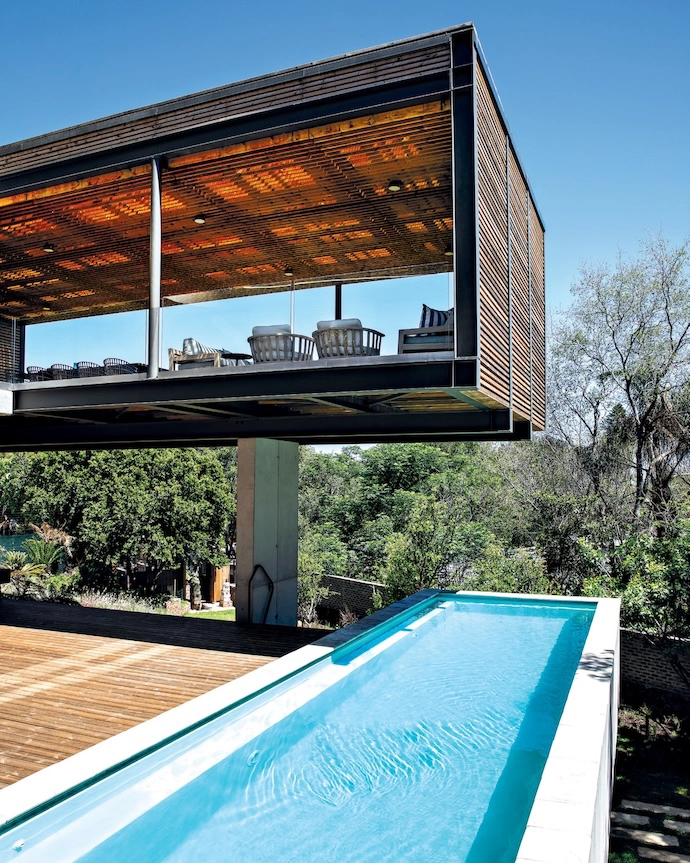
The floating patio at this Waterkloof Ridge property extends the living space outwards into the view while forming a central decked courtyard by the pool – like an open-air atrium at the heart of the home. -
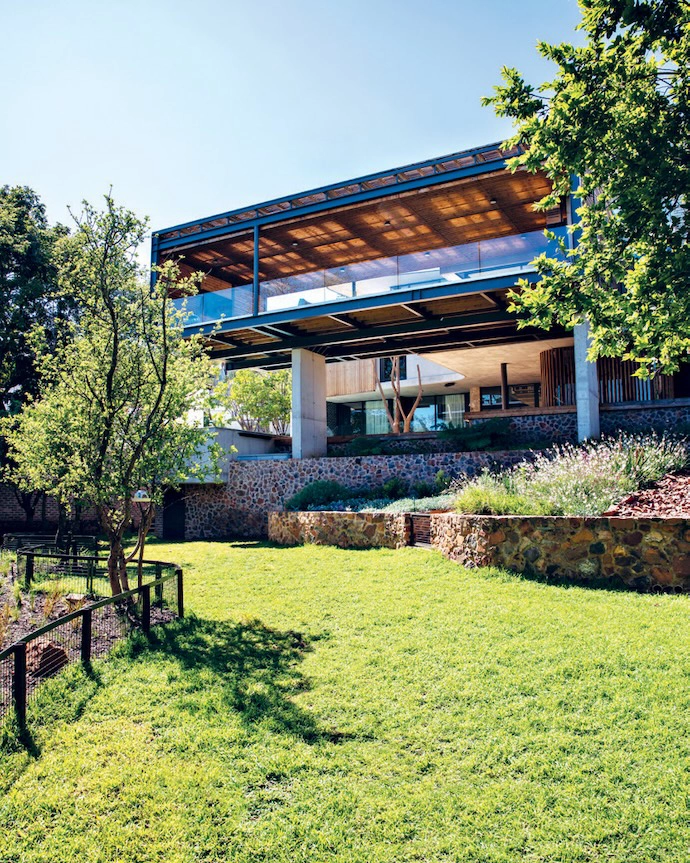
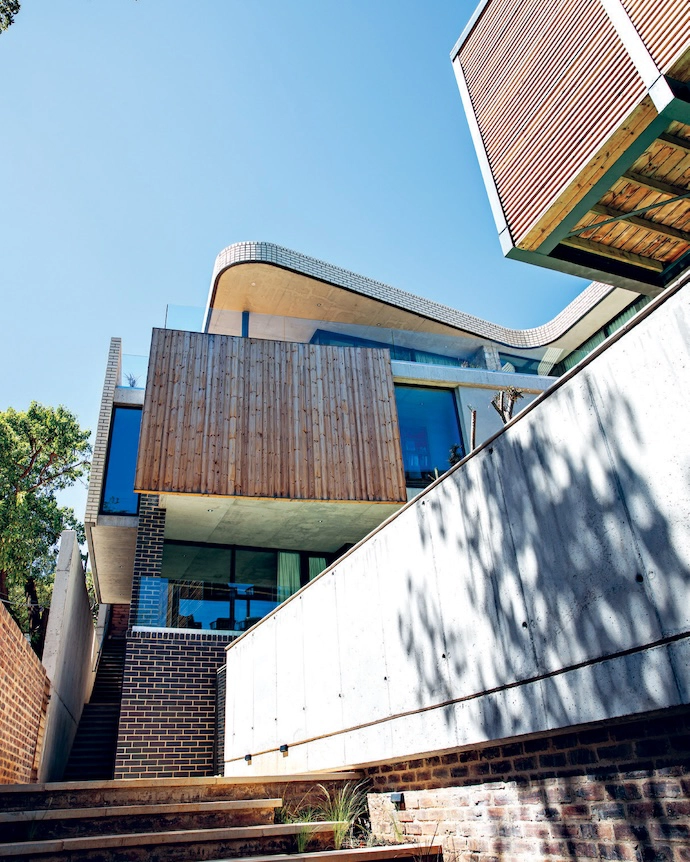
From the bottom of the steeply sloping site, the true elevation of the floating patio becomes apparent. -

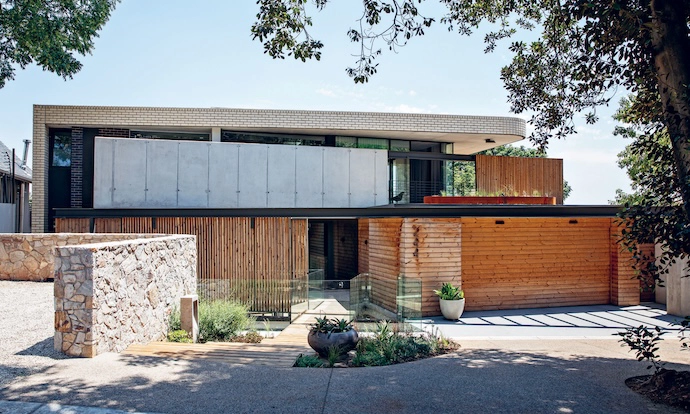
The home’s complex geometry is softened by a rich palette of materials. -
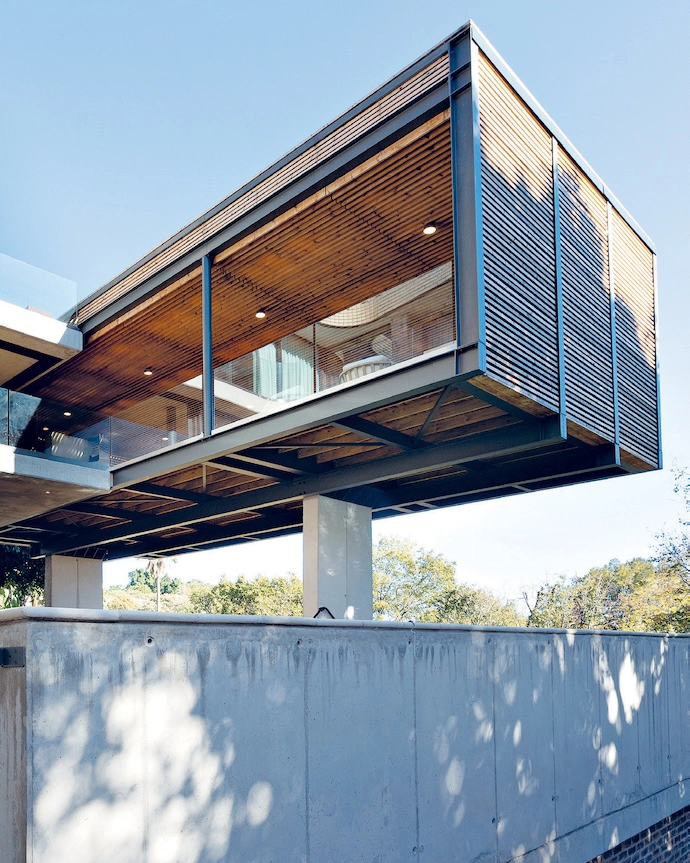
The dramatically cantilevered patio seems suspended from “sky hooks”, as Leon calls them. -

From the street, the house reveals a series of angular, fragmented planes in brick, timber and concrete. -
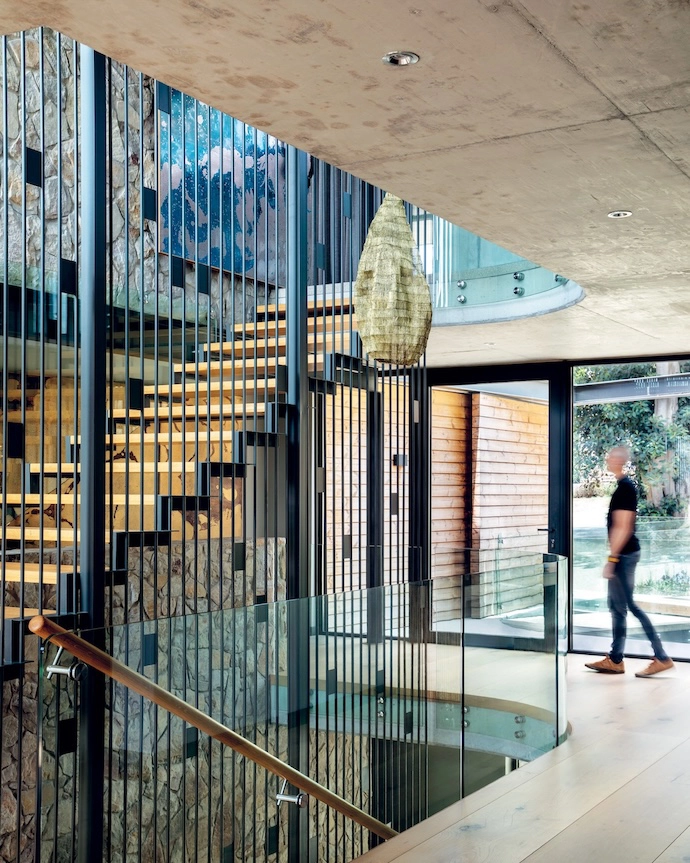
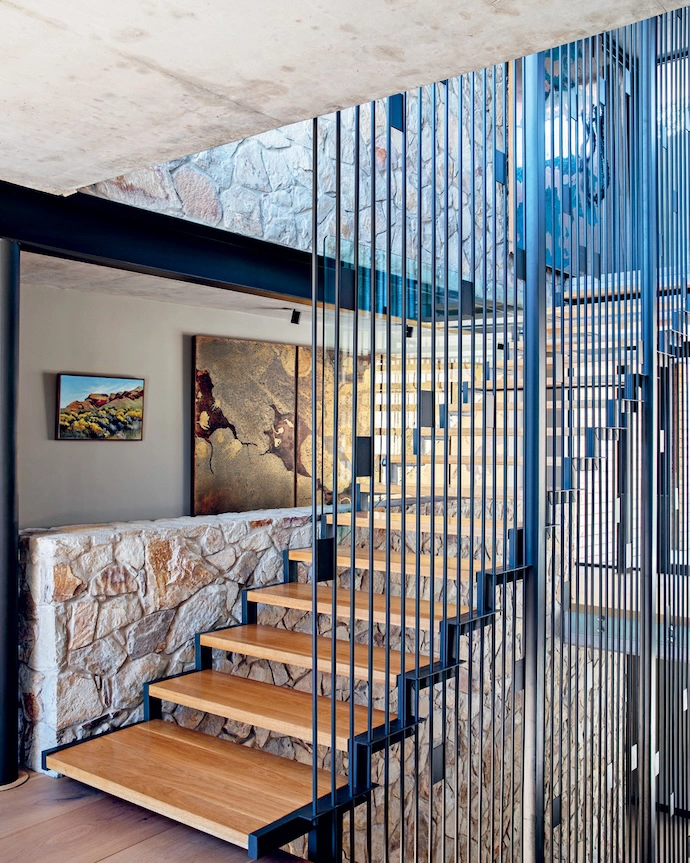
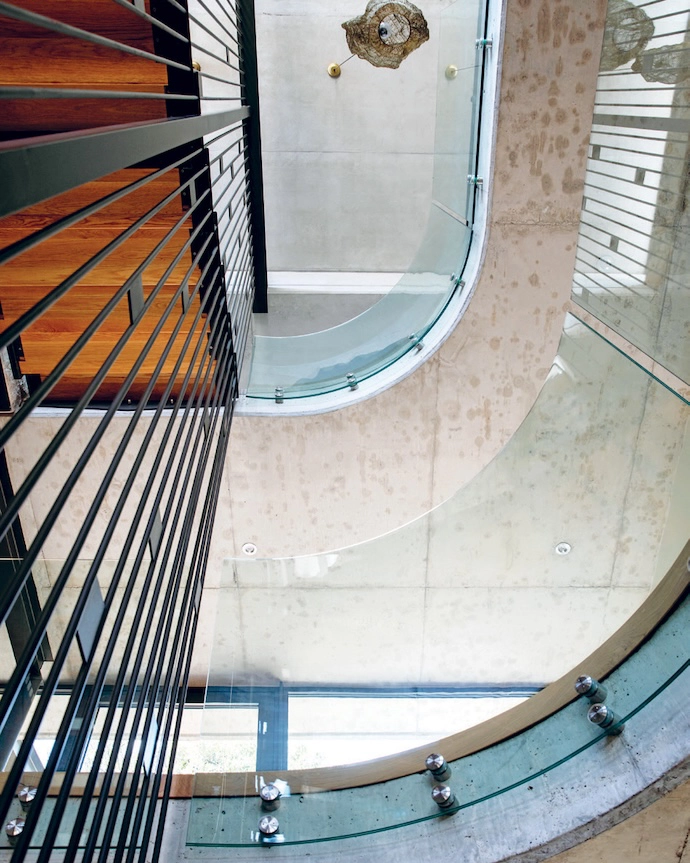
Sculpture meets engineering in the suspended staircase, which appears to fl oat in the triple-volume void near the entrance. -
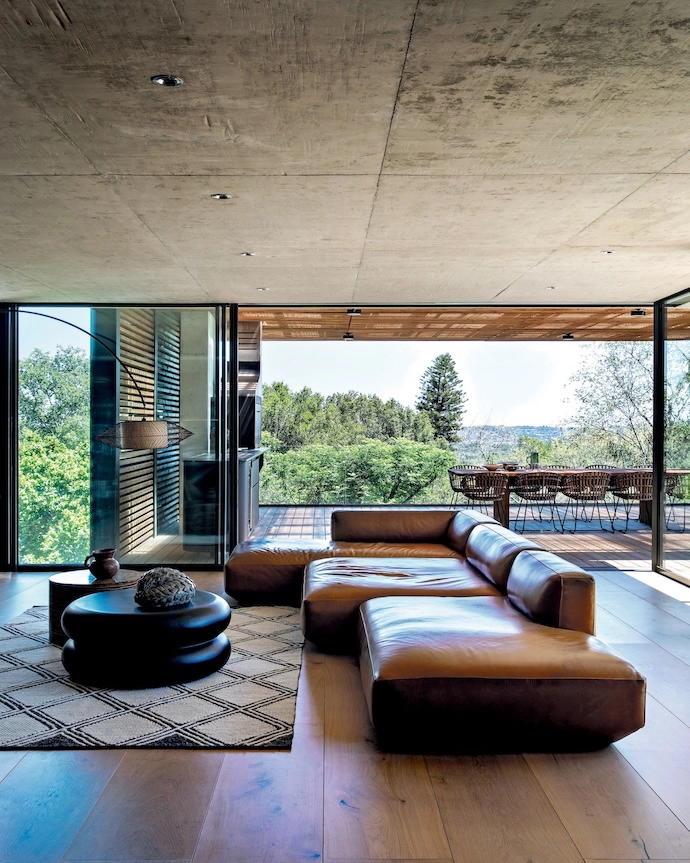
The main living area flows onto an outdoor bridge, leading to a floating patio that perfectly frames the panoramic views. -
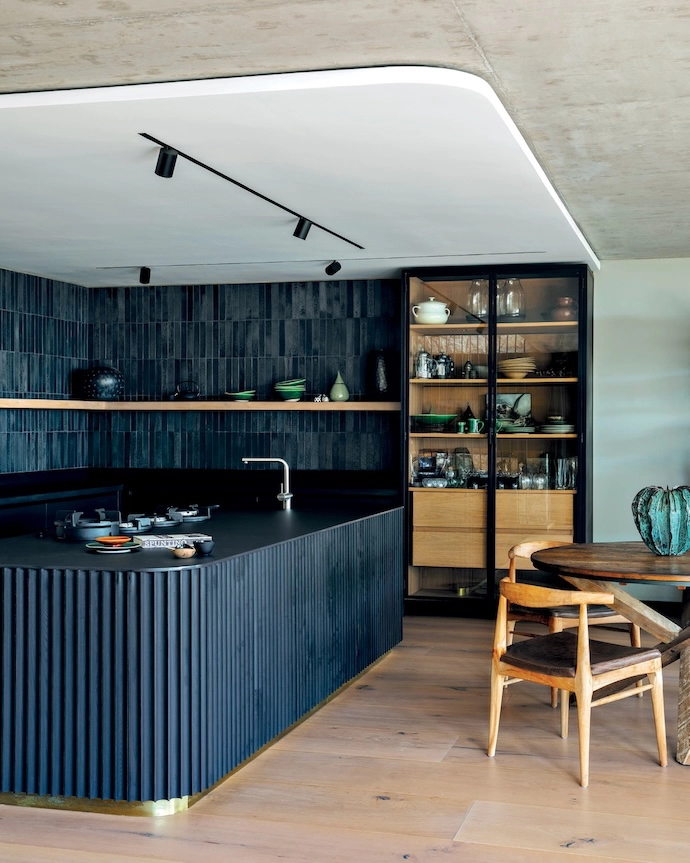
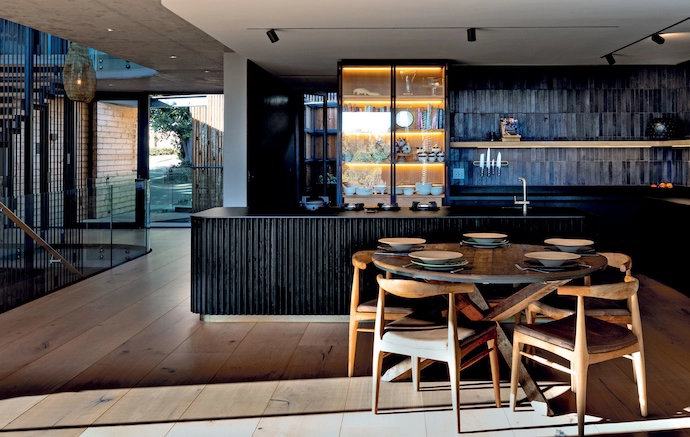
In the kitchen and dining space, an interplay of angles and curves creates a bold architectural statement. The fluted timber island is the work of Timmer Creative Woodwork and JSdesign Consultancy, while the two tall steel-and-glass cabinets were commissioned from The Iron Banister. -

In the kitchen and dining space, an interplay of angles and curves creates a bold architectural statement. The fluted timber island is the work of Timmer Creative Woodwork and JSdesign Consultancy, while the two tall steel-and-glass cabinets were commissioned from The Iron Banister. -

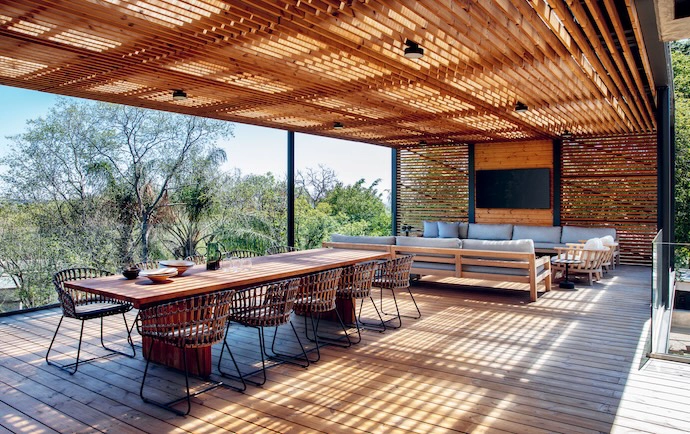
The patio features a long dining table with chairs from Weylandts, and a lounge area (with Weylandts furniture) that seems to float above the treetops. -
The floating staircase acts as an orientation device, creating connection and cohesion between the home’s various levels. -
The floating staircase acts as an orientation device, creating connection and cohesion between the home’s various levels. -
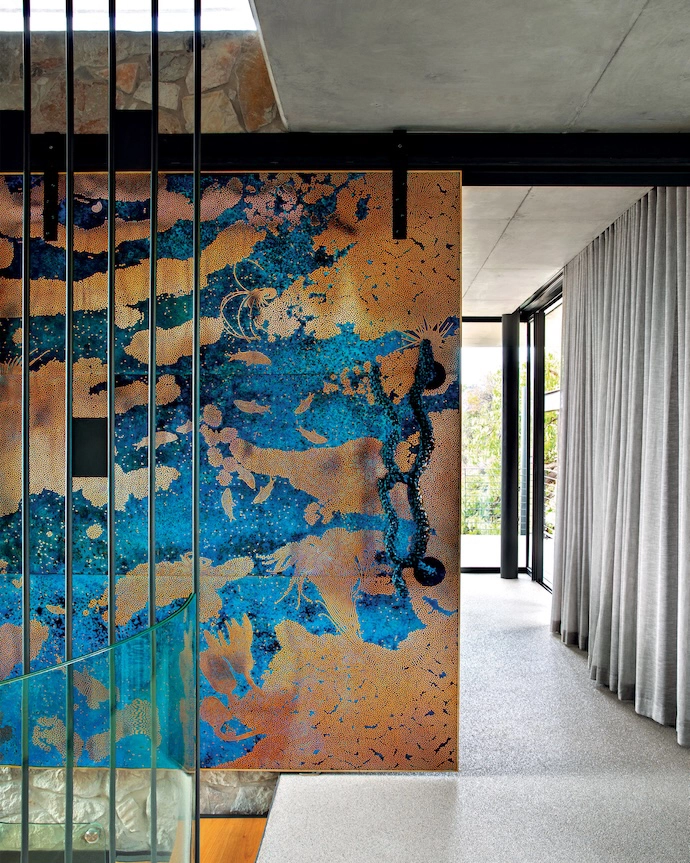
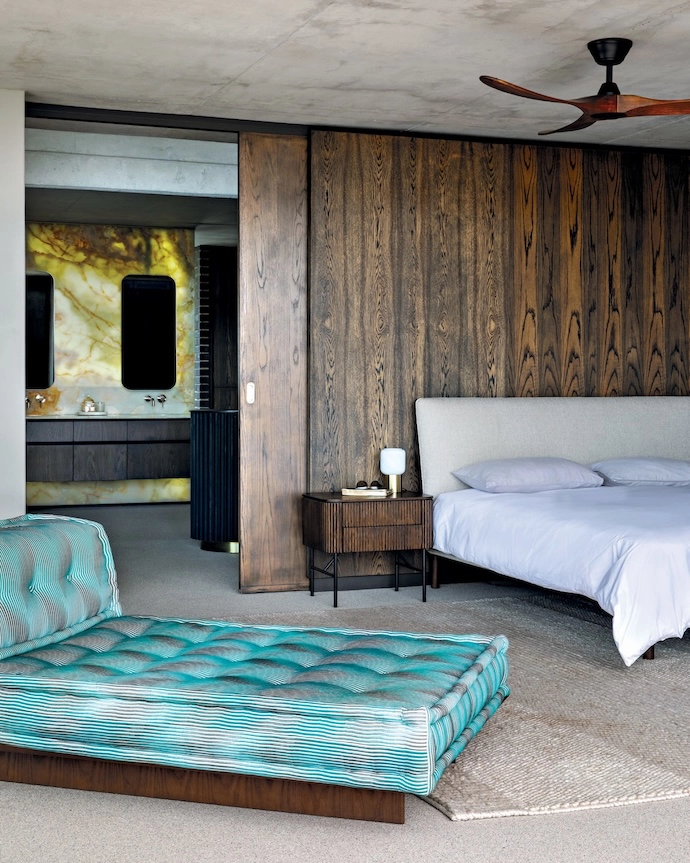
A custom sliding door by Cape Town-based artist Stanislaw Trzebinski leads to the main bedroom. -
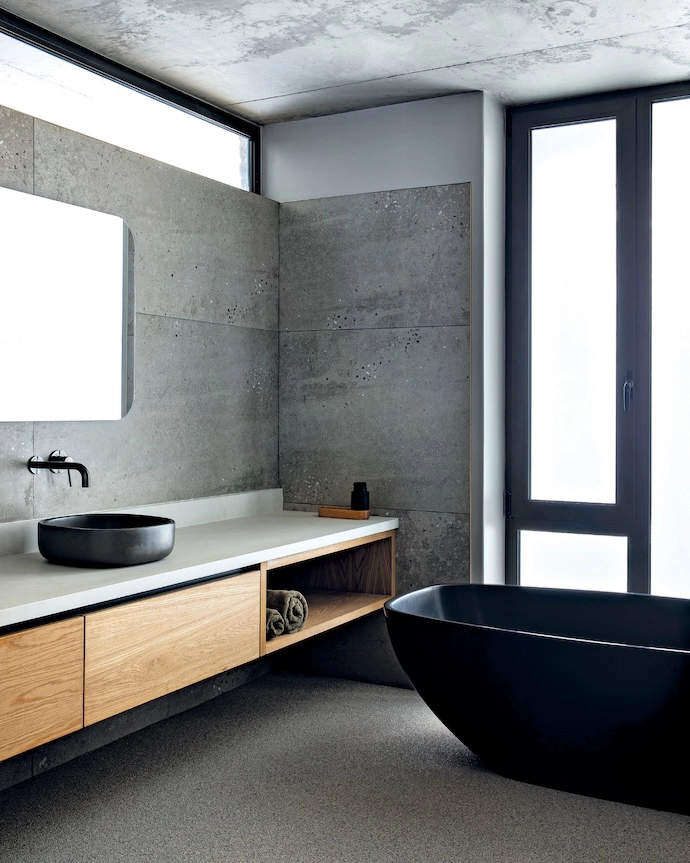
With a pared-back palette and ample natural light, the guest bathroom exudes Zen-like serenity. -
The master bedroom’s wood-panelled walls and sliding door reveal a backlit marble feature, which the owners secured for their bathroom before the house was built.
Perched high on Waterkloof Ridge, this Pretoria home turns the challenge of an awkward, wedge-shaped plot into the inspiration for its architectural solution, with sharp angles, beautiful natural materials and breathtaking views.
WORDS Graham Wood PHOTOS Sarah de Pina
With its view over Pretoria treetops and the Union Buildings, it’s not often that a pristine piece of land becomes available high up in Waterkloof Ridge. The owners of this home were lucky to find just such a site freed by a subdivision. It was not without challenges: while the outlook was incredible, the plot was steep and wedge-shaped, with a narrow protrusion (which turned out to be perfect for a bonsai greenhouse).
The task of solving this architectural puzzle fell to Leon van der Westhuizen of Anthrop Abbott Architects. His clients gave him a broad brief, with a few specific requests – a main bedroom and study with a view, as well as space for key artworks, including a Dylan Lewis sculpture and a large copper wall panel by Stanislaw Trzebinski. Beyond that, they granted Leon creative freedom.
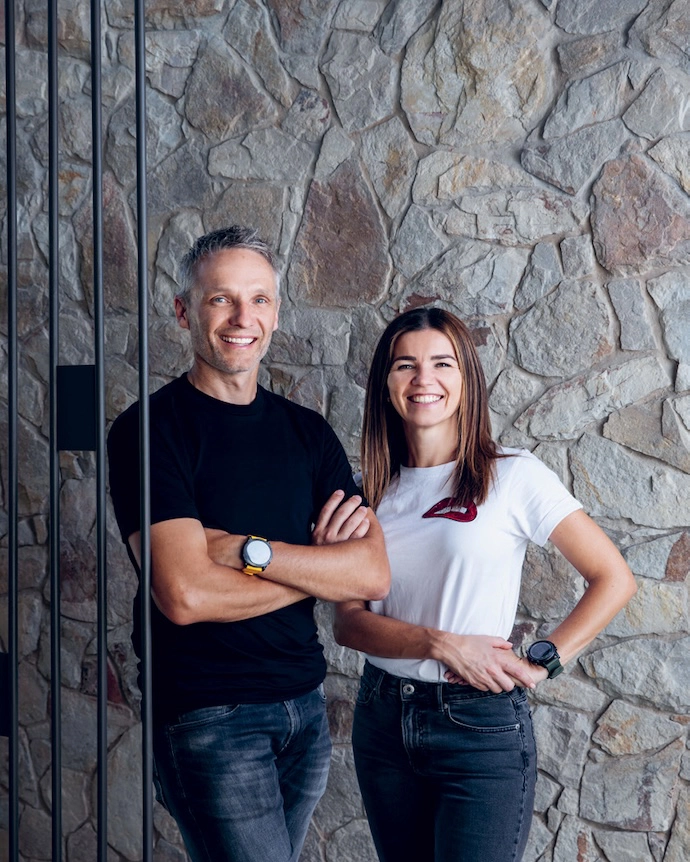
“When you have a site like this, with such an unusual shape, how do you turn it to your advantage?” Leon asks. As a designer, he’s already inclined to take a building that might otherwise be square on and turn it ever so slightly. “It makes things different,” he explains. In this instance, that “difference” was baked into the site: a retaining wall near the street that didn’t align perfectly with the boundary line, and on the other side of the house, the views to the north (which implied yet another line), offered plenty of sharp angles to work with.
Leon realised that the steep slope would require a three-level house, so he decided to stack intersecting planes on top of each other, crossing and floating past one another at odd angles. In a trademark move, he incorporated curves to balance the sharp lines, adding some tension and “sexiness”. The rich material palette – featuring satin brick, crafted concrete, natural stone, timber screens and steel – softens the overall effect. With the boundary wall pretty much done away with, this dynamic facade faces directly onto the street, creating interest without being imposing. The fragmented design almost dematerialises the bulk of the building, making it feel lighter and more open.
Having designed a few “upside down” houses – with living spaces on the upper floors and bedrooms below – in this project Leon varied the concept to more of a “sandwich” design. The communal spaces occupy the middle level, with most bedrooms on the lower level, and a main suite and study above.
The entrance is on the middle level, which is also the primary living space. You approach the front door via a catwalk that comes in at an angle – another twist on the home’s unusual geometry. Instead of pulling the house back towards the street, Leon pushed it forward, creating a courtyard between the tricky retaining wall and the house. This space functions as a light well, allowing natural light to filter down to the bedrooms.
The interiors are warm and inviting, echoing the exterior’s material palette with soft wooden floors, natural stone walls, and natural timber, concrete and steel. A staircase seems to defy gravity, floating weightlessly in the triple-volume space.
“A staircase shouldn’t just be a staircase,” says Leon. “It should be a way to navigate visually.” This one orients you, offering glimpses and connections between spaces while also maintaining privacy and pointing you in the right direction – which, in this instance, is towards the view to the front of the house.
Given the 180-degree vistas and Pretoria’s climate, an outdoor living space was essential. Leon’s solution was a “floating patio”, which extends out into the treetops as far as possible. The transition from indoors to outdoors is seamless as you walk from the living room across a bridge and onto the patio. This layout creates another clever design feature: a central atrium between the deck and the house, which draws light into the lower-level bedrooms and gym. The downstairs rooms open onto their own outdoor deck, complete with a swimming pool.
It’s an intricate design. Without a back yard to “hide” anything, every angle of the home is visible. “It demanded a 360-degree exterior design of every single detail,” says Leon. This challenge is part of the appeal for him. He’s incorporated thoughtful touches that are easy to miss, but add depth and finesse – the seamless transition between indoor and outdoor floors; the drip lines; the slim window frames; the cantilevers and overhangs that allow windows and doors to remain open even when it rains. The complexity of the design is resolved into a harmonious whole that facilitates a relaxed, easy- going lifestyle. And the richness and subtlety of the details will be a gift that keeps on giving for a long time to come. | anthrop.co.za
Don’t forget to sign up to our weekly newsletter for the latest architecture and design news.