-

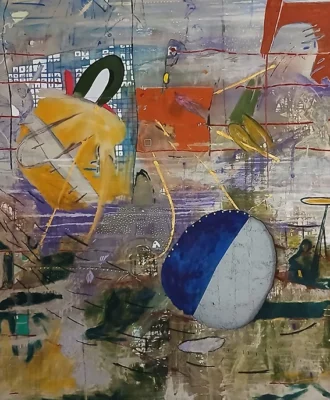
Bonteheuwelstasie (Bonteheuwel Station) by Igshaan Adams (2021), Blank Projects. -

The dyeing process at Stephens Tapestry Studio in Eswatini. -
Weaving a Yarn -

Buyisile Mncini spinning mohair at her homestead. -

Stephens Tapestry Studio weavers on the completed Misha Kahn Spacetime Weft carpet. -

Stephens Tapestry Studio weavers on the completed Misha Kahn Spacetime Weft carpet. -

Inyanga yeDwarha, The Lunar Month of the Lily Pad, From The Lunar Songbook by Athi-Patra Ruga (2021), WHATIFTHEWORLD. -

Stephens Tapestry Studio’s version of Three Figures by Cecil Skotnes. -

A GREYROOM weaving workshop. -

GREYROOM’s Jonette Schoeman at her loom. -

Stephens Tapestry studio collabs on show at La Motte’s “Threads of Synergy” exhibition: Models by Sam Nhlengethwa. -

Stephens Tapestry studio collabs on show at La Motte’s “Threads of Synergy” exhibition: One-Eyed Cat by Cecil Skotnes. -

Tina Weavind annotates an artwork at Stephens Tapestry Studio.


WORDS Sarah Buitendach PHOTOS Mario Todeschini (Igshaan Adams), Supplied
Textile art is big in South Africa, tapestries even more so. Read this VISI crash course on the topic, and you’ll be totally in the loop.
Perhaps you have an, er, soft spot for tapestries, and love the idea of ’70s versions cascading into conversation pits. Maybe they make you think of Tuscan scenes woven into antique pieces of furniture, or fiddly failed school projects. Whatever the associations, you need to know that tapestries and their textile-art brethren are huge globally. Embroidery, weaving, beading, appliqué, rug-hooking, knitting and mixing pieces of fabric with other media are just a tiny sample of textile-related craft that artists are embracing. Take, for example, the much-lauded Polish pavilion at this year’s Venice Biennale. It consists completely, inside, and out, of hand-stitched artworks and tapestries by artist Małgorzata Mirga-Tas. On our shores, many contemporary artists favour fibre and textiles, and in particular, tapestry. This makes sense when you consider our past.
Very Material: A Short History
Africa has a rich, expansive history of using textiles as a form of expression. In southern Africa, you need only think of the centuries of intricate beadwork done by local groups ranging from the Tsonga to the Nguni to get a sense of this. Tapestry weaving is said to have been introduced to South Africa by Anglican missionaries in the early 1900s, but it was only in the mid-20th century that it morphed from craft to art. Art tapestries were all the rage internationally in the 1960s and ’70s, and the trend spilled over here too. Public buildings, galleries and homes were wall-to-wall with huge woven pieces by artists such as Bettie Cilliers-Barnard, Cecily Sash and Cecil Skotnes.

READ MORE: Conquering The Canals: Sub-Saharan Africa’s Showcase at the 59th Venice Biennale
At the centre of this artistic endeavour was Marguerite “Mags” Stephens, who learnt the craft of weaving from her mom Coral in the hills of Piggs Peak, Swaziland (now Eswatini). At the suggestion of Coral, Mags made her first tapestry of a Skotnes block print in 1962. Sixty years on, her business, Stephens Tapestry Studio – split between Joburg and Piggs Peak and now run by Mags and her daughter Tina – is one of the leading art tapestry makers in the world. The all-woman team has produced work for artists such as local luminary Judith Mason and American designer Misha Kahn, and

recently finished a carpet for the latter that’s 5.2m x 3.5m in size and will show at Design Miami/Basel in June. Aspire Art’s senior art specialist Marelize van Zyl points out that in the ’80s and early ’90s, this type of art was not as popular – mostly because so much of what was being made in those years was in resistance to apartheid. “Such a so medium didn’t work for the message,” she says. Tapestries also fell out of favour decor-wise. It was only in the 2000s that a new generation of local artists began to consider textile art again. “They started to look back and reuse old skills for new meanings,” she says. Today, collectors clamour for Billie Zangewa’s silk collages, Athi-Patra Ruga’s mixed media tapestries, Igshaan Adams’s woven wonders and Turiya Magadlela’s powerful pieces fashioned from pantyhose. And there are many youngsters dabbling in the field, too.
Looking for more art inspiration? Sign up to our weekly newsletter, here.