-

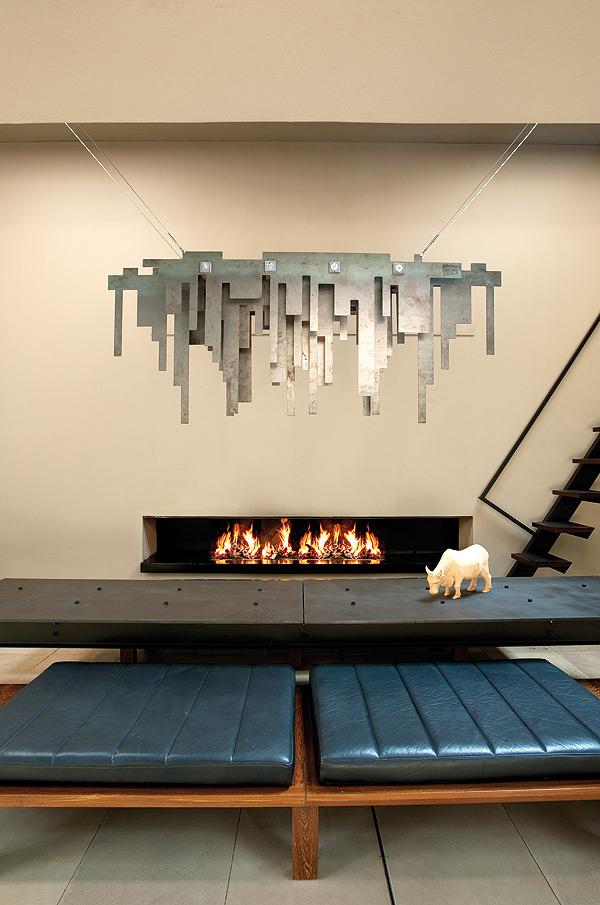
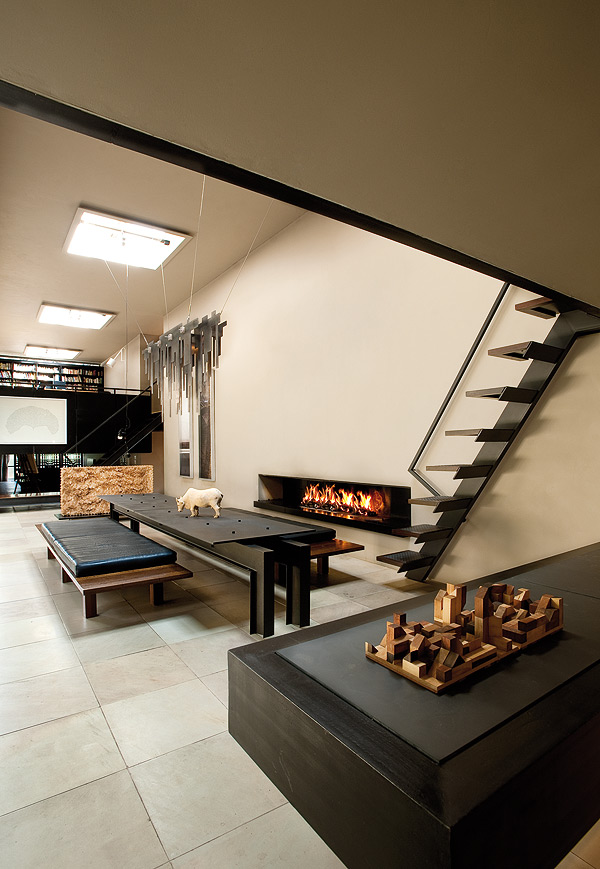
Urban experiment : Pierre Swanepoel designed the chandelier above the dining-room table to resemble dripping wax. The cow on the table was bought at the roadside and is made from jacaranda wood. -

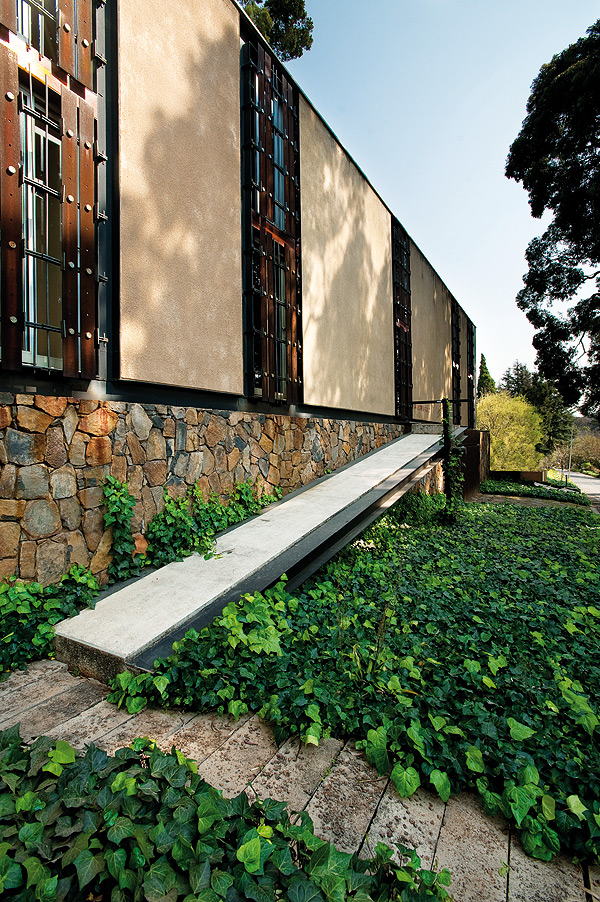
Urban experiment : The street facade of the house features a concrete ramp leading tot he front door. -
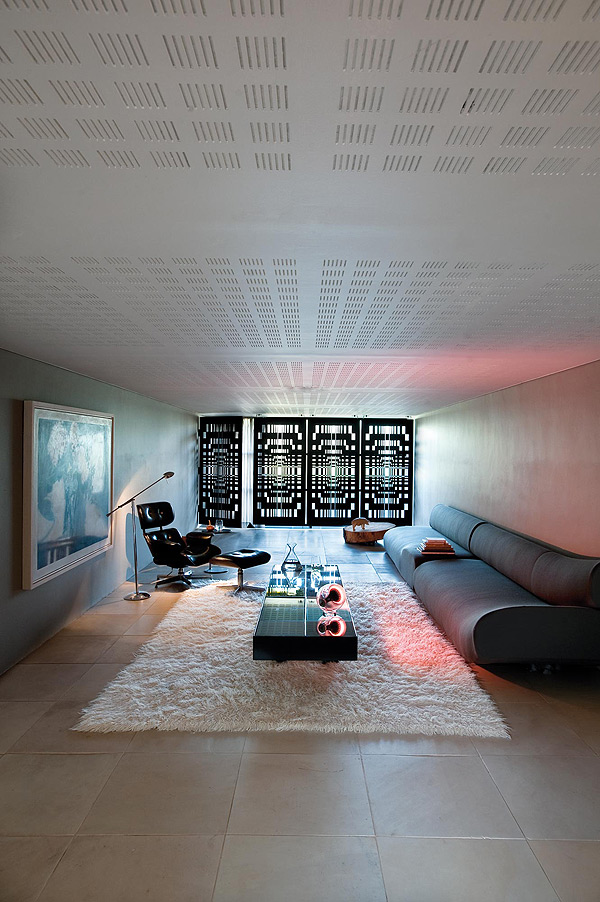
Urban experiment : The lounge area displays a laser-cut steel screen that suggests views to infinity. -
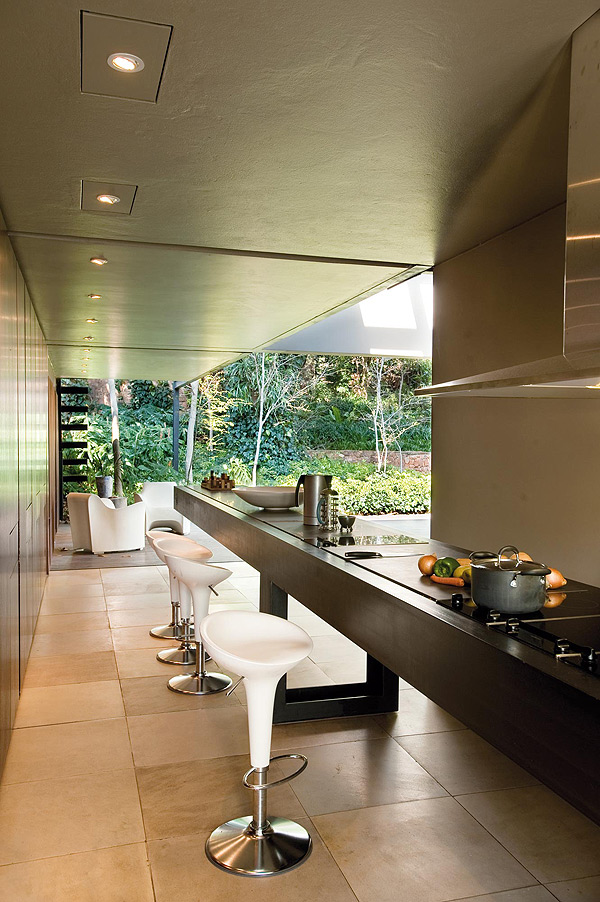
Urban experiment : The family spends a lot of time cooking and eating in the kitchen, which has a great view of the back garden. -

Urban experiment : The main living-room area faces south and captures the sun from the skylights above. -

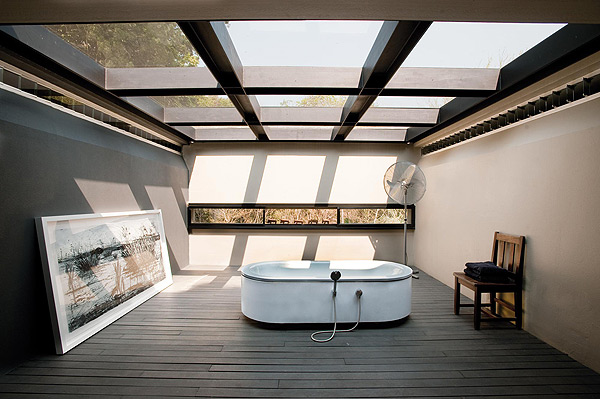
Urban experiment : The main bedroom's en-suite bathroom, featuring artwork by Philemon Hlungwani, is flooded with natural light and offers wonderful views of sky and trees.
PHOTOS: Dook | PRODUCTION: Trevyn & Julian McGowan | WORDS: Nia Magoulianiti-McGregor
StudioMAS’s Pierre Swanepoel opens the door to a private laboratory – his ever-changing family home in Forest Town, Johannesburg.
An architect’s personal space is always a work in progress, says Pierre Swanepoel of StudioMAS Architecture and Urban Design.
Certainly, in his six-year-old Long House, the architectural Bunsen burners are always lit, for this is a place that is continually evolving. “I sculpted this house around my life and my family. It has no ‘style’,” says Pierre. “It’s urban architecture.”
This idea of “urbanism” melds with Pierre’s passion of integrating buildings into the city and “reconnecting with the street and each other” while making optimum use of the space
available.
It kicks against the kind of modernism that sees a building live in isolation from its surroundings so that it becomes about the ego of the homeowner or architect.
He wanted his house, shared with landscape architect wife, Sonja, and five-year-old daughter, Alba, as well as other houses he touches, to be there for the long haul – to be reused and not discarded.
“This doesn’t happen by accident,” says Pierre. “It’s important to make a concerted effort to plan a lifestyle with the idea of change in mind.”
A house that ages gracefully
This belief in longevity and being part of your environment is manifest everywhere in Long House: In the idea that if you take away ground space by building, you replace it with vertical growth such as creepers or vines.
It is in the materials he has used, including concrete, which is “going to age in a dignified way”, and glass that prevents alienation from the outside areas.
The house’s position on the stand is also crucial. “By building on the front perimeter you do away with wasted space inherent in the standard ‘big house in middle of plot’ concept.”
More than this, the building functions as a secure boundary wall and gives inhabitants a bird’s-eye view of what is happening outside. It also allows for a big garden at the rear. “In this way, you can interact with the street, your neighbours and your environment,” says Pierre.
Take ownership of the street
Still, security, privacy and personal comfort are not compromised. In his view, South Africans have a tendency to build behind walls with the idea, “If I cut myself off, I am safe”.
But this in fact offers a superficial sense of security. “The streets become the property of criminals. We need to take ownership of them.”
Pierre enjoys inside-outside living, which is why he can open the 12m-long glass sliding door with a flick of a switch so that the house is part of the wild paradise of trees and ground cover that Sonja has created.
“Maybe it’s because I grew up on a farm in Dullstroom. I still want to be close to nature but be part of old Johannesburg. I could never live in Fourways or Sunninghill – I want to hear the sounds of the city. It’s like that Neil Diamond song, What a Beautiful Noise.”
• StudioMAS Architecture and Urban Design: 011 486 2979, www.studiomas.co.za