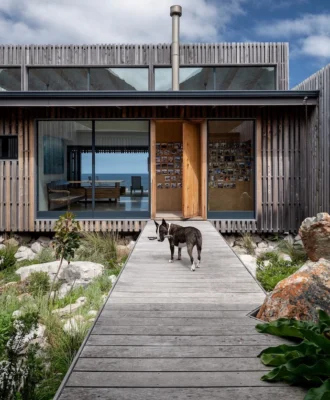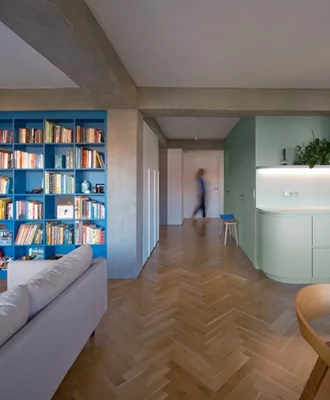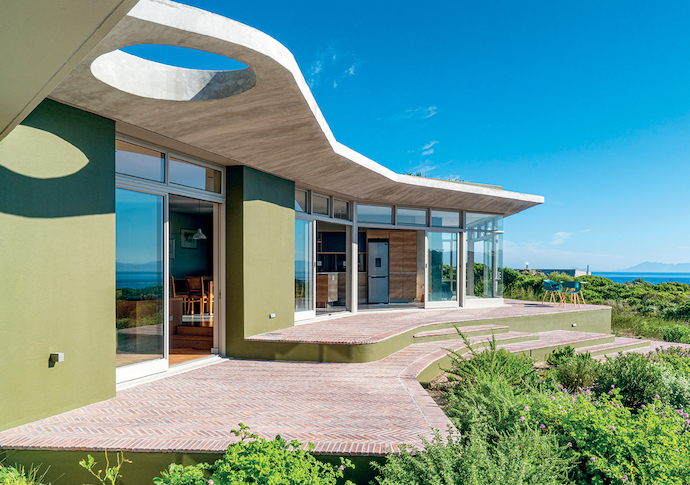
WORDS Graham Wood PHOTOS David Ross (Cuilidh), Sarah Calburn (Sea House), Anna B (Cocoon House)
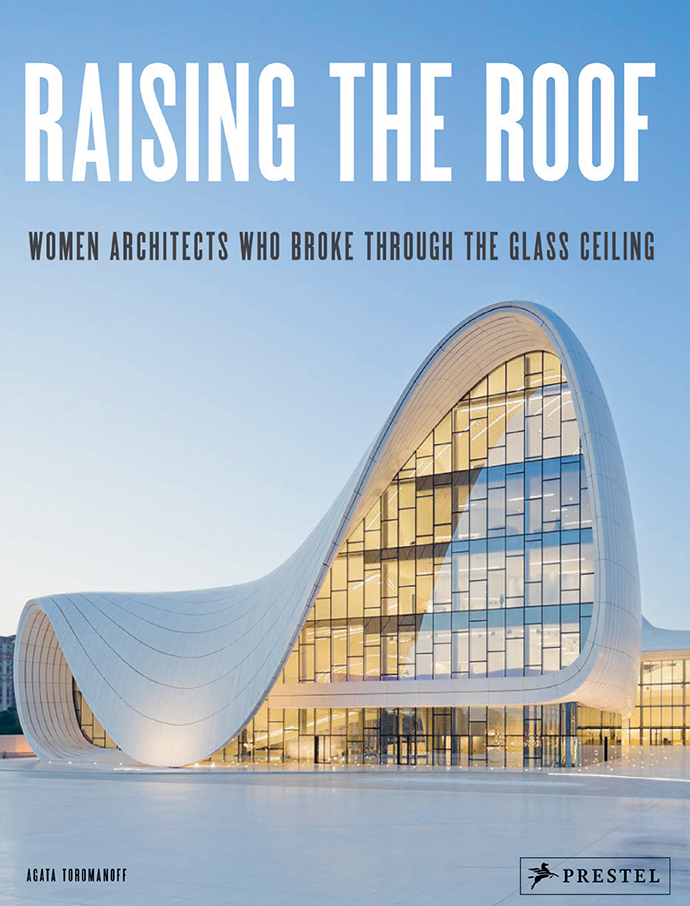
Local architect Sarah Calburn has been included among 50 of the world’s best women architects in a new book, Raising the Roof: Women Architects who Broke through the Glass Ceiling. VISI chats to her about the news.
The pages of the recent book from Prestel, local architect Sarah Calburn finds herself in the company of Zaha Hadid, possibly the most famous woman architect ever; and Elizabeth Diller, whose recent landmarks include The Shed, a huge moving cultural venue in Hudson Yards in Manhattan. The all-time greats featured in the book include Eileen Gray and Lina Bo Bardi.
Sarah is the only South African in the publication. She has scaled down her practice in recent years to concentrate on residential architecture, but her output over the past 25 years nevertheless plays an outsized role in the contemporary architectural landscape. The book notes her buildings’ “unique relationship with the landscape”, and the way she has galvanised discussion about how Johannesburg’s urban fabric, particularly, might be re-envisioned in the 21st century. More recently, she has worked with the Brenthurst Foundation on publications that investigate solutions for in-situ slum redevelopment in Lagos.
In fact, it’s possibly her ability to match the “conceptual basis” (what she sometimes calls the “wider philosophy”) of her approach with its physical manifestation in visionary buildings that has cemented the significance of her work.
Despite her suspicion early in her career of the distinction made between women and men architects, and her ongoing belief that architecture isn’t necessarily gendered in any discernible way – “I don’t even think one could say that creative intelligence is affected by whether your experience of the world is male or female,” she says – she believes the book is very timely.
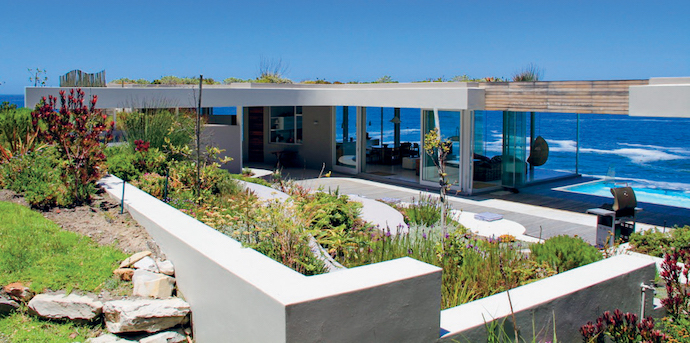
There have certainly been moments throughout her career, she says, when she was vocal about not primarily being identified as a woman architect. “What I objected to was being called a good female architect,” she says. However, she adds, with hindsight, she can appreciate that there is “no question” that “being female in the field has definitely been much harder than being male”.
Sarah muses that perhaps her predisposition to residential architecture has something to do with being a woman, and says that, without doubt, her favourite houses have been designed for women clients. She still approaches her designs with the same sense of spatial intelligence as she always has, concentrating on the potential of buildings to reframe our perspective of ourselves and our place in the world – something that is true whether you’re talking about public housing or the most high-end houses.
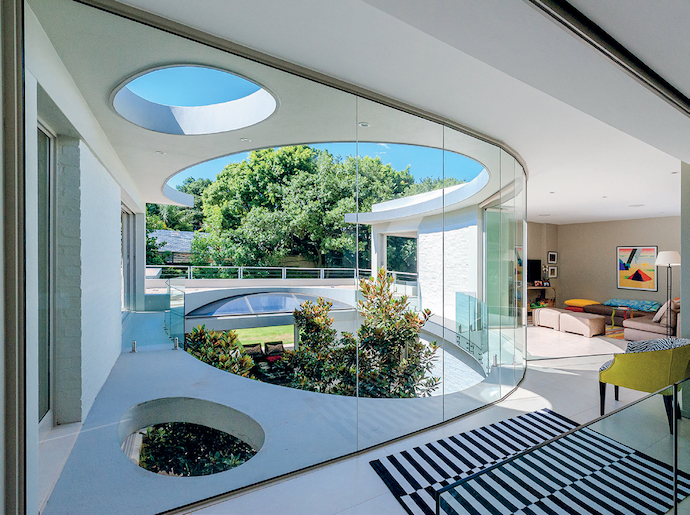
Considering her presence in books such as Raising The Roof, Sarah says that her buildings tend to frustrate photographers because, while they are often undeniably sleek and beautifully conceived, they seldom present an easy image. “My buildings are always moving away or turning around or layered in some way,” she says. Her designs are not about “surface”; they’re not static. “I’m not a stylist,” she says. “You’re creating realities. You aren’t creating pretty pictures on a wall.”
What she is doing is treating architecture as a frame for life: an immersive form of art that is about “your body and space, and the place from which you view the world”. Reconfigure that, and you can open up space to re-imagine how people relate to their environment, reshaping the relationship of building and landscape, inside and out. If fact, she talks about how physical space opens up mental space – the right environment can free creativity. Where you live, and what you live in, structures your point of view.
For her, being an architect is like blowing a bubble into the empty space of the future. “You’re absolutely involved in imagining happy, productive, joyful futures,” she says. “Architecture is, primarily, an act of optimism.”
Looking for more architecture inspiration? Sign up to our weekly newsletter, here.