-

Form in Hand -
Form in Hand
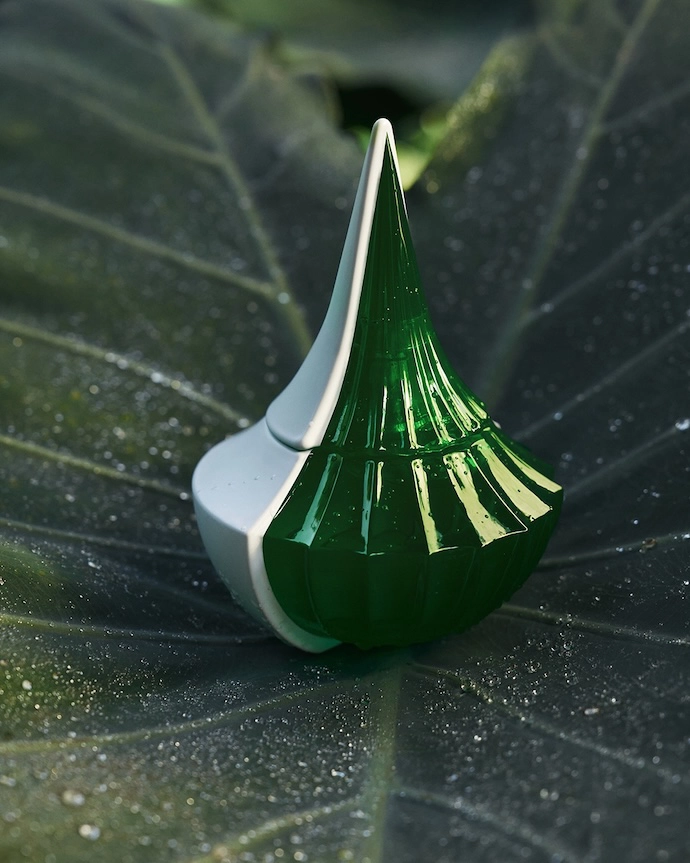
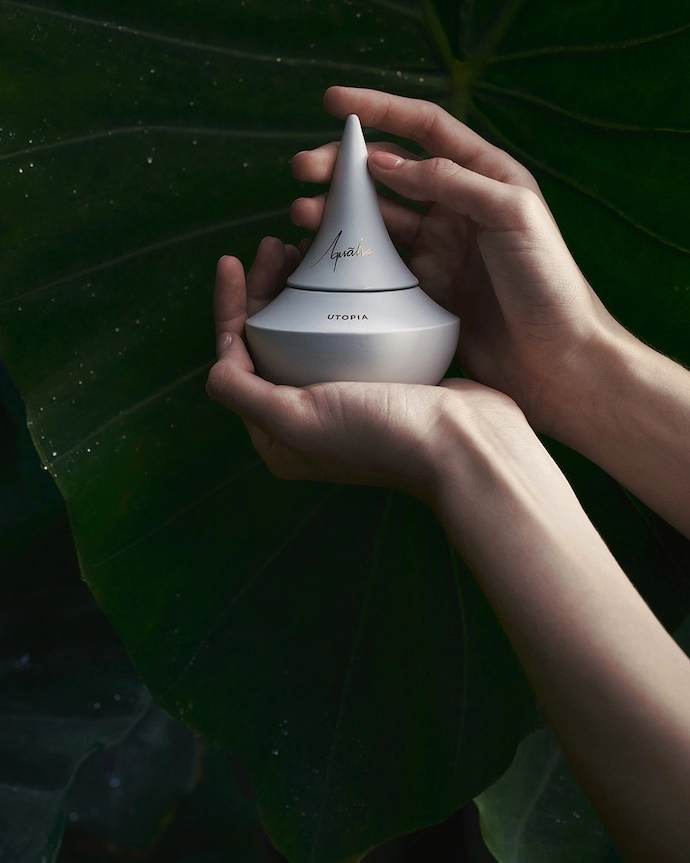
For London-based architect Coetzee Steyn, the challenge of designing a perfume vessel that invites touch raised an unexpected question: what can a building teach you about an object small enough to hold in your hand? Quite a lot, as it turns out.
WORDS Gina Dionisio PHOTOS Luke Kuisis, Steyn Studio
When London-based South African perfume entrepreneur Steyn Grobler approached fellow countryman Coetzee Steyn of Steyn Studio to design the vessel for Aqualis, the commission presented an unfamiliar design problem. “The initial response was a kind of nervous curiosity,” says Coetzee. Rather than designing a building, the studio was asked to develop an object experienced primarily through touch – one that would become part of the daily ritual of wearing fragrance.
“The interesting thing about designing for touch is that the hand becomes the measure of the object,” says Coetzee. “You become conscious of things that are easy to overlook when designing visually – balance, weight, proportion, the way the fingers encounter a surface, and how the object sits in the hand.”
Rather than prescribing a visual language, the project invited an exploration of form, ergonomics and identity, and challenged Coetzee not just to create a miniature piece of architecture, but to explore how an architectural design process might inform an object held in the hand. “In architecture we think about the relationship between the body and space: how someone approaches, enters, moves through and occupies a building. With the vessel, that experience is compressed into a much smaller scale. Instead of the body moving through space, the hand moves around the object,” he says. “In a sense, this project became an exploration of what happens when ‘architecture leaves the building’.”
Finding form
Nature is one of Aqualis’s core values, and that became an important influence on the exploration of form; however, Coetzee and the team were not interested in creating a literal reproduction of a natural form. “We were more interested in the qualities and logic of natural forms and geometries – their balance, irregularity and sense of having logically evolved rather than having been assembled from a series of predetermined parts,” he says.
The ritual of fragrance was equally important to the physical form. “This isn’t an object that is simply looked at. It is picked up, held, opened and ultimately brought into direct contact with the body through the act of wearing the fragrance. That creates a very intimate relationship between the object, the hand and the wearer,” he adds.
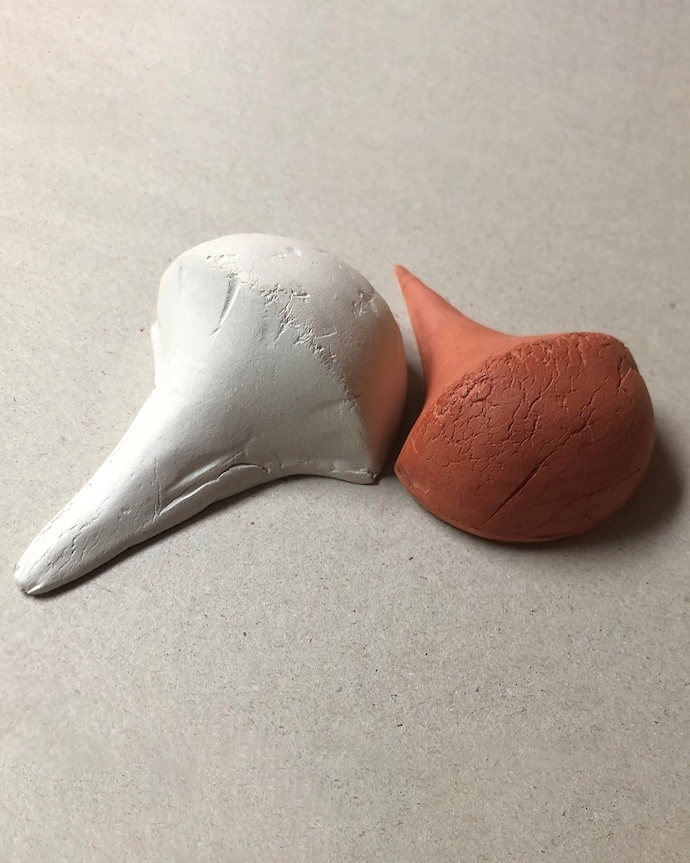
When early sketches couldn’t quite capture what Coetzee and the team were looking to achieve, they changed gear and turned to clay as a way of thinking through the problem. “We knew that the object needed to have a special relationship with the hand, but it was difficult to truly understand that relationship through two-dimensional drawings,” says Coetzee. The move to clay also allowed the team to explore the object physically. “Questions of balance, ergonomics and the relationship between the hand and the form became much more immediate. Some of the initial explorations were simply quite ugly; crude and bonelike, but they served well in this process,” he says. “It reinforced something that is true of architecture as well: sometimes the most appropriate way to understand a problem is simply by making.”
A matter of glass
The transition from clay concept, digital refinement and prototyping to glass manufacture introduced a new set of challenges. “The digital model allowed us to translate what we had discovered physically into a precise geometry and then test it physically by means of in-house prototyping through 3D printing. But when we reached manufacturing, the material introduced another set of conditions and limitations. Tooling, tolerances and production techniques all became part of the design process, which was resolved largely by means of prototyping by the manufacturer, Continental Bottle,” explains Coetzee.
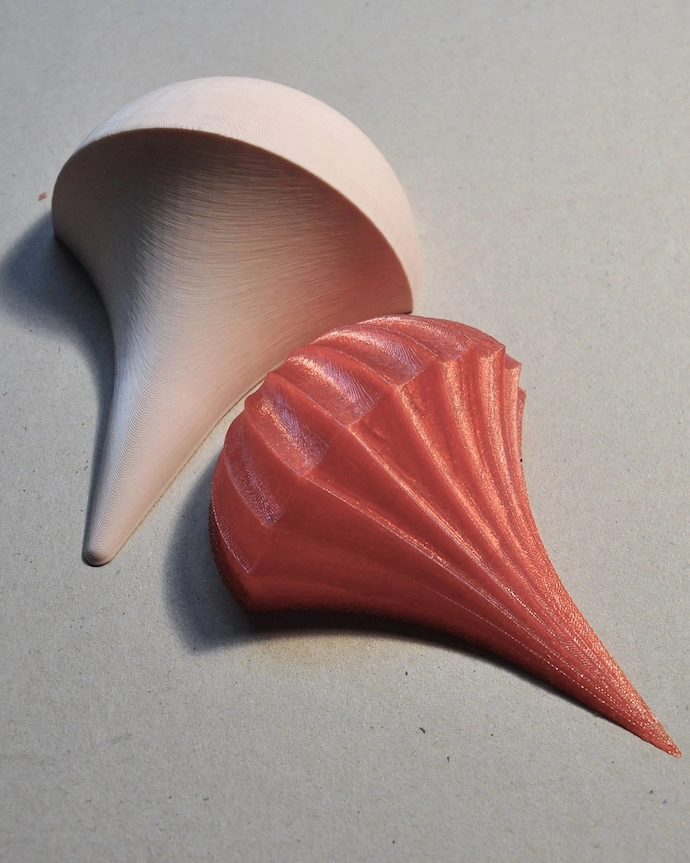
“What was interesting was that the manufacturing process didn’t simply force us to compromise the design. It became an extension of the design process itself. We had to understand what was fundamental to the original idea and where the manufacturing process could legitimately influence the final form and materiality,” he says. “There was certainly a degree of letting go, but it was less about abandoning the design and more about allowing the material and manufacturing process to participate in it.”
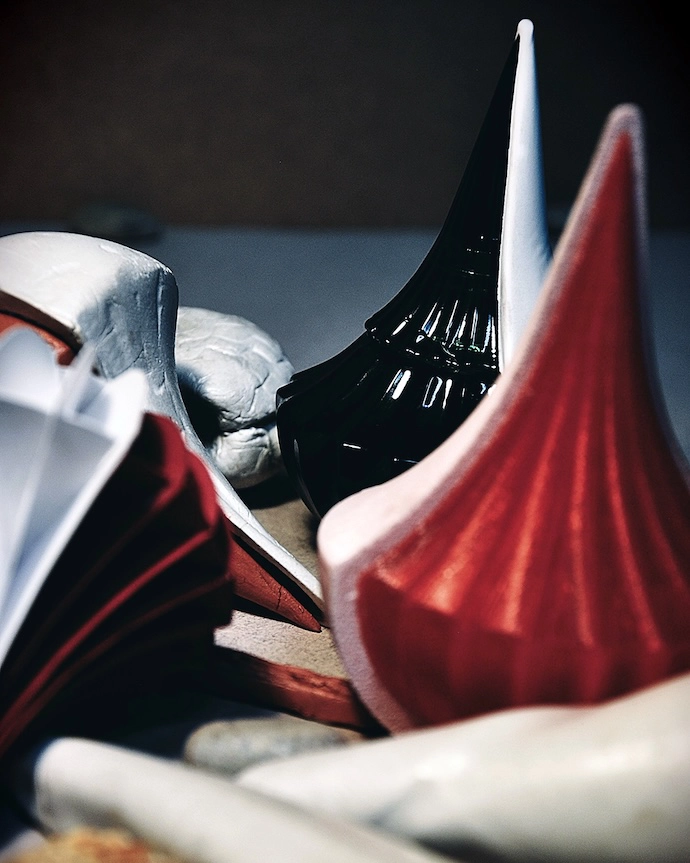
The geometry of the vessel, pushed beyond conventional expectations of glass production, required close collaboration between the studio and the manufacturer to preserve the integrity of the original concept. “The project reinforced the importance of understanding the behaviour of a material rather than simply imposing a geometry onto it,” says Coetzee. “What you design digitally is therefore not quite what you ultimately see. Once the geometry becomes glass, light becomes part of the object and begins to alter how its form is perceived. Glass reinforced how sensitive a relatively small object can be to very small changes.”
The commission reinforced an observation familiar to many designers: every project finds its own process. Sometimes ideas begin with drawings, sometimes with digital models and, sometimes, through making. The method is never a philosophy in itself, but simply the most appropriate way of understanding the problem. “For us, the vessel therefore became more than packaging. It is the first physical encounter with the fragrance – before the scent itself is experienced,” says Coetzee.
Perhaps the most unexpected outcome of the project was the mirror it held up to the studio’s own architectural work. “The scale is completely different, but the fundamental question is surprisingly similar: how does a person physically experience the thing we have designed?” reflects Coetzee. “In hindsight, the process made us reflect more about our own practice of architecture and how our buildings could better respond to people through their tactility.” steynstudio.com | @steynstudio
Don’t forget to sign up to our weekly newsletter for the latest architecture and design news.