-

Haus of Stone -
Haus of Stone -
Haus of Stone -
Haus of Stone -
Haus of Stone -
Haus of Stone
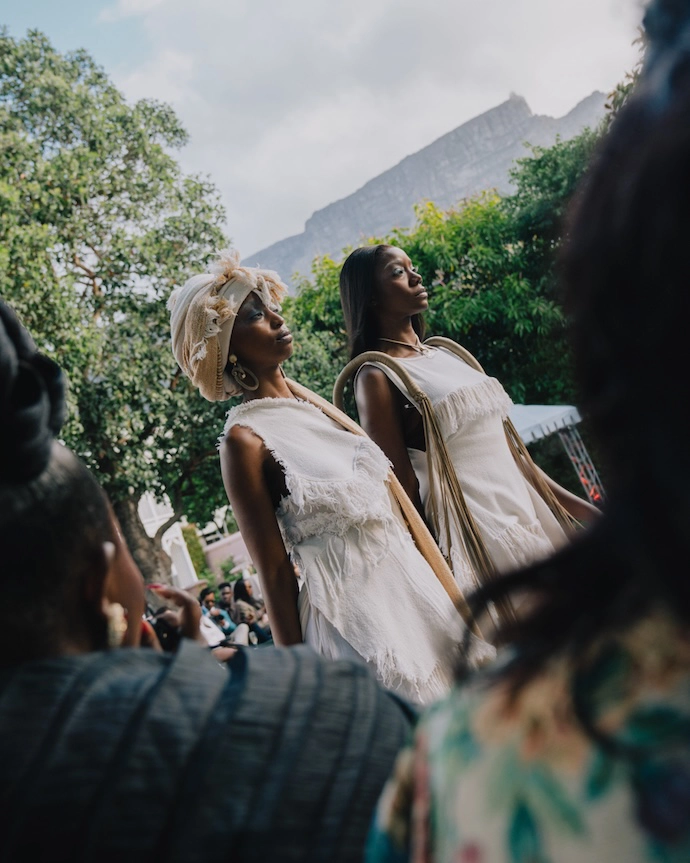
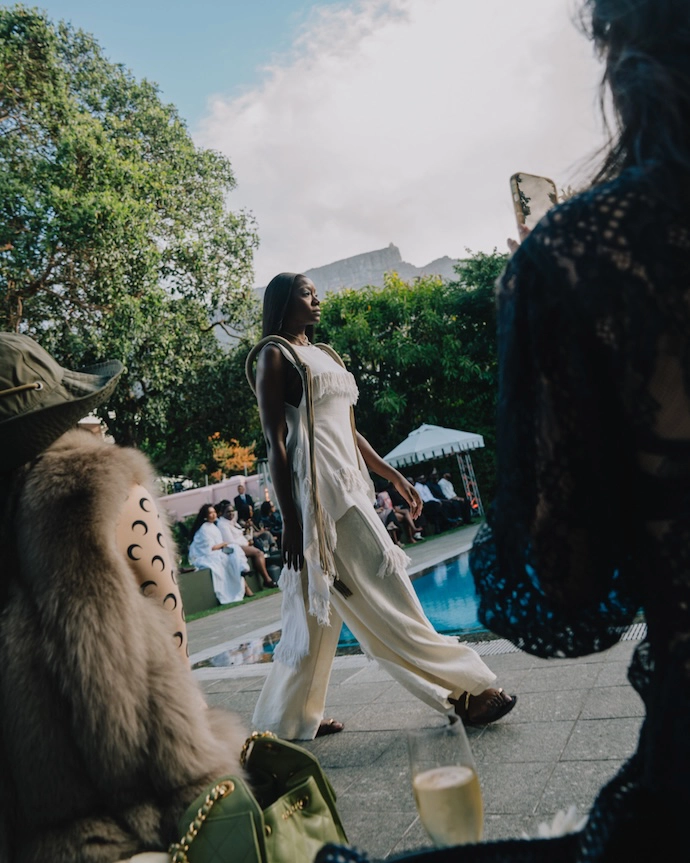
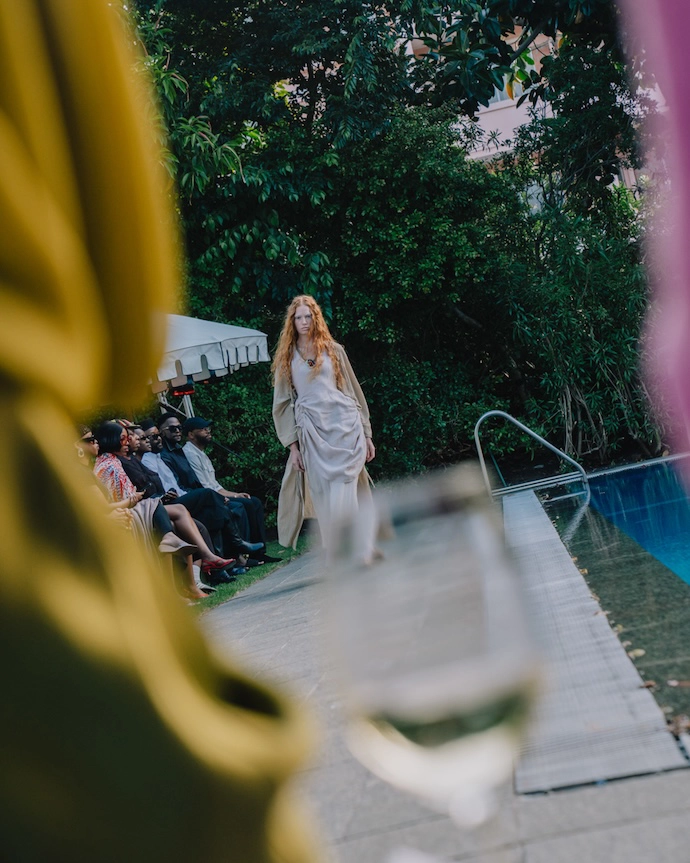
Fashion, heritage and culinary craftsmanship came together at Mount Nelson, A Belmond Hotel, for the fifth edition of CONFECTIONS x COLLECTIONS.
INTERVIEW Nzuzo Khosa PHOTOS Ross Alex Nagel
Under this year’s theme, A Wonderland in Bloom, the three-day showcase brought together four visionary African designers: Sevaria’s Jamie Kimani, Onesimo Bam, Haus of Stone’s Danayi Madondo and Wanda Lephoto. Against the backdrop of the hotel’s iconic gardens, each designer presented a collection exploring identity, cultural heritage, craftsmanship and contemporary African design.
Curated with sustainability platform Twyg, the showcase also celebrated creative collaboration, slow fashion and the stories woven into the work of African designers.
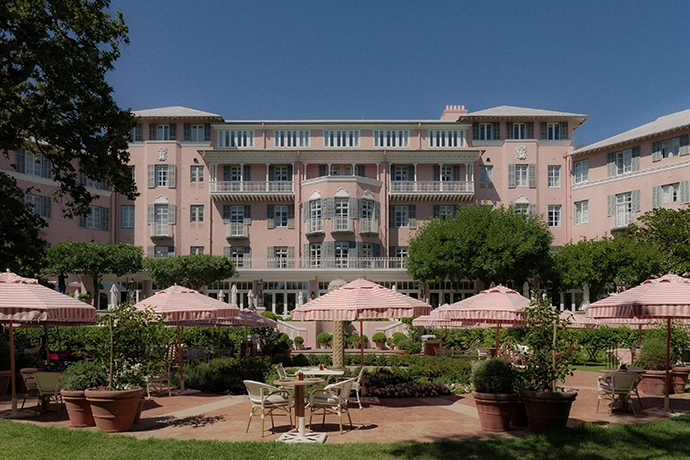
From sculptural silhouettes to intricate textiles, the event reaffirmed the place of the Nellie, in Cape Town’s creative landscape. We caught up with designer Danayi Madondo to find out more about the collection Haus of Stone presented.
You describe yourself as a fashion alchemist and approach clothing as an archive of history. For this year’s CONFECTIONS x COLLECTIONS at the hotel, how did you explore the relationship between fashion, heritage and the stories that materials can hold?
“When I started this journey, I tried following ‘the rules’ by seeking out standard luxury materials deemed essential for high fashion. However, those fabrics were not readily available within Zimbabwe. Importing them was tedious, inefficient and simply not the best use of my capital as a self-funded designer. I was forced to look inward, think locally and ask a fundamental question: What is already here in Zimbabwe that is easily and reliably accessible to me?
“Speaking from a Zimbabwean perspective, our innate way of being is to use whatever we have access to. As I did the ground-level work to build the aesthetic of Haus of Stone, my environment and resource constraints directly influenced how the brand evolved.
“It began with sourcing deadstock from local warehouses. Then, it became about doing more with less by minimising studio waste and adapting patterns to create zero-waste silhouettes. Where waste did exist, I asked myself how it could be integrated in a meaningful, aesthetically rich and narrative-driven way.
“Out of that tension, the Tere patchwork collection was born. It is named after the dry stone brickwork of the ancient ruins in Mutoko, where my family roots lie. Just as those historic walls were built by meticulously layering stone upon stone without mortar, Tere uses studio textile offcuts, layering material to construct something new. The patchwork reflects how my grandmother used to upcycle and recycle everything. For me, alchemy is maximising resources in the most creatively sophisticated way possible.
“Because of this journey, Haus of Stone became a deeply textural brand rooted in experimentation with handcraft and raw materials, yet always executed with quiet refinement. My approach to culture goes far beyond replicating traditional motifs, colours or historical design practices. It is about capturing an essence, a mood, a feeling and the spirit of a people. I define Zimbabweans as possessing a quiet power. My central design question for this collection is: How can apparel be understated, yet undeniably bold and African? That balance is the soul of Haus of Stone.
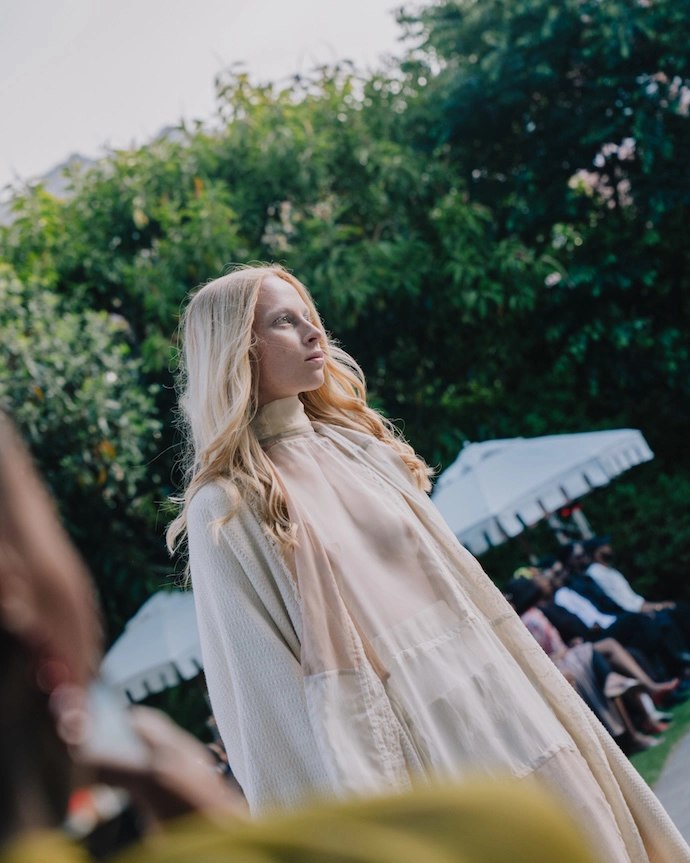
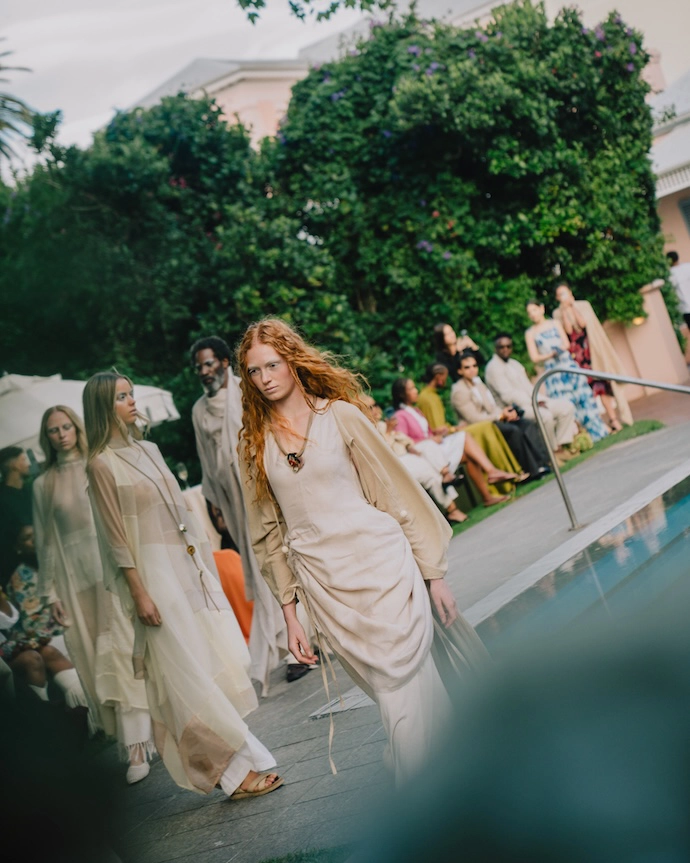
“For this year’s CONFECTIONS x COLLECTIONS showcase at Mount Nelson, I am grounding this philosophy in true origin by spotlighting a fully localised supply chain. Two years ago, I began building The Ruka Range, a proudly Zimbabwean collection crafted from cotton that is grown, woven and designed entirely within Zimbabwe. Ruka is rooted in the soil, in the land that Zimbabweans live and die by. It is blended with lightweight linens, gauzy voiles and fluid chiffons to create an ethereal, transcendent experience.
“By marrying the textural depth of the Tere upcycling technique with the pure Zimbabwean lineage of the Ruka cottons, fashion becomes a living archive. It acts as a refined, unassuming ode to Zimbabwe, honouring where we come from while projecting a quiet strength into the present.
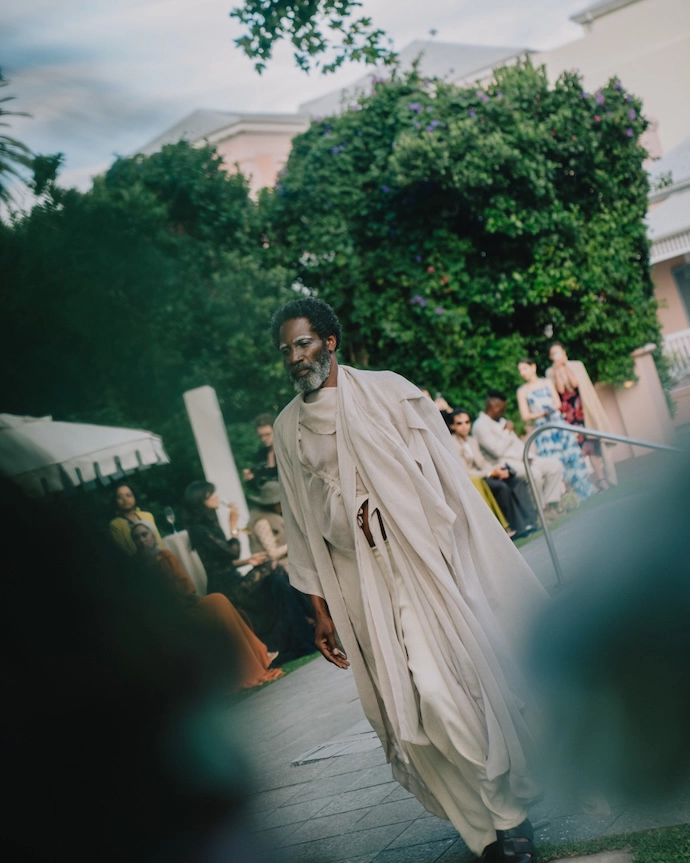
“The drapery throughout the collection pays direct homage to the ways our ancestors adorned themselves. Often, historical drapery is framed around classical Greek references, but when our ancestors engaged with cloth, wrapping, draping and tying were their native ways of dressing the body. Incorporating these ancestral gestures brings our heritage into the present, celebrating a timeless African approach to form and movement.”
The name Haus of Stone references the origins of Zimbabwe’s name. How has your relationship with Zimbabwean identity influenced the visual language and direction of your label, and how do you bring that into conversation with contemporary fashion?
“I focus on the subtleties of my Zimbabwean identity. Sometimes, this approach manifests by taking traditional objects and placing them into alternative contexts, such as reinterpreting a Binga basket, traditionally used in the kitchen for cleaning grain, into a high-fashion wearable piece. Other times, I approach it through the intangible by capturing the essence of a people. In this instance, that essence is our quiet power, our adaptability and our deep capacity for resourcefulness. My garments can often be worn and styled in multiple ways, allowing room for that same adaptability and individual creativity to take place within the wearer.
“The use of natural, muted tones references our spirituality and our connection to natural earth tones. Historically, we were not a nation defined by access to bright, synthetic shades. When people think of African fashion, they often picture excessive adornment and vibrant, bold colours. While those expressions are valid aspects of our continent, alternative African aesthetics exist that are equally relevant and deserving of being platformed. For a long time, European fashion has claimed neutral tones as strictly its own. I push back against that narrative: What if neutral tones are in fact deeply African, simply reframed?
“Ultimately, I use fashion not only for personal expression, but as a vehicle for cultural discourse, spiritual awareness and awakening. Cloth is a portal, and that is how I frame every piece I create.”
Your practice places considerable emphasis on handcraft, texture and circular methods. How important is the human hand in determining the value and character of a finished garment, particularly in an industry increasingly driven by speed and mass production?
“In an industry increasingly driven by speed and mass production, the human hand is everything. It is the defining element that elevates a garment from mere apparel to a vessel of memory, energy and intention.
“For Haus of Stone, the human hand determines value not through mechanical perfection, but through presence and emotional depth: a machine can replicate a stitch, but it cannot impart a story or a spirit. When an artisan hand-stitches a repair detail, hand-weaves cotton or knots cords for a neckpiece, they leave behind a physical footprint of time, patience and energy. That tactile touch creates a soul within the cloth. In a world saturated with hyper-fast, homogenised production, true luxury resides in the intimacy of knowing another human being invested their presence and craftsmanship into what you wear.
“Handcraft is an irreplaceable bridge to our history. Practices like manual weaving, beadwork and upcycling studio remnants through our Tere layering technique are traditional African methods passed down through generations. By keeping the human hand at the centre of our process, fashion becomes a living archive. It honours regional craft traditions and respects ancestral intelligence that prioritised slow, intentional creation long before ‘sustainability’ became an industry buzzword.
“Mass production demands absolute uniformity, stripping away individuality. In contrast, handcraft celebrates the subtle variations that occur when a person works with raw, organic materials like our hand-spun Zimbabwean cottons or studio textile offcuts. Those subtle nuances are not flaws; they are marks of authenticity, character and uniqueness. No two hand-worked pieces are ever identical, giving the wearer a garment that carries its own distinct identity.
“Central to our philosophy is the concept of a ‘quiet power’. Slowing down the creation process to privilege the human hand is a deliberate act of resistance against the noise of mass consumerism. It honours the dignity of local artisans, respects natural resource boundaries and insists on a refined, quiet approach to fashion where value is measured in longevity, emotional connection and cultural reverence.
“Ultimately, the human hand is what transforms cloth into a portal, connecting the heritage of the maker to the lived experience of the wearer.”
The gardens of The Pink Lady inspired this year’s botanical showcase. How did you interpret the natural world through your exploration of texture, spirituality and materiality? Was there a particular botanical element or sensory experience that informed your collection?
“I didn’t try to copy the flowers or the gardens literally. For me, nature is about texture, raw elements and earth. The core botanical element in this collection is the soil itself.
“Through The Ruka Range, we use Zimbabwean cotton that is grown, woven and designed right in our own soil. Cotton carries the memory of the rain and the land it comes from, which feels like a natural fit for the botanical context of Mount Nelson.
“We also explore texture through Tere, taking our studio offcuts, linens and voiles and layering them. Just like organic matter builds up in nature, we layer waste to build something meaningful and new. The earth tones we use link back to our spirituality and our connection to the land. I didn’t change my work for the environment at all; I just stayed true to my intention and my brand aesthetic.
“At the same time, I appreciate the tension of bringing my work as a Zimbabwean designer into a space like Mount Nelson, which is rather colonial in its nature. I love how we can come into a colonial space and reframe it for our own African fashion narratives.
“You don’t need to dilute your culture to reach a global audience. Platforms like CONFECTIONS x COLLECTIONS give us an intimate space to bring these alternative African aesthetics into the light, allowing cloth to serve as a portal for real cultural discourse.”
Don’t forget to sign up to our weekly newsletter for the latest architecture and design news.