-

São Paulo Apartment -
São Paulo Apartment -
São Paulo Apartment -
São Paulo Apartment -
São Paulo Apartment -
São Paulo Apartment -
São Paulo Apartment -
São Paulo Apartment -
São Paulo Apartment -
São Paulo Apartment -
São Paulo Apartment -
São Paulo Apartment -
São Paulo Apartment -
São Paulo Apartment -
São Paulo Apartment -
São Paulo Apartment
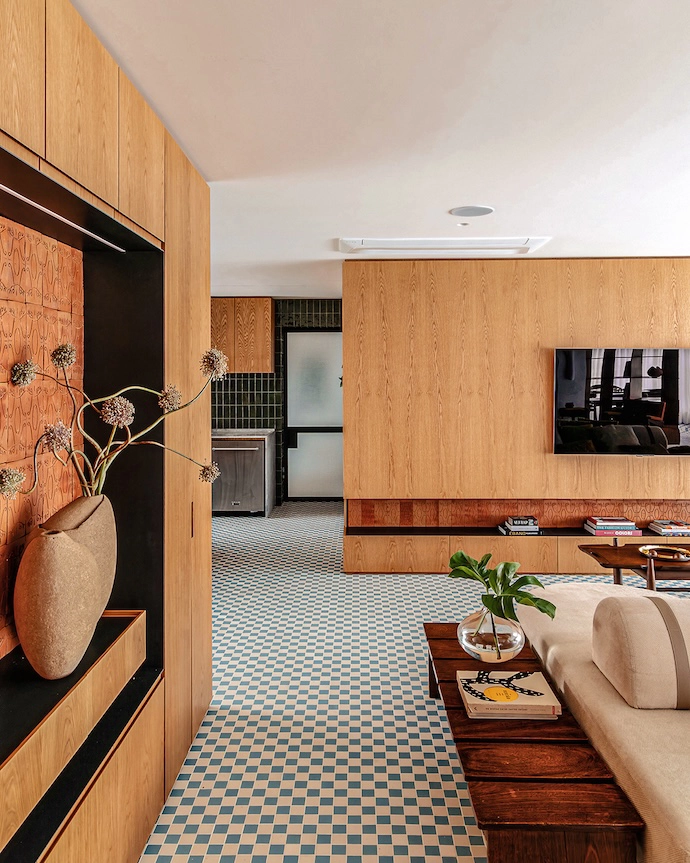
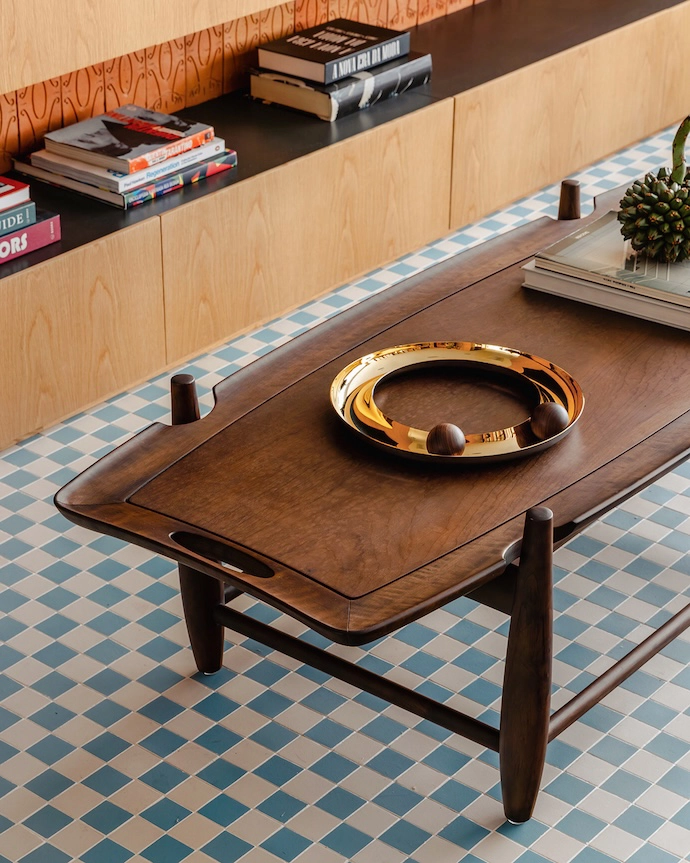
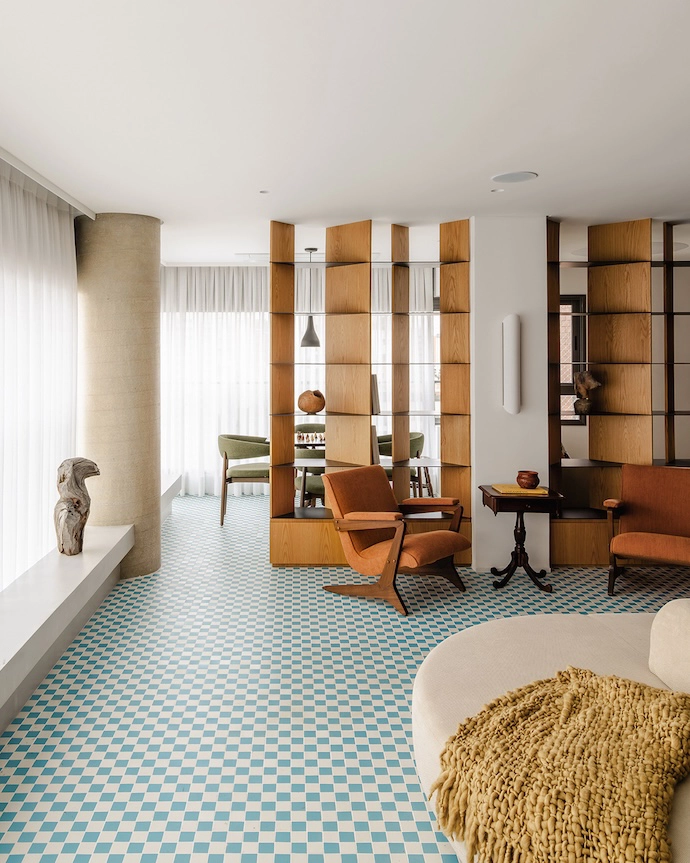
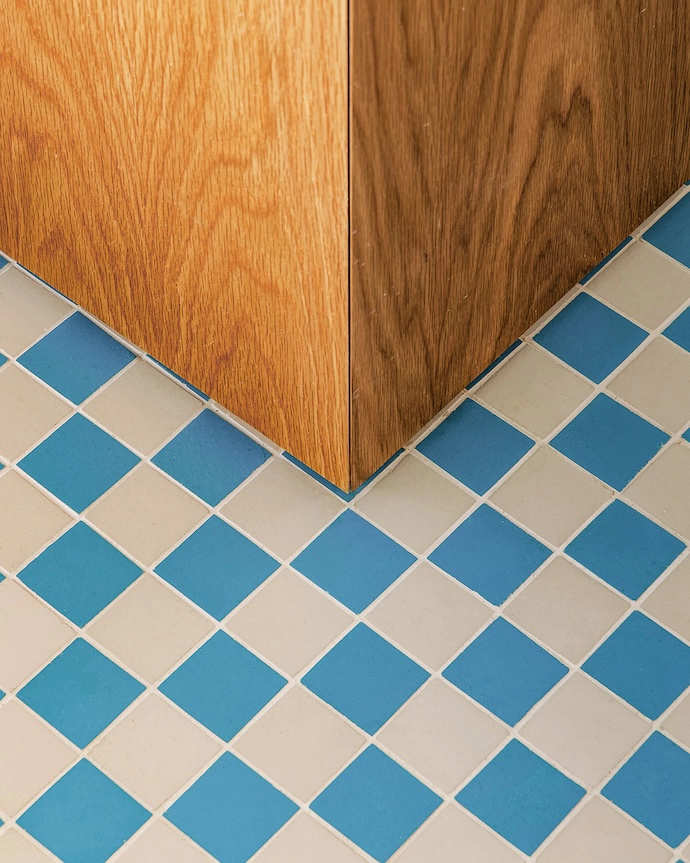
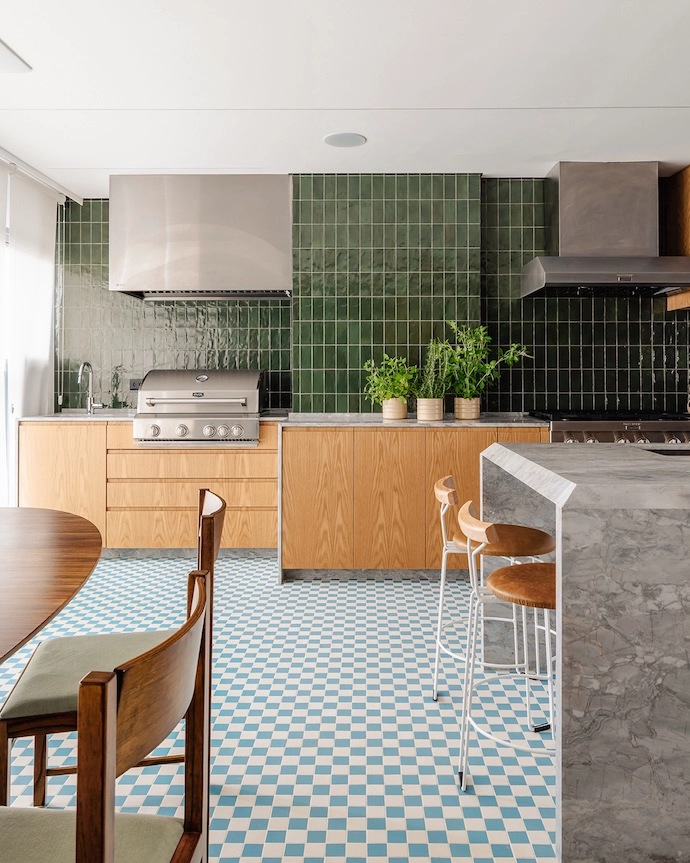
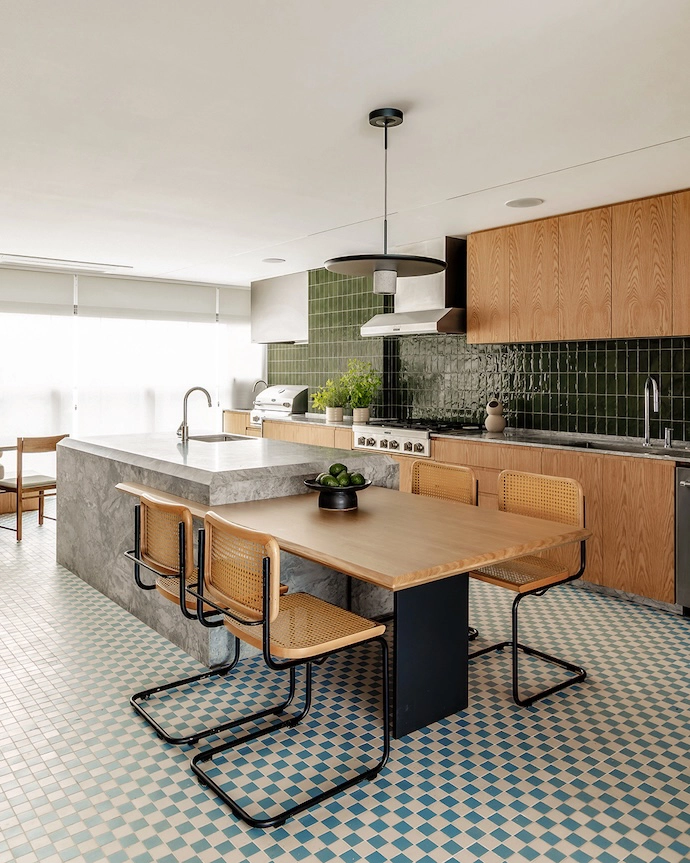
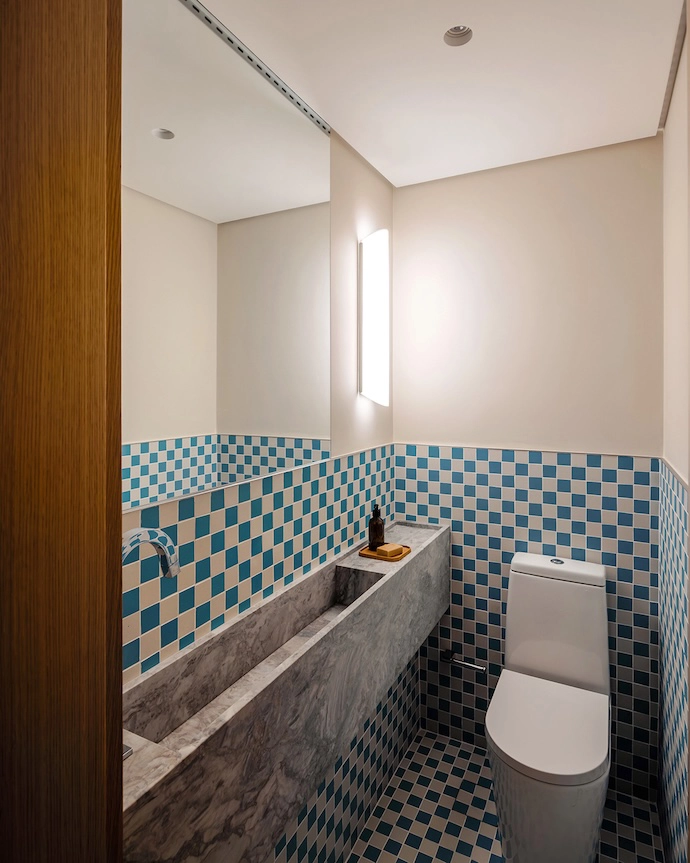
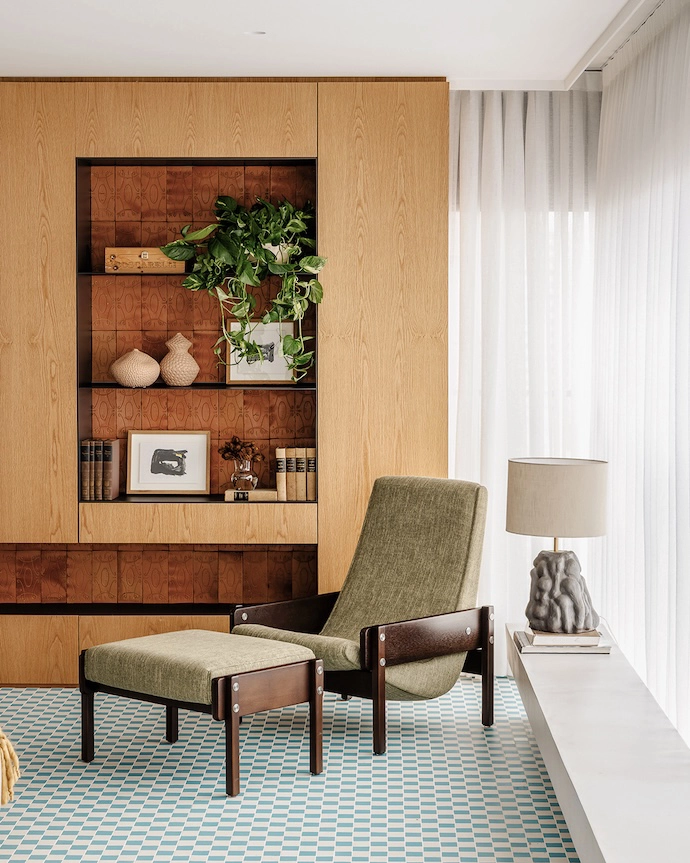
A bold blue and white chequered ceramic floor unifies the open-plan interior of this apartment in São Paulo, Brazil, setting the material tone for a home conceived around family life.
WORDS Palesa Mohola PHOTOS Manuel Sá
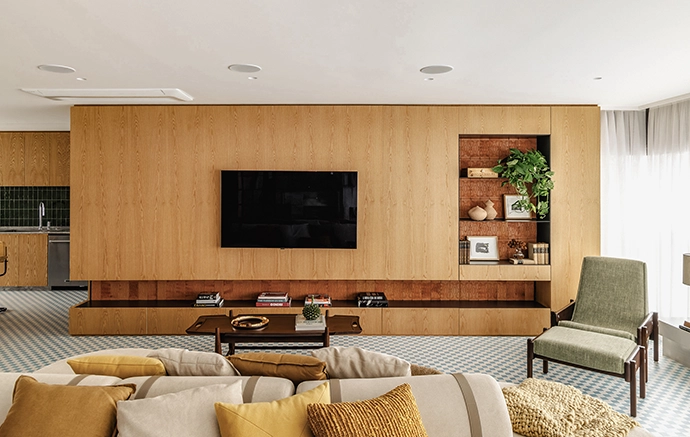
Küster Brizola Arquitetos designed this 200 m² apartment with a family of four in mind, structuring it as a home centred on family life, hosting friends and family, and creating meaningful memories. Here, a chequered pattern spread across the living areas is a defining feature of the apartment, used to organise the social zones and establish its identity.
The ceramic floors were the guiding factor in the selection of materials and finishes throughout the apartment. This also meant that the striking pattern required a careful balance of textures, colours and surfaces – one that would allow it to stand out while working in harmony with other elements. The architects opted for a restrained palette, where white lends a sense of lightness and blue accents introduce a quiet serenity.
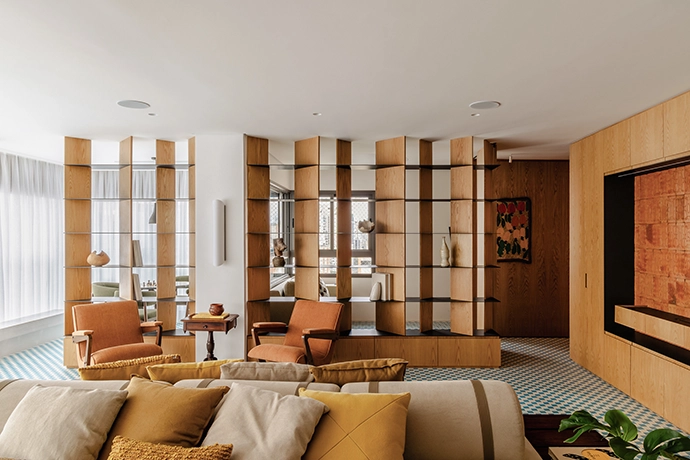
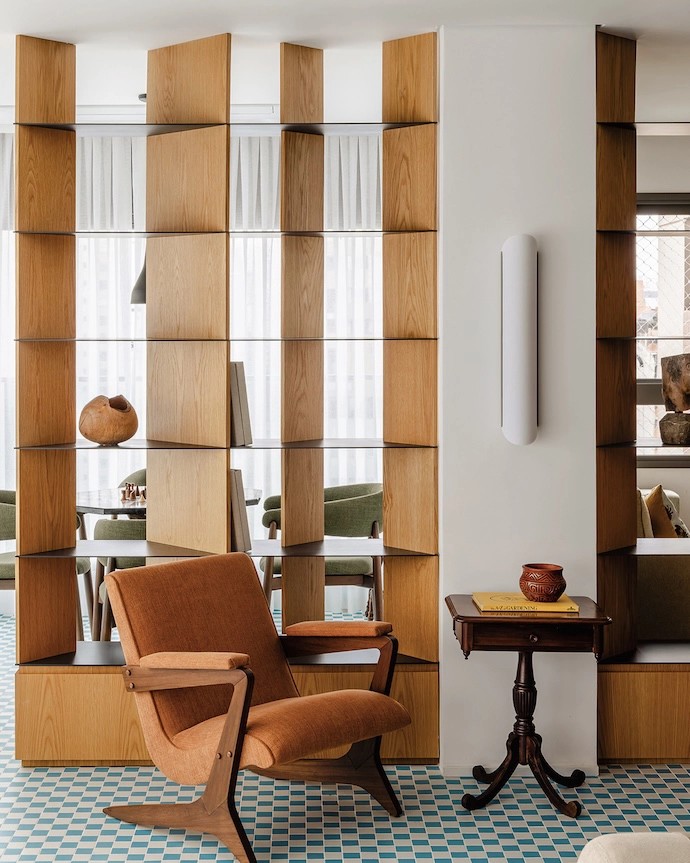
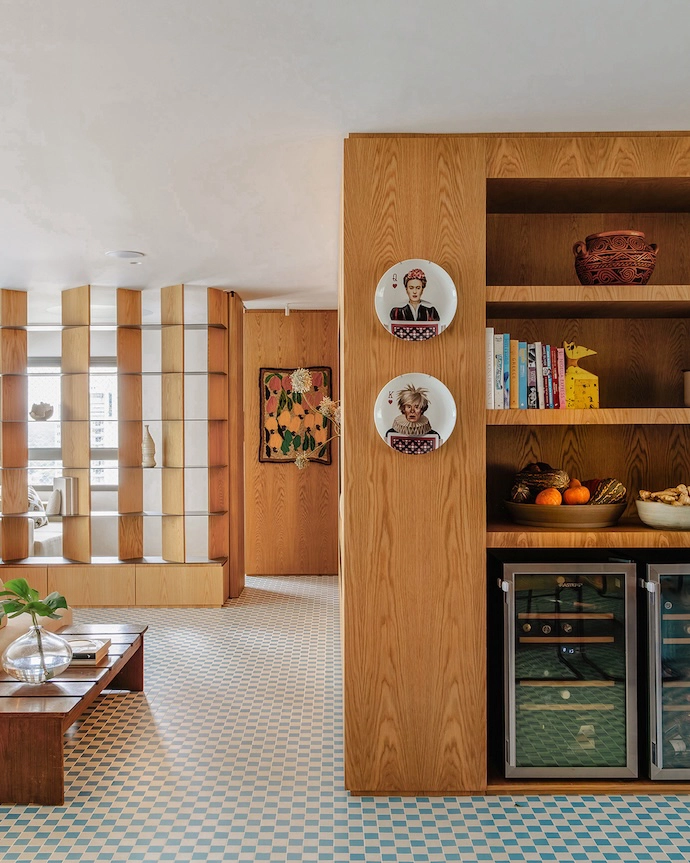
The social area sits at the heart of the home, with the grid guiding the architectural layout and its geometry carefully aligned with the custom cabinetry and stone countertops. Since it is a multifunctional area, the shelving unit organises circulation and subtly defines the playroom, game room and living area; to preserve the feel of an open-plan layout, the playroom received a delicate metal-framed partition in place of a solid wall.
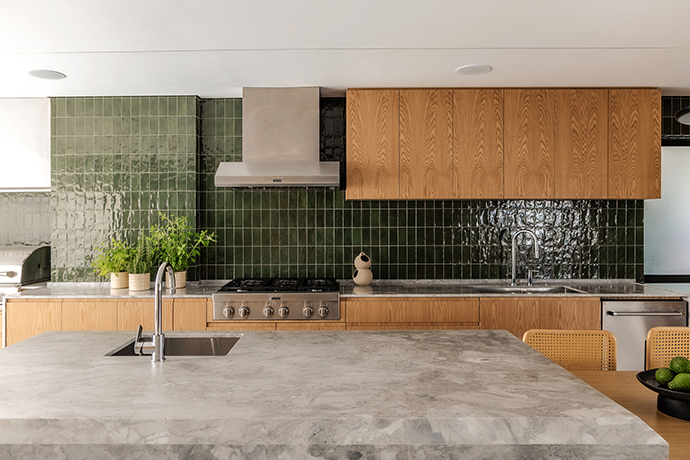
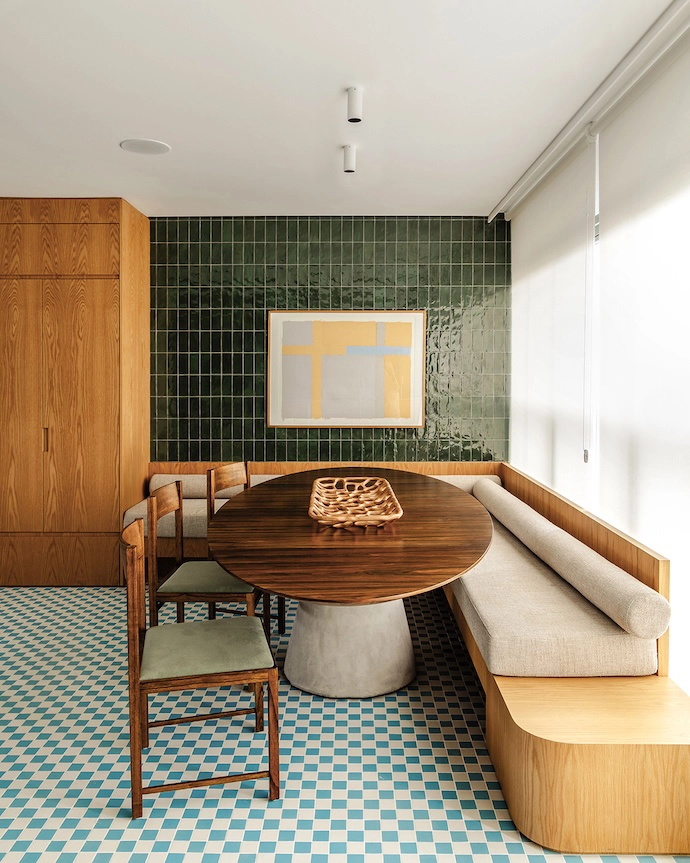
The same communal spirit informed the kitchen – a room dedicated to cooking, family gatherings and entertaining, with a Paraná Cromos stone island at its centre.
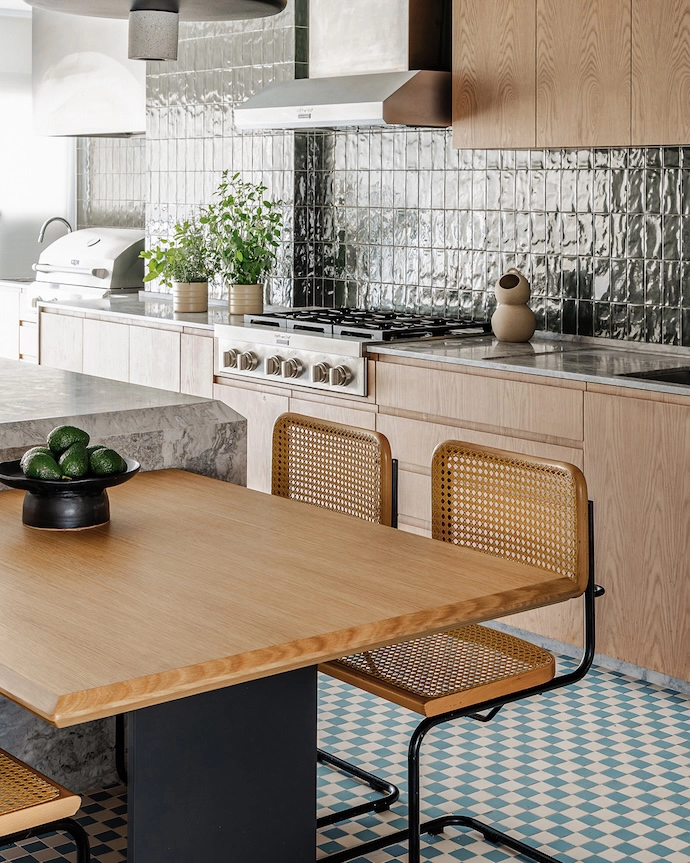
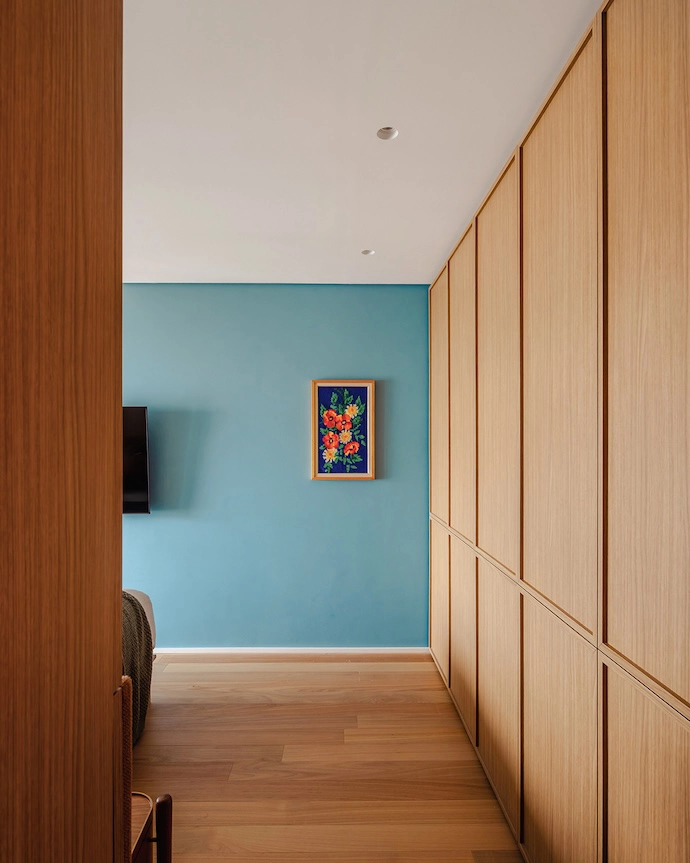
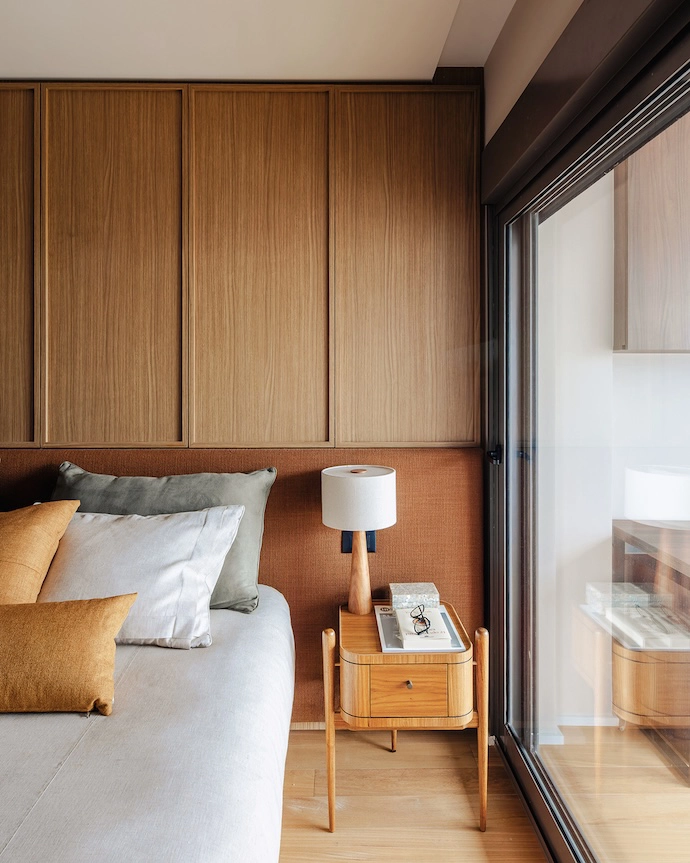
Shades of green run throughout the kitchen via the Gouache ceramic tiles by Portobello, evoking nature and bringing freshness to the room. These harmonise with the American oak cabinetry found throughout the residence, establishing a continuous material language between rooms – one that brings warmth to the interiors and blends seamlessly with the project’s palette of blue, green and terracotta tones.
To add a personal touch, the furnishings in the game room reflect the family’s appreciation for pieces with historical value, reinforcing the dialogue between memory and contemporary living. Ceramic pieces from the family’s pottery workshop are displayed throughout the home, creating a symbolic connection between past and present while lending a distinctive identity to the interior. A century-old Italian pietra dura table – sourced from Florence and acquired at Cristiano Ross Antique Shop – anchors the room, further deepening the project’s sense of history and emotional resonance. | kusterbrizola.com.br
Don’t forget to sign up to our weekly newsletter for the latest architecture and design news.