-

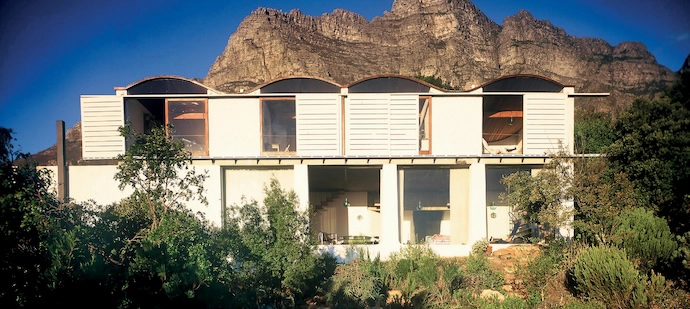
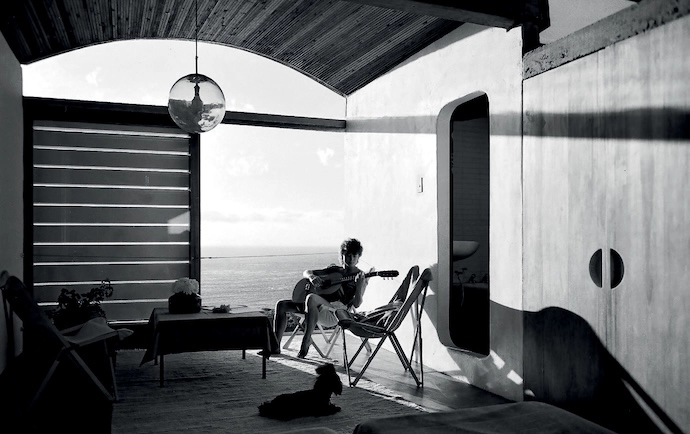
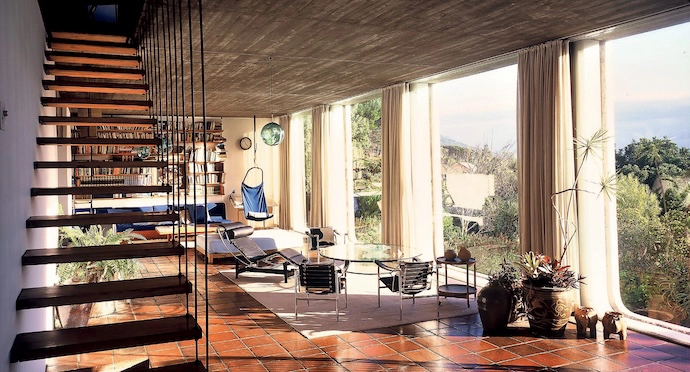
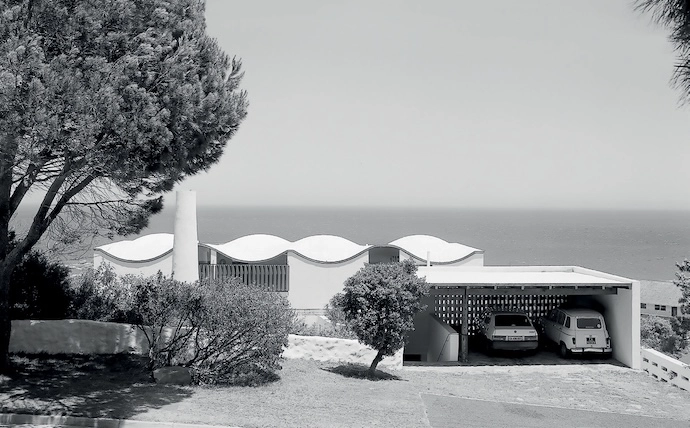
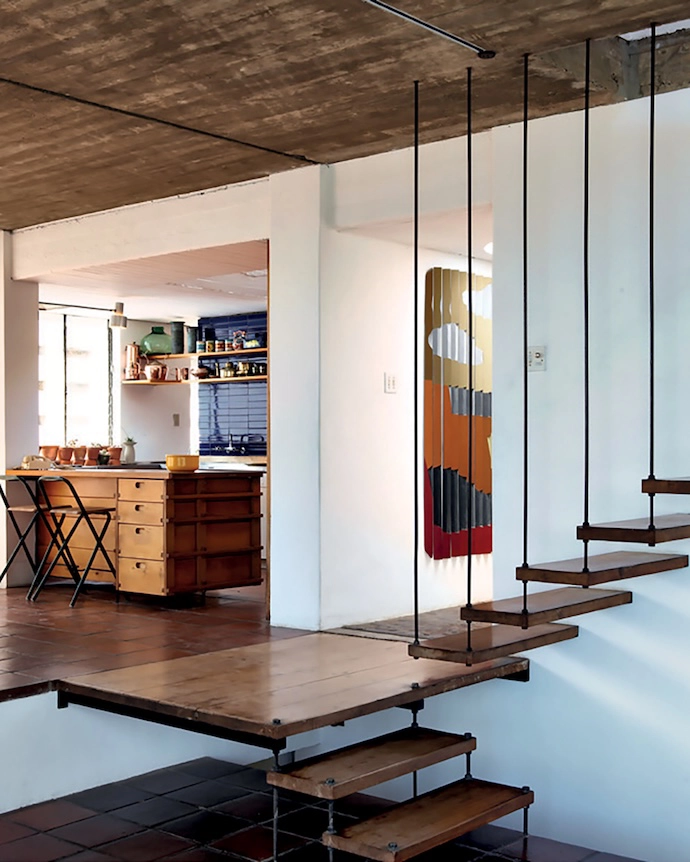
The roof shape at Die Es conforms directly to the plan, enhancing the cell-like separateness of each room while lift ing to frame alternate western sea and eastern mountain views. Gawie Fagan and his family of six built most of Die Es themselves during weekends and time aft er school. It was completed in 1965. -

The roof shape at Die Es conforms directly to the plan, enhancing the cell-like separateness of each room while lift ing to frame alternate western sea and eastern mountain views. Gawie Fagan and his family of six built most of Die Es themselves during weekends and time aft er school. It was completed in 1965. -

The roof shape at Die Es conforms directly to the plan, enhancing the cell-like separateness of each room while lift ing to frame alternate western sea and eastern mountain views. Gawie Fagan and his family of six built most of Die Es themselves during weekends and time aft er school. It was completed in 1965. -

The roof shape at Die Es conforms directly to the plan, enhancing the cell-like separateness of each room while lift ing to frame alternate western sea and eastern mountain views. Gawie Fagan and his family of six built most of Die Es themselves during weekends and time aft er school. It was completed in 1965. -

The roof shape at Die Es conforms directly to the plan, enhancing the cell-like separateness of each room while lift ing to frame alternate western sea and eastern mountain views. Gawie Fagan and his family of six built most of Die Es themselves during weekends and time aft er school. It was completed in 1965. -

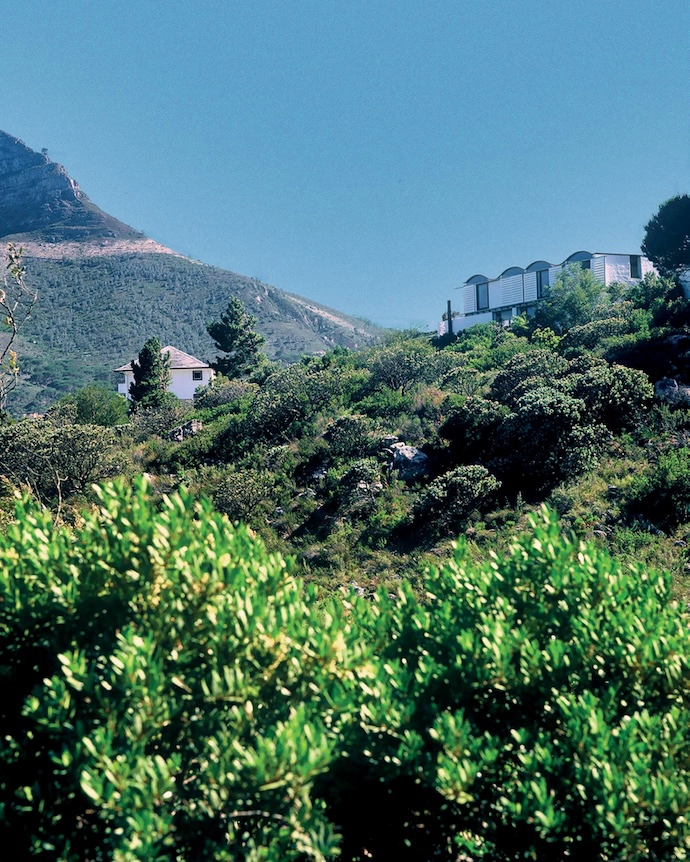
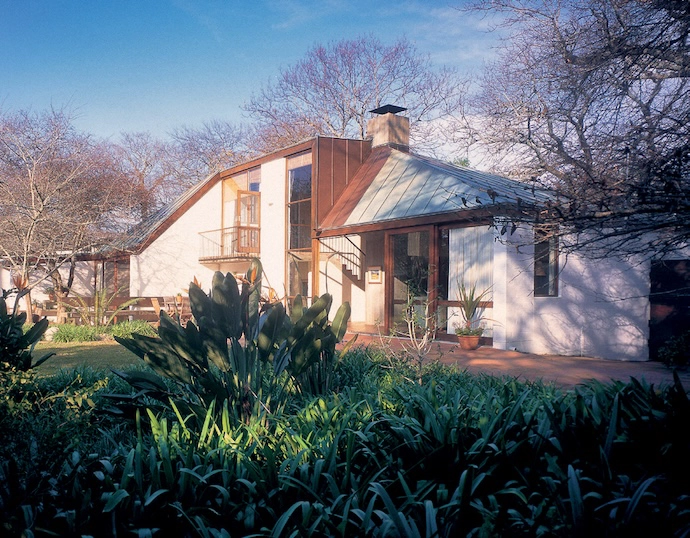
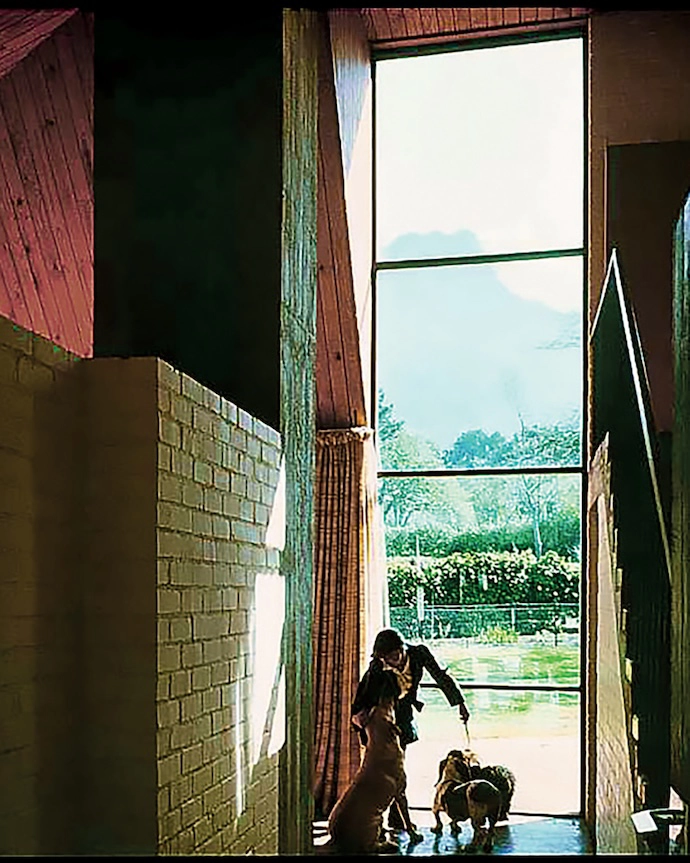
Completed in 1967, House Raynham takes you on an exploration of the advantages of context through light, solar contact and mountain views. -
Completed in 1967, House Raynham takes you on an exploration of the advantages of context through light, solar contact and mountain views. -

Completed in 1967, House Raynham takes you on an exploration of the advantages of context through light, solar contact and mountain views. -
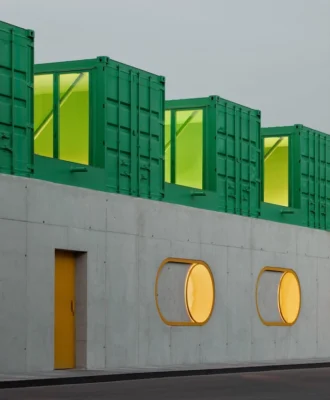
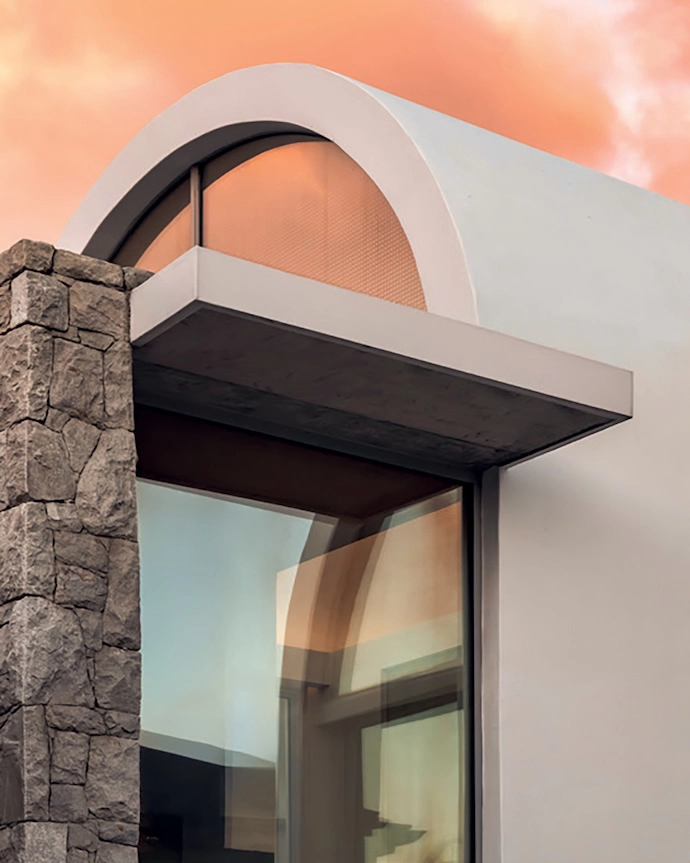
Jankel Nieuwoudt’s own project – a house in Onrus. -
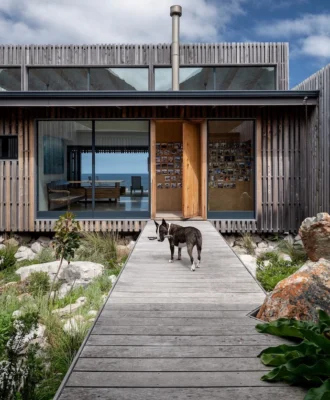
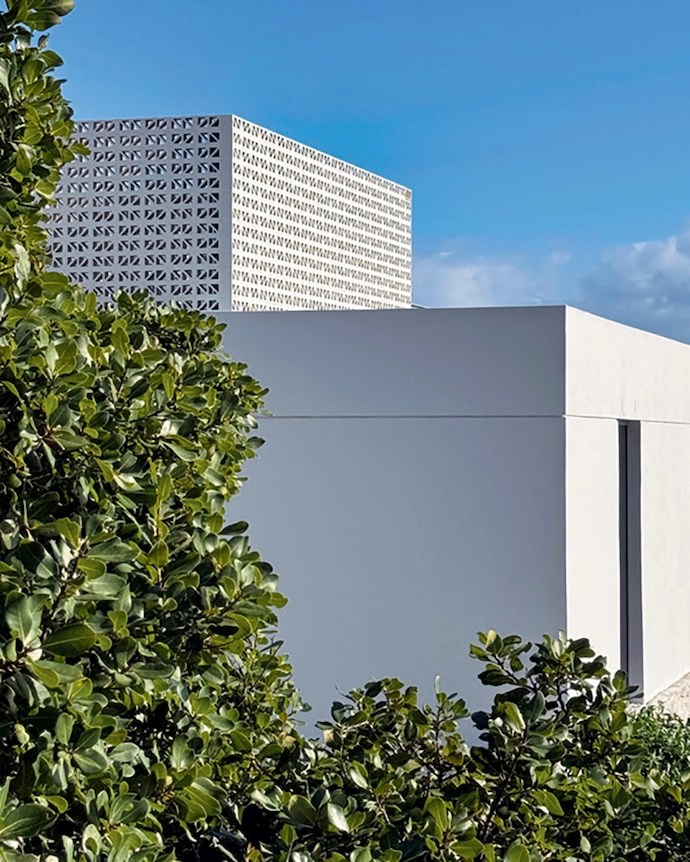
Jankel Nieuwoudt’s own project – a house in De Kelders, outside Hermanus.
Jankel Nieuwoudt, of the up-and-coming architecture firm Nieuw – which designed Atlantic 91 – describes the impact that the work of the late South African legend Gawie Fagan has had on his own approach to architectural design.
WORDS Jankel Nieuwoudt PHOTOS Supplied
Bellville to bourgeois and back again
It’s 2005 and I’m well into my first internship at the studio of a well-known South African architect. The office specialises in highly detailed luxury residential architecture, of the kind that populates the mountainside along the Atlantic Seaboard, all meticulously crafted manually on drawing boards. As a kid from Bellville, I’d never been exposed to this level of wealth before, and I never knew that people in South Africa built houses like these. Beyond the boerewors curtain, our spaces were shaped by various tones of face brick topped with Double Roman roof tiles.
As part of our coursework during the internship, we had to analyse one of the firm’s past projects, and I end up choosing a slick little house composed of mostly steel and glass, situated on the upper slopes of Camps Bay. As I turn off Camps Bay Drive into Woodford Avenue, a ripple floating above the Atlantic horizon catches my eye. Not sure what I just saw, I continue another 30 metres and take a left onto a small panhandle to the chosen house for the coursework. I park in front of a beautiful contemporary piece of architecture and, as I get out of the car and look back towards the mountain, I get a better view of what caught my eye moments ago.
The ripple is a thin, long, undulating parabolic roof, threatening to float away only to be anchored to the mountain by an oversized white chimney contrasted against the dark rocky slopes. I race back up to Woodford Avenue to take a closer look and see a house number – it reads “Die Es 32”. What? People speak Afrikaans in Camps Bay?
Finding the familiar
I soon found out this was my first Gawie Fagan experience, and it was of his own home, hand-built by him and his family. Fast-forward three years, and I’m working full time. I just purchased my first DSLR camera and have ambitions of being the next Julius Shulman. That year, the Open House tours were launched in Cape Town, and they were hosting a Gawie Fagan tour. Camera in hand, I finally get to fully immerse myself in that striking house I saw years ago.
Entering Die Es – it translates to hearth – you are channelled along a skinny dark corridor lined with white plastered walls and stone tiles. It leads to the main living space, bathed in light reflecting off the expansive views across the Atlantic – a volume of very specific scale, bookended by a library and a beautiful courtyard on the sides, a room- sized hearth on the rear, and the Atlantic Ocean framed by large openings with rounded corners at the front.
While I had never experienced anything like this before, it somehow felt familiar. The spaces and materiality contained something that reverberated with my South African sensibilities. It was hard to put my finger on it, but it soon became apparent. We spent a couple of hours there, snapping away, taking it all in. Being able to share the space with Gawie and his wife Gwen, there to answer all our questions, would leave a lasting impression on me.
On the same day, we travelled to the suburb of Fernwood Estate, where Gawie sculpted House Raynham. Gawie stood in the yard with a small crowd around him, explaining to us how the shape of the roof was informed by the mountain it faces. He originally came to the site with a theodolite, and mapped the silhouette of the mountain. A young architect raised her hand and asked, “What’s a theodolite?” Gawie turned to her and, in his quiet voice, said, “I thought you were an architect.”
The roof rising and falling over the simply organised spaces was an exercise in plasticising the rigid forms of traditional roofs. With familiar white walls and brick floors, it was another roof threatening to float away, but restrained by the hearth rooting it to the ground.
Die Es and House Raynham are two very different projects, but they contain the same qualities – a simple diagram for living with a strong connection to nature. But, equally as important, House Raynham continued a familiar built tradition.
The tree doesn’t grow very far from the apple
The South African built environment tradition was inherited from Europe. Our history textbooks were filled with illustrations of the old Cape Dutch buildings, and our primary-school fi eld trips were spent touring their sometimes-haunting spaces. It’s a language we were familiar with, an architecture that represented our origins in this place we call home. If you asked a young, white, middle-class kid of my generation to show you an example of South African architecture, they would most certainly have pointed to their nearest Cape Dutch building or plaashuis.
As young architects, our ambitions were very Euro-centric. We immersed ourselves in architectural books, and in magazines showcasing the latest international architecture trends. Our references for academic projects were very rarely local, and within ourselves grew a sense of dread about the state of our local built fabric and traditions. It’s the typical rebellious teen syndrome, refusing to see the value at home and yearning for the unfamiliar only to find out that our parents were right about many things all along.
The quiet radical
Gawie fully understood our inherited vernacular tradition and, together with his own modern architectural influences, reinterpreted it by reducing it to its purest qualities – context, technology and symbol. The simplicity of Gawie’s spatial arrangements, their connection to place, the honesty of the materials, and the craft in joining them resulted in an iconic body of work. Each project was different from the next, growing from the site instead of being imposed on it.
His work was not about novelty, but about authentic problem-solving – purpose over style; intention over image. As I pored over the photos I took that day, I came to realise that Gawie’s work was radical. Quiet, but radical – an oxymoron to me at the time. For the architect, tradition should not be a totem to be preserved, but a disciplined way of thinking – an instrument for invention grounded in inherited wisdom. Old lessons can be used to tell radical new stories.
Gawie Fagan’s influence on our work is not in replication, but in approach. We take lessons from the context before and above anything else. We listen before we speak. Our current work explores radical contextual reinterpretations, and we are proud to say that you cannot put two of our projects alongside one another and say, “That’s the same architect.” It shows that we are, in fact, listening. We have the radical part down – now we’re working on the quiet part… @_jankel | @_nieuw
Read the feature on Atlantic 91 designed by Jankel Nieuwoudt.
Don’t forget to sign up to our weekly newsletter for the latest architecture and design news.