-

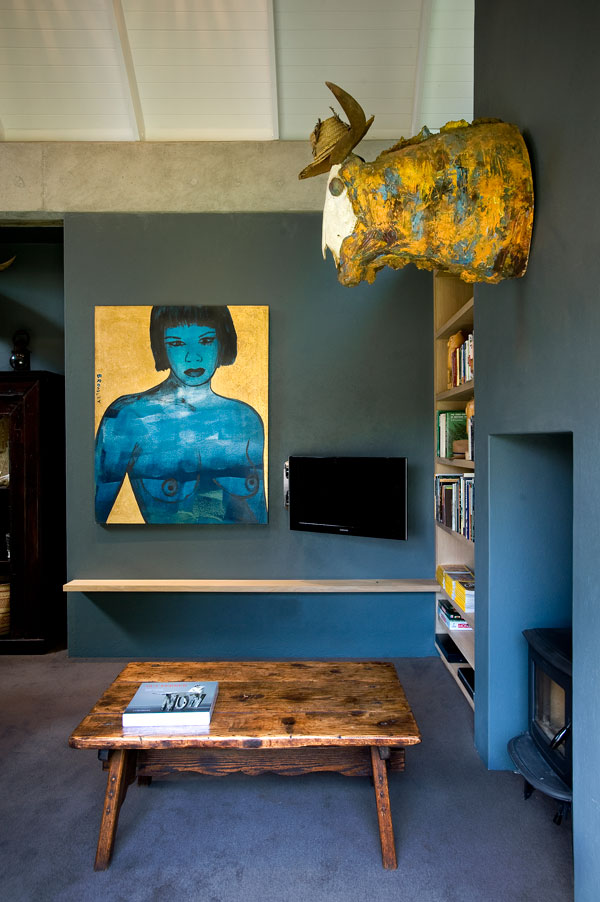
A tale of two houses : The Read's house is a feast of contemporary art, including this painting by David Bromley and a humorous wildebeest trophy by Theodore Waddell. -
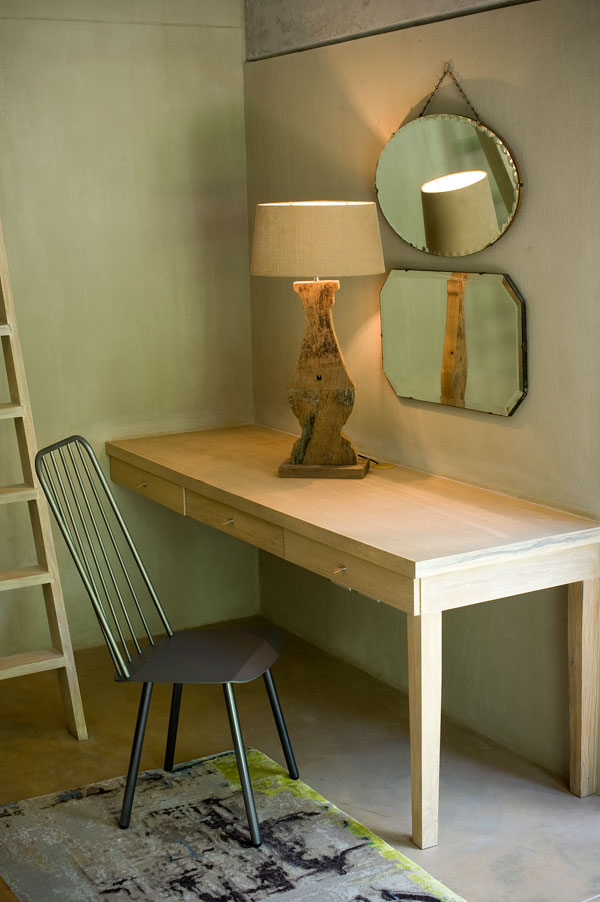
A tale of two houses : Simplicity is key in the interior of the second family home, where decor by Sarah Watermeyer is a combination of custom-made dressing tables, contemporary pieces and finds such as these antique mirrors. -
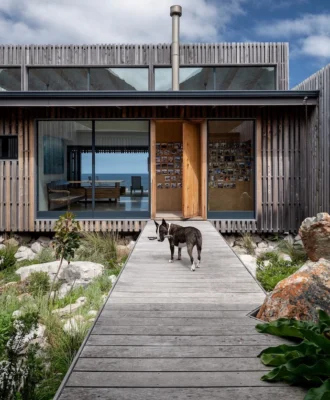
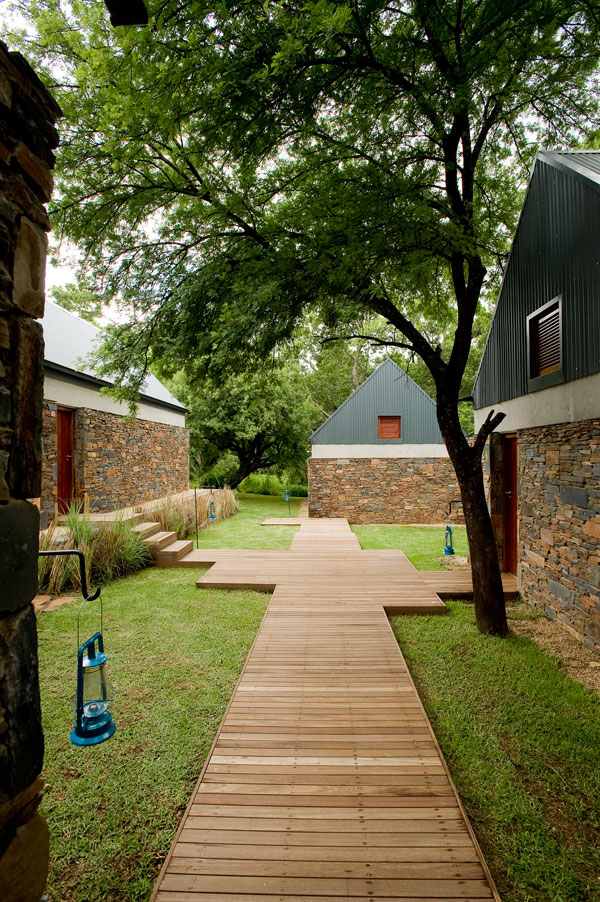
A tale of two houses : All the guest suites at Plovers Lake House can be reached along slightly elevated timber decking pathways. -
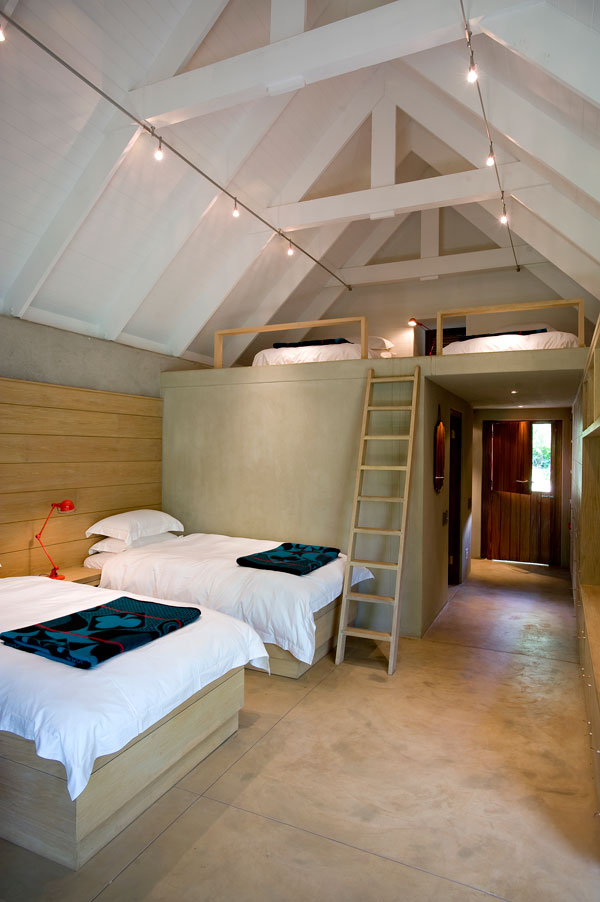
A tale of two houses : Children's rooms in the second home are simple and have plenty of accommodation thanks to the mezzanine level. -
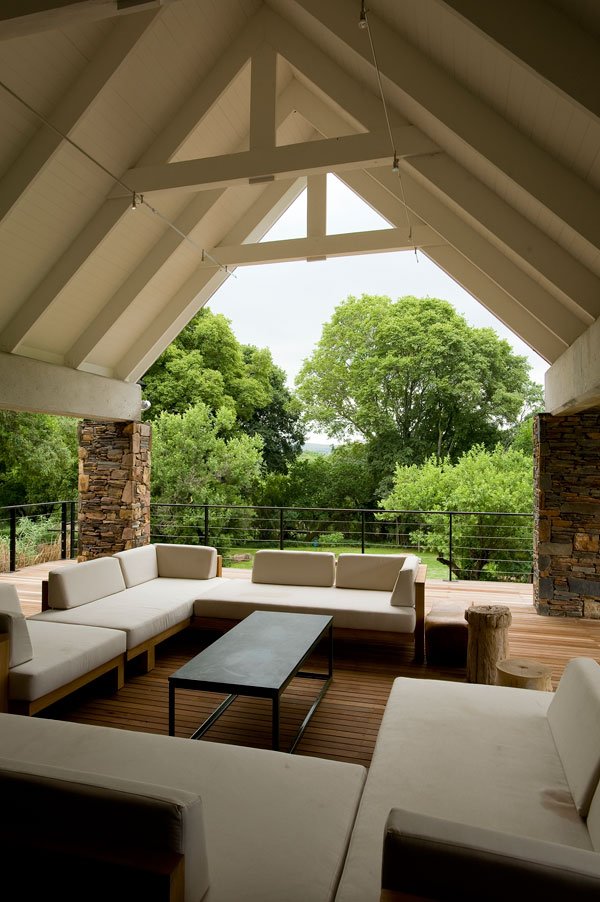
A tale of two houses : The walls of the houses were constructed with layered stone, and the structures were topped with off-shutter concrete and white supporting timber construction to provide light. -
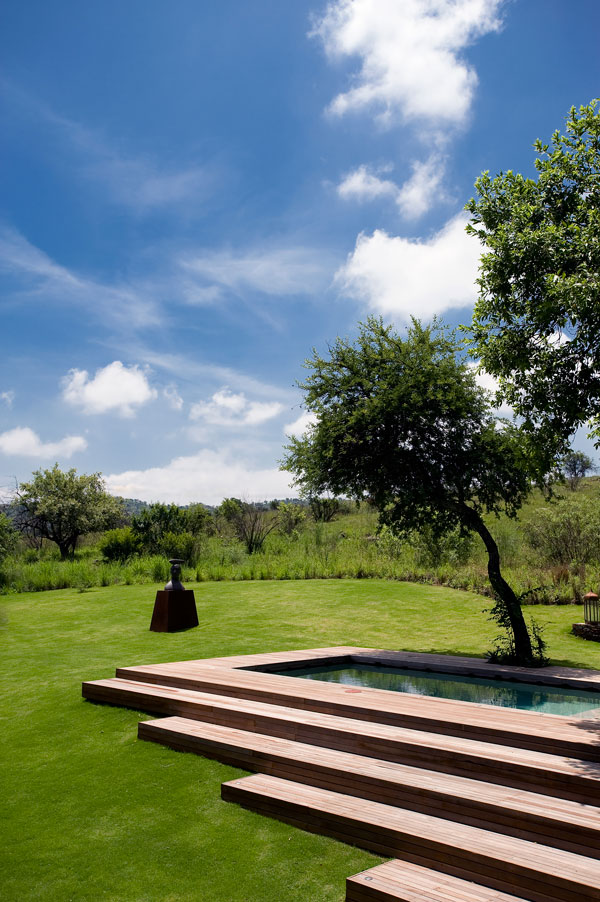
A tale of two houses : The balau timber decking and steps around the pool at the Reads' house stands on geometric contrast to the natural surroundings. -

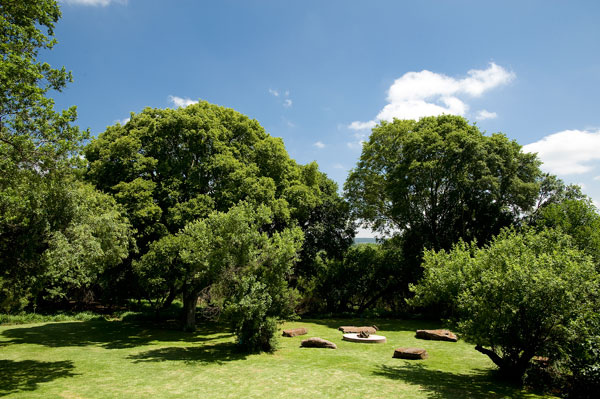
A tale of two houses : The owners of both houses wanted lapa-like fireplaces at the bottoms of their gardens. Giant rocks from the area provide rustic seating. -
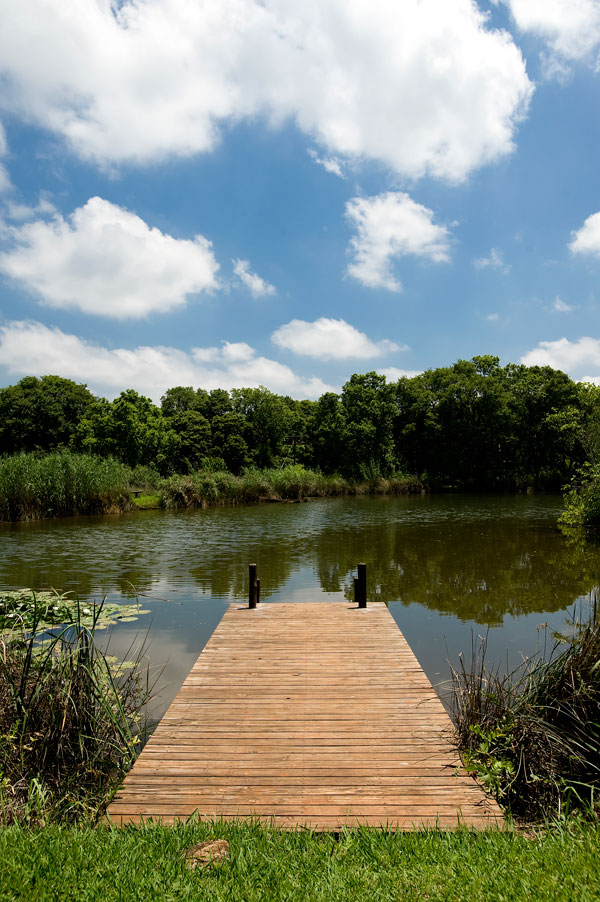
A tale of two houses : The timber jetty on the lake. -
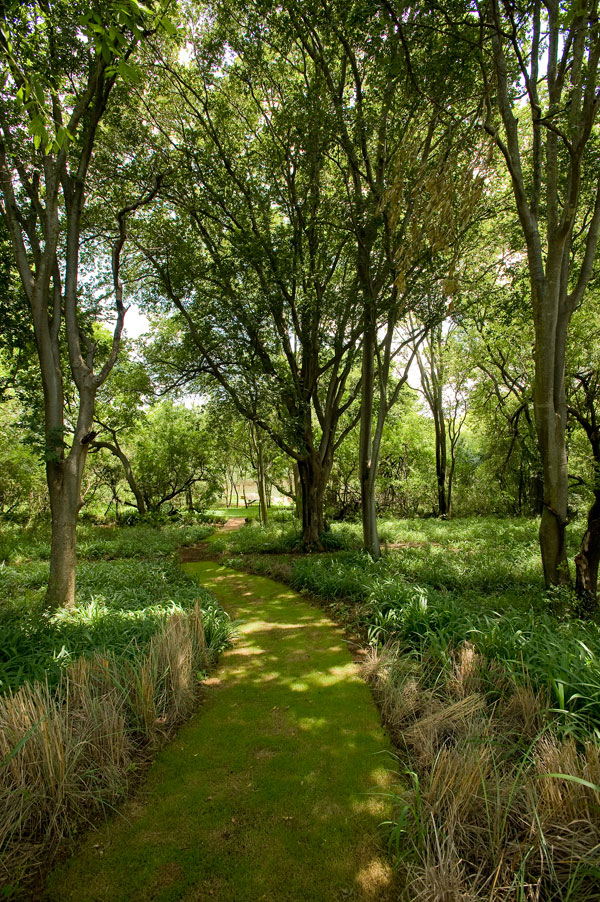
A tale of two houses : Landscape architect Wesley de Witt used mainly grasses to create texture and interest in both gardens.
PHOTOS: Dook | PRODUCTION: Annemarie Meintjes | WORDS: Jacqueline Myburgh Chemaly
North of Johannesburg, in the Cradle of Humankind, architect Johan Bergenthuin has created two separate homes as an ode to the beauty of South Africa’s natural heritage.
The Cradle of Humankind is fast becoming the playground of hard-working Johannesburg residents wanting to take a break from the madness of the city.
But this is no average playground, for the area’s unique paleontological value makes it one of the most important natural heritage sites in the world.
This is why the type of person who chooses this as their weekend escape is one with an affinity for the rare and the untouched – they do everything possible to ensure that their presence here will have minimal impact on this remarkable piece of the world.
It all began with the Nirox Foundation, an artists’ retreat and sculpture park in the heart of the pristine Khatlhampi Private Reserve. Further down the road, MTN boss Phuthuma Nhleko has reportedly created a forested architectural masterpiece that is a tribute to his engineering background.
Slick, yet warm
Given their personal passion for all things archaeological, it therefore made perfect sense for Mark and Christine Read, of the Everard Read and Circa on Jellicoe galleries in Johannesburg, to set up a weekend getaway in The Cradle.
Plovers Lake House is the stone and glass home from home to which Reads escape every Friday afternoon if they can.
Designed by Johannesburg architect Johan Bergenthuin, the house is slick yet warm and comfortable. As one would expect, it is filled with art and objects that tell the story of the couple’s rich life.
The house is a collection of buildings around the central glass and stone living area. The Reads’ grown-up daughters have a suite of their own, a visitors’ cottage lies a discreet distance from the main house, and Christine and Mark can retreat to their room on the hill to enjoy the views and serenity offered by the environment. Inside each room, a mezzanine level provides not only optional sleeping room for children but also a cunning storage space concept.
The Reads’ neighbours barely 100m away chose a more modern style for their house but still with plenty of glass and stone to help it blend into the landscape. The walls were constructed using slate stone layering, which Johan chose because, he says, in his mind that is how the earth was formed – layer upon layer.
Design that evolved on site
As with the Reads’ house, the roof on this one consists of a light corrugated iron, which is a subtle reference to the colonial Transvaal farmhouse that could have been found in this area. Exposed concrete beams are both rustic and contemporary at the same time, while ventilation windows add to the 21st century barn effect.
The black gutters contrast ever so subtly with charcoal-coloured fascias, giving an embossed detail and adding texture to the design.
The balau deck outside adds a natural touch and will turn a beautiful grey colour as it ages. “The wood also has a light touch – you don’t want to interfere with the earth here,” says Bergenthuin. The black, grey and brown colour palette was inspired by the environment around the house, particularly the white stinkwood forest nearby.
In true Bergenthuin style, much of the design of this home evolved on the site. Similarly to the Reads’ home, it is more than a house but rather a complex of rooms linked to one another through outside passages.
“You have to go outside and experience the weather,” says Johan, “Otherwise it wouldn’t feel like the weekend and you might as well be back in Johannesburg.” A bit of distance between the rooms is also a way of guaranteeing privacy for weekend guests.
The house has a northern approach and is therefore south-facing. To maximise the flow of light, therefore, Johan created small windows in the north-facing roof.
The family has three boys who have been bundled together in a cool, country dormitory setting with a large three-person shower next door. Downstairs a “dungeon” playroom is simply adorned with large family photographs.
Decorator Sarah Watermeyer interpreted Johan Bergenthuin’s slick simplicity perfectly. There is a feeling of rural sophistication but also a complete absence of pretension in the way that bedside lamps don’t need to match and guest beds sport witty African blankets for Sunday afternoon naps.
Mass planting of indigenous plants
Both of these Cradle homes are also tied together by the light touch of 27-year-old landscape architect Wesley de Witt. A long-time friend of the Reads’ who has also worked with the legendary Patrick Watson, Wesley grew up in the area and has a small home of his own at Nirox.
Wesley is passionate about making as little impact on the natural environment as possible. For him, landscaping is more of a philosophy than a profession and he says most of us spend too much time focusing on the planting of a garden and too little time looking at the contours.
At Plovers Lake House he has focused on the existing levels and shapes of the natural environment and used different grasses to create interesting spaces.
Most effective has been the mass planting of indigenous plants to enhance the environment. The only exception is the all-seasons evergreen lawn at the entrance to both homes. Wesley says this type of garden is also a boon for the owners since it requires minimal maintenance.
It is almost impossible to distinguish Wesley’s work from that which Mother Nature herself has created – could there be any greater tribute to the talents of a landscape artist?
• Louis Louw Johan Bergenthuin Architects: 011 781 3663, reception@lljb.co.za, www.lljb.co.za
• Sarah Watermeyer: 083 407 6857, 011 838 9211
• Wesley de Witt: 082 978 1135, wes@circaonjellicoe.co.za