-

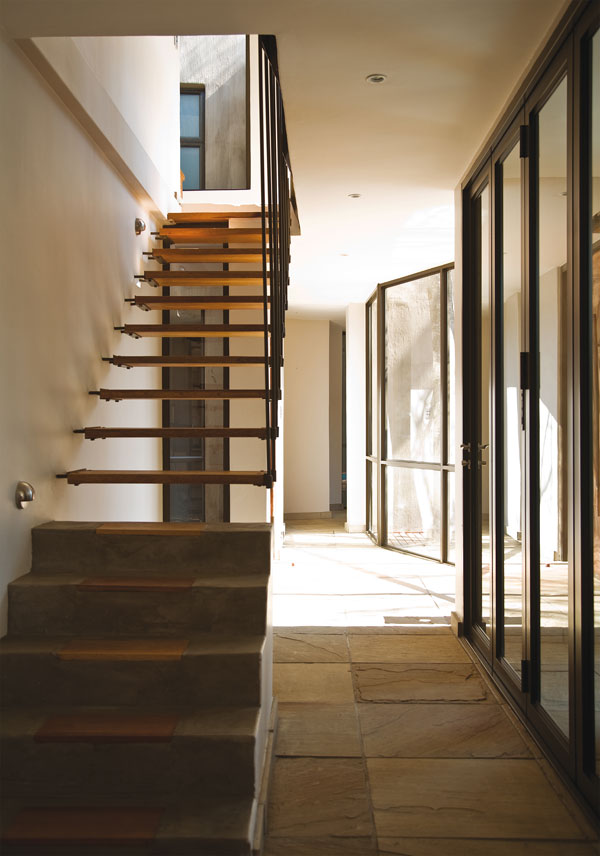
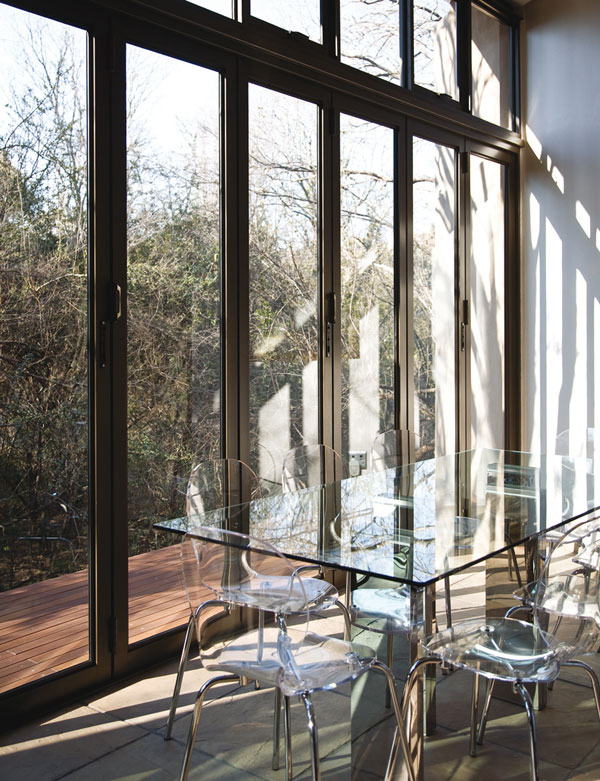
A leafy haven : The organic passage created by the trees allows close-up views of the bush on entering the front door. Aluminium and Allied worked wonders with the glass, making it disappear into the space when necessary. -

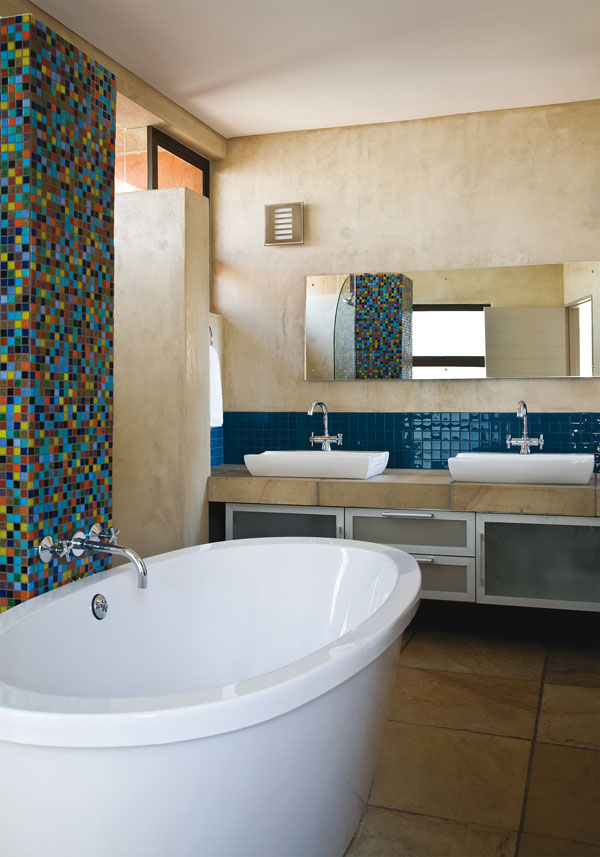
A leafy haven : The bathroom on the ground floor makes use of every inch of space, thanks to excellent planning by Aksiekas. Elgru says she and Schalk wanted a modern bathroom that remained in line with the rest of the house. -

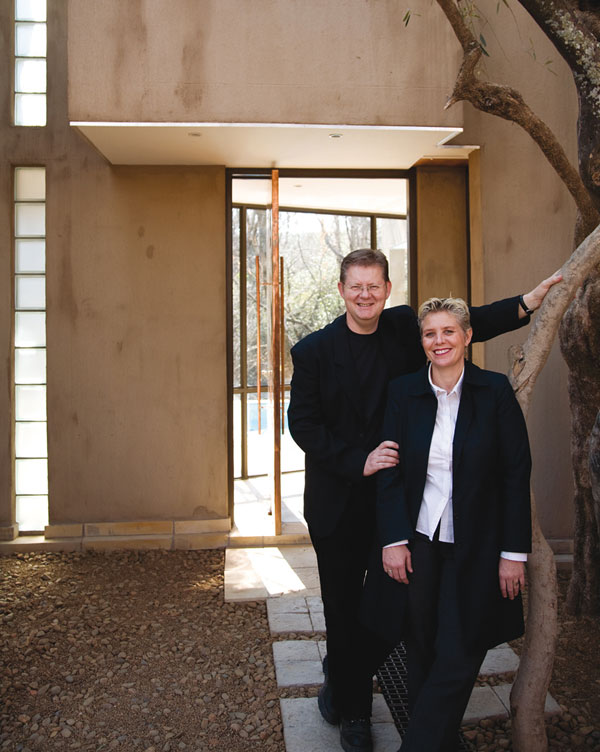
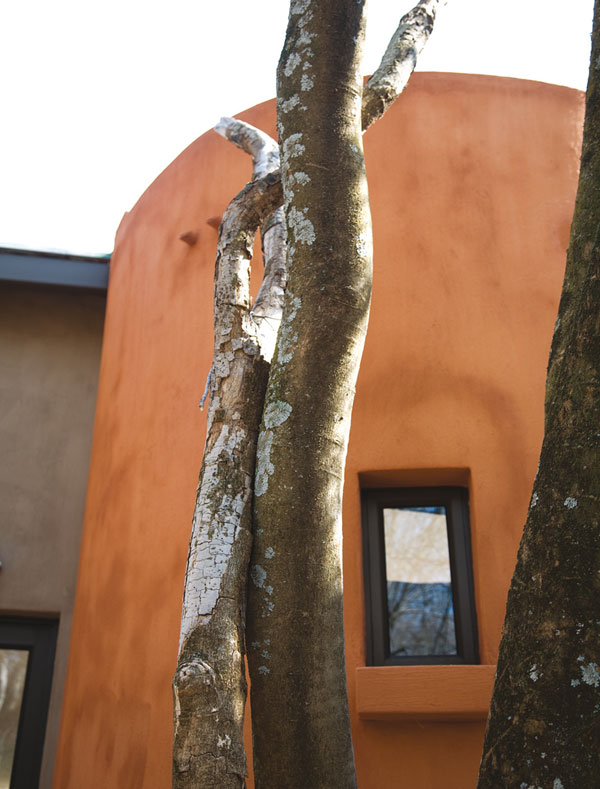
A leafy haven : Jan and Petria Smit beside the two white stinkwoods that create the organic movement of the ground floor. -

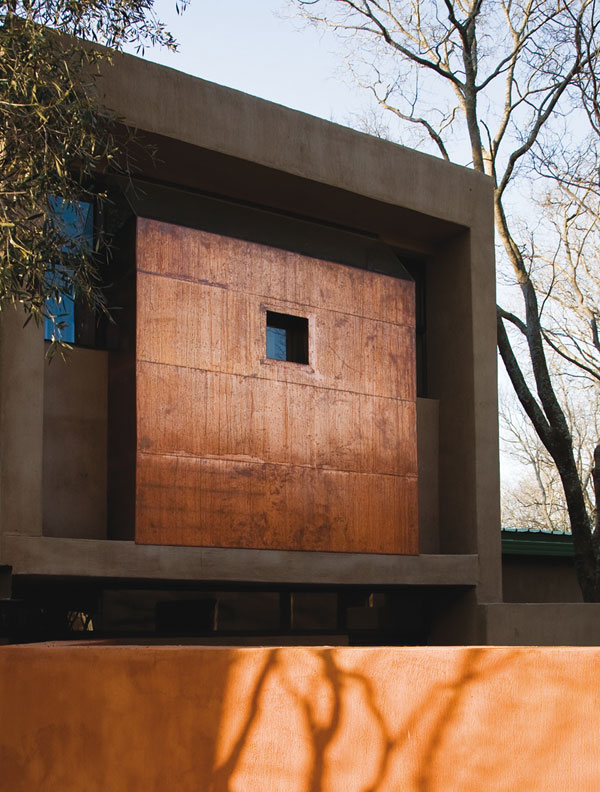
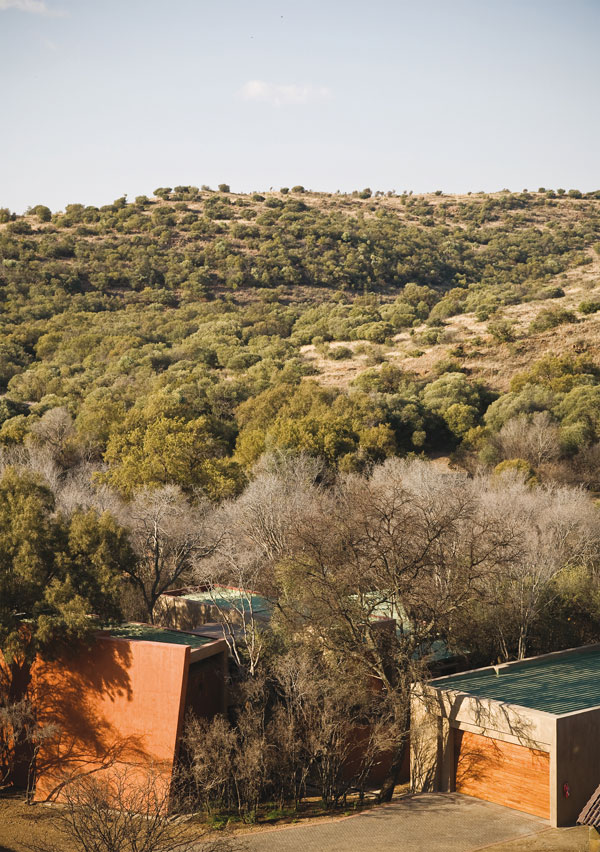
A leafy haven : Copper cladding has begun to weather, creating a formidable entrance on an otherwise conventional estate. Colours were chosen to blend in with the surrounding hills. -

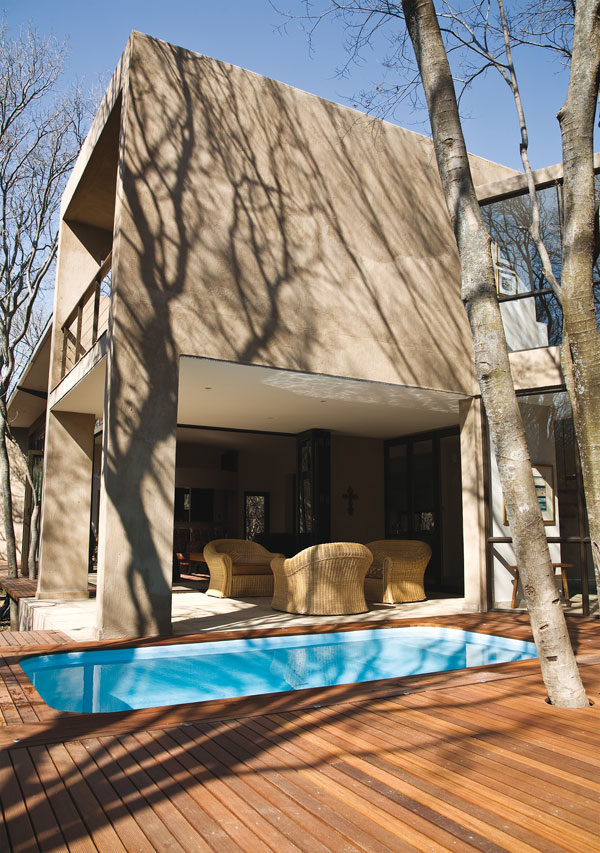
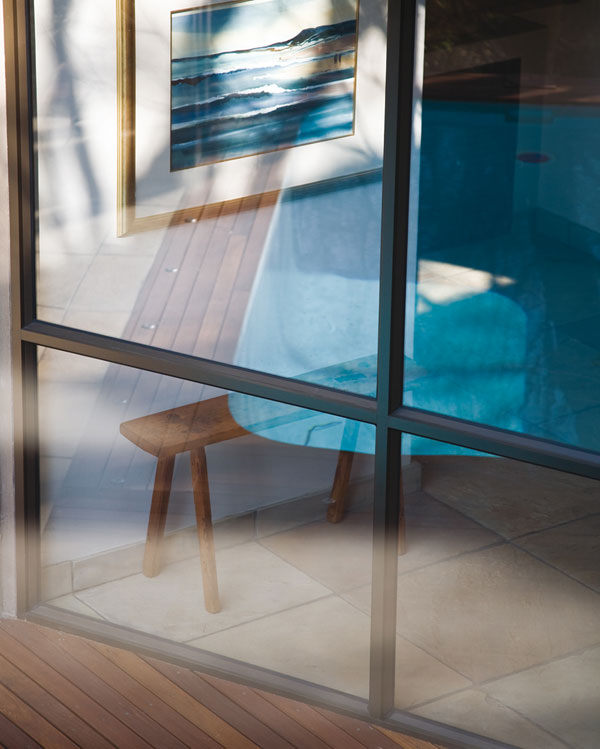
A leafy haven : Foldaway doors invite the bush in and make the pool part of the lounge in summer. The east tube, which accommodates the guest room and bathroom, almost fl oats above the living area and offers views of the valley. -

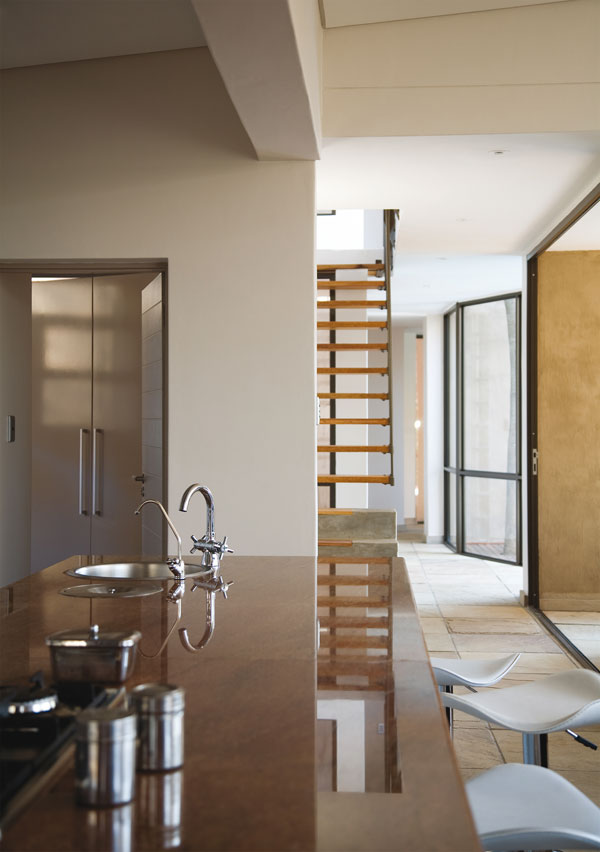
A leafy haven : Elgru Burger admits that she isn’t fond of cooking but it’s growing on her because of the contemporary kitchen with a view. “Aksiekas worked wonders with the organic part of the house,” she says. -

A leafy haven : The sharp glass corner of the lounge is the perfect spot for bird-watching. -

A leafy haven : Trees are the focal point in every window, creating a tree-house effect in each room. -

A leafy haven : The swimming pool between Elgru’s workroom and the living room offers a cool oasis. -
A leafy haven : Nestled within the Free State bush, the home is uncharacteristically private for estate living. Clever architecture and a unique site made it a perfect environmental study for the Smits, known for the Free State vernacular they have developed.
PHOTOS: David Ross | PRODUCTION: Klara van Wyngaarden | WORDS: Alisa Uys
Bloemfontein’s Jan Smit Architects is renowned for its site-responsive approach to architecture. The result is a house that honours its environment by incorporating all the trees on the stand into the design.
Schalk and Elgru Burger love trees, so much so that when they engaged Bloemfontein’s Smit Architects to design their home on a residential estate on the outskirts of The City of Roses, they stipulated that it had to be built around all the indigenous trees on the site.
“The trees were marked and the plan was adapted by Jan and Petria Smit to form ‘bubbles’ around them,” smiles Elgru. Yet this wasn’t too much of a tall order for the architectural practice, which is known for adhering to the principle of site-specific design determined by environment, landscape and climate, as Jan and Petria’s students at the University of the Free State will attest. (Jan heads the institution’s highly regarded Department of Architecture where Petria is a senior lecturer.)
Tree house
As a result of the couple’s collaboration with the Burgers, the oversized, copper-clad front door hides a wonderland of views in this house of glass. But rather than expansive vistas, you’ll find close-up views of karee, wild olive, white stinkwood and sweet thorn trees.
The house is both surrounded by, and contains, nature’s works of art, each floor-to-ceiling window framing a tree-top or gnarled trunk as a focal point.
Seclusion and privacy might seem like a pipe dream on a residential estate but this home is indeed inconspicuous and hidden, not only by virtue of its position at the edge of the estate, but also thanks to the conserved trees and a towering, earthen-coloured wall on the west side.
The site, nestled deep in the bush between two koppies, has a stream running through it. Schalk, a retired civil engineer, says he and Elgru dreamed of living here out of sight, free to observe and enjoy the beauty around them.
He explains what he and his wife discussed with Jan and Petria: “No airs and graces. No extra frills. A contemporary, open living space. Close to nature but disturbing as little as possible.”
Enhancing nature
While initially it might seem that their needs have come second to those of the environment, the Burgers are quick to point out that this isn’t the case and, if it can be argued that it’s possible for a structure to enhance a natural site, this house has certainly achieved it.
The Burgers fell for the first plan the Smits presented to them and theirs was also the first house on the estate to be approved within the existing guidelines. As with other Smit houses, the service area to the south is characteristically separated from the served or living areas – in this case by a dividing passage running through the middle of the open-plan layout.
The served areas face north with glass doors opening onto the bush. The public and private spaces are also clearly defined in two tubes running north to south: the western tube, with bathrooms on both levels, houses Schalk and Elgru’s separate workrooms downstairs – her room doubles up as a bedroom for the grandchildren, with bunk beds cleverly suspended from the roof above the desk.
The master bedroom is upstairs in this tube, while the eastern tube sleeps guests and has its own bathroom. Downstairs, the two tubes are linked by the living room, kitchen and Schalk’s bar area with its custom-built, air-conditioned wine cellar. Schalk can often be found perched on a bar stool here, binoculars in hand, “I have spotted 37 different bird species from this very spot,” he says with pride.
Floating within the foliage
The ground floor – best described as “organic” – appears to meander through the trees, while the upstairs sections are geometric and light, seeming to float within the foliage.
Two white stinkwoods form a canopy overhead, creating a tree-house effect in the main bedroom. The plunge pool, sunken into the deck between Elgru’s workroom and the living room, offers a welcome, cool oasis.
The Burgers love camping so are thrilled with the permanent outdoor effect. The living room ends in a surprising sharp corner to accommodate the trees. Schalk insists this space is good “for listening to jazz” and he puts some on to demonstrate.
The rich notes are contained within the bush cocoon, making the house resonate with sound. He and Elgru take the opportunity to praise the Smits, “They have a special gift for interpreting a feeling, an emotion and a client’s lifestyle into a place of concrete, glass and brick.”
An indefinable, almost rejuvenating, energy moves through this refuge in the bush. As Jan remarks, “People feel good here but they don’t always know why!”
• Smit Architects: 051 436 4169, smitjd.sci@ufs.ac.za