-

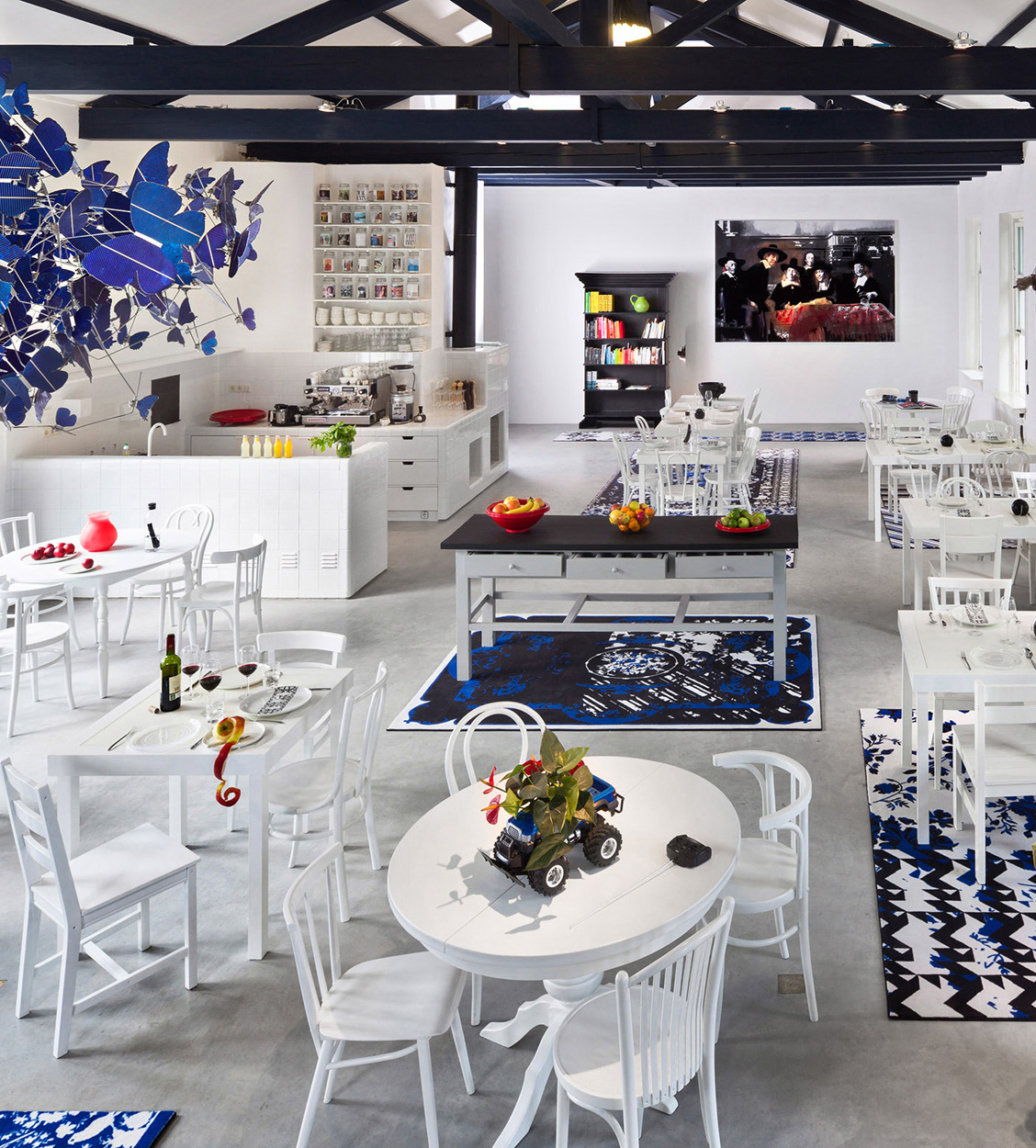
Eat and drink at Roomservice : Photo: Thijs Wolzak -

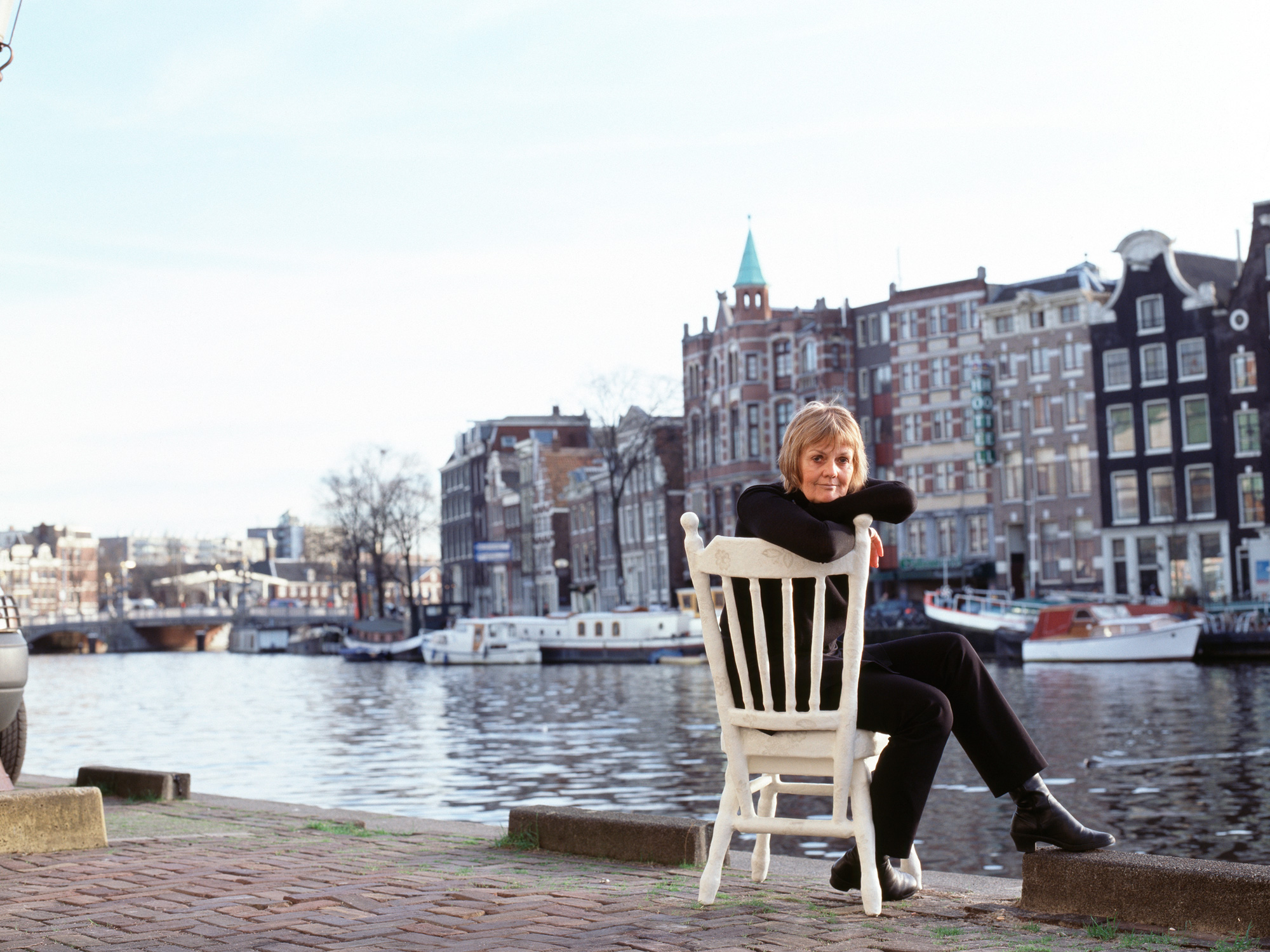
Renny Ramakers : Photo: Richard Legge for Blueprint magazine -
Tree-trunk bench for Droog : Design: Jurgen Bey. Photo: Marsel Loermans -

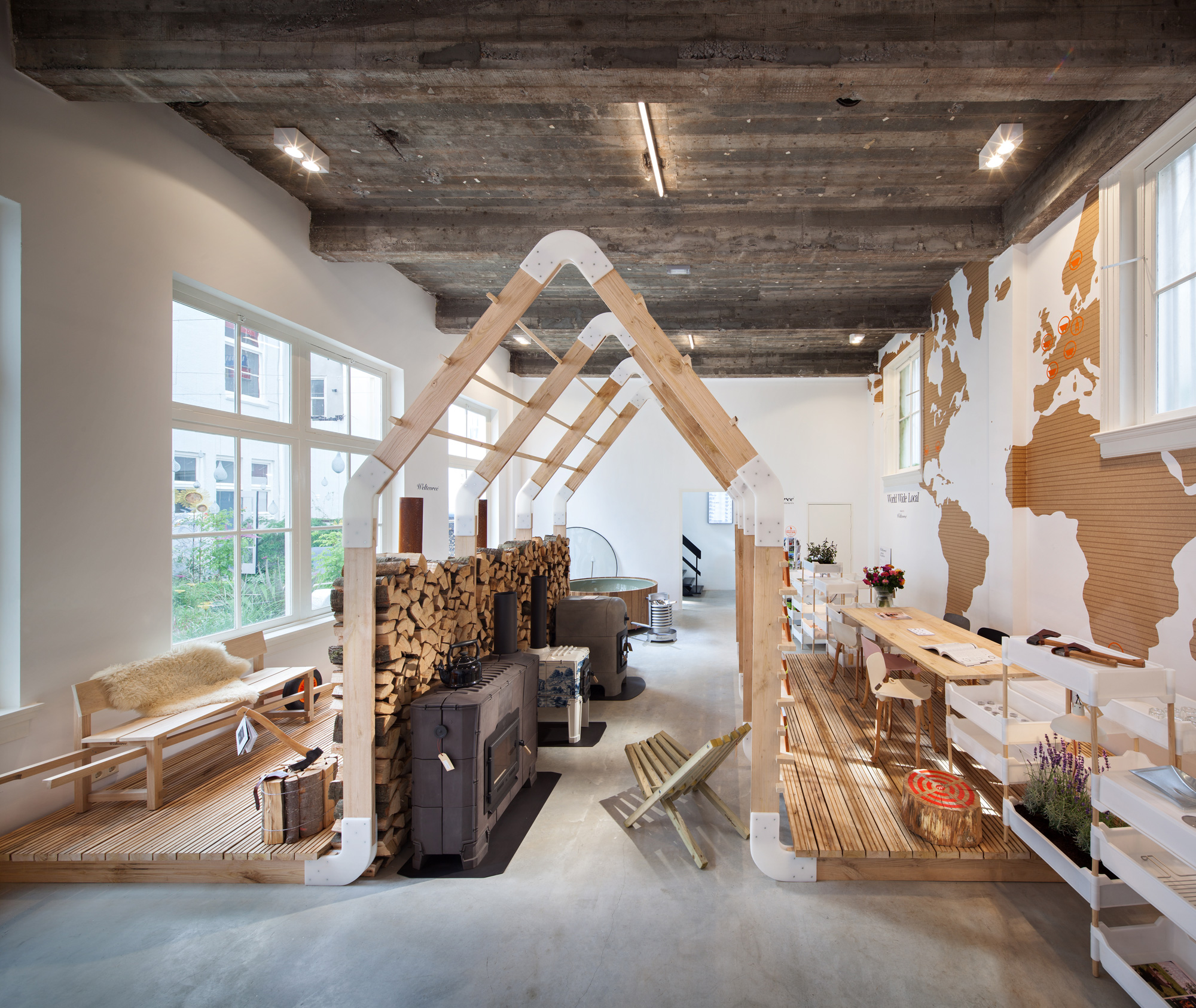
Products at Weltevree : Photo: Thijs Wolzak -
Crochet Chair for Droog : Design: Marcel Wanders -
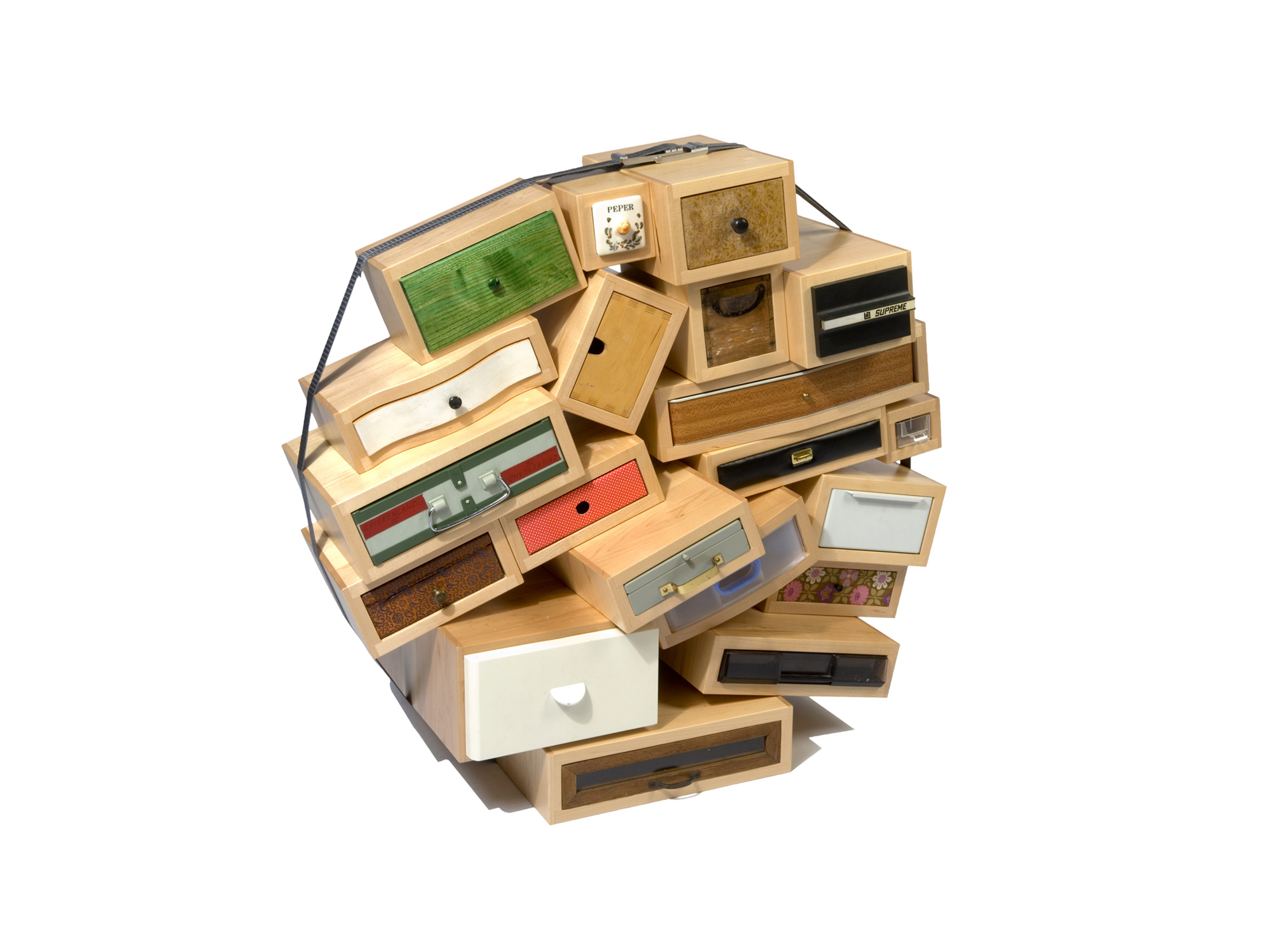
Chest of Drawers XS for Droog : Design: Tejo Remy. Photo: Gerard van Hees -

The one and only bedroom : Photo: Thijs Wolzak -
Droog store : Photo: Thijs Wolzak -

Fashion at Kabinet : Photo: Thijs Wolzak -
Beauty at Cosmania : Photo: Thijs Wolzak -

Fairy tale garden : Design: Claude Pasquer and Corinne Détroyat. Photo: Thijs Wolzak


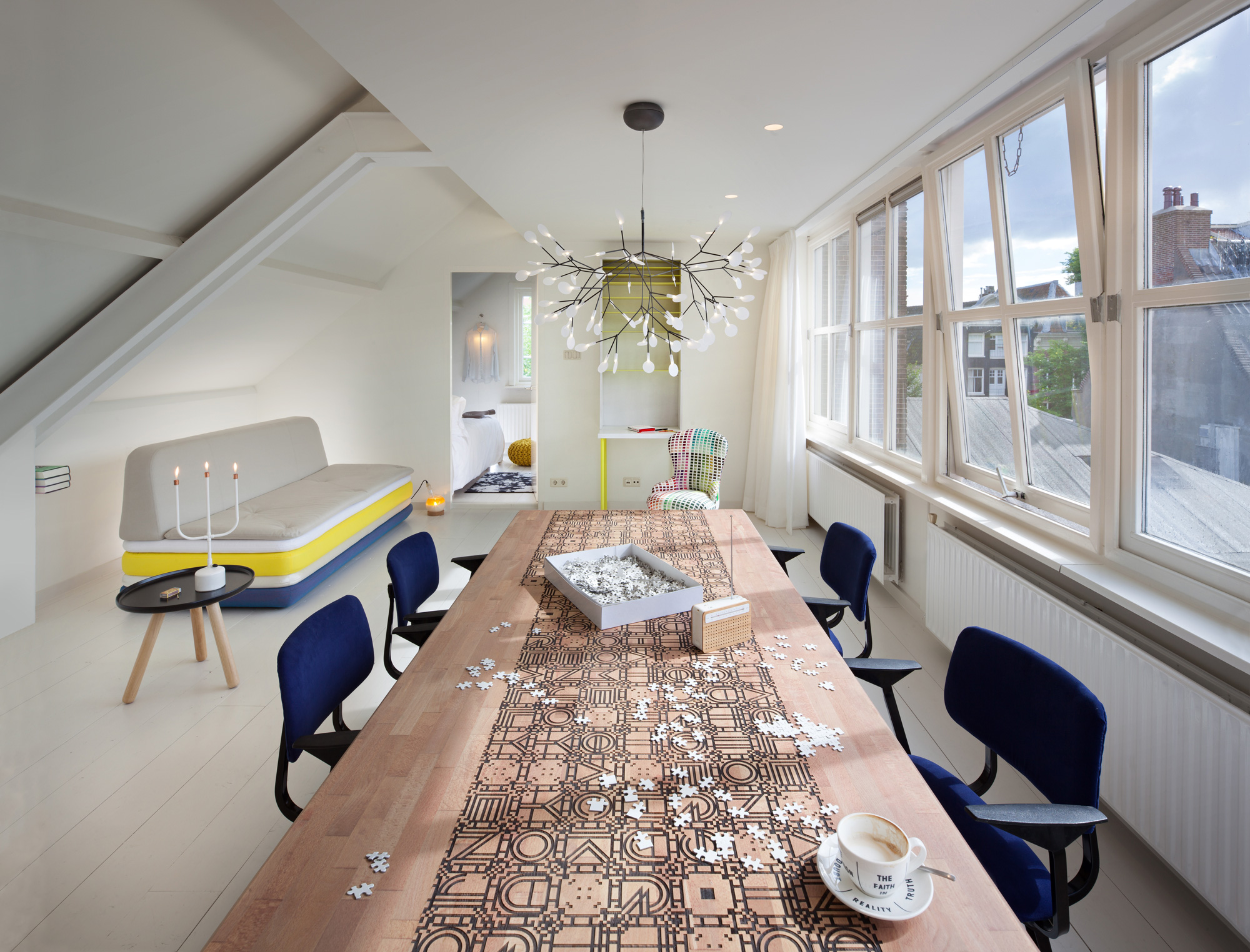
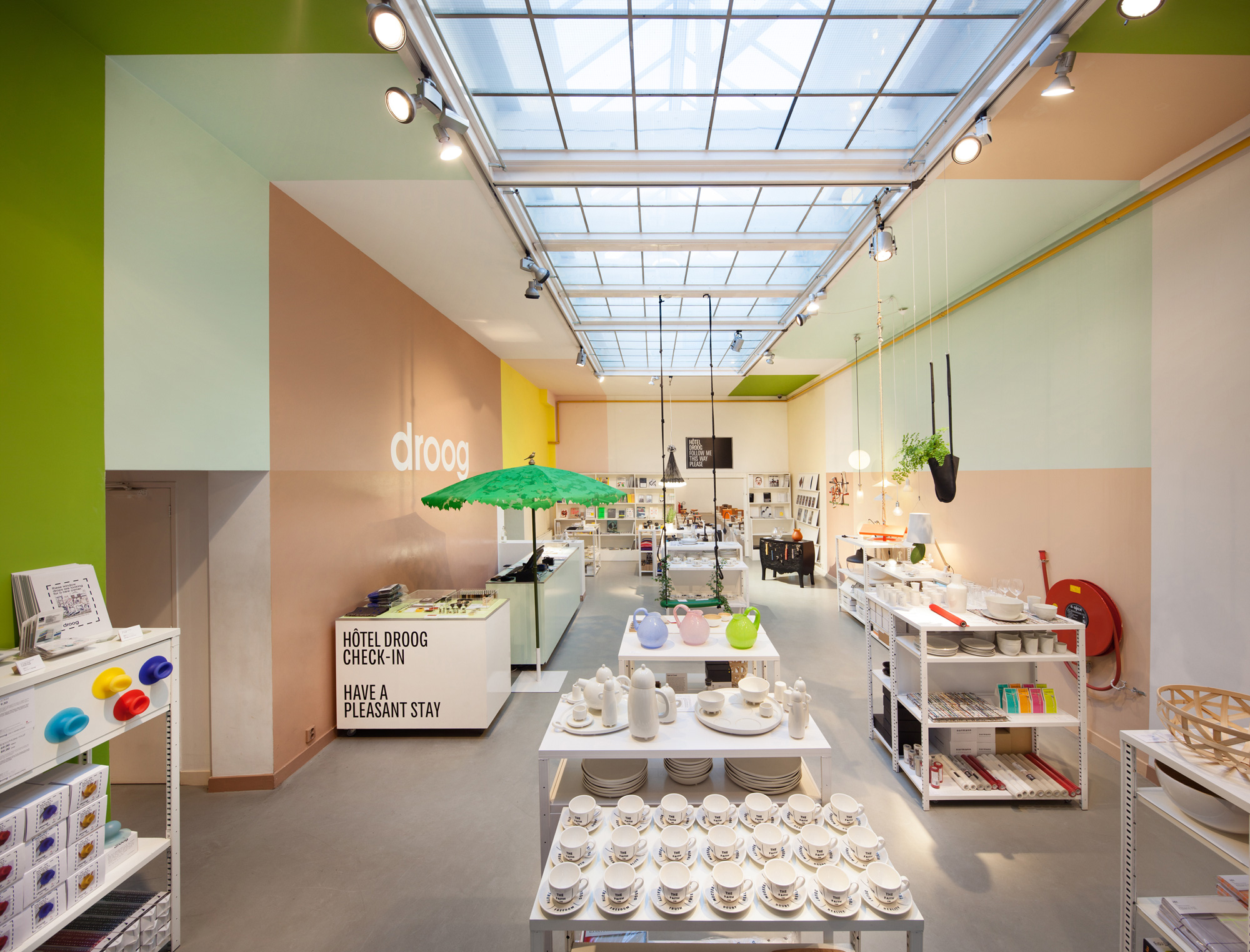
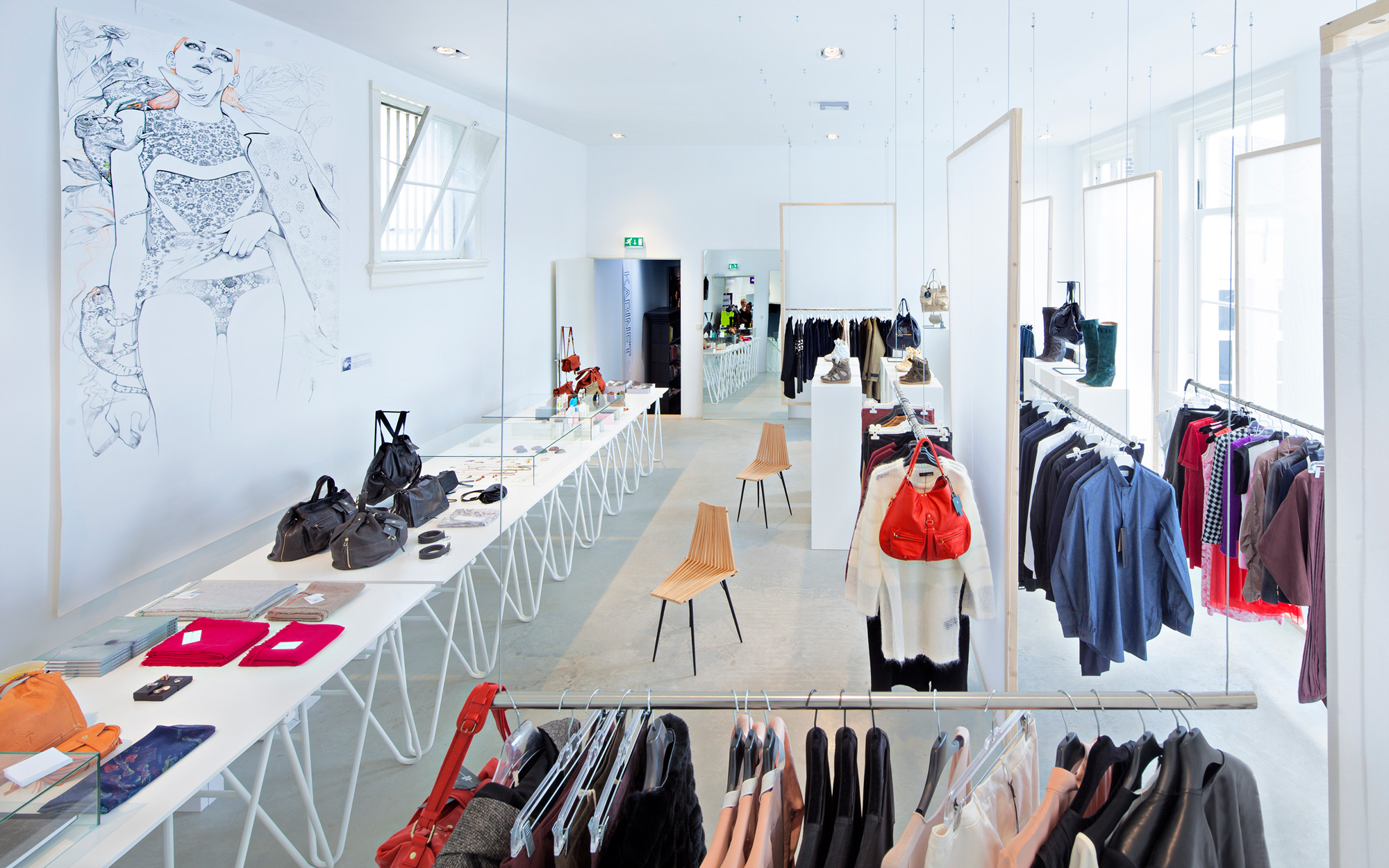

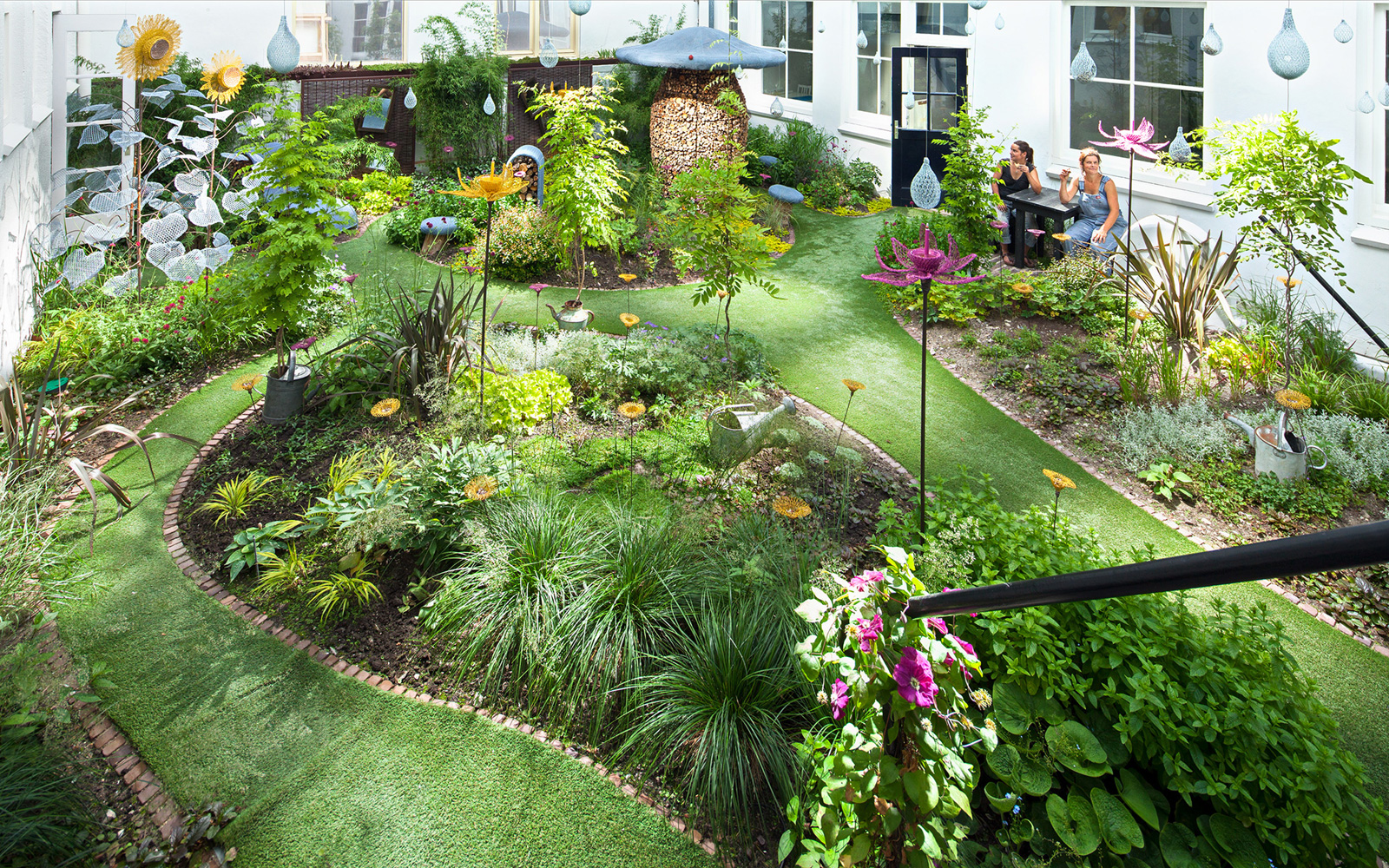
WORDS Daniel Scheffler
With the launch of Hotel Droog in Amsterdam, we fell in love with the quirky Dutch design brand all over again. It has a store, gallery, dining room, fairy tale garden, beauty at Cosmania, fashion at Kabinet, products at Weltevree and only one bedroom! Daniel Scheffler spoke to co-founder and director Renny Ramakers, and discovers that she has one of the best smiles in the world.
“The concept of a hotel has been reversed. Whereas a hotel is usually mostly about sleeping, here we have enlarged and emphasised all the aspects that many hotels also offer and made them central to the hotel experience – and it even has a room to sleep in,” explains Renny. “Hotel Droog brings all of our activities under one roof – from curation to product design, exhibitions and lectures – and invites people to plug in as they choose.”
For almost 20 years, the brawn of Droog design, Renny has produced and sold products that push the boundaries of design, not just in the obvious way but also with an intellectual smear of confrontation. Products that tell stories and that bring a new vista of design to the world is what Droog is known for and it has also collaborated with some of the most interesting designers alive, creating a place for itself in the market as provocation challengers. No wonder Renny has one of the world’s greatest smiles.
“We distanced ourselves from the perfection and stylishness of design with a capital D and connected to ordinary life with all its imperfections”, says Renny about Droog’s traverse. Iconic products like Chest of Drawers by Tejo Remy (1991), Knotted Chair by Marcel Wanders (1996) and Tree-trunk Bench by Jurgen Bey (1999) addressed themes like overconsumption and overproduction, simplicity and innovation through a craftsman’s approach to high technology. And that in Renny’s mind is where design is at its height.
Tell me about your thinking around how conceptual thinking can open up new possibilities?
It is not just conceptual thinking. It is above all about looking at issues from a different perspective. Non-linear thinking. Let me give you an example: there is a shortage of piano tuners. We could obviously try to solve this problem by training more piano tuners. But maybe we could also think of designing a piano that does not need to be tuned. This could result in innovation in piano production and might open new possibilities for the music industry.
What do you believe the future holds for designers?
Our economy is in turmoil. The environment is threatened. Powers are shifting. Technology is moving in fascinating directions. Social networks are growing. This all affects the work of designers. It opens up so many new possibilities; it is key to revolutionise design. And it’s already starting. In a world where information is there for the taking and everything is connected, cutting-edge designers feel free to take whatever they need, mixing low-tech and high-tech, addressing more than one issue at the same time, discovering a multitude of directions.
In terms of philosophy, do you believe in an existentialist view of the world? Or how do you see the world?
I believe in individual freedom and responsibility, in defining one’s own reality. I also believe in chance. I am very open to seize accidental occurrence.
We’ve often heard “design can save the world”. In my view it is too theoretical, not practical enough. Tell me your thoughts.
The question is whether anyone can save the world. Problems always existed, and we’ll have different problems in the future. It’s up to designers, just as much as it is up to scientists, and other professionals and non-professionals, to play a role. Design can indeed have a small-scale influence. It cannot save the world but it is still important, at least it can be inspirational. Our presentation “Material Matters” does not change the world but it turned out to be inspiring and hopefully it generates discussion about the direction design should move. It would be fantastic if it would generate a boom of new initiatives.
Dutch design has always been revered. Do you find the industry there to be a motivator?
Dutch design is based on a lot of freedom, on an open-minded and a hands-on mentality. Maybe it’s because we do not have much industry in our country. Designers have to do it themselves. And they do!