-

Chris Ofili. Image via ekekee.com. -

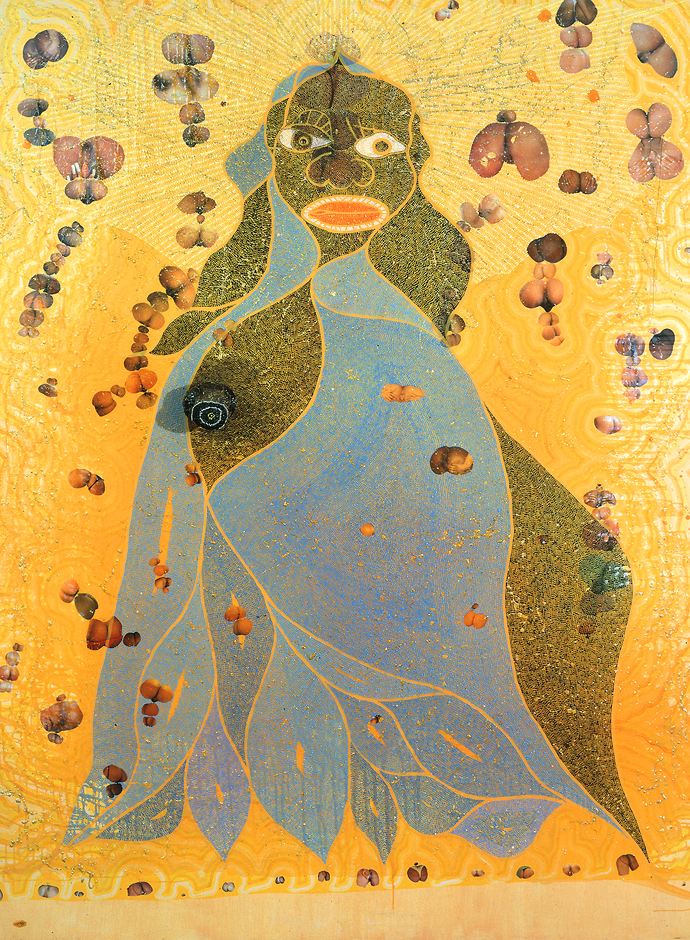
The Holy Virgin Mary by Chris Ofili. Image via africanah.org. -

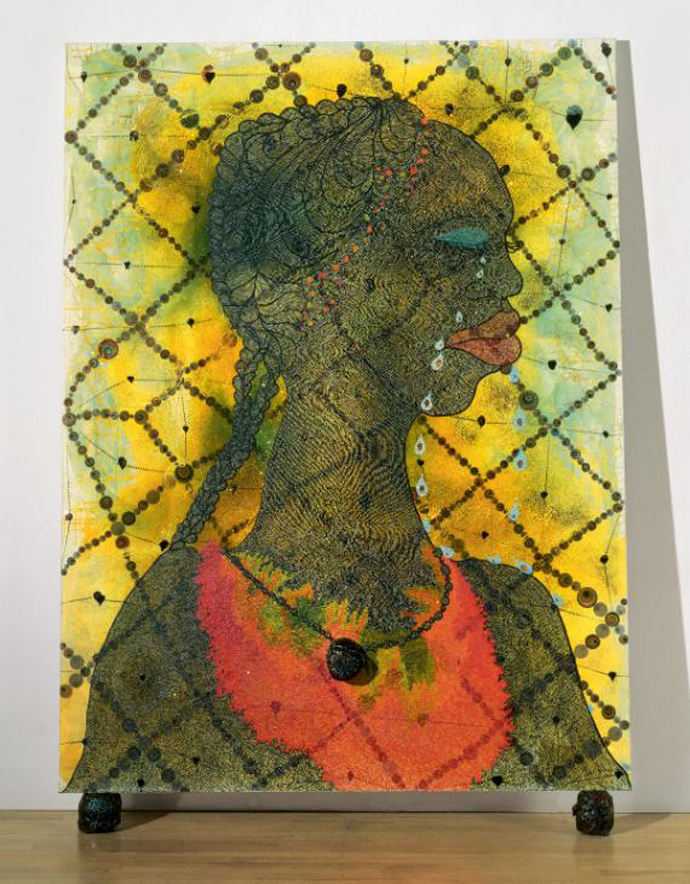
No Woman, No Cry by Chris Ofili. Image via tate.org.uk.

WORDS Malibongwe Tyilo IMAGES via ekekee.com, africanah.org and tate.org.uk
In April 2015, TIME magazine released its annual list of the world’s 100 most influential people. Included in the list was Turner Prize-winning English artist Chris Ofili.
“With works like No Woman, No Cry and The Holy Virgin Mary, both breathtaking and controversial in equal measure, he positioned himself as an artist who could redefine art practice by affirming the relevance of painting for the 21st century,” writes award-winning architect David Adjaye, for TIME.
Since the mid-90s, Ofili became known for his meticulously executed painting, which combines traditional mediums with cowdung, sacred themes and the profane, while drawing inspiration from a wide range of sources, including the Bible, jazz, hip hop, blaxploitation movies and Zimbabwean cave paintings.
One of Ofili’s most controversial career moments happened in 1999. The City of New York – and its mayor at the time – Rudy Giuliani, famously brought a court case against the Brooklyn Museum to block them from showing the above mentioned The Holy Virgin Mary, calling it “sick” and “disgusting”. The museum eventually won the court case.
Since 2005, Ofili has lived and worked in Trinidad.