-

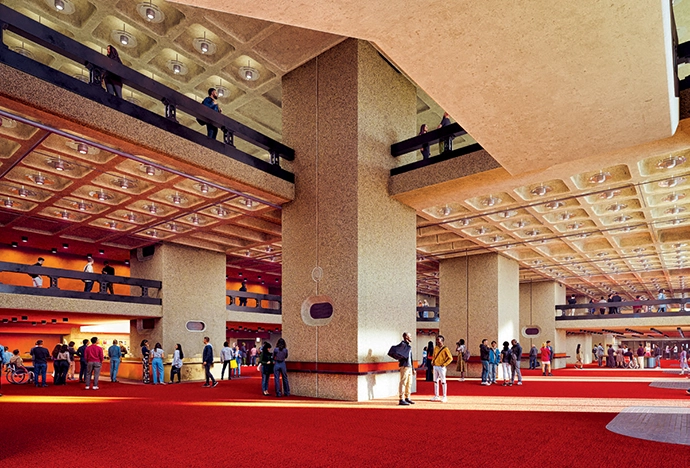
The Barbican, which opened its doors in 1982, is a Grade II listed Brutalist icon, and is recognised as one of the UK’s architectural treasures. Its refurb is scheduled to begin next year and finish in 2030, ahead of its 50th anniversary. -

The Barbican, which opened its doors in 1982, is a Grade II listed Brutalist icon, and is recognised as one of the UK’s architectural treasures. Its refurb is scheduled to begin next year and finish in 2030, ahead of its 50th anniversary. -

The Barbican, which opened its doors in 1982, is a Grade II listed Brutalist icon, and is recognised as one of the UK’s architectural treasures. Its refurb is scheduled to begin next year and finish in 2030, ahead of its 50th anniversary. -

The Barbican, which opened its doors in 1982, is a Grade II listed Brutalist icon, and is recognised as one of the UK’s architectural treasures. Its refurb is scheduled to begin next year and finish in 2030, ahead of its 50th anniversary.
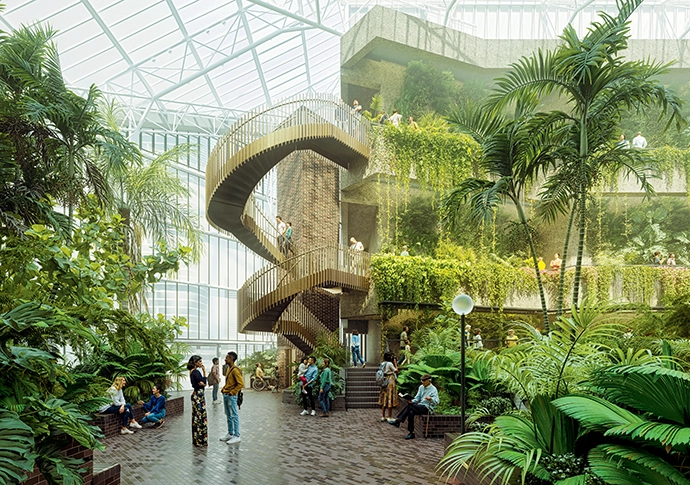
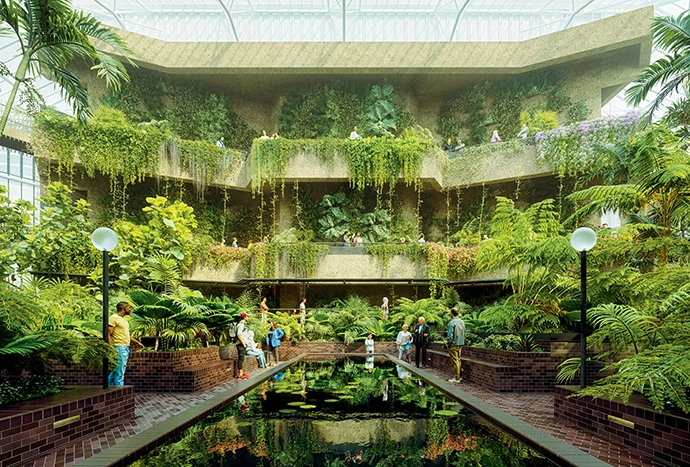
Eco-Brutalism is a thing… who knew? Our trends guru Chris Reid, that’s who.
WORDS Chris Reid PHOTOS Helene Sandberg, Supplied
Concrete is not a material that has historically kept good company with living things. It doesn’t bend, it doesn’t breathe, and it’s difficult to love at times. Which is exactly what makes Eco-Brutalism – the movement built on the marriage of raw concrete and rampant greenery – one of the more surprising design stories of recent years. Yet the more you sit with it, the more inevitable it feels.
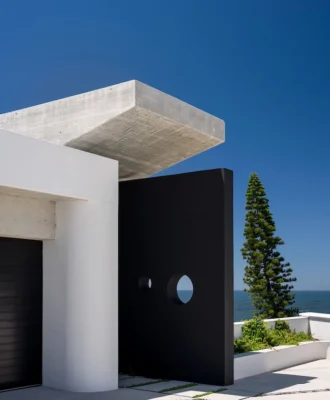
As a reminder, Brutalism is an architectural style that’s known for its pragmatic yet monolithic design, as well as its heavy use of unfinished building materials. (The latter is the source of the name: a reference to the French term for raw concrete, béton brut.) Emerging in the 1950s, it was used for institutions such as universities, civic buildings and hospitals. Post-war governments valued its speed and cost-efficiency. City planners loved its scale. The public was, however, oft en less convinced.
Eco-Brutalism takes the same commitment to material honesty and pushes it into more verdant territory. In this approach, hard edges aren’t softened with paint or embellishments, but with plants. And not just a discreet flowerbed here and there: we’re talking climbing vines, living walls, rooftop gardens and indoor trees – the kind of foliage that sprawls and reaches and eventually makes a building look more like a terrarium than a monument. It feels like it should clash. But in the right hands, it produces something genuinely arresting: the hard and the soft, the permanent and the growing, locked together in an aesthetic that feels both radical and deeply natural.
Tough Love
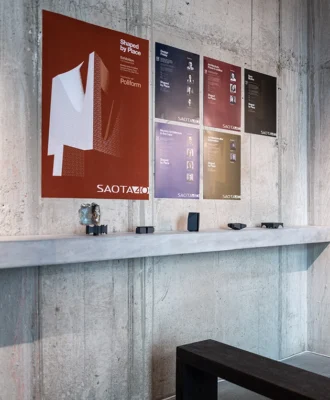
A shift in attitudes to Brutalism has been brewing for some time. In London, the Barbican is the most instructive example. Once polarising, it is now the subject of a £231-million renewal programme approved in late 2025, with plans to restore its public spaces and conservatory ahead of its 50th anniversary. What has long been regarded as a cold, labyrinthine edifice has become one of the most desirable addresses in Europe. Architecture tours are sold out. The shop sells Brutalist memorabilia. The turnaround is remarkable – and it signals something broader.
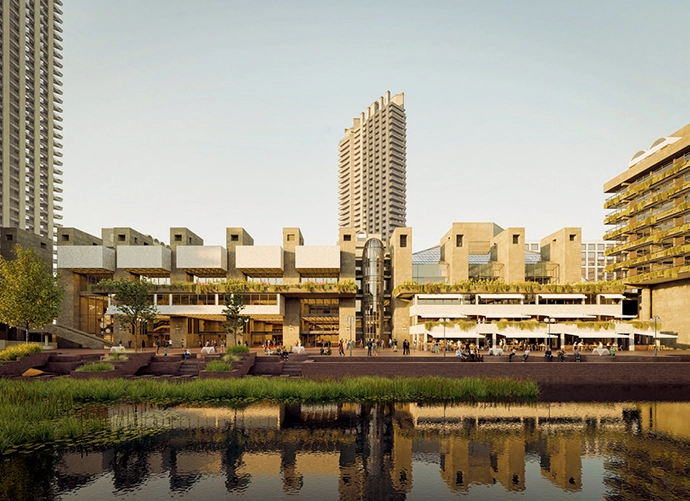
As a style, Eco-Brutalism has some associations that make it quite apt for the current point in history. For a start, it has an innately socialist bent and forward-looking perspective. At a time when income disparity feels like it’s constantly increasing and retrogressive politics are on the rise, that is comforting. It also taps into the biophilia trend that defined the last decade or so. But where biophilia often feels surface-level, this turns the volume up and takes the greenery from an accent to an essential core. Also, in a world where the future will only get hotter and where cities will continue to densify, the smart use of greenery alongside concrete creates instant oases that people can appreciate regardless of their feelings on the aesthetic itself.
More than Skin Deep
With this type of design trend, there’s an implicit question: how much of the green thinking is substantial, and how much is purely symbolic? After all, Brutalism with a few plants added to it hardly feels like it warrants a whole new name. Added to that, concrete is a material that has come under significant scrutiny in recent years for its environmental impact.
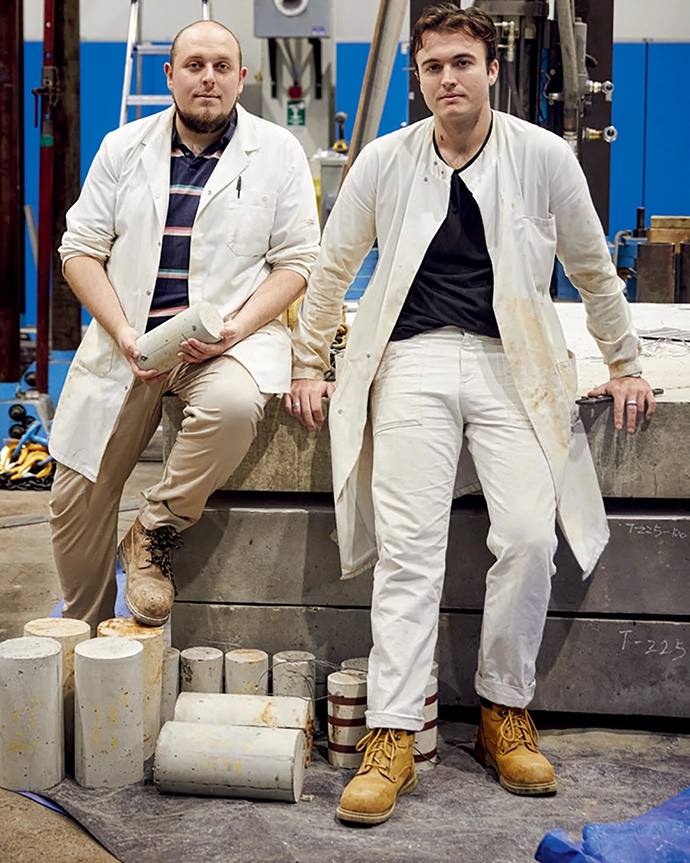
What we’re seeing in this new iteration of Brutalism, however, is the “Eco” aspect going deeper. New, sustainable cement innovations by companies like Seratech are helping to sequester carbon in the build process. Architects intentionally include passive cooling and rainwater collection to reduce their environmental footprint. Plus, there’s an argument that this kind of anti-ostentatious design removes the unnecessary features that tend to add to a building’s overall impact.
Perhaps most importantly, this aesthetic is defined by permanence. In a world of fast design and disposable interiors, there is something quietly radical about creating buildings that are designed around function and intended to be scaffolding for nature. Brutalism in all its forms resists simple interpretation. But sometimes the most beautiful things are the ones that refuse to be easy.
Don’t forget to sign up to our weekly newsletter for the latest architecture and design news.