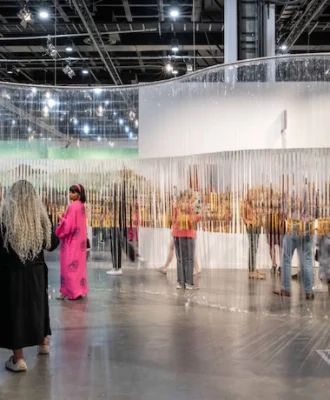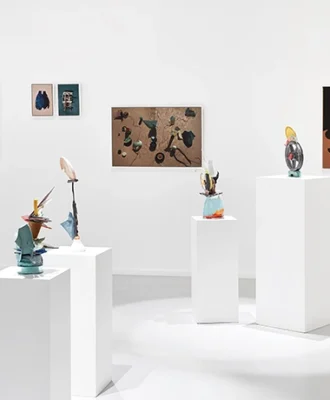
We asked art critic, writer and curator Sean O’Toole to pick five emerging artists from the recent Investec Cape Town Art Fair.
WORDS Sean O’Toole PHOTOS Courtesy of the THK Gallery, Goodman Gallery and Everard Read, Supplied PORTRAITS Rebecca Boulet, Courtesy of Goodman Gallery, Supplied
New talent is the lifeblood of the art scene. It’s why canny dealers and curators haunt graduate exhibitions, feigning indifference, scanning degree shows for next year’s big name. Instagram has become an auxiliary viewing room, with many high-profile collectors now scrolling as avidly as they once strode through art school corridors.
For those who prefer to saunter rather than swipe for talent, the art fair circuit offers its own barometer of what’s next. In South Africa’s comparatively new market, youth carries particular currency. The Investec Cape Town Art Fair, Art Joburg and Latitudes Art Fair each foreground emerging artists through dedicated prizes: respectively, the Investec Emerging Artist Award, the FNB Art Prize, and the ANNA Award for women artists. Recent winners have skewed Millennial.
For artists, the period between their late 20s and early 40s is a time of ambition and attrition. Four of the five artists profiled here are old enough to have outlasted early doubt, but young enough to remain institutionally nimble. They’re all “ones to watch”.
Tshepiso Moropa
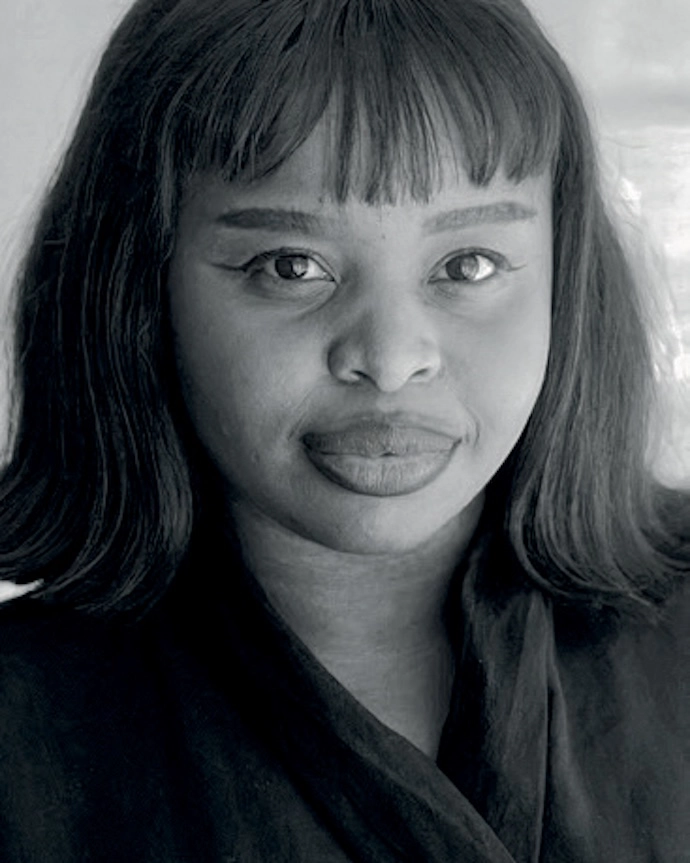
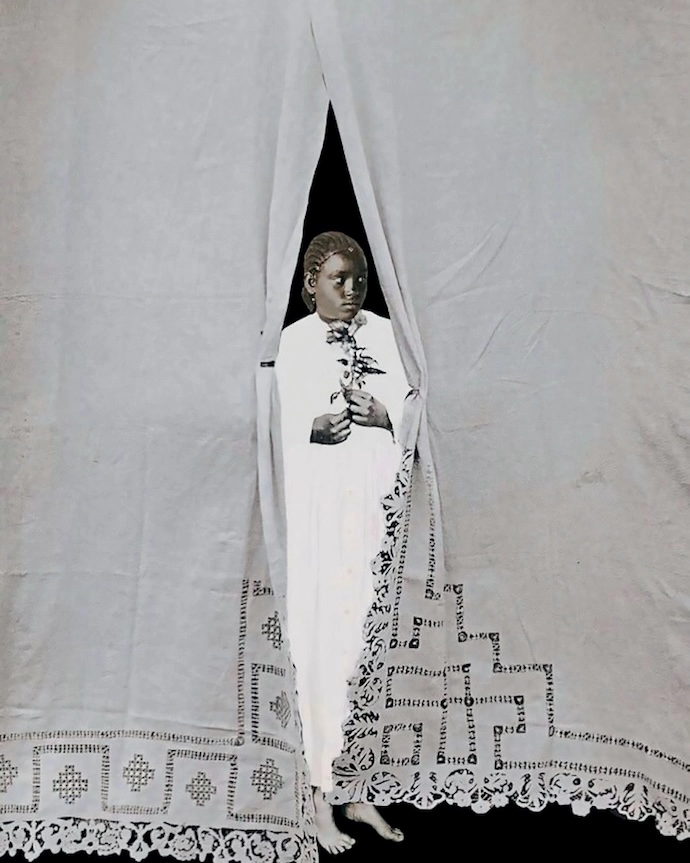
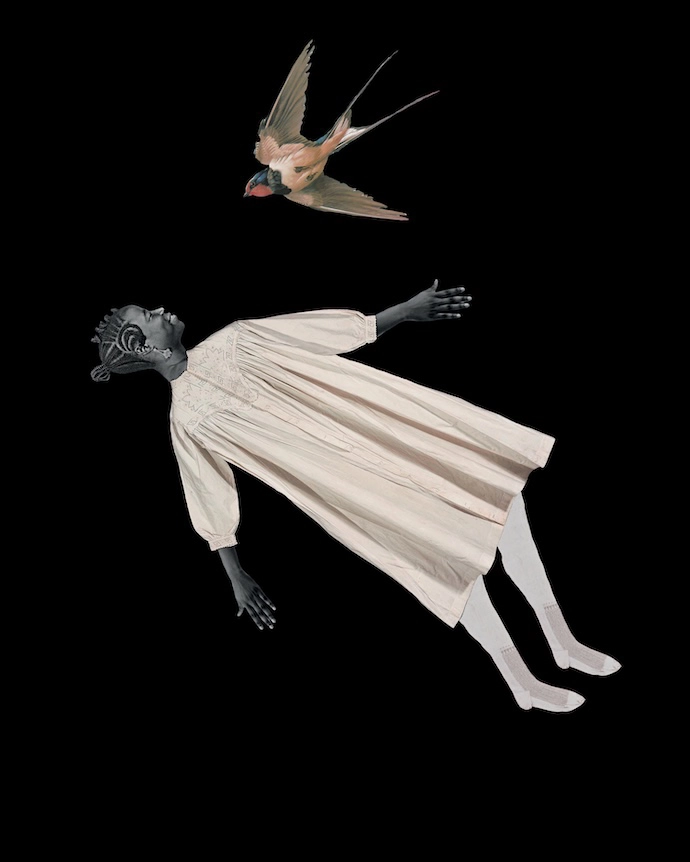
When she finished high school, Joburg-based collage artist Tshepiso Moropa had to park her dreams. Following her parents’ advice, she studied psychology and linguistics at Wits. The training lingers in her work, which is attentive to language, memory and identity. Her handcraft ed photo collages, presented in her debut at the 2026 Cape Town Art Fair, draw on Tswana folk tales shared with her by her aunt. “The subject matter oft en includes self-portraits or archived images of African women that I’ve sourced from library resources or research sites on the internet,” Tshepiso explains. “The archive serves as a site for both excavation and recreation.”
She treats found photographs as living documents. “I use archived images as proxies for memory, especially concerning cultural heritage and the present time.”
Figures are cut, layered and re-staged against stark white backgrounds, as if suspended between eras. The effect is neither nostalgic nor didactic. “My collages celebrate blackness, and pride in our heritage and culture. The focus is on finding a sense of belonging within ourselves, rather than seeking it from others.” @tshepisomoropaa
Guy Simpson
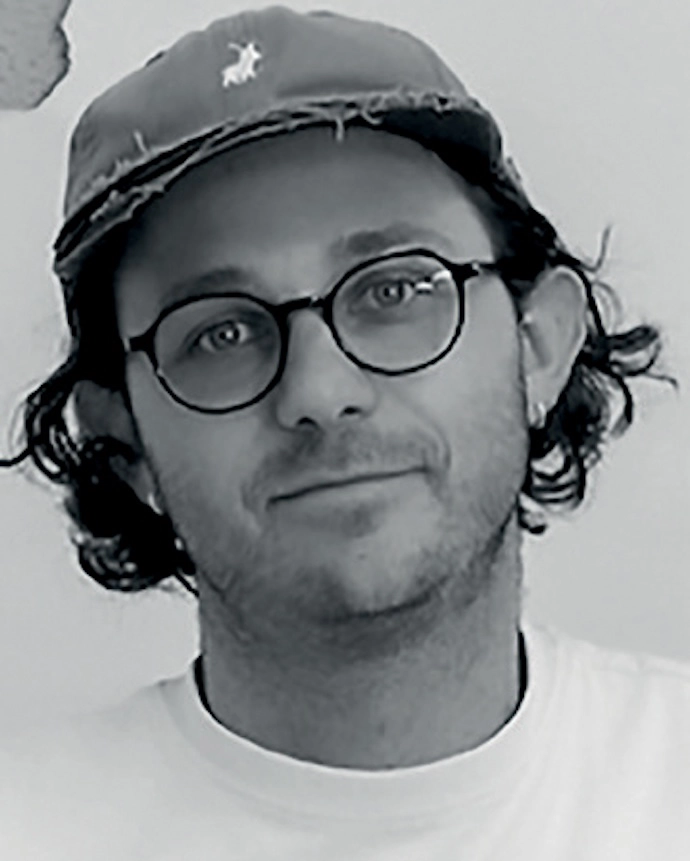
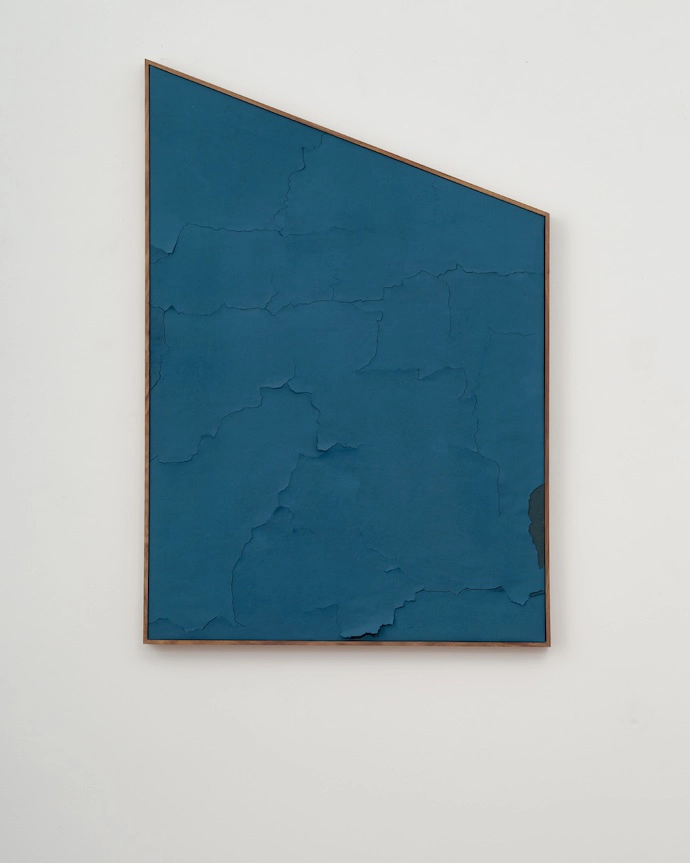
In the three years since his debut solo at THK Gallery, painter and sculptor Guy Simpson has moved briskly through South Africa’s blue-chip ecosystem, also showing at Everard Read and Goodman Gallery. Yet it was his 2024 exhibition “Over the Garden Wall” at Breakroom Projects – a Woodstock space created by artist Igshaan Adams – that was decisive. Installed alongside a freestanding motorised gate and a pair of shoes caught mid-stride, Guy showed irregularly shaped, layered abstractions. The paintings, some of which read like peeled sections of scuffed walls, announced his interest in pushing beyond the literal.
His earliest works were precise drawings of interiors. This domestic theme informed paintings of his childhood home in the Joburg suburb of Sydenham – a pitched-roof bungalow he moved into at age six and left at 19, to study at the Cape Town Creative Academy. His work concentrated on its unremarkable fixtures: plug points, parquet floors, alarm sensors, brass numbers.
His Goodman Gallery exhibition, “Was Here”, presented a mix of descriptive and irregular abstractions, the latter now framed. “I was struggling to sell the larger canvas works,” he says. “Stretching and framing them helped me do a lot more with the medium; I now have a rigid structure to layer more materials.” Framing may have closed some doors – but it opened others. @guysimpson_
Kamva Matuis
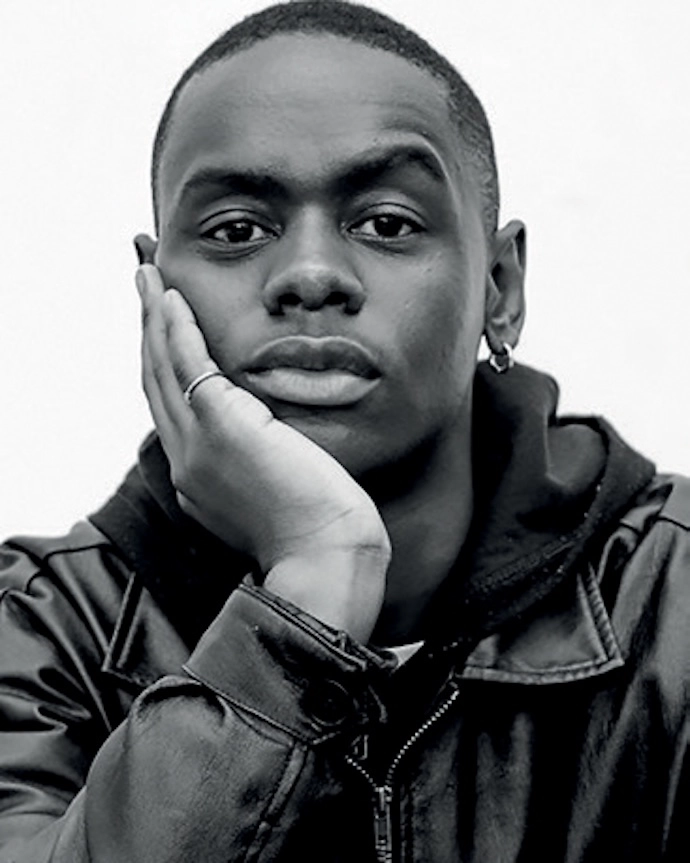
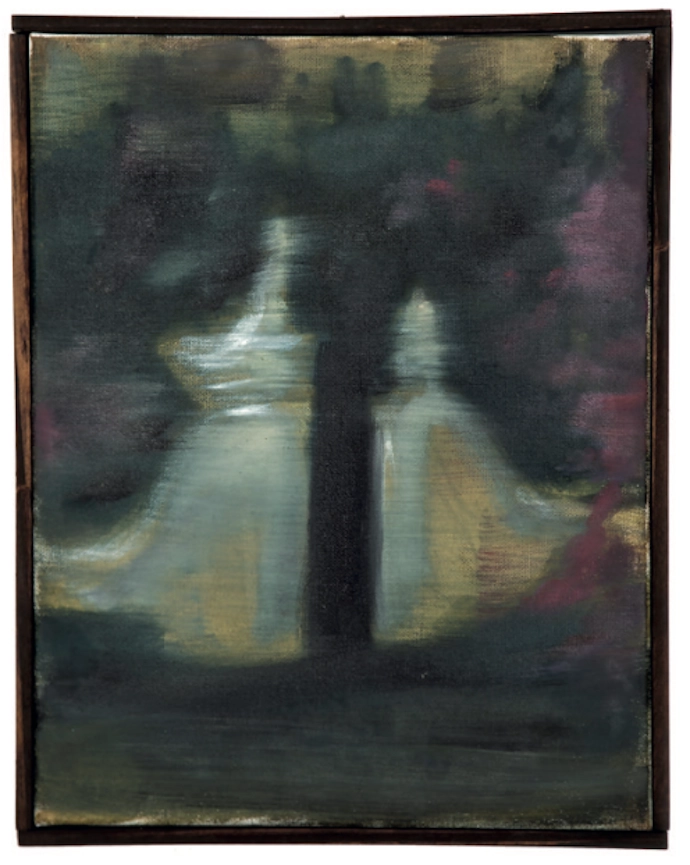
Shortcuts to becoming an artist are rare, though luck can sometimes accelerate the process. Joburg-based painter Kamva Matuis, the only Gen Z artist here, is enjoying such a moment. Trained at Wits, last year he presented a solo exhibition at Lemkus Gallery, an important early-career space run by Michaelis graduate Jared Leite. Among the work, an upward-looking view of two Fallists preparing to cover the statue of Cecil John Rhodes lingered, partly because of its unusual vantage point but also for its restrained palette. Kamva, who was born in Burgersdorp in the Eastern Cape, described the painting as a form of exorcism.
The momentum has continued. In January, he participated in Everard Read’s Cubicle Series, showing earlier paintings triggered by his first visit to Cape Town. A month later he appeared with two galleries at the Cape Town Art Fair: Lemkus presented a jolting composition of a stitched-up cadaver with a half-eaten apple balanced on its torso, while tastemaker Blank Projects showed portraits of Winnie Mandela and Nina Simone – both role models for the artist.
Kamva is an assured figurative painter with a marked feeling for brown – a notoriously difficult colour. But while good painters are plentiful, interesting ones are rare. And he is interesting. @matuiskamva
Amy Rusch
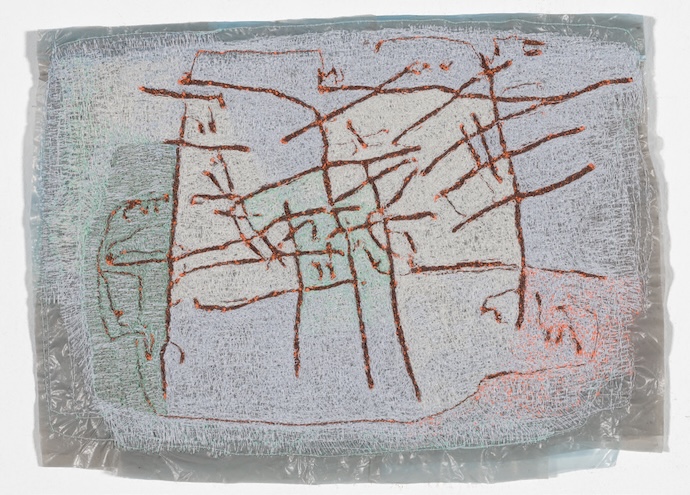
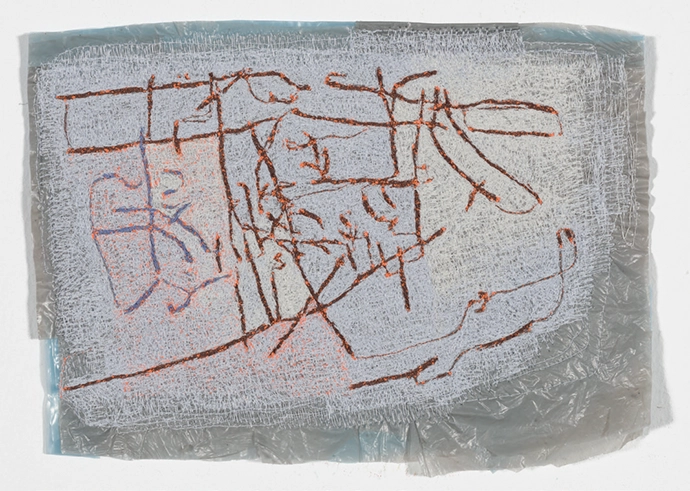
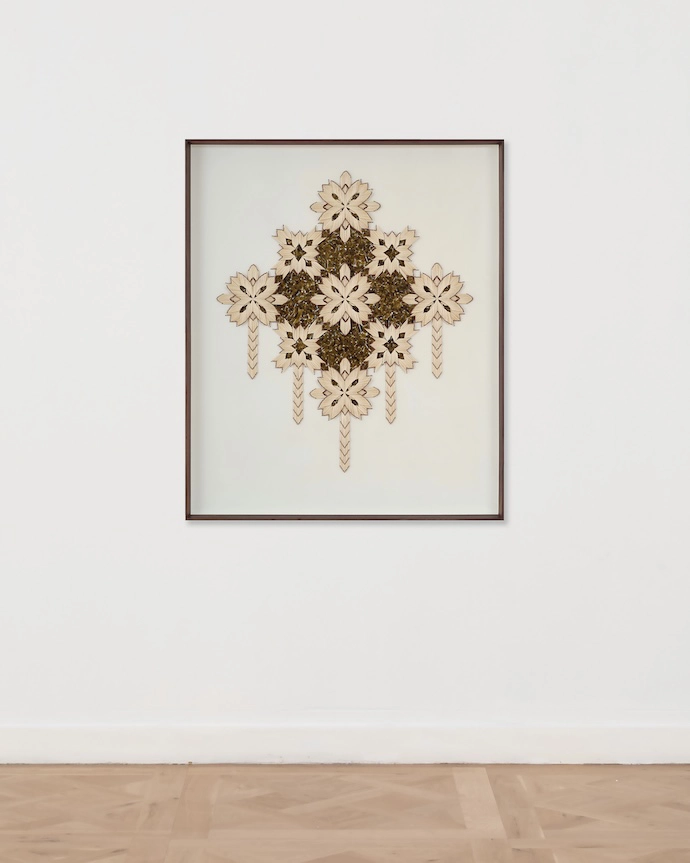
Remembering marks at first light I and II , 2026, Suburbia Contemporary.
“My work is fed by my experiences in sailing and archaeology,” says Cape Town-born textile artist Amy Rusch. Equally comfortable crewing a boat on the Atlantic and tracing rock engravings in the Northern Cape, Amy produces works that are an elegant metabolism of her experiences.
Water is integral to understanding her practice. In recent years, she’s shown large hanging textile pieces made of nylon spinnaker sail, either as collages or free-form installations. She’s best known for her work using salvaged plastic bags, many found on shorelines. “Plastic is the material of our time,” she says.
In her hands, the plastic buckles under accumulated stitching. Tension is palpable. The outcome may be abstract, but her works feel animated, offering an “archaeological sense” of now. Cut, flattened and tensioned into submission, they become the ground for machine stitching. Thread, often inherited from female relatives, functions as both a drawing tool and quiet biographical trace.
Her compositions range from tight, almost cartographic colour fields to spare contour studies referencing a sailboat crossing of the South Atlantic. Time spent on archaeological sites with her father also registers in her layered, topographical works. She was awarded the Materiality Prize at the 2026 Cape Town Art Fair. @amy.rusch
Warren Maroon
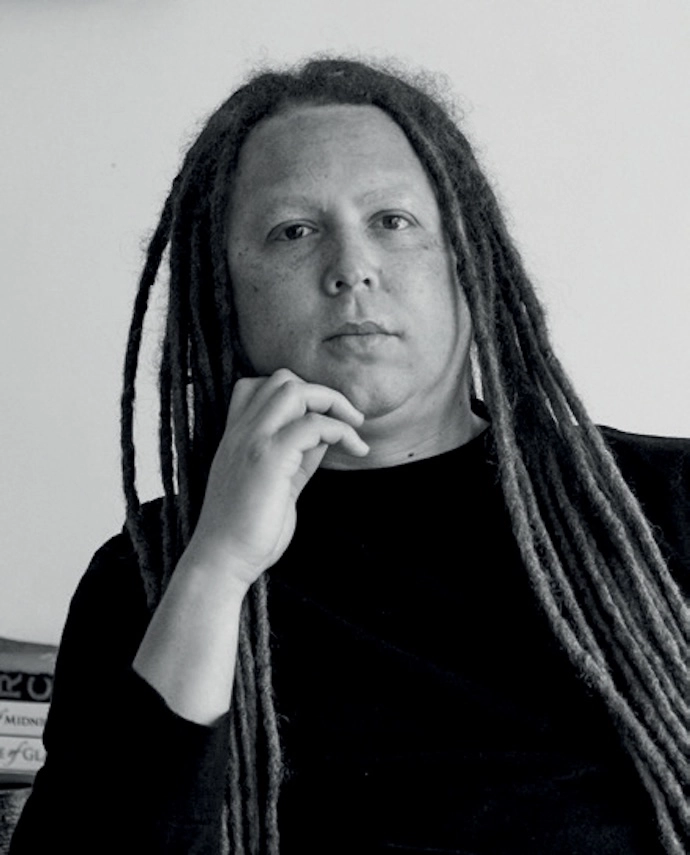
“I started making art late due to, well, things,” says Warren Maroon, winner of the Emerging Artist Award at the 2026 Cape Town Art Fair. In 2020, while working as a gallery assistant, he presented his debut, “Living in a Box”. The exhibition featured commonplace objects such as bricks, hammers and burglar bars; one work comprised a hammer wrapped in a pink cloth, like a mourning shroud. His sculptures reflected his – and many other young men’s – lived experience of the Cape Flats.
Warren’s muscular practice caught the eye of Everard Read, who invited him to show in its Cubicle Series. His 2023 solo at the gallery, “Well, there goes that dream”, included a freestanding installation composed of dowel sticks and gavels.
Inspired by Italy’s post-war Arte Povera movement, Warren’s materialist practice is propositional. It wants you to consider the potential of ordinary things. His latest solo at Everard Read builds on his long-standing interest in hammers, using a new medium: paper. “The exhibition is about a hammer and a nail, and the power relationship between the two,” he says. “One can’t survive without the other. I usually use multiple found objects to tell a story, but it can become too abstract, so I decided to be more precise with how I imbue meaning in objects.” @warrenmaroon
Don’t forget to sign up to our weekly newsletter for the latest architecture and design news.