-

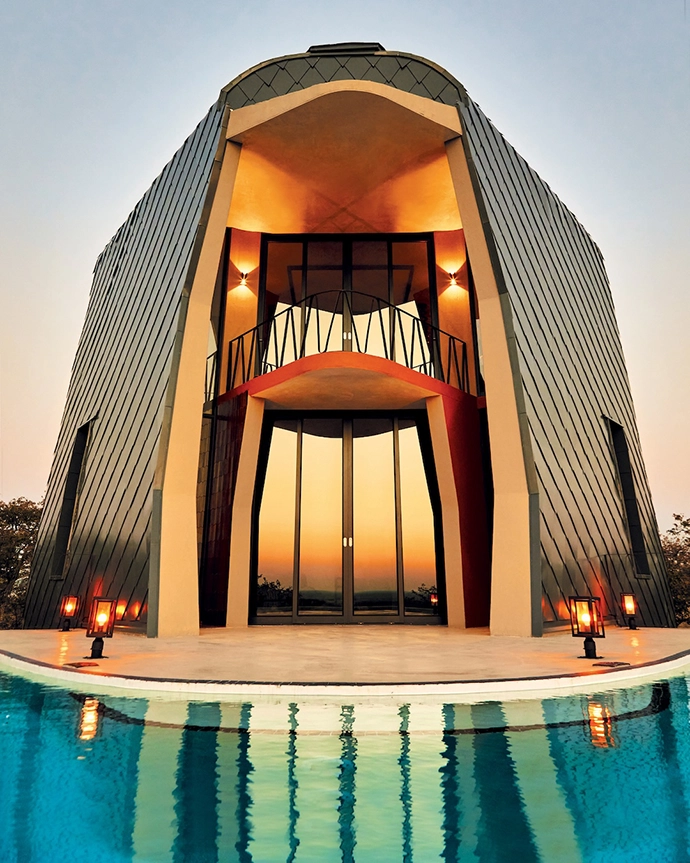
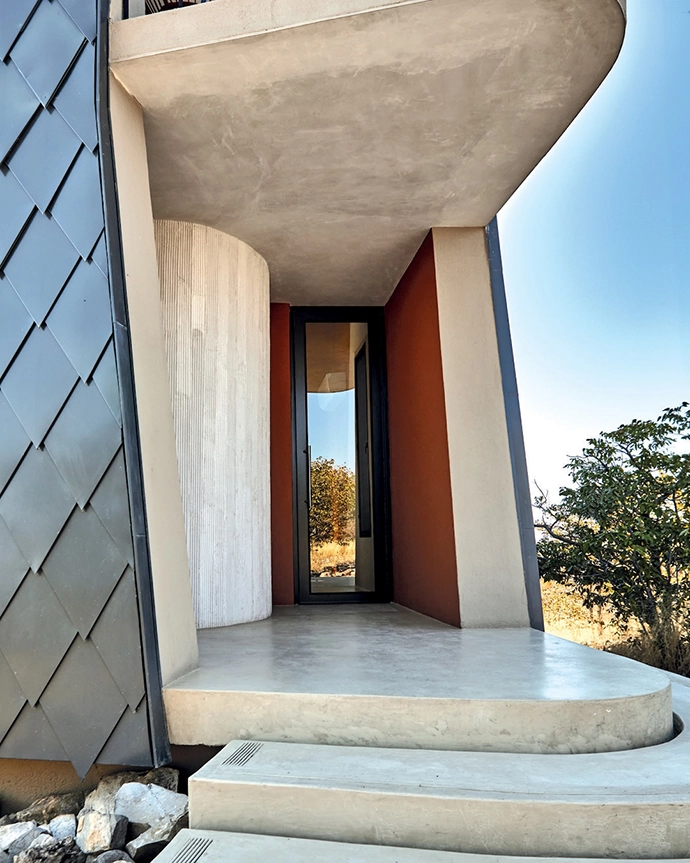
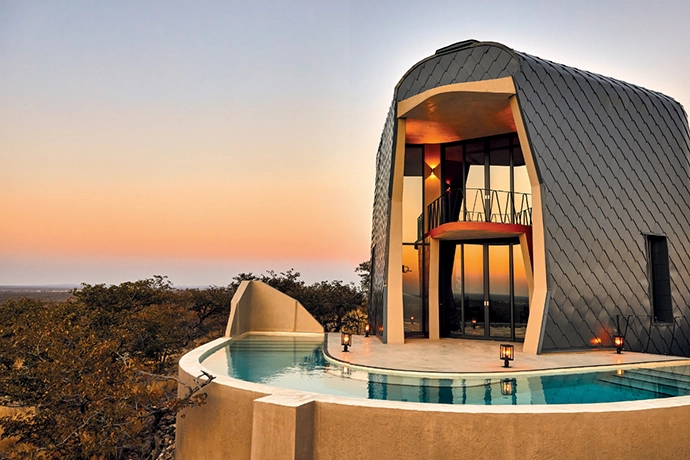
The two open ends of Ekipa are on an east-west axis, to view the rising and setting sun. This is the east-facing corner of the sift cube at sunrise. -
The west-facing corner. -
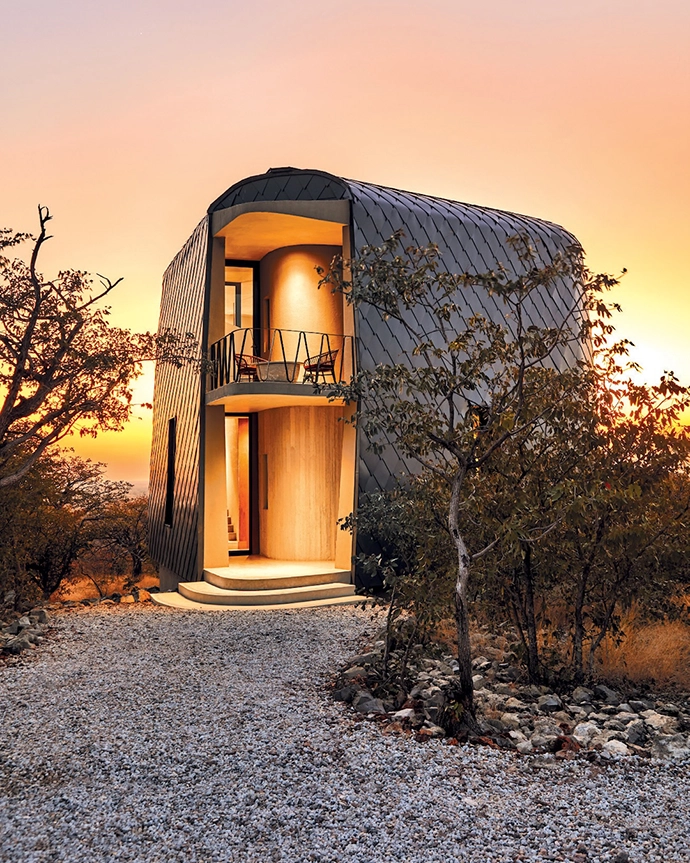
Ekipa’s front steps and door. -

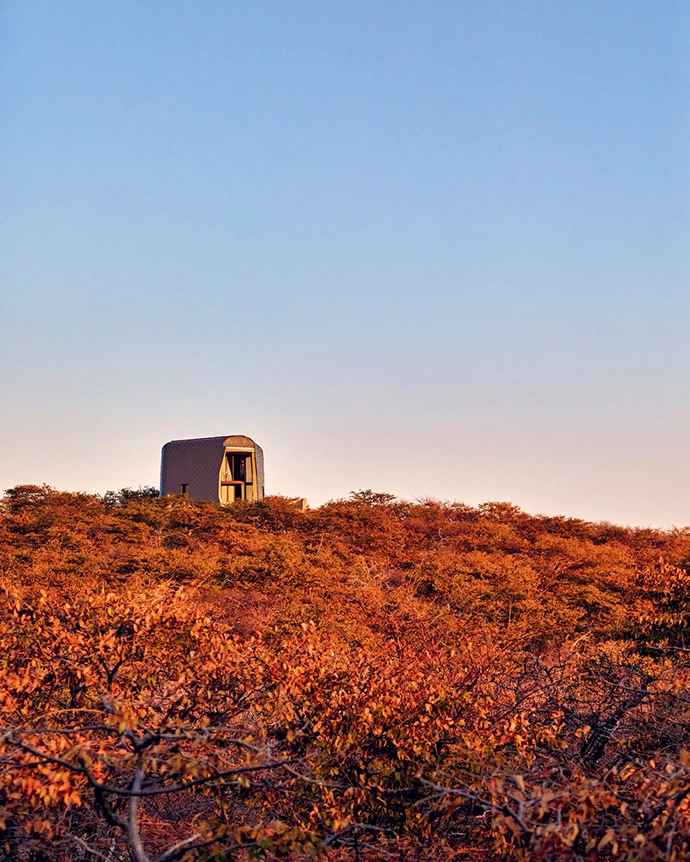
The structure rises above the low mopane tree forest. -
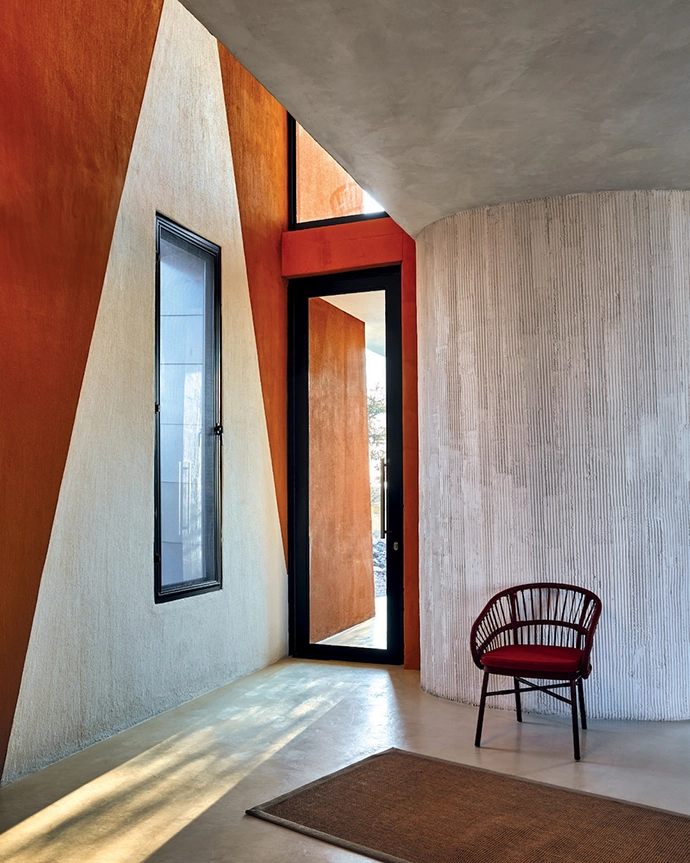
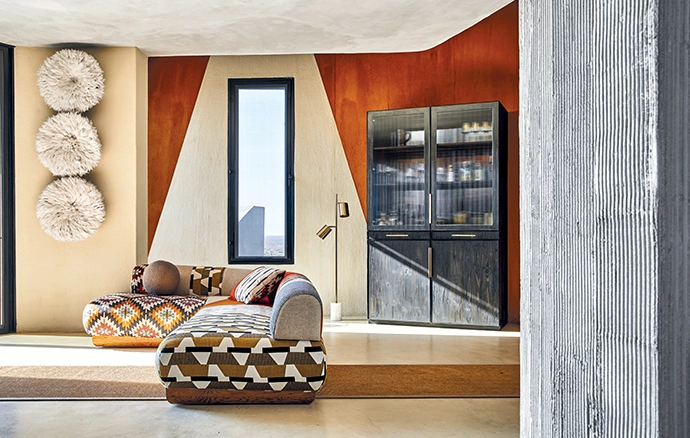
The entrance is a combination of textures and finishes, with a custom-colour Africote floor and a burnt-orange silhouette on the wall in a nod to the Ekipa motif. -

The texture of the curved wall was created by scraping lines into the RhinoGlide surface plaster. All joinery is by Cajaka. -

The texture of the curved wall was created by scraping lines into the RhinoGlide surface plaster. All joinery is by Cajaka. -
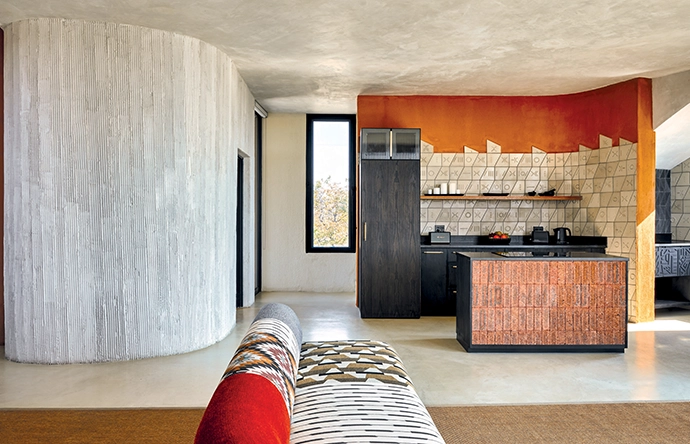
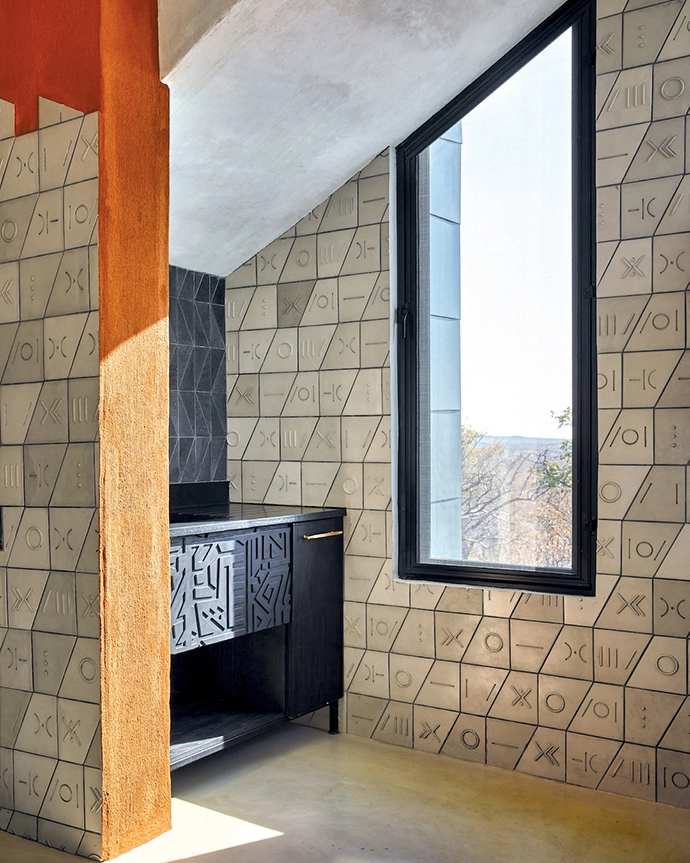
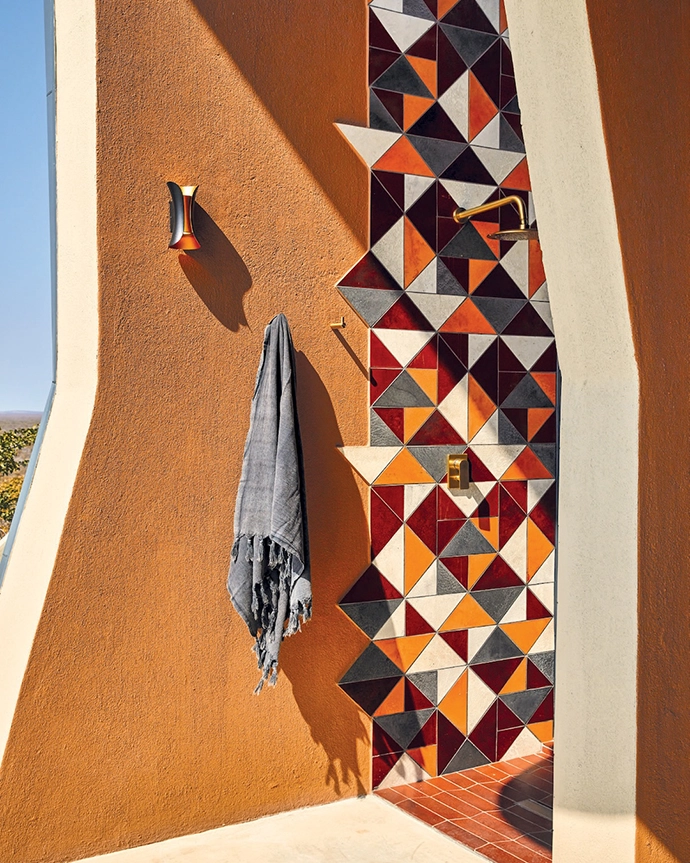
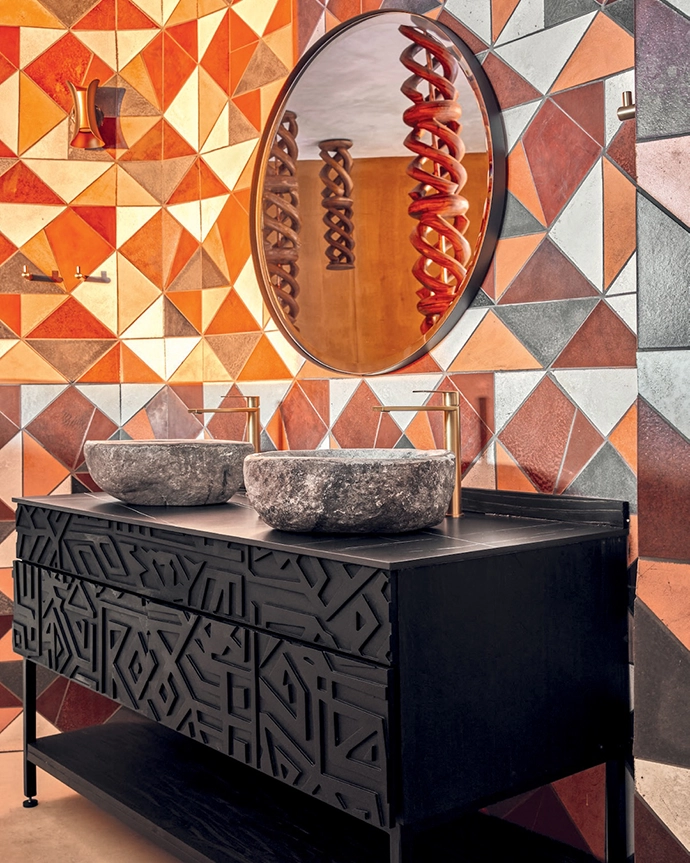
The markings and shapes of the tiles by Wolkberg Casting Studio, along with the engraving in the joinery by Namibian furniture brand Cajaka, pay further homage to the Ekipa motif. -

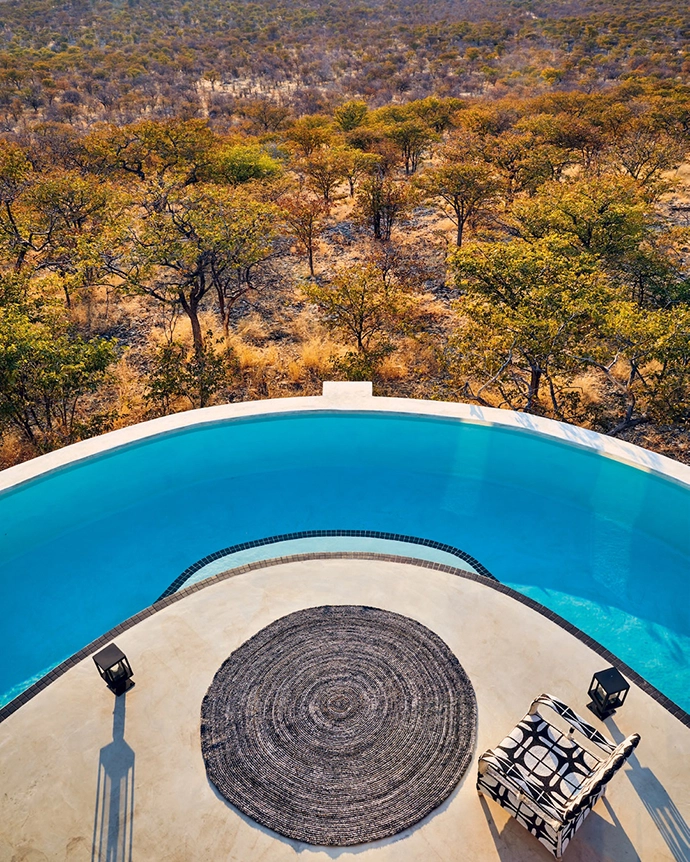
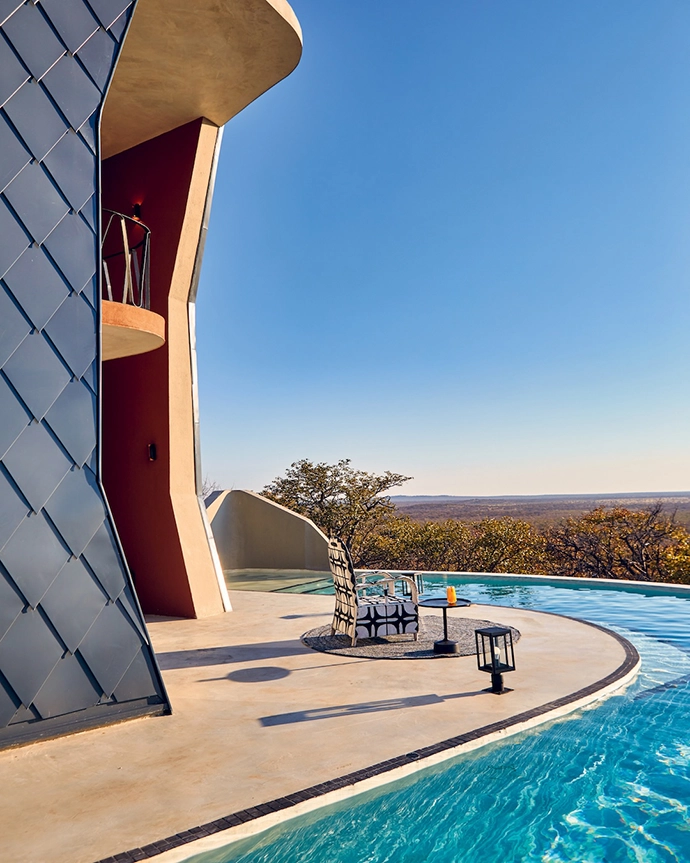
Captured as the sun rises above Etosha, Ekipa’s curved swimming pool offers a luxurious respite after a day spent viewing the abundant game in the famous Namibian national park. -
View over the pool from the bedroom’s balcony -
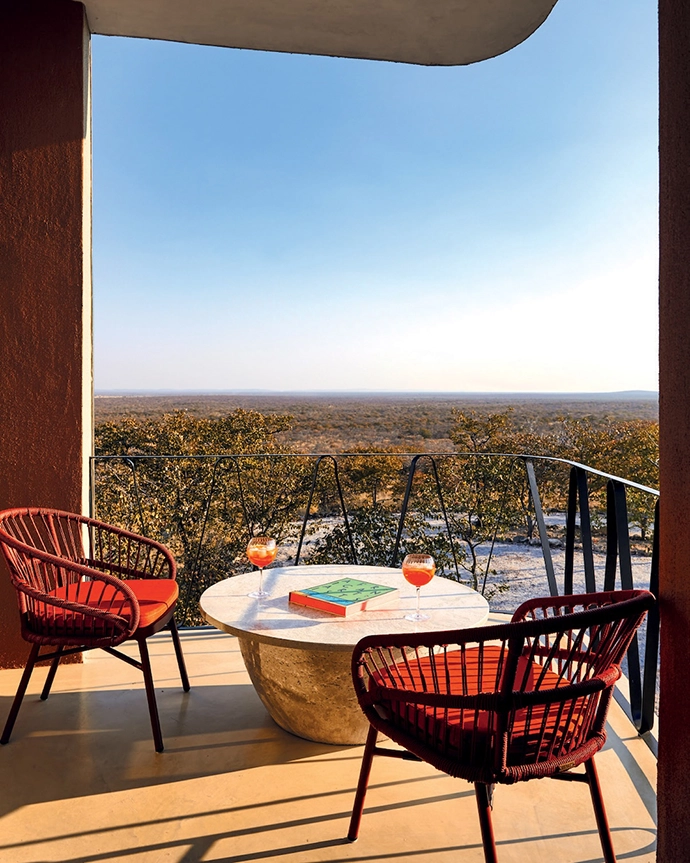
The west-facing balcony above the entrance is the perfect sundowner spot. -
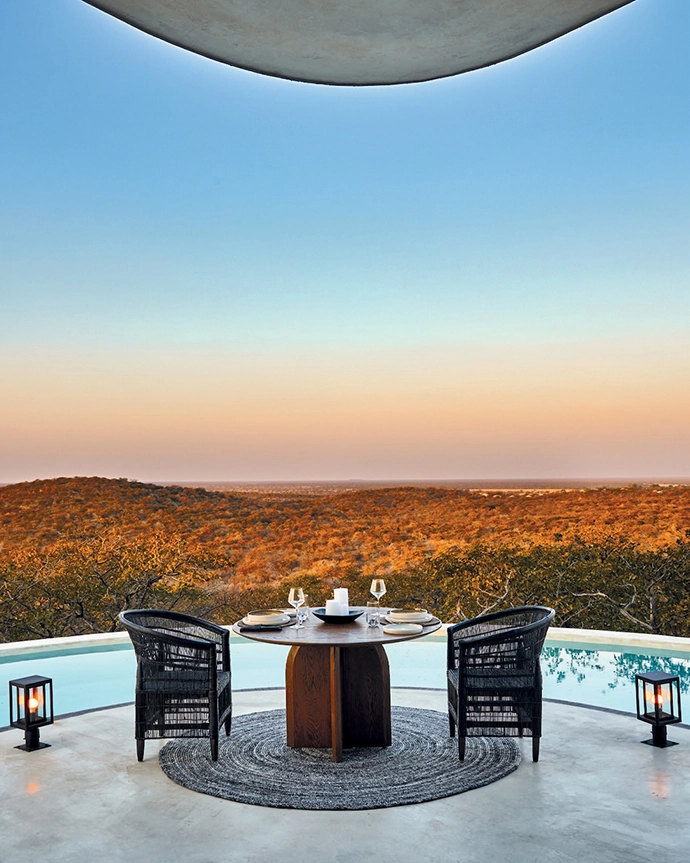
Alfresco dining is a given here. -
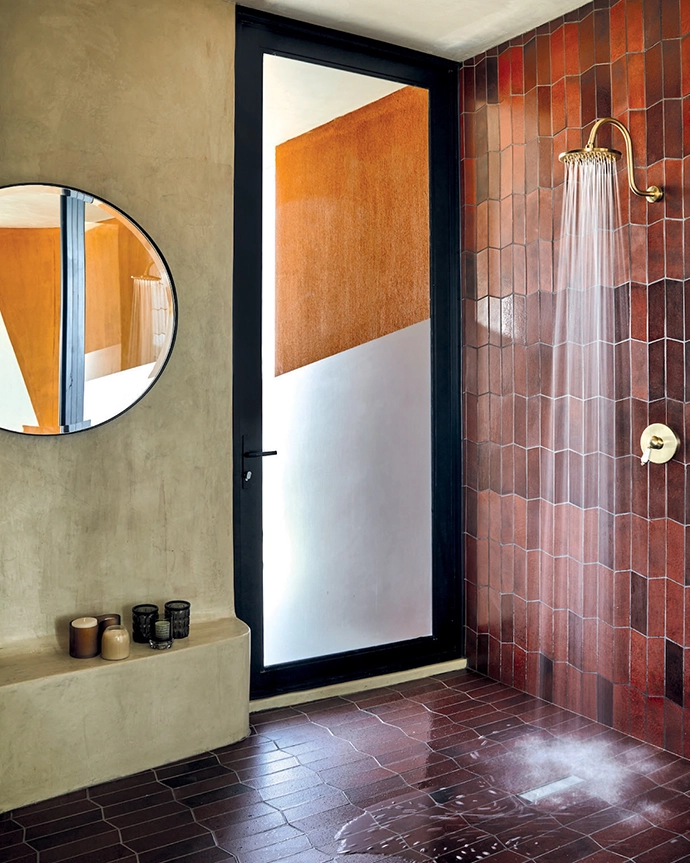
The outside shower with tiles by Wolkberg Casting Studio. -
Shaped around the east aperture of the pod, the swimming pool symbolises a border of life-giving water in a country where water is treasured. The beaded chair celebrates African craftsmanship, each bead adding to its texture and individuality. -
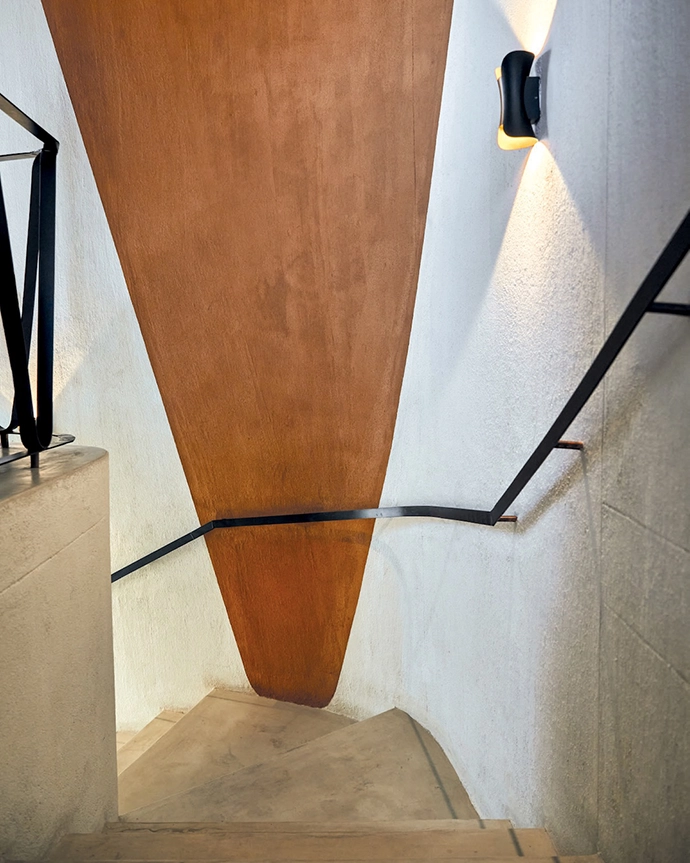
Africote’s clay-coloured Natural Cement paint celebrates and amplifies the Ekipa design that’s echoed in the bespoke railings. -
Africote’s clay-coloured Natural Cement paint celebrates and amplifies the Ekipa design that’s echoed in the bespoke railings. -
Africote’s clay-coloured Natural Cement paint celebrates and amplifies the Ekipa design that’s echoed in the bespoke railings. -
Africote’s clay-coloured Natural Cement paint celebrates and amplifies the Ekipa design that’s echoed in the bespoke railings. -
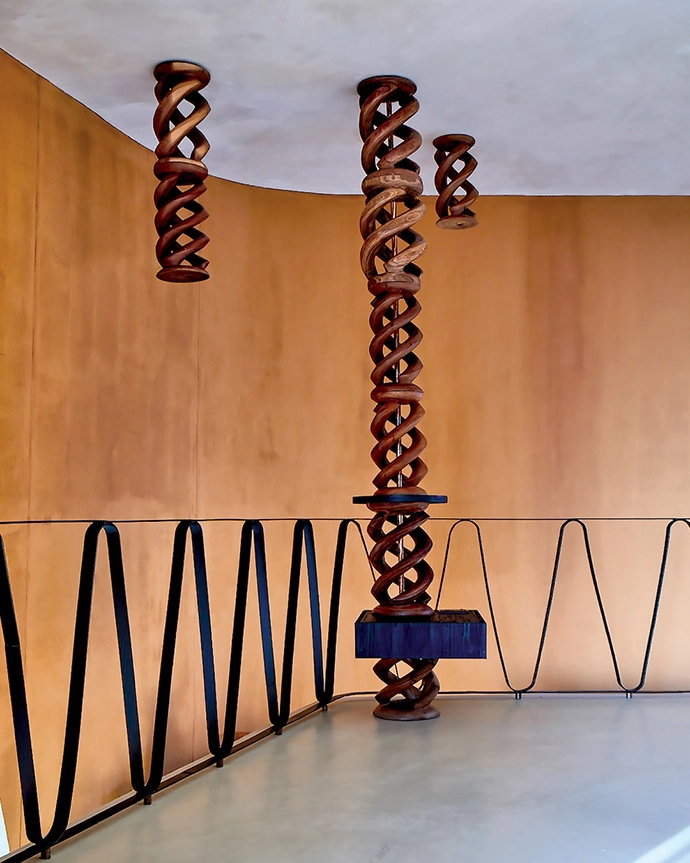
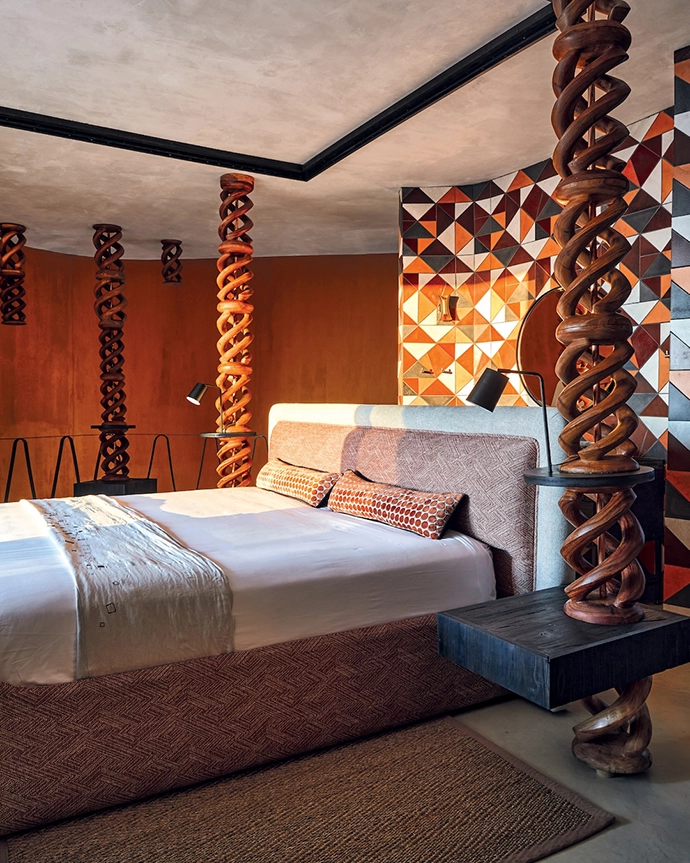
Interior designer Melanie Redecker created totems from hand-carved African stools. The Namibian-made bespoke bed complements the curve of the walls.
Located on the edge of the Etosha National Park, this two-person pod boldly waves aside established lodge design for something that borders on the sculptural.
WORDS & PRODUCTION Steve Smith PHOTOS Greg Cox
Ekipa looks nothing like its siblings. While the other two pods that architect Sven Staby designed for the Gondwana Collection tread gently in the desert sands of the Namibian landscape (see our story on the Reverie Pod and Desert Whisper), his latest structure is metal-clad – and far more imposing. From a distance, seeing it glint in the Etosha sunlight above a forest of gnarled mopane trees, you’d be tempted to reach for sculptural metaphors. Depending on your angle of approach, you could describe it as an abstract great anvil, the prow of a warship, a warrior’s helmet. Sven’s designs for the Desert Whisper and Reverie pods were softer, more feminine, sympathetic to their surrounds – and the armour-clad Ekipa seems anything but.
Yet when you hear him describe its inspiration, and his interpretation thereof, you begin to understand that this too is a nod to the environment it sits in. The pod takes its name and shape from the iconic round-edged ivory buttons worn by Aawambo women as a marker of status. In homage, the pod is a square with soft edges, and rotated 45 degrees so that its apertures face the rising and setting sun. “Volume-wise, it’s the mass of an elephant seen against the plain, or the presence of a colonial defensive structure – both undeniably significant spatial entities in these landscapes,” says Sven. Further symbolism is in the dark blue- grey, diamond-shaped cladding that nods to the scales of the pangolin anteater that’s found in much of Africa. Fixed to the inclined brick walls, the cladding ensures proper insulation and creates a sense of seclusion. “I like to think that the presence of Ekipa is as much a natural expressive intervention in the landscape as the hulk of an elephant is a natural presence in a plain. It wants to be left alone, at peace with itself and with all around it.”
The fact that Ekipa is at peace in its space is testament to its designer’s commitment to keep going until the most fitting iteration was inked on the paper before him. By Sven’s own admission, it was “a rather difficult birth”. “The biggest challenge we faced was finding a suitable site – one that was away from the park’s noisy feeder road and the light pollution of surrounding settlements, yet with a view that would focus on the expanse of bushland culminating in the hills and mountains. The first concepts were too-literal copies of the living things, rather than interpretations thereof. Graphically, the discarded plans resembled the shape of a mopane worm or had the profile of a pangolin, and did not evoke any deep emotional reactions.”
What Sven was after was a strong yet simple form that would be perceived as an obvious part of the surroundings. And there was the practical side to it, too. “It needed to be a design that could be built in a remote locality and function as intended (be an awesome experience for the guests), yet also be flexible enough to incorporate design and technical improvements during construction (a work in progress until complete).”
Ekipa is also a testament to the relationship Sven enjoys with the owners of the Gondwana Collection, one of Namibia’s leading lodge groups. The pods have all been collaborative efforts, spitballed over beers and biltong. “The most rewarding aspect is having a client who is supportive, believes in your way of thinking, and contributes critically to the evolution of the designs,” he says.
Another part of this team is self-styled interior artist Melanie Redecker of Unleashed Design in Namibia. She created soft, gentle interiors for both Desert Whisper and Reverie – but this project required a different approach. “Ekipa’s strength, geometry and presence demanded interiors that could stand shoulder to shoulder with that exterior – proud, unapologetic, and deeply rooted in the tones and textures of Africa,” she says. “Ekipa’s identity became about strength, and the celebration of masculine forms, confident lines and the tonal depth of Africa itself. It honours boldness, it’s a celebration of place, yet it still holds moments of intimacy and warmth within that strength.”
From echoing the building’s rounded edges with painted interior walls, to the geometric tiles and fabrics that reflect the pangolin cladding, Melanie’s interior treatment is in constant dialogue with the structure. “We used the building materials as a paintbrush to colour walls with texture, patterns carved by shadow and light, surfaces that feel alive to the touch. Strong lines and tactile finishes give it a pulse of pride and presence – yet comfort too.”
Guests spending time in this fully catered two-person wonder will experience exactly that: African grandeur. In the expansive, luxurious bed on the upper floor, you’ll awaken to the orange glow of the Namibian sun rising above two distant hills. Filtered through a soft haze, it’s likely to be one of the few times you’re able to look directly at our star – now a deep orange rather than the usual fierce, yellow-blue-white blaze. And your view over the Etosha National Park will hold the promise of a memorable experience in a special place. | gondwana-collection.com
Don’t forget to sign up to our weekly newsletter for the latest architecture and design news.