-

To create a building with a radical architectural language, Ricardo opted for a concrete structure and cork insulation. -

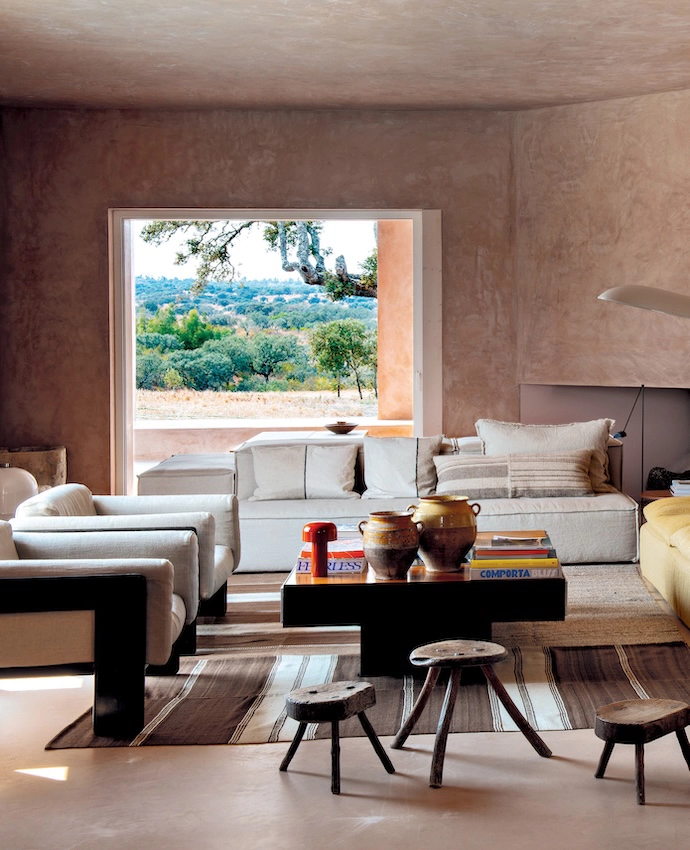
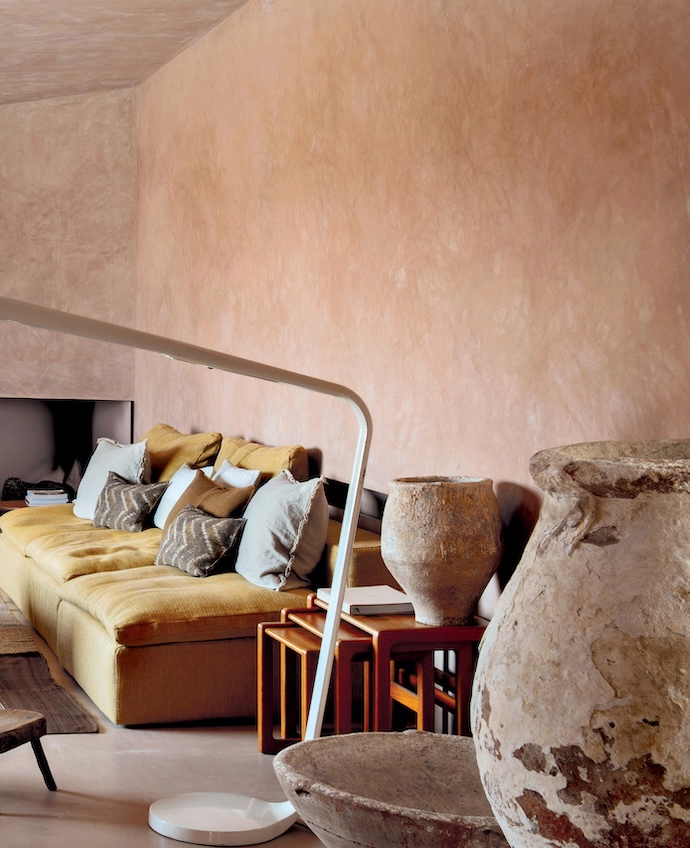
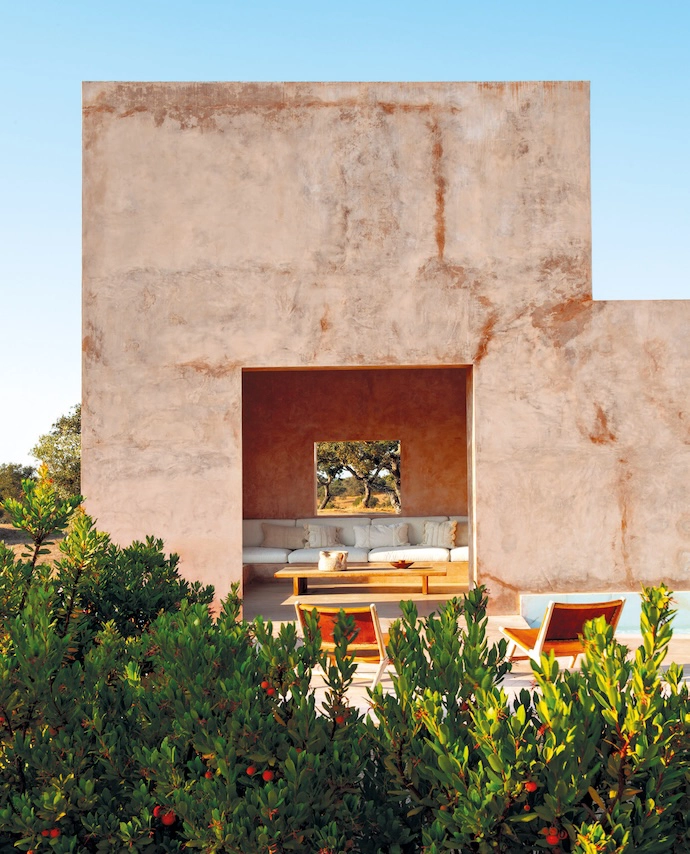
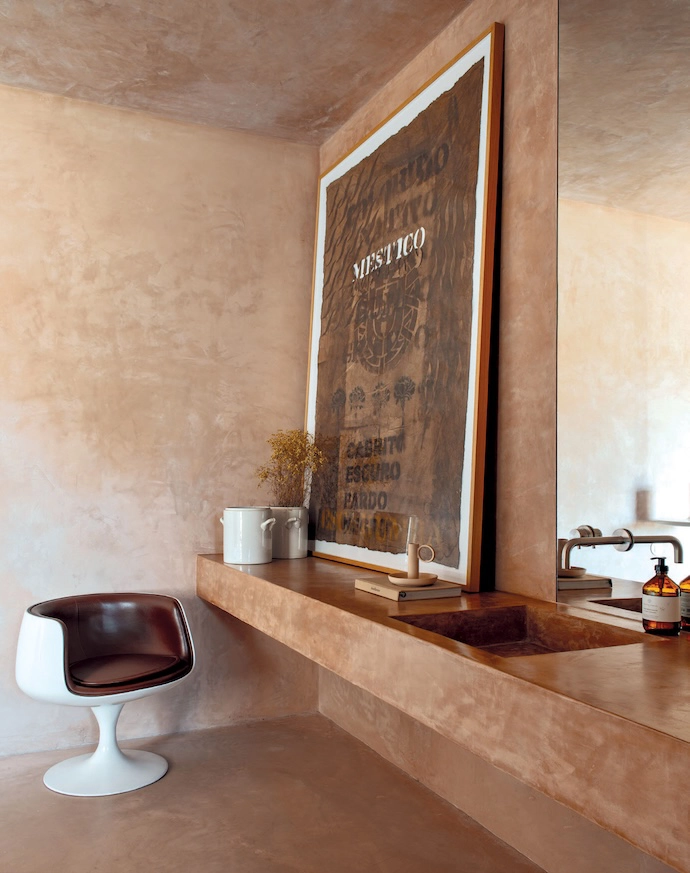
All interiors and interior surfaces are finished in hand-crafted plaster, polished tadelakt-style and coloured in shades of pink. -

Semi-covered terraces encourage the enjoyment of the natural landscape. -

Alentejo Villa -

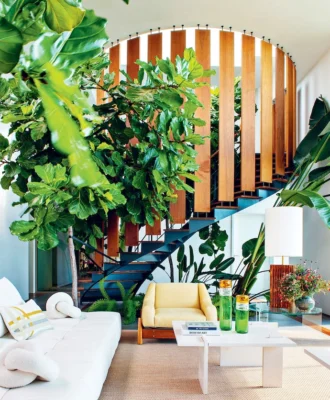
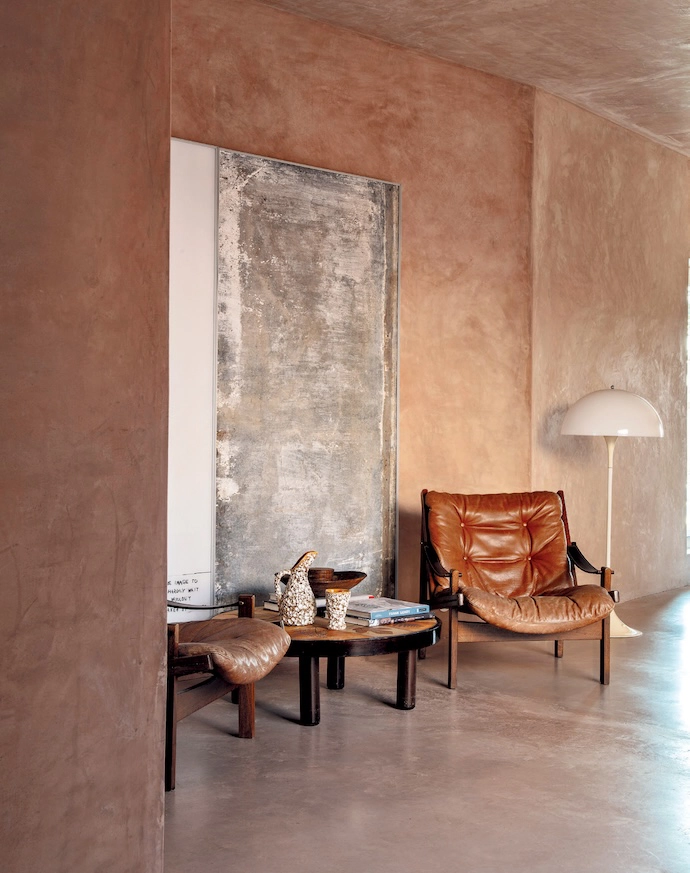
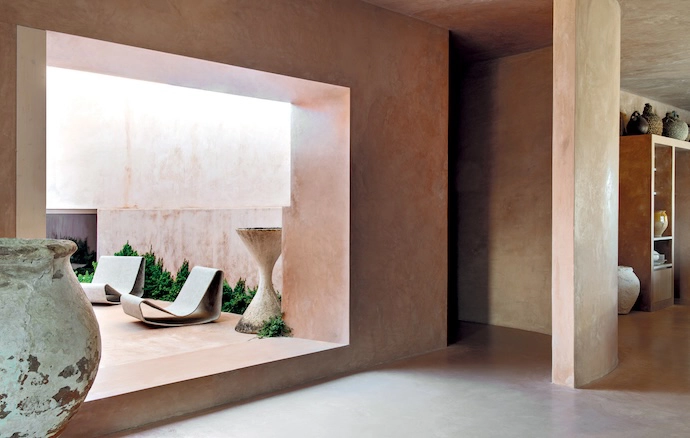
A reading area in the lounge features two 1960s Hunter armchairs by Torbjørn Afdal for Bruksbo and a Verner Panton lamp. -

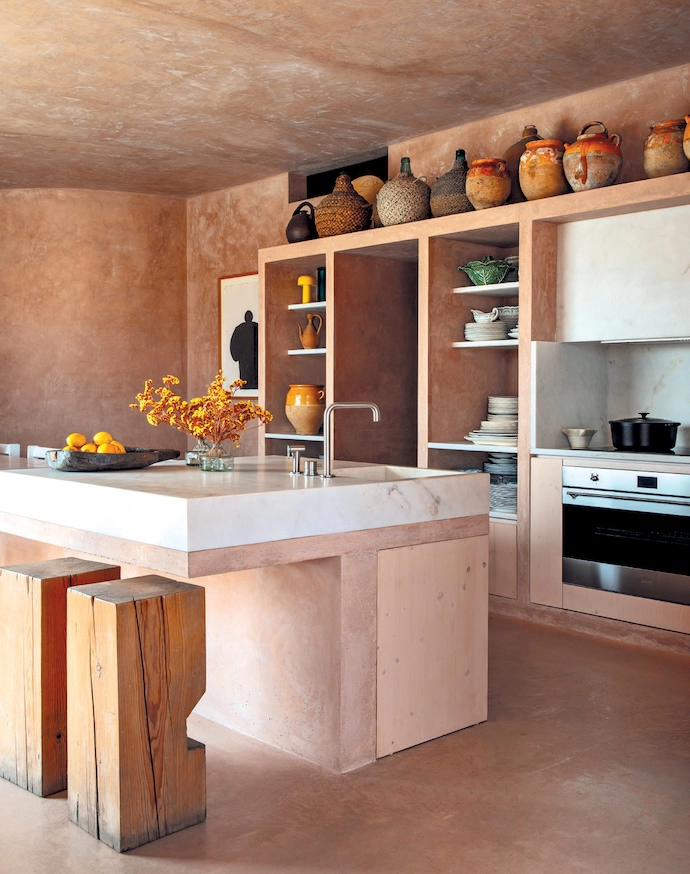
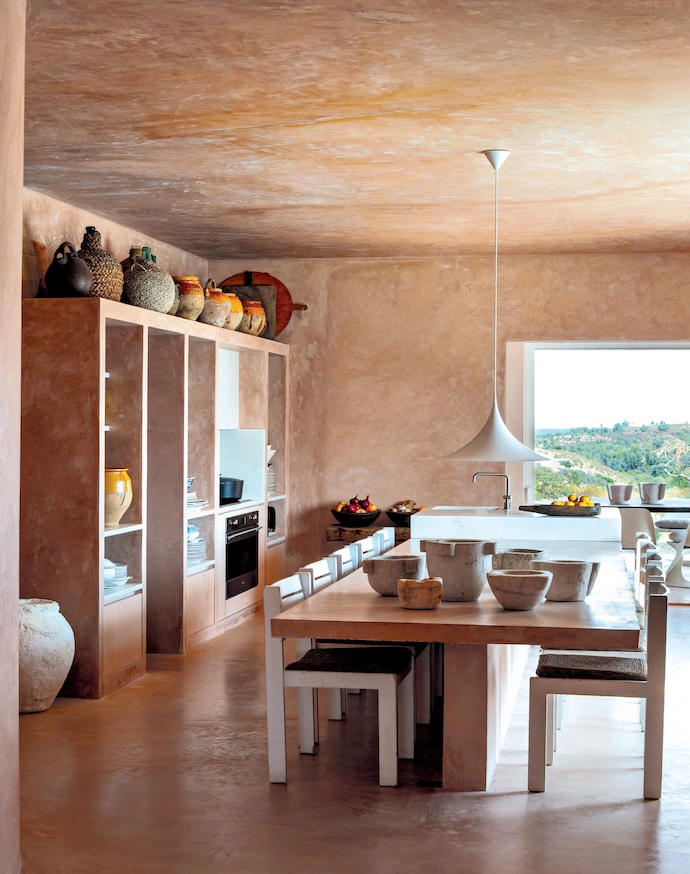
Like the rest of the house, the kitchen is coated in floor-to-ceiling plaster, with custom shelving for the oven and hob. -

The kitchen opens onto an adjoining terrace. -
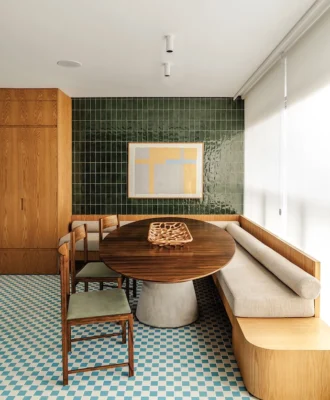
The dining table forms an integral part of the decor. The vintage dining chairs were found at Berenis in Madrid. -

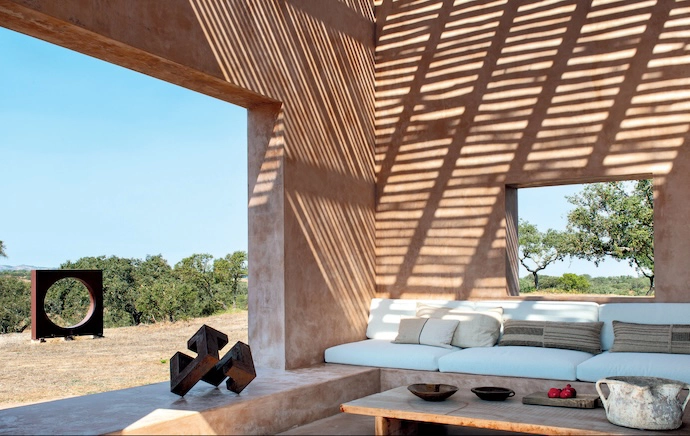
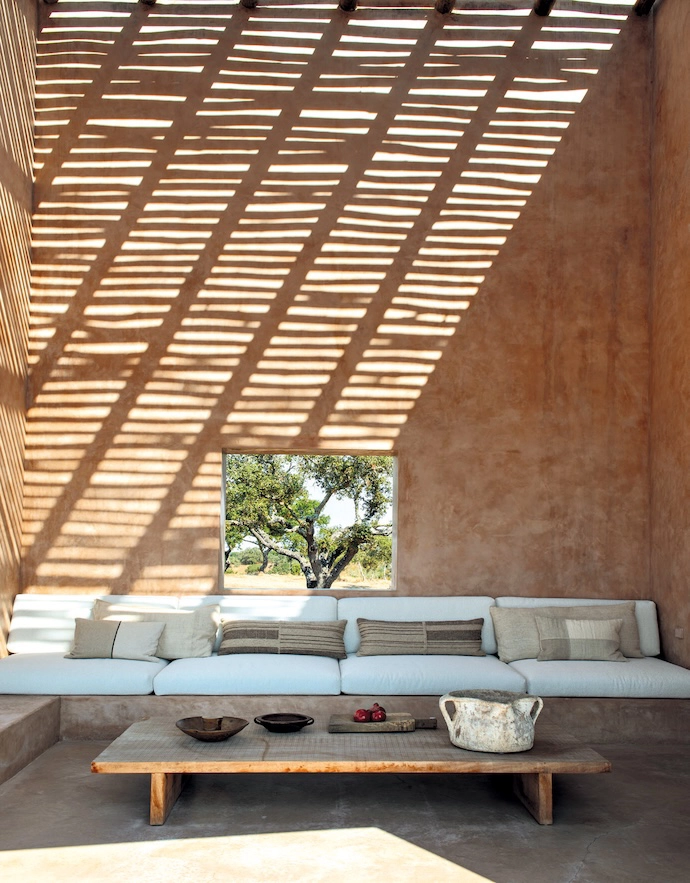
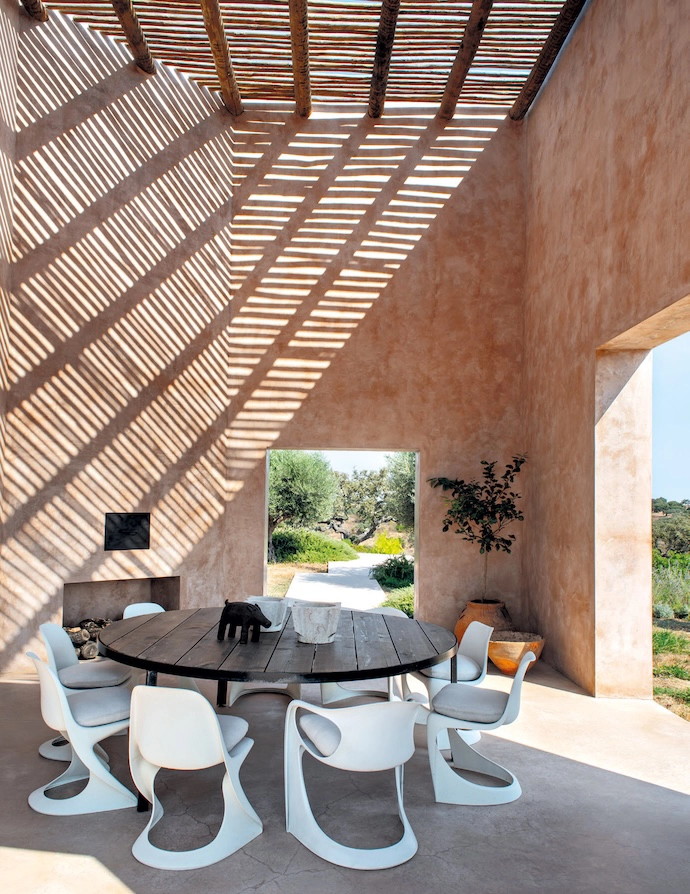
On either side of the vast living room, two outdoor terraces are shaded by an awning of eucalyptus branches to filter the sunlight. -

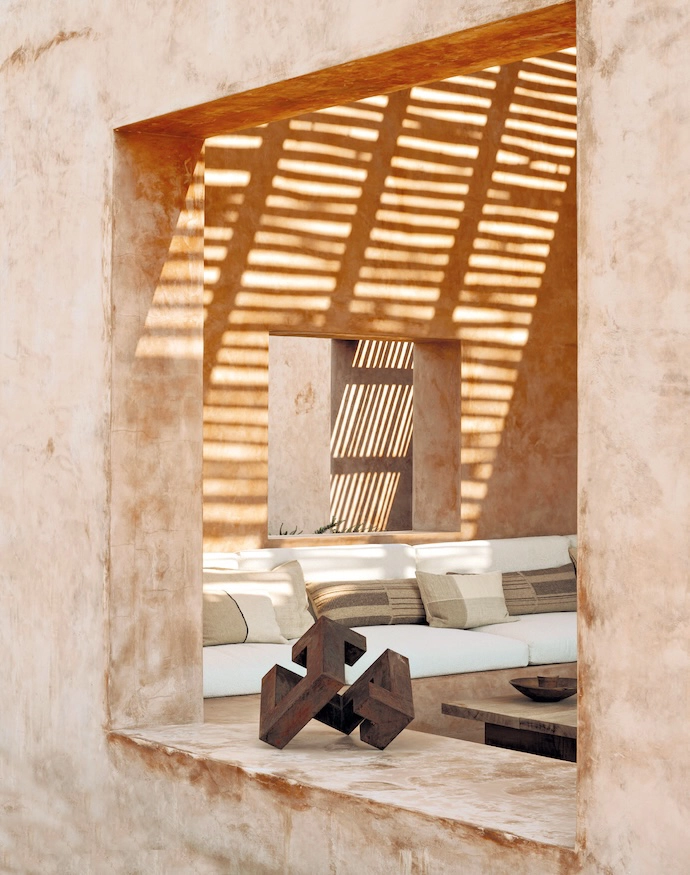
The masonry benches, finished in tadelakt, are softened by cushions in Élitis canvas fabric and wool cushions from Zara Home. -

On either side of the vast living room, two outdoor terraces are shaded by an awning of eucalyptus branches to filter the sunlight. -

On either side of the vast living room, two outdoor terraces are shaded by an awning of eucalyptus branches to filter the sunlight. -

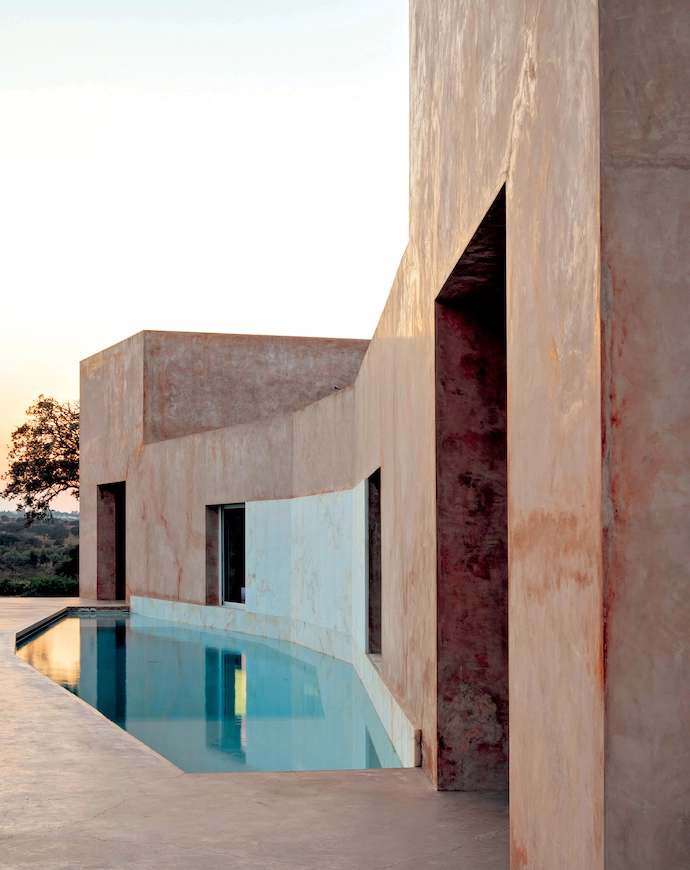
The pool, lined with Aquabright coating in light blue, shares a wall with the house – this has been laid with marble slabs that complement the plasterwork. -
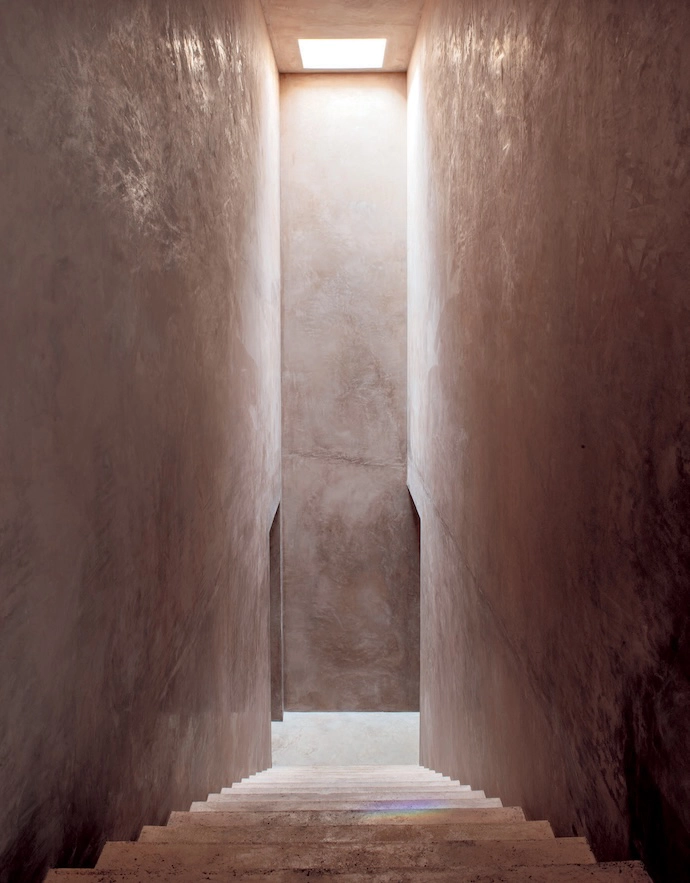
A staircase illuminated by a skylight leads to the bedrooms on the lower level. -
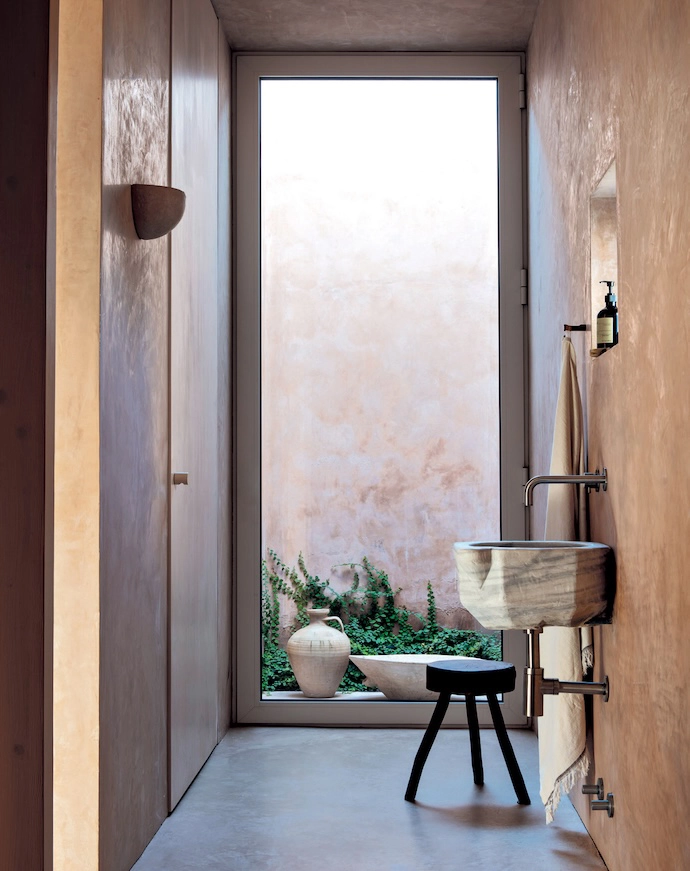
Mirrors were cut to incorporate Italian tapware by QuadroDesign. -

At the end of the passage to the three bedrooms, an antique marble baptismal font has been installed as a basin. -
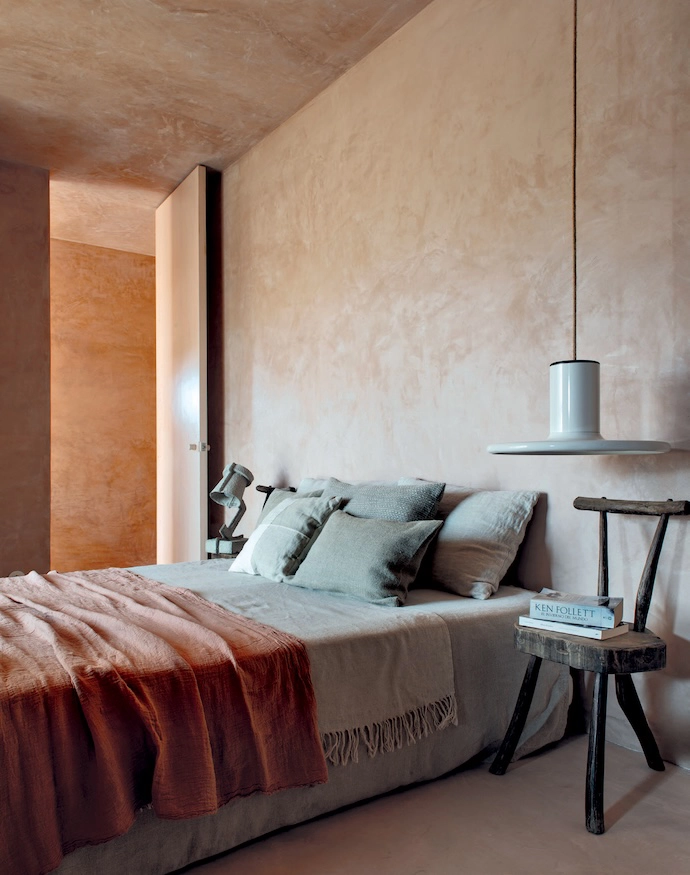
Soft materials in a guest room are accented by a desert-rose throw from Couleur Chanvre, with a wooden chair acting as a bedside table and a Trash Me lamp (made of recycled egg cartons) by New York designer Victor Vetterlein. -

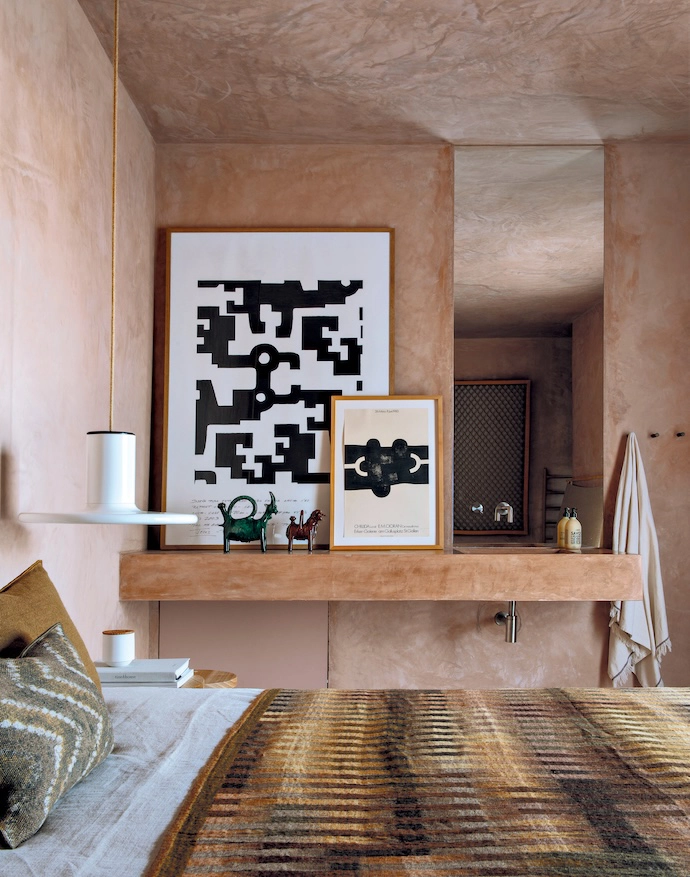
The vanities in the bedrooms are finished in tadelakt, creating uniformity throughout the home. Mirrors were cut to incorporate Italian tapware by QuadroDesign.
In harmony with its rigid landscape, this minimalistic Portuguese home combines ample volumes with a paired-back layout in a quest for simplicity and natural coolness.
WORDS Steve Smith and Laurence Dougier PHOTOS Nicolas Mathéus
About 120 kilometres south of Lisbon in the municipality of Grândola, Casa Azul – or Blue House – emerges quietly from the sun-drenched terrain of Portugal’s Alentejo region. This vast, sparsely populated area between the Tagus River and the Algarve covers nearly a third of the country’s surface, and is famed for its rolling hills, olive groves, cork forests and golden light. Alentejo is a land where the natural and built environments are in deep conversation – and Casa Azul, designed by Lisbon-based firm Bak Gordon, exemplifies this dialogue.
Grândola’s dry, arid landscape, rich in ancestral agricultural traditions and cork oak trees, provides the perfect setting for a house that is at once contemporary and rooted in local history. It’s here that four friends purchased adjoining plots of land with the vision of creating a shared retreat – a holiday home that feels as though it belongs to the terrain. Enter Ricardo Bak Gordon, the founder of Bak Gordon, who designed a home that feels less like an architectural intervention and more like a natural continuation of the land itself.
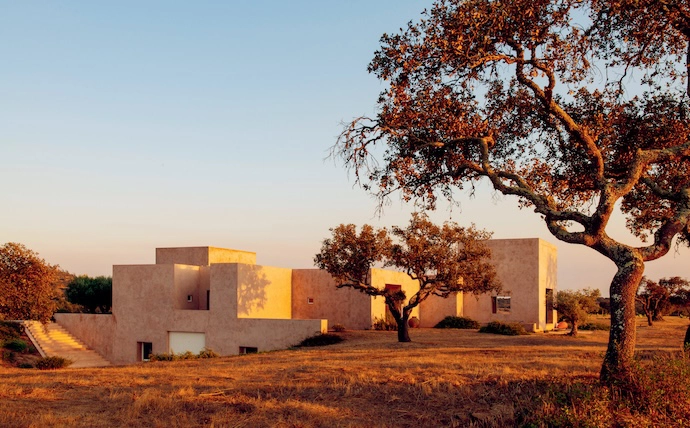
Casa Azul almost disappears into the horizon. If it weren’t for the reflective water tank that doubles as a pool and mirrors the surrounding cork trees and sky, the house might go unnoticed. Anchored to a long, linear wall that runs along the southern face of the site, the design follows the horizontal rhythm of the landscape. This wall – part architecture, part sculpture – acts as the spine of the house. On one side is the pool and arid scenery; on the other, a sequence of social spaces, fresco rooms and private quarters.
The house’s layout is cleverly broken into volumes of varying heights, mimicking the undulations of the Alentejo topography. These forms adapt to the terrain’s natural slope, while northern-facing elements are subtly set back to capture natural light and frame the sweeping views. At the heart of the home is a small interior courtyard that floods the space with daylight, offering quiet reflection – and cooler air during the region’s intense summer heat.
Materiality plays a central role in the building’s relationship with its environment. The entire house is clad in pigmented lime mortar – a finish that echoes the earthy reds and browns of the soil. This traditional technique, long used in southern Portugal, provides texture and warmth while minimising visual disruption to the landscape. A layer of locally sourced cork, harvested from the region’s Quercus suber trees, insulates the home, ensuring thermal comfort in the extreme climate. Inside, the same pigmented mortar continues across floors, ceilings and walls, creating a tactile continuity between indoors and out.
It’s not just the exterior that responds to the region’s harsh climate – the interior design is equally in tune with the rhythm of Alentejo life. The house comprises three bedrooms, each with its own en suite bathroom and terrace, ensuring privacy while maintaining a strong connection to the outdoors. A central living room, accessed via a corridor lined with vintage furniture and handmade ceramics, serves as a relaxed gathering space.
But the soul of Casa Azul lies in its fresco rooms – two semi-outdoor living areas located at opposite ends of the home. These rooms, inspired by traditional southern Portuguese architecture, serve as transitional zones between the interior and the exterior. The east-facing room features a wood-fired oven and a 12-person dining table,
perfect for long summer meals overlooking the pool. To the west, the second fresco room offers a tranquil spot to watch the sun set over cork-dotted hills. These spaces are where life happens – where conversations flow, children play, and time stretches out in the golden Alentejo light.
Designed during the pandemic and completed in 2021, Casa Azul represents more than just a holiday retreat. It is a meditation on climate, culture and community. Ricardo has skilfully balanced modern minimalism with a respect for local traditions, resulting in a home that offers both refuge and revelation. The architecture is not just about form, but about how people live – moving with the sun, seeking shelter from the heat, and gathering in shaded places to share meals and stories. With its masterful use of space, material and climate-responsive design, the house defines rural luxury not through excess, but through authenticity, simplicity and a deep sense of place. | bakgordon.com
Don’t forget to sign up to our weekly newsletter for the latest architecture and design news.