-

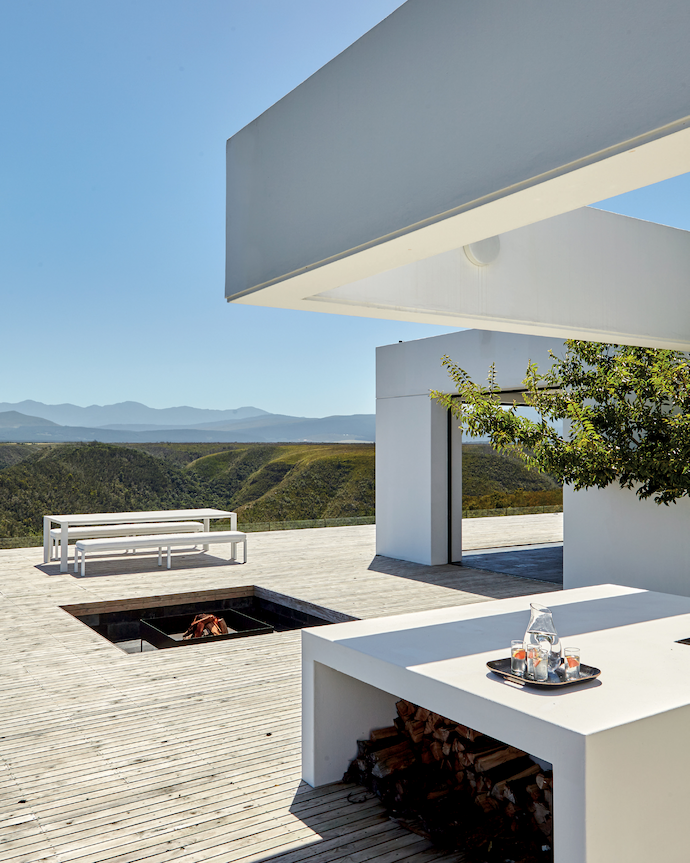
Inspired by geometry and classic minimalism, White House by Hours Clear Architects is a family home in the nature reserve near Plettenberg Bay. -

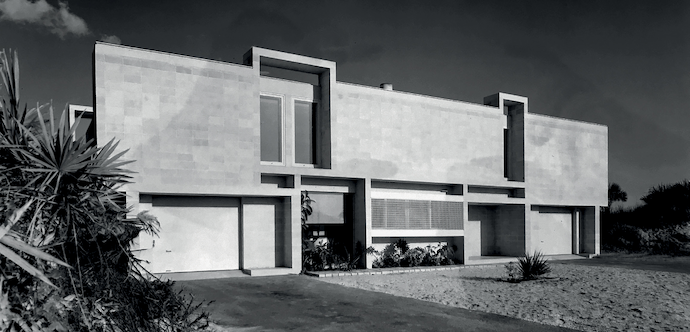
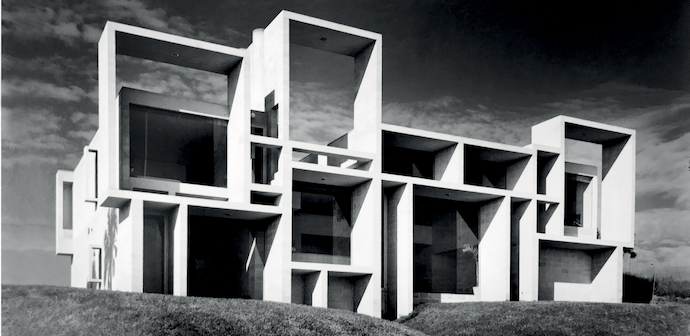
Taken just after completion in 1961, this image shows the rear exterior angle of Milam Residence. -

Its distinct, three-dimensional east-facing facade overlooks the Atlantic Ocean at Ponte Vedra Beach in Florida. -

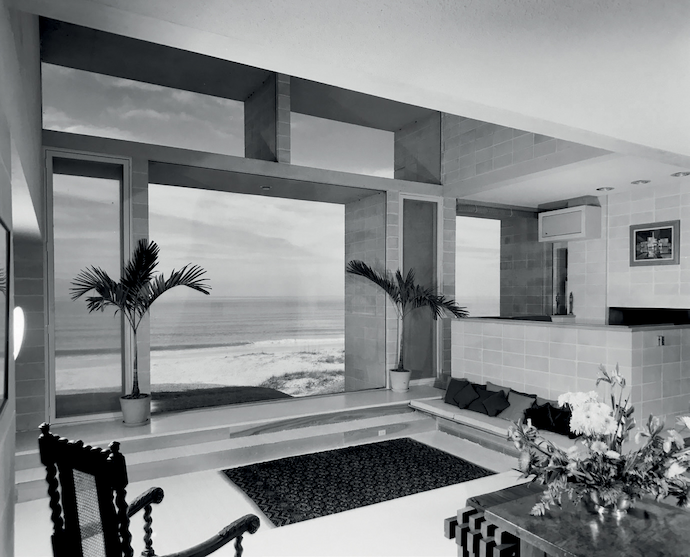
Appropriately for its era, Milam Residence features a sunken living room/conversation pit. -
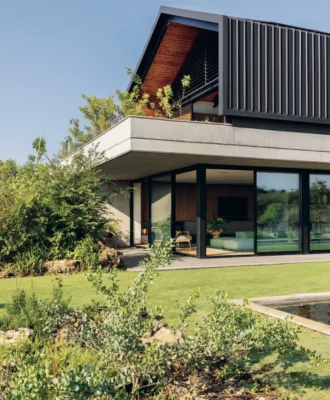
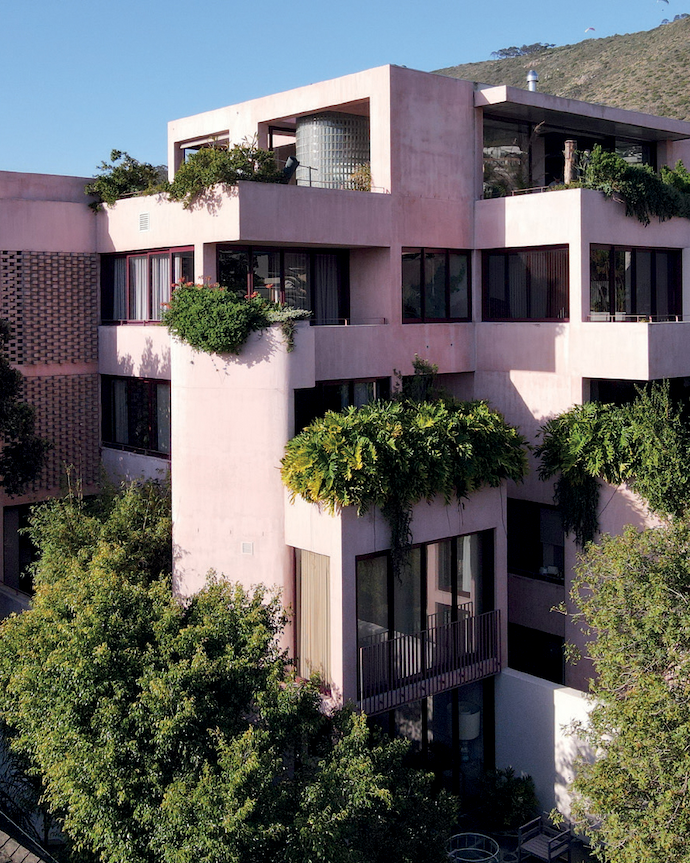
Hours Clear Architects’ Clarens project in Fresnaye, Cape Town offers a range of living spaces, seamlessly connecting interior and exterior experiences. -

The forms of Milam Residence’s walls and floors were constructed to block out the sun’s rays and temper Florida’s heat. Between 1969 and 1973, architect Paul Rudolph extended the house by adding a bedroom, a guesthouse, a three-car garage and a pool. -

The forms of Milam Residence’s walls and floors were constructed to block out the sun’s rays and temper Florida’s heat. Between 1969 and 1973, architect Paul Rudolph extended the house by adding a bedroom, a guesthouse, a three-car garage and a pool. -

The forms of Milam Residence’s walls and floors were constructed to block out the sun’s rays and temper Florida’s heat. Between 1969 and 1973, architect Paul Rudolph extended the house by adding a bedroom, a guesthouse, a three-car garage and a pool.


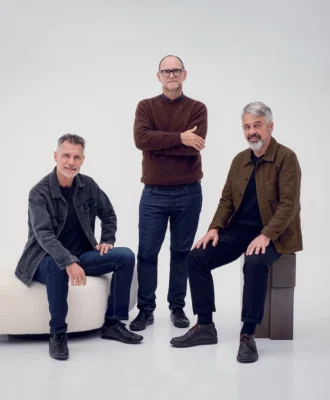
Annemie van den Heever, principal at Hours Clear Architects, talks about the ways in which American architect Paul Rudolph’s modernist masterpiece Milam Residence influenced her work.
WORDS Annemie van den Heever PHOTOS Joseph W Molitor, Honeyman Films
Leaving the familiar landscapes of my home in Tzaneen for the rigours of architectural studies, I arrived with a fresh perspective, knowing little of the discipline. My introduction came through a gift: a book called Paul Rudolph: The Florida Houses by Christopher Domin. It was given to me by a senior architecture student who recognised a spatial sensibility in my early designs that reminded him of Paul Rudolph’s work. To this day, this book remains my starting point when working on a new design, with the Milam Residence in particular being a foundational study in layered facades and dynamic volumes.
From an early internship in 1941 to his partnership with Ralph Twitchell ending in 1951, Paul Rudolph’s career began amid a pivotal transition in architecture: a move away from the universalising tendencies of orthodox Modernism towards a more regionally responsive approach. Their practice explored the intersection of modern technology and spatial theories with indigenous materials and a keen awareness of a building’s relationship to its landscape. While Twitchell’s expertise lay in practical aspects of construction, materials and detail, Rudolph was driven by conceptual underpinnings of design. This distinction became even more pronounced aft er Rudolph separated from Twitchell and established his own firm, where his work embraced a growing simplicity, as seen in the Milam Residence.
One thing built within another
Rudolph spoke about the idea of “one thing built within another”, expressed in the Milam Residence. Here, he introduced a secondary facade that wraps the living spaces, creating a dynamic tension between the interior layout and the exterior envelope. This interplay, where the facade sometimes aligns and sometimes diverges from the interior organisation, yields aesthetic complexity. A similar spatial strategy is evident in the Deering Residence, where the primary living spaces are wrapped around a central porch, effectively inverting the traditional home’s configuration.
Materiality
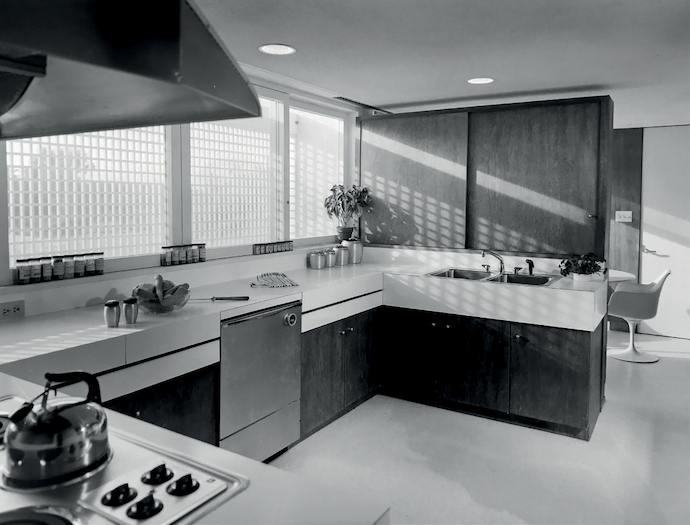
The Milam Residence demonstrates a deliberate material palette: concrete block, terrazzo and cypress. Cypress, a native wood known for its resistance to decay, was critical in Florida’s humid climate. The sand-coloured concrete blocks, the building’s most prominent feature, deliberately echo the beach, blurring the transition between the building and its environment. This integration is enhanced by terrazzo floors, their colour selected to replicate the coastal sands, creating a seamless visual flow from interior to exterior.
The house of seven levels
The Milam Residence exemplifies Rudolph’s mastery of spatial modulation, a technique that’s used to tailor the mood of each space to its function. This manifests in a series of floor level variations throughout the interior – most notably the sunken living room, which creates an intimate and conversational space. This is complemented by a deliberate manipulation of ceiling heights, an architectural strategy that enhances human comfort.
Landscape connection
The spatial complexity is enhanced by the building’s integration with its natural surroundings courtesy of the large windows. The extensive application of glass – a revolutionary feature for its time – is another defining element. After visiting Rudolph and Twitchell’s glass-walled homes, Electus D Litchfield expressed concerns about privacy in a 1948 letter to The Architectural Forum:
“How comfortable is it to realise that the casual passer-by, unbeknownst to you, may have you in complete surveillance; and will one always recognise the necessity for pulling the curtains or lowering the Venetian blinds when one starts to disrobe – or have we reached a time of Eden-like frankness and simplicity when this is no longer necessary.
“Again with all the beauty of the sea and the more intimate interest of the garden made part of the very furnishing of one’s room, is it possible to be surfeited with, or to become blind to, these beauties, and to find life of less consuming interest because of having all of one’s good things at once…”
However, time has proven the lasting appeal of expansive views, demonstrating the value of “having all of one’s good things at once”. These design elements – now commonplace in contemporary architecture – were revolutionary at the time. Delving into their origins provides a deeper understanding of their enduring necessity and, crucially, how to effectively implement them.
Rudolph’s influence on us
When it comes to our own work, Rudolph’s influence is evident in the way we approach spatial complexity. The “one thing built within another” principle guides our resolution of challenging designs. We’ve found that creating spaces with the right ambiance doesn’t always translate to a cohesive facade. To address this, we often employ a secondary facade, providing a layer of order and visual interest.
For instance, our Clarens penthouse showcases a concrete frame that envelops a loosely defined interior. At the White House, cantilevered concrete beams join up to delineate an outdoor kitchen, preventing it from becoming lost within an expansive deck.
Furthermore, our studio’s focus on urban environments has heightened our awareness of the balance between privacy and connection to the surroundings. Studying this era also emphasises the importance of careful window placement. In addition to being a budgetary waste, indiscriminately placed windows can be a source of significant discomfort.
At another one of our projects, The Aven, a strategically positioned window provides a private bathing experience, seamlessly integrating the iconic Lion’s Head into the interior space. Even in the remote setting of the White House, windows are meticulously placed to frame specific elements of the surrounding landscape.
Ultimately, Rudolph’s work has instilled in us a profound appreciation for the power of architectural ideas to shape our experience of the world. | hoursclear.com
Don’t forget to sign up to our weekly newsletter for the latest architecture and design news.