-

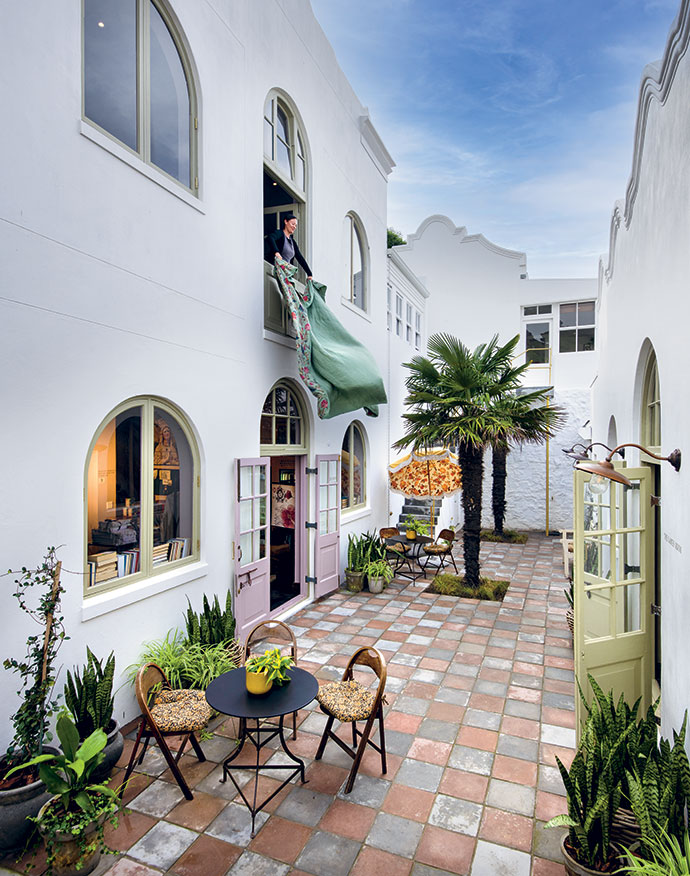
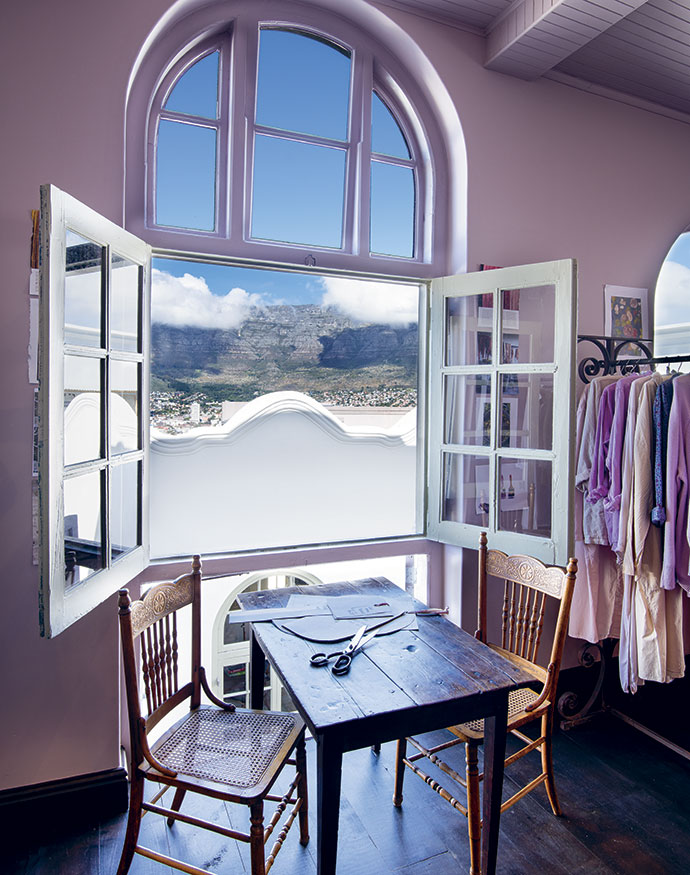
Meagen Jongebloed, Gail Behr’s accomplished pattern maker, unfurls one of Dorp’s handmade coverlets, for sale in the shop below. -

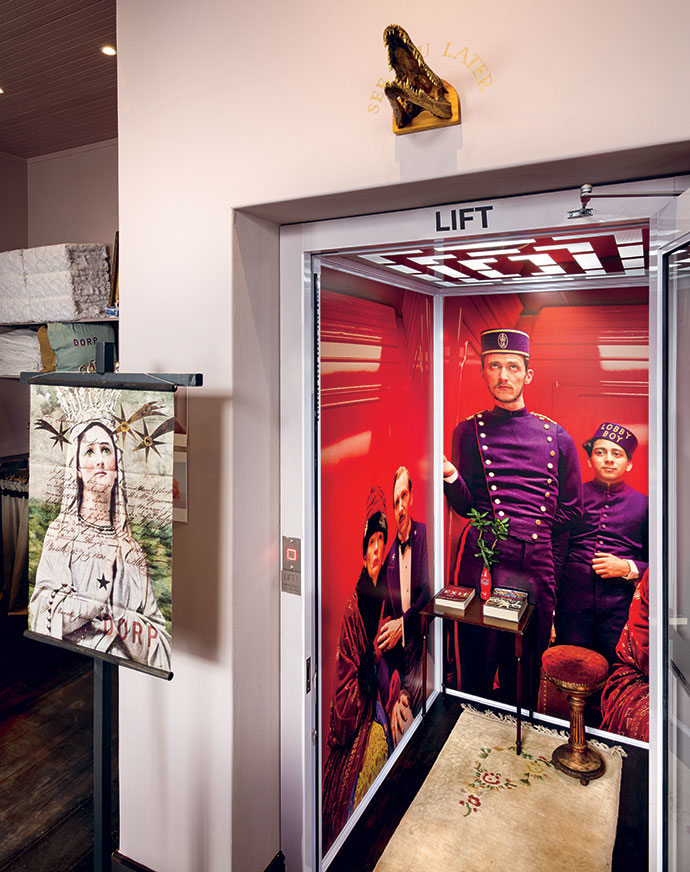
The shop lift, wallpapered with scenes from Wes Anderson’s The Grand Budapest Hotel, replete with red velvet stool, carpet and table – a mini set referencing one of Gail’s favourite films. -

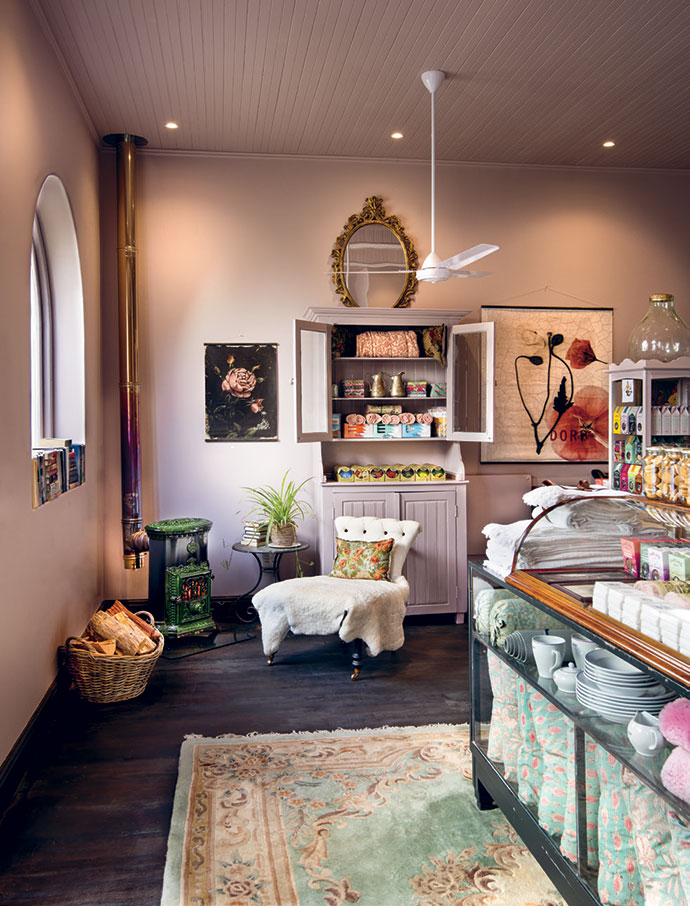
Gail often referred to herself as a “shopkeeper”, and decided to open one in Onderdorp and stock it with covetable Dorp items. Upstairs, where Meagen works, guests can browse rails of Gail’s Homework Clothing range. -

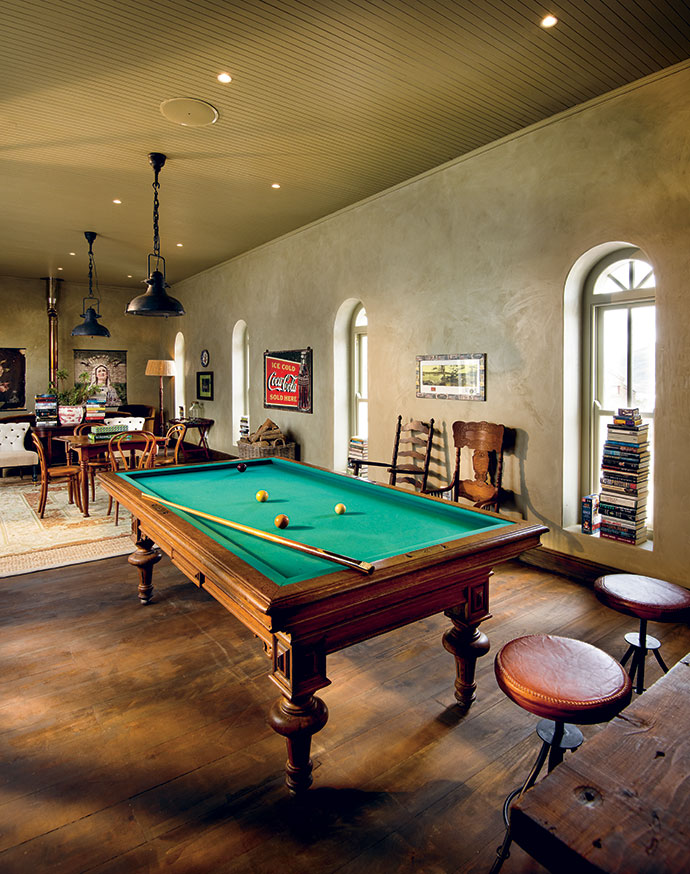
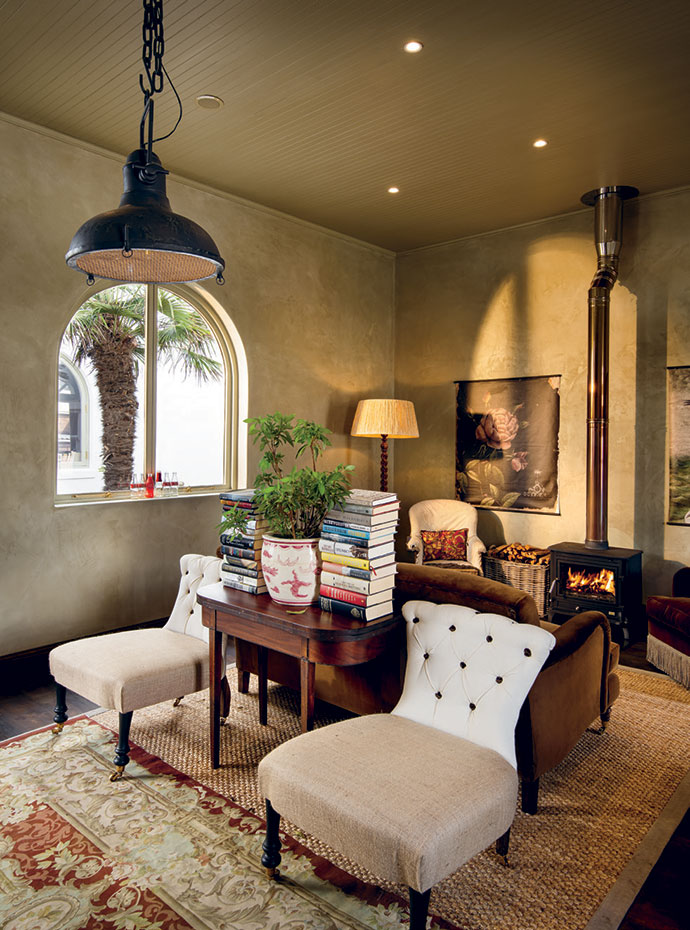
An adult playground, with board games, dartboard, piles of books, comfortable sofas facing a convection fireplace, and an antique French or “carom” billiard table taking centre stage -

The austere, putty-green walls of the rustic demonstration kitchen in Palm House are softened by clutter, found artworks and Roger Ballen photographs. Together with the velvet fringed armchairs, designed by Gail, the overall effect is one of homely comfort rather than hotel. -

The austere, putty-green walls of the rustic demonstration kitchen in Palm House are softened by clutter, found artworks and Roger Ballen photographs. Together with the velvet fringed armchairs, designed by Gail, the overall effect is one of homely comfort rather than hotel. -
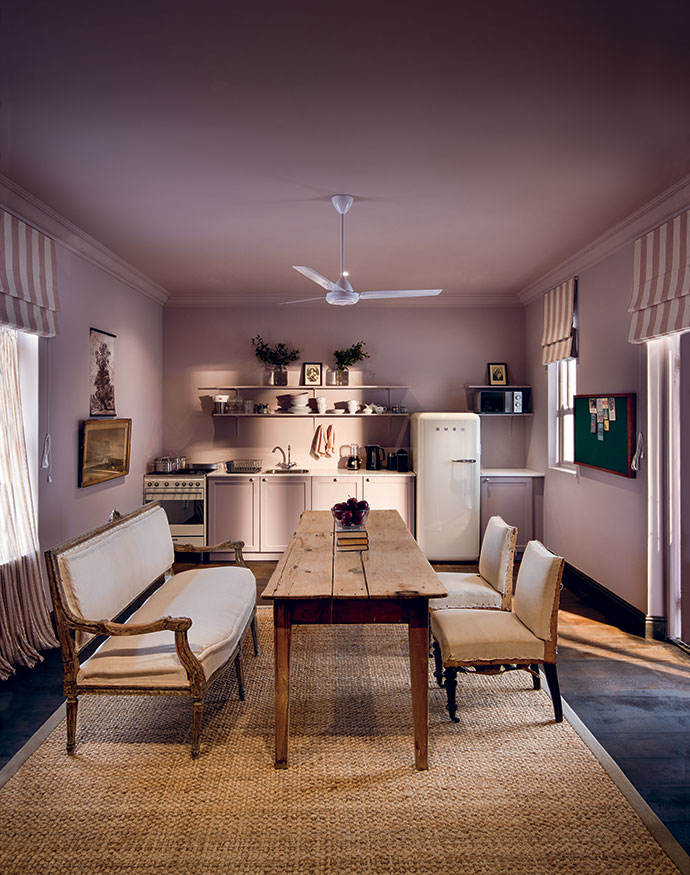
Mansion Block 5, one of five rooms with a dine-in kitchen. Gail preferred old-fashioned pinboards, pinned with specially designed quirky cards, to in-room hotel brochures or folders. -
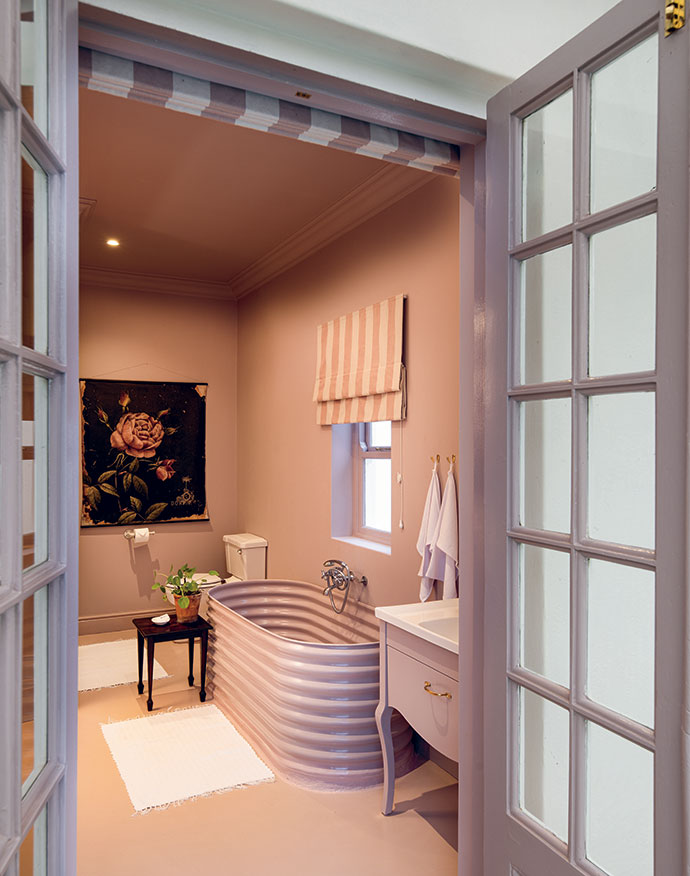
The Pool Room, overlooking one of three pools, has an ingenious bathtub. A dusty-pink palette predominates. -

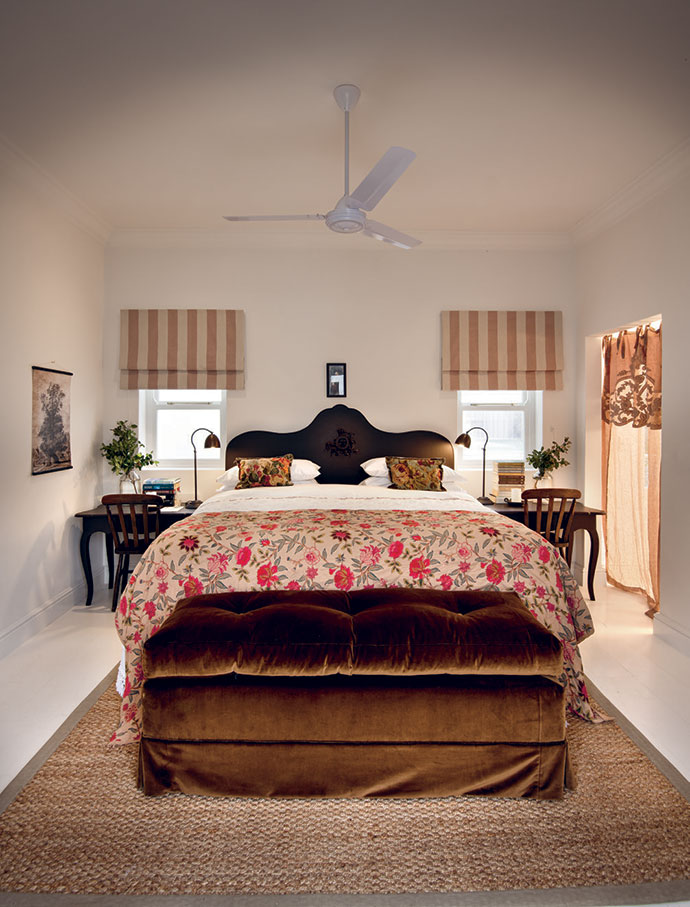
The Witness Protection Room, like all others at Onderdorp, features Gail’s signature curtains and coverlets, and a Madonna and Child centred above the bed. -

The cosy back corner of the games room. -

The Dorp shop doubles as Onderdorp’s reception. -

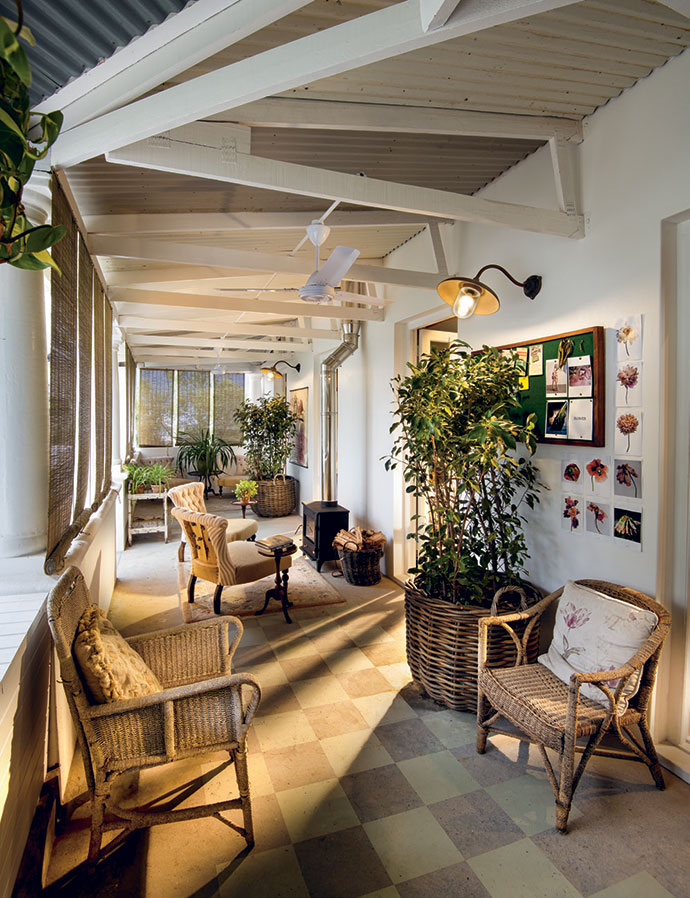
The Palm House veranda, with one of several outdoor fireplaces. -

Mansion Block comprises eight rooms – Klein (kitchenette), Groot (alcove kitchen) and Grootste Kamers (dine-in kitchen).


WORDS Pippa de Bruyn IMAGES Dook PRODUCTION Annemarie Meintjes
Her untimely passing at the end of its construction has imbued Onderdorp with special meaning. Relaxed, comfortable and eclectically stylish, Gail Behr’s final project could not be a more fitting memorial to this much-loved hotelier.
“Our Queen is dead. Long live our Queen.” The announcement on @dorphotel of the unexpected death of its creator was a hammer to the heart for her followers. Gail Behr, the maverick hotelier who worked with fabrics and plants like artists do with paint, an impresario who conjured up a theatre-like experience on the terraced garden carved into Signal Hill, was gone.
Gail was extraordinary. A hotelier who never really wanted guests – “cluttering the pink floral sofas with their turquoise bunny jackets” – she reluctantly opened her compound of Georgian-inspired buildings at the end of 2019. No-one could believe it hadn’t been there forever, that she designed and built it from scratch within a few years, using doors and windows purloined from demolition sites to breathe centuries into new structures. Gail had a talent for mixing the grand with the unpretentious, and an English sensibility for contrasting fabrics. Too homely to be called a hotel, too grand to be called a home, this was just how Gail wanted to live: with cut glass tumblers, large candles, great art and piles of books. In spaces that exude authentic character. With a doorman at the door.
READ MORE: Dorp Hotel
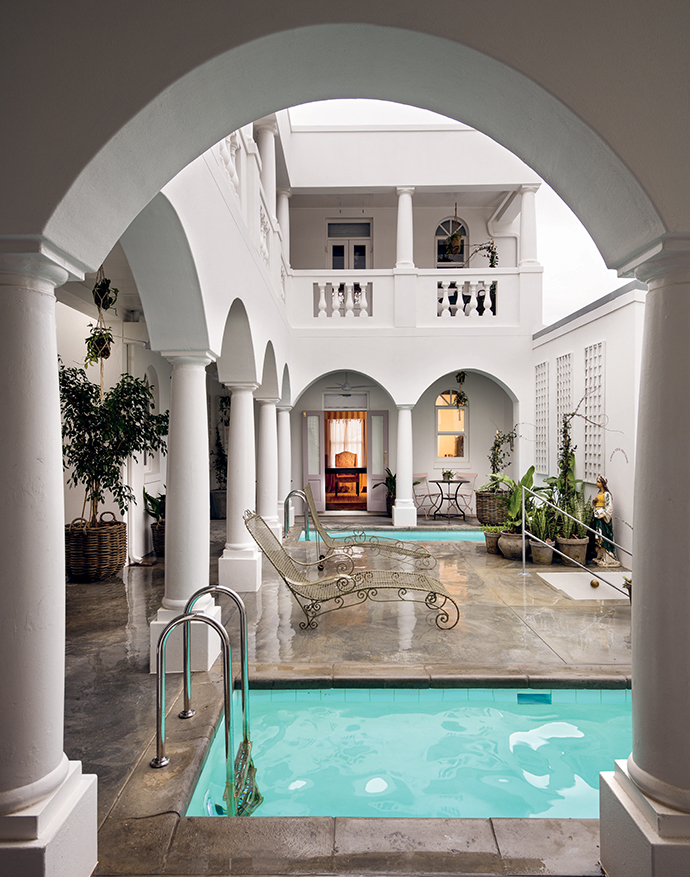
Like Dorp, Onderdorp defies easy categorisation. Conceived as an entirely self-sufficient wing, it stretches the length of the block below Dorp: a small collection of warren-like buildings behind a fortress-like wall of white. And like Dorp, it feels like a clever renovation of existing buildings, rather than purpose-built. Fifteen rooms, ranging from studio-style pods to mini-apartments, share three plunge-sized pools, a central games room and the Palm House. The latter is the proverbial hearth, with a demonstration kitchen – made homely with art, books, a fireplace – and an adjacent dining room. Sash windows frame Table Mountain, and several narrow French doors open onto a veranda shaded by rattan blinds. The bedrooms, either white or painted a distinctive dusky pink, are comfortably womb-like; beds, raised high enough for you to store your luggage underneath, are layered with fabric and flanked by brass lamps and books. Every room has a kitchenette of sorts; the larger feature a separate kitchen, anchored by a vintage table. Gail’s wit is evident throughout: “Check Your Privilege” stencilled above a Madonna surrounded by pots; the “Witness Protection Room”; a photo of Putin stuck above the dartboard. Images of Madonna and Child are everywhere.
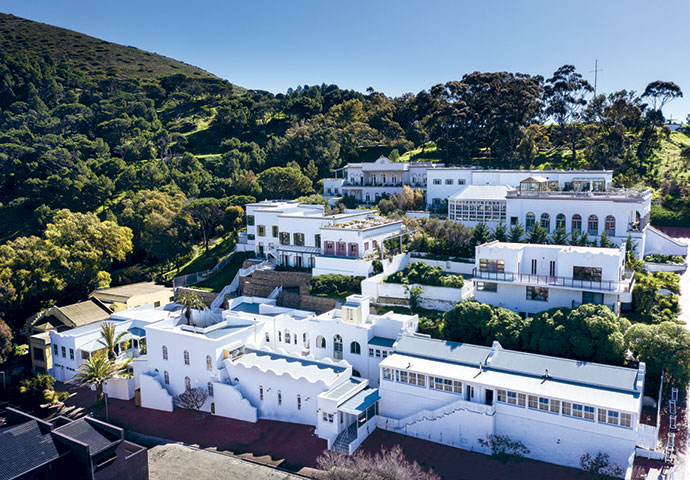
“She envisaged this as a safe place for abused nuns,” says Ryan Findlay, Gail’s assistant manager and creative sounding board, smiling at the absurd notion. We are under a ’70s-style scalloped and fringed umbrella – a pop of yellow against the white exterior. It marks the entrance to the reception/shop, where a whimsical glass-fronted lift takes you up to Gail’s clothing shop. Ryan compares Gail’s design sensibility to that of a film director. “She had such a singularly strong vision. She’d bring in carpenters, builders, gardeners, designers and draughtsmen, and make them produce what was in her head. She was entirely in control, from bathroom to balustrade. It wasn’t the most cost-efficient way to build. And it was a massive undertaking, at any age.” When Gail died, aged 70, the exterior – with shaded verandas bookended by large concrete pots and pavers surrounding palms – was almost done. Melissa van Hoogstraten, Dorp’s gardener, is digging in two more palms, soil-smudged hands rearranging pots filled with “mother-in-law’s tongue”, as Gail instructed.
“Gail was a legend, but also a kind of contradiction. She spent every day working at Onderdorp. Like Dorp, it was a place where she cocooned herself, creating a deeply personal private haven. But she knew it was also a theatre, a place that required an audience. And that real success is when – having done all you can, and put the right people in place – the show carries on, without you.”
Looking for more architecture inspiration? Sign up to our weekly newsletter, here.