-

George Clarke’s Amazing Spaces: Airstream Caravan -

Mark and Charlotte Mabon live in rural Somerset and are both caterers and food educators, working to create healthy and invigorating food which is as fresh, natural, restorative and tasty as possible. They believe that delicious and nutritionally rich food can be available for you, no matter what intolerance or health issue you might have. -

George Clarke’s Amazing Spaces: Airstream Caravan -

George Clarke’s Amazing Spaces: Airstream Caravan -

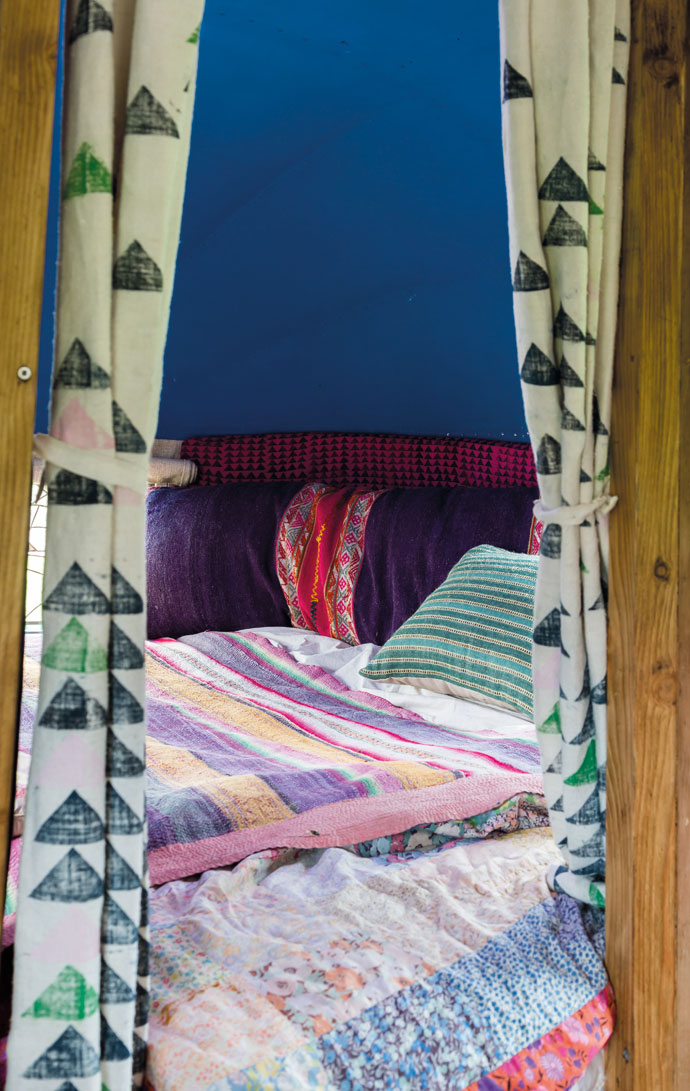
Charlotte specially designed a block print pattern for the natural linen to be used as a door curtain for the bedroom. -

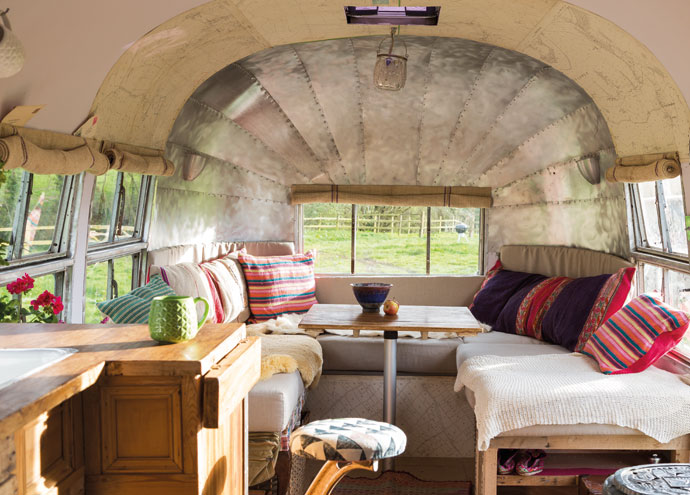
Mark loves to sit on a stool at a countertop, and he really wanted to re-create this in the Airstream, despite the limited amount of available floor space. The idea came to him to design a stool that is hinged to the kitchen counter and swings out when in use. Rather than have it in a regular shape, he designed one based on the gently sweeping curve of a wild goose’s neck to reinforce the goose talisman associated with the Airstream. The upholstered stool seat folds flat when it’s not in use. -

George Clarke’s Amazing Spaces: Airstream Caravan -

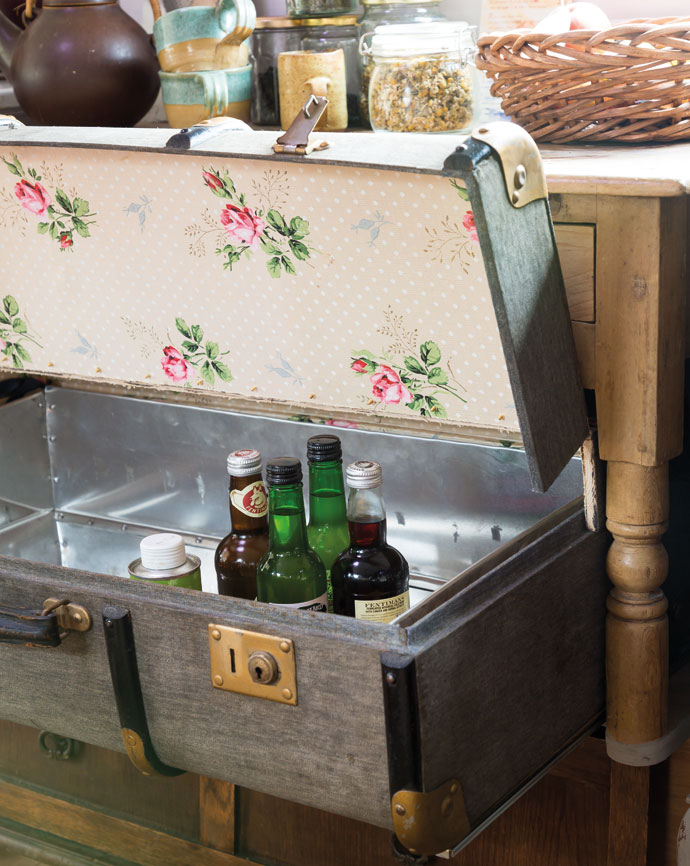
Amazingly, Mark and Charlotte managed to create their own fridge in a vintage suitcase. The case is lined with vintage wallpaper while an inner aluminium container acts as the actual food box, with a small heat exchanger and fan fitted at the back to cool everything. -

George Clarke’s Amazing Spaces: Airstream Caravan -

George Clarke’s Amazing Spaces: Airstream Caravan -
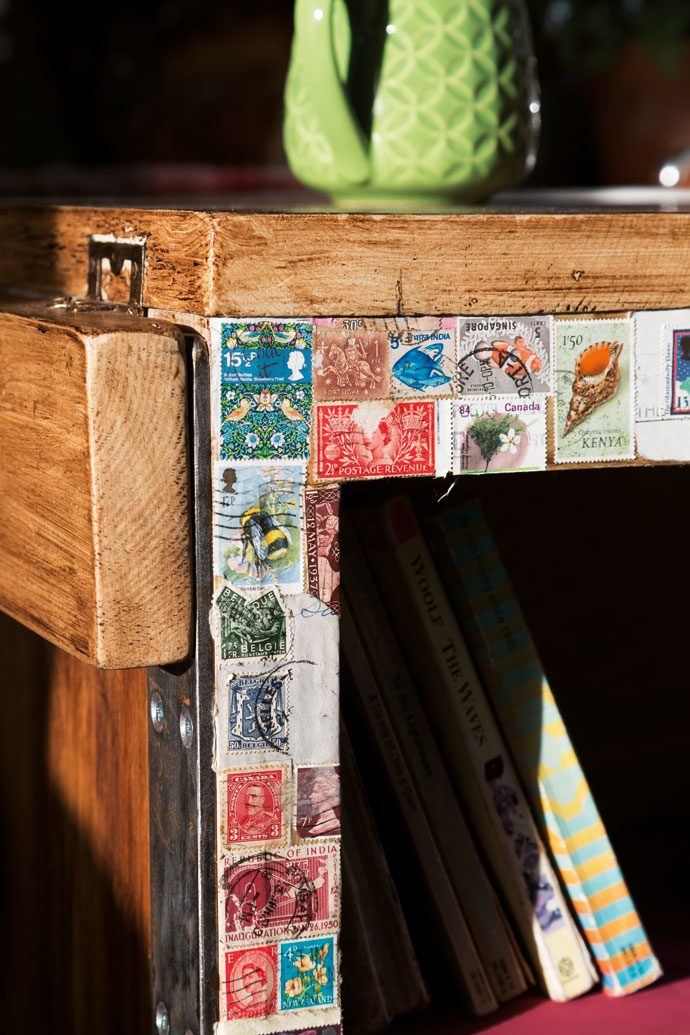
Rather than keep their old collection of loose stamps out of sight in a box somewhere they used them as a decorative edging for the shelving unit, each one stuck on with glue and then carefully sealed. -

George Clarke’s Amazing Spaces: Airstream Caravan




WORDS George Clark and Jane Field-Lewis PHOTOS Ben Anders
Finding that first step onto the property ladder has never been easy. Over recent years this has become a Herculean task for many young people and it was no different for Mark and Charlotte Mabon. Together with their young daughter, they were living in rented accommodation and their lease was coming to an end.
“We were really fed up with the rentals market, but it’s also true to say that we wanted to do something a bit bold. Renting felt so mediocre and not our life; we wanted to be closer to nature and connected to the land. This was a project we could put our creative energy into and would propel us into the lifestyle we wanted.”
THE INSPIRATION
Mark and Charlotte were pondering how to create a more permanent family home with limited means but big principles and a wish for a better life when Charlotte had a dream about a shiny silver Airstream caravan. “In our darkest hour and not knowing what to do we looked at the book My Cool Caravan and I dreamt about it.” They were so excited by the idea that they started researching it straightaway on the internet and found one for sale on an online auction. A few hours later they set off to a neighbouring county to view it.
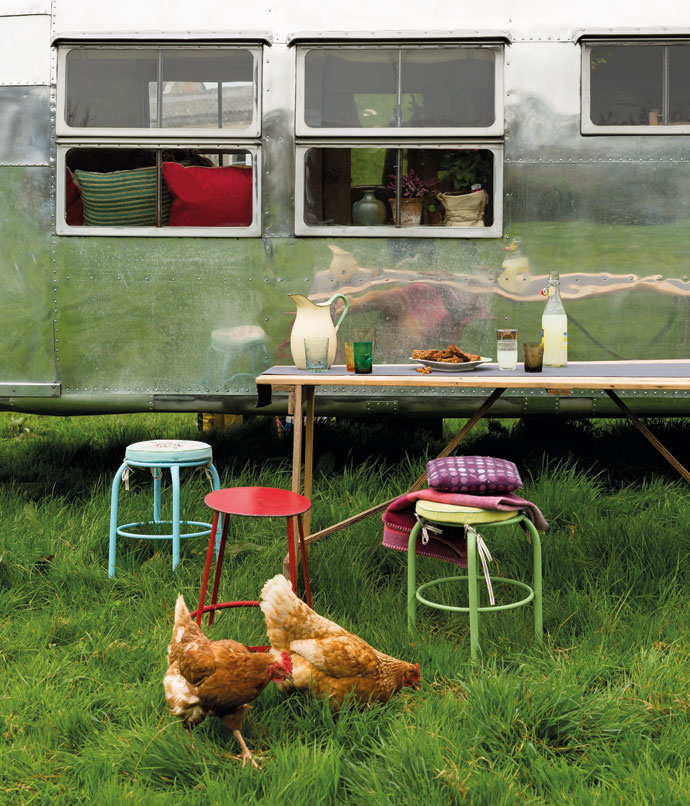
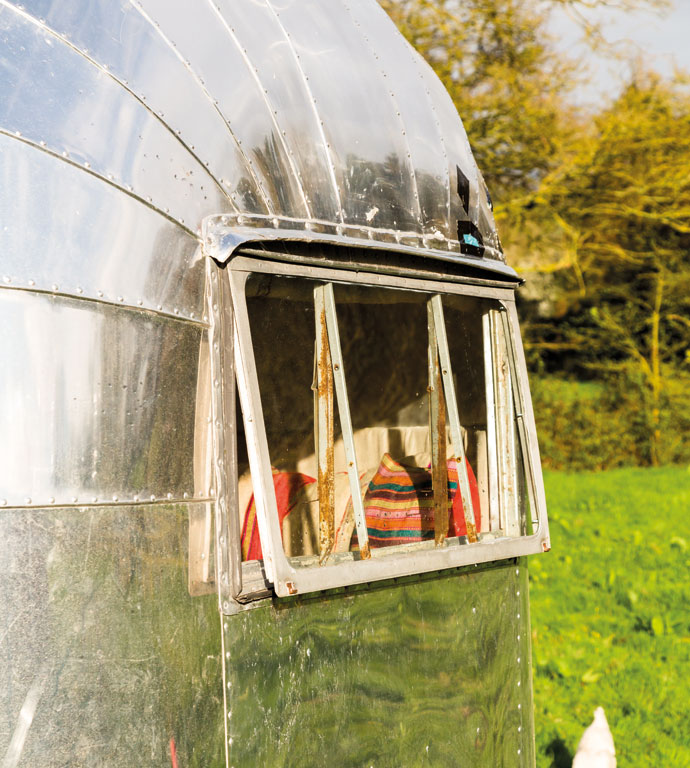
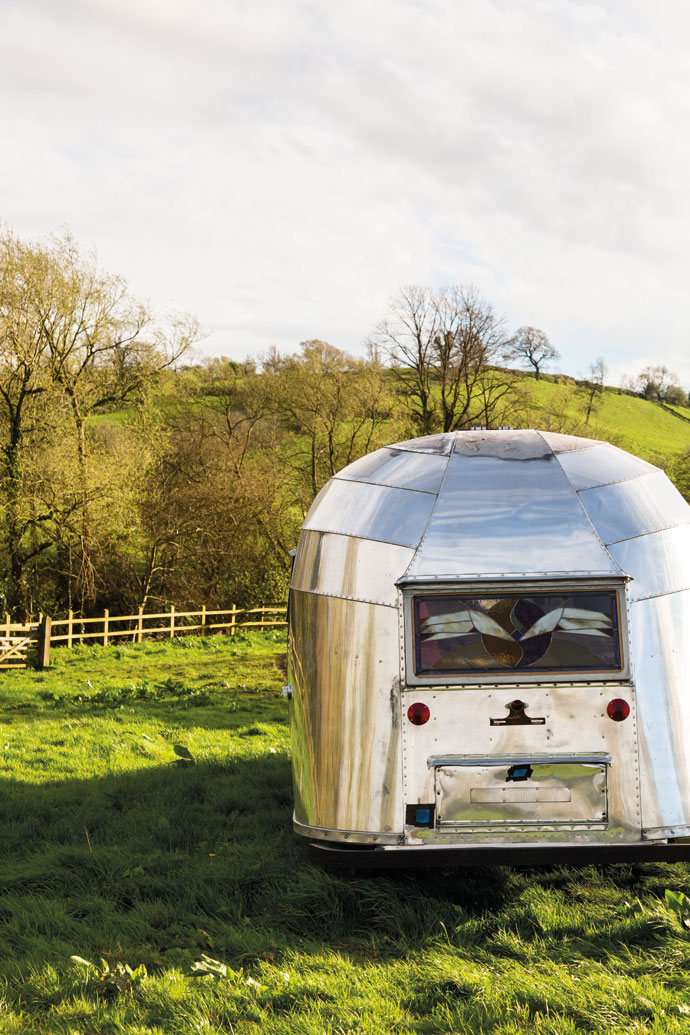
Unfortunately, the Airstream wasn’t quite right for them, but they got talking to the owner and he had another one for sale that ticked all their boxes. This beast, a 1954 Airstream “Sovereign of the Road”, had seen better days and it was a long way from being roadworthy, but the idea of making a home out of it had taken root, and it felt like they were embarking on a real adventure.
THE WORK
The well-worn and battered old Airstream needed some serious work before they could even move it. It had been damaged in an accident and the front quarter section was missing; a new axle was required, together with new brakes and a new tow-hitch; and the chassis needed repairing, too. The man who sold it to them offered his knowledge and experience, and Mark assisted with the work. In addition, they needed professional help to carry out the skilled jobs. Mark describes himself as the lackey, happy to run around and help, source parts and materials, and learn from watching the skilled tradesmen do their jobs.
He took on the challenge of repairing the bodywork himself with help from the seller, who also let Mark carry out this fundamental work in his barn. Repairing the bodywork meant using some identically shaped pieces as templates and cutting the new pieces out of sheet aluminium, learning how to master a rivet gun, and riveting them all into place.
When the structural repairs were complete, they installed a new plywood floor and towed the Airstream back to Somerset. Far from being a terrifying experience, Mark describes that first journey as “amazingly good fun – it was totally empty, so light, and it was a beautiful crystal-clear day. Everyone on the motorway turned their heads.”
The walls were the next item on Mark’s list to receive his attention. The interior aluminium skin that was riveted to the exterior was removed and the old insulation in between the two layers was taken out. Mark re-insulated it with a more modern aluminium-coated bubble wrap material: an ex-NASA product that is lightweight, has good thermal properties and, importantly, doesn’t absorb water, so any water ingress wouldn’t be retained by the material.
All this took three weeks of full-on, full days’ work. Meanwhile, Mark and Charlotte started thinking about the structure and style of the interior. Mark had conflicted feelings. “It was thrilling and exciting to start visualising how the layout might be. There was quite a lot of sitting around, eating lunch in the caravan, imagining the space and being productive, but working on your own like that you lose a lot of motivation and you really have to push yourself.”
THE INTERIOR
The layout of the internal space gradually began to take shape in Mark and Charlotte’s minds. Their next step was to bring in their guitar-maker friend, Nathan, to help with the carpentry. They had decided to re-use and re-purpose as much previously used material as possible. And instead of installing new builtin specific pieces, they wanted to buy older ones and customise them to sit well within the idiosyncratic curves of the Airstream. They looked at online auction sites and made regular trips to their local reclamation yard to source the pieces they needed. They soon accumulated a collection of old items of furniture: a haberdashery unit, fruit and vegetable wooden crates, doors, a bureau, a wood-burning stove, some old glazed tiles… Although they had a layout in mind, they weren’t slaves to it and the actual design was refined to work around the pieces they found. They used to stand in the space to get a sense of what would work and what wouldn’t.
The exterior look of the Airstream was clearly already spoken for in the inherent glamour of the shiny aluminium, riveted panels and curved, industrial, aerodynamic lines. But inside, the couple wanted to impose their own personal style. Through their readings, the wild goose became a talisman for the project, guiding their way and their spirit and carrying them through the project. They batted backwards and forwards between them possible designs for a wild goose stained-glass window to replace the one missing in the front section bedroom area. Five minutes away, they found a local stained-glass artist to create this for them. Apart from the technical skills that she brought to the project, she also helped them decide on the gentle colour palette for the piece.
While Mark was working full-time on the Airstream, Charlotte took over the parenting duties and simultaneously began to acquire textiles and vintage fabrics to use inside the caravan. She set up a sewing workroom at home, so she could work on the project while their daughter was having her afternoon naps. Some 1970s navy-blue floral print needle-cord was re-invented and became a small kitchen cupboard curtain hung from a simple net curtain wire. Some vintage grain sacks were made up into simple roll-up blinds for all the windows. Gearing up towards the end of the build, Charlotte began to hand-mix paint colours to use on the interior and exterior of the re-purposed furniture.
THE LIVING AREA
They built a curved seating area at the back end of the caravan, with a central-legged table which could be lowered to enable the sofa to become a large additional bed space. Mark and Charlotte made the backrest and large linen padded seat cushions that form the U-shaped unit. Some old Peruvian textiles were divided into two and made into long bolster cushions for added comfort. Charlotte had collected some old leather school satchels and small canvas utility-style bags, and these were fixed along the wooden edge of the seating unit to store small items.
Mark had collected old maps of the area where they live – things of beauty, with their cream-coloured fibrous parchment background, old typeface and elegant fine black lines demarcating the ancient field patterns. He used these as his own highly individual interpretation of wallpaper, trimming them to size and sticking them up with wallpaper paste. It’s very engaging to look at exactly where you are on a map, and to imagine how the landscape might have looked and how life must have been many years ago.
The plywood floor was covered in cork tiles with a patchwork of rugs laid on top. An old bureau has been re-used as a working desk, its back legs removed so it can fit snugly over the wheel arches. Its exterior was painted a chalky, matt dove-grey and the interior a rich magenta/fuchsia, both of which were hand-colourmixed by Charlotte.
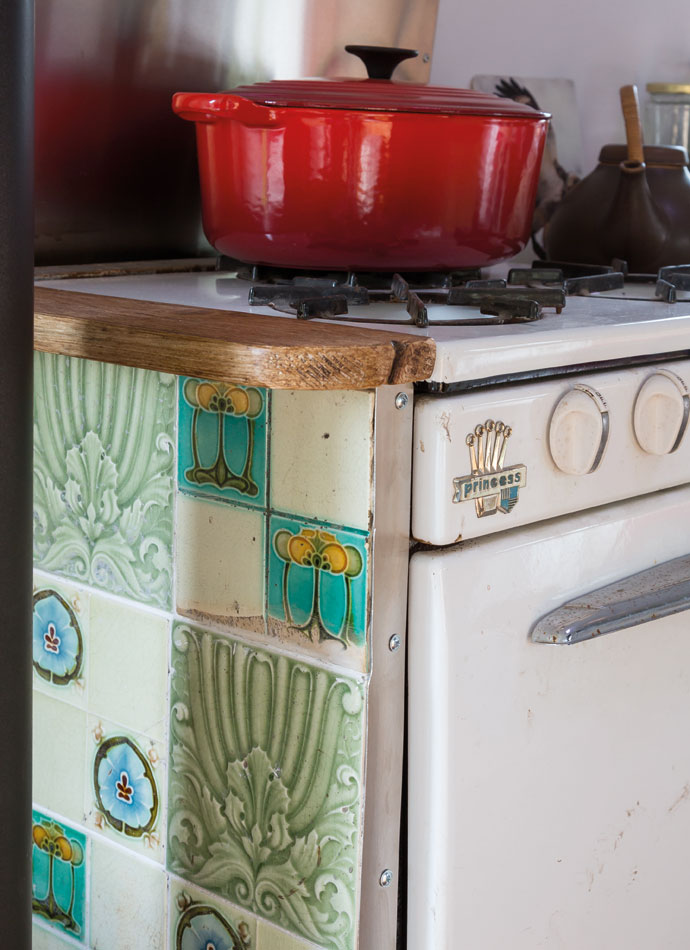
Water is supplied from a tank which is replenished by a hosepipe lead once every week or so, and heated by a gas powered caravan water heater concealed in the box area underneath the sofa. The space is heated by a vintage pale blue highly decorative wood-burning stove, which sits on a slate hearth, and a mixture of old fire-surround tiles from a local reclamation yard were laid as a backplate.
WHERE THEY ARE NOW
The family has moved into the Airstream that is parked in an old apple orchard at the back of a farm where Mark works. At last they have a real home and it has worked out perfectly.
This is an excerpt from George Clarke’s More Amazing Spaces by George Clarke and Jane Field-Lewis (published by Quadrille Publishing, distributed by Pan Macmillan South Africa). For more information about the show, visit channel4.com. The book is available at all leading bookstores.