-

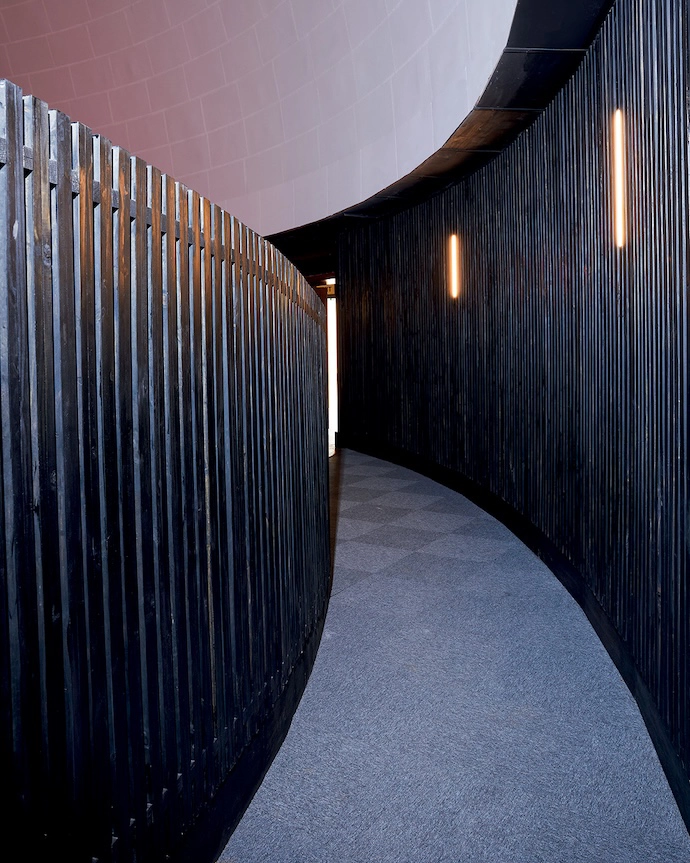
The way into the auditorium features dark wood acoustic panelling. Architect Kate Otten points out that it was stained dark so that it wouldn’t reflect light during projections. -

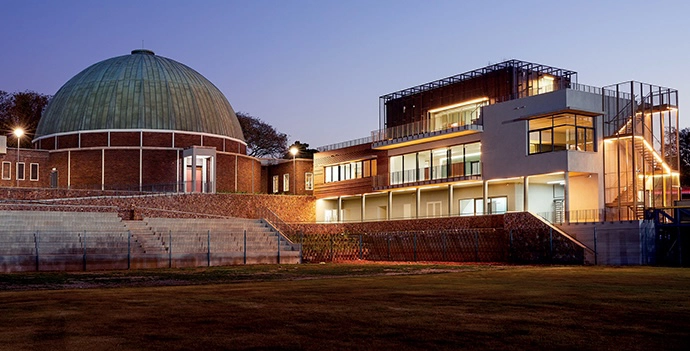
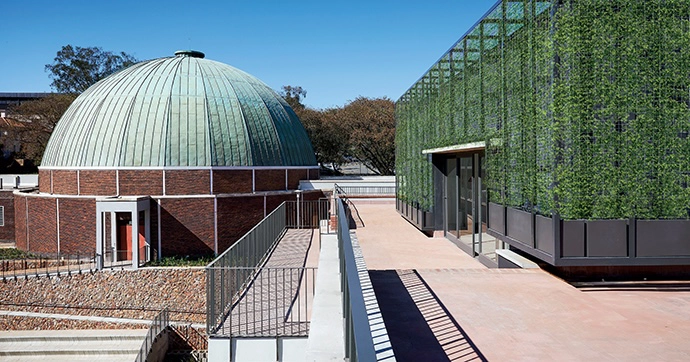
The lift and storerooms on the roof of the extension are covered in a steel mesh box over which creepers will climb, echoing the colour of the copper dome. -

The original building and the new extension complement one another visually, but remain distinct. Seating for the Bidvest Stadium, also part of this project, has been integrated, and is visible in front of the dome. -

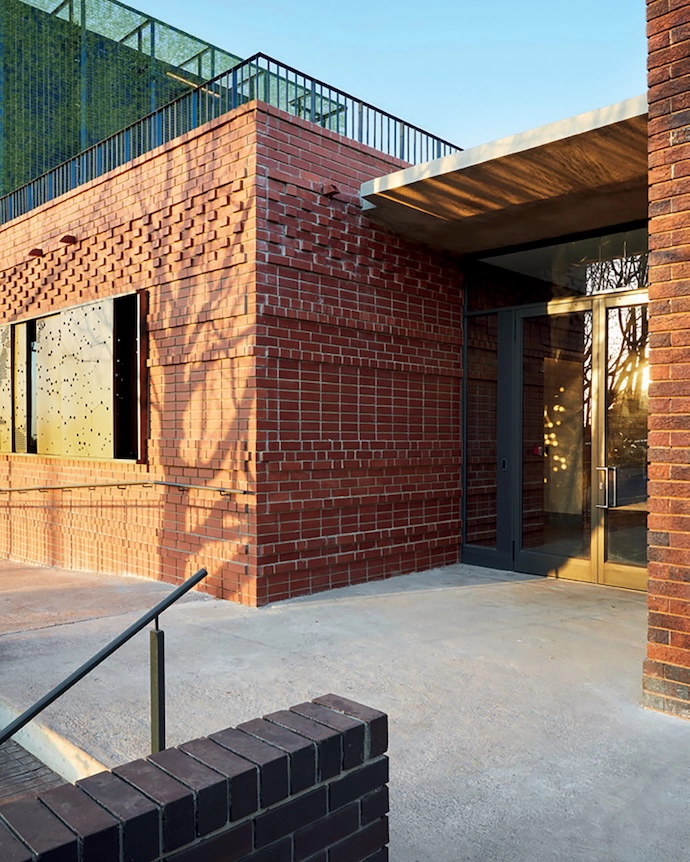
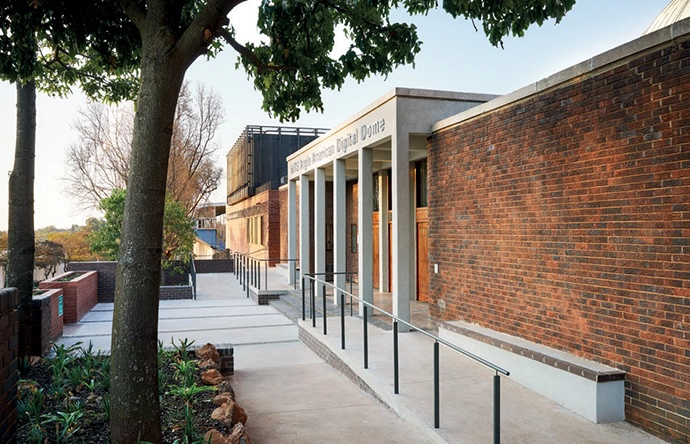
New ramps welcome visitors at the Yale Road entrance. -

A glass door links the original building and the new wing, allowing staff to enter the offi ces and seminar rooms privately, without engaging with visitors to the dome. -

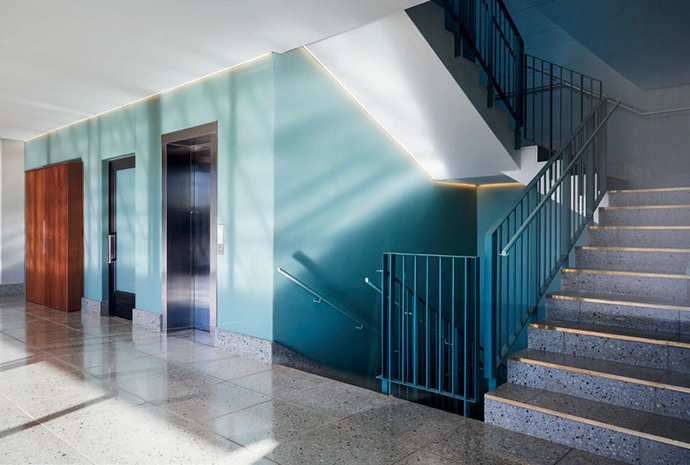
The lobby, with stairs to the roof terrace. -

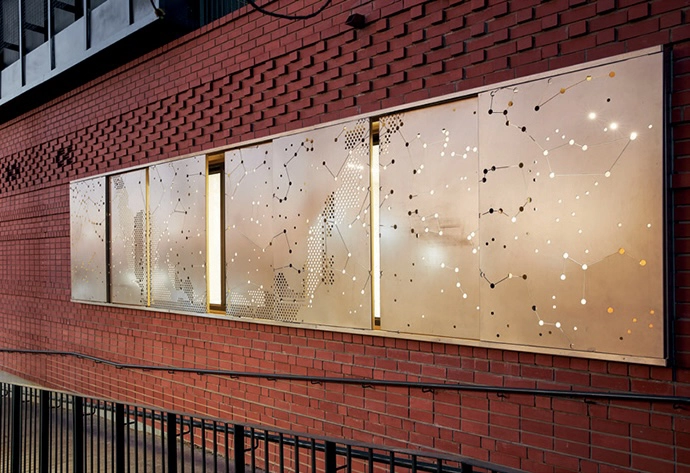
Sliding sun screens are patterned with constellations – a reference to the etchings in the glasswork above the entrance of the original building. -

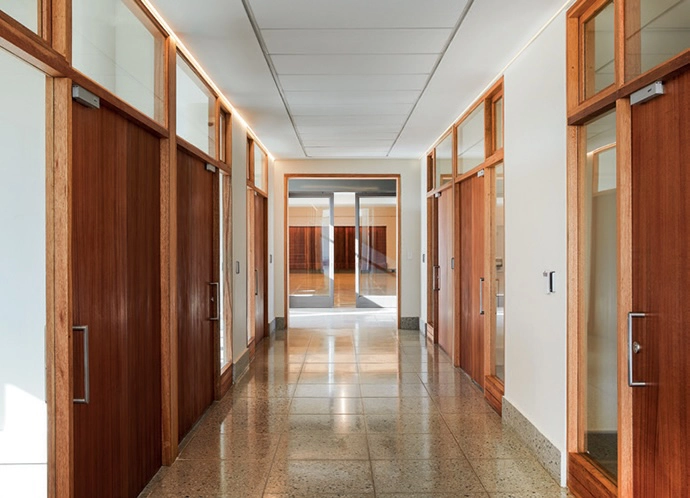
The internal doors and windows of the new offices were chosen to integrate with the existing design language. -

A ramp leads to the dome entrance, ensuring universal access. -

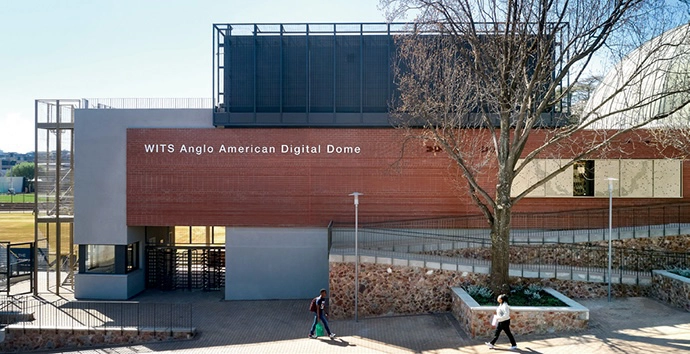
The entrance to the stadium is visible at the bottom left of the new wing. -
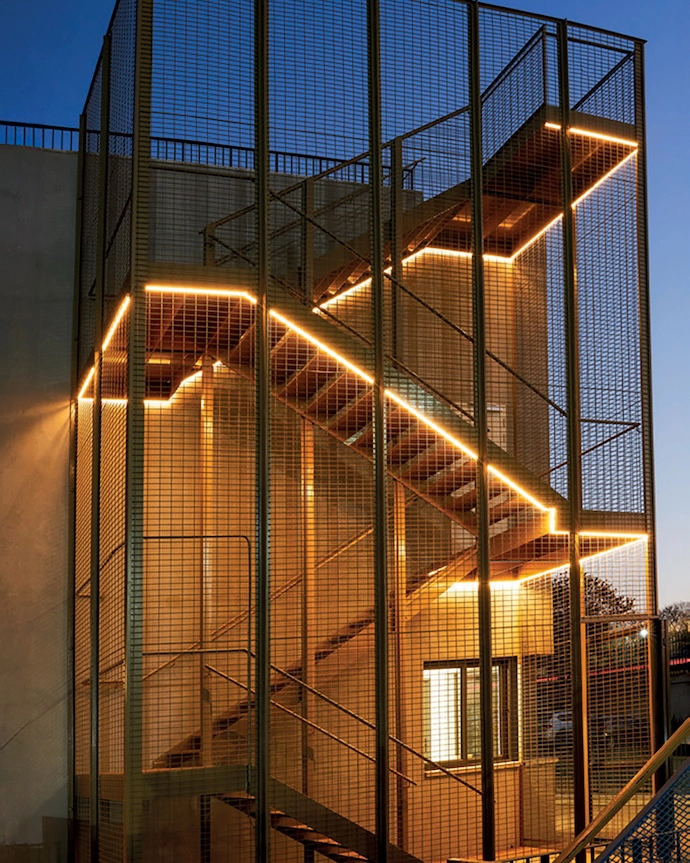
External stairs leading to the roof terrace.
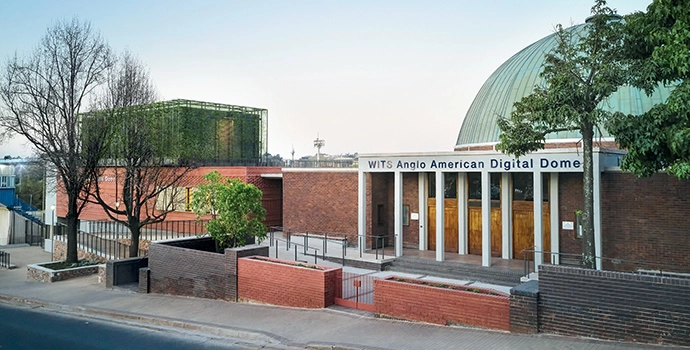
The sensitive renovation of the Wits Anglo American Digital Dome preserves the heritage of an icon while reinventing it for a digital future.
WORDS Graham Wood PHOTOS Elsa Young
The planetarium – now the Wits Anglo American Digital Dome – is a Joburg icon. It was completed in 1960; since then, generations of Joburgers have visited the copper-domed building on the Wits University campus during school trips to the planetarium, and felt “completely transported by this strange, amazing sky”, says architect Kate Otten, principal at Kate Otten Architects, who recently refurbished and extended the building. (The practice has won several awards for its efforts, including the Herbert Prins Colosseum Memorial Award for heritage conservation.)
As Kate points out, the digital dome is one of the university’s most significant public interfaces, alongside WAM, the Origins Centre and, notably, Bidvest Stadium, which is adjacent to the dome.
As part of Wits’s centenary, the university set about transforming the planetarium into a “visualisation laboratory” with new digital projectors, a project that also involved the renovation and expansion of the surrounding complex. The dome is no longer solely dedicated to astronomy; it now serves various faculties, including the arts and medicine. The larger project involved resolving the complex needs of all the stakeholders, and included upgrades to the stadium.
In addition to the “adaptive reuse” of the original planetarium building, a new wing was added. The landscaping around the complex was designed to integrate the building with its surroundings, and support its new functions. As Kate notes, the challenge usually lies in “rescripting” a historic building so it retains its integrity while evolving to serve a new community and purpose. “Heritage,” she says, “is oft en misunderstood.” Rather than just “saving colonial buildings” (as heritage work is frequently mischaracterised), her approach involves maintaining their integrity while adapting them to a new social context. Adaptive reuse is also important from a sustainability point of view.
Restoring the dome
Remarkably, the dome’s original interior screen was intact, and was preserved during the renovation. The addition of a new wing, however, allowed the removal of clutter in the original wings on either side of the dome, which opened up a “beautiful big foyer with an open kitchen”. The “ambulatory” or walk space around the auditorium, previously blocked by storerooms, was also cleared.
“The fundamental difference between the planetarium and a digital dome is how you occupy the space,” says Kate. Originally, the seats were arranged in a radial formation; they are now “directional” to suit digital projections.
Original features such as doors and glass etchings on the fanlights above the entrance were carefully protected, or removed, stored and reinstalled. In keeping with the materials of the time, linoleum floors were reinstated. New ceilings were installed to improve acoustics.
Some aspects of the building’s interior were creatively adapted. For example, the small shop in the foyer was repurposed as a ticket office. Hardwood from another Wits project, The Gatehouse, was salvaged and incorporated into the design, matching the existing timber in the planetarium. Countertops in the open kitchen were crafted from laboratory benches.
Landscaping and accessibility
The landscaping around the new buildings and the adjacent stadium was carefully considered to improve access, circulation and the overall experience. Kate emphasises that the entrance to any public building should be both symbolic and practical. Whether you’re young, old or in a wheelchair, “Everyone should be able to enter equally,” she says. “It is critical that, as architects, we respect the dignity of people who use our buildings.”
To achieve this, two ramps were added alongside the existing steps, which were tidied up using bricks salvaged from walls that had been removed. Additional ramps ensure accessibility all around, as well as to the stadium. These interventions also enhance the building’s architecture, with the twin ramps reinforcing the symmetrical design of the dome.
The new wing
In designing the new wing, Kate was mindful of how it would “integrate with [and] enhance the old structure, rather than undermining it or undoing it”.
She was meticulous about preserving unobstructed views of the copper dome, both from key areas on campus and from the nearby highway. The proportions of the new wing take their cue from the original building and are sensitive to the surrounding campus architecture. “For me, proportion and scale are critical in the making of architecture,” says Kate.
The new wing, while unashamedly contemporary, engages in “conversation” with the old building rather than trying to mimic it. The bricks and Marmoran of the new structure reference the materiality of the original. Laser-cut patterns on metal screens echo the glass etchings of constellations in the original building. A mesh over the lift and storerooms on the roof’s viewing deck, which serves as a stargazing platform and a VIP spectator area for the stadium, is covered in creepers to reflect the verdigris of the dome.
“They talk to each other even though they’re not the same,” says Kate.
Towards the future
Despite the amount of work that has been done, the iconic dome is perfectly preserved and the memories of past generations are respected. Its radical reframing is so subtly integrated that, at times, it is indiscernible – and yet the building has had new life breathed into it. Undoubtedly, the same dome will go on to stand for a kind of wonder in the memories of those to come, but this time more inclusive: heritage transformed. | kateottenarchitects.com
Don’t forget to sign up to our weekly newsletter for the latest architecture and design news.