-

The Azulik Residences - a real estate concept in the Mayan jungle of Tulum, Mexico – are biophilic in aesthetic, but use elemental building materials like wood, stone and aggregate. -

The Azulik Residences - a real estate concept in the Mayan jungle of Tulum, Mexico – are biophilic in aesthetic, but use elemental building materials like wood, stone and aggregate. -

The Marmomac trade show in Verona, Italy focused on advanced approaches to stone design.


Addressing the shortcomings of biophilic design, geophilia is not just about populating a space with pot plants, but rather the intentional incorporation of natural materials and systems into design.
WORDS Chris Reid PHOTOS Ennevi Foto (Marmomac); Supplied
As human, we’re intrinsically wired to enjoy being in nature. Studies show that exposure to greenery, fresh air and daylight has a meaningful effect on both increasing positive feelings and decreasing negative emotions. At a time when life seems continually disconnected from the world around us, the recent rise of biophilia in design was inevitable. Loosely defined as the incorporation of natural elements into the built environment, it’s been seen by many as the go-to solution for our ecological alienation. Except, in so many applications, it isn’t.
Although well intentioned, biophilia has to be one of the most fundamentally misinterpreted design trends of the last decade. Rather than sparking discussions around how to integrate natural materials and systems into design, it has simply become shorthand for putting a potted plant or two in interiors and calling it a day. Which is why it’s heartening to see the rise of its more essential evolution gaining prominence in design – less biophilic and more geophilic.
Common grounding
Rather than focusing on greenery, geophilia is about incorporating the more elemental building blocks of our world: minerals, aggregates, stone. The early signs of this were seen in the trending status of earth-toned colours throughout 2024 and 2025 – terracotta, ochre and all kinds of brown imaginable. The slow arc away from saturated polish and pigment has been a long time coming – but importantly, it’s not a step back to Scandi beige or millennial grey. The impulse behind geophilia is not about being minimal, but about being essential. From this initial, superficial shift in colour, the next step is a focus on minerality and geology in materials themselves.
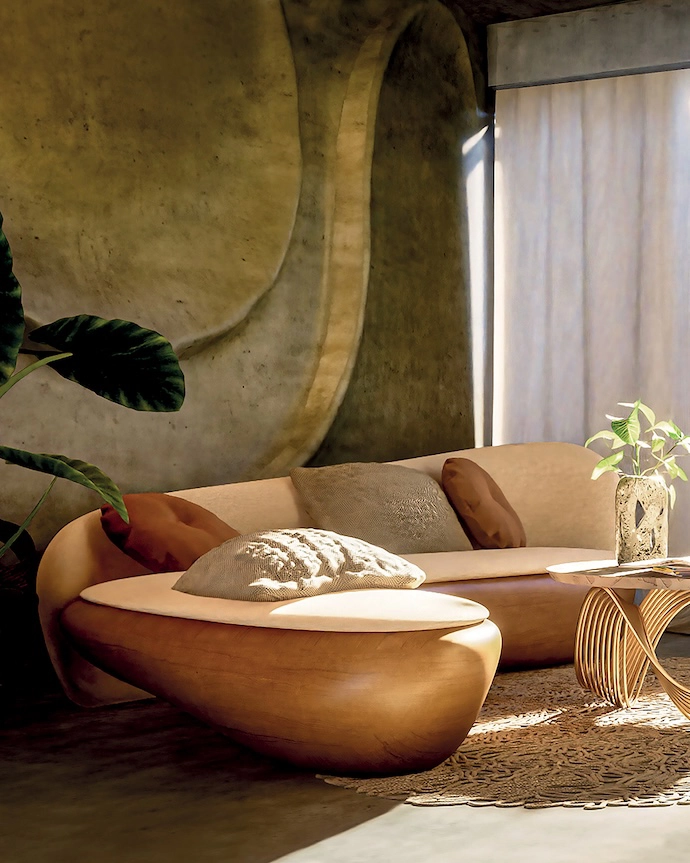
Emotionally, it’s partially a response to our need to stabilise ourselves in an uncertain world. It’s also a sign of the pendulum swinging away from digitally smoothed aesthetics back to something more solid and real. It’s no coincidence that natural, earthy textures oft en show up in the popular “material drenching” trend, which sees entire rooms – walls, floors and ceilings – covered in the same finish. When life feels frantic, we crave spaces that help us exhale. And nothing is more grounding than earth beneath us.
Material difference
Biophilic design may have started with good intentions, but its explosion into the mainstream oft en prioritised aesthetics over impact. A few plants and botanical prints don’t off set synthetic fabrication, fast furniture or excessive consumption. Geophilia, on the other hand, is rooted in realism. In moving from looking natural to being natural, it speaks to materiality rather than superficiality. It requires us to ask what things are made of and where they’re from. Importantly, geophilia isn’t an anti-technology trend in the slightest.
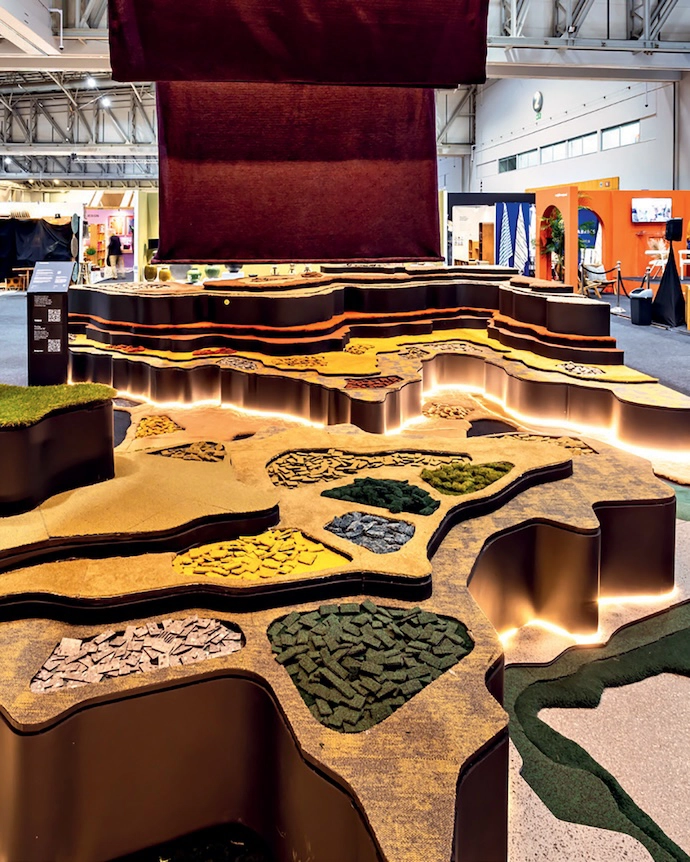
Quite the opposite: it’s driven by material innovation. From carbon-sequestering concrete to aggregates made of reclaimed waste and stone that’s grown rather than quarried, the building blocks of design are being fundamentally rethought to be as responsible as they are elemental. And even when they’re not hi-tech, materials are being treated with a welcome, uncompromising honesty.
Evolving tastes
Like any ecosystem, design thrives on variety, with trends cross- pollinating and evolving in unexpected ways. Geophilia might share space with maximalist flash or Y2K nostalgia, but it speaks a different language – one of permanence, substance and honesty.
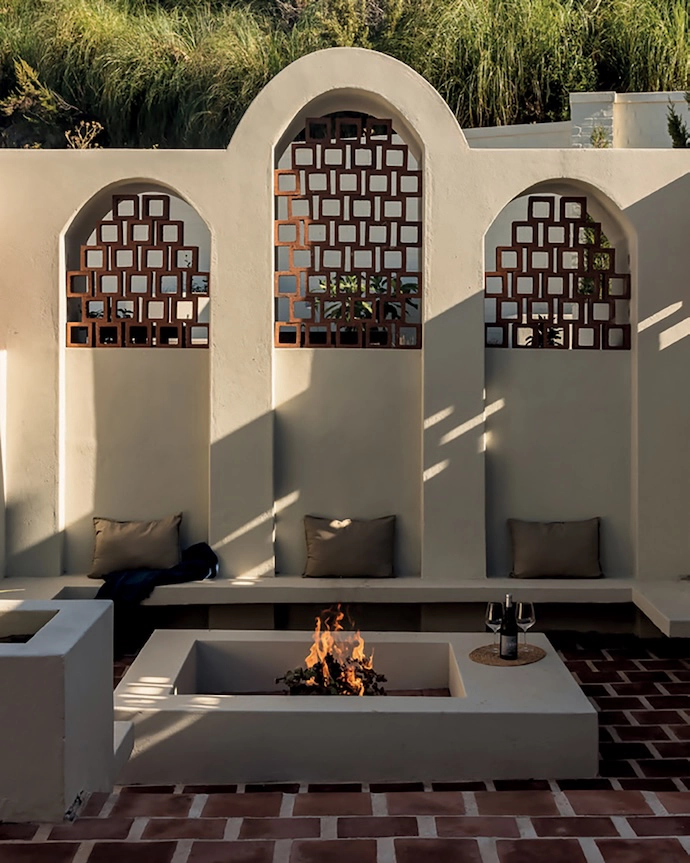
It’s less about chasing a moment than shaping a future that feels grounded, stable and real. In a world hooked on the next big thing, it’s about choosing what endures – materials that ground us, forms that steady us, and decisions that will still matter in decades to come.
Don’t forget to sign up to our weekly newsletter for the latest architecture and design news.