-

The power of imagination -

The power of imagination -
The power of imagination -
The power of imagination -
The power of imagination -
The power of imagination -
The power of imagination -
The power of imagination
PHOTOS: Ryno | PRODUCTION: Sumien Brink | WORDS: Elna van der Merwe
Ogilvy’s head office in Woodstock places no boundaries on creativity.
“Encourage imagination. Change is our lifeblood, stagnation our death knell.” David Ogilvy’s words loom large in the foyer of advertising agency Ogilvy’s building in Woodstock.
To create a building for a company that makes a living from creativity is no easy task – trying to be too clever could have somewhat twee results. “Absolutely,” confirms Aidan Hart of InHouse Brand Architects.
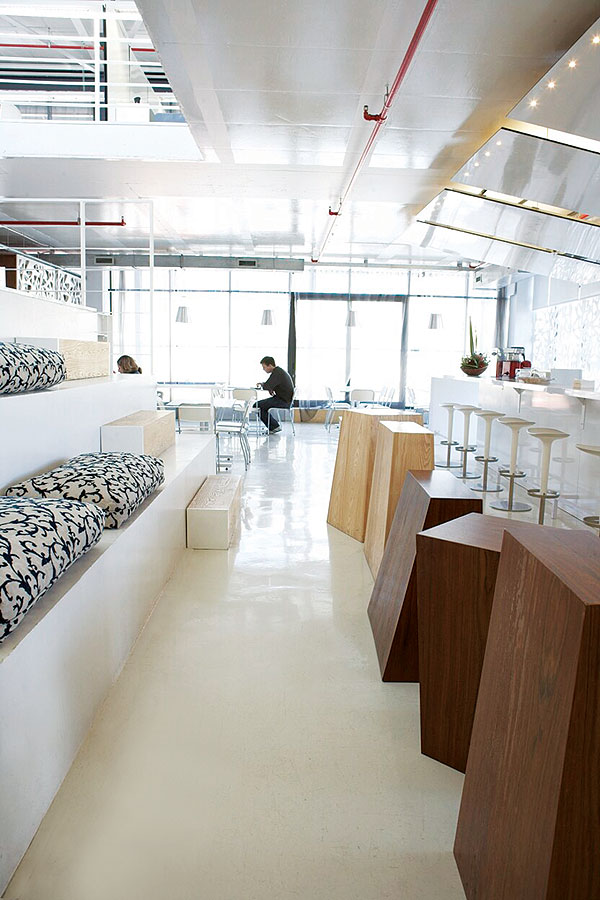
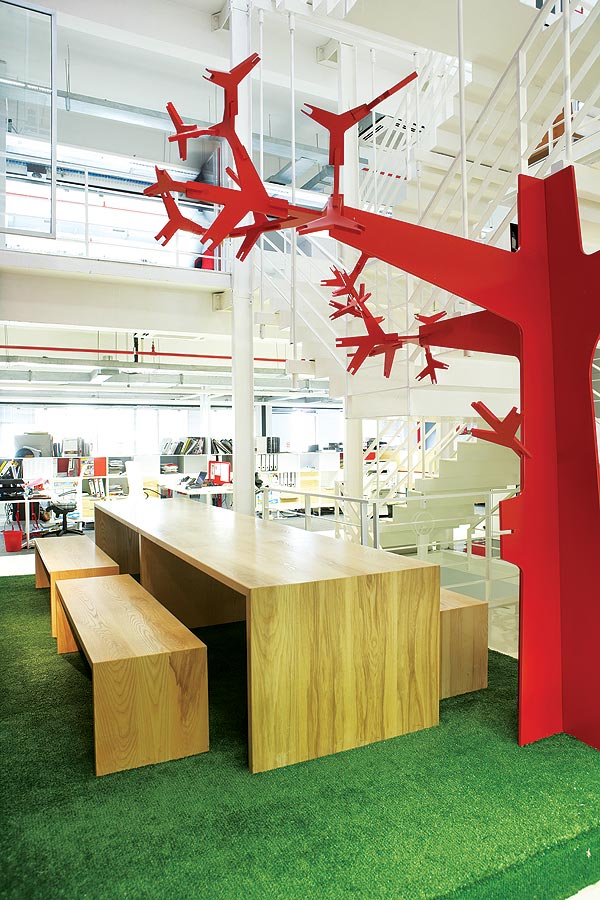
“And it also ages quickly. Ogilvy’s brief gave us a lot of freedom. They wanted an environment that would reflect their business but one that wouldn’t date. An extremely creative space can easily become cheesy, which is why we opted for a neutral canvas for their daily tasks. We were given an empty shell and had great fun filling it.”
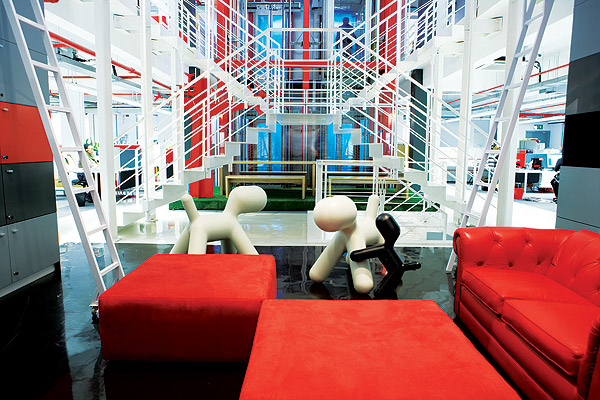
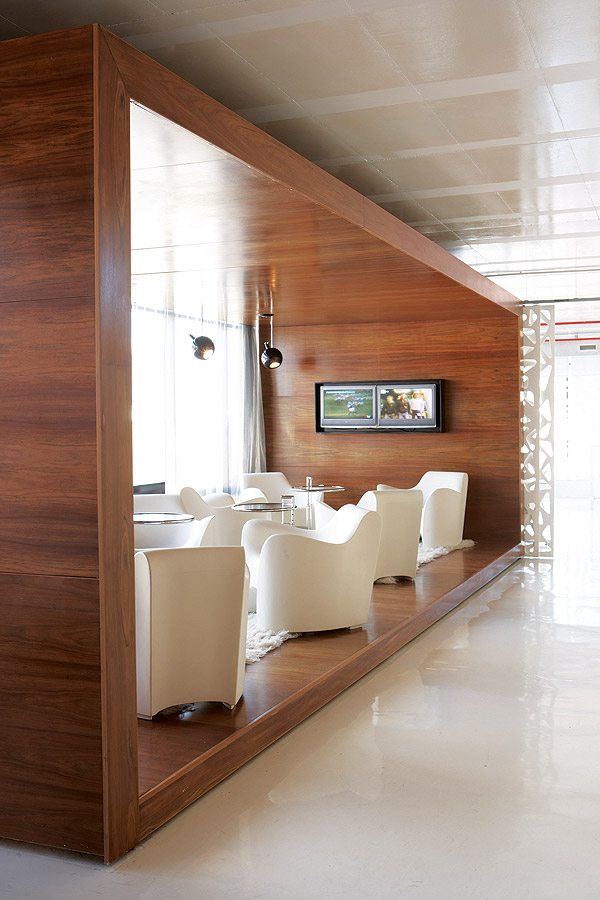
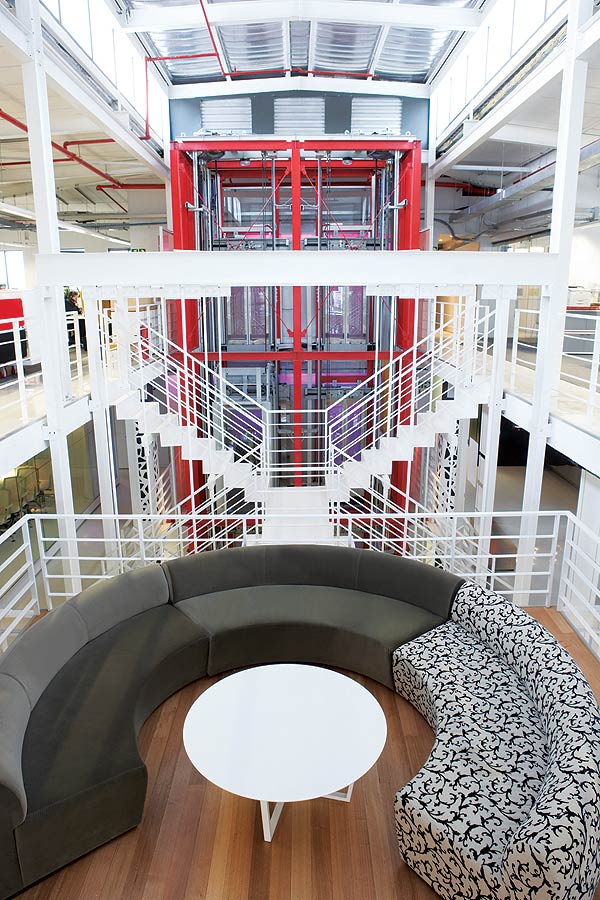
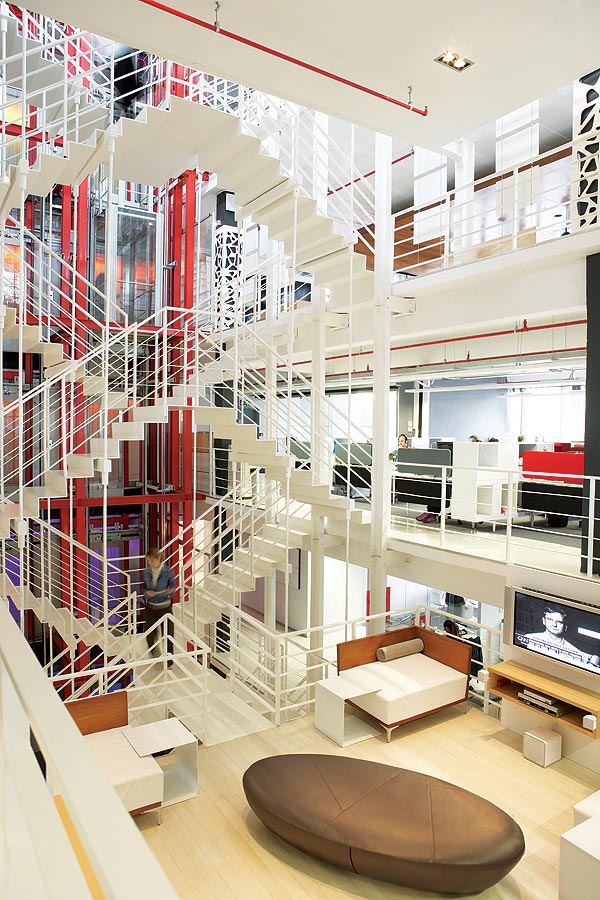
You know these offices are something extraordinary from the moment you walk into reception – on the fifth floor, no less. A glass lift takes you up to a massive open space that overlooks all five stories of open atrium in the centre. But you’re not only looking down at work stations, you’re also looking at the interspersed lounges that are used for meetings, or simply for staff to have a rest.
The reception desk – a massive pencil clad in polished stainless steel – came from the previous Ogilvy building where it had been painted in the company’s signature red. A crane was used to raise this attractive feature up to the fifth floor, but only after some windows had first been removed.
“One of the most important considerations in planning this office was communication. There had to be a sense of transparency – people had to be able to talk to one another and walk to one another with great ease,” explains Aidan.
Challenge to create inter communication
Two important design elements made this possible: the staircase and the glass doors.
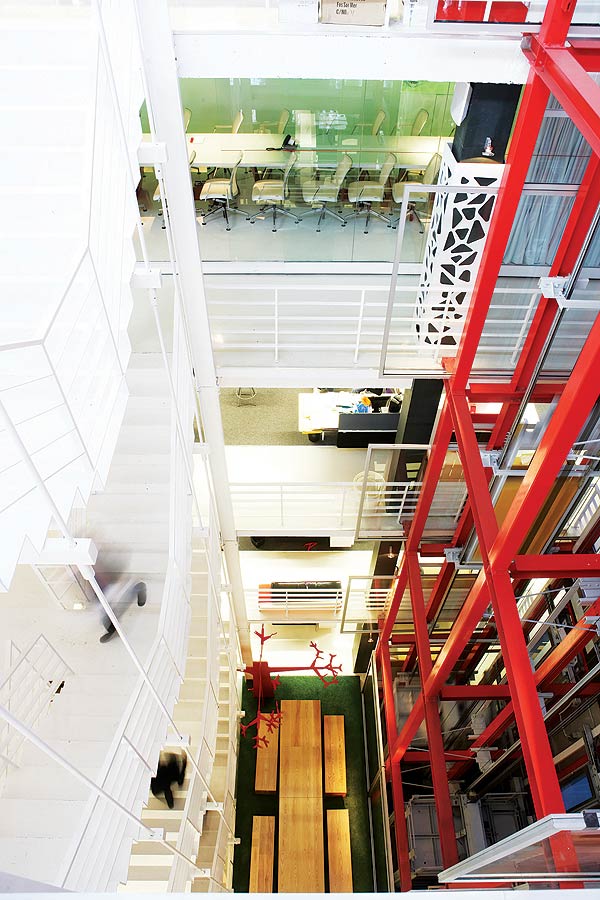
“The biggest challenge of this project was to create inter communication,” says Aidan. That’s how the idea of the staircase came about. As Aidan says, “I like teasing the mind.” He refers to how the staircase tricks the eye by creating the impression that it can’t possibly carry your weight. “Even the company that made the staircase told me it wouldn’t work.”
But, work it does. This staircase – ten tons of plated steel welded into a floating illusion – is more used, and more loved, than the lift. The lattice beams serve as handrails and, in places, the staircase gives the appearance of saddlebags bolted to the building’s sides.
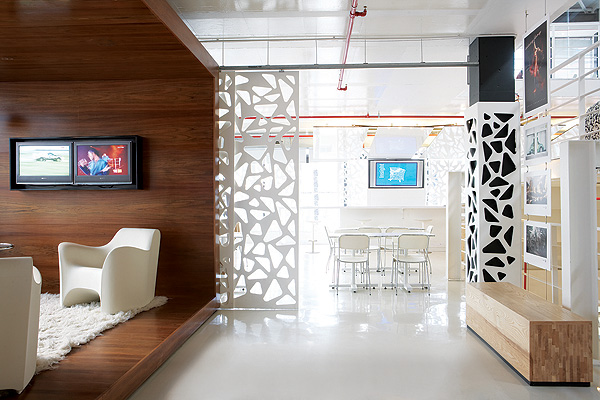
Then there are the glass doors. “I was so tired of the same old standard glass sliding doors that everyone uses these days. There had to be something better,” says Aidan. So he designed them himself. (InHouse custom-designed almost everything – from the desk lamps to the desks themselves).
“The front wall of an office is seldom attractive and one loses a lot of space with the traditional swinging door. So we used frameless glass walls with sliding doors. “It’s hard to believe, but this turned out to be no more expensive than the dry walls more commonly used in offices. The glass also suggests the transparency of the company and nobody is hidden away in dark cubicles.”
Metres and metres of soft organza take the place of the usual blinds. The fabric is easier to keep clean and also doesn’t obscure the view of Table Mountain and the surrounding city. Besides, unevenly closed blinds would have spoilt the look of the building from the outside.
Inspirational developments
The facade was also carefully scrutinised by the architects, as the original Russel House needed to “Remain within its period,” according to Grant Arendse and Valerie Lambrechts of DHK Architects. “So we used a strip of windows in typical Woodstock language. The finishing touch is the outside walls decked in Marmorino – a textured plaster that is not as coarse as other plasters and also doesn’t get dirty as quickly.”
The Ogilvy building forms part of The District, a new creative precinct in Woodstock developed by Berman Bros and Gateway Property Developments.
“The District will eventually comprise four office blocks with a central courtyard,” says Valerie. “Ogilvy’s offices developed from the old structure. The first two storeys create a visually solid base as they consist of brickwork punctuated by windows. The remaining storeys consist of glass and steel, which does justice to the breathtaking views over mountain, city and harbour.”
Woodstock and the adjoining District Six were known as the home of Bohemian artists in their heyday but the area went into decline during the apartheid era. However, in recent years, several inspirational developments such as the Neighbour Goods Market, and now the completion of the new Ogilvy offices, have seen an injection of a new creative energy into the area.
It’s easy to imagine that this energy will spill over to the rest of the neighbourhood, helping to transform Woodstock and surrounds into a hotbed of ideas and dreams once more.
• InHouse Brand Architects: 021 488 2400
• DHK Architects: 021 421 6803