-

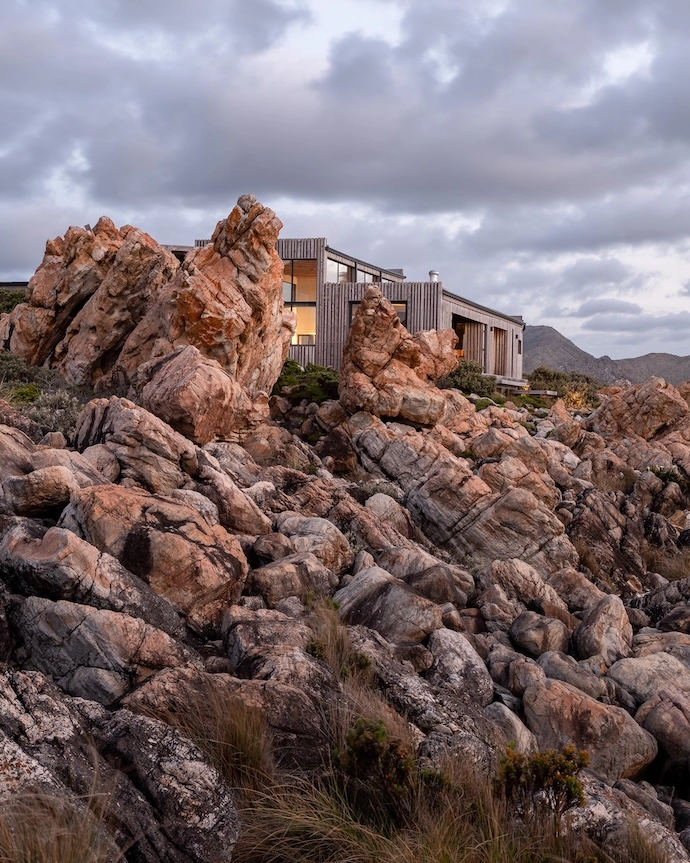
Situated on the water’s edge, this contemporary sea cabin is so remote that its owner had to build an access road with stones quarried from the surrounds. -

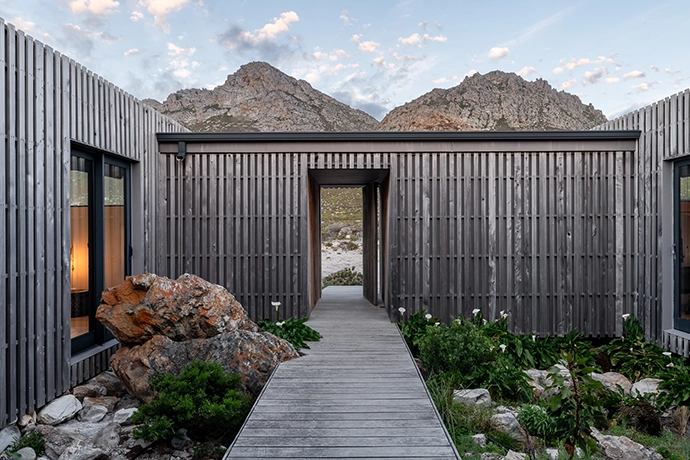
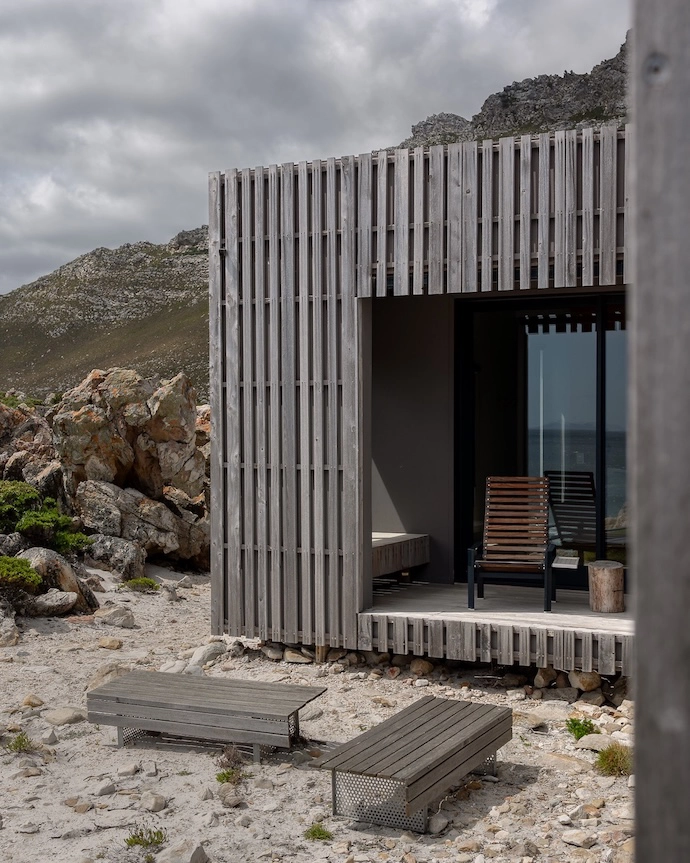
Designed to recede into its surroundings, the residence is clad in locally sourced cypress wood, which has naturally weathered to grey. To allow for the free movement of wildlife, the house is anchored to the rocks with elevated point loads. -
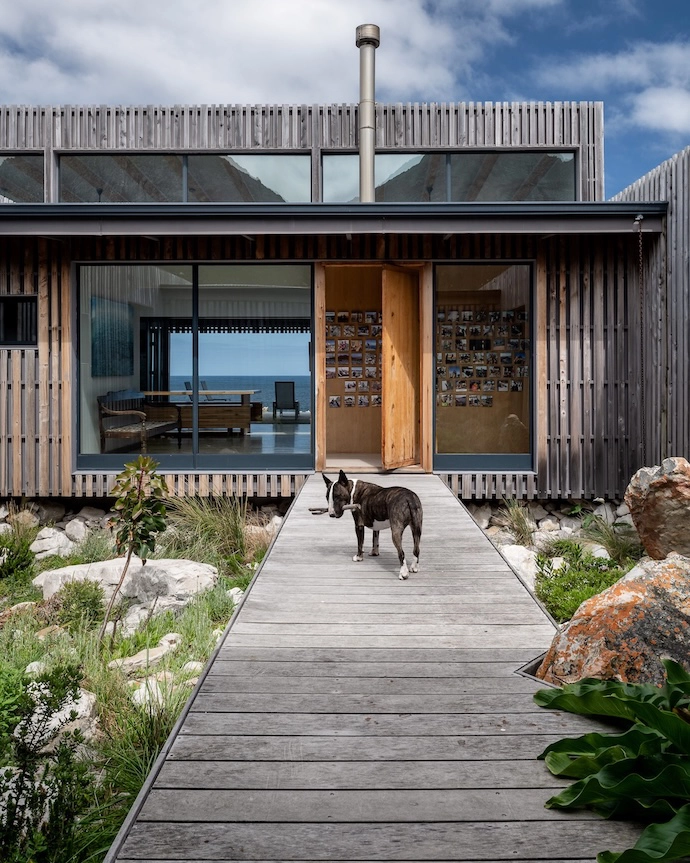
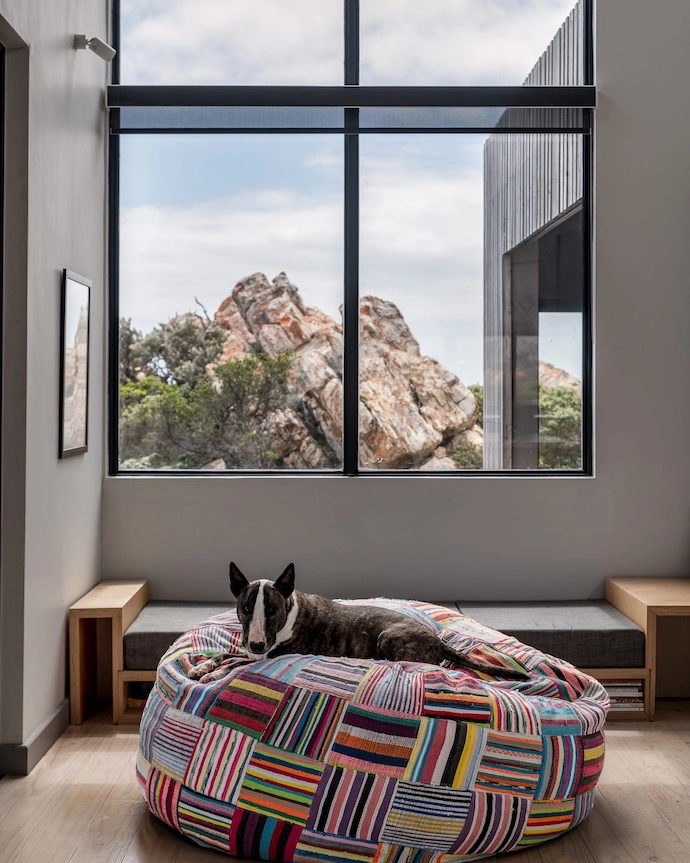
Filled with naturally growing indigenous flora of the eco-reserve, the courtyard offers resident bullterrier Soetlief a windless retreat, come rain or shine. -
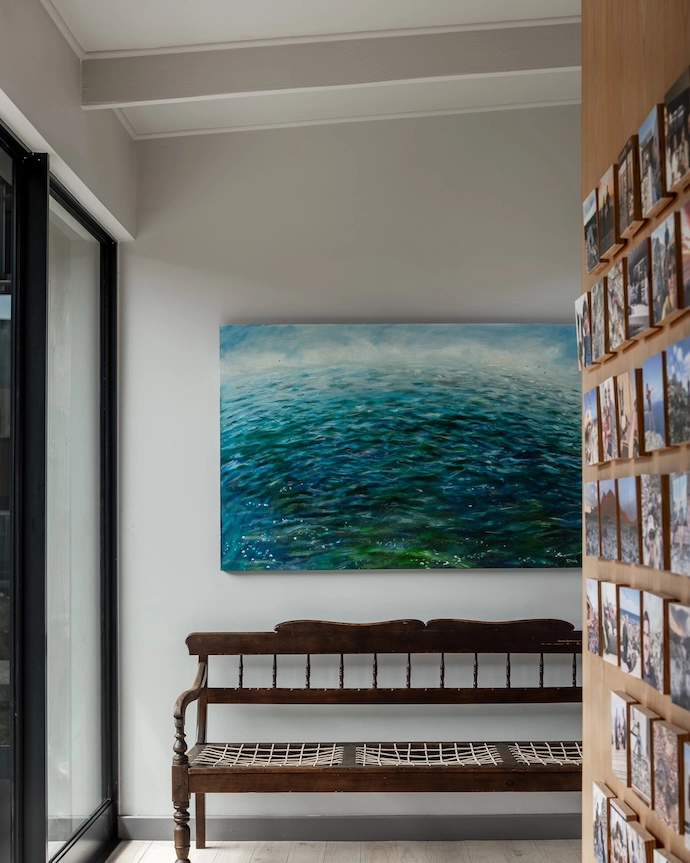
The entrance lobby, a windless retreat, come rain or shine; the entrance lobby, featuring a family photo wall, riempiesbank heirloom, and painting by Isabelle Webb. -
Flanked on either side by bedrooms, the entrance to the house houses wine racks and bookshelves. -
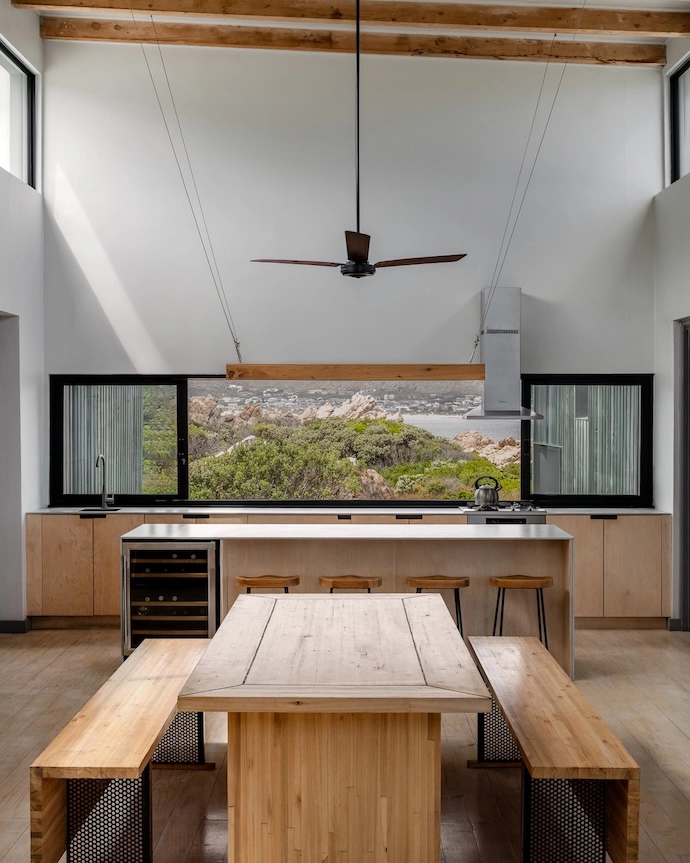
The owner designed the uncluttered interior, which is characterised by wood accents such as the cabinetry, and a dining table built by her father. -
The house is situated on a smallholding in the Kogelberg Biosphere, and has been visited by dassies, mongooses, otters and snakes. -
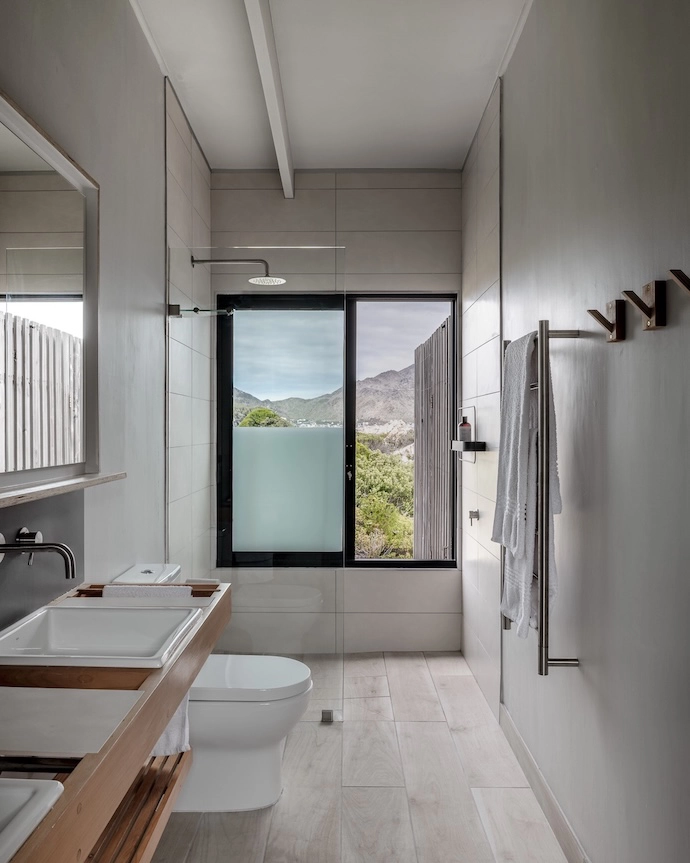
The bathroom (with a view!) features a double vanity designed by the owner. -
One of the bedrooms has its own veranda and private sea view; a built-in bench seat - another of the owner’s designs - offers storage and a reading nook. -
Pringle Bay Cabin -
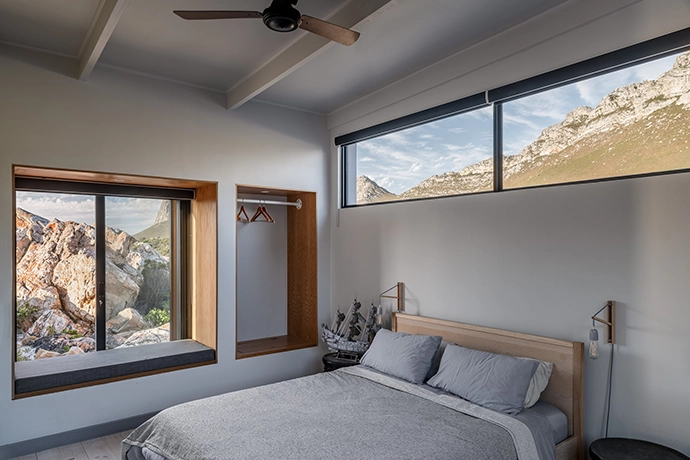
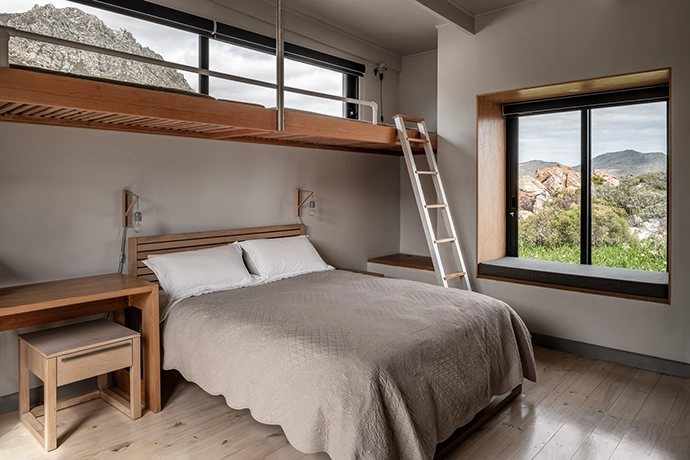
Featuring an open wall-recessed cupboard designed by the owner, this bedroom with its mountain views, and another, with sea views, is connected to a shared bathroom. -
The “family” bedroom boasts bunk beds for the kids, as well as a desk and built-in storage. -
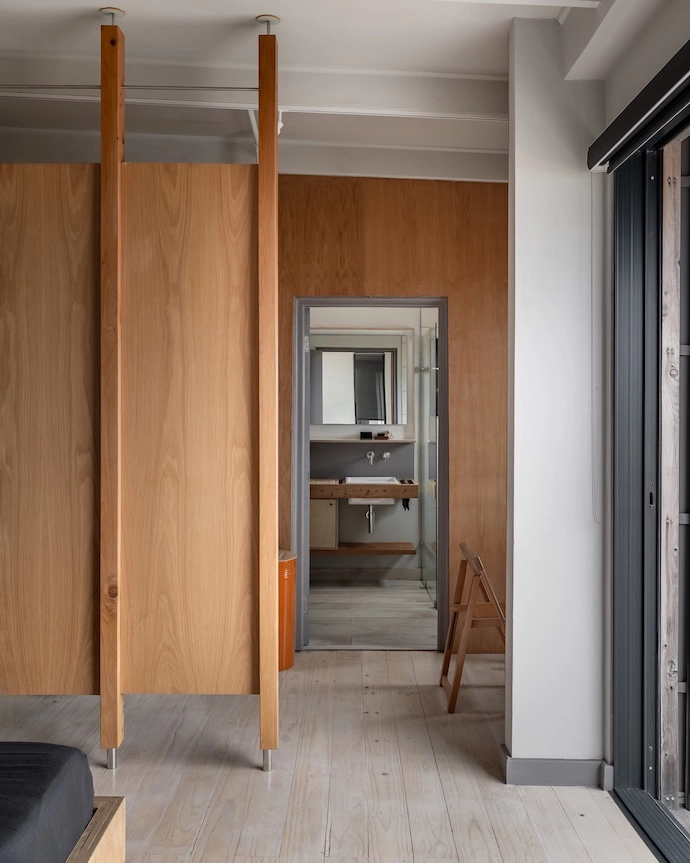
Designed by the owner and built by her father, a wooden partition demarcates space for a home office in the en suite bedroom. -
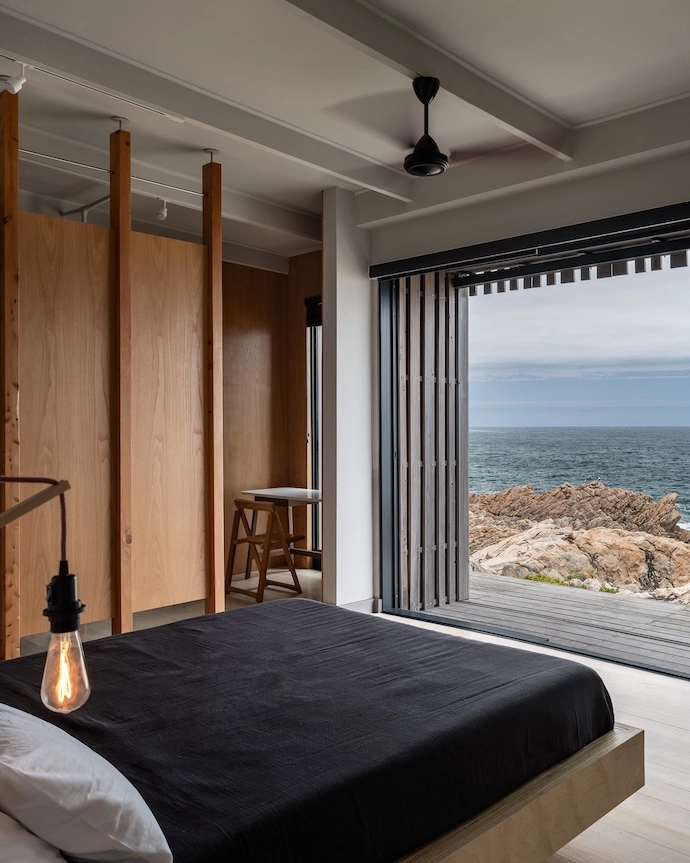
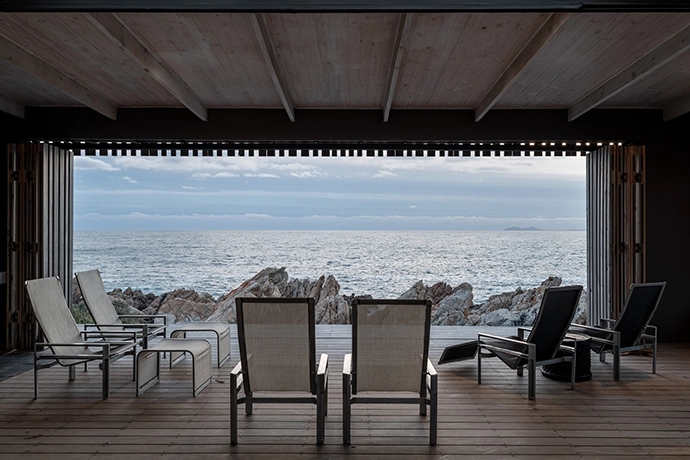
The main bedroom overlooks the ocean and, like the rest of the house, can be shuttered to protect against the elements.
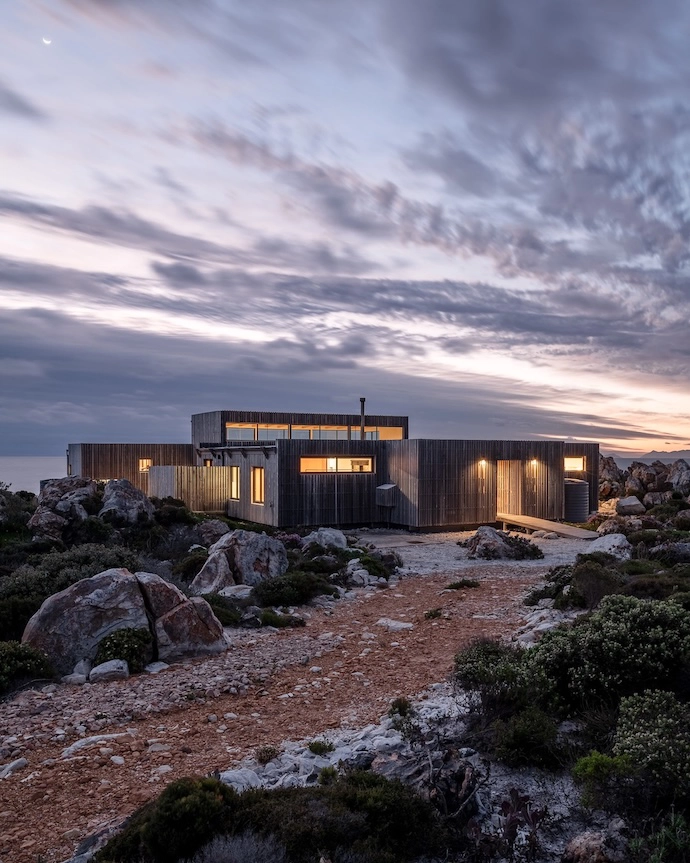
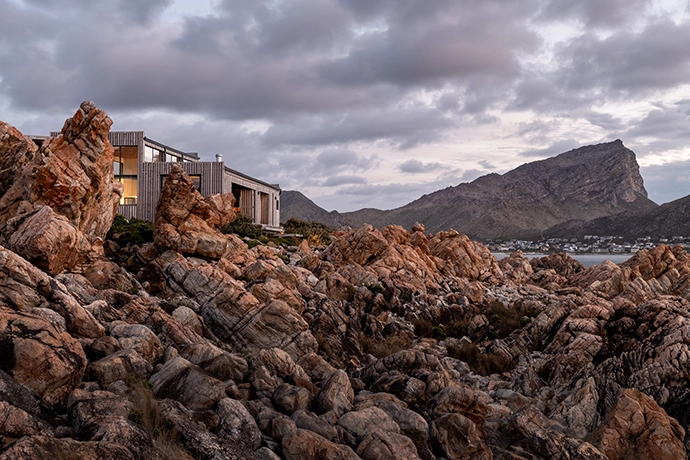
On a stretch of pristine coastline between Pringle Bay and Rooi-Els in the Western Cape, one determined homeowner realised her vision: a sea cabin built close to the roaring ocean.
WORDS Annette Klinger PHOTOS Paris Brummer
It’s safe to say that most of us want our own slice of paradise. What that slice looks like, however, is up to the individual. For one single-minded woman, the ideal spot was beside the ocean – on the rocks, next to the high-water-level mark, above a 20-metre drop into its swells, to be specific. “The site is on a smallholding in the Kogelberg Biosphere between Pringle Bay and Rooi-Els, and required extensive environmental impact assessment,” says the owner. “We finally got permission to build on two sites, so I took my folks and brother on a walk to decide on one of them. It was spring tide, and the waves were crashing spectacularly against this specific rock in the ocean, and we said, ‘Clearly, this is it!’”
A design graduate, the owner had a clear vision of what she did and didn’t want from a residence. “I wanted something that felt like a cabin, not something fancy with glass and marble,” she says. “The house needed to accommodate me, and my brother and his family, and we wanted to be able to close it off into private areas with their own entrances.”
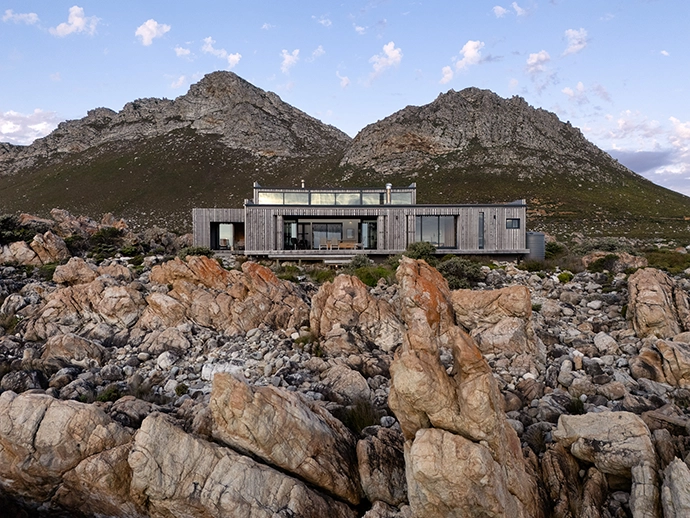
Taking the specifications on board, architects Matthew Beatty and Saskia Vermeiren of Beatty Vermeiren drew up plans that were practical but sensitive to the pristine surrounds. “The key was to design something robust enough to withstand being that close to the ocean, yet lightweight, because casting concrete wasn’t permitted for environmental reasons,” says Matthew. “We decided on timber, which would weather and let the house blend into the environment, and a rectilinear design that was close to the landscape,” adds Saskia. As no foundations could be poured, the house is anchored with elevated point loads, which also allows wildlife to go about their business undisturbed under the building. “The whole idea was to touch the earth lightly.”
In terms of flow, the floor plan is oriented around a large boulder, with two private wings on either side of it and a large open-plan living area beyond, which opens up to that ocean view. “We essentially created two spaces: the sort-of Zen, rocky courtyard that’s sheltered from the wind; and the front of the house, which is more ocean-dramatic,” says Saskia. With 360 degrees of gorgeous views, the obvious temptation would be loads of floor-to-ceiling windows, but the architects instead carefully curated window placement to create a space geared towards calm contemplation. “That way, the view becomes an artwork,” says Matthew. “When you frame something, you emphasise it more than if you were to walk into a sheer glass space.”
Beyond its site, one of the most remarkable aspects of the house is that the owner oversaw the building process herself. “I like to have a certain level of control – and I also have a budget that’s never quite as big as the architects would hope!” she says. When it came to the wood cladding, for example, the owner’s ingenuity led her to a local contractor tasked with removing invasive cypress wood, which she then had cut to size at a local sawmill. She also did the interior design herself. “I wanted an interior that wasn’t too cluttered, and that used a lot of wood,” she says. “My father used to have a furniture manufacturing business; I designed most things, and he made them. Often, what I wanted didn’t exist – which is how I ended up designing all the basins…”
So what does it actually feel like to live in an oceanside wood cabin, at the mercy of the elements? “I love the quiet isolation – far removed from the maddening crowd,” says the owner. “Because it’s built on stilts, when the waves crash on the rocks, the whole structure shakes. It was initially rather scary, until I realised that the house is not going anywhere. In 2020, there was an incredible storm, and Clarence Drive was shut for a long time. After the house survived that, I thought, we’re definitely going to be okay!” | beattyvermeiren.com
Don’t forget to sign up to our weekly newsletter for the latest architecture and design news.