-

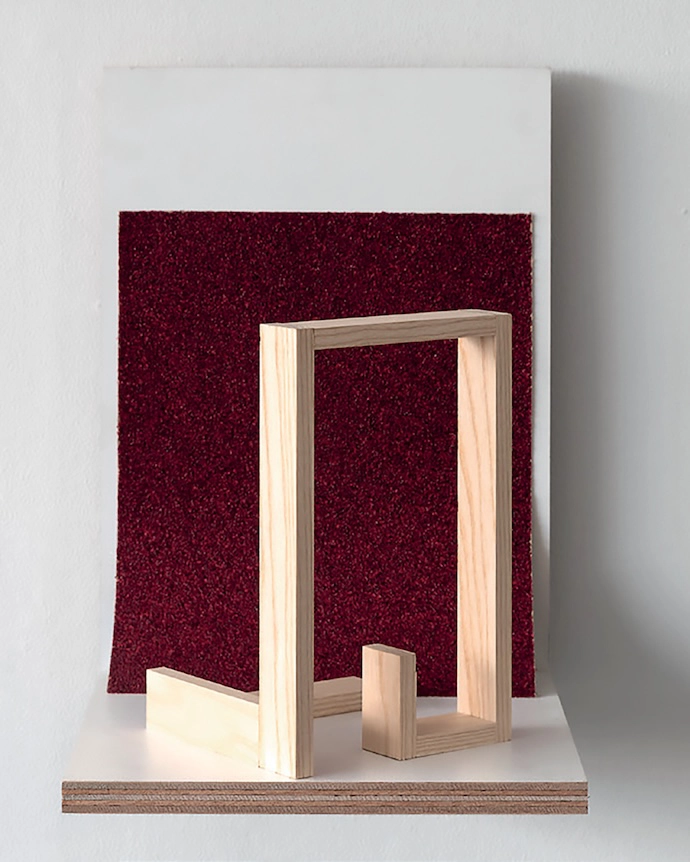
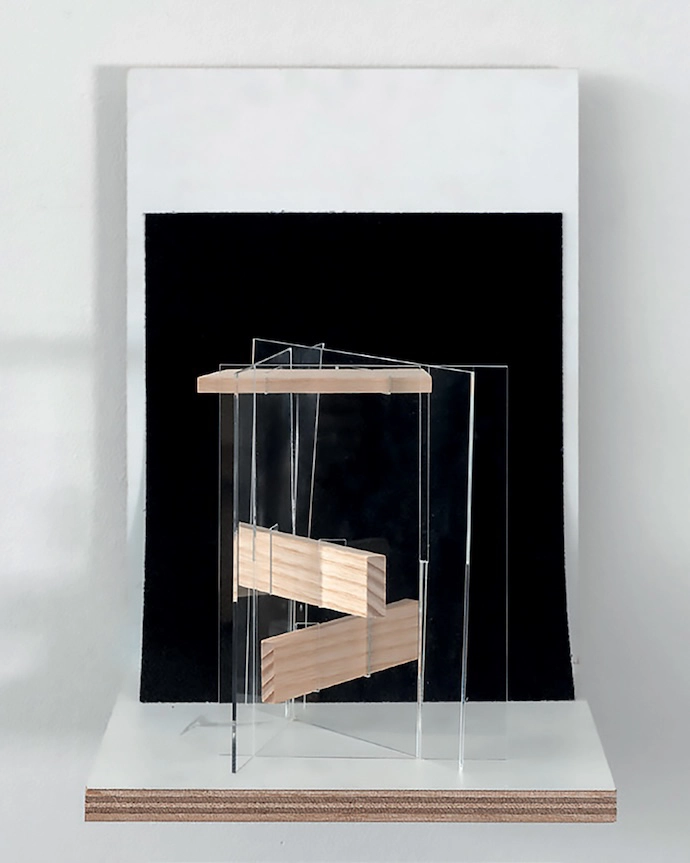
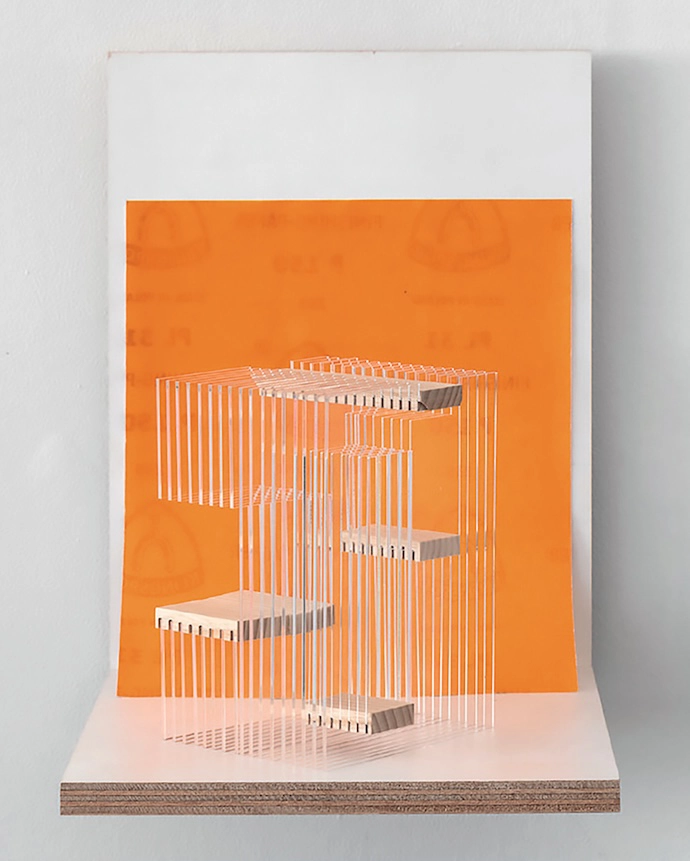
Maquette for Attempt 4 from “Five Attempts at Getting it Right”. -

Maquette for Attempt 3 from “Five Attempts at Getting it Right” -
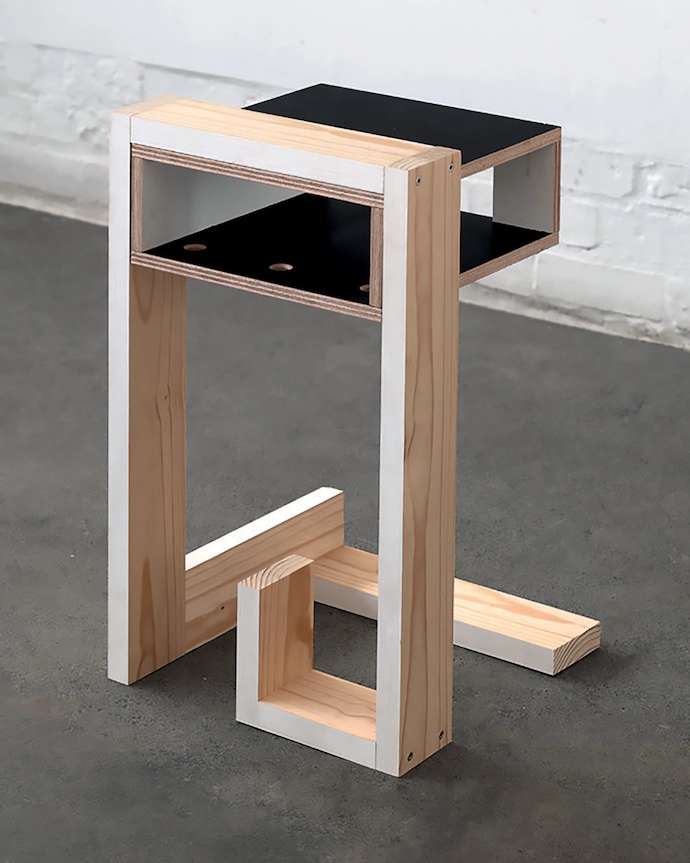
Attempt 4 from “Five Attempts at Getting it Right”. -

Maquette for Attempt 5 from “Five Attempts at Getting it Right”. -
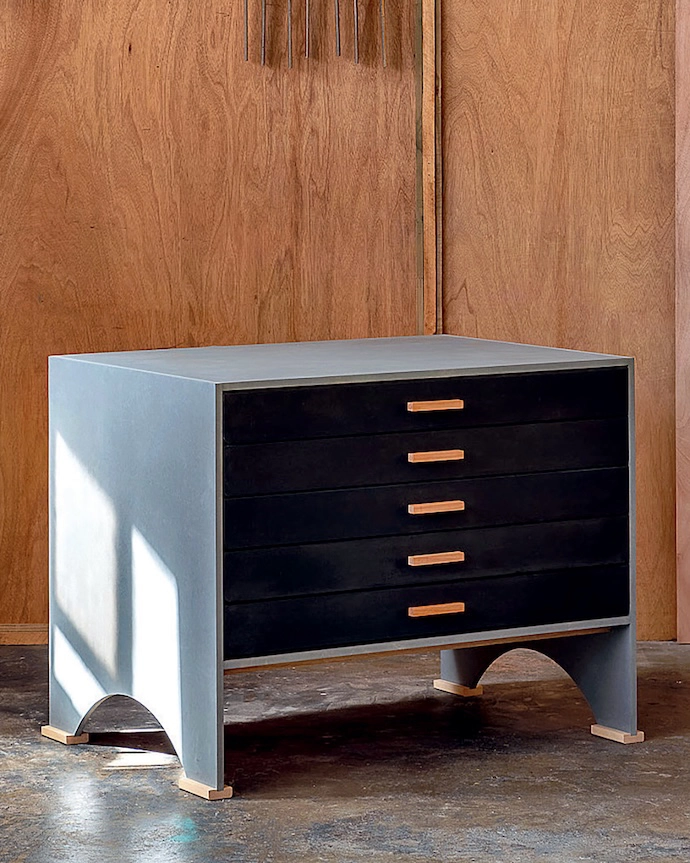
Duo-tone Print cabinet in Valchromat.
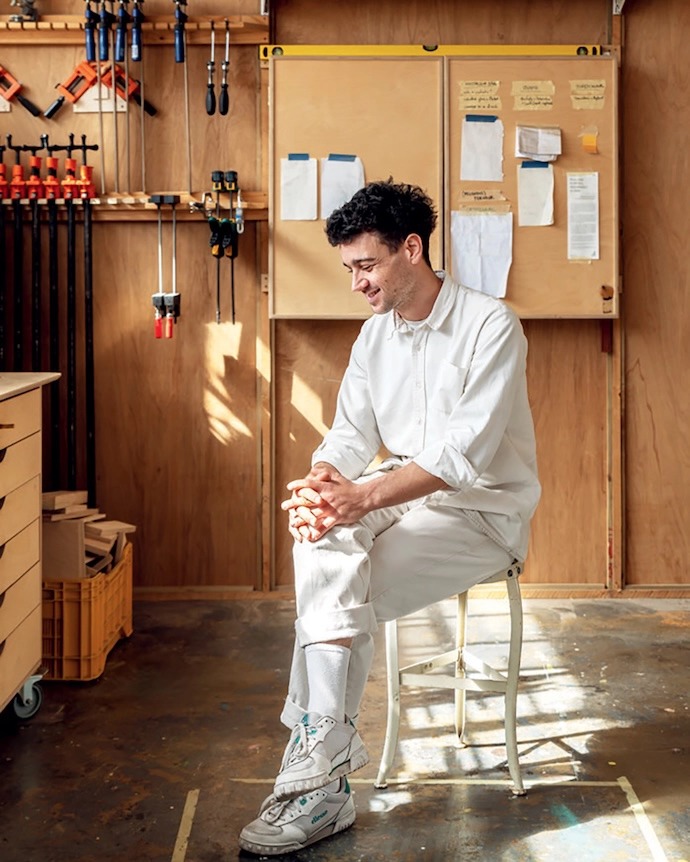
Ex Hotel has no concierge, no room service and nowhere to check in. Gabriel Hope has spent years constructing an imagined address where furniture, interiors and entire environments occupy the same curious universe.
WORDS Lynette Botha PHOTOS Paris Brummer
“First of all, there is no hotel.”
This is usually the number-one thing Gabriel Hope feels obliged to explain when introducing Ex Hotel, the fictional establishment that has become the framework for his increasingly distinctive design practice. Yet, while the rooms exist only in the imagination, the objects within them are very real. “The story I used to tell is that I needed a place for my ideas to live, and so I gave them a hotel to live in,” he says. “What has changed, I realise, is that the hotel has become the idea.”
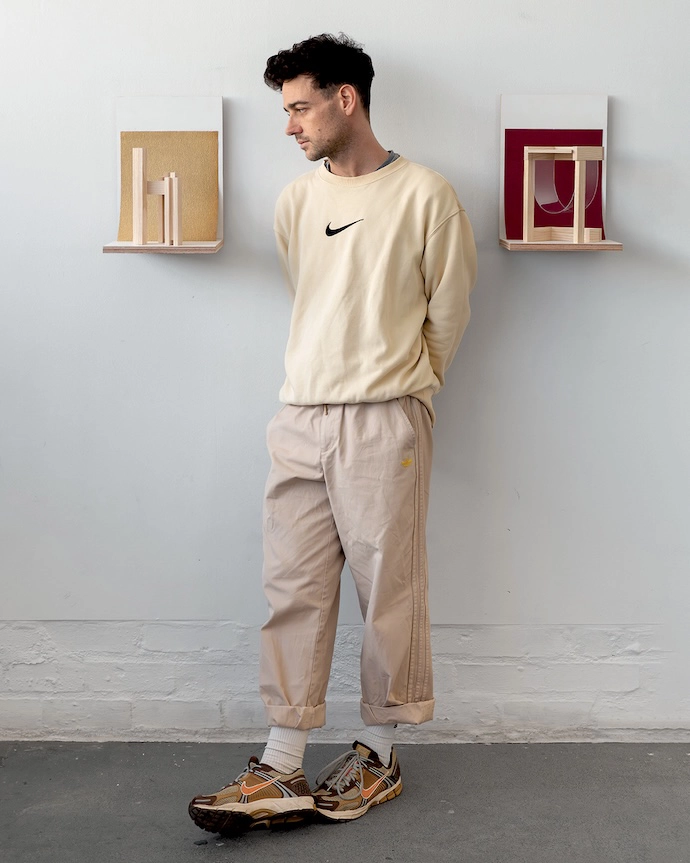
For Gabriel, a cabinet, a chair or even a retail interior are all occupants of the same ongoing narrative. “Nobody would stay in an empty hotel room with nothing but a great view,” he says. Trained in fine art rather than furniture or interior design, Gabriel arrived at making through what he describes as the back door. There is little sense of reverence for categories or convention – in his mind, a piece of furniture and an event occupy the same territory. “I’m as happy making a piece of furniture as I am organising an event for the Ex Hotel Bar. To me they are the same, part of the same thing I’m creating.”
Ex Hotel produces bespoke furniture and cabinetry with an affection for nostalgic detail, though Gabriel likes to remind people that visitors can also purchase room keys. “A room for life,” he jokes. “Now that’s a bargain.”
Humour runs quietly beneath much of the work. By his own admission, Gabriel is hesitant to reveal the full extent of his dry wit in person, but Ex Hotel has become a useful disguise. “It’s been a powerful mask – even if it’s all a game of pretend that we all know is happening, a willing suspension of belief.”
Ideas tend to arrive emotionally before practicality enters the room. “I design emotionally at first – read impractically – and then spend a long time trying to work out how to hold on to that feeling while dealing with the unfortunate realities of gravity and structural integrity.” The references come from unexpected places. His computer desktop is filled with screen grabs from films, often saved because of some almost imperceptible detail in the background. Typography has become another preoccupation: “If I get a second shot at life, I’ll be a typographer,” he says. In his mind, the profile of a lowercase “h” might become the back of a chair, while an “l” suggests the leg of a table.
He has little interest in presenting himself as an authority, and speaks freely about mistakes and false starts, preferring the honesty of process to the illusion of perfection. “So much of the time, I’m lost,” he says. “It feels only fair to communicate this and not pretend by hiding behind some slick, finished item.”
That openness informed “Five Attempts at Getting it Right”, his 2026 Cape Town Furniture Week series that explored the humble bedside table through five sculptural studies – an everyday object that captivated him precisely because of its quiet role in our routine. “A bedside table is the bookend to our day. It’s the first thing we see on waking, and the last as we shut a book or set an alarm on our phone. It’s the quiet witness to our routine.”
Built quickly, and intentionally rough around the edges, the pieces became what he describes as three- dimensional scribbles. In a discipline where craftsmanship can move at a glacial pace, they off ered something immediate. “Furniture has a presence, and this is something near-impossible to experience through drawings, screens, models or renders. Only the real thing, at 1:1, will do.”
That sense of scale has gradually expanded. Recent projects, including The Corner Store on Bree Street and Clay Corner in Woodstock, have allowed him to shape entire environments rather than individual pieces, revealing more of Ex Hotel’s character in the process. “The crack in the door is widening,” he says. “Slowly, more is coming into view.”
Public spaces hold particular appeal because they are constantly activated by strangers who eventually become regulars. They provide opportunities for moments of theatre, such as the train compartment concealed within The Corner Store. “Being able to play like this is a huge drawcard,” he says.
Lately, another unlikely obsession has emerged: galvanised steel. “It’s a strange material, kind of ugly, especially at first,” he says, almost affectionately. What fascinates him is not its refinement; precisely the opposite. The marks left by its manufacture remain visible on the surface, unapologetic. “I love that the process of its production is what gives it its character, as opposed to how we usually treat materials by sanding, polishing, painting or oiling them. Galvanised steel is what it is. Take it or leave it.”
As South African design continues to negotiate questions of identity and authorship, Gabriel is increasingly interested in embracing the freedoms and constraints that come with making things locally. More than anything, he speaks longingly about older skills and slower ways of working. “I long for a period of consolidation, of relearning old skills and reviving time-honoured skill sets before embarking on new modes of making. I’m not sure the world has the patience for this, so I’ll continue to make and design in an urgent and engaged way, hoping no-one looks too closely at my credentials.”
And if Ex Hotel ever materialises? According to its proprietor, guests would encounter a beautifully weathered floor, a drunken janitor pushing a mop, an irate visitor complaining about room service, a family of seven wrestling with too much luggage, and an awkward newlywed couple oblivious to the commotion around them.
The plans already include a heated pool and three additional floors. exhotel.co.za | @ex.hotel
Don’t forget to sign up to our weekly newsletter for the latest architecture and design news.