-

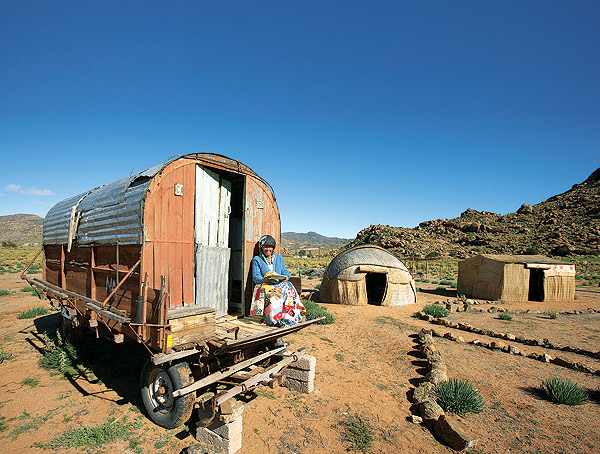
Restaurant at the end of the world : Ouma, surrounded by the primeval beauty of Namaqualand, takes a break from cooking. The Voortrekker wagon is largely made of tin and hasn't moved for years but is a comfortable place to take a nap. -

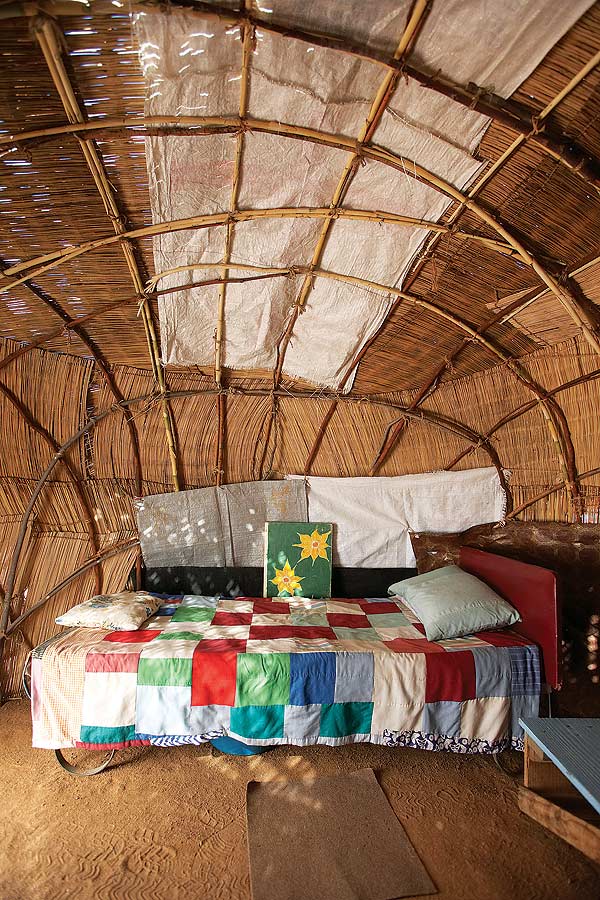
Restaurant at the end of the world : Visitors can spend the night in a hut made of mats and sometimes lined with cloth. The patchwork is a local craft. -
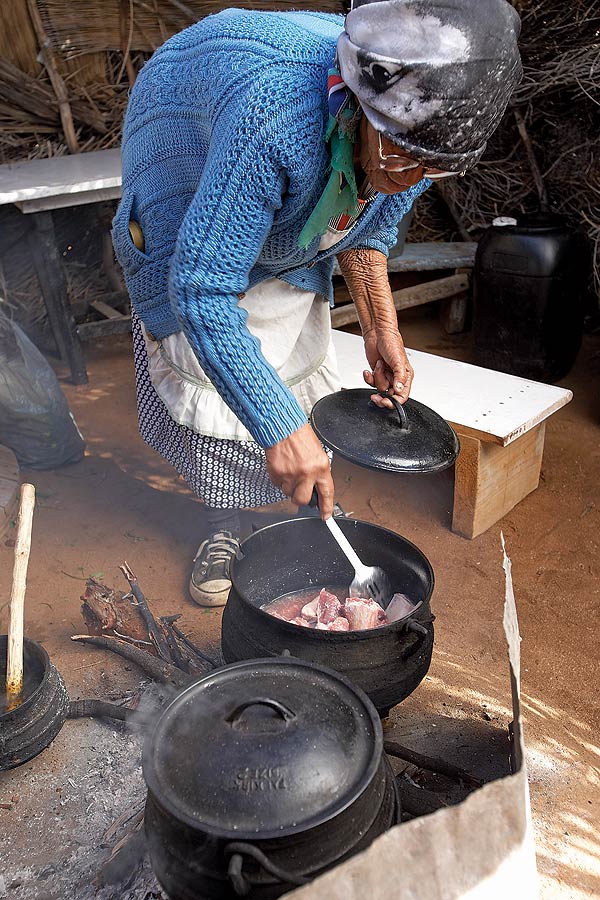
Restaurant at the end of the world : 'Skaapsterte' (sheep's tails) and 'afval' (offal) are cooked on an open fire in the kookskerm, or outdoor kitchen. -
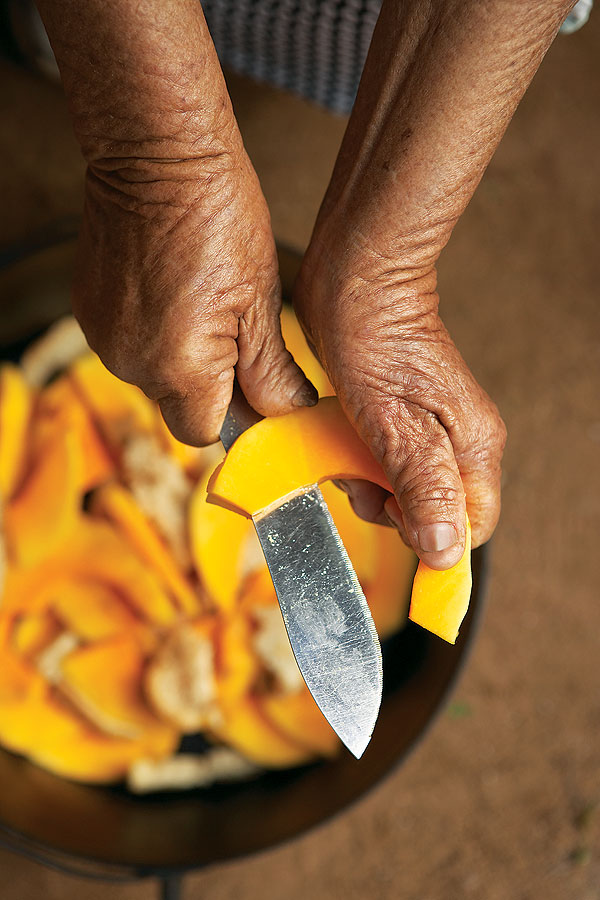
Restaurant at the end of the world : A good pair of hands and a sharp knife work wonders with the toughest pumpkin. -
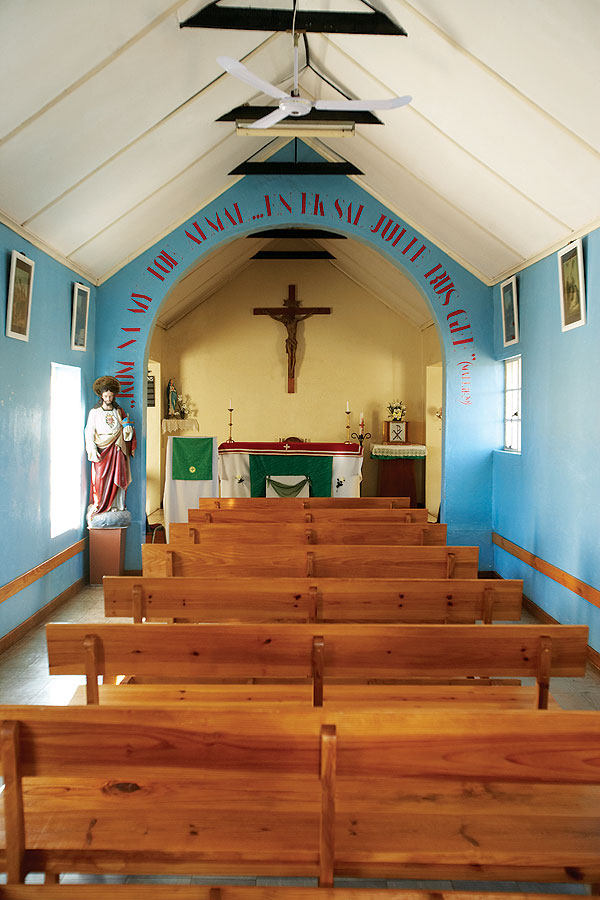
Restaurant at the end of the world : The colourful Catholic church in Kamieskroon. -
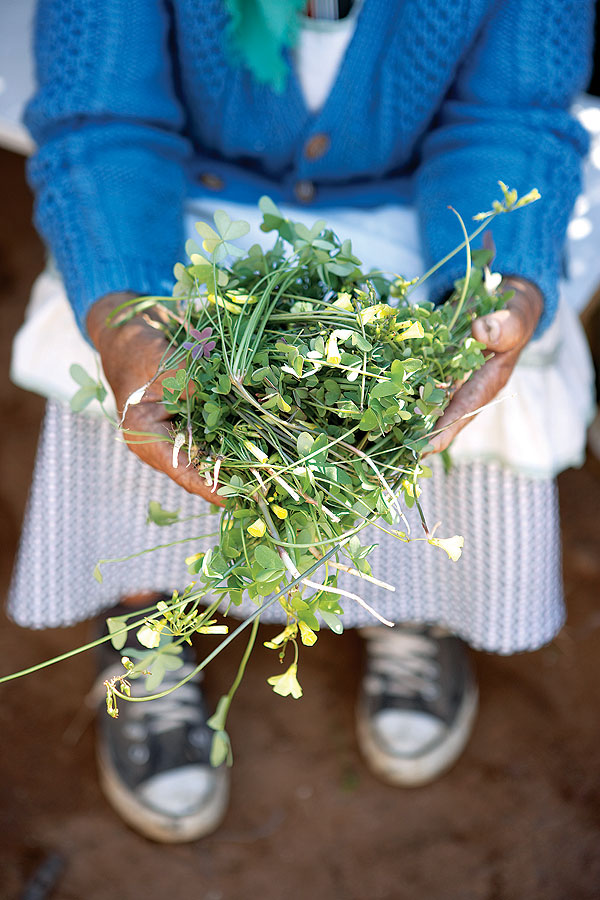
Restaurant at the end of the world : Much of the food is plucked from the veld. This woman is holding a bunch of oxails, from which a delicious drink similar to yoghurt is made. -
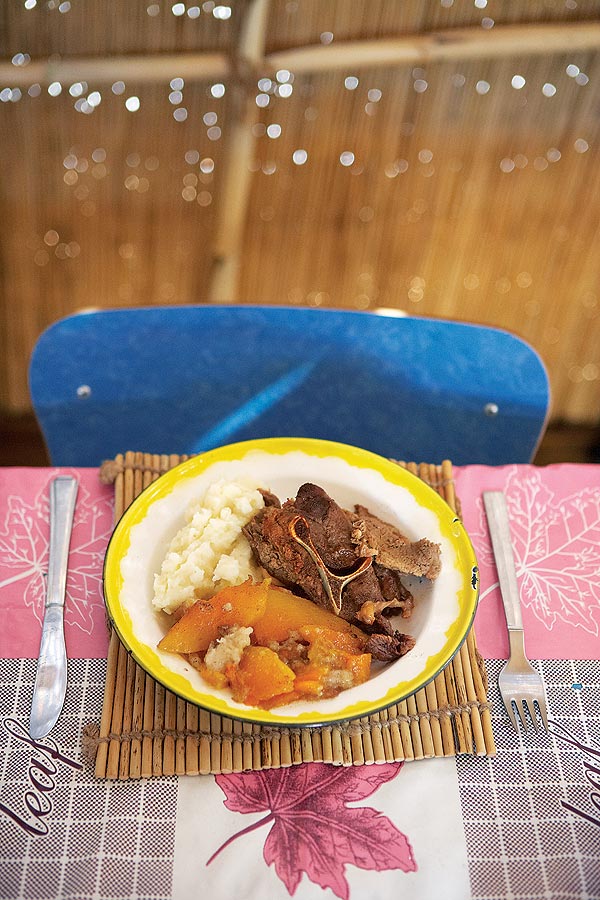
Restaurant at the end of the world : A hearty plate of food: pumpkin, freshly slaughtered mutton and samp. The reed place mats are made locally by the women of the town. -
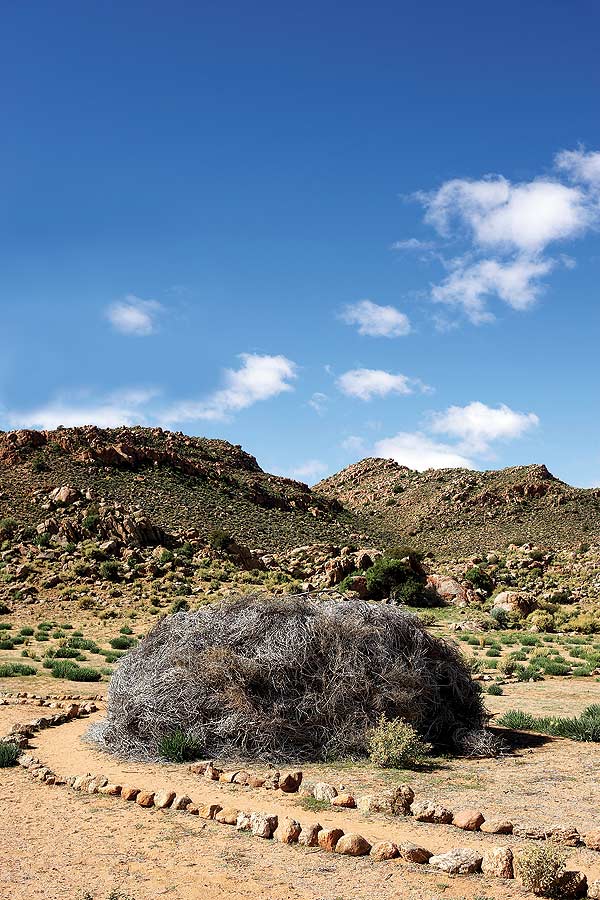
Restaurant at the end of the world : The cooking is done by the women from Nourivier in the kookskerm, which is made from dry, flammable bushes including melkbos and kraalbos.
PHOTOS: Jac De Villiers | WORDS: Lin Sampson
In the higher reaches of the Kamiesberge lies the Nama village of Nourivier, where visitors have the opportunity to enjoy a largely undiscovered cultural experience.
An hour’s drive from Kamieskroon we come across it by chance, up a rough Namaqualand road as pitted as Gorgonzola. We are in the middle of the Brokenveld – a geological term for the rugged topography of this area – a place that has changed little since the Jurassic period. The rocks here are between 600 and 1 500 million years old.
The sign reads: ‘Nourivier – Traditional food, tea and coffee’.
Namaqualand in the Northern Cape is unknown and uncared about because, like a butterfly, its time of beauty is so fleeting – a springtime of flowers, more beautiful than anywhere else on earth, that rise after the spring rains in a crush of colours of neon intensity.
The countryside, even in this short, lush season after the spring rains, is flinty and elemental: a semi-desert; a dolerite escarpment with folds of limestone that look like pancakes; knobs of rock balancing one on another, veined with milky quartz arteries that shine like rivers. You can pick up a handful of stones that resemble rich jewels.
It was along this southern African coast, with its capricious, sometimes violent, climate, that the early Portuguese explorers had their first glimpse of the people of the area. Wiry and yellow-skinned, they called themselves Khoikhoi, which means ‘men of men’. They shared the land with a smaller, even wirier people whom they called San and from whom they were descended. It is with the San that the human story of southern Africa really starts.
Not for sissies
The descendants of these people still live in this part of the world. Their style of living has changed little and, because of frequent drought conditions, poverty is often extreme.
The menu at ‘The Restaurant at the End of the World’ is not for sissies or anyone worried about cholesterol. Much of it is plucked from the veld and the flavours are fugitive and a little untamed, which can sometimes take a bit of getting used to. The basis of the food is mutton, sometimes lamb, freshly slaughtered from the roaming flocks that are dimly visible on the escarpment.
The menu changes according to what is available but we eat wildebrein, a mutton stew made with veldkool (a type of wild asparagus). If you are a mutton stew aficionado, this is the best in the world. It coats your mouth with a thin, delicious layer of pure fat.
There is also a large potjie of afval (offal), with whole sheep’s head. Afval is a specialty of the area, a culinary trick that requires experience if it is not to taste like the inside of a hangover. Served with roosterkoek, bread made on the fire and singed with black stripes, it is durable and filling.
Another specialty of the region is pofadder. Named for the deadly South African snake, this dish is approached tentatively by squeamish tourists who think it is the real thing, when in fact it is made from sheep’s intestines stuffed with heart, lung and kidneys. Dessert is frequently a simple home-made bread-and-apricot-jam pudding.
The meal ends with a cup of suringmelk, a celadon-coloured concoction with a thick barium-meal consistency that is made with the yellow-flowered oxalis plant and goat’s milk.
The pleasures of simple things
The cooking is done by the women from Nourivier in a kookskerm – a hut used as an outdoor kitchen and made from dry, flammable bushes such as melkbos and kraalbos, the floor smeared with a mixture of dung and clay. A traditional clay oven a few metres away is used for baking bread.
‘We grew up on this food,’ says Hanna Witbooi, one of the village women. ‘Every season is different – it just depends on what is around. We could go into the veld for a day’s walk and not take any food with us. We just find it there. Taaibos berries are my favourite. They come out around November and are butter-yellow at first, turning slowly to bright red. Oh, then they taste so, so sweet.’
The whole meal costs R45 a head, and for an extra R100 you can either spend the night in a small Voortrekker wagon, or in a matjieshut made out of reed mats – an experience not for the faint-hearted but, for seekers of real solitude, there is no equivalent in the world. Visitors can also pitch their own tents for a small fee.
These days, there is a global search for something new, unsullied, and away from the franchised horizon that has given so many destinations a tiringly familiar iconography; a place that epitomises the pleasures of simple things. The Restaurant at the End of the World encompasses all these elements with a casualness that, in itself, is seductive.
• Phone Anna Brand or Elize Beukes on 027 672 1715 to book (booking essential)