-

Luxury Found Close to Home -
Luxury Found Close to Home -
Luxury Found Close to Home -

Luxury Found Close to Home -
Luxury Found Close to Home
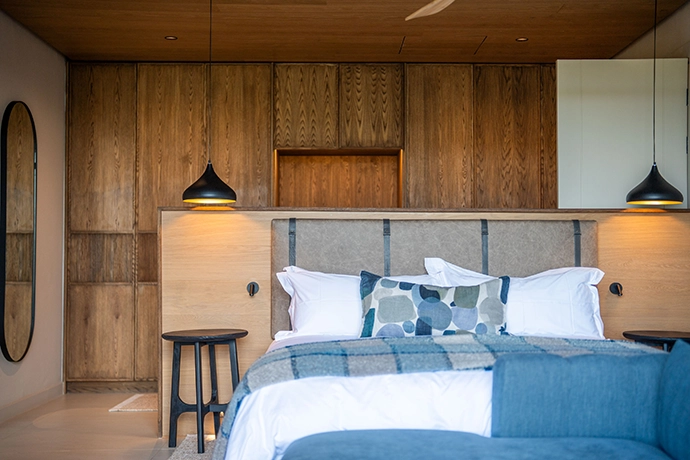
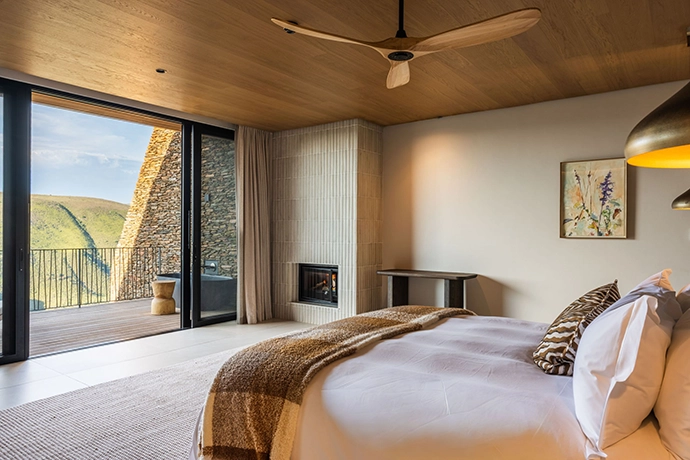
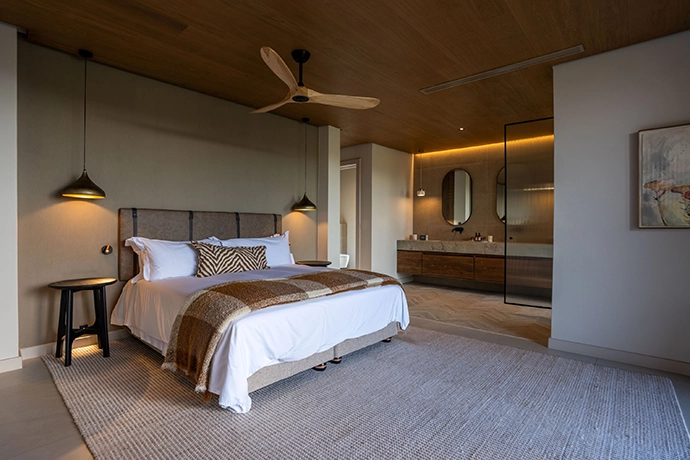
A new luxury eco-lodge graces the Zuurberg Mountains in the Eastern Cape. Mantis’ Hiddn – designed to blend in with its surrounding wilderness – collaborates with Barnard Mohair, a family-owned mohair weaving business.
WORDS Palesa Mohola PHOTOS Supplied
In early March 2026, Mantis Hiddn opened its doors to the public. Located at the centre of Addo Elephant National Park in the Eastern Cape, the lodge was designed to fit into the landscape instead of interrupting its surroundings. Not only does its sustainable design blend with the environment, but each handcrafted piece of furniture and decor item carries a story.
“Conservation is about far more than protecting wildlife,” says Samantha Levey, Director of Design and Technical Services at Mantis. “It is about protecting heritage, preserving traditional skills and creating meaningful economic opportunities for local communities.”
The Mantis design team consciously decided to collaborate with local Eastern Cape designers and artisans. One such collaboration was with Barnard Mohair – a small weaving company in Alicedale, founded in 1967 by the late Jan Paul Barnard and his wife, Elsa Barnard – which is currently led by their daughter, Louise Cameron, who was taught the weaving business from a very young age.
“Our family didn’t simply own the factory, we grew up working in it,” says Louise. “During school holidays we learnt the craft, helped at exhibitions and developed an appreciation for what makes mohair such an exceptional fibre.”
Barnard Mohair is a purposefully small and deliberately slow company of eight employees, seven of whom are women, with several having more than 40 years of experience. They also employ local women for large commissions and provide ongoing training for younger employees to ensure the craft is passed down to future generations.
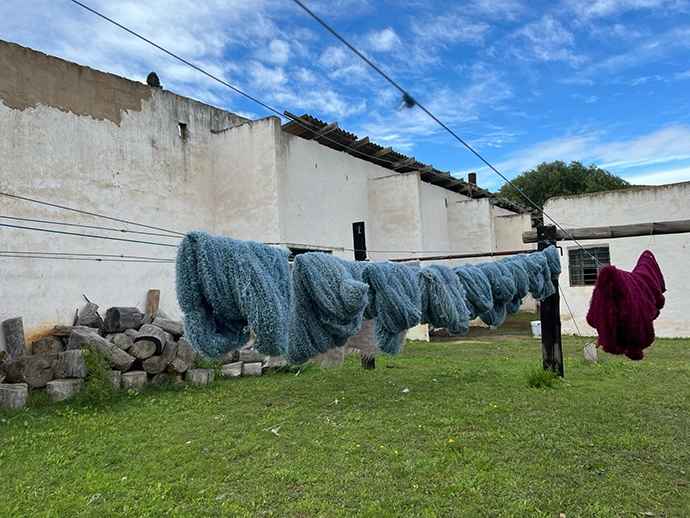
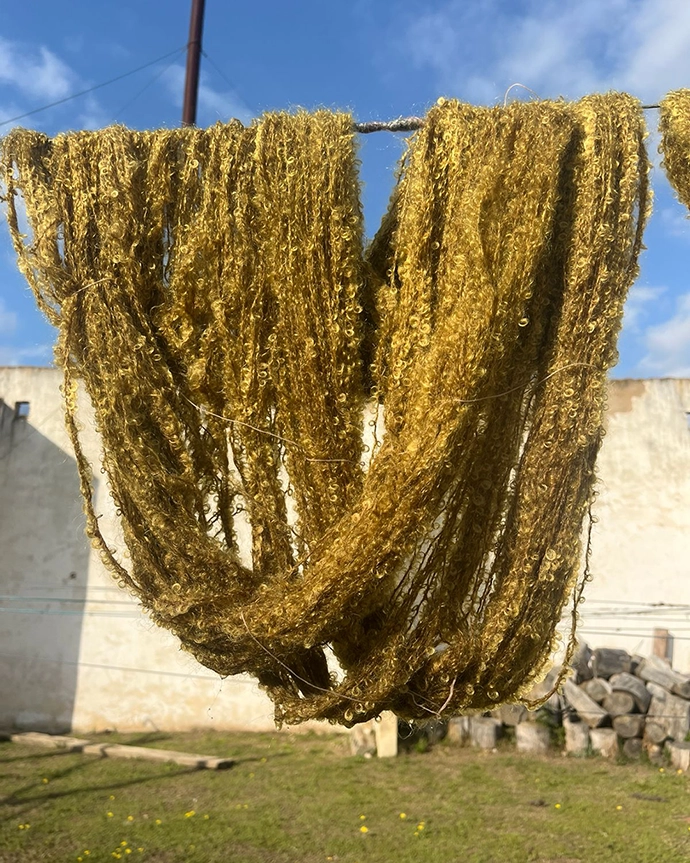
They are known for their eco-sensitive production and use 100% locally sourced mohair from Angora goats of the Karoo, bought at auction in Gqeberha – a raw fibre that must be spun into yarn, then hand-dyed and dried naturally in the sun, before being woven.
“It is a noble fibre,” Louise explains. “Only five fibres in the world are classified as such. Mohair is light, warm and regulates temperature. It also dyes exceptionally well, allowing you to achieve rich, vibrant colours, which help achieve beautiful designs.”
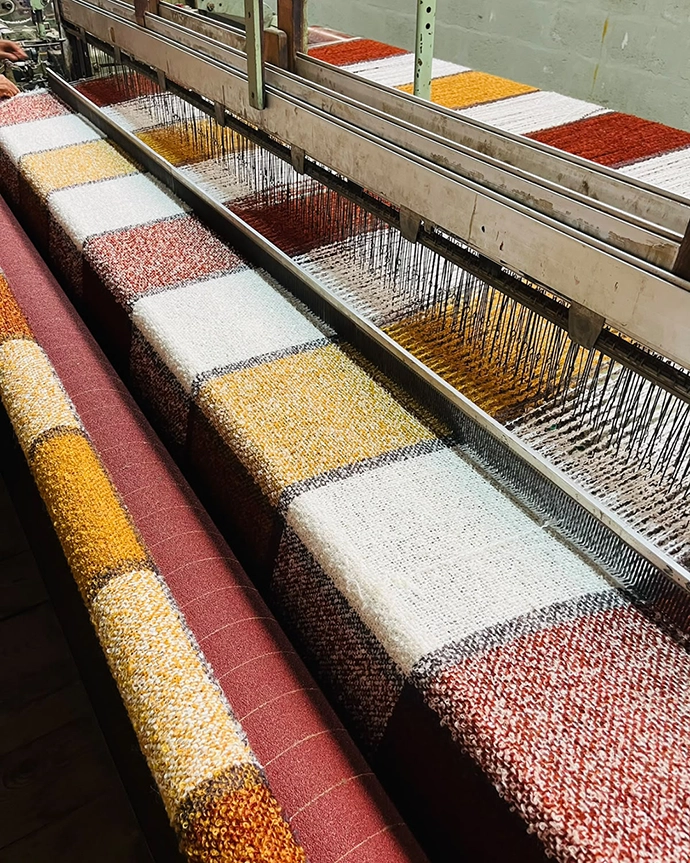
In this collaboration, they worked closely with interior design company MI Design to curate a unique collection of colourful mohair throws for Hiddn. The design vision was to reflect Africa’s natural landscape, with colours mirroring the contrasts of the surrounding wilderness. The team developed new shades through multiple test runs and samples, using eco-friendly Lanaset dyes until the perfect colours were achieved.
The weaving itself was also customised, yet still preserved the softness for which mohair is renowned – achieved through a six-stage production process requiring patience and precision.
Mantis’ decision to invest in artisans from its own province not only sheds light on local creativity but also increases economic value within the Eastern Cape, while celebrating one of South Africa’s finest natural resources – proving that luxury need not be imported, but can instead be found at home, with important and relatable stories to tell. mantiscollection.com | barnardmohair.com
Don’t forget to sign up to our weekly newsletter for the latest architecture and design news.