-

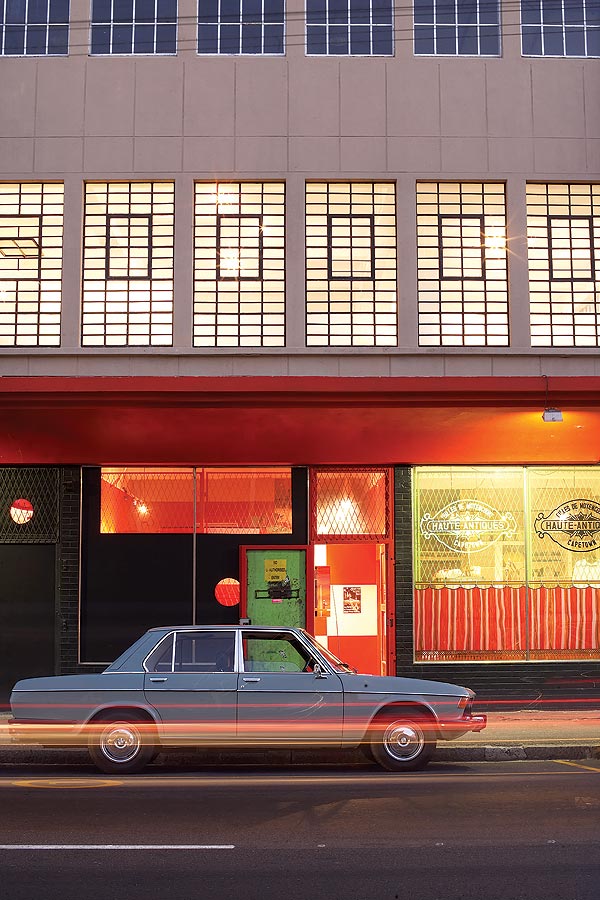
Hall of entertainment : 208 Albert Road, Woodstock - a building that has received new life. -
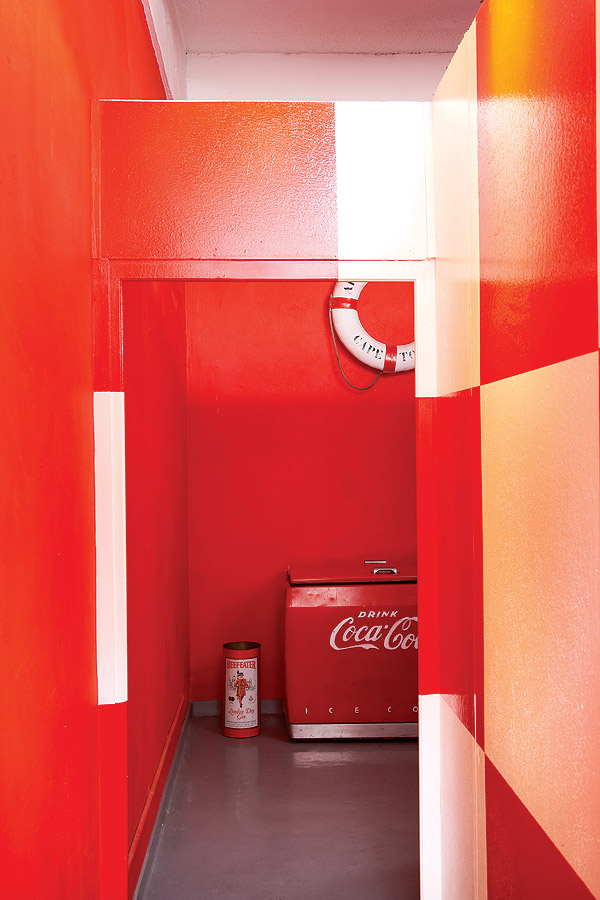
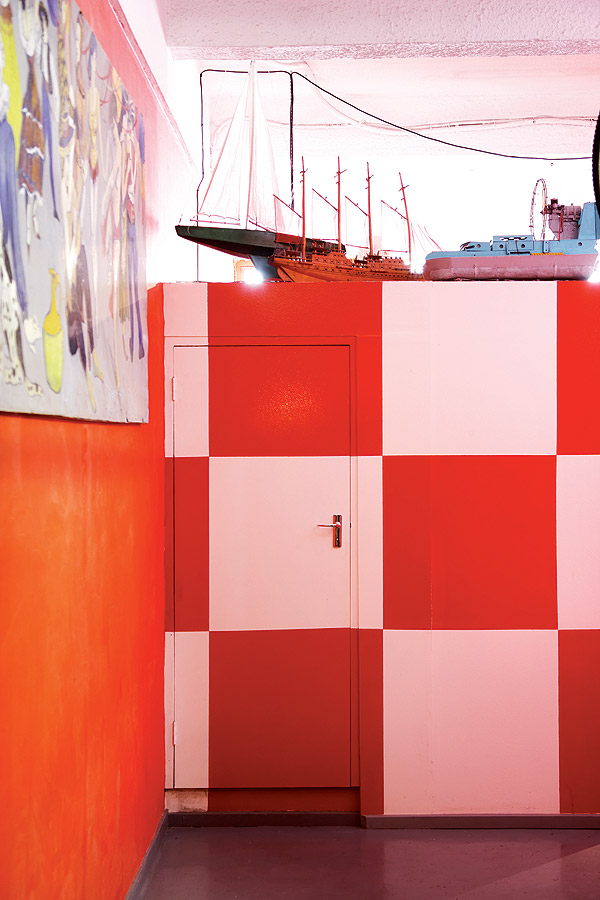
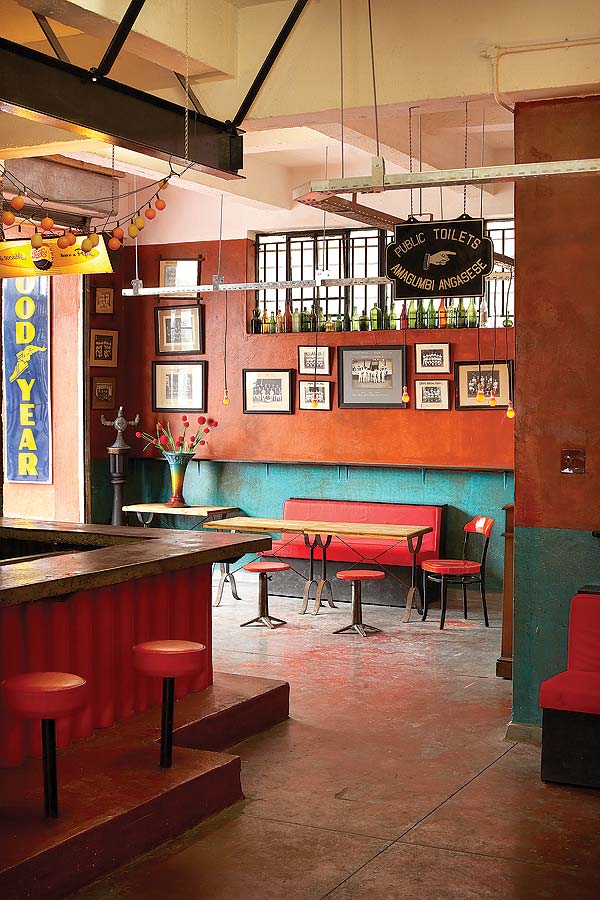
Hall of entertainment : The entrance, with it's strong colours, is reminiscent of the style of Sonia Delaunay, a French-Ukranian artist from the 1950s known for her use of crayon colours and geometric shapes. -
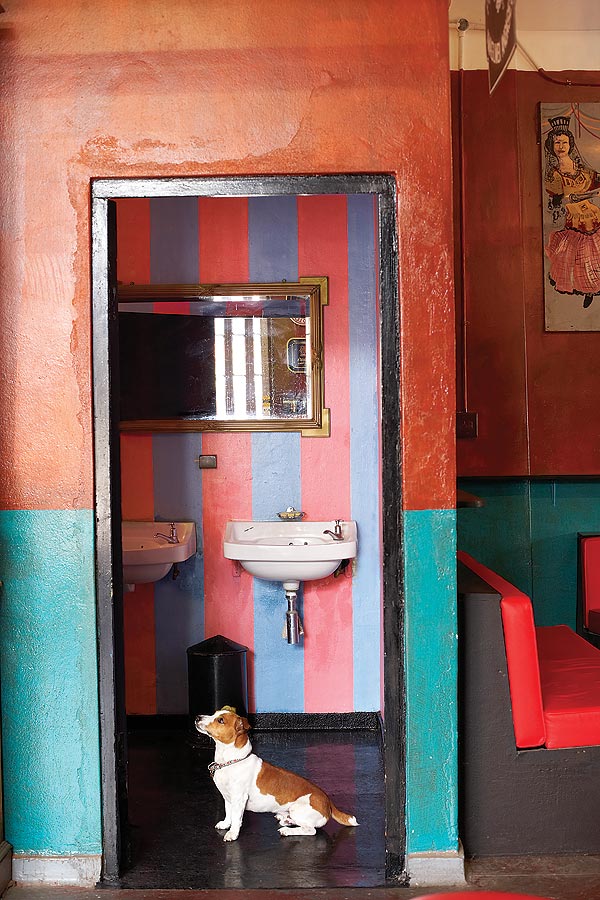
Hall of entertainment : A small, private alcove for 'sitting in peace'. -
Hall of entertainment : The backdoor of the box office, topped by a collection of wooden yachts and an early model of a hydrofoil. -
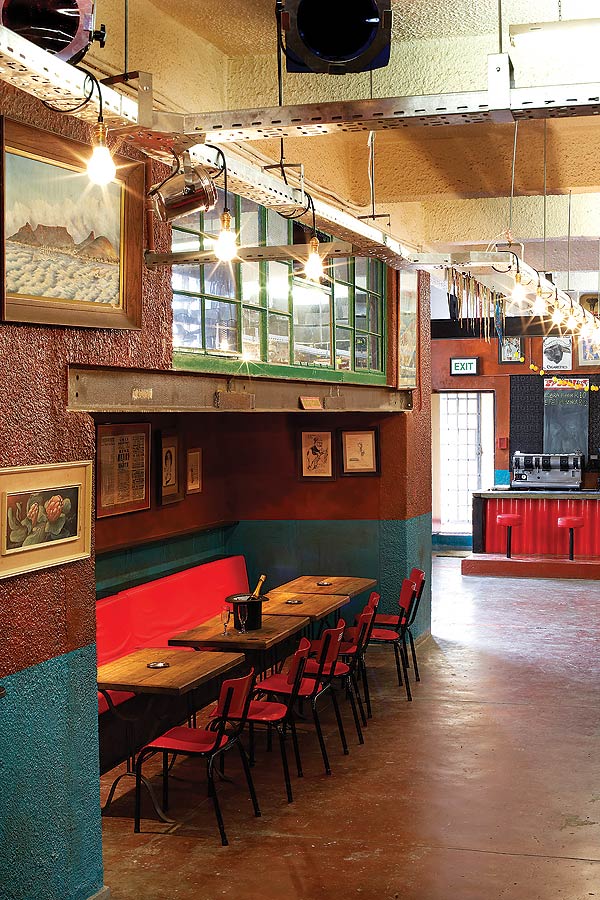
Hall of entertainment : The walls are old-potato and watermelon pink - colours achieved by mixing old paints. -
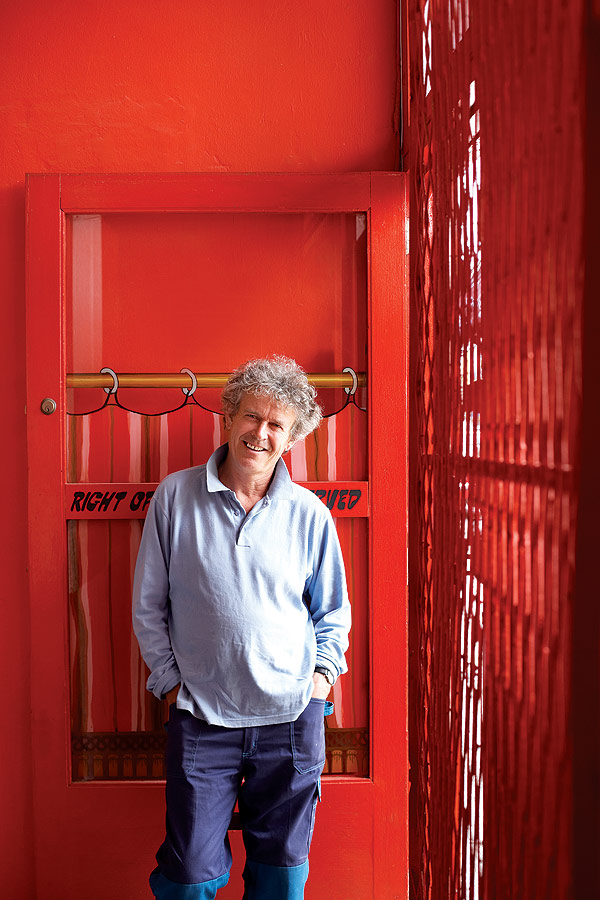
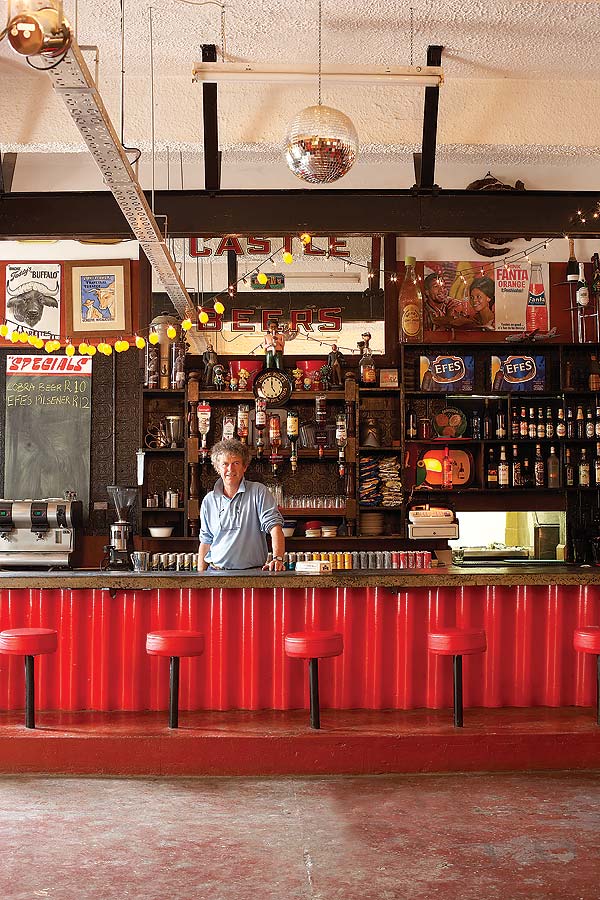
Hall of entertainment : The Boss, who says: "I feel I could be anywhere in the world when I am here". -
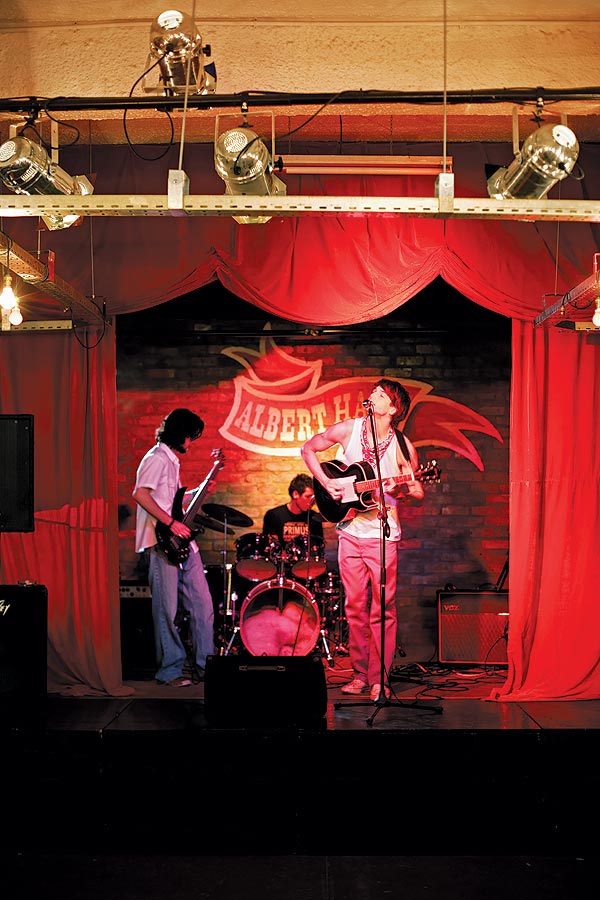
Hall of entertainment : Christopher of the Wailing Jimmies - one of the many local bands who play at Albert Hall - belts it out. -
A night to remember : Giles uses what he calls 'coner-shop colours' that lack trendy artifice. "A real place for real people," is how the owner describes his new emporium. -
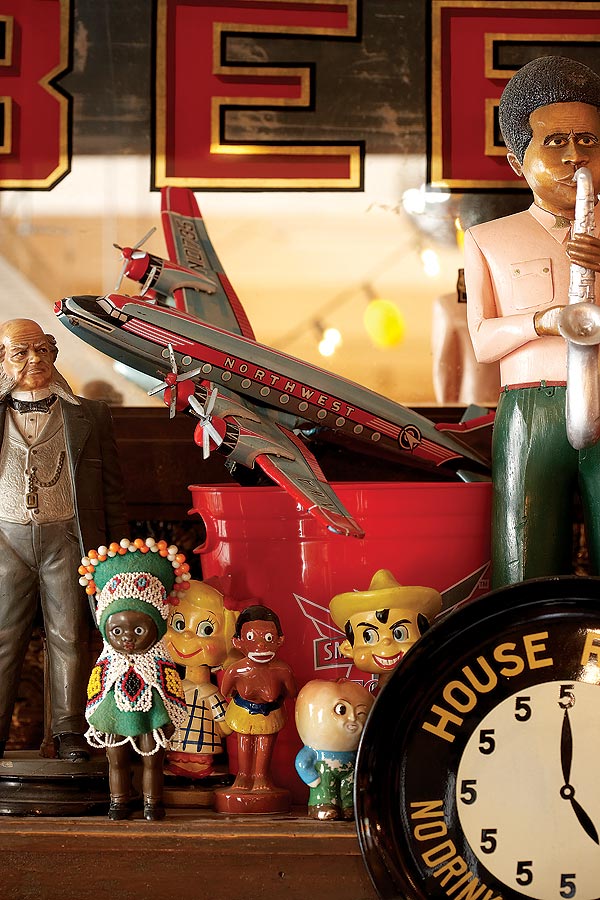
Hall of entertainment : A collection of found objects from South Africa, Zimbabwe and Tanzania. "You have no idea of the onderful things you can find in Africa that are sold on the roadside as souvenirs". -
Hall of entertainment : The long bar is made with fibre-cement roofing tiles painted red and topped with concrete. "I wanted a real American bar," says the owner.
PHOTOS: Micky Hoyle | PRODUCTION: Sumien Brink | WORDS: Lin Sampson
Not so long ago, The Albert Hall was a brokenhearted building in Woodstock. Now, under the acute eye of Gilles de Moyencourt, it has become a place of quirky charm.
When Gilles de Moyencourt first arrived in Cape Town his English was fractured. It is now entirely broken. A friend says he does it on purpose.
Gilles left his native France to come to this country in the early 1980s. After the small grid of Paris, where the buildings are bound tightly together, South Africa, with its high skies and space, seemed filled with opportunity.
‘Cape Town was so beautiful. The whole country just held my imagination – like being in a hand, you know. I wanted to squizz (squeeze) it.’
However Gilles always felt that there was potential that had not been realised. He immediately started to deal in antiques. Casting his fleet eye around the country, he saw things that other South Africans did not notice.
He went on long expeditions into the hinterland and brought back ordinary articles we were all familiar with but which we had never treasured: old tin signs, apartheid slogans, large fossil remains, children’s toys. His shop – one of the few places in Cape Town featured in British magazine The World of Interiors, was an emporium of the quirky: a turtle shell as shiny as a date, a wooden yacht with a yellow sail, an old red lacquered trunk the colour of sealing wax.
A place without cliché
A few years ago, his situation changed.
‘For the first time in my life I had a bit of money, so I brought it over from France. I wanted to buy something in Woodstock. I have always loved the area. Ever since I arrived from Paris, I wondered why it had been left to rot. So, I took a motorbike and rode around every street in Woodstock. I looked and looked, and at the same time the estate agents were showing me things so ugly they made me cry.
‘Then I found this tweestoreebilling (three-storey building) – 400m2 per floor. There was also ground behind it that could be turned into a parking area. It was inhabited by refugees; the top floor was burnt; the toilets were overflowing. Two hundred people were living here with cardboard partitions.’
It hit him like a flaming dart, partly because it was situated on Albert Road – the old road to Johannesburg. It was here that the Voortrekkers set out for the interior, turning their wagons at Salt River Circle.
The Albert Hall has now been transformed into a jazz theatre with an art gallery on the first floor and a restaurant in the making. It can be booked for weddings (a friend had her third wedding there – a 1940s bash), parties, small theatre productions and band performances.
Gilles decorated it with his perfect eye, spinning out the irregular and dysfunctional to give the place the look that one so often seeks and so seldom finds – a place without cliché. He did a lot of the work himself, standing on teetering ladders, often falling while scraping and painting. ‘Repair, replace, renew,’ was his motto.
Gilles has always managed a creative alchemy
He is accustomed to operating with a small budget and is able to build a dramatic aesthetic structure out of anything. The bricked courtyard, for instance, is done with broken bricks and covered with a cement screed that makes it look as if it has been there forever. He has planted cacti around the perimeter and all the appurtenances are industrial, many picked up from scrap yards.
Gilles has always managed a creative alchemy – a brave dreaming of the eccentric elements of life: wasabi-green ceramic plates, cream tin storage canisters, a crude blue enamel sign and another that many Capetonians will recognise: the comely flying angel that decorated the façade of The Mission to Seafarers. ‘’Ave you ever seen an angel with breasts?’ he asks.
He sends up South African pretension and cultural defensiveness with a mixture of pieces from every era and class, and the whole place has the strange and seductive fusion of a small museum.
An aficionado of markets, he can be found early on most mornings tracking through the stalls in Parow or Muizenberg. He is also a fixture at Milnerton’s weekend fleamarket, where he picks up treasures by casting his primed eye across articles that others have not noticed. This very week he has bought a piece of rare Staffordshire china.
Gilles is patron of the discarded, disciple of the unwanted, demiurge of the overlooked. His attitude towards the inanimate is ‘keep it loose’ – collect everything and anything – sort later. Do not worry about the ugly and unusable. They will find their place.
Keep it Real
The banquettes in The Albert Hall are made from red plastic bought from Bagraim’s (his favourite shop) and the paint trimmings are corner-shop green. The walls are decorated with old photographs – an entire wall displays images of cricket teams dating from the 1930s to the 1940s: men with shiny hair partings sitting in rows with folded arms.
There is a small stage hung with ancient crimson velvet curtains and the walls are old-potato and watermelon pink, achieved by mixing old paints together. The bar is made from curvaceous asbestos roof tiling and the lighting is strings of bare bulbs and old 1950s fairy lights.
‘I created the bar because the industrial lifting mechanism (above it) provided the inspiration for me to create a bar underneath,’ says Gilles. ‘I once worked at the Studio Paris – the top dance studio in the world – as a barman. That is where I met my South African wife, and so I wanted to make a place where everyone felt comfortable, where people from seven to 70 could meet.’
He is a tricky but engaging character with a perfect sense of occasion. Meeting him for even a brief time is always a little ceremony that drives away the spleen of everyday life and provides some relaxation. When we arrive, there is the steam and hiss of the espresso machine, fluffy croissants, smoked eel and tiny jars of potted shrimps and octopus.
It has always baffled Gilles that South Africans have such a stifled sense of quality. ‘The decorating style, like “join the dots”, is so boring. Why do South Africans think that because it is expensive, it will be good?’
What advice would he give?
‘Kipitreel,’ he says.
Ah, kipitreel, of course. A new decorating term?
No, just Keep it Real.
• The Albert Hall: 021 447 0851, 078 193 0102