-

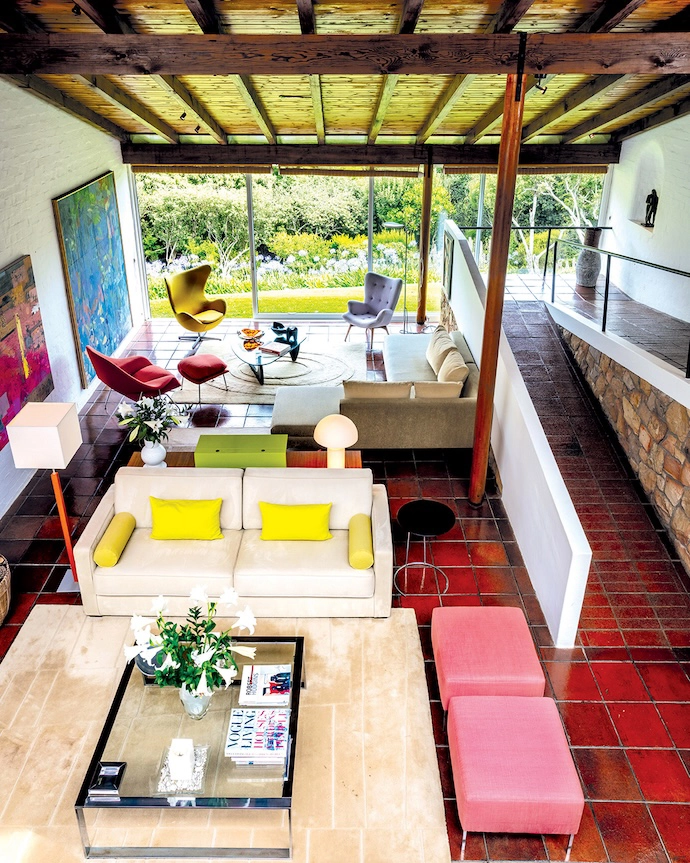
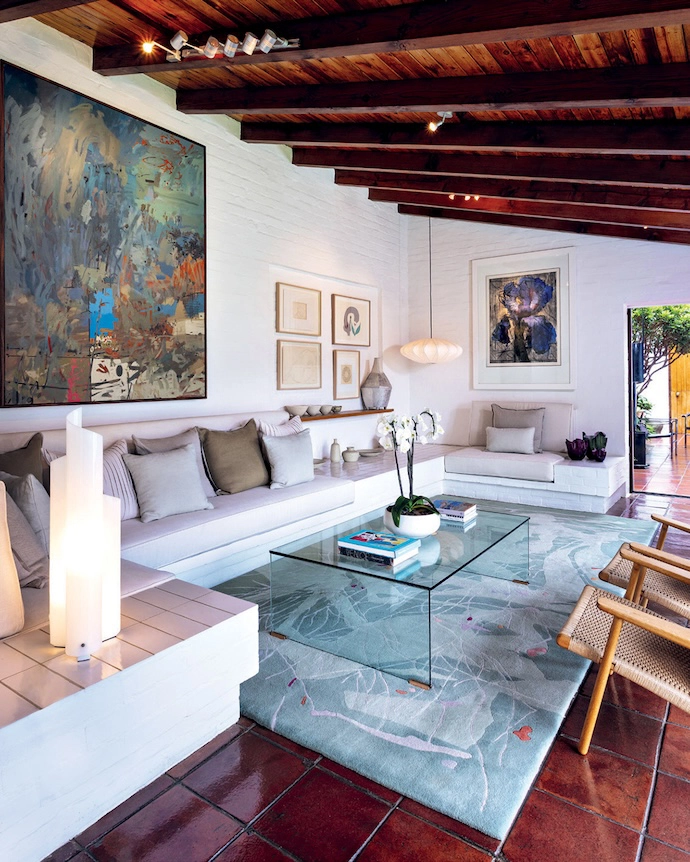
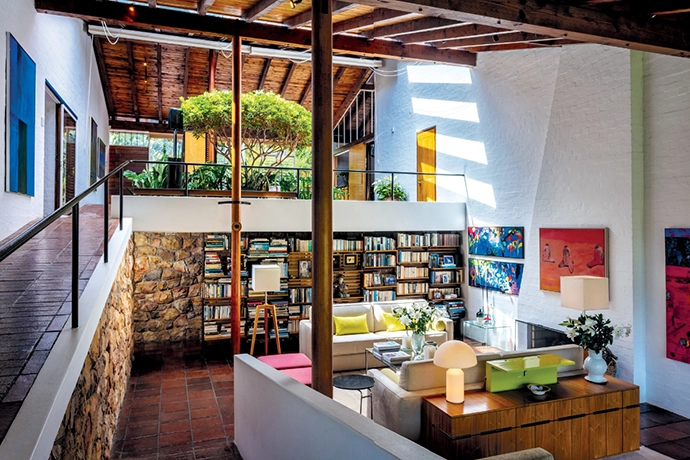
Walk through the front door and the house opens up into a double-volume living area with a view out towards Kirstenbosch and the mountain above it. -

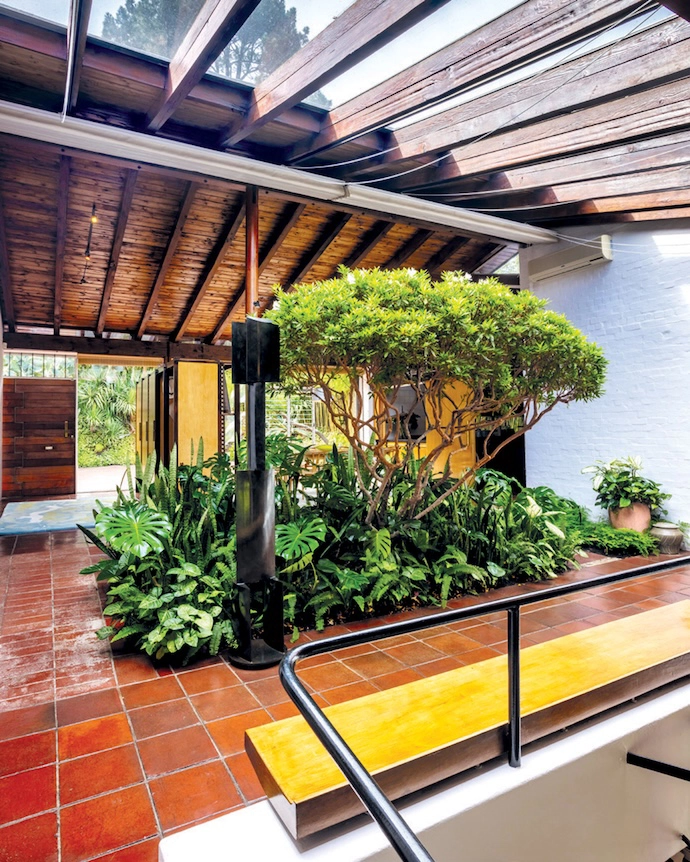
The entrance hall with an indoor garden fed by natural light from the skylights above that architect Gawie Fagan designed for his mother – an avid gardener. -

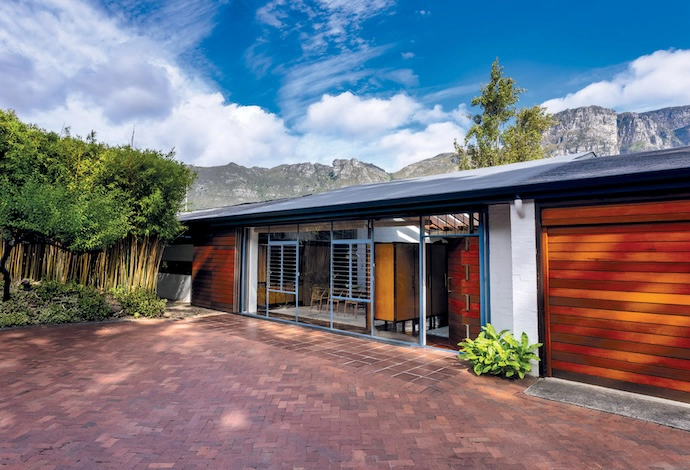
Keurbos’s entrance – note the beautiful bespoke front door with large brass hinges, again designed by the architect. -

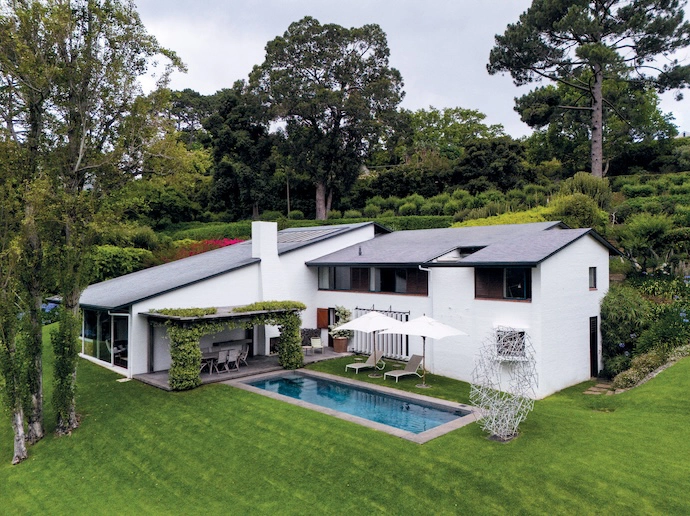
The aerial view shows how Keurbos follows the contours of the plot. -

The double-volume living area includes a bespoke bookcase/room divider designed by Gawie. Behind it is the passage to the guest bedroom and bathroom. The room is the ideal space to show off some of owner Lana Hudson’s art collection, which includes works by Clive van den Berg and Robert Hodgins. -
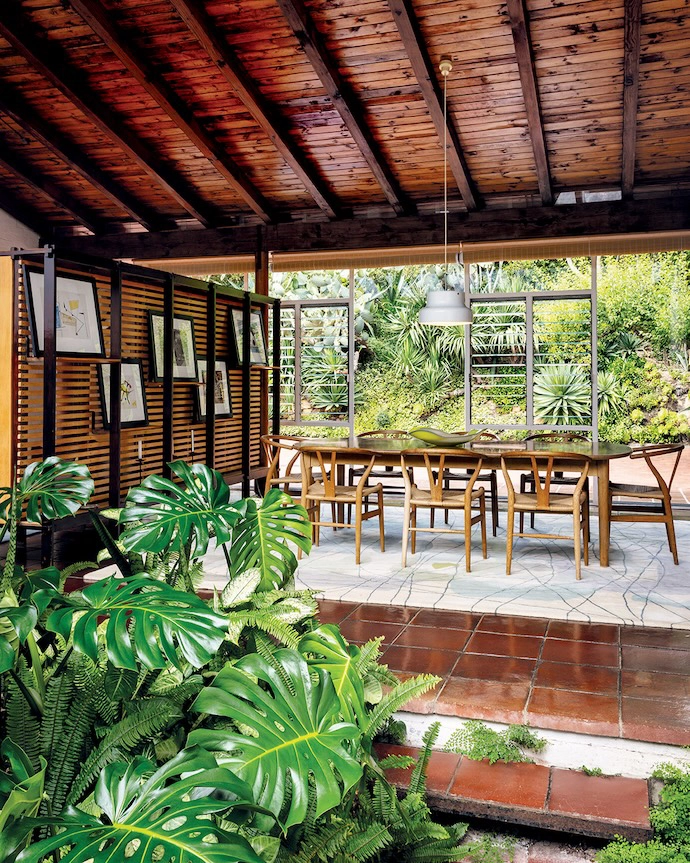
Another bespoke screen in the entrance hall separates it from the dining area. All flooring is quarry tile – a nod to the Cape Dutch aesthetic. -
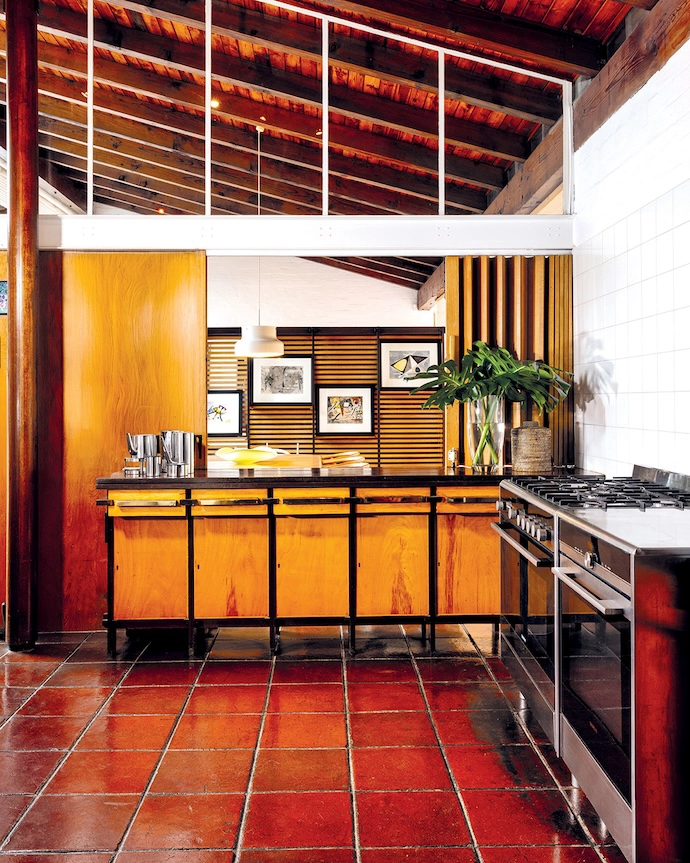
The kitchen still has all the original cabinetry, made of dark imbuia and light Japanese birch and beech. The brass handles are also original. -
One of two areas that Lana modified was the stoepkamer, which she turned into a much-used sunroom. -
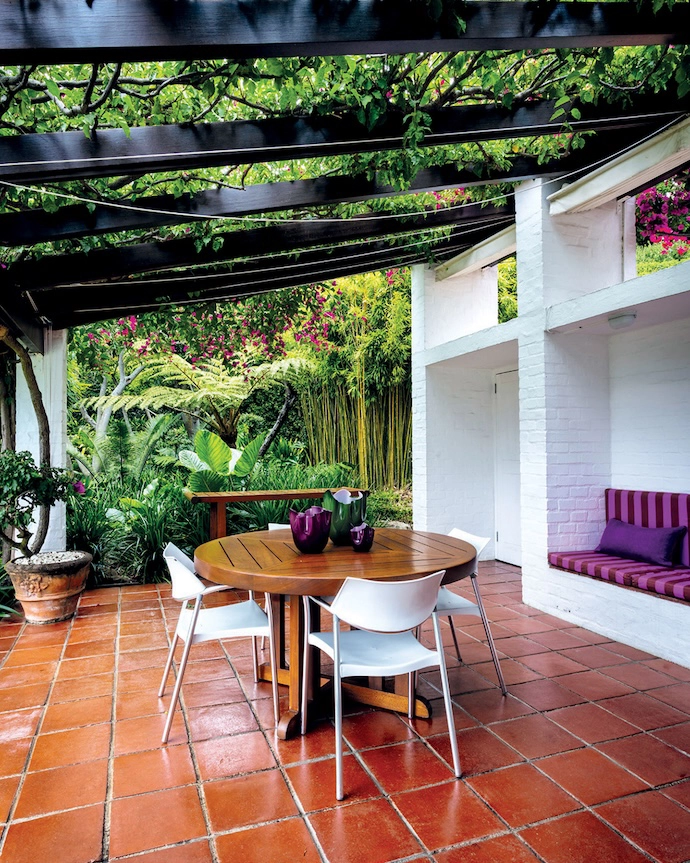
The sunroom opens onto a shaded courtyard – both have expansive mountain views. -
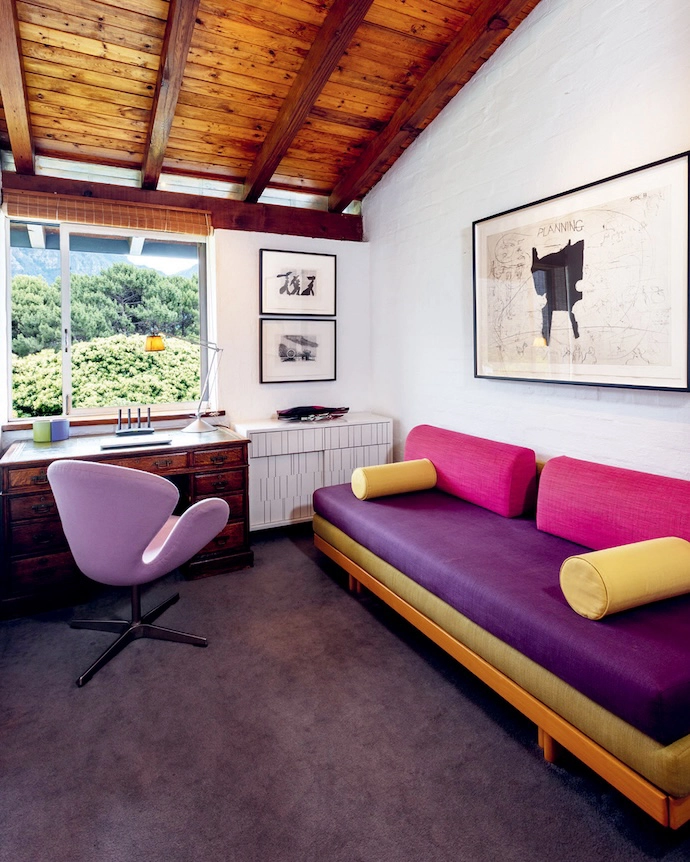
Lana’s study. -
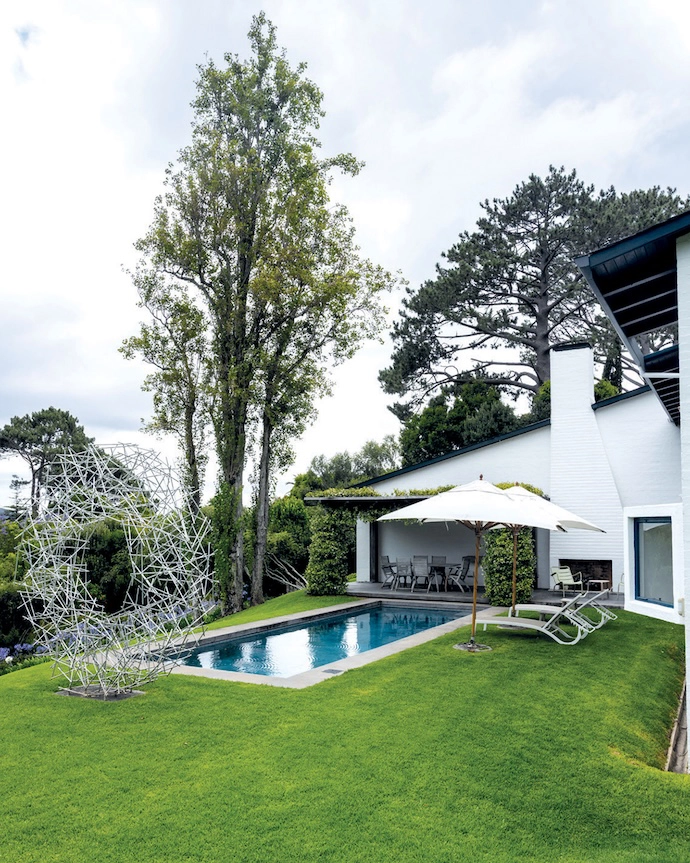
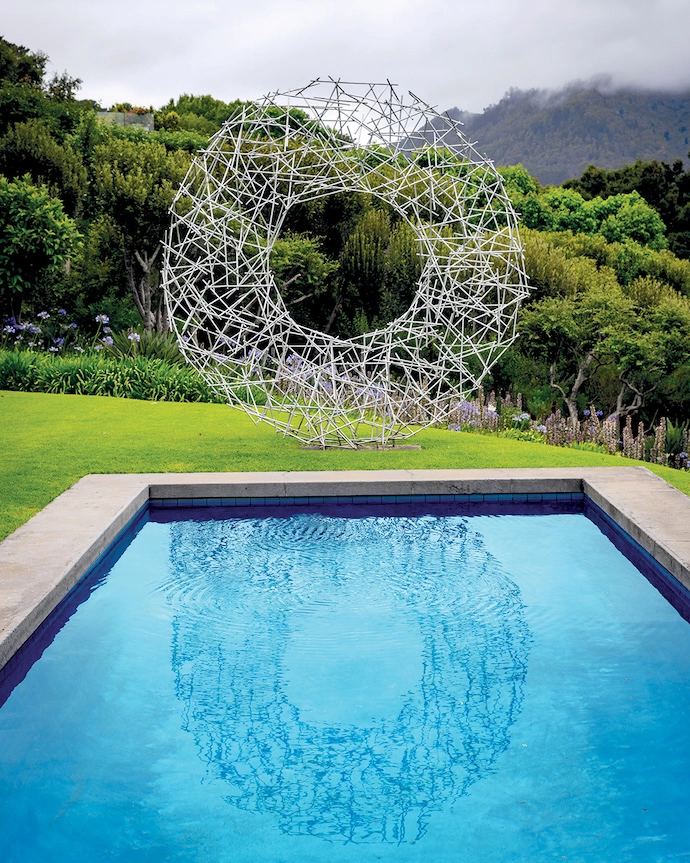
The other change she made was to put in this pool. -
Reflected in the pool is a Strijdom van der Merwe sculpture. -
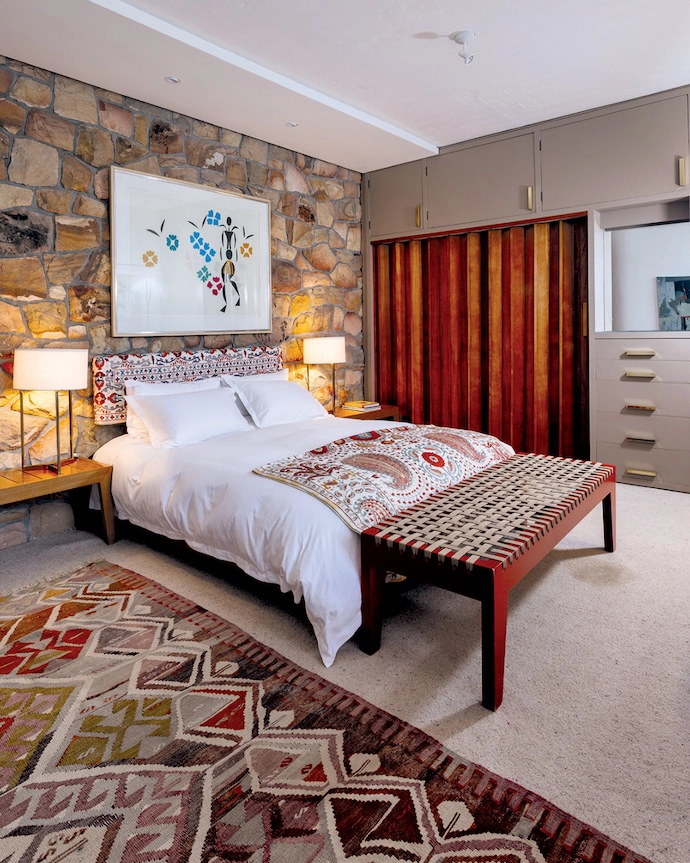
The guest bedroom. -
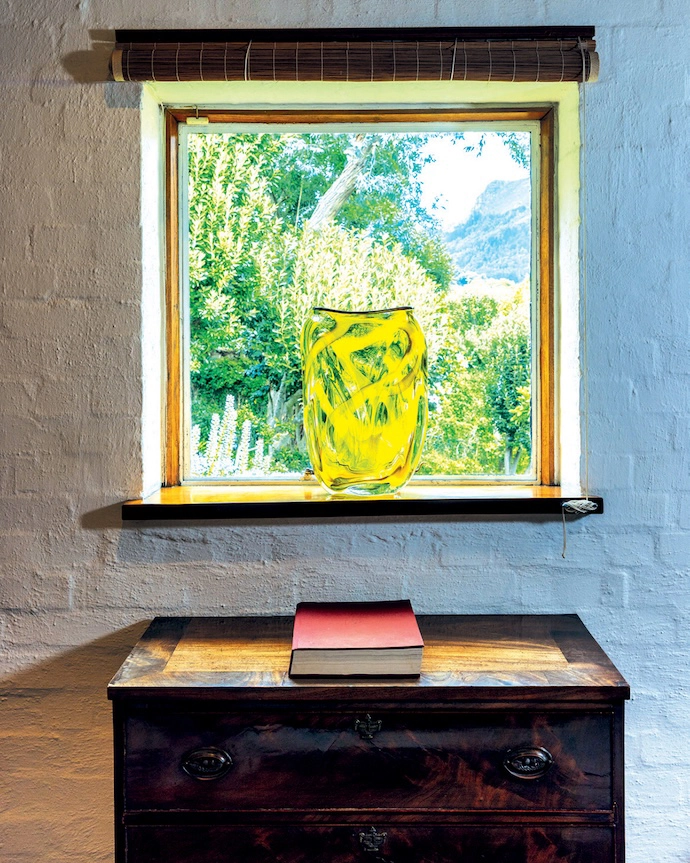
A vase by South African glassblower David Reade in Lana’s study. -
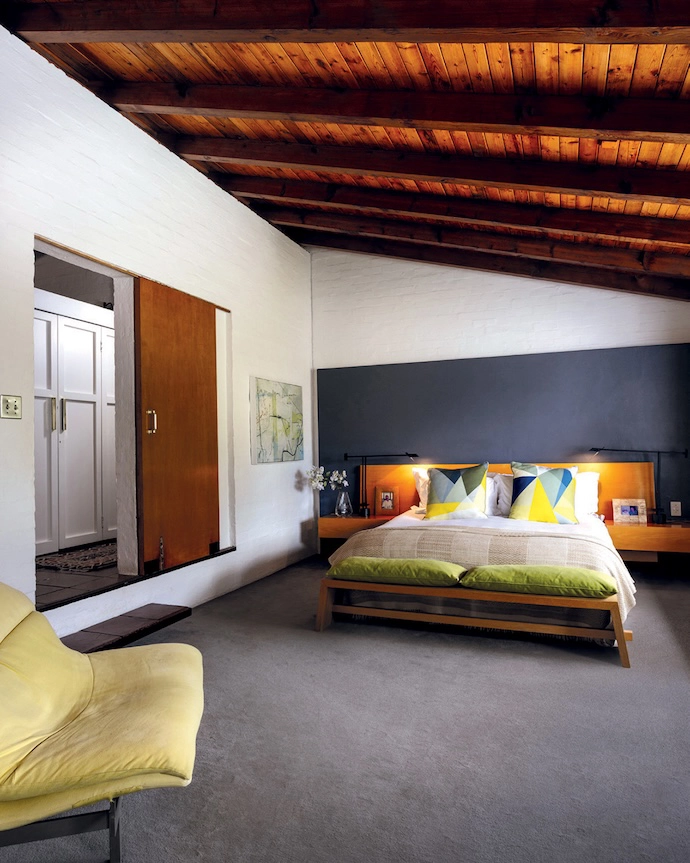
The main bedroom. -
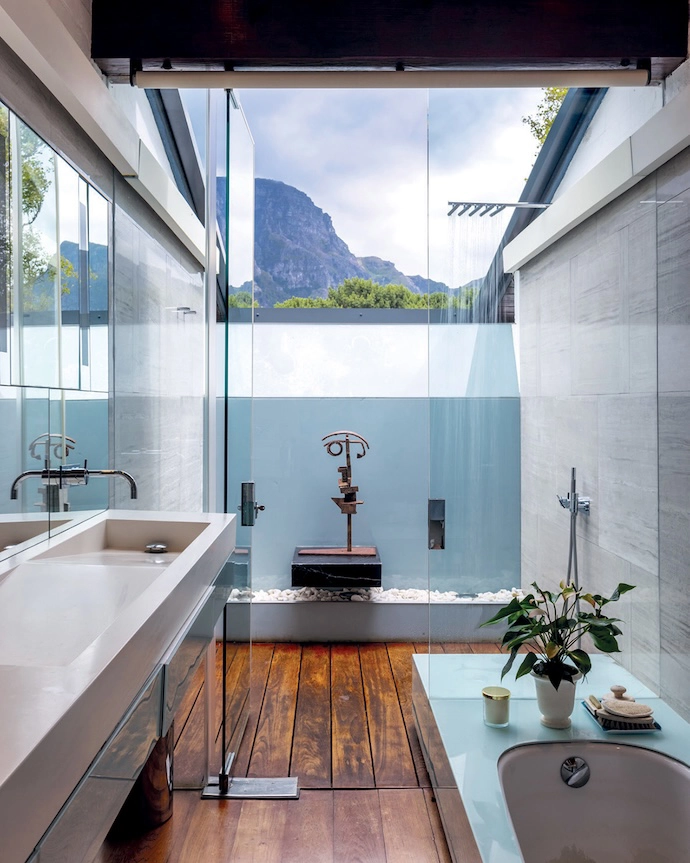
The main bathroom with an outdoor shower. -
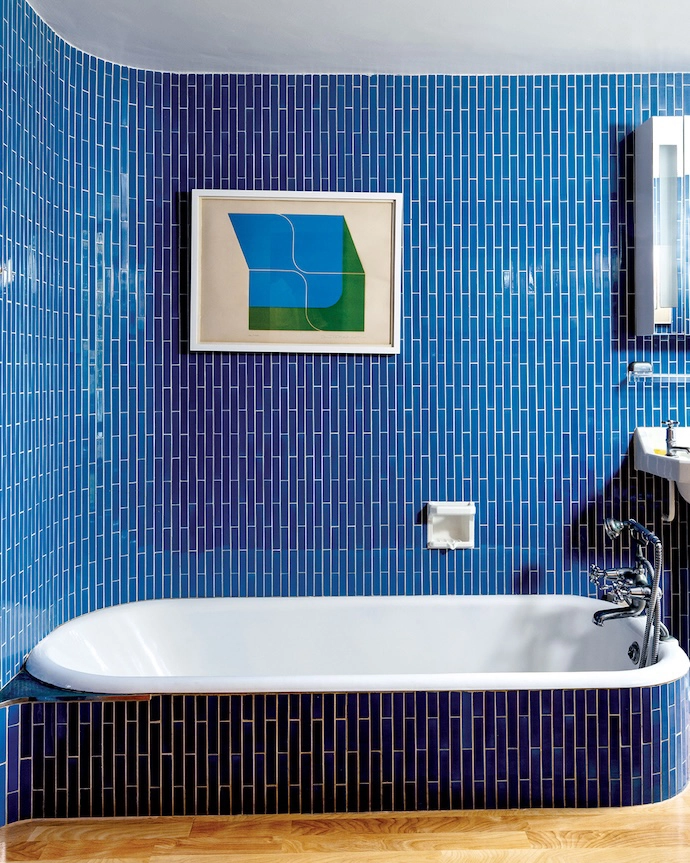
The curved-walled guest bathroom still has original fittings, including this beautiful tilework.
Originally designed and built for his parents while he was still at university, Keurbos is testament to Gawie fagan’s visionary approach to architecture – an approach that owner Lana Hudson has treasured for the last five decades.
WORDS AND PRODUCTION Steve Smith PHOTOS Jan Ras
Keurbos manages the clever trick of being both conspicuous and concealed. It stands out in the architectural sense: this Gawie Fagan-designed Modernist bungalow-style home bears no resemblance to the Neo-Georgian squares and contemporary concrete rectangles that occupy Bishopscourt’s streets. And it’s hidden both physically and conceptually: built on a steep slope, Keurbos sits well below street level on a verdant hillside. It’s a discrete structure in a discrete location, accessed via a descending panhandle driveway that requires very specific directional instructions to find. If you know anything about the late architect’s approach, you’ll know that’s all intentional. This giant of South African Modernist architecture had sense of place as one of his key design principles, and his structures all show a sensitivity to the landscape – Keurbos nestles into the hill, rather than dominating it.
These were all elements that held great appeal for the house’s owner of the past 48 years, Lana Hudson. Gawie had designed Keurbos in 1951 for his parents – Chief Justice H A Fagan and his wife Jessie – while he was a final-year student. After Justice Fagan’s passing in 1963, the home stayed in the family until it was put up for sale in 1978.
“We were interested in a house in Nettleton Road above Clifton, but our bid was R5 000 short,” recalls Lana. “It was a lot of money for a house back then, so before we put in another bid, I thought I’d have one more look around. I knew about Keurbos – it had been on the market for a while and there had been an auction, but the family had deemed the bids too low. They put it back on the market, where it sat for a few months again. We then put in an offer that was accepted.”
That final short statement holds much within it. It speaks to great foresight and more than a small degree of bravery to be spending a large sum of money on a house whose architecture was not just progressive for its time, but also an aesthetic challenge to others in the neighbourhood.
But then, Lana does have an impressively canny eye: just cast your own over her wonderful collection of modern art. Her bookcase is filled with works on art and architecture, but her choice of home (and of art) was never an intellectual one. “I buy art because I fall in love with it. If I walk into a gallery and a piece makes my heart beat faster, I know that’s the one to get. I only buy one piece of art per year, so my collection has been gradually built up over the time I’ve lived here.”
Lana’s heart also happens to be astute; her emotionally driven purchases have turned out to be shrewd investments. You don’t want to know what she paid for the Erik Laubscher abstract – my favourite piece in the house – in the ’90s. It’s that same instant emotional connection that made her choose Keurbos. With an innate, instinctual sense for design that is both progressive and timeless, Lana’s radar is joy – and Keurbos elevated her heartbeat more than anything the lofty Clifton sea views had to offer. And it continues to do so. As she walks us through her home, sharing the last five decades of living here, her love for Keurbos and her appreciation for the impact it’s had on her is wonderfully evident. “Great architecture never dates, and I honestly believe that a thoughtfully designed space improves the experience of your life. I appreciate living at Keurbos every day.”
Along with this joy, though, comes an element of responsibility – one she has held close since owning the house. A deep awareness of its architectural provenance means that Keurbos’s bones have been meticulously maintained. Everything from the beautiful brass-edged front door to the wooden ceilings and bespoke built-in furniture that Gawie designed remains; even the kitchen cabinetry, with its yellow wood drawers and brass handles, is original.
One thing that Lana has modified is what used to be an open stoepkamer to the right of the entrance hall. It was a change inherently sympathetic to the home’s architecture, and one that has improved her experience of living here. “Because it was open to the outside, the weather had to be right to use it. At night, it tended to be a bit chilly, and obviously you couldn’t sit out there when it rained. By taking out the breeze blocks and enclosing it with sliding doors, it became a sunroom – and the space in the house that I’ve used the most. It’s warm, it has a wonderful view of the mountain, it’s close to the kitchen and, if I do want to sit outside, it leads straight to the little courtyard.”
It’s in this courtyard, sitting on mauve-and-purple-striped cushions, that Lana and I are chatting. The conversation flows between the story of the house, her love of art and travel, and The Rest Is History podcast that we’re both avid listeners of. She looks happy and content – something Lana attributes much of to living at Keurbos.
Gabriël “Gawie” Fagan (1925-2020)
Gawie Fagan was celebrated for blending Modernist principles with a deep respect for local climate, landscape and vernacular building traditions. Together with his wife and partner Gwen Fagan, he founded Gabriël Fagan Architects in 1963, producing influential work across Cape Town, from Die Es, his own home in Camps Bay, to sensitive heritage restorations, including the Castle of Good Hope. His architecture is marked by warm materials, human-scaled spaces and elegant simplicity, leaving a lasting imprint on South Africa’s built environment. gabrielfaganarchitects.com
Don’t forget to sign up to our weekly newsletter for the latest architecture and design news.