-

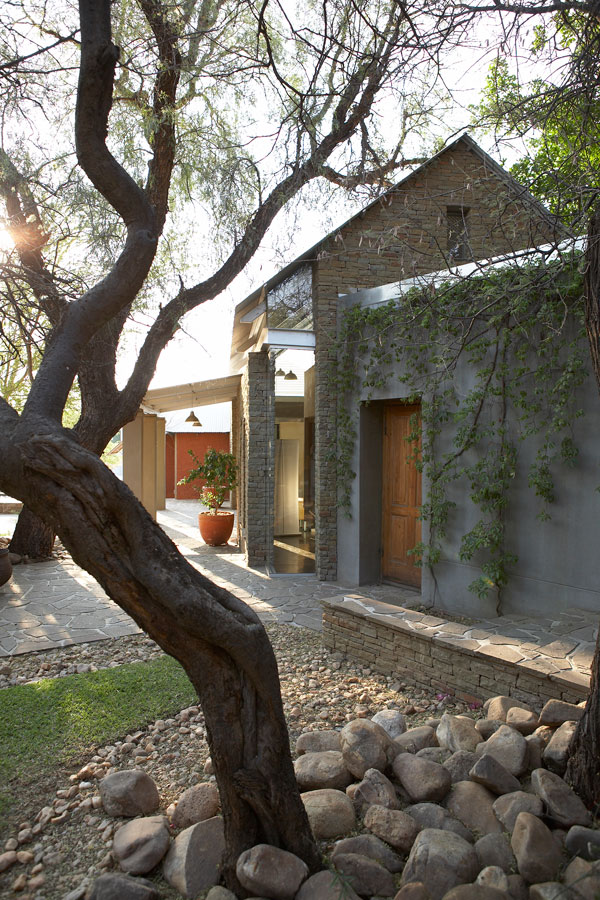
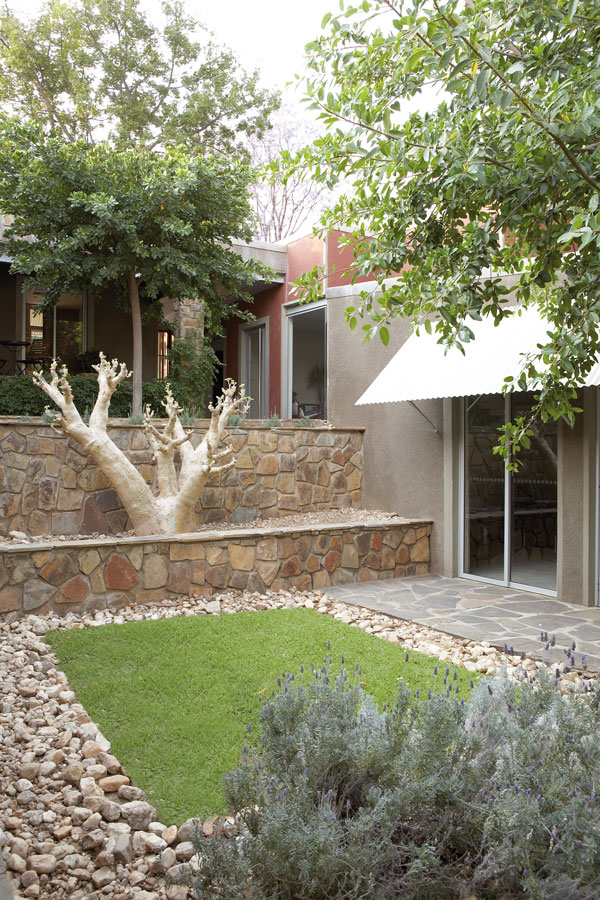
Building a community : Natural stone is used extensively through the development as it is one of the few readily available building resources in Namibia. Together with I-steel beams, screed floors and signature corrugated iron roofs, Leon has created an appropriate aesthetic. -
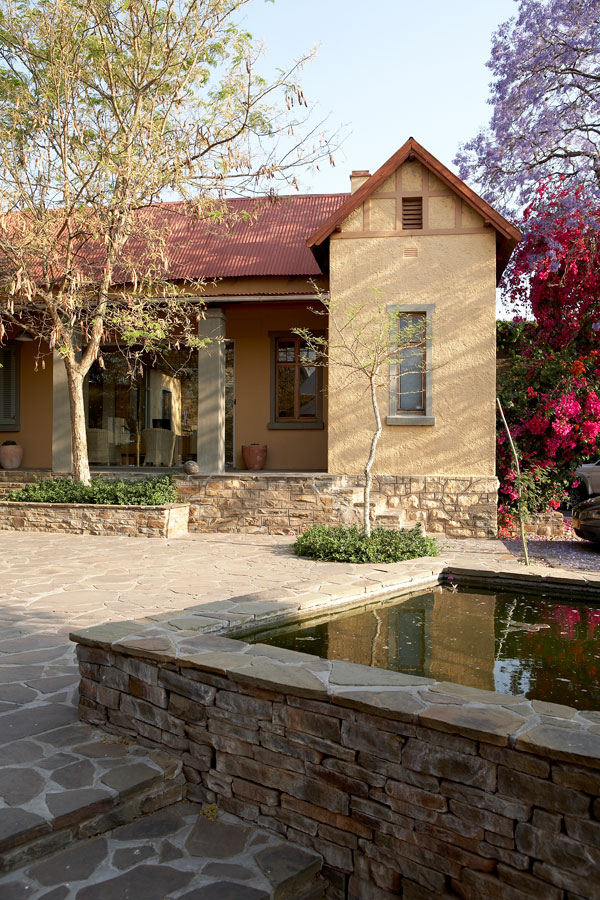
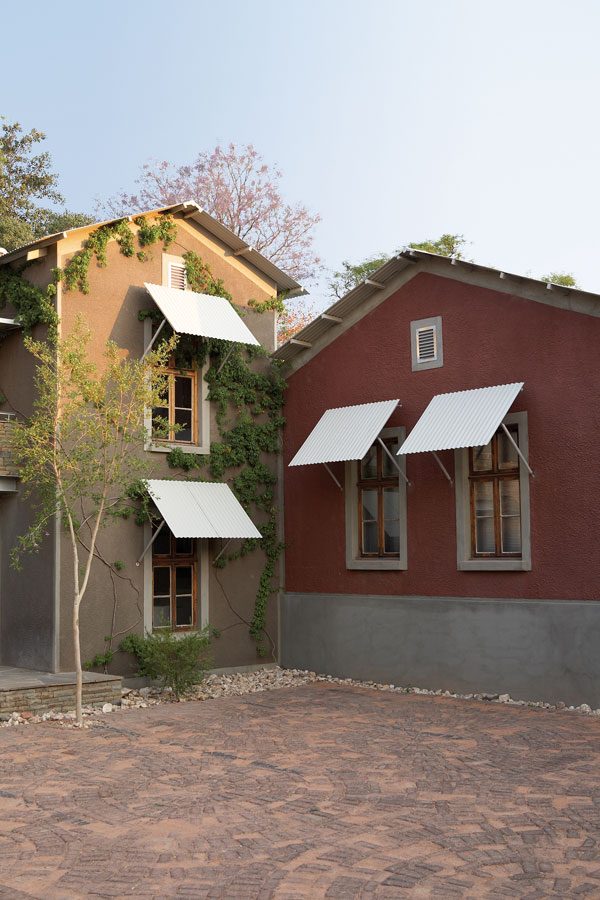
Building a community : The project that kick-started it all, Leon's own office. The generous internal volume, thick walls and small openings of the old German house contribute to making the internal climate pleasant all year round. -
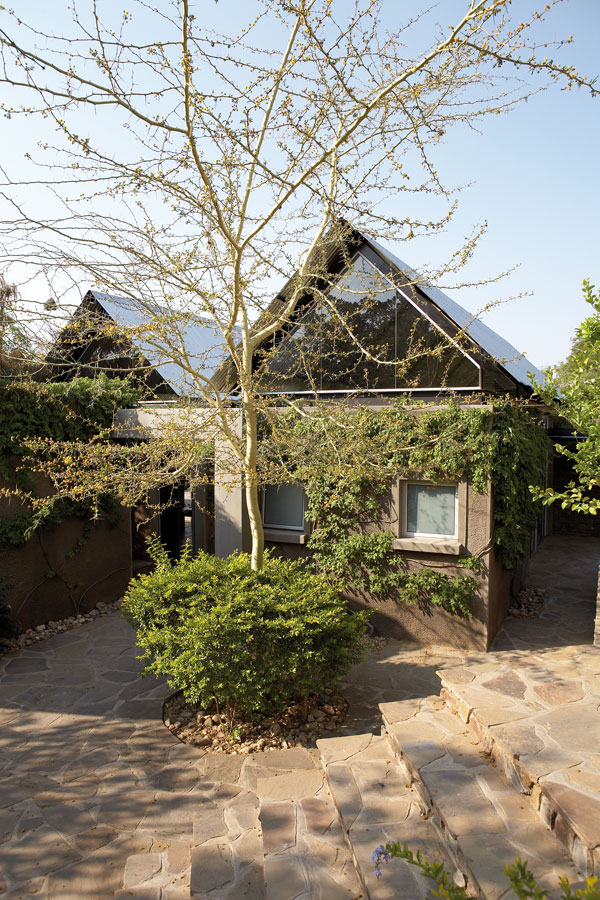
Building a community : Two single garages were converted into two offices. -
Building a community : A palette of earthy tones drawn from the landscape was chosen for the buildings. -
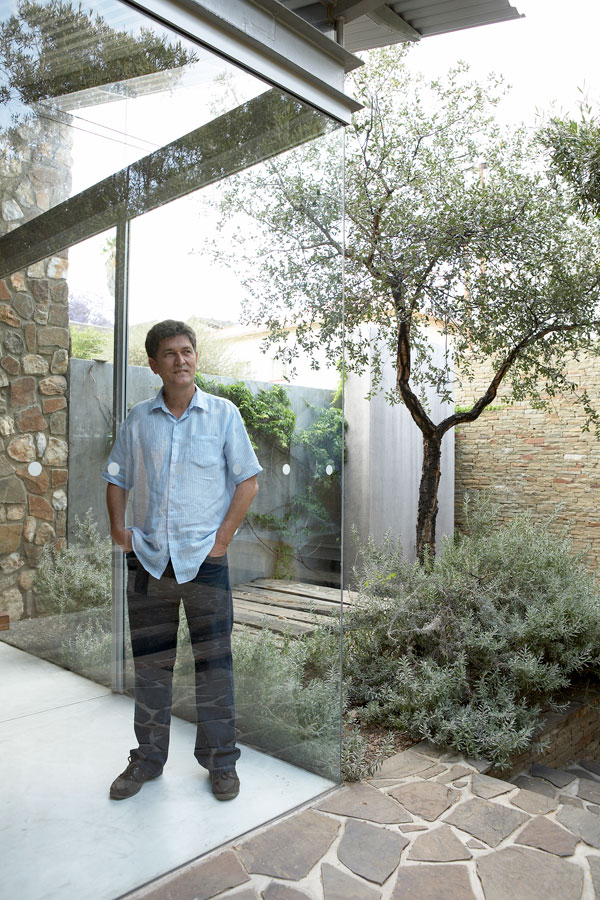
Building a community : Leon Barnard, the architect, visionary and mastermind behind The Village project. -
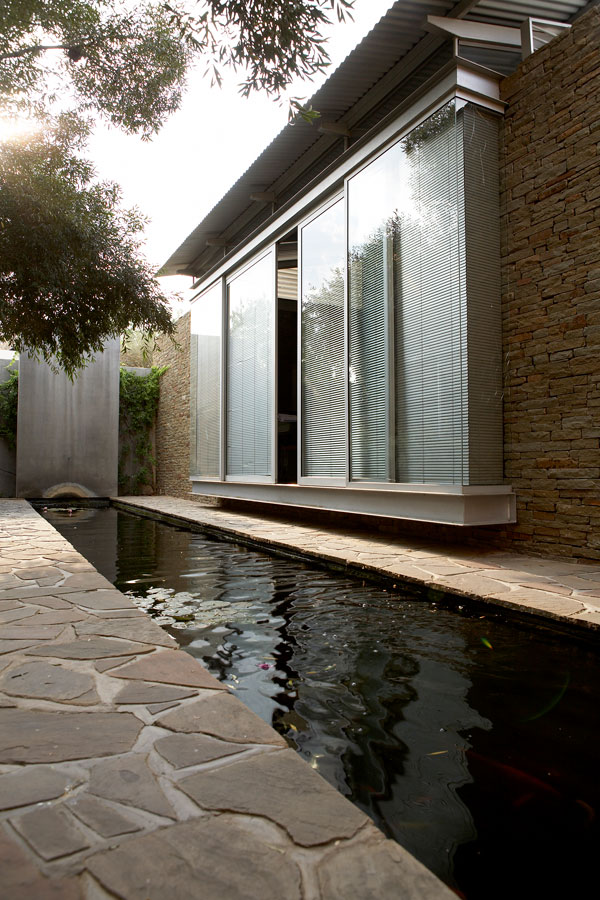
Building a community : The steel and glass box that punctures the existing wall forms part of Leon's studio and hovers over the reflection pool outside. -

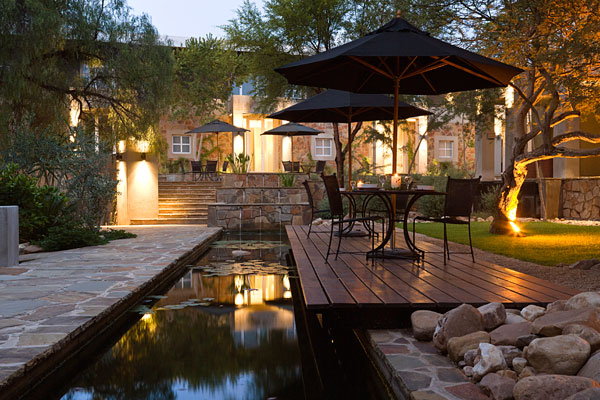
Building a community : A floating deck over one of the pools that contribute to evaporative cooling. -
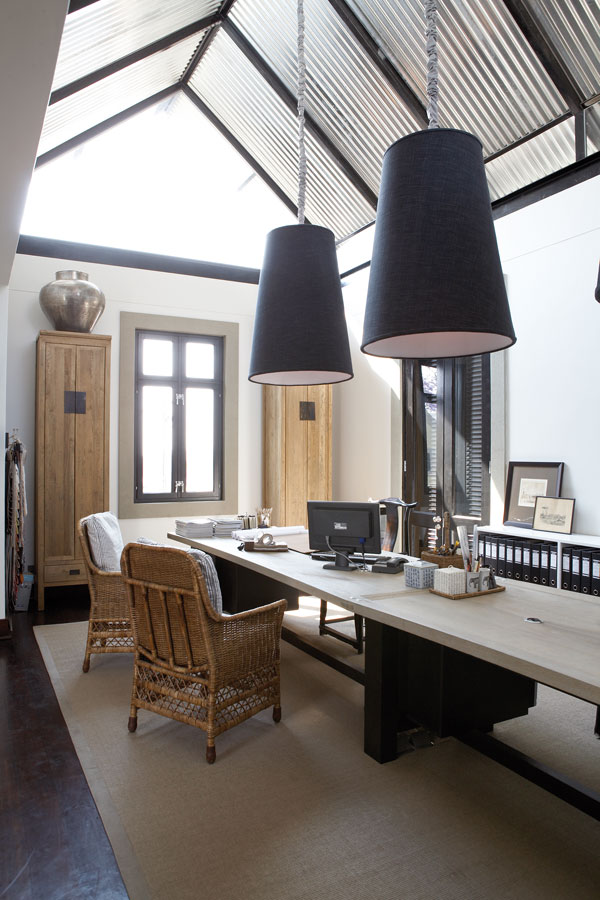
Building a community : Interior designer Heidrun Diekmann's office. Heidrun and Leon often collaborate and she was responsible for the interior design of The Village Suites. -
Building a community : Terracing and walkways connect previously separate sites to create an integrated development. -
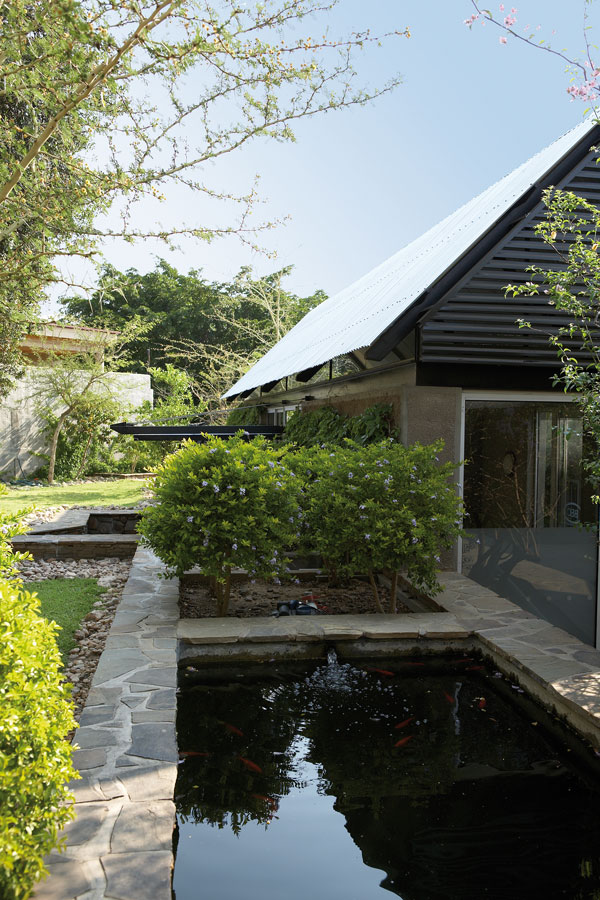
Building a community : Large roof overhangs and screens help keep the Namibian sun at bay.
PHOTOS: Greg Cox | PRODUCTION: Etienne Hanekom | WORDS: Alma Viviers
The Village in Windhoek’s Central Business District has transformed a once derelict and unsavoury neighbourhood into a mixed-used development.
It all started when South African-born architect Leon Barnard decided to open his own office in Windhoek after settling in the Namibian capital in 1990.
Like casting a stone into a pond, this move proved to be the catalyst that would send ripples of change through a suburb, resulting in a case-study urban renewal development. “I bought a run-down German manor house in the suburb of Eros on the edge of Windhoek’s CBD,” Leon recalls. “The house, which had been valued at zero by the bank, had stood derelict since the 1950s.
I could fit my fist through the cracks in the walls and it was carpeted in dust and sand.” Rather than demolishing the house and starting with a clean slate, Leon opted for an environmentally friendly approach and decided to work with the existing structure.
Regeneration: a trend
What emerged from the process was not only a spacious contemporary office but also a responsive architectural solution. Struck by how well the conversion worked, Leon and his business partner, Wouter van Zijl, invested in more properties in the suburb with the intention of applying this new solution to create further office and commercial space.
They also managed to convince neighbouring property owners of the value of the redevelopment into an integrated mixed-use area. Boundary walls between houses came down to create an interconnected pedestrian corridor with plenty of courtyards and squares to give the new neighbourhood the feel of a village.
True to context, the converted buildings are climate sensitive and make use of local materials and craftspeople, resulting in a refreshing, contemporary vernacular. “There aren’t many natural resources in Namibia but one thing we do have plenty of is stone,” Leon explains.
However when they started out, experienced stonemasons proved to be hard to find. “We managed to track down a sole 72-year-old mason,” Leon says. “As the project progressed he took on an apprentice, eventually started his own business and now runs two teams of trained masons.”
Thick stone walls are, of course, perfect in the semi-desert climate, staying cool during scorching days and radiating warmth on cool evenings. Leon also employs high internal volumes, well-insulated roofs, cross-ventilation and deep-set verandas to achieve buildings that hardly ever need air-conditioning.
Plenty of water features dotted throughout the development serve a double purpose, not only helping to make the environment appear cooler but also contributing to climate control through evaporative cooling.
Positive and negative spaces
Leon has applied a principle of noughts and crosses in the design of The Village: there is a positive space to balance every negative one, and for every building there is an open courtyard or green area.
Swimming pools have been transformed into ponds and reflection pools. Original vegetation, particularly indigenous species, has been retained as far as possible, creating a lush feel despite the semi-desert location.
The Village is now home to an assortment of lawyers’ offices, several architects’ practices and the studio of an interior designer, as well as conference facilities and The Village Courtyard Suites, which offers short-term accommodation.
The Fresh and Wild restaurant is at the heart of the development and the place where this newly formed community meets over lunch or coffee.
Future plans envision the conversion of a disused church into a gallery and theatre, more long-term rental accommodation, as well as the creation of a large town square. There couldn’t be a more apt name for this development: it has the sense of scale and connectedness of a small village with a strong local identity and has also reconstituted an entire community.
• Leon Barnard Architects: +264 61 240 405, leon@leonbarnard.com