-

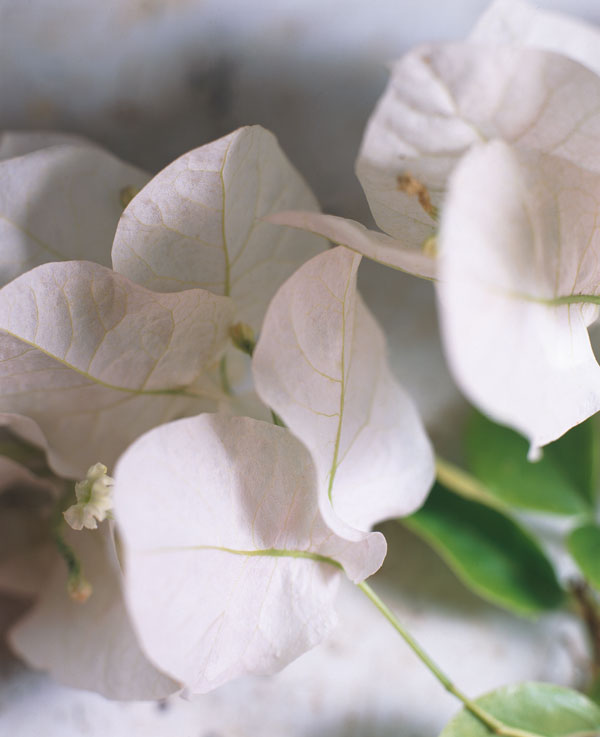
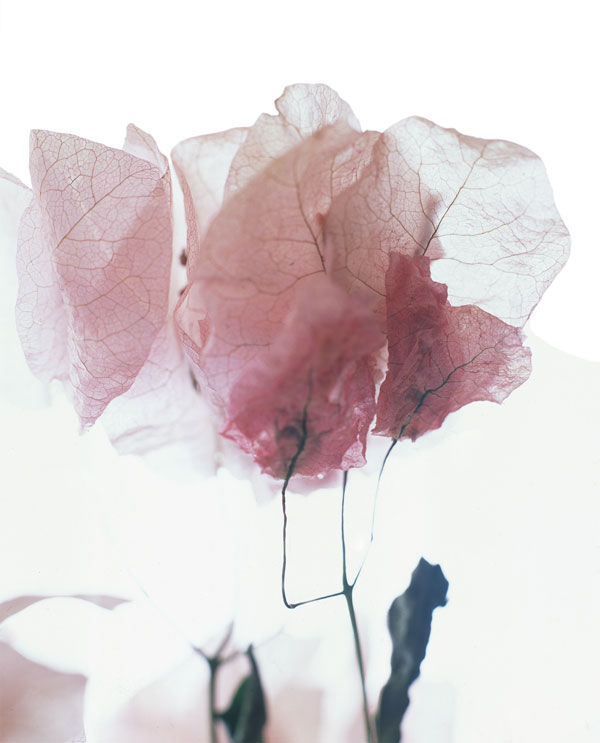
Bold papery lanterns : Pale colours reveal the delicacy of the bracts. Bougainvilllea sprays are easily dried in a 120 degree oven, provided their little white flowers themselves are fully open. If they are still in bud, the bracts will wilt. -

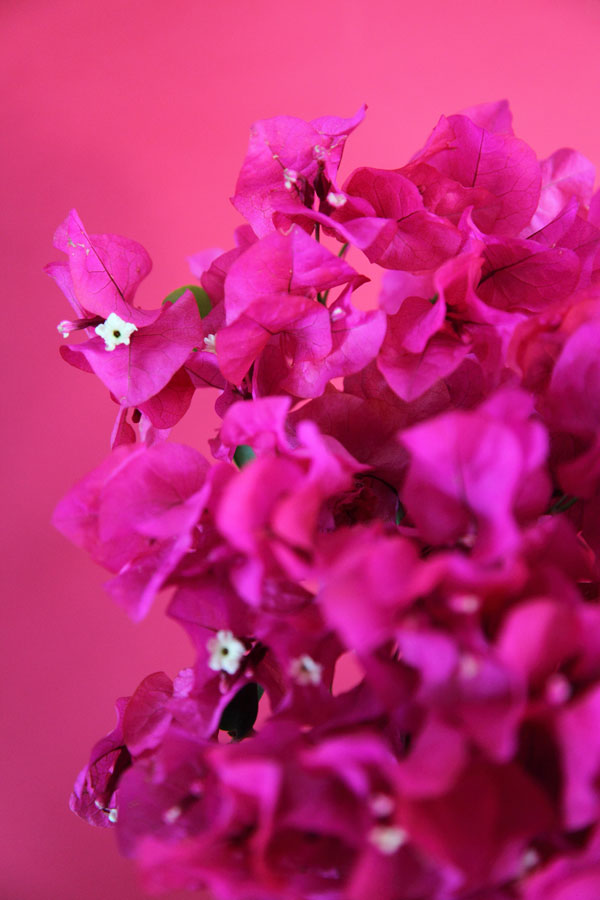
Bold papery lanterns : A white or colour-washed wall is an ideal bougainvillea backdrop. -

Bold papery lanterns : 'Killie Campbell' is one of the great classics. The flowers darken as they mature to sumptuous effect. -
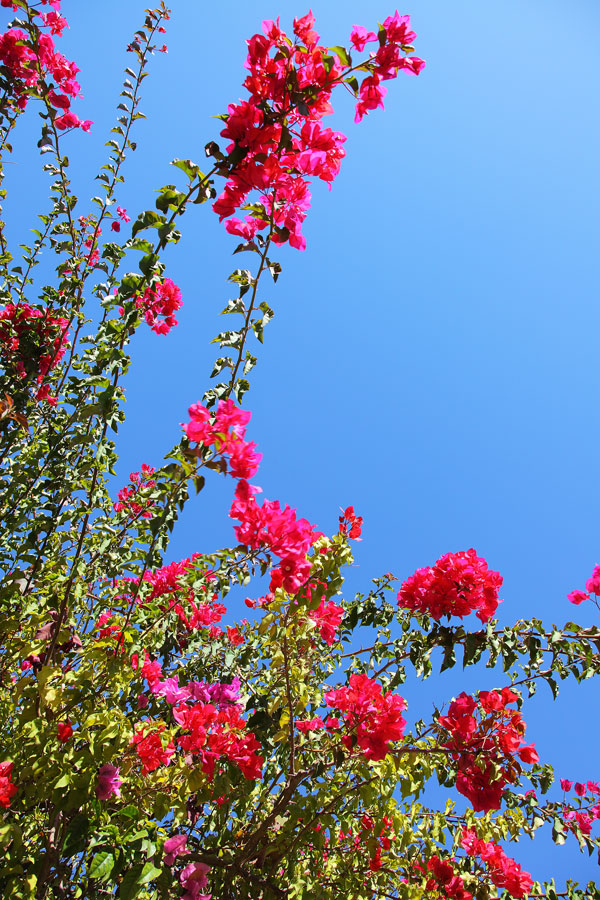
Bold papery lanterns : Flowers may be borne all along the shoots, or in trusses that could be loose or dense. -
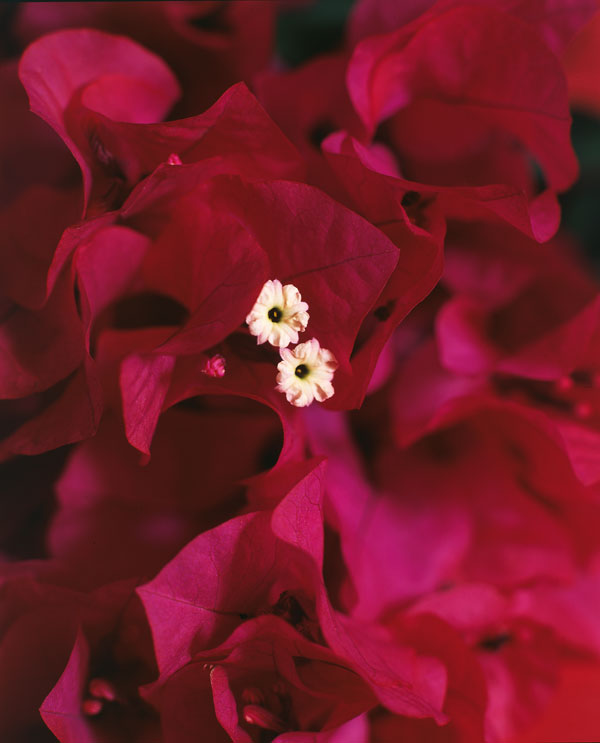
Bold papery lanterns : The actual flowers are small white trumpets in the centre of three papery bracts.
PHOTOS: Lien Botha | WORDS: Dave Pepler and Laurian Brown
Is your garden let down by a drab patch that could do with a bright explosion of colour? Try detonating a bougainvillea bomb and then standing back to watch the effect.
Bougainvillea makes me uneasy. A rain spider hides in every thicket, emerging from the thorny depths at evening to spread herself across the nest of leaves. Shine a light and her eyes gleam like diodes, her web silver as a mist across the moon.
Try to pick a branch and a thorn will instantly pierce your finger like an injection needle, followed by the burn – intense, laming and lingering.
Worldwide beauty
When it comes to colour, however, Bougainvillea spectabilis is more than worthy of its name. Admiral Louis de Bougainville, who brought the plant back to Europe from Brazil in 1768, could scarcely have imagined that it would become one of the most universal of ornamental plants.
From the tropics – think of the Javanese opening scene of Max Havelaar, of de koffij-veilingen der Nederlandsche Handel-Maatschappij, where the whole screen is simply saturated with dense layers of purple – to the little railway house in J.M. Coetzee’s Worcester: “In the corner of the stoep, in the shade of the bougainvillea, a canvas water bottle hangs.” (From Boyhood)
Bougainvillea is at its most striking in arid landscapes. When next you take the R62 to Oudtshoorn, keep in mind the plain before Goreeshoogte. In that rock-hard earth, all along the dark ribbon of the road, someone with an eye for the fabric of the landscape has planted a line of colour.
The khaki monotone of the Little Karoo suddenly becomes land art: the grey of the tar, the pink, gold and purple of the bougainvillea glowing like corals in a sea of drabness, and then the combed green of the vineyards. The effect is pure architecture, like a stone wall or a bridge of colour across the hills.
My favourite alliance of bougainvillea and structure is in the heart of the Karoo, in places such as Willowmore, Williston and Carnarvon. The heart of these little towns has been ripped out by the widening of the main street into a soulless road, without any consideration of balance, sympathy or respect for the organic proportions of the buildings; you have only to look at Calvinia’s main street now.
But wander down the dusty back roads and you will find houses that still sit properly on their patch of earth. Deep front stoep, outside step, garage and toilet against a hedge of prickly pear? Yes, plus a pepper tree and, against the green trellis of the stoep, a bougainvillea – the old-fashioned purple kind.
Bougainvillea is also the colour of the Kilombero Valley in Tanzania. Years ago I found myself on a path through the leper colonies of Nazareti and Ifakara. I was deep in thought, the heat like a blanket around me. Then my eye caught another eye, through a dusty purple curtain of bougainvillea. It was Pius, trapped in his wheelchair.
Pius, a child of 15 in the crumpled body of a four year old. He would leave the stoep once a week, when his mother pushed him to the mud-brick hall that served as the Catholic cathedral. There he sang in the choir. Every time I returned, I would look out for the purple, knowing that Pius would be waiting there in his wheelchair, bubbling with laughter as I drew near.
What would I want in a little hideaway in the Karoo? A kitchen with a grainy wooden table and an oil lamp. A Bolinder wood stove with a fat ginger cat on a cushion in front of it. A pepper tree at my bedroom window for the night breeze. And a deep stoep with a day bed behind a curtain of bougainvillea, where the light falling on my book would remind me of the tropics. – DAVE PEPLER
Latino colour bursts
Dag-Glo delight Latin America is home to some of the brightest, most improbable flower colours in the world, none more dazzling than bougainvillea with its papery textures and Mardi Gras hues.
Botanists are still arguing about the family (Nyctaginaceae) and the actual number of species – somewhere between four and 18 – but the bougainvillea presence is so powerful, and there are so many beautiful forms and hybrids of this most popular of ornamentals, that no one else cares too much.
Bougainvillea is a scrambling semi-deciduous climber equipped with vicious thorns to help it on its way. The most vigorous types will grow to over 30m, scaling tall trees to spectacular, if sometimes hazardous, effect.
The flowers themselves are small: three white or creamy trumpets set at the heart of three or six vivid bracts that capture the light like paper lanterns, creating cascades and ruffles of dense colour. Some of the bracts change colour as they age, which makes the effect even more lively and sumptuous.
A wide selection of cultivars is available in South Africa, ranging from vigorous giants to more manageable medium growers and compact plants no more than a metre high. Growth may be upright or lax; flower trusses may be borne in long sprays or bunches, loose or tightly packed. Flowers may be single, double, bi-coloured or of mixed colours: purple and white on the same branch. Leaves may also be variegated in two or even three colours.