-

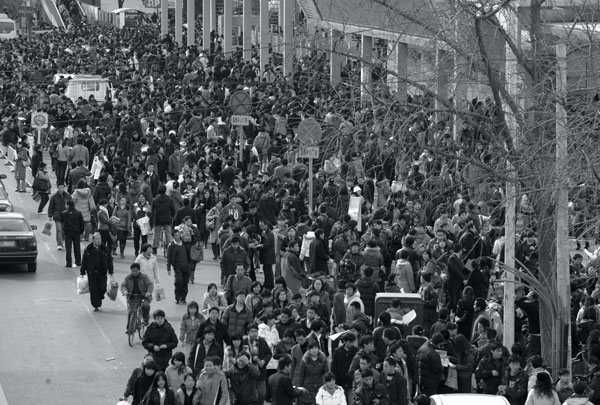
Cool chaos : Visitors to Beijing should prepare themselves for the thrilling lack or order and space. -

Cool chaos : A security guard marches at the Mao Zedong Revolution Memorial Hall, Tianamen Square. -

Cool chaos : The new Terminal 3 at Beijing Capital International Airport opened in 2008 as the world's largest airport terminal but was relegated to second lace following the opening of Dubai International Airport's Terminal3 later the same year. -

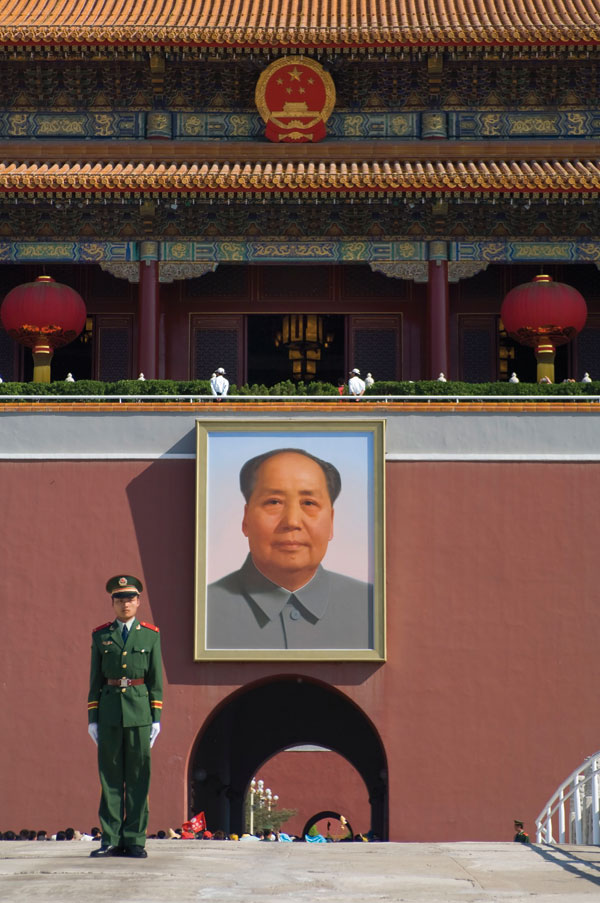
Cool chaos : A soldier stands to attention in front of aportrait of Mao Zedong at the Gate of Heavenly Peace at the northern edge of Tianamen Square. -

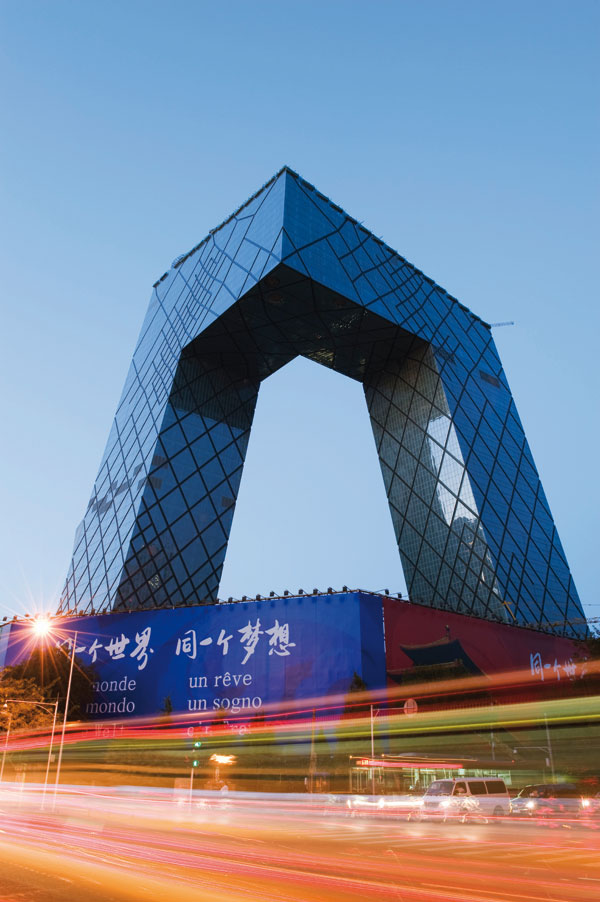
Cool chaos : The CCTV tower by Rem Koolhaas and Ole Scheeren of the Office for Metropolitan Architecture (OMA), was designed to withstand earthquakes. -

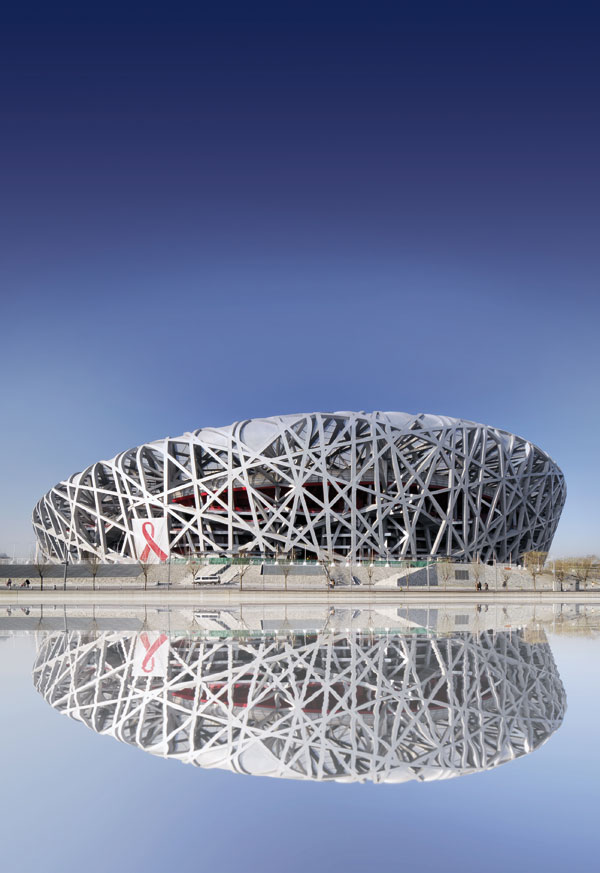
Cool chaos : Ground for the Beijing National Stadium was broken in December 2003 and it officially opened in June 2008. -

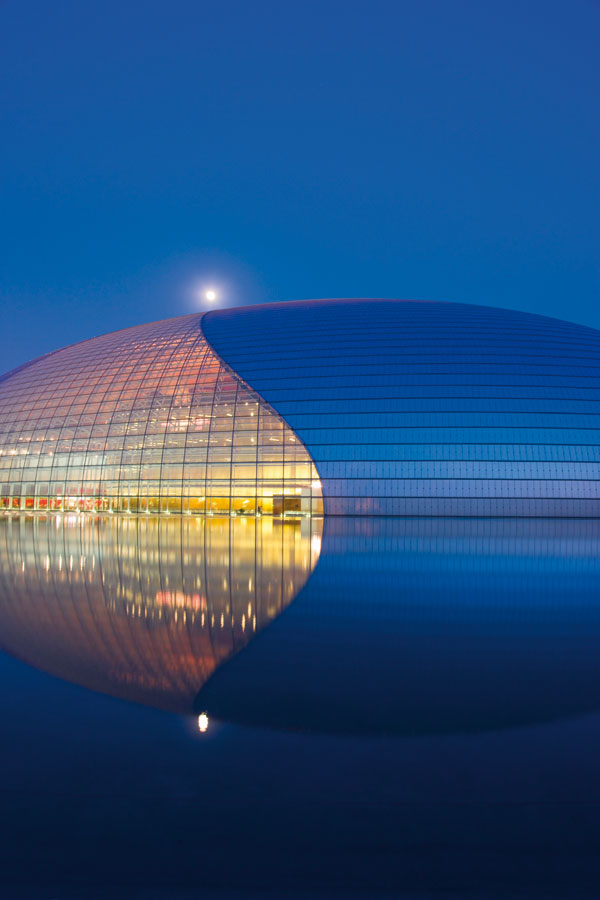
Cool chaos : The elliptical dome of the National Centre for the Performing Arts. designed by Paul Andreu Architects Paris. -

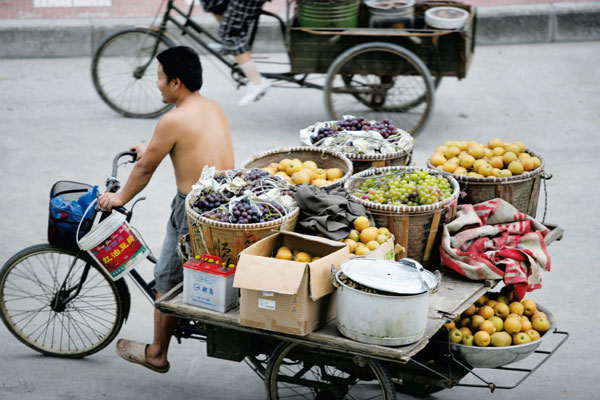
Cool chaos : Beijing's lively street sand markets offer vibrant colours, flavours and sounds


WORDS: Ross Chowles
Ross Chowles has had a long-standing love affair with China’s dynamic capital, where the ancient and futuristic combine to lure him back time and again.
As I landed at Beijing’s airport in 2003, I could see the beginnings of the new Terminal 3 under construction. This spectacular dragon-like structure was the first sign that the Chinese capital was preparing for the 2008 Olympics.
Architecturally, Beijing then was a completely different city to the one I visit today. The Beijing National Stadium, known as The Bird’s Nest, did not exist. Neither did the famous China Central Television (CCTV) building, nor the futuristic titanium-and-glass dome of the National Centre for the Performing Arts.
What I discovered was a city that had become a massive building site among the hutongs – the old suburbs of narrow alleyways made from grey brick, as well as symbols of China’s past, such as the ancient Forbidden City. It was chaos.
The past and future collide
The streets bustled at all hours with people, bicycles, taxis and thousands of newly acquired cars, a sign of China’s booming economy. Street vendors sold everything from socks to TV sets. I felt the energy of a place both living in the past and colliding with the future.
The smells, sounds and sights rubbed my senses raw. I didn’t know what I was eating and couldn’t read the words on shop windows or understand those being spoken around me. I felt like an alien – and I absolutely loved it.
If you enjoy Switzerland or Canada, you probably won’t like China as it doesn’t have the orderliness of these places. Space is at a premium: Imagine 19 million people living on top of one other. No wonder harmony is such an important concept, for how else would such vast numbers of people (China has a population of 1,3 billion) be able to live together?
I have since returned to Beijing every November, feeling at home and entirely out of place at the same time, and so have been privileged to watch the metamorphosis of this fantastic city. During the six years of construction for the Olympic Games, Beijing never slept and was permanently covered in dust.
As China became wealthier, so more cars were purchased and the already congested city became even busier: In Beijing it’s only possible to make two appointments each day, one in the morning and one in the afternoon, because it takes so long to get anywhere.
Yet deep below the traffic jams, the subway system was being improved and is now a fantastic, cheap way to travel. As a Westerner, though, you have to pay careful attention to the announcement of station names. Mandarin is a subtle language and although announcements are repeated in English, it is difficult to decipher one name from another.
Showing the good side
The Chinese government saw the Olympics as an opportunity to show the country’s best face to the world. This meant cleaning up the streets, forcing people to leave cars at home, closing factories to minimise pollution, and rounding up vagrants and stray dogs.
Many developments are incredible, such as the stunning new buildings that punctuate the skyline. Some of the changes, though, are sad. Much of the old was destroyed to make way for the new and I think one day China will regret destroying so much of its structural past.
Building completion deadlines were set for six months before the Olympics so that construction sites could be beautified with gardens, windows washed, streets swept and taxi drivers taught English. Every citizen was expected to put in the effort to make Beijing perfect. Then came the two weeks of the Games and Beijing was transformed into a Swiss-like place for a brief time.
Now, over a year later, although the city showcases numerous amazing architectural landmarks, the congestion is back. So are the vendors, the chaos, the overcrowding. The writhing mass of humanity – Beijing’s lifeblood – has returned. It is the city I know. Great, magnificent Beijing.
I am so glad to have my familiar old friend back again.
• Visit www.travelchinaguide.com and www.beijingpage.com for more information.