-

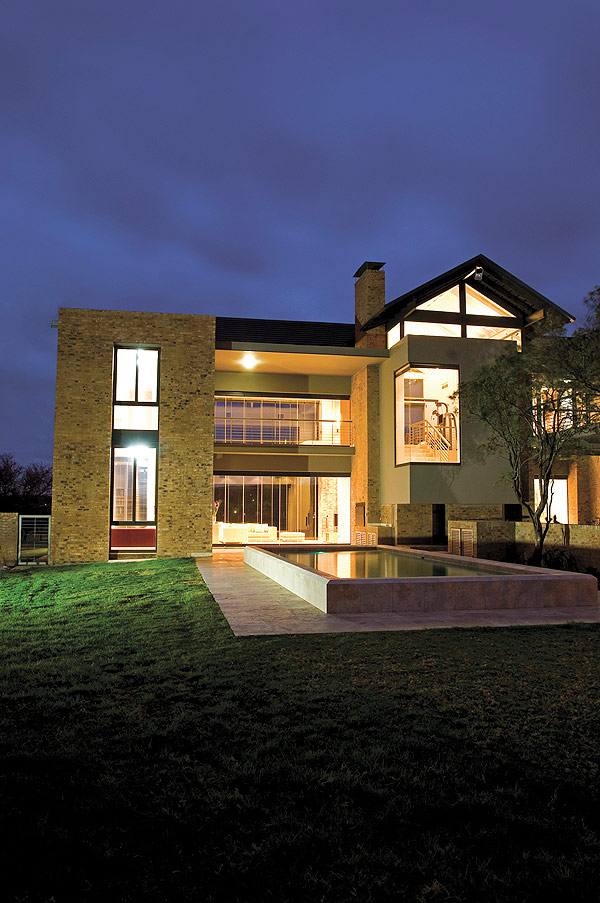
Lighthouse : Thomas Gouw's elegant design blooms at night behind a screen of soft light, -

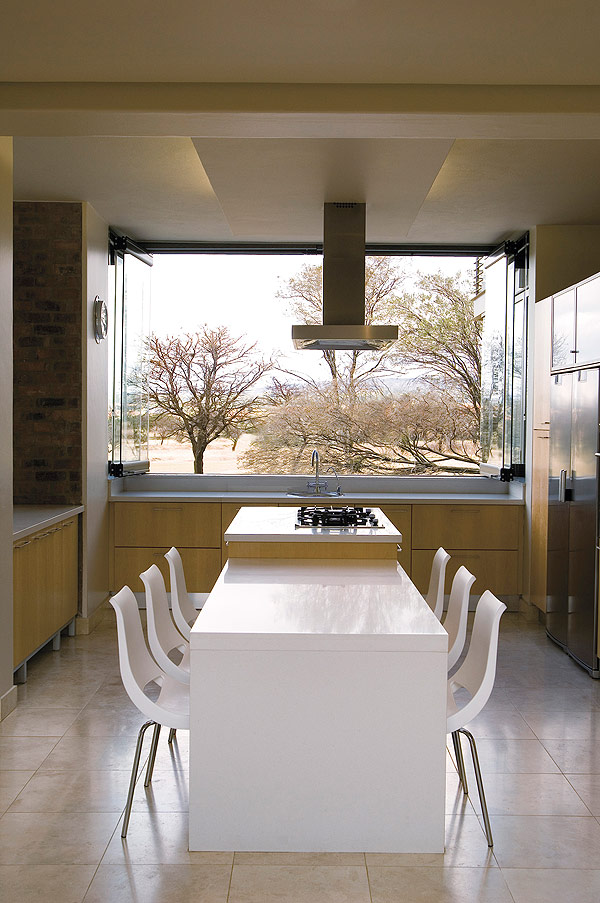
Lighthouse : While the contemporary open-plan kitchen is not exceptionally large, the frameless-concertina windows open up completely to the outdoors, creating an illusion of limitless space. -
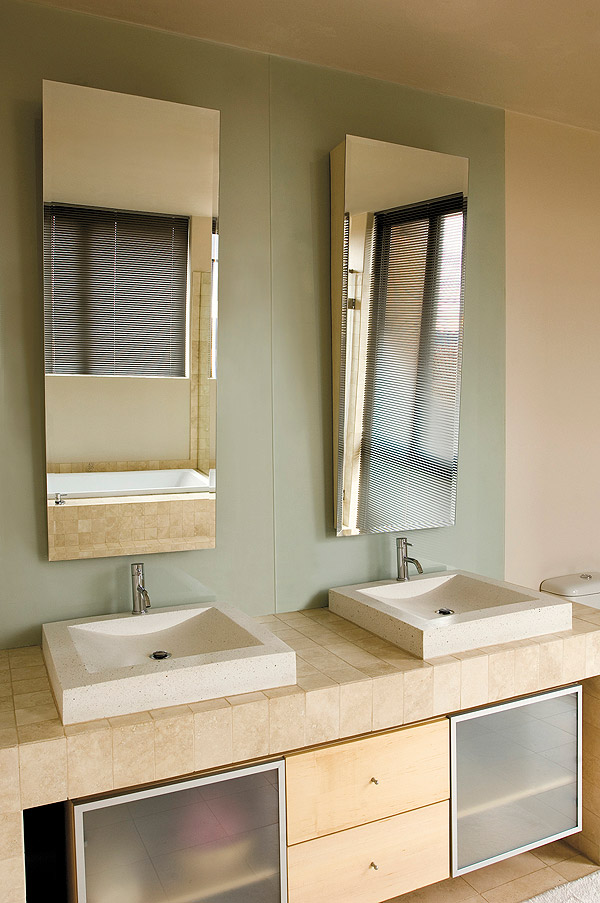
Lighthouse : With its cool palette and streamlined fittings, the bathroom is an exercise in seamless design. -
Lighthouse : The children have their very own eyries - each kid's bedroom has a mezzanine play loft to which they can escape. -
Lighthouse : True to the owners brief - this house looks elegant form every angle. -
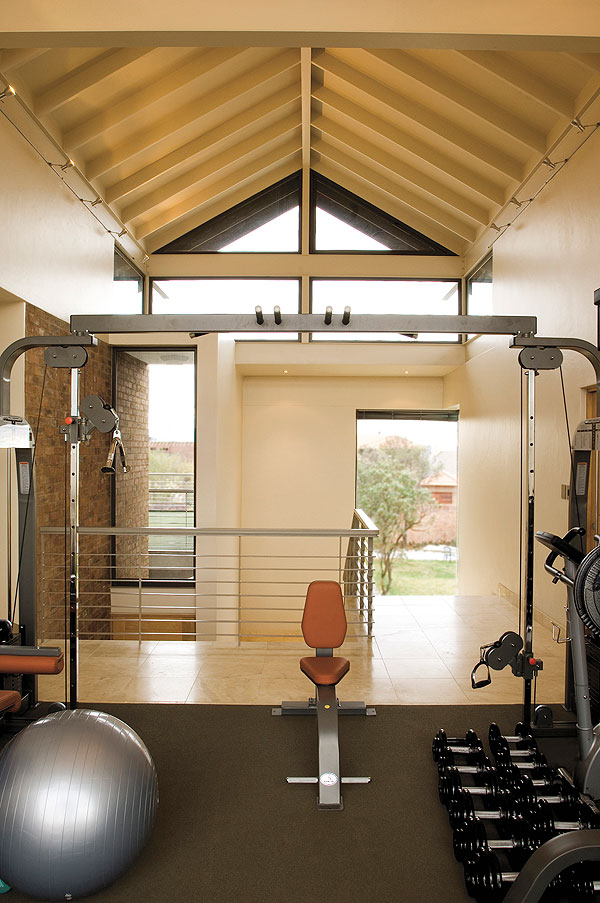
Lighthouse : Even when hard at work in the top-storey gymnasium you can enjoy wonderful views over the thorn trees and dam. -
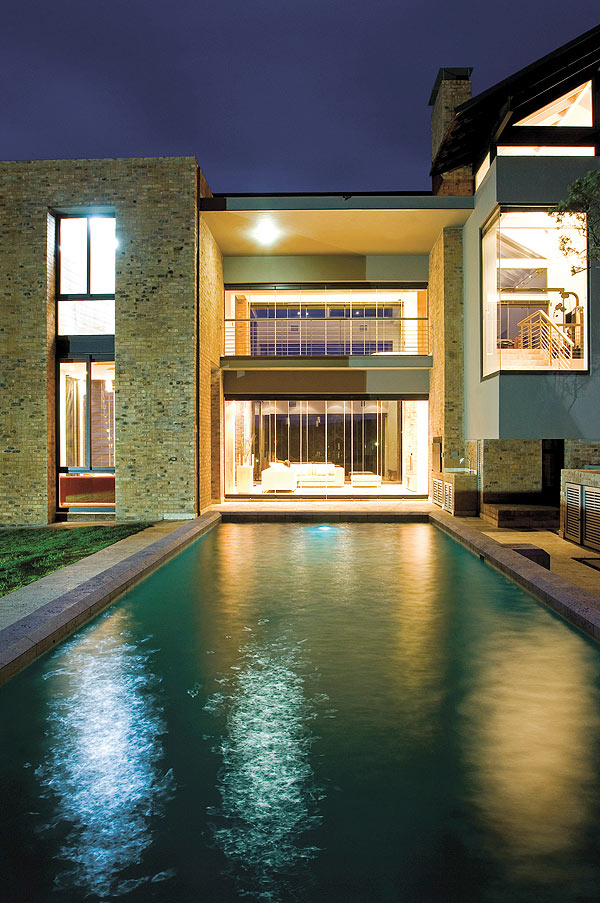
Lighthouse : On warm Pretoria nights the swimming pool, with its shimmering reflection of the light-flooded house, has extra appeal.


PHOTOS: Dook | PRODUCTION: Annemarie Meintjes | WORDS: Danie Marais
In this Pretoria house of light and air, clean lines and effortless functionality extend right through to the finely considered details to create a sophisticated yet utterly accessible family home.
Visser du Plessis, owner of this dreamily transparent house in the Silver Lakes security village in Pretoria East, will be familiar to many. Presenter of the TV magazine program Tekkies for six years, he also appeared in many hit Afrikaans series such as Skooldae, Grondbaronne and Sonkring.
Now a successful businessman, Visser no longer has time for acting. But he’s by no means a grey man in a grey suit; he competes regularly in rallies in his fiery Subaru, ‘the best car in the world’.
Simplicity in every light
Visser and his wife Stephanie weren’t exactly sure of what kind of house they wanted. What they did know was what they wanted to avoid. ‘We didn’t want our dream house to be a forbidding castle,’ explains Visser. ‘I like simplicity, so I didn’t want anything with twists and curls that looked as though it had been designed in a particular style. It needed to be a house that would look good from any angle if you were to fly around it in a helicopter.’
With the help of bright young architect Thomas Gouws, they got everything they wanted and more. In Thomas, Visser found the perfect working partner. Both agreed that inherently good design needs no decoration and that architecture that has been reduced to its most essential elements has the most impact. Working together was a pleasure.
‘About 10% of how the house should look was already in my head,’ says Visser. ‘But Thomas immediately understood what I wanted. By our second meeting he was able to supply the remaining 90%.’
For the house to be as open and transparent as possible, frameless-glass concertina doors and windows were used on the lower and upper levels. These mobile walls and three-metre-high ceilings blur the lines between indoors and out, creating living spaces in which you feel one with the landscape and the glorious inland climate.
Transforming a comfortable living room into a summer veranda is as easy as opening a window, and even at the kitchen table you feel as though you’re alfresco. In the breezy top-floor gymnasium you exercise, cooled by the breeze. The main bedroom next door enjoys a 180-degree panoramic view of the dam and golf course – when you slide open the glass doors you can hear the ducks and on a summer night, if you sleep with the room completely open, you might be woken in the morning by the roar of the lions at the nearby Farm Inn.
With thorn trees and thatch roofs stretching into the distance, it’s more like being on a game farm than in a suburb or even a country club. After only a quarter of an hour in the Du Plessis house you feel lighter and more relaxed.
Shattering the challenges
A glass house presents a number of challenges. To ensure that the interior doesn’t become baking hot, house and roof have been positioned so that there is always an abundance of natural light but are cleverly designed so that the summer sun does not shine directly into the house.
The summer heat is also dealt with by an evaporation system – a fan blows air through a damp membrane located in the roof and the interior is cooled and humidified by the resulting condensation.
This energy-efficient system also works with all the windows open and builds up a positive pressure in the house, keeping the dust out. In winter, the generously proportioned indoor spaces are warmed with underfloor heating. ‘Even when the whole world is frosted white around us, we can walk around barefoot and in shorts,’ says Visser.
Another foot-friendly feature is the natural texture of the travertine tiles that have been laid through the house. Travertine has something of the gloss of marble but not its chilly grandeur. The architect has deliberately avoided playing with contrast here – floors, walls and ceilings are all more or less the same colour for a seamless effect. The travertine, together with russet-coloured brick, ensures that this house of glass and steel does not have an austere modern feel.
Good design and functionality meet in every corner. The garage, stairs and passages are extra-wide for comfort, not for show. Optimum use has been made of every space: a guest toilet is tucked neatly under the stairs and the overhang of the roof terrace is also a carport.
The children’s rooms each have a high, Heidi-style loft in which they can play as in a tree house. The braai area at the swimming pool is in the shade and well protected in the event of a thunderstorm.
The greatest challenge in a transparent house is to create privacy, says Thomas, and he achieved this by introducing a combination of electronic blinds and lighting – the blinds transform the glass box into a completely private space within seconds, while white lightbeams outside cast a curtain of light over the glass so that only the silhouettes and shadows of the people within are visible.
The lighting not only creates privacy, but also changes the form of the house. At night this house without walls looks as though it has been built out of light. Thomas Gouws is an architect who proves that practical can also be irresistibly beautiful.
• Thomas Gouws: 012 460 9867, fax 086 636 5649, thomasgouws@mweb.co.za