-

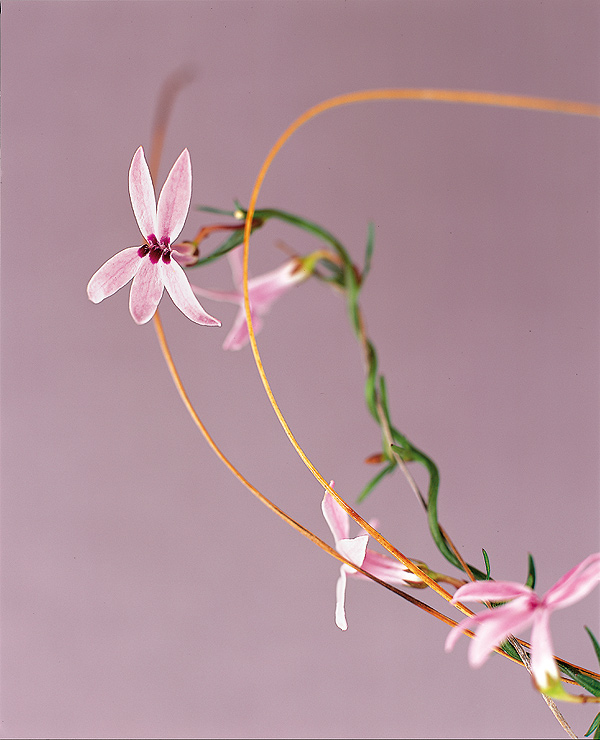
Pharmacy of the veld : Cyphia volubilis is a twining herb with small but showy flowers. It is widespread in the Cape and its large underground tuber is used as a thirst quencher and an emetic. -

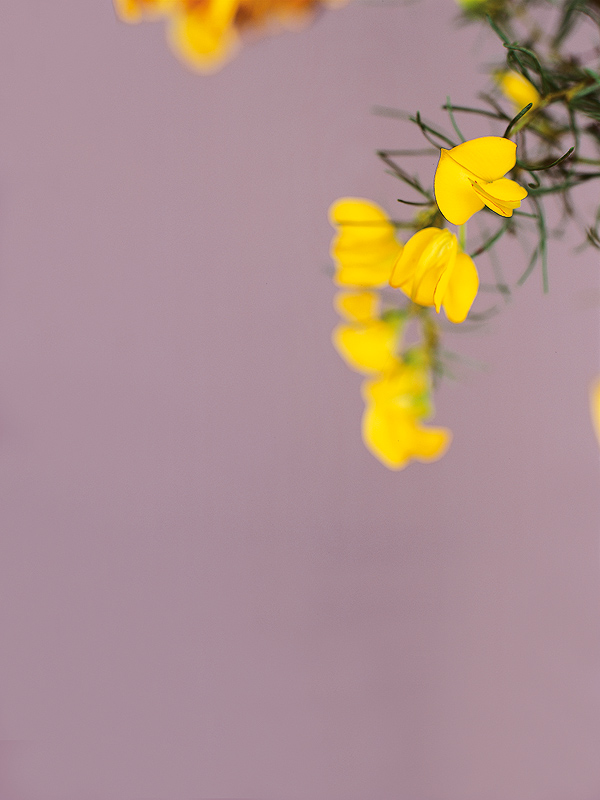
Pharmacy of the veld : Cyclopia genistoides (honeybush) is used to make a caffeine-free herbal tea. The honeybush contains phenolic compounds that have antioxidant properties. This yellow-flowered shrub makes an attractive addition to a fynbos garden. -
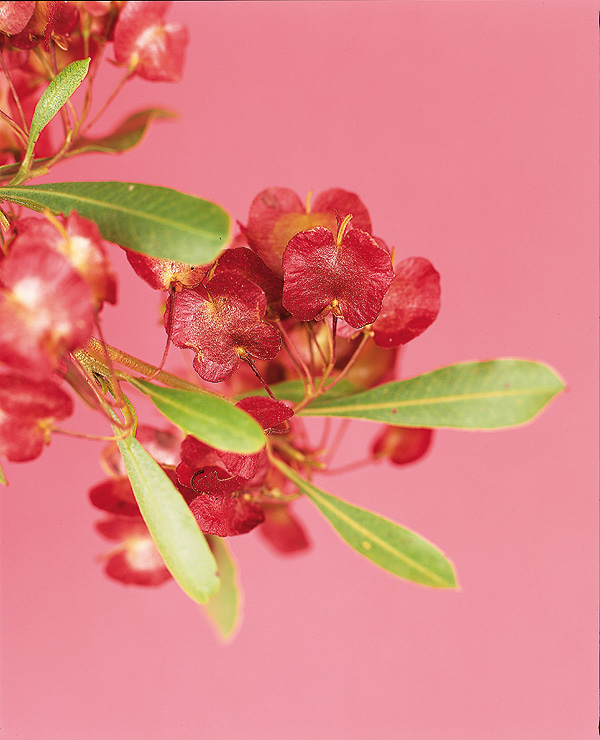
Pharmacy of the veld : Dodonea angustifolia (sand olive): a decoction of the leaves is used for fevers, colds, sore throats and arthritis. This resilient shrub or small tree makes a good screening plant and the plum-leaved form is particularly attractive. -

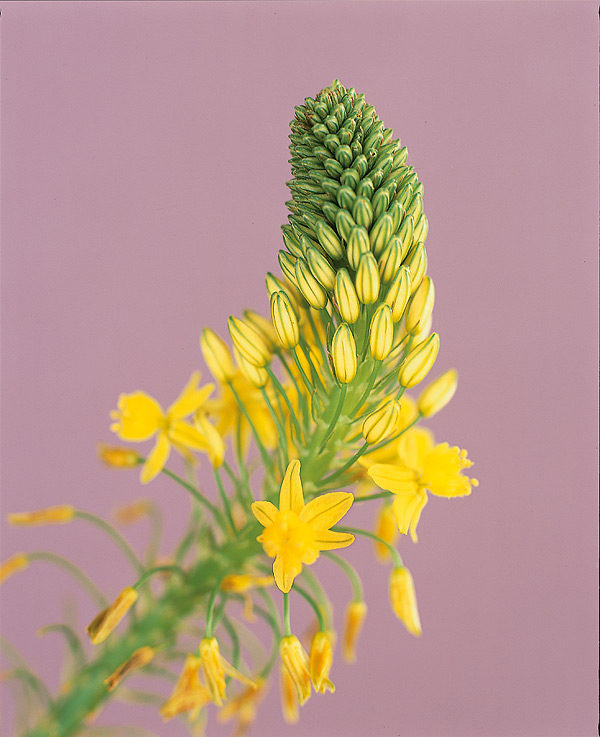
Pharmacy of the veld : Bulbine frutescens (kopiva): several species of bulbine are used medicinally- the sap treats burns, wounds, chapped lips and skin problems. They make versatile and effective garden plants that are able to cope with full sun and a fair amount of shade. -

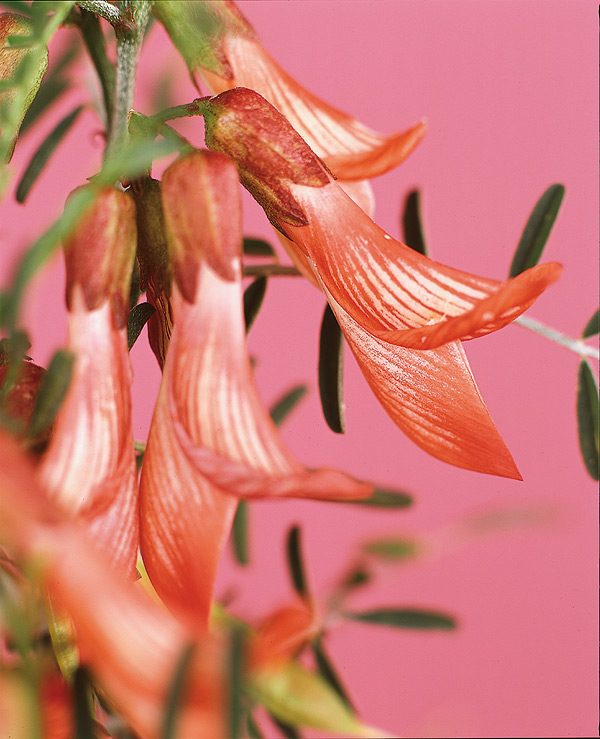
Pharmacy of the veld : Sutherlandia frutescens (cancer bush) is an old Cape cure-all for stomach problems, internal cancers, fevers and diabetes. It is rich in amino acids, which may boost the immune system, and acts as a general tonic. -
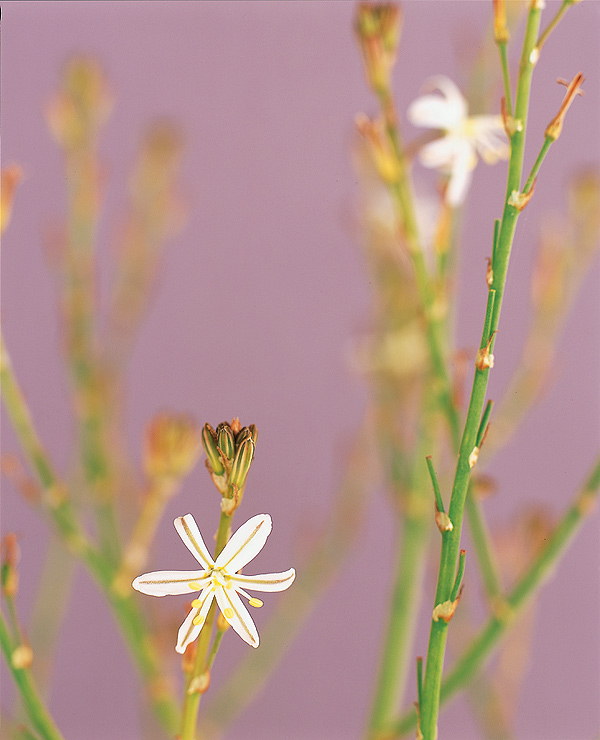
Pharmacy of the veld : Trachyandra divaricata (veldkool): in the Cape, the very young flower spikes of this rhizomatous plant are used to make a delicate bredie. Their flowers are inconspicious but usually sweetly scented. -

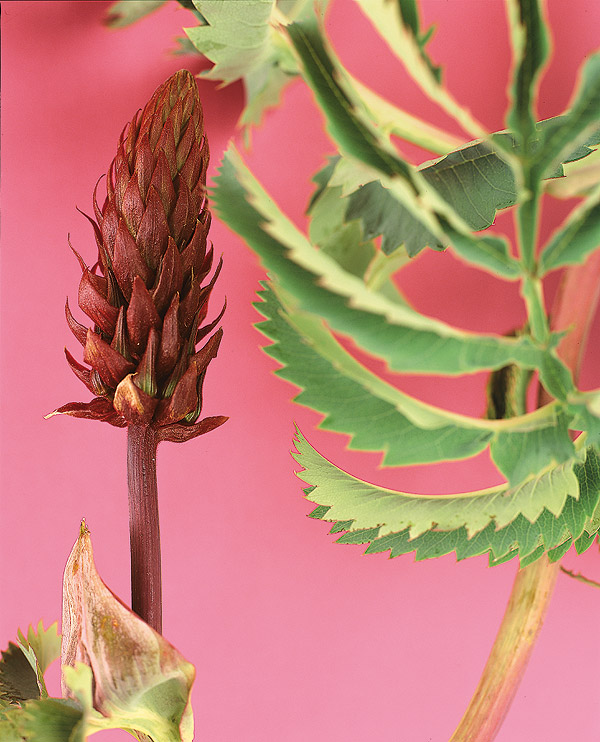
Pharmacy of the veld : Melianthus major (kruidjie-roer-my-nie) is toxic and so for external use only. Leaves are used in poultices and decoctions to treat septic wounds, ringworm, bruises and aching joints.
PHOTOS: Lien Botha | WORDS: Dave Pepler, Allan Davies
Modern science has proved that there is much more to the medicinal use of plants than spells and potions – the magical plant names are incantations in themselves.
I grew up in Robertson in the Little Karoo. My mother’s family lived in the bodorp – Ouma Lilly, Oupa Boy, brothers and sisters – all committed gardeners and lovers of the veld.
From them I learnt the ritual of ‘going into the veld’ – getting up in the dark, filling a wine bottle with sweet coffee, wrapping it in brown paper and setting out at first light – always with a purpose: the first naeltjies of spring for the sitting room, kamkoo and vinkels for preserving, and num-num to eat on the spot.
For me, though, the real treasure lay in the discovery of names like kukumakranka, renosterbos, geelpleisterbos, wild rosemary and mistletoe. I didn’t know then that nearly all these plants contain hidden medicinal properties, but I was to learn that in South Africa, plants used as medicines number more than 4 000.
The use of wild plants as medication, elixirs, philtres and remedies is as old as humankind itself. One day, long before the written word, someone somewhere – out of need or curiosity – chewed a leaf, sniffed some scrapings of bark or nibbled a bulb and: Eureka! Relief, enchantment, euphoria – and they lived to tell the tale. Even in the very first inscriptions, such as the Epic of Gilgamesh, there are references to ceremonial and cleansing herbs:
Ninsun went into her living quarters.
She washed herself with the purity plant, She donned a robe worthy of her body,
She donned jewels worthy of her chest,
She donned her sash, and put on her crown.
She sprinkled water from a bowl onto the ground. – Tablet 3
The Bible speaks of balsam, bitter herbs, manna and rue. In the medieval manuscripts of the alchemists there are numerous references to powerful potions made from deadly plants. And the works of Shakespeare are steeped in references to elixirs and plant poisons, such as in these lines from Pericles, Act III:
I have,
Together with my practice, made familiar
To me and to my aid the blest infusions
That dwell in vegetives, in metals, stones…
Here in South Africa, Anders Sparrman, William Paterson and François Le Vaillant described medicinal plants long before Carl Peter Thunberg completed his great field study, packed with descriptions of herbs, for Flora Capensis in 1813.
Today, a healthy kinship exists between traditional herbalists, western homeopathy and Oriental influences from Ayurvedic treatments. Almost every day we hear of new preparations making news worldwide, such as the cancer bush, the African potato and the devil’s claw. You have only to look at the shelves laden with herbal preparations to see that there are remedies for everything from ingrown toenails to sties.
Not all plant-derived medicines are beneficial, nor are they necessarily dangerous. We tend to underestimate the power of the placebo; blind faith in a preparation can have remarkable results. Rue, for instance.
A year or two ago I asked my neighbour for a slip. ‘With pleasure,’ she said, ‘but remember, rue works only when it is given, not when it is asked for.’ Last year I heard the same story from a Mapuche Indian in Patagonia. We don’t realise how deeply our different worlds are intertwined by this ancient, universal knowledge of plants.
The moral of the story: don’t wait to be asked – give!
Plant power in your garden
Only in a laboratory can the medicinal powers of plants be separated from their perceived magic. In the ancient world, prayer and prescription went hand in hand. Though not all sacred herbs may have had pharmacological value, over millennia a vast bank of plant knowledge accumulated, interwoven with faith and superstition.
Scientists have drawn on this knowledge to produce important medicines such as digitalis, morphine, quinine, curare and reserpine. Other plant contributions include aspirin from meadowsweet, a breakthrough cancer treatment from the Madagascan periwinkle, and, from the Mexican yam, the raw material for oral contraceptives.
In South Africa, it’s estimated that 70% of the population relies on plants for primary health care. There is also an increasing number who depend on these plants for their livelihood. In the past, harvesting of medicinal plant material was governed by taboos and undertaken only by skilled traditional healers.
Demographic and economic pressures have brought in other gatherers; tons of bulbs, tree bark and plants arrive at muti markets every week, causing numerous plant species to suffer serious decline.
The management of this phenomenon has presented a huge challenge to conservationists and health regulators. Collaboration with communities to teach correct harvesting practice and the cultivation of muti plants is aimed at addressing the situation, as is the registration of traditional healers. The Institute for African Traditional Medicines has been set up to evaluate the effectiveness and safety of traditional medicines and to provide consumer protection.
Key medicinal substances are usually the plant’s defence against predation and are often pretty potent. ‘Only the right dose differentiates a poison and remedy,’ declared Paracelsus. A number of kill-or-cure plants feature in the traditional African pharmacopoeia, and probably also in your garden. Consider your clivias: looking at them is all you really need do to feel better, but those pretty faces are also awesome reminders of the power of nature.
There are, however, gentler remedies to grow and enjoy:
• Classic herbs often contain beneficial compounds. Grow and use them lavishly.
• Salad leaves: Grow a mix of bitter (chicory, endive); peppery (rocket, mustard and cress); sour (sorrel); salty (our own delicious brakslaai, Mesembryanthemum crystallinum); and simply succulent (butter lettuce).
• Fragrant aromatic plants such as scented-leaf pelargoniums, to crush and inhale after a carbon-overloaded day.
• Tea: Ceylon tea itself (Camellia sinensis) is one of the greatest medicinal herbs of all time but, like rooibos, not for home cultivation. Try lemon verbena (Aloysius triphylla) or indigenous Lippia javanica for a delicious lemon flavoured tea good for treating colds.
• Plants to steep in brandy: Buchu (Agathosma betulina) is a great South African cure-all and a lovely fragrant plant for the patio if your garden doesn’t have the acidic soil it prefers.
• Soothing gels: The sap of Bulbine frutescens is a healing gel, good for burns and all kinds of skin problems. Grow it on a sunny windowsill in the kitchen. It also makes a wonderful groundcover in hot, dry conditions.
• Sovereign remedy: Shimmering blue rue (Ruta graveolens) is an ancient, sacred and protective herb and also a great traditional panacea for fever, rheumatic pain, hypertension and venous disease. It is also the herb of grace – and so a must for every garden.
Further reading:
• Medicinal Plants of South Africa by Ben-Erik van Wyk, Bosch van Oudtshoorn, Nigel Gericke (Briza)
• The Royal Horticultural Society Encyclopaedia of Herbs and their Uses by Deni Bown (Dorling Kindersley)