-

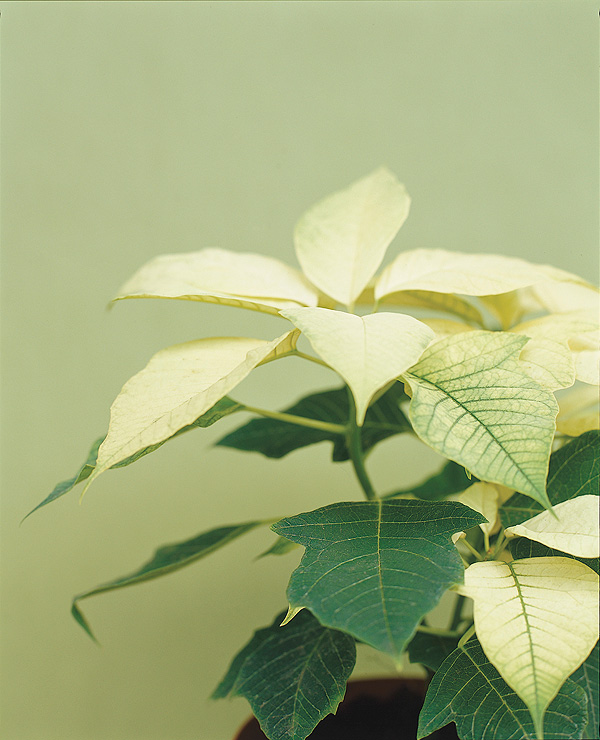
Flowers of the holy night : The cream white 'Snow Cap'. -

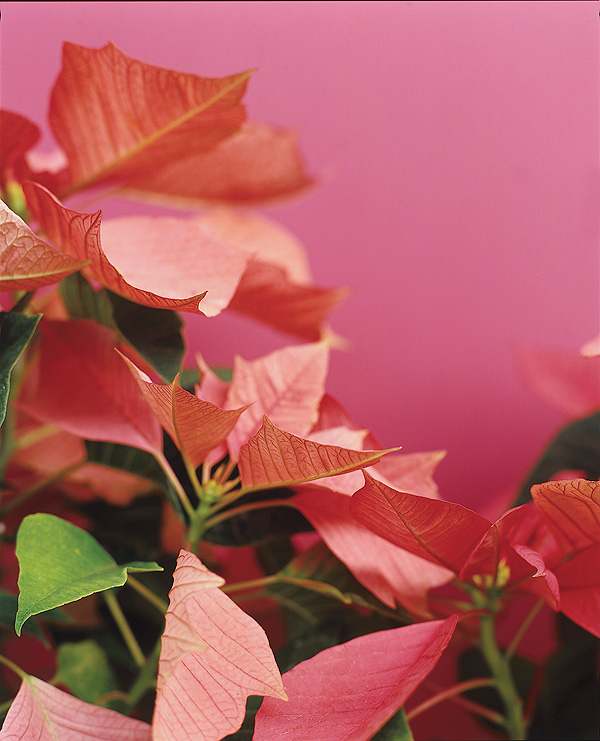
Flowers of the holy night : The 'Pink Freedom'. -
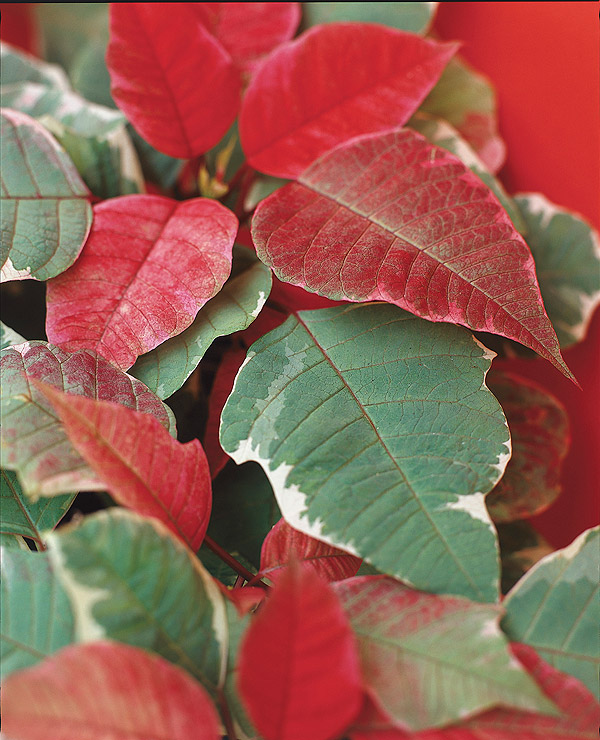
Flowers of the holy night : The multi-colour 'Starlight'.
WORDS Dave Pepler, Allan Davies PHOTOS Lien Botha
Behind every wild beauty there is a story or two. The perfectly poised poinsettia is no exception to the rule.
One winter in the 1970s, Martin Versveld and I went partridge shooting in the Koue Bokkeveld. After supper and too much wine, we lay and talked through the walls of our tents. Martin had left his tent flap open and from his reclining position kept throwing mielie kernels out into the dark. One never knew how early a little pheasant might come to feed, he explained.
It was then he told me about William Prescott, American author of The Conquest of Mexico. The tale of the poinsettia From this sublime work I learnt for the first time how the poinsettia got its name – from Joel Roberts Poinsett, American ambassador to Mexico, who collected the plant and took it back to the US. The scientific name Euphorbia pulcherrima was devised by the German botanist Wilenow. Overwhelmed by that reddest of reds, he named it accordingly.
But of all plant legends, the Mexican story about the poinsettia is for me the most charming: a little girl from a poverty-stricken family could not afford a Christmas Eve gift for the Christ Child. Her mother tried to comfort her by explaining that the humblest gift, given with love, would be acceptable in the eyes of God. On the way to church the little girl gathered weeds along the road and as she entered the chapel, they burst into glorious bloom. Food for the Catholic imagination, flowers of the holy night.
Poinsettias: delightful but durable
Poinsettias are the flowers of the poor and of gardens without water. They stand next to deserted railway houses, as in the paintings of Adriaan van Zyl. You find them in front of stone houses in the Tanqua Karoo, because even chickens and baboons cannot destroy them. Like rue, you can give a cutting to your neighbour, because all you have to do is stick it into the clay-hard ground and it will flower before it has even put down roots. Children don’t play with the flowers because the milky sap makes their hands sticky, which is just as well.
If you own a little place in the Karoo, plant poinsettias along your stoep. Pick the flowers with long stems, with the green leaves, and put them in a round clay pot. Then look for a spot where the late afternoon sun slants in; perhaps on your scrubbed pine table? Walk outside, look into the burning light, wait, then come inside again. As your eyes grow accustomed to the half-light, the flowers will begin to glow, at first like dull coals and then, the red of coral.
I write from Vicuña, the birthplace of Gabriela Mistral, high in the dry cactus world of the Elqui Valley, with the feather-white snows of the Andes beyond. Here in Chile the poinsettia is called Crown of the Andes. I think of blood and blood-red and the Andes and Mistral – against the adobe wall of the little museum, there is a poinsettia in full bloom.
Poinsettia facts
- Poinsettias belong to the great genus Euphorbia, one of the largest in the plant world.
- There are over 2 000 species, both hardy and subtropical, which include trees, shrubs, perennials, annuals, cactus-like succulents large and tiny (from our naboom, Euphorbia ingens, to the little vetmensie, Euphorbia obesa) and spiny succulents like the Crown of Thorns, Euphorbia millii.
- All euphorbias have one thing in common: their sap is a milky latex, highly toxic in some species, only mildly irritant in others, such as the poinsettia.
- In common also with many other euphorbias, poinsettia flowers are those little insignificant buttons in the centre of vivid bracts that are actually modified leaves.
- It is not only the colour that produced the legends and associations with Christmas in its native Mexico and in the US. The flowering of poinsettias is triggered by decreasing daylight, so in nature they bloom in midwinter, around Christmas time in the northern hemisphere.
- Commercial growers manipulate growing conditions to produce container plants that flower on short stems summer or winter, but especially at Christmas.
- The Mexican legend and the timing have made the Crown of the Andes a major industry.
- Almost 85% of all pot plants sold in the US are poinsettias.
- There are over 100 varieties available now, hybridised to produce extra-large bracts and double flowers in cream yellow, salmon and pink, as well as that reddest of reds.
As a pot plant
- Poinsettias make lovely, cheerful gifts and brilliant Christmas decorations, especially when used exclusively and en masse. Red may be traditional, but cream and pink can work as well, depending on your decor.
- Choose your plants carefully. Make sure they’re sturdy with healthy green, not yellowing, leaves.
- Place them in indirect light, out of draughts or blasts of hot air.
- Water regularly but allow the soil to almost dry out between waterings. Make sure that the drainage in the pot is good. Once the plants have finished flowering you can give them a little feed and harden them off in morning sun for a couple of days.
- Plant them out in a sunny but sheltered spot, where they will revert to their natural growth habit.
In the garden
- In nature poinsettias usually grow 3 metres high or taller.
- They’re invaluable as cut flowers, because they bloom when very little else is flowering in the garden.
- Like bougainvillea, poinsettias often flower on bare stems.
- Don’t try to slot them into a cottage garden. They’re at their flamboyant best in subtropical regions, combined with equally bright and bold plants like purple bougainvillea.
- They make a splendid addition to the succulent garden.
- Plant them behind lower shrubs – when you cut them down after flowering, the stumps and outgrowth can be unattractive.
- Propagate them from canes or soft cuttings. If using canes, allow them to dry for a day or two then plant them straight into the garden; if propagating from cuttings, dip them immediately into hormone rooting powder then allow them to root before planting them out in a sunny spot.
- Starke-Ayres and other garden centres countrywide offer a good selection of poinsettias.
Don’t forget to sign up to our weekly newsletter for the latest architecture and design news.