-

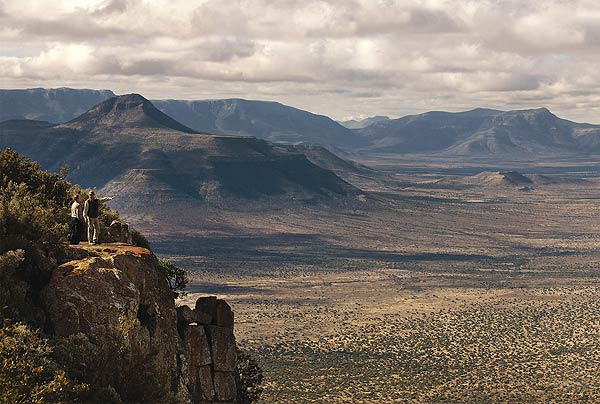
The buck stop here : On a clear day... from Eagle Rock on the plateau of Kondoa, the view extends across the plains to Bruintjieshoogte in the east, even to the Cockscomb 250 km to the south. -

The buck stop here : On a clear day... from Eagle Rock on the plateau of Kondoa, the view extends across the plains to Bruintjieshoogte in the east, even to the Cockscomb 250km to the south. -

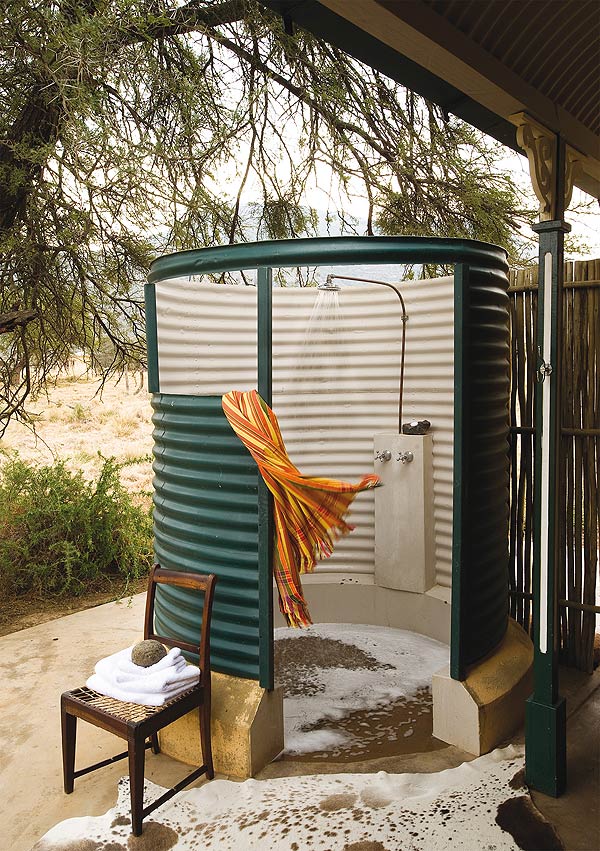
The buck stop here : Water tanks make appropriate outdoor showers. -

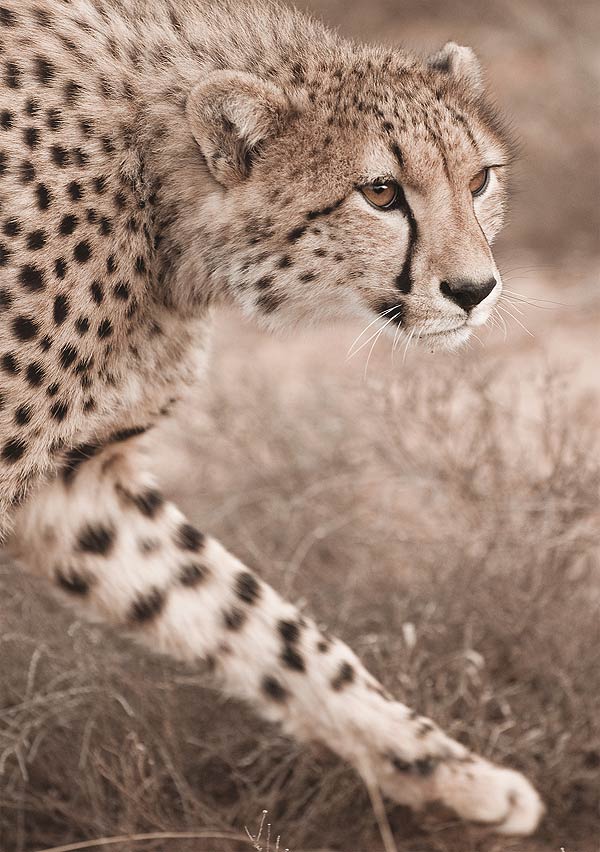
The buck stop here : Sibella is a great conservation success story. After being trapped and severely injured on a farm in the Northern Province, she was nursed back to health and released at Samara three years ago. She has since produced three litters of cubs. -

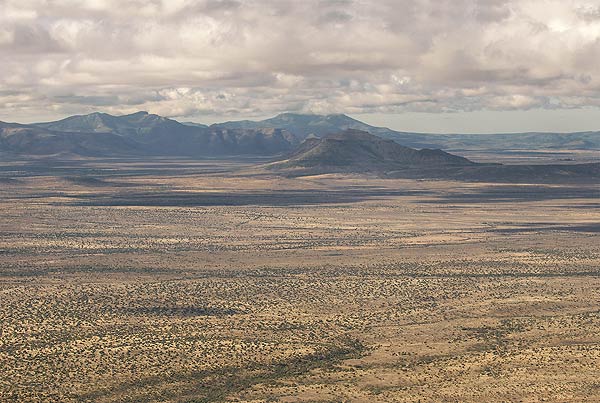
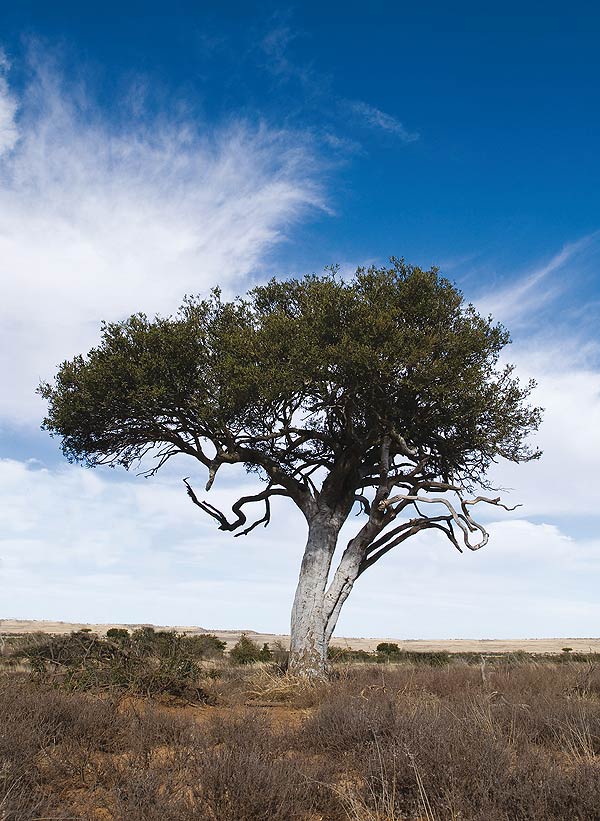
The buck stop here : The sculptural forms of the shepherd’s tree (Boscia aleoides), some possibly as much as 700 years old, are a feature of Samara’s plains. -

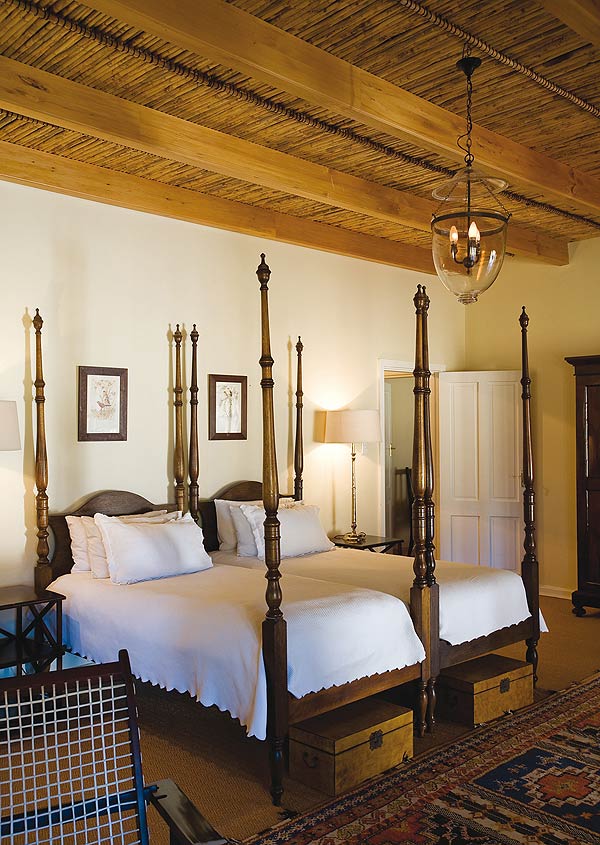
The buck stop here : Accommodation is spacious and splendid: traditional Karoo riempies and beamed and reeded ceilings offset an elegant mix of colonial, African and continental pieces. -

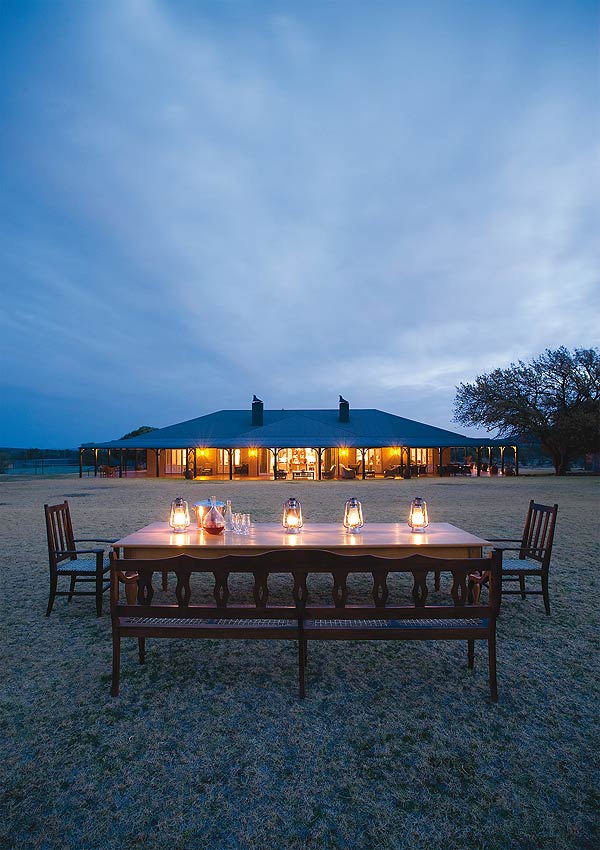
The buck stop here : Meals at Samara are moveable feasts: a lamp-lit outdoor banquet on the lawn in front of the main lodge is one of many options. Executive chef Quintinn van Rensburg combines Karoo tradition with his training at Le Quartier Francais for a feast of flavours.
PHOTOS: Dook | PRODUCTION: Annemarie Meintjes | WORDS: Laurian Brown
The Great Karoo plains and mountains contain the heart and soul of South Africa’s landscape and history. After centuries of hunting and farming, the game is being returned to Samara Private Game Reserve.
Drive from Graaff-Reinet to Somerset East and you follow in the footprints and wagon tracks of generations of travellers. San hunter-gatherers, Inqua pastoralists and their fat-tailed sheep, European hunters, traders, trekboers, freebooters, naturalists, missionaries, Xhosa warriors, Boer commandos, British cavalry – just about the whole melancholy cavalcade of South African history has come or gone this way.
The R63 runs a little to the south of the old highway, which has all but vanished beneath the scrub but the great sweep of space is much as earlier travellers found it. To the south an infinity of arid plain, to the north the Coetzeeberg and the Sneeuberg, ripple upon ripple of peaks and crags, shadowed kloofs and hidden valleys.
With one major difference. No game. A scattering of springbok here and there on the plains but the vast herds that once drew the hunting parties are long gone. It doesn’t do to ponder on the details of the slaughter; rather head for a place that’s trying to make amends. Take a left at the sign to Samara, on the old Petersburg road that swings north into the mountains. This is the road not only to redemption, but also to some of the most breathtaking landscapes in the country, if not the continent.
The first joy along the way is a plaintive beep that signals the end of cell phone reception. Not surprising because, all around, the landscape is beginning to tower above the thorn-treed flats. First the worn fangs of Tandjiesberg, then the red cliffs of Aasvoëlkop and the massive shoulders of Bouwershoek. And then on into one of the grand amphitheatres of the Great Escarpment, grey-green and purple above the bleached plain.
A dream takes shape
The setting explains the dream. Here, Englishman Mark Tompkins and his South African-born wife, Sarah, have embarked on a personal mission to restore this piece of Africa to something of its original glory. They fell in love with one farm and bought it for a holiday home; then, as the dream took shape, another and another. Eleven in all.
Eleven years later it adds up to 28 000 hectares, plus a long-term rehabilitation programme, a population of game that’s steadily growing in numbers and diversity, and a lodge that’s deservedly received rave reviews from the international media.
The staff, most of whom are Karoo born and bred, have also taken the dream to heart, and it shows. This is their home ground and there’s a real sense of belonging and pride in sharing it with guests.
Head ranger, Les Slabbert, was delighted to return from Botswana to work at Samara, and not just because it meant coming home.
“It’s such a great place. The Tompkins went to the right people from the word go: Professor Graham Kerley, who helped set up Addo, and Glen Coetzee, who conducted impact studies on what game we could carry. We’ve avoided the Big Five, although the reserve is home to cheetah, white rhino, buffalo, and wildebeest. We also like to focus on the smaller animals and the birds – an important and fascinating part of the whole picture.”
The range of altitude at Samara makes for an astonishing variety of plant life. Four of South Africa’s seven biomes occur within its boundaries: Nama Karoo, Valley Bushveld, Savannah and Plateau Grassland.
The vision
“One of the main aims is to get these back to pristine habitats, or at least to what they were before the goats, sheep and cattle,” Les explains. “It’s remarkable what has happened over the last six years. In certain areas the vegetation has increased by 30%. We’ve combated some of the erosion and removed aliens but it’s early days yet – this is a 30 to 40-year project.”
The ultimate vision is to create a vast conservancy via linking corridors to other reserves – the Camdeboo, Mountain Zebra and even Addo National Parks – which would allow the natural migration of game, as happened centuries ago. Says Les, “We could have 10 000 springbok if we open up. It’s a great vision. There’s already a lot of game on the property, but this is only the beginning.”
Even within the present boundaries, the diversity of game and vegetation, and the breathtaking landscape, turn even an overnight visit to Samara into a safari.
Spectacular prospects
Arriving in the still of the Karoo afternoon gives me time to attune to the vastness, wander around and spend a Morris-Chair hour on my private stoep, staring into true space. On the game drive after tea there are kudu, rhino and giraffe out on a late amble, bat-eared foxes and an aardvark on an early sortie. The late sun lights up the bone-white trunks of the shepherd’s trees and the silvery hump of Nardousberg before it blazes down behind the mountains.
Dinner (and breakfast and lunch) may be served in any one of a number of atmospheric settings: the boma, on the lawn, or the verandah of the lodge, even in the main dining room if the night is chilly. Wherever it is, executive chef Quintinn van Rensburg (son of the local postmaster) combines Karoo tradition with his training at Le Quartier Francais to present a feast of flavours. Before bed there’s more Morris-Chair time, gazing at the brilliance of the stars. I think of the San doing the same as I listen to the wind clicking through the thorn trees.
The highlight of any visit to Samara has to be the drive up to the mountain plateau of Kondoa, a climb of over 1 000 metres. After a splendid breakfast on the veranda of the lodge, we set out across the plain. Meerkats are sunning themselves; a Kori bustard methodically paces out his vast territory.
Giant, heavily grazed spekboom with huge trunks march across the base of the kloof, gradually giving way to steep wooded slopes and sandstone cliffs studded with kiepersol and white stinkwood. It takes an hour of slow 4x4ing up the sharpest of gradients to reach one of the most spectacular prospects in the country; a vast plateau of mountain grassland, with the Sneeuberg rolling to the north and the Camdeboo stretching out to the south, far below.
For many years this was prized cattle pasture. Now there are herds of game scattered everywhere: eland, gemsbok, wildebeest and zebra gallop and graze as the San must have seen them, because this is how they painted them. There’s a real sense of elevation, of escape to another plane, another time. At least part of the dream has been realised.
• Samara Private Game Reserve: 049 891 0558, www.samara.co.za