-

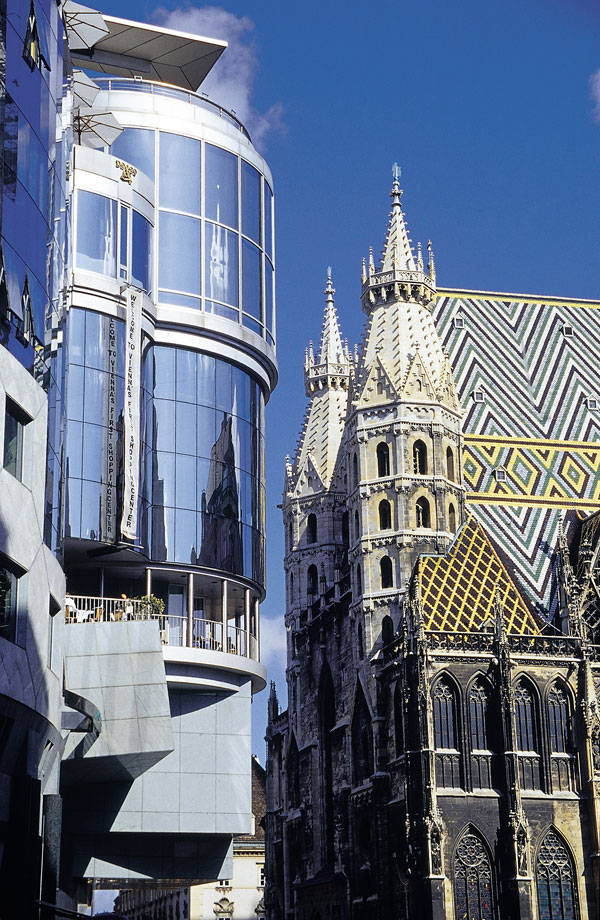
24 hours in Munich 48 hours in Vienna : Haas Haus and St Stephen's cathedral lend dramatic contrast to Stephansplatz at the centre of Vienna. -

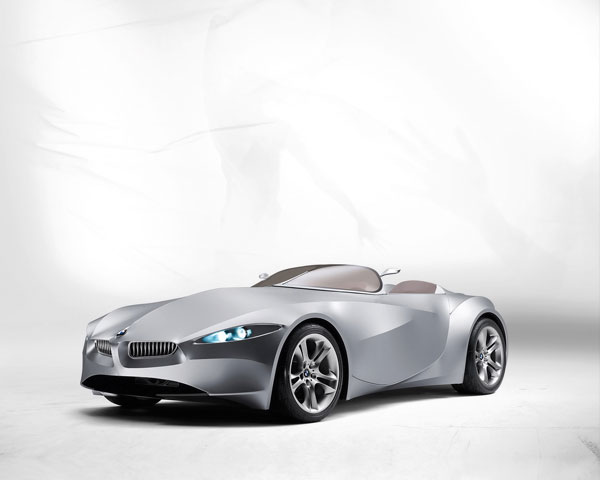
24 hours in Munich 48 hours in Vienna : The GNA Light Visionary Nodel two-seater roadster designed by BMW Group DesignworksUSA Munich Studio, presents a vision for the cars of the future. -

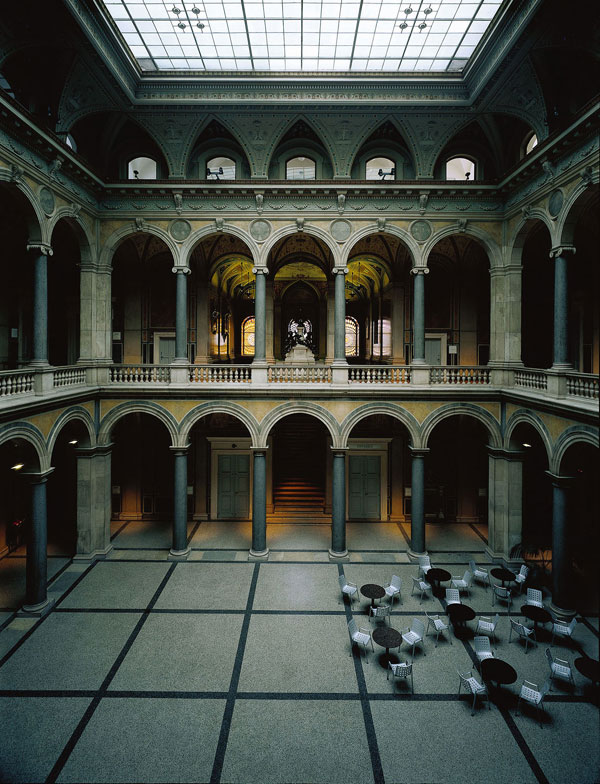
24 hours in Munich 48 hours in Vienna : The impressive columned main hall of the Museum of Applied Arts (MAK). -

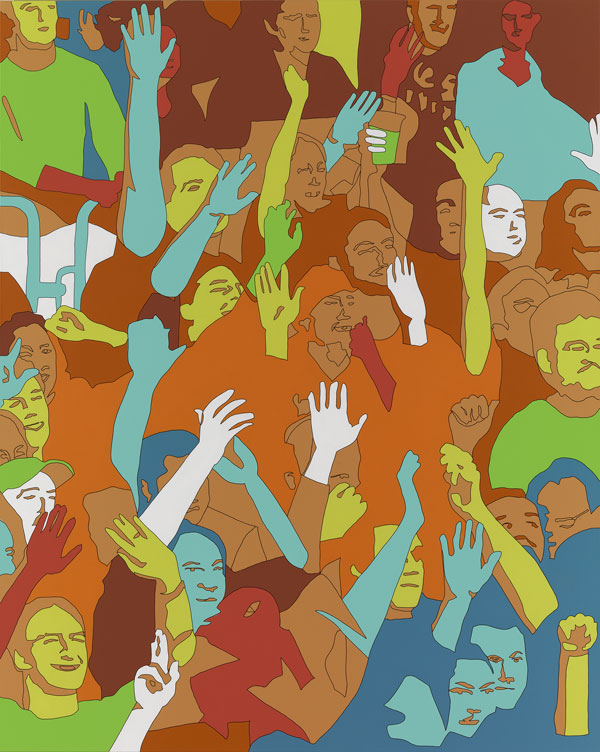
24 hours in Munich 48 hours in Vienna : Middle of the Moment (2007, acrylic on canvas, 150cm x 120cm) by Lisa Ruyter. A wealth of museums, galleries and design institutions make Vienna an attractive home for international artists. -

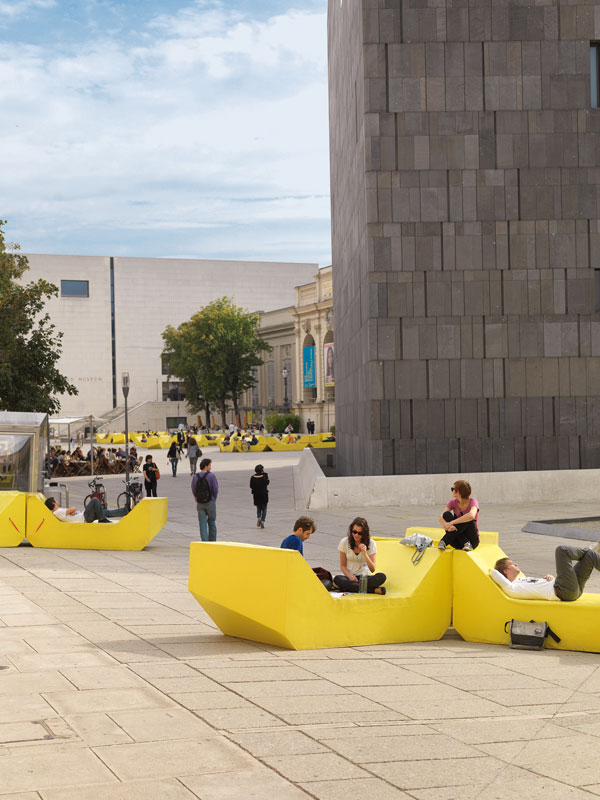
24 hours in Munich 48 hours in Vienna : Vienna's MuseumsQuartier is a place of "cultural diversity, experiment, permanent action and change". The monolithic Museum of Modern Art (MUMOK), with its facade of basalt lavastone, stands in dramatic contrast to the limestone Leopold Museum in the back
PHOTOS: Courtesy of BMW AG and Rupert Steiner | WORDS: Micelle Coburn
Vienna and Munich share a lot more than a language. An hour’s flight apart, Austria’s capital and Germany’s third city are also at the forefront of a dialogue between tradition and innovation.
I leave the silence of St Stephan’s Cathedral and step into the twilight of Stephansplatz, sweet incense in my hair and thoughts of lebkuchen and Viennese coffee on my mind, when a man wearing tights, a crimson and gold overcoat and a hat with a jaunty tassel on the end confronts me: “Come back at eight for Mozart’s Requiem by candlelight,” he says as he hands me a leaflet.
It’s hard to imagine a more perfect setting for the composer’s last creation than this Gothic landmark, but music (and dessert) are quickly forgotten as I take in the theatrical spectacle of the square at the heart of the Austrian capital.
Architectural pride
The cathedral’s mosaic roof and soaring spire are reflected in the cantilevered glass facade of Haas Haus designed by Hans Hollein, one of Europe’s foremost architects. In true Viennese fashion, its construction within the Innere Stadt – a UNESCO World Heritage Site – was met with controversy but once the media frenzy had died down it soon became another source of architectural pride.
This seems to be the way of things in this city inhabited by Baroque, Art Nouveau and Postmodern buildings: A confrontation between old and new has been underway since the Vienna Secession, pioneered at the end of the 19th century by artists and architects including Gustav Klimt and Otto Wagner in reaction to the strict historicism of the time. Hot debate is the inevitable result. So is persistent innovation. Yes, the Viennese do have a lot to discuss for there are many choices to be made.
At the würstelstand around the corner from the cathedral, the stylishly dressed locals fill the gap before dinner at the standing-room-only tables. The menu offers bratwurst, and a whole lot more, but a man in an oil-spattered apron will also offer you a Czech, Hungarian or Bosnian – a veritable menu of nationalities reflecting the city’s multiculturalism served up with mustard and a tall beer if you like. Decisions, decisions…
Their quiet conversations appear earnest but my German is rusty and I don’t understand much. They could be discussing the next important city vote: What colour should they choose for the summer loungers in the courtyard of the MuseumsQuartier for 2010? One year beige, the next yellow, perhaps red should be next? Or they are more than likely debating an ongoing controversy that has created yet another petition – the matter of the Contemporary Art Tower.
The CAT project, driven by powerful voices on Vienna’s creative scene and supported by people such as Wolf D. Prix of Vienna-based architecture firm Coop Himmelb(l)au, aims to convert a monolithic WWII flak tower into a work and exhibition space for internationally acclaimed artists.
The proposal includes spatial interventions and experimental architecture, and the plan is to produce a 21st-century collection unique to the city. Some Viennese love the idea; some loathe it. Everyone has a strong opinion.
A creative pull
This creative energy is one of the qualities that attracted American artist Lisa Ruyter to live here. A visit to her studio in Kantgasse reveals high walls exhibiting bold, graphic works-in-progress. The sheer size and theatrical quality of her paintings inspired by urban life is astounding.
But what makes an artist exchange the Big Apple for life in Central Europe? She explains, “My identity is very much defined by the perspective that 18 years in New York has given me but I’m rediscovering my core ideas by being in a smaller city. Vienna is beautiful, central (London, Cairo and Moscow are nearby), and offers a high quality of life – in deep contrast to the compromises I had to make as an artist in New York.”
More to offer in Munich
A short flight away the same energy that inspires Lisa and many other international creatives in Vienna is also tangible in Munich. At the ClassiCon headquarters, which produces a combination of classic and contemporary furniture including Eileen Gray designs, CEO Oliver Holy says authorities wouldn’t give permission for the award-winning concrete and steel building to be more centrally located.
So the “too modern” structure has literally turned its back on the typical business park buildings around it, leaving an impressive warehouse gate to greet visitors who drive around the building to the glass facade of the showroom.
The BMW Museum is another Munich landmark situated beside the twisted matrix of Wolf D. Prix’s BMW Welt vehicle delivery centre. The museum reopened in 2008 following the redesign of Karl Schwanzer’s striking 1973 building – known as “The Bowl”.
In a celebration of urban mobility, visitors travel through the “streets and squares in one space” on a journey through the history of the brand, as well as take in a vision of the future of motor-vehicle transport, as seen in the GINA Light Visionary Model concept car.
Designed by creative agency BMW Group DesignworksUSA, which also designs yachts, planes and other lifestyle products for outside companies, GINA is a living sculpture in which the fluid lines of the car’s architecture are visible through a seamless fabric skin that opens and closes to expose functions on demand.
Director of DesignworksUSA’s Munich studio, Nikolaus von Saurma, says the intention was to challenge established concepts and describes the design philosophy as “the emotion of motion”. He adds with a smile, “The best way to predict the future is to create it.”
I think back to the row of glossy 19th-century horse-drawn carriages lined up outside Vienna’s Hofburg Imperial Palace, red leather seats enticing visitors to experience a brief moment from yesteryear. The designers of these elegant vehicles could never have predicted something like the GINA, just as the builders of Hofburg would never have imagined the BMW Welt or Museum.
If creative dialogue continues to fuel Vienna’s and Munich’s designers and architects, the future they will create is exciting to contemplate – even if some of us only get to pay it a whirlwind visit.