-

Caffeinate me -

Caffeinate me -

Caffeinate me -
Caffeinate me -
Caffeinate me -
Caffeinate me -
Caffeinate me
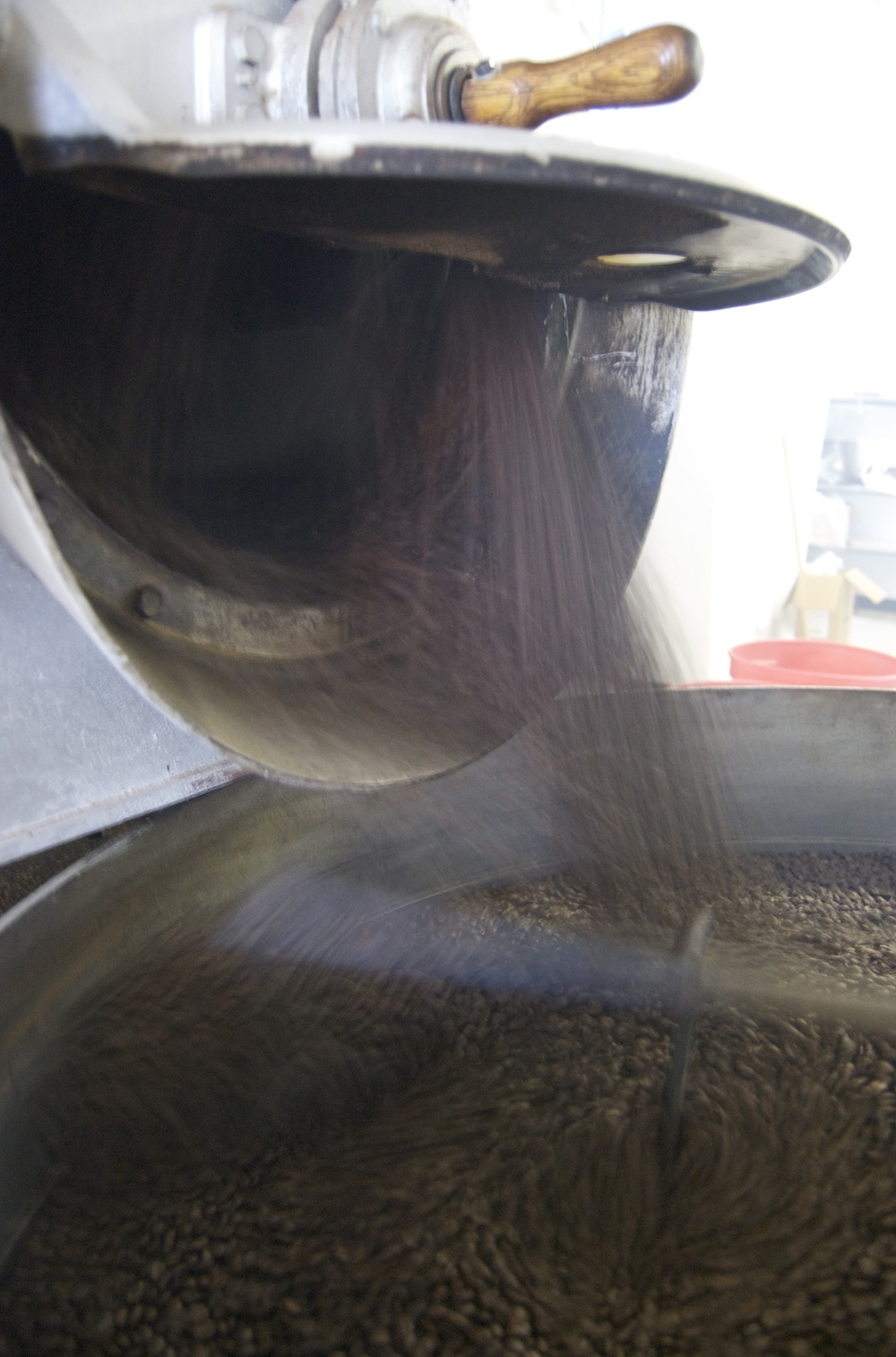
WORDS: Daniel Scheffler
Writer Daniel Scheffler chats with Jake Easton, from Tribe Coffee, about the prevailing café culture in South Africa, the local coffee culture, what coffee design means for flavour, branding and spaces.
Jake is under the impression that café culture in South Africa has gone through four huge changes in the past 18 years. The first greatest change was the ‘post-apartheid-cafe’. It was inclusive and open for everyone but, sadly, only moneyed, well-heeled consumers were aware of it.
The second wave was Seattle Coffee, started by Dale Mazon, who humbly left the US and consequently built a mass brand in South Africa. This was a first chance to break out of the obvious Lavazza, Illy, Ciro, House of Coffee mould that forced consumers to stomach those brands and drink instant Nescafé and say it was good. Seattle Coffee changed café culture by giving locals an actual choice, and as every coffee lover knows, says Jake, “It was so much better than anything before.”
Then there was the third wave, Vida e Cafe. What the Portuguese brothers created was a space that was so filled with the proverbial ‘vibe’ you didn’t care if the coffee was burnt to a Starbucks charcoal level 10 roast. The baristas were alive. The vibe enthused the most stringent hipsters to smile, housewives to line up, and coffee-speak became cool!
The final spark that set the coffee world on fire was the introduction of Origin Coffee Roasting by Joel Singer. Origin gave birth to luxury coffee in South Africa and started the Specialty Coffee Association of South Africa, the South African Barista Championships and created a market for luxury branded coffee that had never existed.
As a result of Origin’s expertise, they spawned major competition for every other brand with ex-employees or consultants starting Tribe Coffee Roasting, Deluxe Coffee Works, Truth Coffee Cult and others who were influenced by Origin such as Haas Coffee, Bean There and, Espresso Lab. And all this happened in fewer than two decades – Seattle, Vida, Origin and the end of Apartheid.
Jake goes on to talk about the design of flavour and believes that ‘taste’ is subjective when it comes to homes, design, art, and architecture – and so is coffee. In the coffee world, once you have a great coffee you can never go back to dark, burnt imported robusta-based coffee hell. And, as with everything, consumers all love coffee “their way” – the only real marker is that everyone loves a great cup of coffee.
A well-designed roast profile creates the flavours that are essential in a great coffee. Five taste sensations are present in every mouth: sweet, salty, sour, bitter, acidic (mouth-watering effect), and umami (savoury for the non-Japanese speakers).
Jake says our taste buds are all the same. Taste, in a coffee, is the equaliser. Defining aroma in the world of coffee is like asking a student from Michalis Art School to explain why a severed cow ear and a four meter fuchsia papier-mâché flower are representative of a waste management system in Dubai. It’s impossible. Aroma is abstract… but not that abstract.
When a master blender understands the five senses of taste and the aroma profile for each coffee then aroma and flavour combine to make magic in your mouth. Some examples of coffees used in blends around Cape Town: Ethiopian – floral notes with a mild acidity and sweet candied tastes; Guatemalan – rich chocolate sweetness with red cherries and candied fruits and a mild acidity; Indonesian – toasted nuts and fresh cinnamon with light hints of spices and a higher acidity. To make a blend of these would mean understanding that too much acidity will wash away the sensitive tender and sweet flavours from the Ethiopian coffee and too much of the floral Ethiopian and the chocolate tastes from the Guatemalan coffee will be subsumed by the floral notes. So as you can see blending is an adventure into taste, flavour and, aroma.
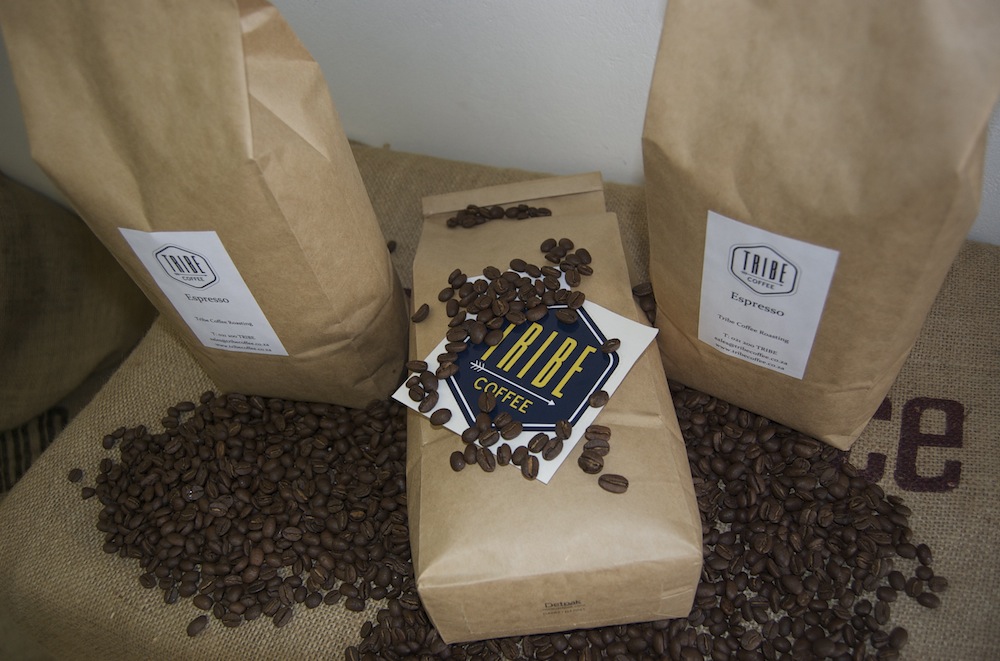
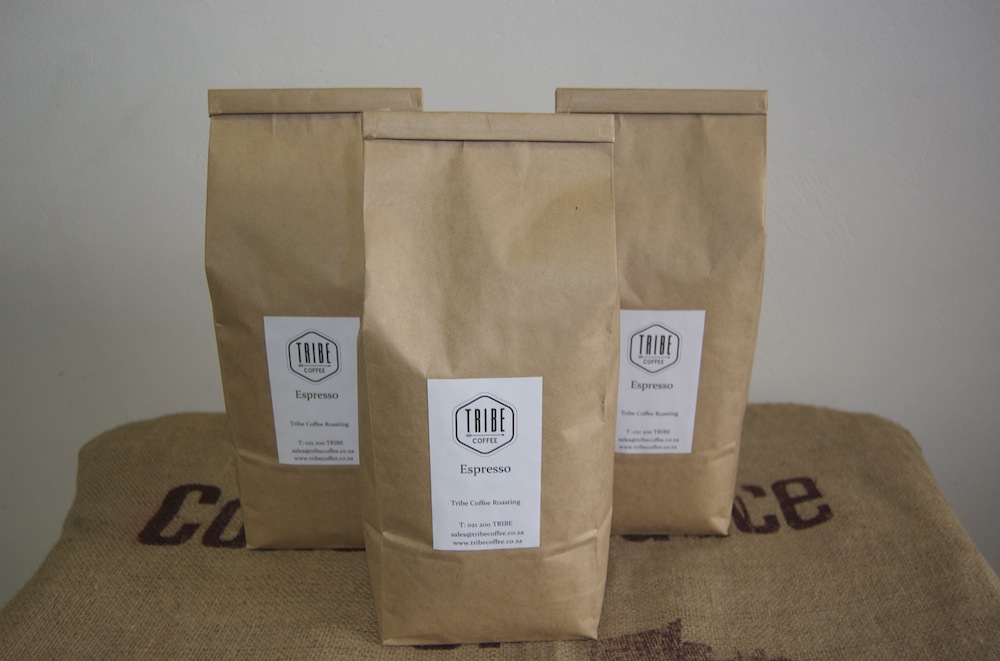
Jake prides himself on the fact that at Tribe Coffee Roasting they design their espresso blend to put truffles, hazelnuts, chocolate and rich candied fruits into every espresso. They aim to have the flavour lingering in your mouth and they want you to want more. Designing the flavour means designing experience and designing expectations. Simple as that.
In terms of brand design, coffee is as diverse as the Papua New Guinea lovebird mating ritual – beautiful, complex, very simple and, absolutely nuts. From the simple arrow on Tribe Coffee, to the D stamp from Deluxe Coffee Works, to the filigreed logo of Rosetta Coffee, to the Periodic Table references from the Espresso Lab brands, to the Workers’ Revolution based Origin logo, to the stylish storyline coffees from Haas Coffee and, one cannot forget, the complex and staid House of Coffee branding.
Each coffee company is unique in its theoretical approach to who their customer is and why they speak to them in that fashion. The tin tub of vacuum sealed imported “bleh” from Illy coffee stands as a strong counterpoint to the specialty coffee companies around the world who extol their uniqueness and quality with images and web sites and pretty dancing around a tree on a May evening. “Well, maybe not tree pole dancing but certainly drunken skateboarding down Kloof Street,” Jake adds.
The theory behind wine label branding (per the most successful wine marketers in the world, The Aussies) is no more than 3 things on a label: Brand Name, Wine Type and, Year. In coffee because no one is drunk, brands can put 3 or 50 things on a brand label. So are these coffees really so unique that each brand has to vie for a space in your eyesight? Yes. Each brand’s design leads you to a different headspace. Tribe Coffee includes you in a group of coffee lovers. Deluxe intimates introduction into Hipsterdom, Origin holds forth its unique nature for you to enjoy, Espresso Lab tells you of its precise skill, Haas Coffee gives you art and design. And the coffees do match the brands. In the end, Jake hold firm, that brand design counts only when the coffee in the bag or the café is good enough for you to want more or “so kak that you want to avoid it again at all costs.”
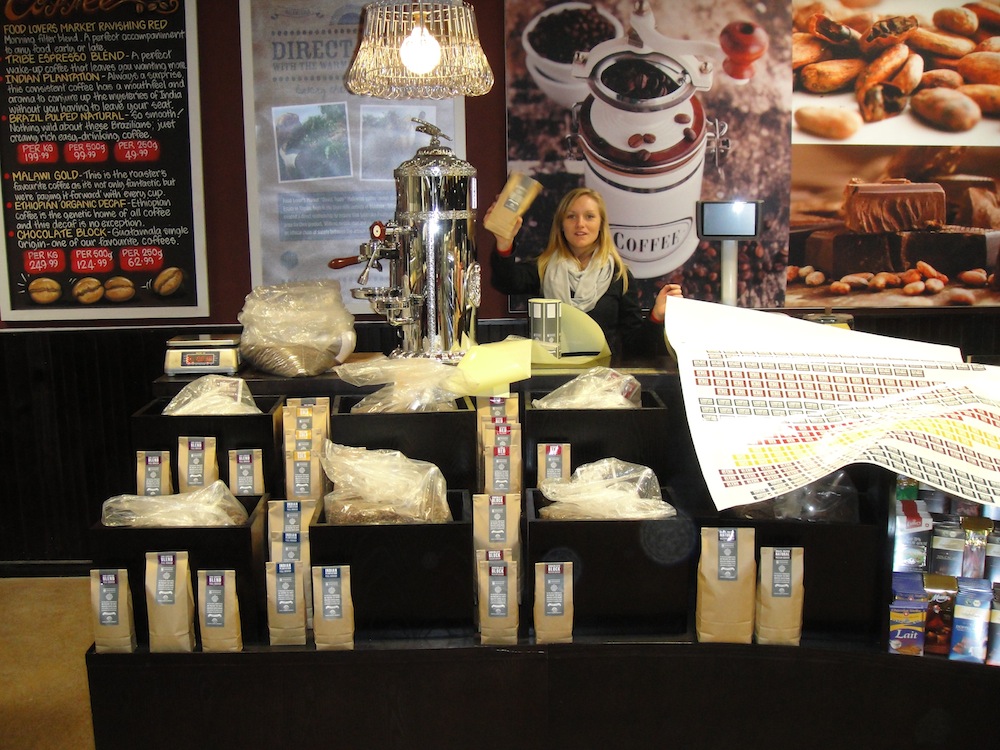
In terms of space design, Jake has dynamic ideas. He tells how the team at Tribe spends all day in and out of vibrant stylistic cafes around the world: “We see trends and spot their unique value every time we walk through a front door”. Space is the key to every cafe. From Parisian outdoors people watching and grumpy waiters, to Italian Piazza cafes with old men and Ristrettos, to modern Hipster Café minimalist. This dynamistic use of space revolves around desire. Desire for a great cup of coffee or, desire to be seen or, desire to get what you want but ultimately, it’s about wish fulfilment. The modern café culture has moved on from the staid simple round tables or square four-seaters.
The trends Tribe are seeing are about personal dynamic space and group collaborative space – long wooden tables with 25 people all on laptops sitting side-by-side, talking to one another or totally alone. Then there are examples of 2-seat café tables spaced no more than 10cm from each other and are utterly anonymous but for the voyeuristic couple four tables away. These spaces create the concept of being “privately visible.”
Along with these idyllic group adventures, most modern café designs are going away from the hard white or dervish black and looking towards natural elements: long wood topped tables, re-used wood racks, open brick walls, copper ducting visible, semi-industrial ceilings or walls, small un-designed spaces. Sensuous curves are in and numbered tables are out. No one wants to be a number. “Individualistic South Africans who create wacky eyesores with gnomes, roman pillars and infinity pools all in the same garden are not numbers in a café,” says Jake.
As Tribe Coffee goes into each café with the owner telling them their desires they hope to infuse a measure of this singularity into each café. From the over designed mall based café to the formula based cookie cutter to the unique nursery café with plants on your shoulder – they guide cafés into their design, in their space, in their budget.
The expert:
Jake Easton, Tribe Coffee: @Tribe_coffee / Jake@tribecoffee.co.za