-

Past present Africa -

Past present Africa -

Past present Africa -

Past present Africa -

Past present Africa -

Past present Africa -

Past present Africa -

Past present Africa -

Past present Africa -

Past present Africa -
Past present Africa -
Past present Africa -

Past present Africa -

Past present Africa -

Past present Africa -

Past present Africa
WORDS Georgia Chennells
Showing until 7 April at the KZNSA Gallery in Durban is graphic design legend Richard Hart’s art exhibition, en route to New York. Indeed, the surfer has swapped his mouse for a paintbrush. Georgia Chennells finds out what the exhibition is about.
Richard Hart, widely known for his founding role at disturbance design, is also a talented fine artist. While the Durban studio has gained an international reputation for creativity and intelligence in design, Richard’s painting, previously an after-hours hobby, has been creeping into the spotlight.
Night and Light and Neverness, Richard’s latest exhibition a year in the making, is now on show at the KZNSA Gallery in Durban. There it will remain until the 7 April, after which it will be packed up for its next appearance in New York in September.
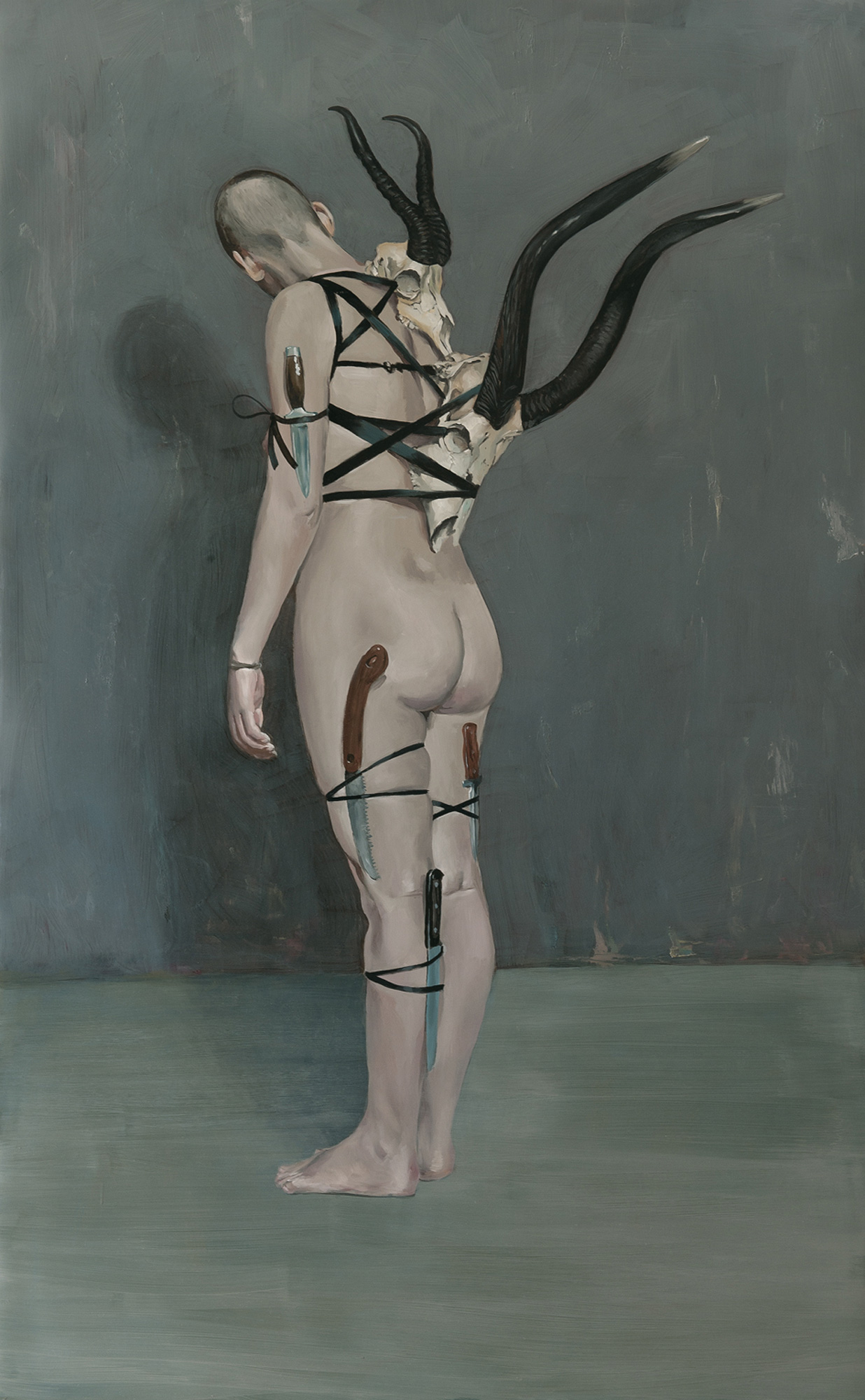
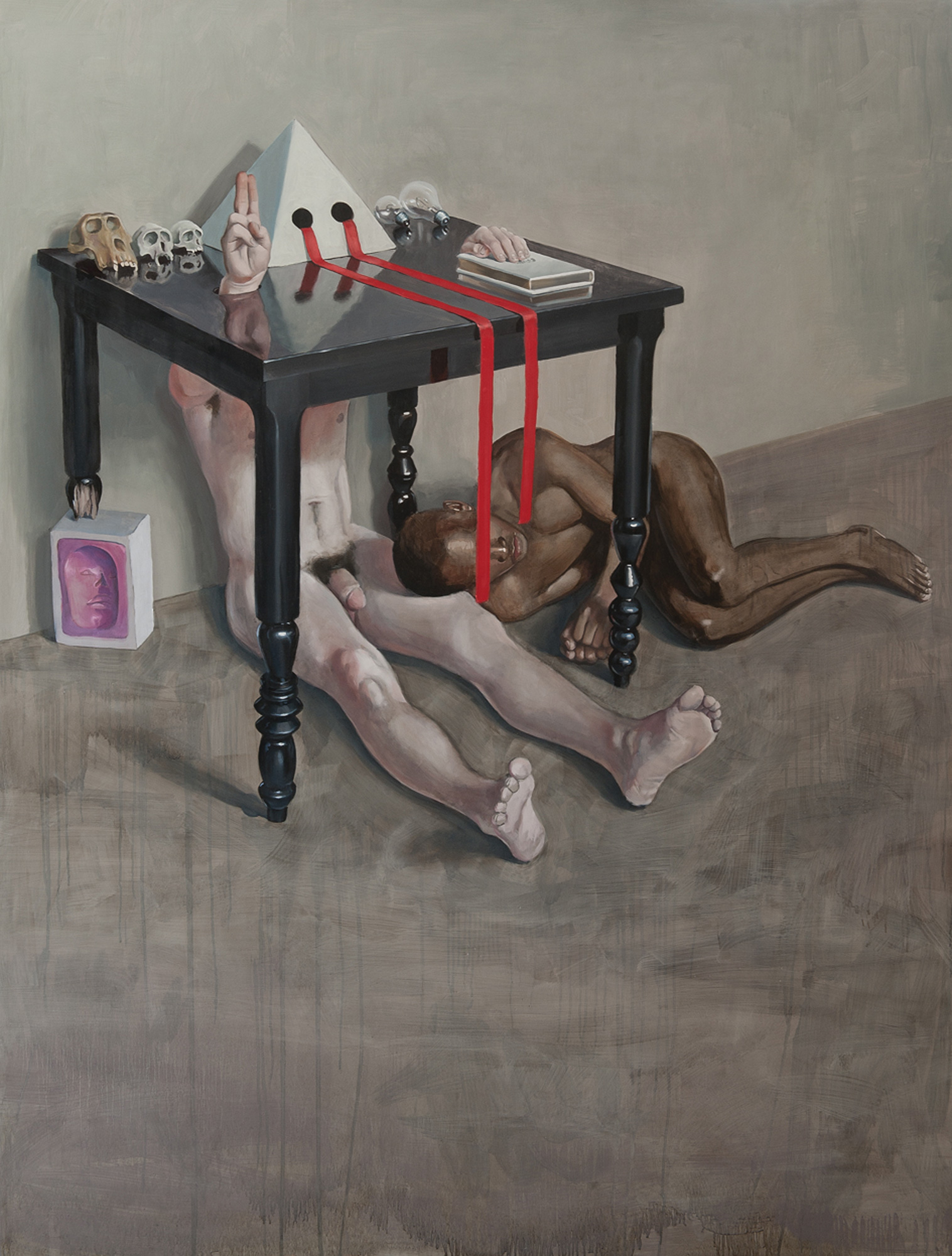
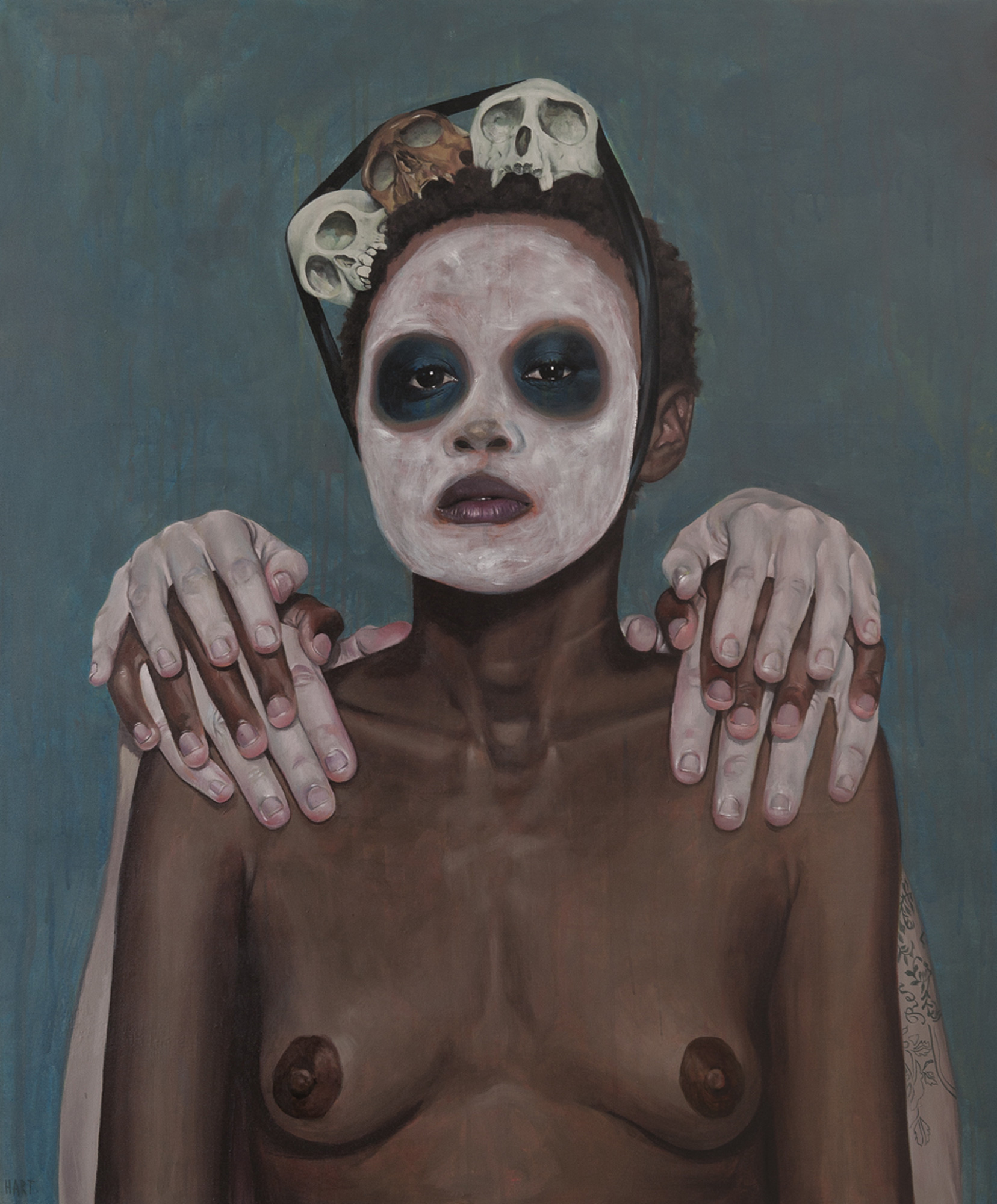
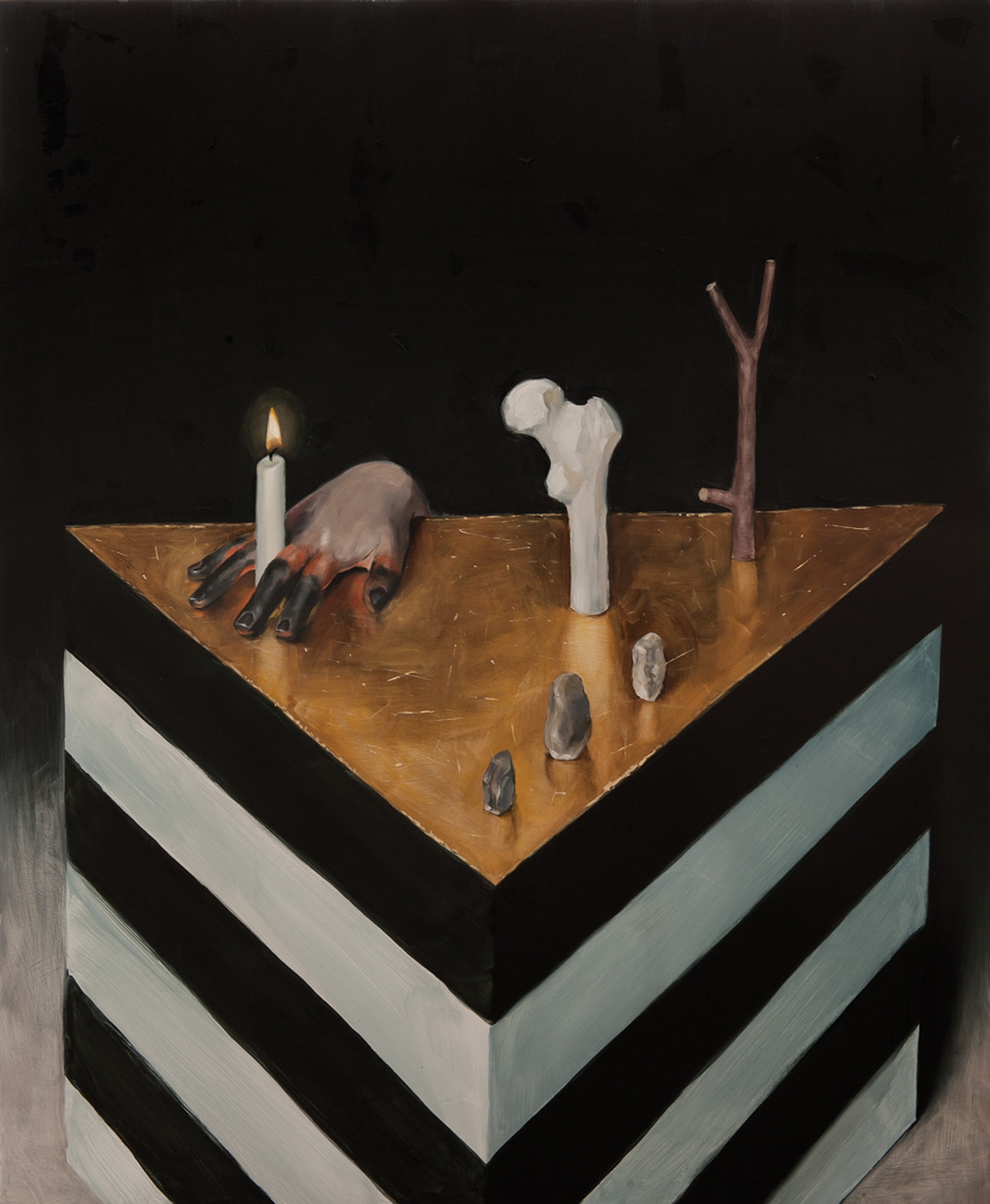
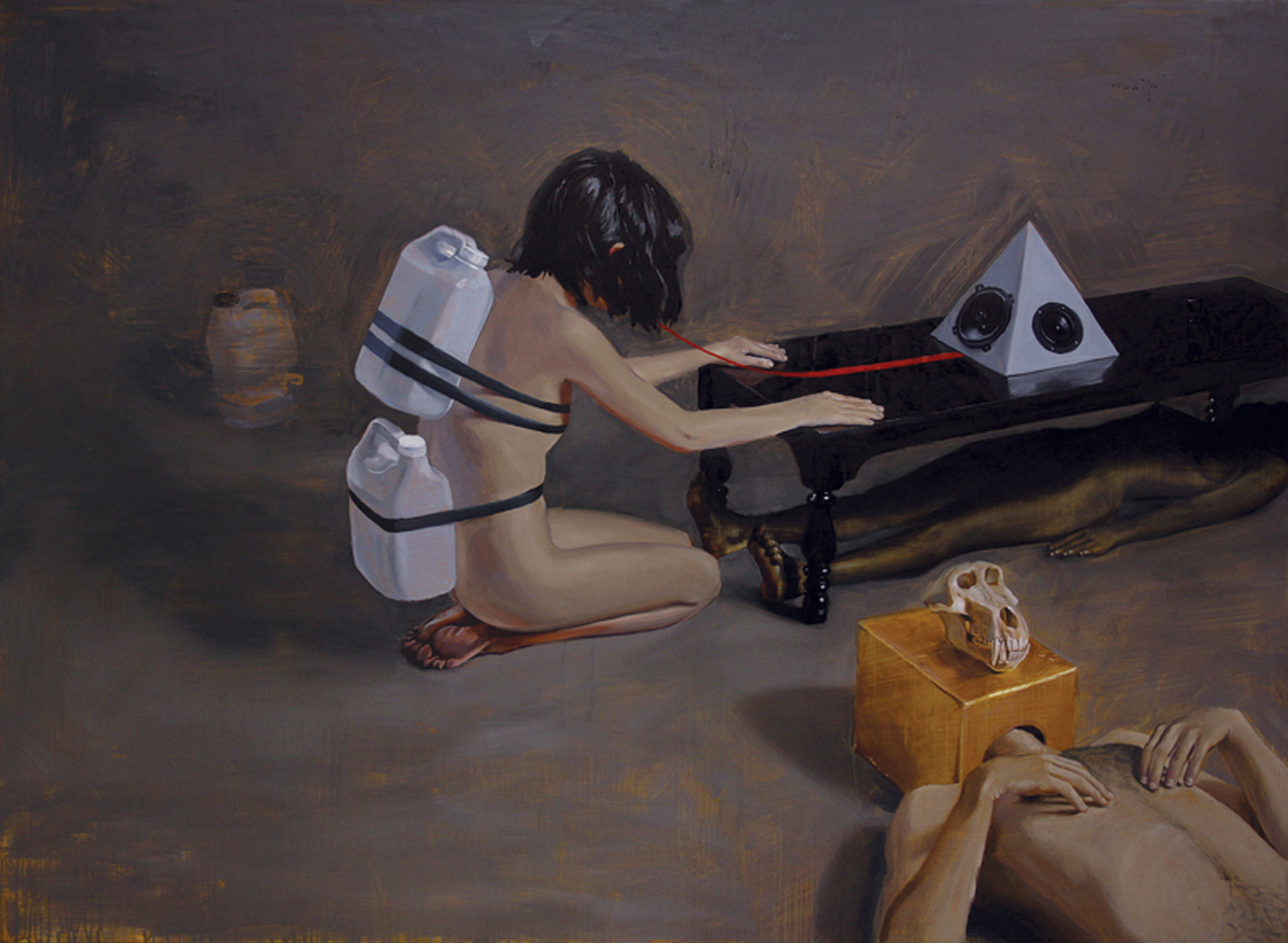
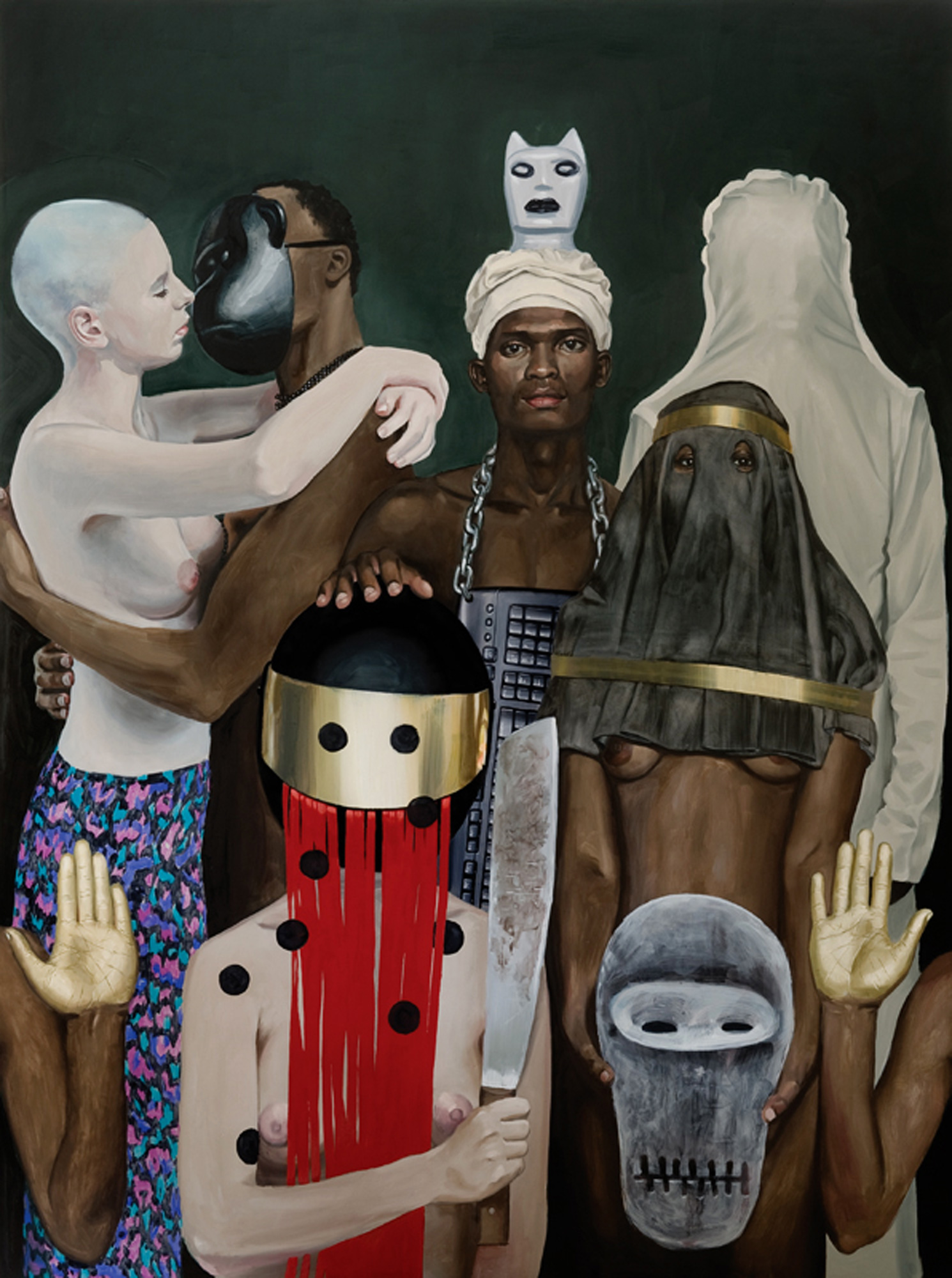
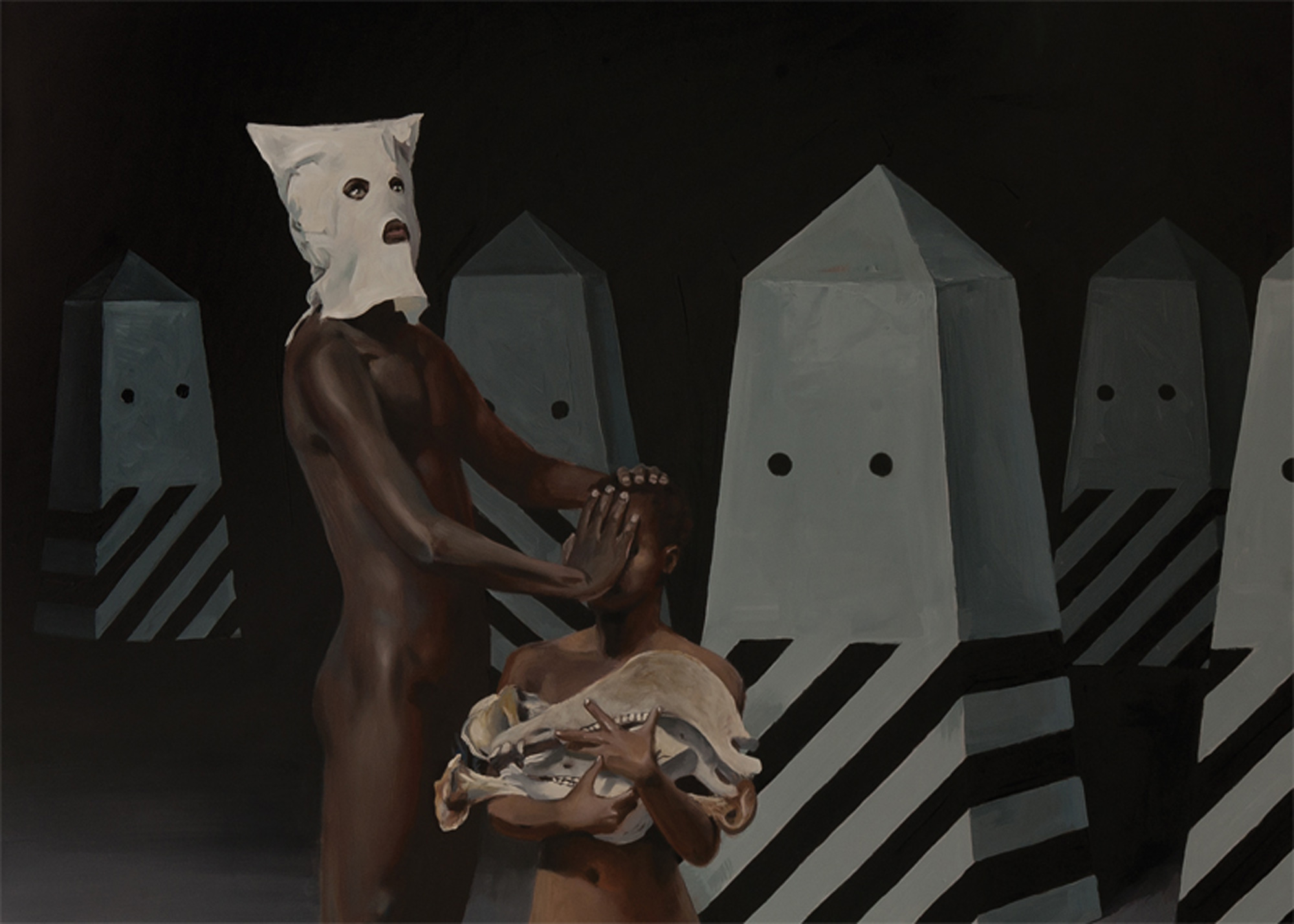
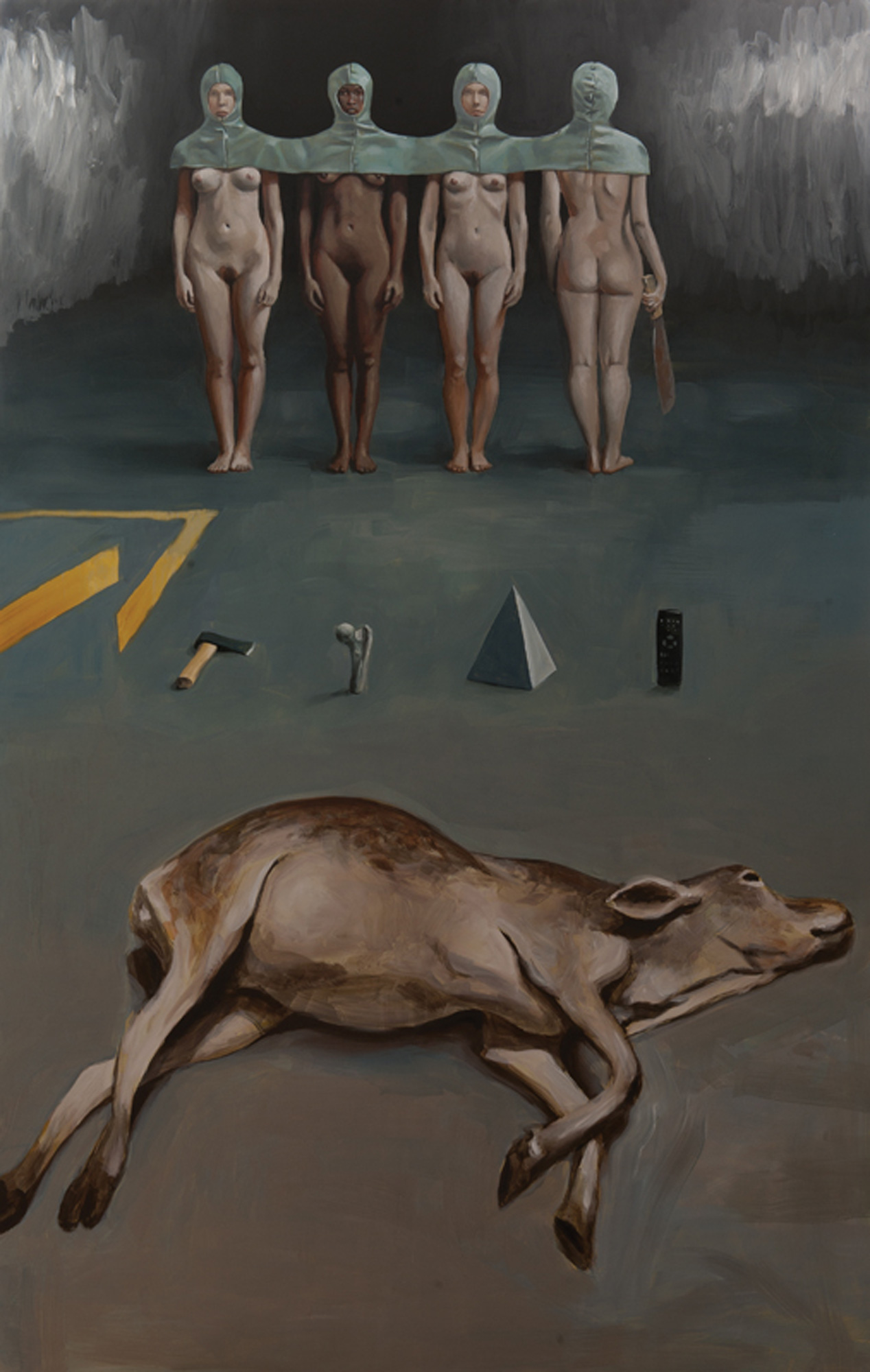
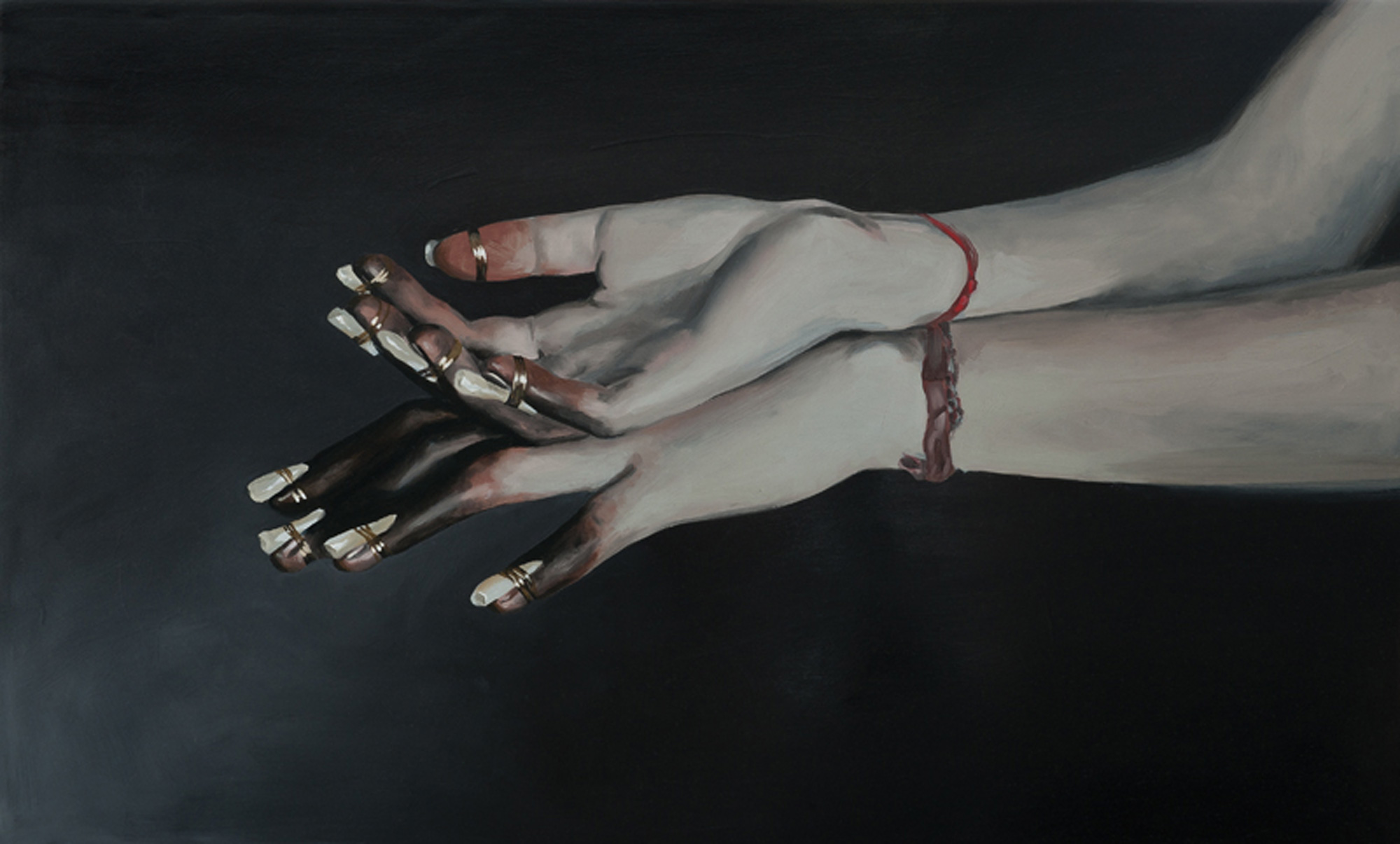
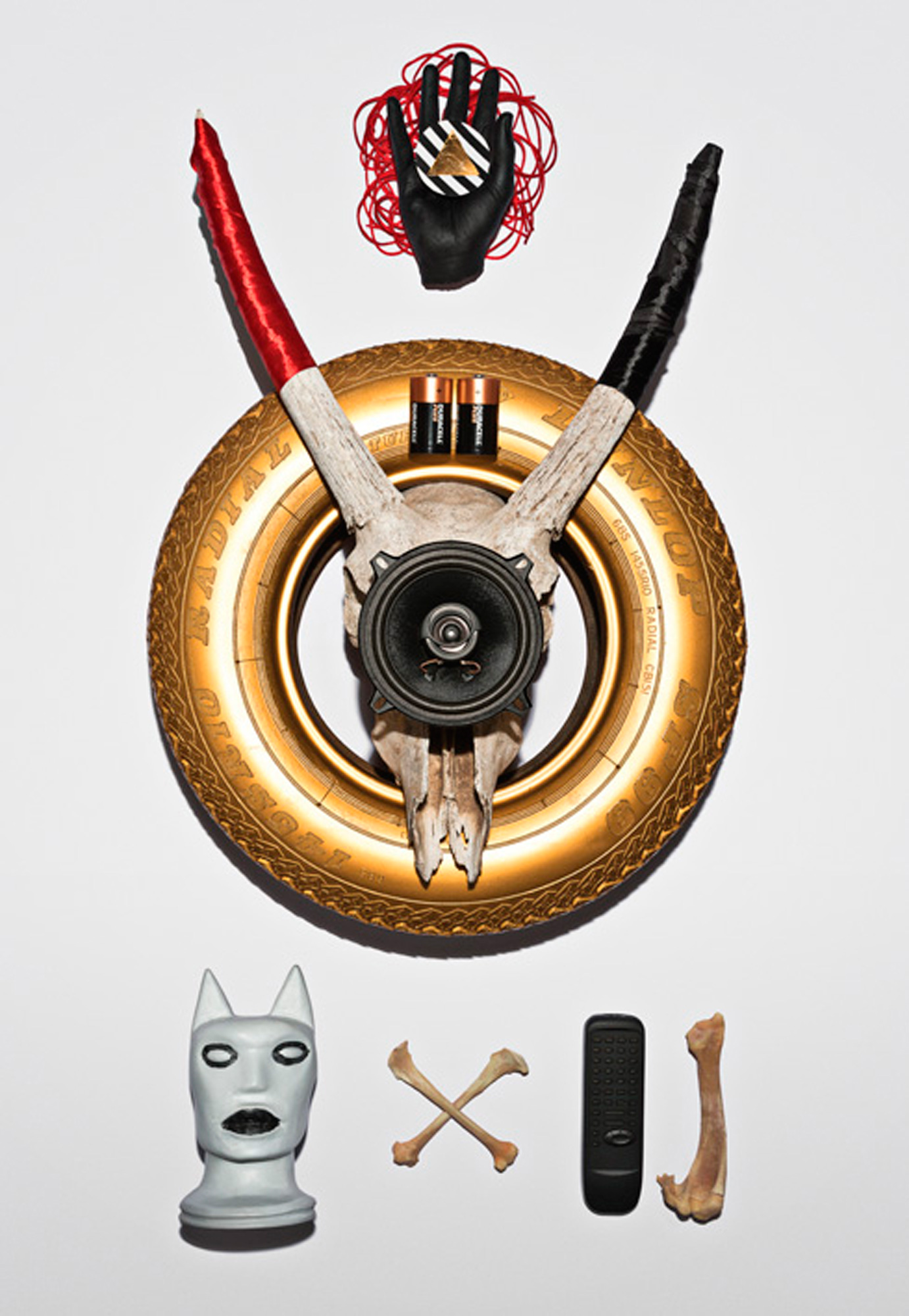
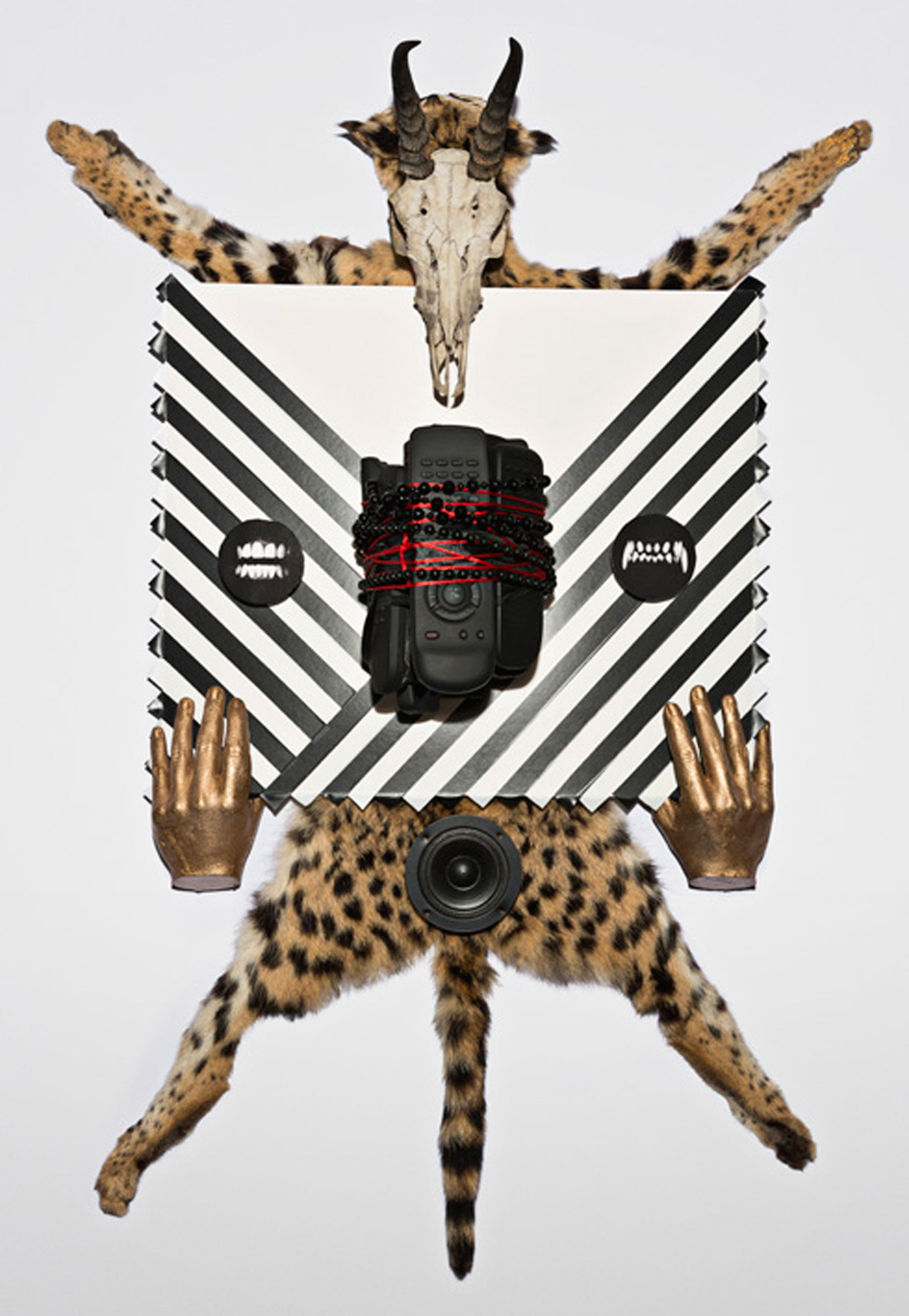
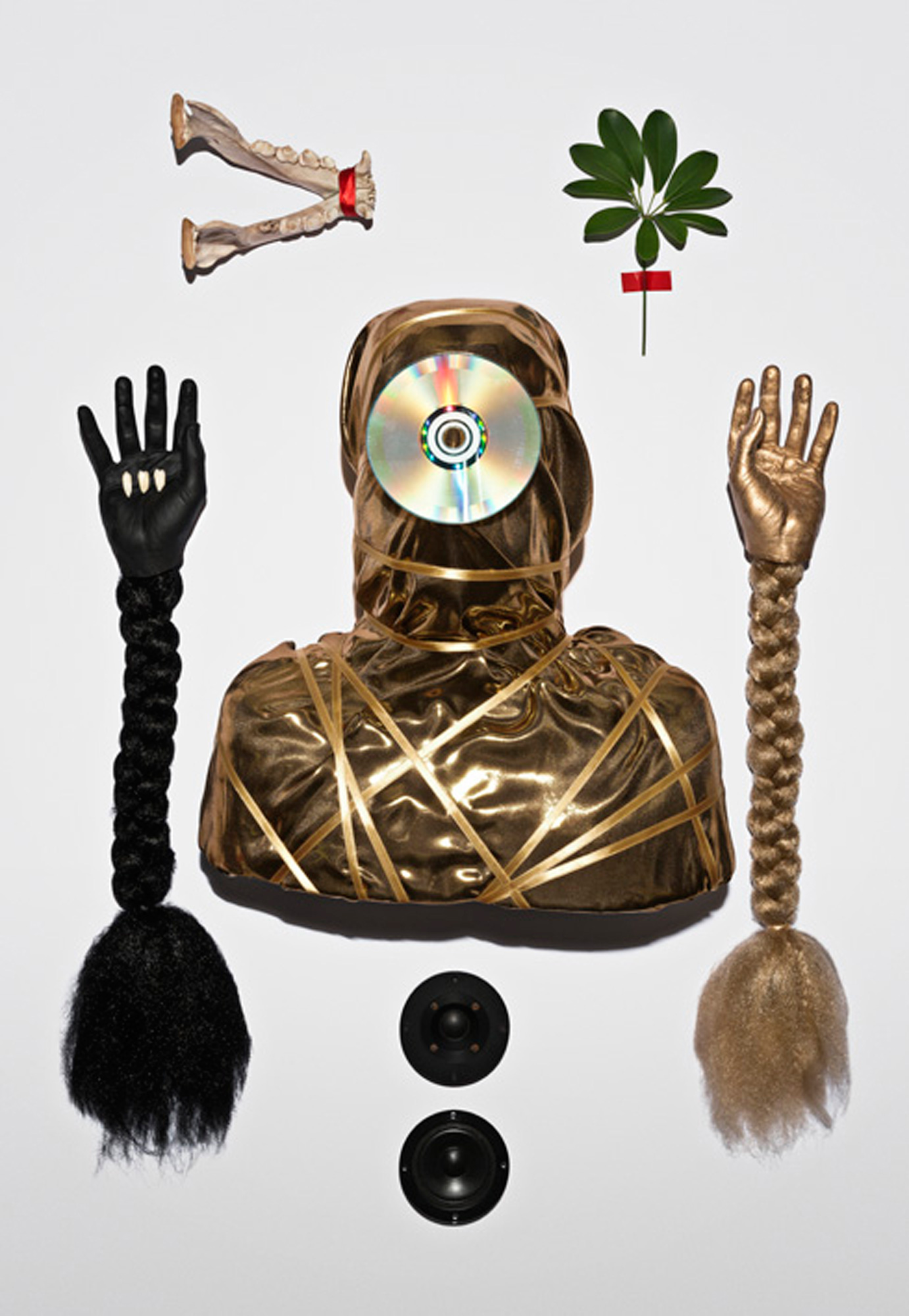
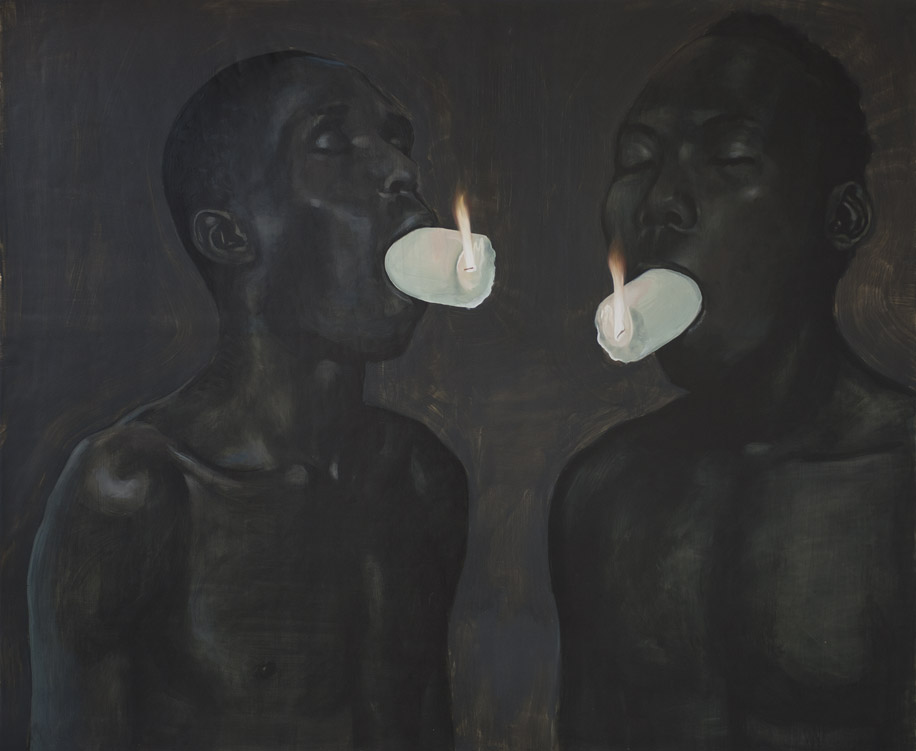
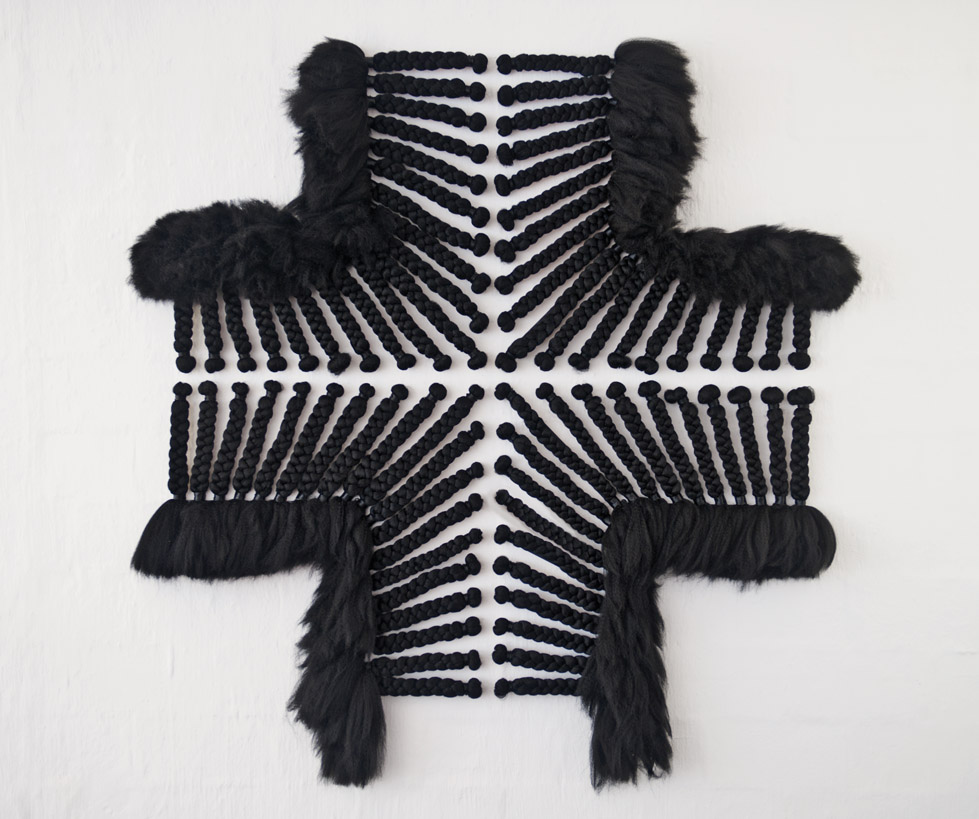
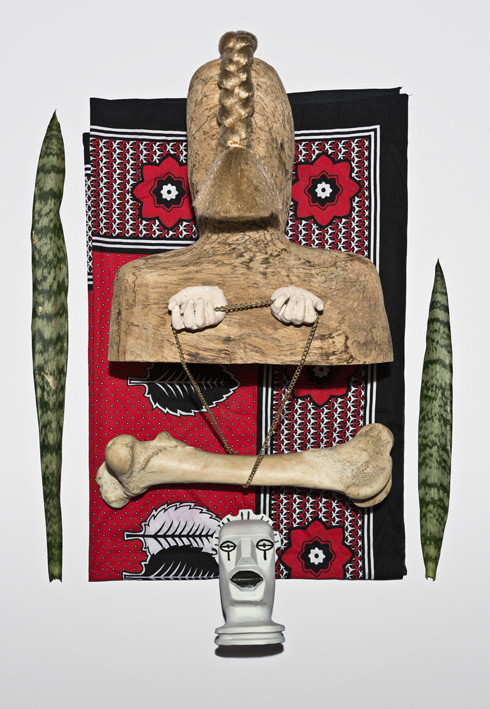
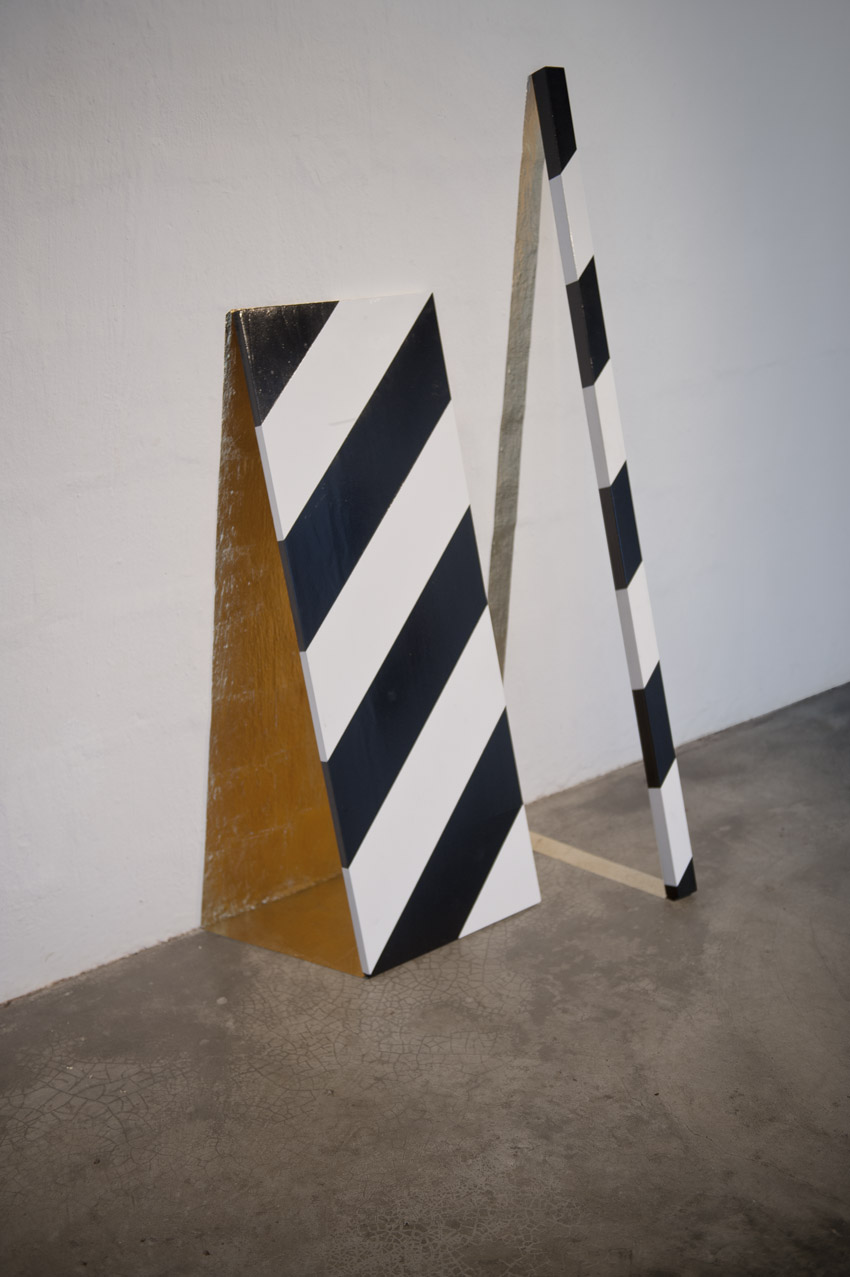
The exhibition features a series of paintings, photographs, installations and a short film all meticulously rendered. Most pieces are composed either as staged scenes or collected assemblages. Several objects, such as a comically haunting mask, appear in numerous artworks.
The majority of the subject matter is what one might associate with Africa past and present. There are symbols of African mysticism and ceremony in the presence of masks and various animal parts including skulls, bones, fur and dead calves. Then there’s the abundance of the everyday in the hair extensions, boom boxes, digital numerals, CDs hung from string, plastic water-transporting containers, chevron tape and toy-like geometric boxes. Juxtaposed is the human element as nude form and skin colours are featured in various situations of covering or tethering.
There’s a thread of the gentle macabre that I’ve come to recognise as his: dusty pastels, softly-buffed curves and subtly glowing gold dominate, in contrast to a series of incongruous assemblages that they host. The viewer is challenged to consider just why this exhibition feels so destabilising.
But what’s it all about? I asked Richard and he said:
“I suppose at face value this body of work deals with ideas of spirituality, specifically in an African context. But I’m not sure that is a satisfactory explanation.
“There are other lenses through which the work can be viewed; the theme of black and white, in terms of both race and all its attendant baggage as well as what those colours symbolise and the feelings they evoke; a concern with reducing the human form to a sculptural element and with deliberately altering conventional readings of the body; a manipulation of religious iconography; concerns with man’s relationship to nature, the animal kingdom and technology; and a deliberate sense of theatre and of fiction.”
While your interpretation of the work may vary from this, Richard’s process, like his execution, is precise and engineered. Each piece is the result of a sketch developed over time and a scene created to meticulous detail. Longtime partner at disturbance, Roger Jardine was brought on board to photograph the compositions, which was a process in itself.
“I suppose the photographs themselves could stand as the finished works, but somehow it feels like they truly become themselves when they are interpreted as paintings,” he says.