-

24 hours in Cape Town : The Baxter Theatre -
24 hours in Cape Town : The District Six Museum -
24 hours in Cape Town : Government Avenue -

24 hours in Cape Town : The Company's Garden, off Government Avenue -
24 hours in Cape Town : The Old Town House -
24 hours in Cape Town : The Hout Bay Public Library -
24 hours in Cape Town : The Hout Bay Public Library
PHOTOS: David Ross | PRODUCTION: Klara van Wyngaarden | WORDS: Alma Viviers
Public spaces are essential to the workings of urban settlements. Professor Lucien le Grange’s choice of five places you have to visit in Cape Town all contest the growing tendency of “privatising” the city.
The District Six Museum – 1994
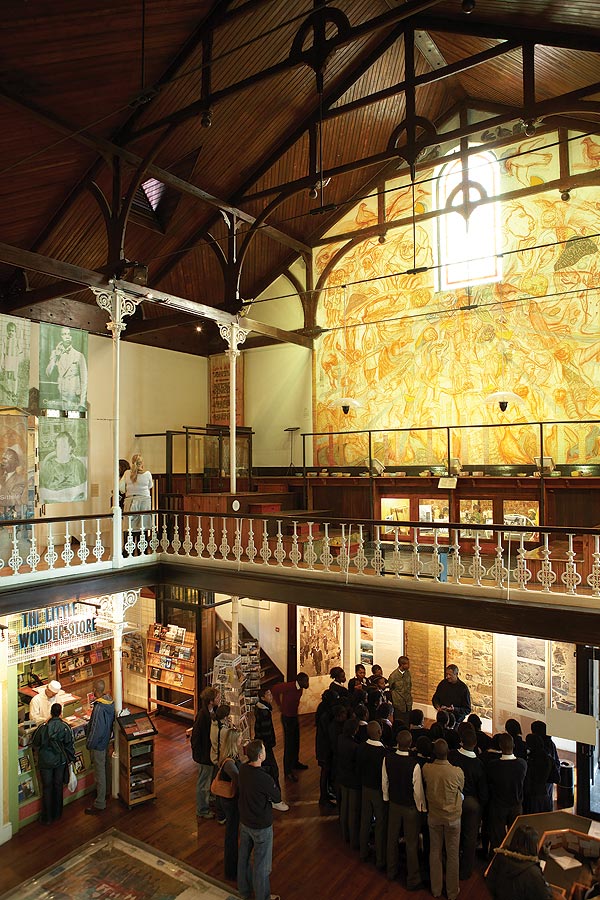
The District Six Museum has become the most popular museum in the city over the past decade. The building, originally a warehouse, had been previously refurbished in 1882 to serve as a Methodist Mission Church. Its external form is a simple hall shape, with the main facade on Buitenkant Street consisting of a gabled front with V-jointed rusticated plaster, including main end pilasters. However, the warm interior space of the museum is the building’s most memorable public quality.
The lofty interior is defined by a two-level Victorian cast-iron colonnade with balustrades, which forms a gallery on three sides of the space. Central to the interior is a map on the floor that depicts the former District Six. Light pours into this central space, from which – and onto which – exhibits are displayed and a different story of the city’s history is told.
During its existence, the museum has become a place of public refuge, a place of public protest and a platform from which the redevelopment of District Six has been launched.
• 25A Buitenkant Street, www.districtsix.co.za
The Baxter Theatre – 1977
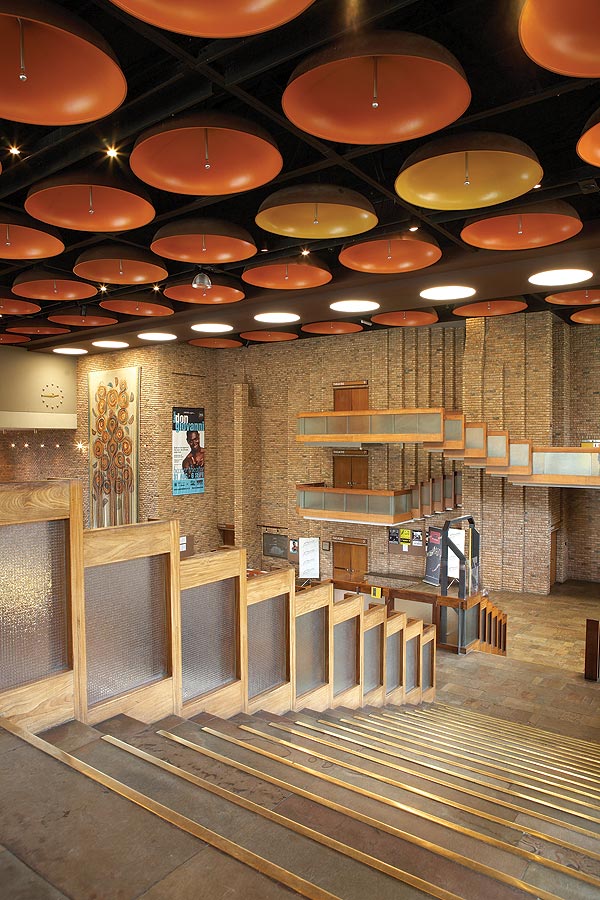
The Baxter Theatre, located on the UCT Lower Campus, was designed by architect Jack Barnett. It is a public building renowned not only as a theatrical venue but also as an architectural landmark. Informed by the Arts and Craft Movement and inspired by the Scandinavian National Romantic Movement of the early 1900s, the architect succeeded in producing a contemporary piece of work that is responsive to the context and architectural brief.
The building is basically a set of ramparts hugging the slope, arranged along the long span roof. The entrance staircase, which cascades down three floors into the foyer, is theatrical in itself. Barnett’s masterful use of brickwork and the distinctive orange fibreglass dome-lights make for a memorable building.
• Main Road, Rondebosch, www.baxter.co.za
Government Avenue
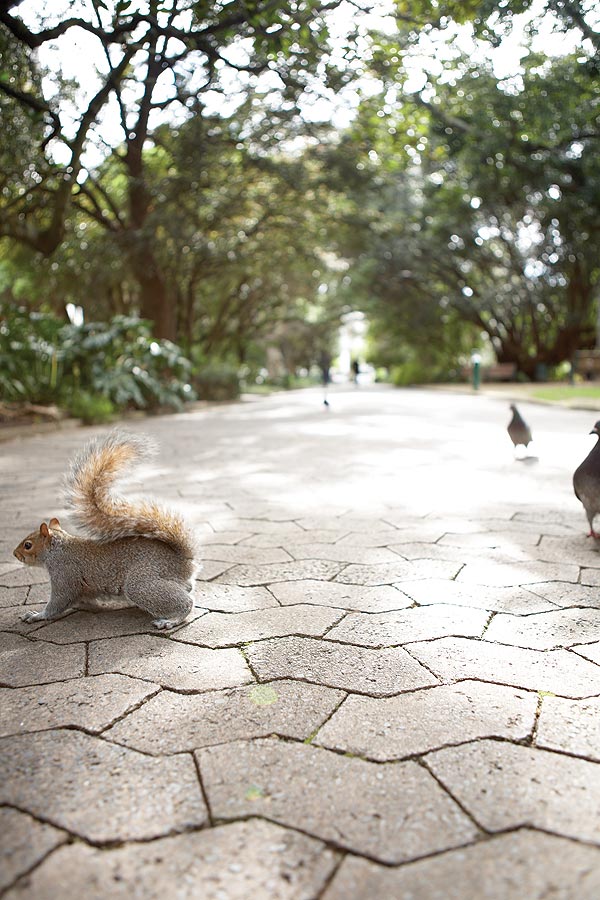
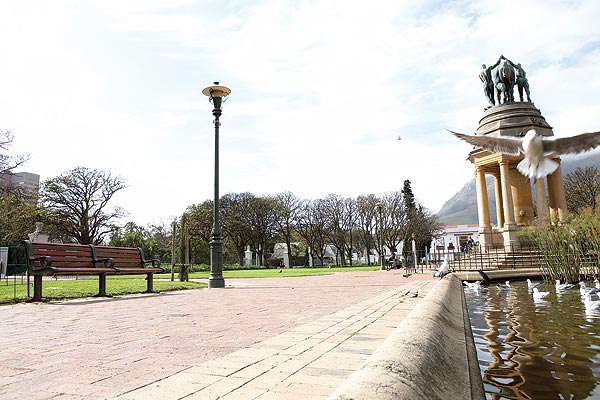
Together with the Company’s Garden, government buildings and public museums associated with it, Government Avenue in central Cape Town constitutes an important public space in the city. This oak-lined, linear avenue, which is both a route and a destination, forms a public “living-room” where young and old meet, citizens promenade, lovers court and the homeless seek refuge.
Embedded within the history of the city, and part of the original bastide grid plan of the founding Dutch colonists, Government Avenue is a public place that changes with the seasons. “For me, it is a space of shade and of warmth. It is, especially in spring, a place of extraordinary dappled light that conveys the promise of summer,” says Lucien. The main entrance to Government Avenue in Adderley Street is flanked by the old Slave Lodge on one side and St George’s Cathedral on the other.
As you walk up the oak-lined avenue, you will also pass the Houses of Parliament, including the Parliament Building which was completed in 1885, and the newer House of Assembly designed by Sir Herbert Baker.
• Government Avenue, Company’s Garden
The Old Town House – 1755
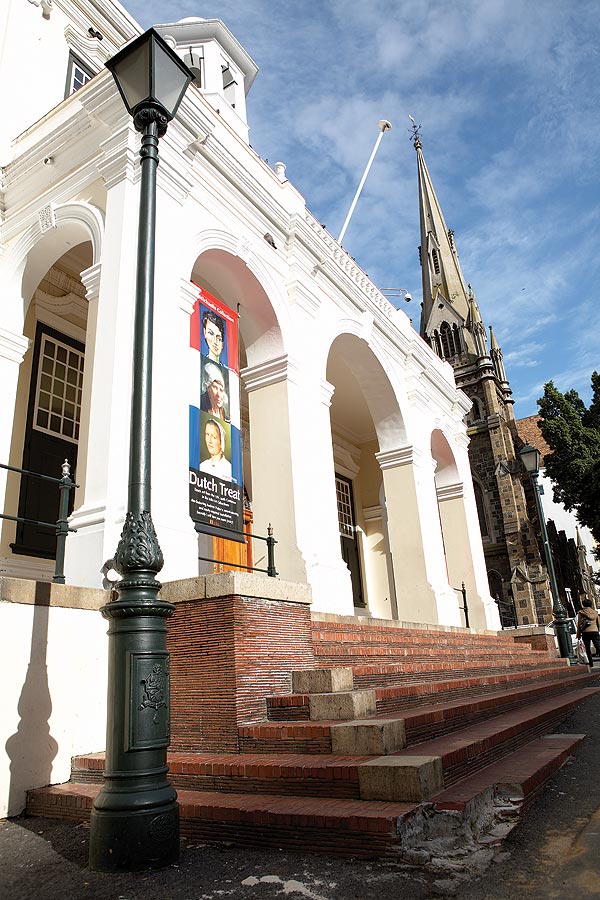
The Old Town House is a significant public building because of its interface with its surroundings. Situated on the north-facing edge of Greenmarket Square, the Old Town House was built as a Burger Watch-house during Dutch colonial rule. The building was restored in the 1920s by architect J.M. Solomon (who also designed the UCT campus) in order to house the Michaelis Art Collection.
Beyond the white plastered formal composition of the main facade, the building acquires its public stature through the stepped threshold that separates it from Longmarket Street and Greenmarket Square. These steps, made of original Dutch klompje bricks, form a permeable edge on which people from all walks of life sit, meet and at times perform.
It is a building that acquires its “publicness” not only in terms of the art collection it houses as part of a public trust, but also because of what it gives back to the city. Along with other buildings such as the Central Methodist Mission Church, the Old Town House defines the outdoor room of Greenmarket Square.
• Longmarket Street, Greenmarket Square
The Hout Bay Public Library – 1989
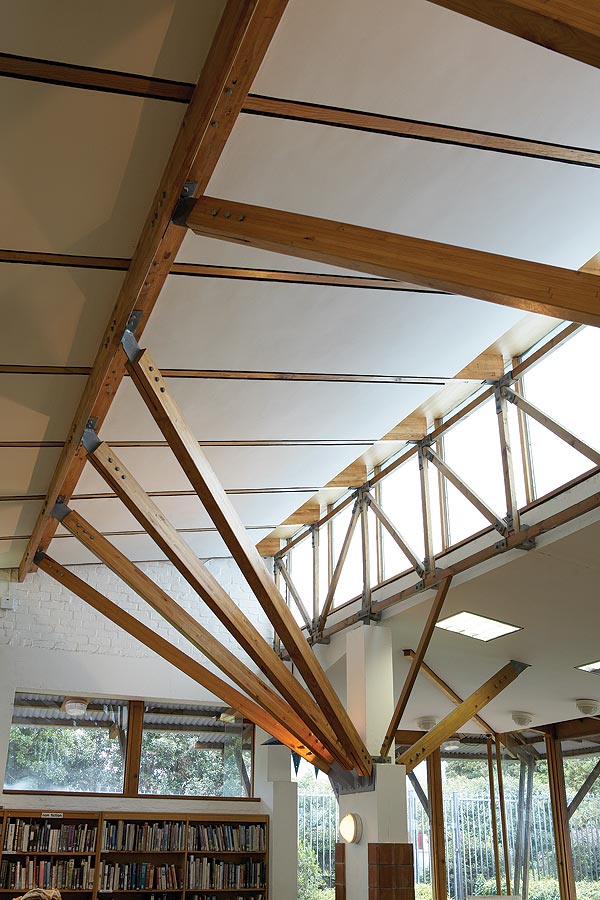
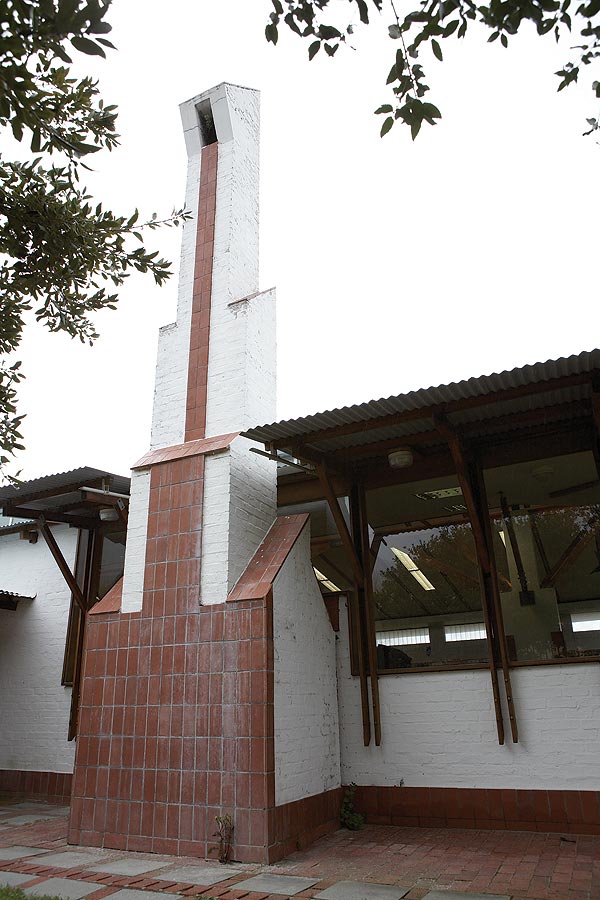
Almost 20 years since its completion, the Hout Bay Public Library, designed by Roelof Uytenbogaardt and Norbet Rosendal, remains one of the most important public architectural works in greater Cape Town. Referring to local historical typologies in its design layout, and inspired by the work of the great Finnish architect Alvar Aalto, the library is an exemplary architectural response to climate, functional efficiency and materials of the place.
As a public building, the modest external treatment and human scale of the entrance courtyard almost renders it “domestic” in quality – except for the large chimney that gives it a landmark status. Internal spaces connect to the outside through framed views. The light-filled interior serves as a wonderful venue – sometimes around the fireplace – for public educational gatherings.
• Melkhout Crescent, Hout Bay